分类: environment

  • Experts Meet in Belize to Tackle Deadly Storm Surge Threat

    Experts Meet in Belize to Tackle Deadly Storm Surge Threat

    As the 2026 Atlantic hurricane season draws near, Belize is hosting a pivotal three-day high-level workshop that brings together top international climate scientists, meteorologists, and disaster risk management specialists to strengthen the nation’s ability to predict and prepare for deadly storm surge events. The workshop, backed by the U.S. National Hurricane Center and a coalition of global climate resilience partners, centers on upskilling local teams in cutting-edge storm surge modeling technology — a tool designed to simulate how hurricanes of varying intensity, forward speed, and approach angle would impact Belize’s low-lying, highly vulnerable Caribbean coastline.

    Ronald Gordon, chief meteorologist at Belize’s National Meteorological Service, shared that the Central American nation was selected as an early beneficiary of this advanced modeling initiative due to its persistent high risk of catastrophic storm surge impacts. “As one of the most vulnerable countries in the Caribbean region to storm surge flooding, we were prioritized to gain access to this transformative technology through this international collaboration,” Gordon explained.

    Jamie Rhome, deputy director of the U.S. National Hurricane Center, highlighted the dramatic leaps forward in storm surge forecasting technology that have made this regional expansion possible. In recent years, advances in computing power and data collection have drastically cut down development timelines for customized modeling systems: what once required years of work to build for a single country can now be deployed across multiple Caribbean nations in just a matter of months, Rhome noted. This speedier scaling means more at-risk coastal communities can access life-saving forecasting capabilities far faster than ever before.

    For Belize’s disaster leadership, the workshop is more than a technical training — it is a chance to draw hard-won lessons from recent extreme weather events across the region. Henry Charles Usher, Belize’s Minister of Disaster Risk Management, pointed to Jamaica’s recent damaging encounter with Category 5 Hurricane Melissa as a critical case study for the nation. “This gathering gives us a unique opportunity to learn from regional experiences, refine our preparedness frameworks, and leverage new technology to keep our communities safe,” Usher said. “Ultimately, our goal is clear: protect lives, safeguard private and public property, and build the resilience we need to recover quickly if a major storm hits our shores.”

    The collaborative initiative comes as climate scientists have recorded rising sea levels and increasing hurricane intensity across the Atlantic basin, putting more coastal communities like Belize at heightened risk of deadly storm surge flooding in recent decades. For this small Central American nation, investing in improved early warning and forecasting systems is a core step to reducing disaster risk ahead of what forecasters warn could be another active hurricane season.

  • We Live in a Hurricane Belt: “Every Year Could be Disastrous”

    We Live in a Hurricane Belt: “Every Year Could be Disastrous”

    Against a backdrop of escalating climate-driven hazards that have made the Caribbean one of the most disaster-prone regions on Earth, Belize took a critical step forward on April 13, 2026 to reinforce its emergency preparedness with a new digital initiative. In an official handover ceremony, 30 Samsung tablets were delivered to frontline disaster management agencies, equipping on-the-ground responders with modern tools to confront the growing frequency and intensity of extreme weather events.

    Dr. Colin Young, Executive Director of the Caribbean Community Climate Change Centre (CCCCC), one of the key partners backing the initiative, outlined the transformative role the new devices will play during active crises. Unlike traditional paper-based assessment methods that delay data sharing and analysis, these tablets will allow officials to gather actionable, on-location information in real time as emergencies unfold. “They’ll be capturing geo-referenced photos, building footprint observations, and rapid assessments during storms, floods, and other emergencies,” Young explained. Beyond the mobile devices, the project also delivers high-resolution satellite imagery, customized digital maps, and detailed vulnerability assessments that highlight high-risk communities across Belize, giving planners and responders clearer insight into where threats are most acute.

    Young emphasized that technical equipment alone cannot deliver lasting improvement. To ensure long-term impact, the initiative includes structured training for at least 40 local officials, building sustained capacity within Belize’s disaster response ecosystem. When fully rolled out, project organizers estimate the benefits will reach hundreds of frontline workers directly, and thousands of at-risk community members indirectly, by cutting response times and improving the accuracy of emergency resource allocation.

    Cordel Hyde, Belize’s Deputy Prime Minister and Minister of Natural Resources, used the ceremony to underscore the urgent climate reality that makes investments like this non-negotiable for his small coastal nation. Located squarely within the Atlantic hurricane belt, Belize faces the constant threat of catastrophic extreme weather, with risks growing worse each year due to climate change. “We live in a hurricane belt. Every year could be disastrous, literally every year or multiple times per year,” Hyde warned. He went on to outline the full scope of compounding threats Belize now confronts with increasing regularity: crippling droughts that undermine drinking water security, out-of-control wildfires, destructive river and coastal flooding, deadly landslides, and accelerating shoreline erosion that eats away at valuable coastal land and community infrastructure.

    Hyde cited data from the International Monetary Fund (IMF) that puts the region’s long-standing disaster risk into stark perspective: of the 511 major disasters that have impacted small island developing states since 1950, roughly two thirds have occurred across the Caribbean. To date, these events have claimed more than 250,000 lives across the region, leaving a legacy of destruction and economic instability that persists for decades after each event. For Belize specifically, nearly 40.5% of the national population resides in low-lying coastal zones, putting hundreds of thousands of people directly in the path of storm surges, hurricane winds, and coastal erosion. “With 40.5% of our population living in coastal zones, strengthening community-level disaster preparedness is a must,” Hyde added.

    The digital handover is part of a broader project titled “Strengthening Data Management Foundation for Disaster Risk Preparedness in Belize”, a joint collaboration between the CCCCC and the Coalition for Disaster Resilient Infrastructure (CDRI). The primary agencies set to benefit from the new tools and training are Belize’s National Climate Change Office (NCCO), the Lands and Survey Department, and the National Emergency Management Organisation (NEMO), the country’s lead agency for coordinating emergency response during large-scale disasters. This investment marks a key milestone in Belize’s ongoing efforts to build climate resilience and protect vulnerable communities from the growing impacts of global climate change.

  • Experts Warn, Development is Driving Placencia’s Beach Erosion

    Experts Warn, Development is Driving Placencia’s Beach Erosion

    At a community gathering held to address Placencia Peninsula’s worsening beach erosion crisis, environmental experts delivered a clear, sobering assessment: the peninsula’s disappearing shorelines are not a random natural event — they are the direct cost of rapid, unregulated coastal development.

    According to Anthony Mai, Chief Environmental Officer of Belize’s Department of the Environment (DOE), the agency has assembled a dedicated special task force to investigate the root causes of the region’s accelerating erosion and identify actionable solutions before irreversible damage occurs. Early research from the task force leaves no room for ambiguity: human-led development is the single largest contributor to the problem.

    Expert analysis shared during the meeting confirms that 72% of Placencia’s entire 16-mile coastline is already covered by built development, ranging from residential homes to tourist resorts and commercial infrastructure. Alarmingly, if current development rates hold steady, the entire coastline will be fully developed by 2035. This continuous construction places unprecedented pressure on fragile shoreline ecosystems, accelerating erosion rates and putting both existing coastal properties and the peninsula’s iconic public beaches at extreme risk of being lost entirely.

    Mai explained that the task force’s months-long research was designed to center community input, not just scientific findings. “We assembled the task force to conduct targeted studies across the peninsula to map erosion causes, given the high concentration of coastal structures,” Mai noted. “Last night’s meeting was a chance for experts to share their final findings, lay out practical, implementable solutions, and get feedback directly from the residents who live with this crisis every day.”

    What may come as a surprise to many residents is that 70% of the developed coastline already has some form of man-made erosion abatement structure in place — from seawalls to rock revetments — yet these interventions have failed to stop the shoreline from retreating. Experts emphasized that hard man-made structures often disrupt natural sand movement along the coast, worsening erosion in adjacent areas over time instead of solving the problem.

    Despite the grim warning, researchers have proposed a low-cost, locally accessible solution that could reverse much of the recent damage without requiring extensive new construction. New scientific surveys confirm that most of the sand eroded from Placencia’s beaches has not washed out into the open ocean. Instead, it has settled just offshore, within 15 kilometers of the original shoreline.

    This discovery opens the door for beach nourishment, a proven coastal management technique that involves dredging the offshore sand deposits and redepositing them on the eroding beaches to rebuild the shoreline. Leading researchers on the project argue that retaining existing coastal structures while replenishing lost sand is the most practical, environmentally sound, and economically feasible option available to Placencia right now.

    Unlike more expensive large-scale infrastructure projects, this approach leverages local resources, avoids major disruption to coastal ecosystems, and can be implemented relatively quickly to stop further shoreline loss. The proposal was shared openly with Placencia residents during the community meeting, with organizers now collecting local feedback before moving forward with a formal implementation plan.

    This report is a transcribed adaptation of an evening television newscast focused on coastal management challenges in Belize.

  • Placencia’s Shoreline Slips Away as Erosion Crisis Intensifies

    Placencia’s Shoreline Slips Away as Erosion Crisis Intensifies

    The idyllic shoreline of Belize’s Placencia Peninsula is vanishing at an alarming rate, pushing a decades-long gradual environmental threat into a full-blown emergency that threatens homes, local livelihoods, and the long-term existence of the coastal community. Longtime residents who have watched the shoreline shift over generations are now sounding the alarm, warning that inaction will lead to irreversible damage that could erase the peninsula the same way it erased the historic nearby town of Monkey River.

    Charles Leslie, a Placencia Village resident who has lived in the area for decades, explained that the coastal ecosystem once maintained a natural balance: shorelines would erode slightly during storm seasons and naturally rebuild over time. But that pattern has shifted dramatically over the last 20 years. Erosion has stopped reversing, and the rate of land loss has accelerated sharply over the last decade. Leslie, who compared current shoreline conditions to photographs taken just 10 years ago, estimates that his stretch of beach alone has lost between 50 and 60 feet of sand to the ocean. The crisis is not isolated to Placencia Village, he stressed; the entire 24-kilometer peninsula, from the northern community of Riversdale down to southern Seine Bight, is experiencing severe degradation. For waterfront property owners and local families who depend on coastal tourism and fishing, the uncertainty has turned into a constant source of anxiety. The situation has already reached a critical tipping point, Leslie said, requiring immediate intervention to avoid total collapse.

    When asked about the worst possible outcome for the peninsula, Leslie pointed to Monkey River, a once-thriving larger town that was completely lost to coastal erosion decades ago. As a child, Leslie recalled spending Easter holidays in the active community, which now exists only in local memory. This history, he argued, proves that total loss is a very real possibility if officials continue to delay meaningful action.

    In response to growing public pressure from residents, Belize’s Department of the Environment has announced it is moving forward with collaborative steps to address the crisis. Environmental officials confirm the issue has been a priority for months, and over the past year and a half, the department has partnered with the Placencia and Seine Bight community groups and the University of South Florida to conduct in-depth scientific studies of the erosion patterns and potential mitigation solutions.

    On the evening of April 9, 2026, the department is hosting a public consultation open to all residents across the peninsula to share the study’s findings and collect community input on proposed protection measures. According to Environmental Officer Kenrick Gordon, the goal of the gathering is to secure community buy-in for the next steps, ensuring that any intervention reflects the needs and priorities of the people most directly affected by the erosion. For months, residents have repeatedly raised concerns about the accelerating shoreline loss, and the consultation marks the first formal step toward turning local concerns into actionable policy.

    As waves continue to wear away at the peninsula’s remaining beaches, the public meeting represents a defining turning point for one of Belize’s most ecologically and economically vulnerable coastlines, where the future of the entire community now hangs in the balance.

  • Emperor penguins listed as endangered species — IUCN

    Emperor penguins listed as endangered species — IUCN

    PARIS, France – In a landmark warning about the cascading ecological damage of human-caused global warming, the International Union for Conservation of Nature (IUCN), the world’s leading authority on threatened wildlife, officially upgraded the emperor penguin from “near threatened” to endangered on Thursday. The reclassification puts the iconic Antarctic species just two steps away from total extinction in the wild, shining a harsh spotlight on the existential crisis facing ice-dependent animals as rising temperatures rapidly transform Earth’s southernmost continent.

    Emperor penguins, the largest and most recognizable penguin species with their distinctive golden-orange neck plumage, have long become a global symbol of Antarctic wildlife resilience. Their entire life cycle is tied to stable Antarctic sea ice: the frozen platforms serve as breeding grounds where males incubate eggs through the harshest winter months on Earth, and as safe habitats for young chicks while they grow their waterproof feathers during moulting. Unlike most other wildlife habitats, Antarctic sea ice shifts dramatically with the seasons, expanding in winter and contracting in summer. But as global temperatures climb to record highs, sea ice now retreats far earlier each spring and remains far less stable than historical norms. Since 2016, Antarctic sea ice has hit repeated record-low extents, and the impact on penguin populations has been severe. IUCN data shows that roughly 10 percent of the global emperor penguin population – around 20,000 adult birds – vanished between 2009 and 2018 alone. If current greenhouse gas emission trends continue, IUCN projects that the total emperor penguin population will drop by 50 percent by the 2080s.

    The reclassification is not limited to emperor penguins. The Antarctic fur seal, once hunted to the brink of extinction for its pelt in the 19th and early 20th centuries, was also moved to the endangered category. The species has seen its global population fall by more than 50 percent since 1999, driven by the same climate change that is harming penguins. Rising ocean temperatures and shrinking sea ice have pushed krill – the tiny crustaceans that form the base of the Antarctic food web and the primary food source for fur seals – deeper into the ocean to find cold enough water, drastically reducing food availability for seals. In a separate update, the IUCN also reclassified the southern elephant seal from “least concern” to vulnerable, after sharp population drops linked to an outbreak of a deadly contagious pathogen.

    Philip Trathan, a member of the IUCN expert group that conducted the latest Red List assessment, confirmed that the core threat to emperor penguins is human-induced climate change. Christophe Barbraud, a scientist with France’s national research institute CNRS, told AFP that the species cannot survive without stable sea ice, and the dramatic drop in Antarctic sea ice extent since 2016 has left the birds with increasingly limited habitat. The IUCN Red List of Threatened Species, the global gold standard for tracking extinction risk for plants, animals, and fungi, sorts species into six categories ranging from “least concern” at the lowest risk to “extinct” at the highest. Conservation leaders warn that the new classification of emperor penguins is a wake-up call for urgent global action to cut greenhouse gas emissions and protect Antarctic ecosystems.

    “The fate of these magnificent birds is in our hands,” said Rod Downie, a senior advisor at global conservation group WWF. “With the shocking decline in Antarctic sea ice that we are currently witnessing, these icons on ice may well be heading down the slippery slope towards extinction by the end of this century — unless we act now.”

  • Funding freeze  threatens turtles

    Funding freeze threatens turtles

    Across Trinidad and Tobago, critical sea turtle conservation work hangs in the balance as a years-long delay in dedicated environmental funding has left 23 local conservation groups stretched to breaking point. Arlene Williams, president of the Las Cuevas Eco Friendly Association Tours (LCEFAT) – a member of the national umbrella conservation body Turtle Village Trust – has sounded the alarm that the National Environmental Fund, more widely known as the Green Fund, has not released allocated funding to the trust since 2018, bringing core conservation activities to the brink of collapse.

    Created under the 2000 Finance Act, the Green Fund was designed to provide sustained financial support for registered environmental organizations working across reforestation, ecological remediation, public environmental education, and habitat and species conservation work. Established in 2006, the Turtle Village Trust serves as the coordinating non-profit umbrella for every sea turtle conservation group operating across Trinidad and Tobago, currently supporting 23 community-led groups focused on key nesting habitats in locations including Grande Riviere, Matura, and Fishing Pond.

    More than a decade ago, the trust submitted a 7-year National Sea Turtle Conservation Project proposal to the Green Fund, requesting TT $92 million to support its nationwide work. In the years when funding was disbursed, the money covered critical costs: living stipends for volunteer patrols that monitor nesting beaches overnight during nesting season, and the purchase of specialized equipment for population and nesting data collection. Today, with no new funding released, conservation activities across all member groups have fallen off dramatically.

    “Funding was supposed to be released ahead of this year’s nesting season, which kicked off on March 1. We are now well into April, and still no funding has arrived,” Williams explained in an interview with the *Express*. “All of our groups are still turning out whenever we can, doing our best with what we have, but we lack the basic equipment to do the work properly.”

    Williams highlighted the crisis facing her own community group in Las Cuevas, where stretched resources have gutted patrol capacity. “We used to have 10 volunteers patrolling this beach every night during nesting season. Now, without funding, there are only two of us covering the entire stretch of coast,” she said.

    So far, the small dedicated team has managed to ward off poachers from accessing vulnerable turtle nests, but Williams says the team cannot sustain this level of work indefinitely – and is already draining personal finances to cover basic operational costs. “I don’t know how much longer we can keep this up. It’s physically and financially draining, right now we are using our own money to buy even the most basic supplies we need, including batteries for our patrol lights. A single pack of batteries we need for one night of patrols costs $209,” she noted.

    In addition to the funding delay, Williams says conservation leaders have been unable to get a response from government authorities about the impasse. A recent donation of computers from the Ministry of Trade, Investment and Tourism to support digital data storage has done little to address the core staffing and supply crisis, as the understaffed patrol teams are unable to collect the volume of data the new equipment is meant to store.

    If the funding deadlock is not broken quickly, Williams warns, sea turtle conservation across the entire country will suffer severe, irreversible damage. “Every one of the 23 groups across Trinidad and Tobago will be harmed, even the larger, more well-known programs,” she said.

    Beyond unlocking the delayed Green Fund allocation, Williams is calling on three government bodies – the Ministry of Agriculture and Fisheries, the Ministry of Planning, Economic Affairs and Development, and the Environmental Management Authority – to step up enforcement of existing wildlife protection laws for sea turtles. “They post signs up and down the beaches spelling out the rules for protecting turtles, but where are the enforcement patrols? We need regular patrols from game wardens, especially during busy holidays and weekends when visitor numbers surge,” she said, adding that there have been no official government patrols on Las Cuevas beach since this year’s nesting season began.

    When contacted for comment last week, Minister of Planning, Economic Affairs and Development Kennedy Swaratsingh confirmed that he is currently reviewing the funding issue and will issue a formal public statement in due course.

  • Early Sargassum Chokes Belize’s Easter Hotspots; And This Is Just the Start

    Early Sargassum Chokes Belize’s Easter Hotspots; And This Is Just the Start

    The 2026 sargassum blooming season has arrived far earlier and more aggressively than expected along Belize’s coastlines, choking the country’s most popular Easter tourism destinations with dense, unmanageable mats of brown seaweed weeks before the annual peak is projected to hit.

    Popular visitor hotspots including Ambergris Caye, Caye Caulker, Placencia, and Hopkins have already seen widespread seaweed accumulation along their shorelines, catching many local communities and tourism operators off guard even as they prepped for the annual influx of Easter holiday travelers.

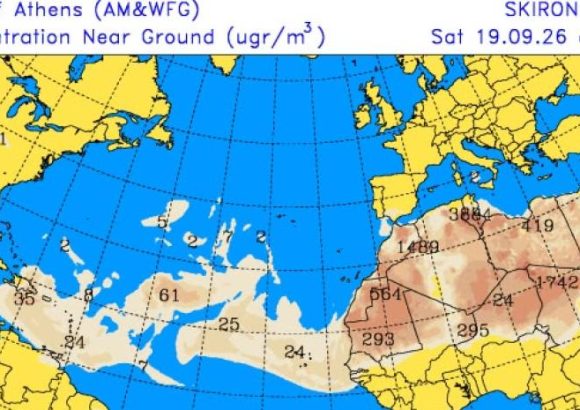
    Data from leading ocean monitoring institutions — the University of South Florida and the U.S. National Oceanic and Atmospheric Administration (NOAA) — confirms that sargassum biomass across the broader Atlantic Ocean and Caribbean basin is already at record-breaking levels for this time of year. The institutions’ March 2026 Sargassum Forecast warns that 2026 is on track to become one of the most severe sargassum seasons on record, with total volumes projected to hit all-time highs by mid-year.

    The crisis is not limited to Belize. Neighboring Mexico is already grappling with the early bloom: local reports confirm that the popular resort destination of Tulum had collected 244 metric tonnes of sargassum by the end of February 2026, a stark jump from just 59 tonnes collected during the same period in 2025.

    The unseasonable early surge has forced Belizean authorities and tourism operators to accelerate their response plans. The San Pedro Town Council expanded its cleanup crews and began daily removal operations weeks ahead of schedule, while private hotels and restaurants along affected coastlines have deployed floating containment barriers to stop sargassum from drifting into swimming areas and waterfront access points. Even with these proactive steps, persistent systemic challenges remain: illegal dumping of collected sargassum on Ambergris Caye has compounded the island’s existing waste management strains, turning a coastal environmental problem into a public nuisance for local residents.

    Despite the immediate pressures, Belize is actively exploring long-term, sustainable solutions to the annual sargassum crisis. Agriculture Minister Rodwell Ferguson confirmed during March 2026’s budget debate that Chilean companies specializing in sargassum collection and recycling are scheduled to arrive in Belize on April 7 to assess potential commercial harvesting and repurposing projects. These firms have developed techniques to turn waste sargassum into usable products ranging from organic fertilizer to biofuel and construction materials, offering an economic alternative to costly open-air disposal.

    This year’s early Easter bloom serves as a stark early warning for the entire Caribbean region: as ocean conditions continue to fuel larger, earlier sargassum blooms, communities reliant on coastal tourism and fisheries are bracing for a year of unprecedented environmental and economic disruption.

  • Communities in Montecristi transform the devil fish into a productive alternative

    Communities in Montecristi transform the devil fish into a productive alternative

    SANTO DOMINGO — An invasive aquatic species that has thrown off the fragile ecological balance of Montecristi province’s Saladilla Lagoon is now at the center of an innovative pilot initiative that re-frames an environmental crisis as a pathway to long-term sustainable economic growth for local communities.

    Native to the Amazon basin, the devil fish has spread rapidly across Saladilla Lagoon in recent years, outcompeting native and commercially important species such as tilapia. Its unchecked proliferation has decimated local fish populations, disrupted the lagoon’s natural ecosystem, and undermined the livelihoods of area fishermen who rely on the waterway for income.

    Rather than focusing solely on population control for this problematic invasive species, a new collaborative project led by development non-profit People for Development (AVSI Dominican Republic) in partnership with the Dominican Ministry of Environment is aiming to integrate the devil fish into a circular local production chain. The core plan of the initiative is to process devil fish and other invasive species caught in the lagoon into nutrient-dense fishmeal.

    Per an official statement from the Ministry of Environment, local community members are carrying out the fishmeal processing work. Once production is complete, samples will undergo rigorous laboratory testing to confirm the safety and efficacy of the final product for two key uses: as an organic soil fertilizer for local farms, and as a nutritional feed supplement for domestic livestock.

    This model marks a critical shift in how invasive species are managed across many affected regions. Instead of treating invasive organisms as a costly problem that drains public resources, the project turns a species with no existing commercial value into a sellable commodity that can generate consistent local income.

    Gustavo Benigno Toribio, project manager for AVSI, explained that the pilot’s greatest potential lies in its scalability. Beyond the small group of initial participants, the project is designed to expand economic opportunity for every community that relies on Saladilla Lagoon for work and resources.

    From the project’s launch, local stakeholders have been at the center of every step of development. After a open selection process, volunteer local farmers and ranchers received specialized training to launch the pilot phase, which kicked off on March 9, 2026. Local fishermen have also been integrated into the workforce, taking on roles in harvesting and initial processing of captured devil fish.

    This deep community ownership has cleared the way for the potential development of a permanent community microenterprise, which would formalize the process of converting the invasive species into a sustained economic asset for the region. Notably, the project has prioritized the participation of organized local women in the processing stage, expanding economic inclusion and strengthening the resilience of the local production chain.

    Project progress was formally validated during a March 26, 2026 site visit by Marina Hernández, Director of Biodiversity at the Dominican Ministry of Environment, where she reviewed the initial outputs of the devil fish transformation process.

    The pilot is one component of a much larger initiative focused on improving environmental management at the Laguna Saladilla Wildlife Refuge, which receives core funding from the Japan International Cooperation Agency.

    Alongside the production and economic work, the initiative embeds environmental education as a cross-cutting priority for long-term impact. A dedicated education program for local students and teachers has been developed, with curriculum modules covering key topics including invasive species dynamics, coastal ecosystem health, and the environmental impacts of local productive activities. These educational efforts are designed to build widespread community understanding of the challenges posed by the devil fish invasion, while empowering local people to contribute to context-appropriate, community-led solutions.

  • San Pedro Removes 75 Tonnes of Sargassum, But Says There’s Still More

    San Pedro Removes 75 Tonnes of Sargassum, But Says There’s Still More

    As coastal communities across Belize brace for the annual Easter tourism rush, the town of San Pedro has announced it has removed 75 tonnes of invasive sargassum from its popular shorelines this week — but officials warn the crisis is far from over, with massive new mats of the brown algae continuing to wash up on coastlines nationwide.

  • Chemical Spill on George Price Highway Under Investigation

    Chemical Spill on George Price Highway Under Investigation

    A late-night cargo truck accident on one of Belize’s major thoroughfares has triggered an official environmental investigation, after the vehicle overturned and leaked hundreds of gallons of restricted insecticides onto the roadside. The incident unfolded between 10:30 p.m. and 11:00 p.m. on April 1, 2026, near the 60-mile marker of the George Price Highway, when the driver lost control of the truck, causing the attached trailer to flip and release its chemical cargo.

    Officials from Belize’s Department of the Environment (DOE) confirmed the leaked materials are two common pest-control compounds: Bifen and Permethrin, which are widely used commercially and residentially to eradicate termites and ants. While the compounds are effective for targeted pest management, improper large-scale release can pose risks to local groundwater systems, native wildlife, and nearby plant life if not contained rapidly.

    In an official statement released following the response, the DOE reported that emergency containment teams were deployed to the scene immediately after the crash was reported. First responders prioritized stopping the spread of the insecticides, conducting controlled extraction of contaminated soil, and securing the site to limit exposure to passersby and local ecosystems. These rapid actions were designed to cut down on the potential long-term environmental damage that could result from an unconfined chemical spill.

    Currently, the DOE is partnering with Belize’s Pesticides Control Board to carry out a full on-site investigation into the circumstances of the incident. Key lines of inquiry include identifying the legal owner of the chemical cargo, verifying whether the shipper and transporter held all required permits for importing and moving the restricted insecticides across the country, and determining what factors led to the truck losing control.

    Notably, no human injuries or fatalities have been linked to the crash or the subsequent chemical leak, a relief for responding officials. Investigations remain active, with teams conducting ongoing assessments of the contamination level to select the safest, most effective method for disposing of or treating all affected materials at the site.