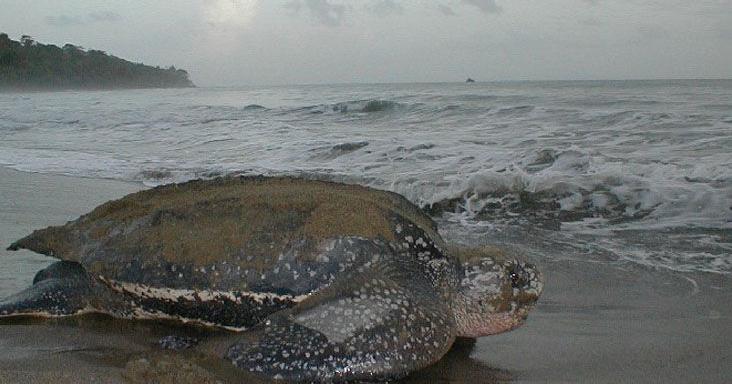
Across Trinidad and Tobago, critical sea turtle conservation work hangs in the balance as a years-long delay in dedicated environmental funding has left 23 local conservation groups stretched to breaking point. Arlene Williams, president of the Las Cuevas Eco Friendly Association Tours (LCEFAT) – a member of the national umbrella conservation body Turtle Village Trust – has sounded the alarm that the National Environmental Fund, more widely known as the Green Fund, has not released allocated funding to the trust since 2018, bringing core conservation activities to the brink of collapse.
Created under the 2000 Finance Act, the Green Fund was designed to provide sustained financial support for registered environmental organizations working across reforestation, ecological remediation, public environmental education, and habitat and species conservation work. Established in 2006, the Turtle Village Trust serves as the coordinating non-profit umbrella for every sea turtle conservation group operating across Trinidad and Tobago, currently supporting 23 community-led groups focused on key nesting habitats in locations including Grande Riviere, Matura, and Fishing Pond.
More than a decade ago, the trust submitted a 7-year National Sea Turtle Conservation Project proposal to the Green Fund, requesting TT $92 million to support its nationwide work. In the years when funding was disbursed, the money covered critical costs: living stipends for volunteer patrols that monitor nesting beaches overnight during nesting season, and the purchase of specialized equipment for population and nesting data collection. Today, with no new funding released, conservation activities across all member groups have fallen off dramatically.
“Funding was supposed to be released ahead of this year’s nesting season, which kicked off on March 1. We are now well into April, and still no funding has arrived,” Williams explained in an interview with the *Express*. “All of our groups are still turning out whenever we can, doing our best with what we have, but we lack the basic equipment to do the work properly.”
Williams highlighted the crisis facing her own community group in Las Cuevas, where stretched resources have gutted patrol capacity. “We used to have 10 volunteers patrolling this beach every night during nesting season. Now, without funding, there are only two of us covering the entire stretch of coast,” she said.
So far, the small dedicated team has managed to ward off poachers from accessing vulnerable turtle nests, but Williams says the team cannot sustain this level of work indefinitely – and is already draining personal finances to cover basic operational costs. “I don’t know how much longer we can keep this up. It’s physically and financially draining, right now we are using our own money to buy even the most basic supplies we need, including batteries for our patrol lights. A single pack of batteries we need for one night of patrols costs $209,” she noted.
In addition to the funding delay, Williams says conservation leaders have been unable to get a response from government authorities about the impasse. A recent donation of computers from the Ministry of Trade, Investment and Tourism to support digital data storage has done little to address the core staffing and supply crisis, as the understaffed patrol teams are unable to collect the volume of data the new equipment is meant to store.
If the funding deadlock is not broken quickly, Williams warns, sea turtle conservation across the entire country will suffer severe, irreversible damage. “Every one of the 23 groups across Trinidad and Tobago will be harmed, even the larger, more well-known programs,” she said.
Beyond unlocking the delayed Green Fund allocation, Williams is calling on three government bodies – the Ministry of Agriculture and Fisheries, the Ministry of Planning, Economic Affairs and Development, and the Environmental Management Authority – to step up enforcement of existing wildlife protection laws for sea turtles. “They post signs up and down the beaches spelling out the rules for protecting turtles, but where are the enforcement patrols? We need regular patrols from game wardens, especially during busy holidays and weekends when visitor numbers surge,” she said, adding that there have been no official government patrols on Las Cuevas beach since this year’s nesting season began.
When contacted for comment last week, Minister of Planning, Economic Affairs and Development Kennedy Swaratsingh confirmed that he is currently reviewing the funding issue and will issue a formal public statement in due course.