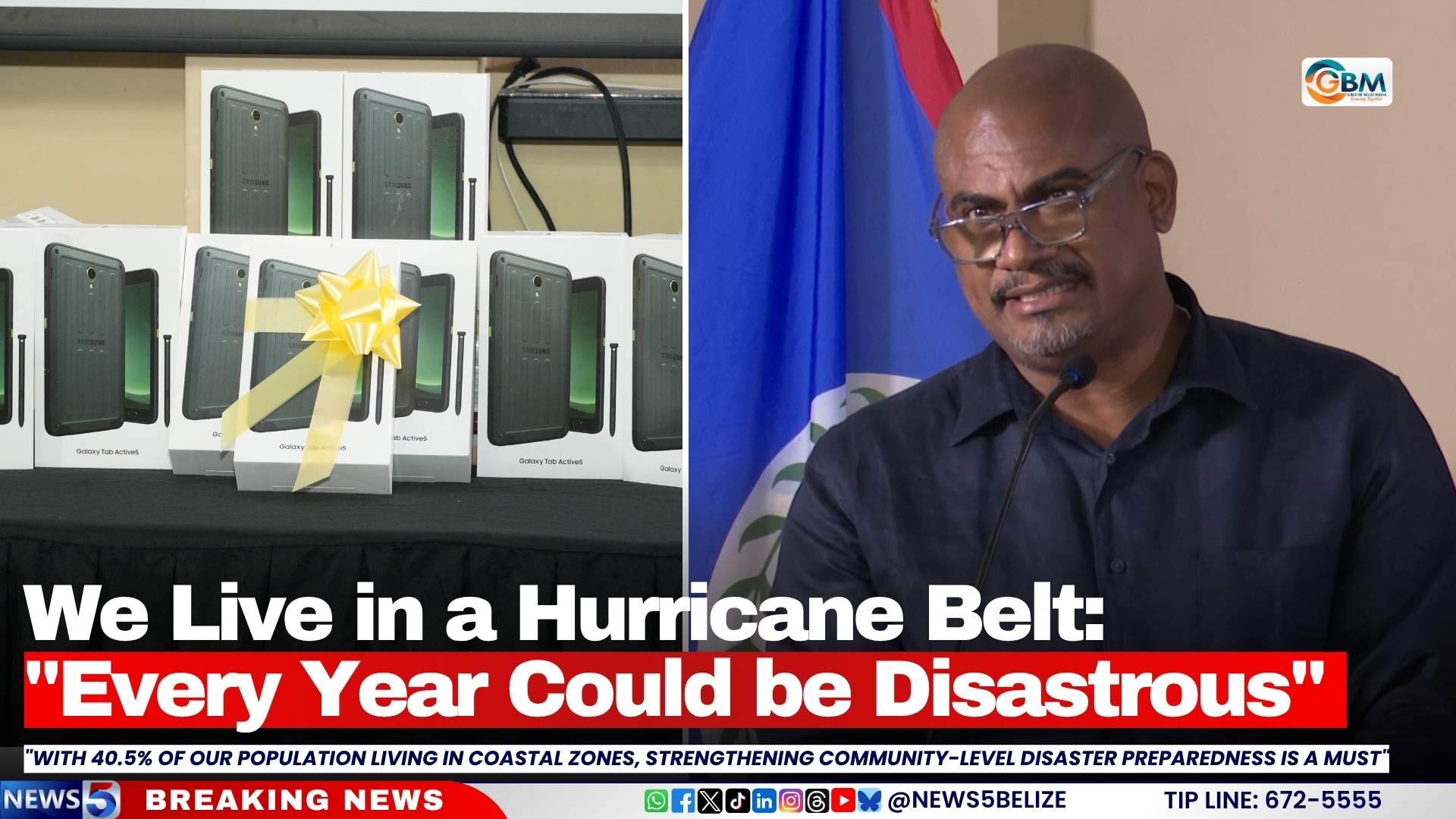
Against a backdrop of escalating climate-driven hazards that have made the Caribbean one of the most disaster-prone regions on Earth, Belize took a critical step forward on April 13, 2026 to reinforce its emergency preparedness with a new digital initiative. In an official handover ceremony, 30 Samsung tablets were delivered to frontline disaster management agencies, equipping on-the-ground responders with modern tools to confront the growing frequency and intensity of extreme weather events.
Dr. Colin Young, Executive Director of the Caribbean Community Climate Change Centre (CCCCC), one of the key partners backing the initiative, outlined the transformative role the new devices will play during active crises. Unlike traditional paper-based assessment methods that delay data sharing and analysis, these tablets will allow officials to gather actionable, on-location information in real time as emergencies unfold. “They’ll be capturing geo-referenced photos, building footprint observations, and rapid assessments during storms, floods, and other emergencies,” Young explained. Beyond the mobile devices, the project also delivers high-resolution satellite imagery, customized digital maps, and detailed vulnerability assessments that highlight high-risk communities across Belize, giving planners and responders clearer insight into where threats are most acute.
Young emphasized that technical equipment alone cannot deliver lasting improvement. To ensure long-term impact, the initiative includes structured training for at least 40 local officials, building sustained capacity within Belize’s disaster response ecosystem. When fully rolled out, project organizers estimate the benefits will reach hundreds of frontline workers directly, and thousands of at-risk community members indirectly, by cutting response times and improving the accuracy of emergency resource allocation.
Cordel Hyde, Belize’s Deputy Prime Minister and Minister of Natural Resources, used the ceremony to underscore the urgent climate reality that makes investments like this non-negotiable for his small coastal nation. Located squarely within the Atlantic hurricane belt, Belize faces the constant threat of catastrophic extreme weather, with risks growing worse each year due to climate change. “We live in a hurricane belt. Every year could be disastrous, literally every year or multiple times per year,” Hyde warned. He went on to outline the full scope of compounding threats Belize now confronts with increasing regularity: crippling droughts that undermine drinking water security, out-of-control wildfires, destructive river and coastal flooding, deadly landslides, and accelerating shoreline erosion that eats away at valuable coastal land and community infrastructure.
Hyde cited data from the International Monetary Fund (IMF) that puts the region’s long-standing disaster risk into stark perspective: of the 511 major disasters that have impacted small island developing states since 1950, roughly two thirds have occurred across the Caribbean. To date, these events have claimed more than 250,000 lives across the region, leaving a legacy of destruction and economic instability that persists for decades after each event. For Belize specifically, nearly 40.5% of the national population resides in low-lying coastal zones, putting hundreds of thousands of people directly in the path of storm surges, hurricane winds, and coastal erosion. “With 40.5% of our population living in coastal zones, strengthening community-level disaster preparedness is a must,” Hyde added.
The digital handover is part of a broader project titled “Strengthening Data Management Foundation for Disaster Risk Preparedness in Belize”, a joint collaboration between the CCCCC and the Coalition for Disaster Resilient Infrastructure (CDRI). The primary agencies set to benefit from the new tools and training are Belize’s National Climate Change Office (NCCO), the Lands and Survey Department, and the National Emergency Management Organisation (NEMO), the country’s lead agency for coordinating emergency response during large-scale disasters. This investment marks a key milestone in Belize’s ongoing efforts to build climate resilience and protect vulnerable communities from the growing impacts of global climate change.