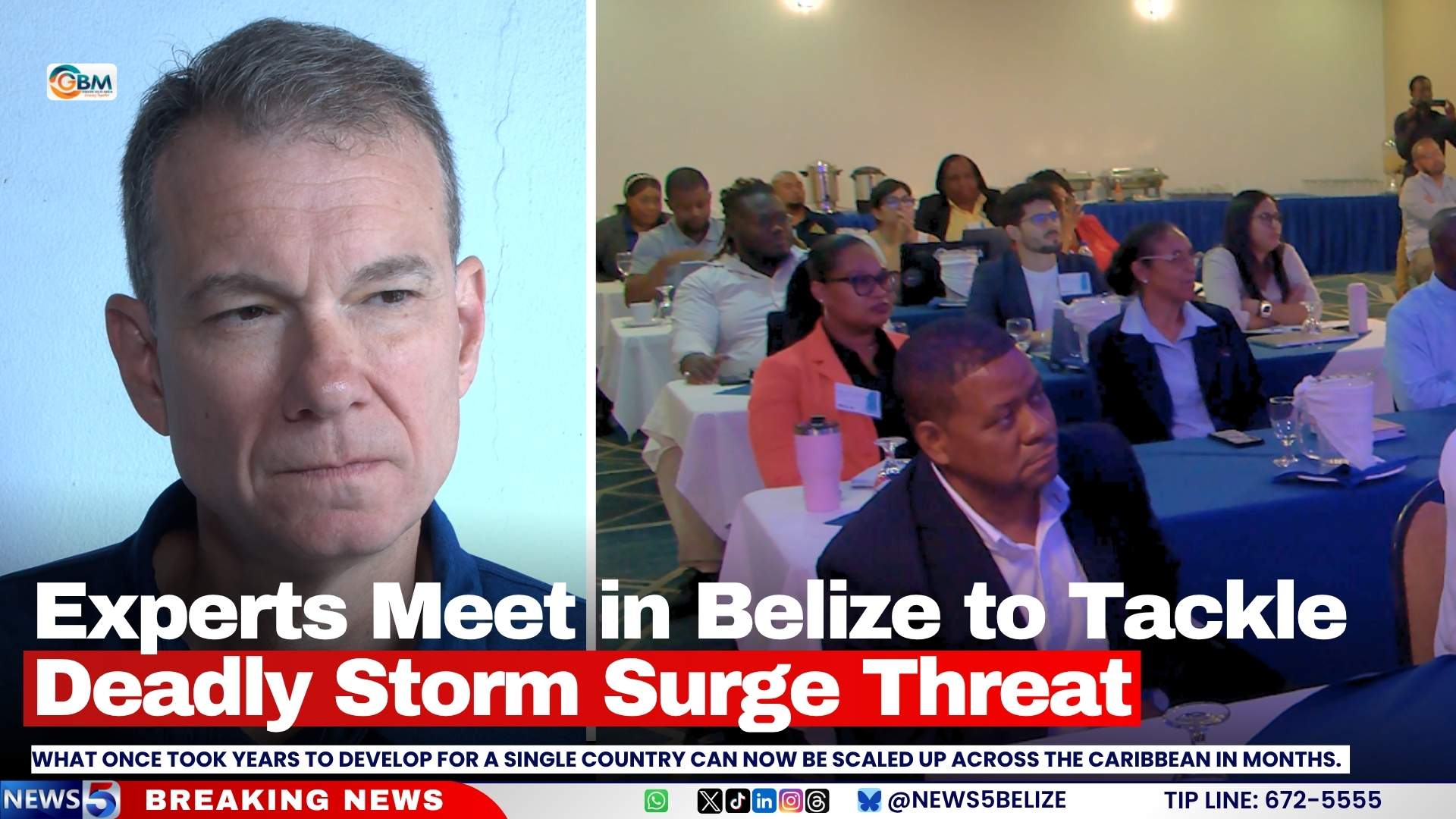
As the 2026 Atlantic hurricane season draws near, Belize is hosting a pivotal three-day high-level workshop that brings together top international climate scientists, meteorologists, and disaster risk management specialists to strengthen the nation’s ability to predict and prepare for deadly storm surge events. The workshop, backed by the U.S. National Hurricane Center and a coalition of global climate resilience partners, centers on upskilling local teams in cutting-edge storm surge modeling technology — a tool designed to simulate how hurricanes of varying intensity, forward speed, and approach angle would impact Belize’s low-lying, highly vulnerable Caribbean coastline.
Ronald Gordon, chief meteorologist at Belize’s National Meteorological Service, shared that the Central American nation was selected as an early beneficiary of this advanced modeling initiative due to its persistent high risk of catastrophic storm surge impacts. “As one of the most vulnerable countries in the Caribbean region to storm surge flooding, we were prioritized to gain access to this transformative technology through this international collaboration,” Gordon explained.
Jamie Rhome, deputy director of the U.S. National Hurricane Center, highlighted the dramatic leaps forward in storm surge forecasting technology that have made this regional expansion possible. In recent years, advances in computing power and data collection have drastically cut down development timelines for customized modeling systems: what once required years of work to build for a single country can now be deployed across multiple Caribbean nations in just a matter of months, Rhome noted. This speedier scaling means more at-risk coastal communities can access life-saving forecasting capabilities far faster than ever before.
For Belize’s disaster leadership, the workshop is more than a technical training — it is a chance to draw hard-won lessons from recent extreme weather events across the region. Henry Charles Usher, Belize’s Minister of Disaster Risk Management, pointed to Jamaica’s recent damaging encounter with Category 5 Hurricane Melissa as a critical case study for the nation. “This gathering gives us a unique opportunity to learn from regional experiences, refine our preparedness frameworks, and leverage new technology to keep our communities safe,” Usher said. “Ultimately, our goal is clear: protect lives, safeguard private and public property, and build the resilience we need to recover quickly if a major storm hits our shores.”
The collaborative initiative comes as climate scientists have recorded rising sea levels and increasing hurricane intensity across the Atlantic basin, putting more coastal communities like Belize at heightened risk of deadly storm surge flooding in recent decades. For this small Central American nation, investing in improved early warning and forecasting systems is a core step to reducing disaster risk ahead of what forecasters warn could be another active hurricane season.