标签: Suriname

苏里南

  • Rijstboeren krijgen padieprijs aangeboden van SRD 500–550 per baal

    Rijstboeren krijgen padieprijs aangeboden van SRD 500–550 per baal

    In a significant development for Suriname’s agricultural sector, rice farmers have secured substantially improved pricing following government-mediated negotiations. Minister Mike Noersalim of Agriculture, Livestock, and Fisheries (LVV) successfully facilitated an agreement that will see rice millers offering between SRD 500–550 per bale, a notable increase from the previously proposed SRD 300–400 range.

    The breakthrough emerged from comprehensive consultations involving multiple stakeholders, including Agriculture Minister Noersalim, Economic Affairs Minister Andrew Basaaron, parliamentary representative Ebu Jones, and Edmund Duiker, Chairman of the NOFA Fund. The discussions focused not only on immediate pricing concerns but also on establishing sustainable solutions for subsequent harvesting seasons.

    Ashwin Jagmohansing, President of the Nickerie Rice Farmers Interest Group Association (VBPN), expressed satisfaction with the outcome, stating he would return to his members with positive news. Approximately 20,000–22,000 hectares of rice have been planted for the current season.

    Minister Noersalim emphasized that while LVV maintains a mediator role in price determinations, the rice sector operates under a free-market system where prices are ultimately determined by supply and demand dynamics. The ministry’s intervention aims to streamline negotiations ensuring both producer satisfaction and continued rice production stability.

    Infrastructure improvements were also addressed, with Minister Noersalim confirming resolution of pumping station issues at Wakay and ongoing efforts to upgrade irrigation systems through public tenders.

    The pricing dispute represents a longstanding challenge in global agricultural markets, as noted by Economic Affairs Minister Basaaron, who highlighted regional developments influencing price structures. The current administration has committed to establishing comprehensive cost-calculation methodologies with broad stakeholder support.

    Parliamentarian Ebu Jones praised the collaborative approach, contrasting it with previous administrations’ priorities. He emphasized that fair pricing for farmers would ultimately benefit consumers through potentially lower market prices for rice products, creating a win-win scenario for both producers and the broader society.

  • Staatstelevisie Teheran bevestigd dood Ayatollah Ali Khamenei

    Staatstelevisie Teheran bevestigd dood Ayatollah Ali Khamenei

    In a seismic development that has shaken the Middle East’s geopolitical landscape, Iranian state television has officially confirmed the death of Supreme Leader Ayatollah Ali Khamenei, 86, along with several family members during coordinated airstrikes on his residence. The announcement marks an unprecedented moment in Iran’s modern history, ending Khamenei’s 37-year reign as the Islamic Republic’s highest authority.

    American President Donald Trump initially disclosed the operation, characterizing it as a successful joint mission between United States and Israeli forces. According to Trump’s statement, Khamenei and associated Iranian officials were unable to evade sophisticated American intelligence tracking systems. Israeli Prime Minister Benjamin Netanyahu subsequently reinforced these claims, citing mounting evidence confirming the Supreme Leader’s demise.

    The tragedy extends beyond political implications, with confirmation that Khamenei’s daughter, son-in-law, and granddaughter also perished in the attack. Iranian media delivered the news through solemn programming, withholding specific operational details while acknowledging the multidimensional loss.

    Following constitutional protocols, Iran has declared 40 days of national mourning alongside seven days of official holiday periods. Regional analysts anticipate intense political maneuvering within Iran’s religious hierarchy as the Assembly of Experts convenes to select Khamenei’s successor—a process that could fundamentally reshape Iran’s domestic policies and international relations.

    Global observers are monitoring Tehran’s transition with heightened alertness, recognizing Iran’s substantial influence across Middle Eastern affairs and global energy markets. The unprecedented nature of this event suggests potential volatility in regional stability, with particular attention on Iran’s proxy networks and nuclear policy trajectory.

  • SEOB waarschuwt: economie blijft fragiel, strikte discipline en hervormingen noodzakelijk

    SEOB waarschuwt: economie blijft fragiel, strikte discipline en hervormingen noodzakelijk

    The Suriname Economic Oversight Board (SEOB) has issued a stark warning about the nation’s ongoing economic fragility in its latest February 2026 bulletin. While acknowledging certain stabilizing factors including robust banking institutions and relatively strong reserve positions, the independent monitoring body highlighted several critical concerns that continue to threaten macroeconomic stability.

    The report reveals accelerating inflation rates, persistent government deficits, and national debt levels soaring significantly above the internationally accepted threshold of 60% of GDP. This elevated debt ratio presents substantial risks to economic stability according to the oversight board’s analysis.

    In response to these challenges, the SEOB has presented comprehensive recommendations centered on implementing strict fiscal discipline. Key proposals include enhancing fiscal transparency, developing coherent medium-term tax policy frameworks, establishing five-year government financial plans with expenditure ceilings, and implementing sustainability targets for total public debt.

    The board specifically addressed concerns regarding substantial government subsidies, particularly in the electricity sector. Recommendations call for transparent divestment of non-strategic, loss-making state enterprises that require significant subsidies and the formal proclamation of procurement legislation to ensure transparency and cost control in government contracts.

    Looking toward anticipated offshore oil revenues, the SEOB emphasized the urgent need to strengthen and operationalize critical institutions including the Savings and Stabilization Fund (SSFS). The organization stressed that transparency and anti-corruption mechanisms must be fully established before substantial revenue inflows begin.

    To reduce mining sector dependency, the report advocates for active economic diversification efforts prioritizing agricultural development (including fisheries and processing), service sector expansion, ecotourism, and collaborative production and export growth strategies between government and private enterprises.

    The bulletin also addressed debt management and monetary policy coordination, highlighting the necessity of active debt management given current debt levels and ensuring proper alignment between fiscal and monetary policies to contain inflationary pressures and stabilize the Surinamese dollar. Maintaining central bank independence in accordance with the 2022 Central Bank Act remains paramount.

    Finally, the SEOB underscored that sustainable economic recovery depends not merely on statistical improvements but equally on building confidence through consistent policy implementation and clear communication regarding socioeconomic strategy for the coming years.

  • Toepassing van aangeleerde landbouwkennis nóg belangrijker dan training

    Toepassing van aangeleerde landbouwkennis nóg belangrijker dan training

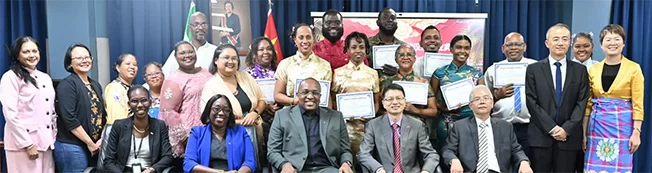
    Coronie, one of Suriname’s most agriculturally significant districts, has successfully concluded an intensive three-month training program on Traditional Compost production, marking a substantial advancement in sustainable farming practices. The program, which commenced on November 20, 2025, focused on mastering the complete process of creating traditional compost, locally known as ‘blaka doti.’

    William Waidoe, Deputy Director of Western Agriculture at the Ministry of Agriculture, Livestock and Fisheries (LVV), emphasized during the closing ceremony that while training remains crucial, the practical application of acquired knowledge holds even greater importance. He highlighted Coronie’s exceptionally fertile soil as ideally suited for agricultural development and reaffirmed LVV’s role as the authoritative body providing essential knowledge transfer to realize this potential.

    A notable aspect of the Coronie training was the overwhelming participation of women, who constituted the majority of attendees. Among them was Leonie Kerseboom-Lynch, a professional midwife who immediately implemented her training by constructing a compost heap alongside her husband to support his agricultural activities. Her primary motivation stemmed from composting’s environmental benefits, noting that the process not only offers sustainable organic waste management but also creates potential revenue streams through surplus compost sales while contributing to cleaner living environments.

    This training initiative forms part of the broader ‘Strengthening of Citrus Production’ project, funded by the Inter-American Development Bank (IDB). The project aims to enhance Suriname’s citrus production capabilities through improved facilities at LVV citrus nurseries and the production of high-quality planting materials. Quality growth medium in plant bags has been identified as essential to this endeavor, prompting the establishment of compost camps and training sessions across various LVV ressort offices, experimental gardens, and nurseries for both ministry staff and interested community members.

    Soesila Ramautar of the Directorate of Agricultural Research, Marketing and Processing (DLOAV), who led the training with her team, expressed considerable satisfaction with the outcomes. This event marked Coronie’s first participation in compost training at this level and represented the final compost training activity within the IDB-funded citrus project framework.

  • SABI Literatuurfestival 2026: lezing over Bea Vianen biedt inzichten in haar literaire loopbaan

    SABI Literatuurfestival 2026: lezing over Bea Vianen biedt inzichten in haar literaire loopbaan

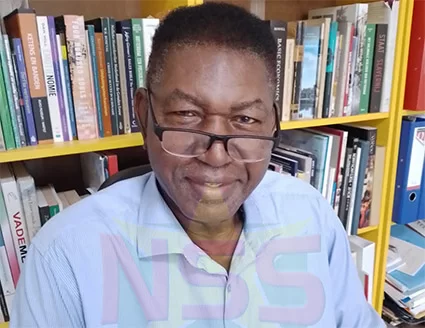
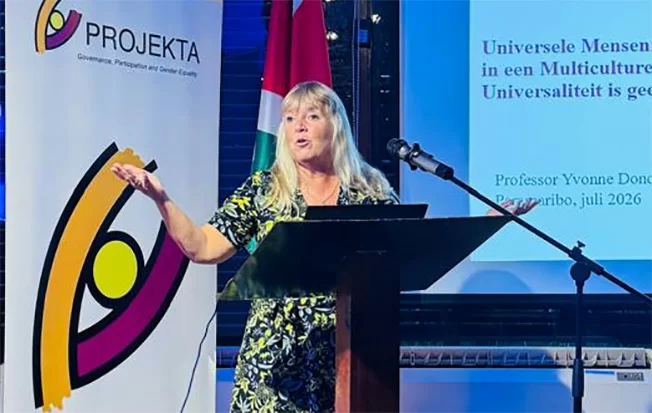
    The SABI Literature Festival 2026 commenced on Friday with an illuminating lecture by literary scholar Thalia Ostendorf focusing on the groundbreaking work of Surinamese author Bea Vianen. The opening event took place at the library of the Anton de Kom University of Suriname, setting the stage for a celebration of Surinamese literary heritage.

    Coco Duivenvoorde, Director of Villa Zapakara, initiated proceedings by outlining the successful reading promotion project recently conducted in collaboration with Skrifi foundation. The initiative included an extensive reading tour reaching children across Paramaribo and multiple districts including Marowijne, Sipaliwini, Brokopondo, Saramacca, Coronie and Nickerie, complemented by a dedicated children’s book festival.

    Ostendorf’s presentation highlighted Vianen’s complex legacy as the first Surinamese woman published by a Dutch publishing house in 1969 – a distinction she characterized as ‘dubious’ given the delayed recognition and the persistent Dutch standards applied to Surinamese diaspora writers. The academic meticulously analyzed Vianen’s complete literary corpus, noting that all but one of her novels are set in Suriname and consistently explore the nation’s multicultural fabric, particularly where cultural tensions create personal and social friction.

    The analysis traced Vianen’s evolving narrative approach across her works: from the constrained adolescence of Sita in ‘Sarnami hai’ (1969), through the political turmoil of ‘Strafhok’ (1970) examining predetermined guilt during civil service strikes, to the boarding school dynamics of ‘Ik eet, ik eet, tot ik niet meer kan’ (1972). Ostendorf particularly emphasized ‘Het paradijs van Oranje’ (1973), which dissects the failed migration dream to the Netherlands, and ‘Geen onderdelen’ (1979), which explores Muslim-Hindu tensions through the lens of a writer returned from Holland.

    The lecture’s second segment revealed Ostendorf’s ongoing biographical research on Vianen, noting the significant challenge posed by the absence of a preserved writer’s archive. The scholar described her painstaking process of locating scattered documents and conducting interviews with those who knew Vianen, particularly within Suriname. The audience responded enthusiastically, with many expressing hope for future lectures on Surinamese literary figures.

    The SABI Literature Festival aims to establish itself as a comprehensive platform showcasing the diverse facets of Surinamese literature, creating space for public engagement, creative dialogue, and artistic innovation beyond comfort zones. This multi-day celebration honors both the richness and ongoing evolution of the nation’s literary tradition, spotlighting writers, musicians, and creators who have shaped and continue to refresh the literary landscape.

    The inaugural program continues with additional events including a musical lecture by Xillan Macrooy across venues including Souposo, Spice Quest, and the Anton de Kom library. The festival is organized by Stichting Skrifi with support from the Dutch Foundation for Literature.

  • Essentiële bijdrage vrouwen in landbouw blijft onderbelicht

    Essentiële bijdrage vrouwen in landbouw blijft onderbelicht

    In Suriname’s agricultural sector, women have historically formed the backbone of food production and rural economies while receiving minimal recognition for their substantial contributions. Despite their pervasive involvement across the entire agricultural value chain—from crop cultivation and livestock rearing to aquaculture, food processing, and entrepreneurial ventures—female farmers continue to face systemic marginalization in public discourse and policy-making arenas.

    These women significantly enhance national food security, bolster rural livelihoods, and strengthen economic resilience through their diverse roles. Particularly in rural communities, female-led agricultural activities are intrinsically linked to household income stability and overall community welfare. Beyond economic contributions, women also bear critical responsibilities in household nutrition and family well-being.

    However, structural barriers persistently hinder women’s full participation and productivity. Challenges including limited access to land ownership, financial resources, modern technologies, specialized training, and market opportunities constrain their potential and impede sector-wide innovation. Addressing these obstacles is not merely a gender equality issue but a strategic imperative for sustainable development and long-term food security.

    In a transformative step toward recognition and empowerment, Suriname will host the Women in Agriculture Fair on International Women’s Day, March 8th. This landmark event—organized by the Ministry of Agriculture, Livestock, and Fisheries with support from the Inter-American Institute for Cooperation on Agriculture and funding from the Inter-American Development Bank—will provide a platform for female farmers, processors, entrepreneurs, and researchers to showcase their products, services, and innovations.

    The fair will facilitate crucial connections between women producers and consumers, potential partners, and policy makers, thereby enhancing visibility and creating new opportunities. By celebrating women’s achievements and fostering collaborative networks, Suriname aims to strengthen its agricultural sector while building a more inclusive and resilient future for generations to come.

  • Iran vuurt raketten af op Golfstaten: dode in Abu Dhabi, internationale reacties op escalatie

    Iran vuurt raketten af op Golfstaten: dode in Abu Dhabi, internationale reacties op escalatie

    The Middle East witnessed a significant escalation in regional tensions on Saturday as Iran launched coordinated rocket attacks against multiple Gulf states in retaliation for previous American and Israeli airstrikes. The offensive marks a dangerous expansion of conflict into a region traditionally known for its relative stability and security.

    Abu Dhabi confirmed at least one fatality from the attacks, with officials reporting powerful explosions and thick plumes of smoke across multiple neighborhoods. Bahrain announced that a service center belonging to the US Fifth Fleet had been directly hit, while eyewitnesses described scenes of gray smoke rising amid blaring sirens.

    Several nations successfully intercepted incoming rockets before they reached their territories. Kuwait, Qatar, and Jordan activated defense systems to neutralize threats, while residents in Doha reported multiple explosions throughout the capital. Initially, many citizens continued daily activities until official warnings urged sheltering indoors, resulting in dramatically reduced street presence and traffic flow.

    International aviation authorities responded by closing airspace across the Middle East, with flight tracking data revealing virtually empty skies above Iran and surrounding nations.

    The international community expressed grave concerns through multiple channels. The European Union described the situation as “deeply worrying” and called for maximum restraint from all parties, emphasizing civilian protection and adherence to international law. European Commission President Ursula von der Leyen and European Council President António Costa jointly stressed the critical importance of calm and diplomatic engagement.

    The International Red Cross Committee warned of a “dangerous chain reaction” of military violence potentially devastating civilian populations. President Mirjana Spoljaric urged nations to respect rules of engagement and demonstrate political will to prevent further casualties and destruction.

    Oman, serving as primary mediator in US-Iran negotiations, expressed concern about the violence, with Foreign Minister Badr Albusaidi warning that escalation serves neither US interests nor global peace, urging Washington to avoid deeper entanglement.

    France announced plans to convene an emergency UN Security Council meeting, with President Emmanuel Macron labeling the escalation dangerous and calling on Iran to negotiate “in good faith” regarding nuclear and ballistic missile programs to prevent regional destabilization.

    Qatar condemned the attacks on its territory—where the US Al Udeid Air Base is located—as a flagrant violation of sovereignty and direct threat to national security, reserving its right to respond under international law.

    The UAE denounced the attacks in “the strongest terms,” characterizing them as “dangerous escalation” and “cowardly acts” threatening civilian safety. Bahrain similarly described the Fifth Fleet attack as “treacherous,” while Kuwait warned that further escalation would deepen regional instability.

    Saudi Arabia issued its strongest condemnation of the attacks and warned of serious consequences. Pakistan joined in condemning the violence while calling for immediate de-escalation through resumed diplomatic negotiations.

    Russia accused the US of masking military actions behind nuclear talks and urged the international community to objectively assess “irresponsible actions” further destabilizing the region.

    Ukraine held Iran responsible for the escalation, referencing Tehran’s harsh crackdown on protests earlier this year. Norway stated that Israel’s preventive attack violated international law without demonstrating immediate threat requirements.

    Belgium lamented that diplomatic efforts failed to achieve earlier resolution, emphasizing that the Iranian people should not bear the cost of their government’s policies.

  • Burn-out bij de politie is groeiend probleem

    Burn-out bij de politie is groeiend probleem

    A groundbreaking study conducted at Suriname’s De Nieuwe Grond police station has exposed a critical burnout epidemic among law enforcement officers, revealing systemic causes that threaten both officer welfare and national security effectiveness. The research, spearheaded by serving police officer and Academy for Higher Art and Cultural Education graduate Dharmveer Balai, identifies chronic physical and emotional exhaustion, overwhelming workloads, and deficient leadership support as primary drivers of this occupational health crisis.

    Officers reported severe symptoms including impaired concentration, heightened irritability, and pervasive feelings of powerlessness, with multiple cases requiring mandatory medical leave prescribed by police physicians. The investigation highlights a dangerous cyclical pattern: absenteeism due to stress-related illnesses increases pressure on remaining staff, subsequently triggering further burnout cases and ultimately compromising street safety, operational budgets, and public trust in law enforcement.

    Balai’s research advocates for implementing Work-Focused Cognitive Behavioral Therapy (W-CGT) as a targeted intervention. This innovative approach actively engages the workplace environment in the recovery process, enabling officers to progressively regain control over their professional responsibilities with crucial support from supervisors and colleagues. “Within a profession where teamwork and operational readiness are paramount, this methodology proves exceptionally valuable,” Balai emphasized.

    The study proposes comprehensive recommendations across three organizational tiers:
    – Micro-level: Enhanced mental resilience training and psychological support following traumatic incidents
    – Meso-level: Formal recognition programs for officers and revised scheduling systems to reduce pressure
    – Macro-level: Institutionalized psychosocial support frameworks and ongoing stress management initiatives

    While acknowledging research limitations due to its single-station focus and modest sample size, the findings provide actionable insights for potential corps-wide implementation. Balai stresses that the Suriname Police Force (KPS) must cultivate an organizational culture that prioritizes mental health, ultimately benefiting officer wellbeing, service delivery quality, public perception, and community confidence in policing institutions.

  • Internationale reacties op VS-Israël aanval op Iran: toenemende spanningen, oproep tot kalmte

    Internationale reacties op VS-Israël aanval op Iran: toenemende spanningen, oproep tot kalmte

    A coordinated military operation conducted by United States and Israeli forces against Iranian targets early Saturday has triggered international condemnation and significantly heightened geopolitical tensions across the Middle East. Dubbed ‘Operation Epic Fury,’ the offensive targeted Iran’s nuclear facilities and military infrastructure, prompting immediate retaliatory measures from Tehran and drawing sharp responses from global powers.

    The United Nations and European Union issued urgent calls for restraint and diplomatic engagement following the attacks. UN Secretary-General António Guterres emphasized the critical importance of adhering to international law and avoiding further escalation, while EU representatives expressed deep concern that military action could undermine ongoing diplomatic efforts.

    Russia and China delivered particularly strong condemnations of the operation. Moscow characterized the strikes as ‘an irresponsible provocation that unnecessarily exacerbates regional tensions,’ while Beijing warned that such military actions ‘seriously undermine Middle Eastern stability’ and urged immediate return to dialogue.

    The military confrontation has triggered significant security responses across the Gulf region. Multiple nations have enhanced their military readiness, implemented temporary flight restrictions, and canceled commercial air traffic as precautionary measures. Bahrain’s American Fifth Fleet service center reportedly sustained damage from rocket attacks, while Israel temporarily closed its airspace to civilian flights.

    Iranian leadership, including Supreme Leader Ayatollah Ali Khamenei and President Masoud Pezeshkian, were specifically mentioned as targets, though the extent of impact remains unclear. Tehran has responded with missile and drone strikes against Israeli positions and issued threats toward American interests throughout the region.

    Political leaders from the attacking nations defended their actions. U.S. President Donald Trump characterized the operation as ‘necessary for American security’ and encouraged Iranian citizens to ‘reclaim their leadership when appropriate conditions are established.’ Israeli Prime Minister Benjamin Netanyahu framed the offensive as an opportunity for Iranians to ‘cast off the yoke of tyranny.’

    The confrontation follows months of strained diplomatic negotiations between Washington and Tehran regarding Iran’s nuclear program. While Iran had demonstrated willingness to make concessions in exchange for sanctions relief, it consistently refused limitations on its ballistic missile development.

    In the aftermath, Iran has announced plans to accelerate its missile program and implement additional military countermeasures. State media reports indicate new missile tests have been conducted and the Revolutionary Guard has been placed on heightened alert.

    The UN Security Council has convened an emergency session to address the crisis, with numerous member states advocating for immediate cessation of hostilities and resumption of diplomatic talks. The EU has announced additional sanctions targeting specific Iranian military entities while simultaneously calling for de-escalation.

    Regional economic implications have already emerged, with global oil prices experiencing significant increases following the attacks. Analysts warn that prolonged conflict could have far-reaching consequences for energy security and geopolitical stability worldwide. Both the U.S. and Israel have indicated readiness for further military action should Iran continue what they term ‘aggressive activities’ and nuclear weapons development, even as diplomatic efforts toward a new nuclear agreement continue despite diminishing prospects for swift resolution.

  • VS en Israël vallen Iran aan; Iran reageert met raket- en droneaanvallen

    VS en Israël vallen Iran aan; Iran reageert met raket- en droneaanvallen

    The Middle East has plunged into heightened military confrontation following coordinated pre-dawn offensive operations by United States and Israeli forces against multiple Iranian targets. This escalation marks a significant deterioration in regional stability, transforming long-simmering tensions into open warfare.

    According to verified international reports, the joint military campaign struck strategic locations across Iran including the capital Tehran and major urban centers such as Isfahan, Qom, and Karaj. The operation specifically targeted Iran’s long-range missile capabilities and nuclear infrastructure, which Western intelligence agencies have repeatedly identified as threats to regional security.

    US President Donald Trump characterized the mission as “major combat operations” designed to eliminate imminent security threats and prevent Tehran from acquiring nuclear weapons. The administration emphasized that these measures were necessary to protect American allies and maintain stability in the volatile region.

    Iran responded with immediate countermeasures, launching missile and drone attacks against Israeli positions. The Islamic Revolutionary Guard Corps confirmed these retaliatory strikes, labeling the initial assault as “hostile criminal aggression.” Residents in northern Israel reported audible explosions and anti-aircraft activity as the Israeli Defense Forces intercepted incoming projectiles. Civil defense sirens were activated across multiple regions, prompting civilians to seek shelter.

    The rapid exchange of hostilities has raised concerns among international observers about potential further escalation, with diplomatic channels working urgently to de-escalate the situation before it evolves into a broader regional conflict.