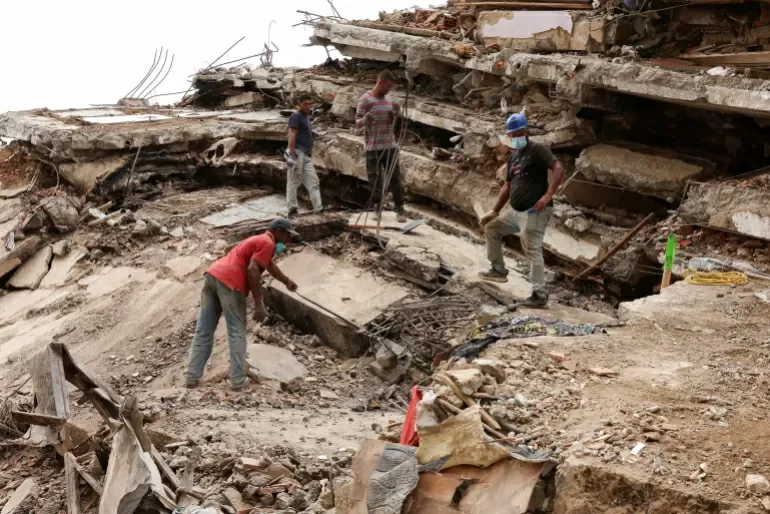
Three weeks have passed since two powerful back-to-back earthquakes struck northern Venezuela, but for hundreds of grieving families across the hard-hit coastal region of La Guaira, the agonizing search for missing loved ones buried beneath collapsed buildings remains far from over. The official death toll from the June 24 quakes – registering magnitudes 7.2 and 7.5 respectively – has already climbed past 5,000, leaving thousands more families trapped in a devastating limbo between confirmed loss and unresolved uncertainty.
标签: Suriname
苏里南
-
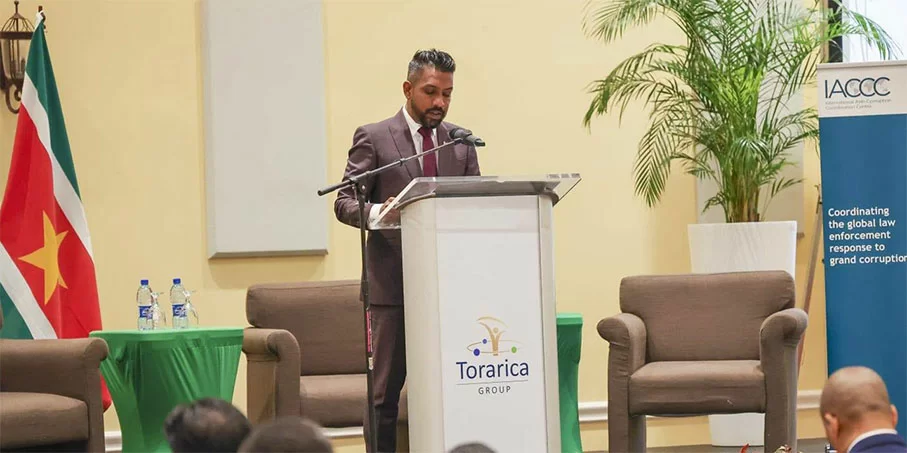
Manorath: Corruptiebestrijding begint bij integriteit en preventie
On July 22, at the opening of Suriname’s national Anti-Corruption Congress, Minister of Justice and Police Harish Monorath laid out a new, multi-pronged approach to combating systemic corruption, arguing that detection and prosecution alone are not enough to root out the problem. Speaking to an audience of national and international experts, Monorath emphasized that long-term success in the fight against corruption requires targeted investment in prevention, institutional strengthening, transparency, and a widespread societal culture rooted in integrity.
“Corruption poses a severe threat to every democratic rule of law, and it holds back the socio-economic development of our nation,” Monorath stated during his opening address. He stressed that anti-corruption work cannot fall solely to the government; it requires shared responsibility across the private sector, civil society organizations, and individual citizens. An accountable, integrity-driven governance culture can only take hold, he argued, when every segment of Surinamese society fulfills its distinct role in upholding ethical standards. The minister also expressed appreciation for the congress, which brought together specialists from across borders to exchange knowledge, best practices, and lived experience in designing effective anti-corruption frameworks.
Monorath confirmed that the Surinamese government is currently advancing a more robust, impact-oriented national anti-corruption agenda, with core priorities including modernizing outdated anti-corruption legislation, strengthening the capacity of state institutions, and embedding integrity standards across all levels of the public sector. He revealed that dozens of new legislative proposals from the Ministry of Justice and Police are currently in preparation or under parliamentary review, all designed to further reinforce the country’s rule of law framework.
International cooperation remains a central pillar of Suriname’s strategy, Monorath noted. The country aligns its national policies with the United Nations Convention Against Corruption (UNCAC), which provides a globally recognized framework for corruption prevention, criminal prosecution, cross-border collaboration, and the recovery of assets gained through corrupt activity.
The minister highlighted that public officials bear a unique responsibility to model ethical behavior, noting that integrity, transparency, and accountable leadership must be visible in the daily work of government. To embed this standard, the administration is pushing forward new initiatives focused on ethical leadership training, formal codes of conduct for civil servants, and binding legal protections for whistleblowers who report corrupt activity.
Repeating his core argument, Monorath emphasized that preventive measures are ultimately more effective at reducing systemic corruption than purely punitive action. The government’s anti-corruption strategy rests on six core pillars: greater transparency, open government practices, institutional strengthening, whistleblower protection, international collaboration, and active civil society engagement. He also called for expanded investment in integrity education, to help young people understand the value of fair governance and the rule of law from an early age.
In closing, Monorath called on all Surinamese citizens to take personal ownership of building an integrity-focused nation. “Integrity starts with personal responsibility. It is a choice we make, even when no one is watching,” he told attendees. Only when corruption is no longer normalized, and public trust in government and its institutions is strengthened, can Suriname achieve truly sustainable development, he added.
-
Rasoelbaks: Corruptie jaagt investeerders weg en vraagt om nieuwe manier van opsporen
On Tuesday, during a national Anti-Corruption Congress held in Paramaribo, the president of Suriname’s High Court, Iwan Rasoelbaks, delivered a stark warning about the far-reaching damage systemic corruption inflicts on the South American nation, outlining sweeping changes needed to effectively combat the growing crisis.
Rasoelbaks emphasized that corruption is not merely a threat to Suriname’s rule of law—it erodes the country’s economic potential, fuels rising criminal activity, and destroys public and investor confidence in state institutions. In his opening address, the court president laid out the cascading harms of unchecked graft: it creates unfair, unequal distribution of national wealth, traps communities in long-term underdevelopment, pushes up rates of organized and street crime, and steadily erodes public trust in government. When a nation’s commitment to institutional integrity declines, he added, international investors and global development organizations also grow increasingly hesitant to commit capital or long-term partnerships to the country.
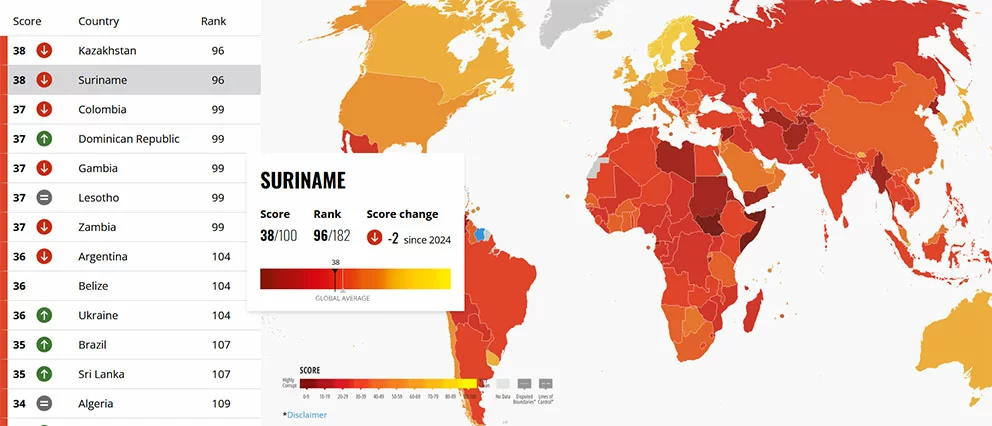
To contextualize Suriname’s current standing, Rasoelbaks pointed to leading global governance rankings, including Transparency International’s annual Corruption Perceptions Index and the World Justice Project’s Rule of Law Index. Both metrics, he noted, make clear that Suriname still must take substantial, meaningful action to strengthen its rule of law frameworks and mount more effective anti-corruption campaigns. As a model for successful reform, he pointed to Singapore, which has built its reputation as one of the world’s least corrupt nations through targeted investments in strong independent institutions, radical government transparency, and specialized anti-corruption enforcement frameworks.
A core pillar of Rasoelbaks’ argument centered on the need for a fundamentally new approach to corruption investigations, one that diverges sharply from the methods used in traditional criminal cases. Unlike standard criminal probes, which typically rely on witness testimony, forensic evidence, or in-the-act arrests, corruption investigations almost always begin with a different set of indicators: suspicious financial flows, anomalous banking transactions, complex offshore tax structures, and unexplained sudden growth in personal or corporate assets. This fundamental difference in how corruption occurs and is uncovered, he argued, requires an entirely new investigative mindset and operational framework.
That shift, Rasoelbaks explained, requires police, public prosecution services, and all other law enforcement agencies to update their technical skills and core working practices. Financial investigation, detailed analysis of corporate accounting records and financial reports, tracking of digital transaction trails, and untangling complex cross-border asset structures are now core, non-negotiable skills for anti-corruption work. “On each of these points, corruption investigations differ fundamentally from traditional criminal investigations,” Rasoelbaks told attendees at the congress.
In closing, the High Court president stressed that countries that have successfully curbed corruption do not rely solely on stricter anti-graft legislation. Instead, they prioritize building strong independent institutions, investing in specialized investigative training, embedding transparency across all levels of government, expanding international cooperation on cross-border graft cases, and entrenching principles of good governance. For Suriname to rebuild trust among its citizens, attract much-needed foreign investment, strengthen partnerships with global bodies, and unlock long-term sustainable economic development, Rasoelbaks said, the nation must follow this same path of reform.
-
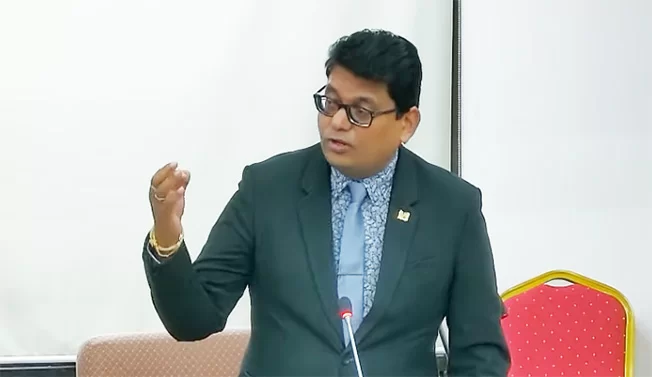
Gajadien waarschuwt voor nieuwe schulden; Parmessar: Laten we niet vooruitlopen
A planned official visit to the United Kingdom by Suriname’s President Jennifer Simons and Finance Minister Adelien Wijnerman has sparked heated political debate in the country’s National Assembly, with opposition and ruling party lawmakers clashing over the terms of upcoming financial discussions with international institutions. The trip, set to depart July 22 and conclude with the delegation’s return on Sunday, will focus on exploring investment and financing opportunities for Suriname, particularly tied to the ongoing expansion of the nation’s oil and gas sector. Key meetings on the agenda include discussions with representatives from Bank of America and global offshore energy firm Subsea7.
VHP (Vooruitstrevende Hervormingspartij) opposition faction leader Asis Gajadien opened the discussion by issuing a formal warning to the Surinamese government, demanding that it strictly adhere to existing legal frameworks governing the accumulation of new national sovereign debt. Gajadien emphasized that all new borrowing must align with the national debt plan already approved by the National Assembly, stressing that no unnecessary debt burdens should be placed on the Surinamese public amid ongoing economic recovery efforts.
In addition to his warning on future borrowing, Gajadien raised questions about a delayed regulatory filing: according to Surinamese law, the National Debt Bureau was required to publish its annual public report by June 1 of this year, but the document has still not been released to the legislature or the public. He also noted that National Assembly Speaker Ashwin Adhin has not issued any formal public announcement confirming President Simons’ upcoming travel schedule, a departure from standard transparency protocols.
“I am simply calling on all relevant authorities to abide by existing legal requirements,” Gajadien told the assembly, adding that heightened vigilance is necessary as the government enters talks over financing for future national development projects.
Ruling NDP (Nationale Democratische Partij) faction leader Rabin Parmessar pushed back against Gajadien’s warnings, dismissing the opposition’s concerns as premature and unfounded. Parmessar clarified that the upcoming meetings in the UK are only exploratory discussions focused on mapping potential investment and financing pathways, and do not signal that the government has already made a final decision to take on new sovereign debt.
“Let us not jump to conclusions before we have full information,” Parmessar stated. He reiterated that Suriname already has a formally approved national budget and debt plan in place, and the government is legally bound to operate within those existing frameworks. No misleading narratives or unfounded expectations should be spread before the outcomes of the UK meetings are made public, he added.
The parliamentary debate was triggered after public confirmation emerged that Simons and Wijnerman would travel to the UK to meet with representatives from global financial institutions and private energy firms to advance Suriname’s economic development goals, centered on unlocking growth in the country’s emerging oil and gas industry.
-
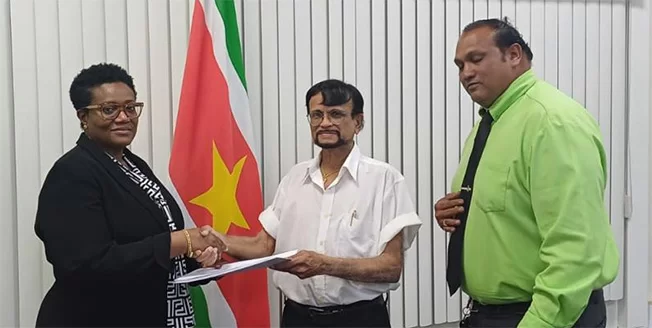
DNL biedt ontwerpwetten aan voor lokale participatie en belastingheffing aan minister Wijnerman
PARAMARIBO – July 21 – Extra-parliamentary Surinamese political organization De Nieuwe Leeuw (DNL) has delivered two key draft pieces of legislation to Minister of Finance and Planning Adelien Wijnerman, aiming to establish a robust regulatory framework for the country’s anticipated growth in the oil, gas and mining sectors. The draft bills focus on local content requirements and transfer pricing regulation, respectively, and were formally presented on Tuesday by DNL chair Dharmvir Mungra and deputy chair Yerry Khoesial.
DNL officials note the legislative proposals were developed with input from both in-house specialists and independent external experts, designed to advance long-term, sustainable economic expansion across Suriname’s burgeoning extractive industries. According to the party, Wijnerman received the drafts positively, confirming that the proposals align directly with investment and offshore development talks she will hold this week alongside Suriname President Jennifer Simons in the United Kingdom.
The proposed Local Content Law is structured to ensure that foreign investment in Suriname’s extractive sectors delivers broader shared benefits to domestic businesses, local workers, and national knowledge institutions. Core provisions of the bill prioritize skills training and knowledge transfer, formal collaboration between foreign operators and local educational and research bodies, and the creation of an independent oversight council to monitor compliance with the law’s requirements. DNL emphasizes that the draft has been crafted to align fully with international trade regulations and existing contractual obligations held by the Surinamese government.
The second draft legislation, focused on transfer pricing regulation, is intended to close tax loopholes that allow multinational companies to shift profits earned in Suriname to low-tax jurisdictions with more favorable tax regimes. The draft aligns with international standards set by the Organisation for Economic Co-operation and Development (OECD), and includes clear rules for setting arm’s-length transfer prices between affiliated entities, mandatory documentation requirements for corporate taxpayers, and the establishment of an advisory body to support the Suriname Tax Administration in resolving complex cross-border tax issues.
DNL points out that these two new drafts, paired with an investment law draft the party submitted previously, form a cohesive, interconnected regulatory framework for the sector. Together, the package is designed to expand local participation in large-scale extractive investment projects while ensuring fair and complete tax contribution from operating companies. The party states its goal with the legislative proposals is to help build a transparent, sustainable investment climate that allows Suriname to capture the maximum possible economic benefit from projected growth in its oil, gas and mining industries. The full draft texts are available for public download via DNL’s official publication portal.
-
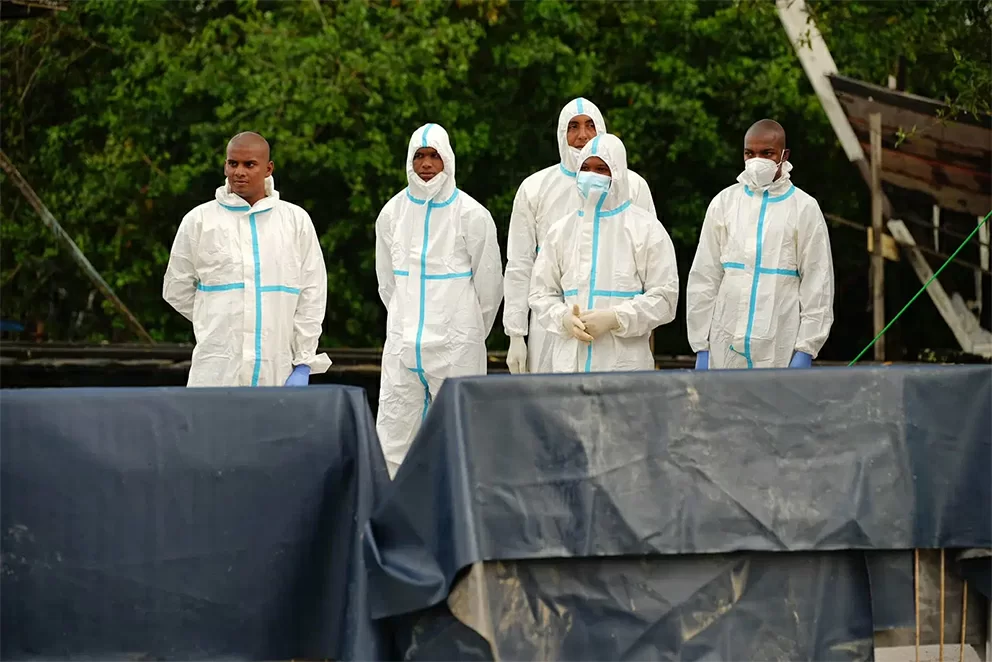
Guyana: Drie dagen nationale rouw na MV Barima tragedie
A devastating maritime disaster has left the South American nation of Guyana in mourning, after the passenger and cargo vessel MV Barima capsized mid-voyage, leaving dozens dead and triggering a full national investigation into the incident. On Tuesday, local officials confirmed a rising death toll from the accident that occurred Saturday evening, and announced a series of national commemorative events to honor the lives lost.
The government of Guyana has officially declared a three-day period of national mourning, running from July 22 through July 24, 2026, to remember all victims of the capsizing. Throughout the mourning period, national flags will fly at half-mast across all government buildings and designated public sites across the country. July 22 has also been designated a National Day of Prayer, with an official memorial service scheduled to take place at the Kingston Seawall in the capital city of Georgetown. On July 23, a community evening of reflection and prayer will be held in Port Kaituma, with a similar gathering to follow the next day in Mabaruma. Religious bodies, civil society organizations and ordinary citizens have all been encouraged to organize independent candlelight vigils and prayer gatherings to honor the victims during this period.
As of 1 p.m. local time Tuesday, 41 bodies have been recovered from the sunken wreck, Public Works Minister Juan Edghill announced via a Facebook post. A total of 77 people have been rescued alive from the incident, the minister confirmed. Search teams retrieved 14 bodies between 10:15 a.m. and 1 p.m. on Tuesday alone, adding to the 27 bodies that had been recovered by the end of Monday. The adjusted count of survivors came after a careful cross-verification process across multiple data sources, which was carried out to eliminate duplicate counts and produce an accurate final tally of people pulled alive from the disaster.
French and local dive teams are continuing search and recovery operations at the wreck site, while family members are currently working to identify recovered remains at Suddie Hospital. Minister Edghill emphasized that all recovered bodies must be transferred immediately to Guyana Police Force personnel stationed at the Charity River Dam facility, to streamline the identification process.
The MV Barima departed the capital’s Port Georgetown Saturday afternoon, bound for Port Kaituma in Guyana’s Region One, but capsized several hours later that same evening. The tragedy has sent shockwaves across the small nation, sparking widespread scrutiny of safety protocols for domestic maritime travel.
Initial passenger manifests listed 116 passengers and 17 crew members on board the vessel. However, official investigations have already found discrepancies in these records: only 35 of the first 67 rescued people were listed on the original passenger manifest, meaning a large share of survivors were never officially registered for the voyage. Officials have also called into question the vessel’s cargo records, which listed 268 tons of cargo on board—close to the vessel’s maximum 284-ton capacity, but still subject to verification for misreporting.
In a major development in the investigation, the vessel’s captain and chief engineer have been taken into custody after testing positive for narcotics. The Guyanese government has launched a full, sweeping investigation to determine the full root causes of the capsizing. President Dr. Mohamed Irfaan Ali has given a public assurance to the Guyanese people that the investigation will be full, transparent and thorough. He added that the government’s top priorities remain continuing life-saving search operations, providing support to victims and their families, and accounting for all people still listed as missing following the disaster.
-
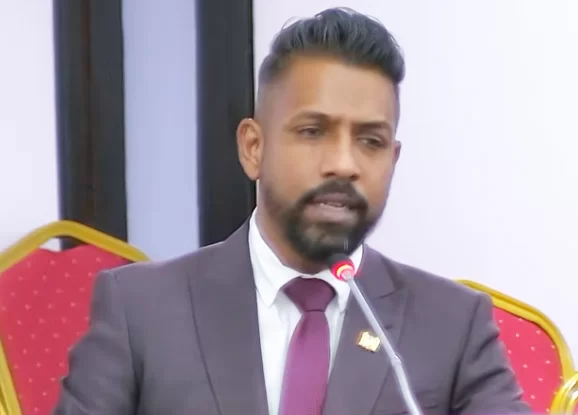
Tekort aan buurtmanagers; evaluatie programma in uitvoering
On July 21, Suriname’s Minister of Justice and Police Harish Monorath revealed a severe staffing gap in the country’s neighborhood policing initiative during a sitting of the National Assembly. Currently, the Suriname Police Corps only has 43 active neighborhood managers in service, while the immediate operational demand stands at 60 full-time positions. This shortfall has forced leadership to reassign several existing neighborhood managers to other departments within the force, leaving critical community policing roles understaffed.
Monorath’s comments came in response to a question from A30 parliament member Steven Reyme, who raised concerns about declining accessibility and effectiveness of neighborhood policing services, particularly for senior residents. Reyme shared that he recently held an extended conversation with an elderly citizen who complained about reduced communication between local residents and assigned neighborhood managers. He noted that in previous years, neighborhood managers were far more visible in communities and maintained consistent, regular contact with local residents, a standard that has slipped in recent times.
Reyme emphasized the urgent need to revitalize communication between community policing staff and local residents, especially for older adults who spend most daytime hours alone at home. These vulnerable residents need clear, reliable points of contact to turn to when safety or quality-of-life issues arise in their neighborhoods, he argued.
Monorath openly acknowledged the scope of the staffing challenge, confirming that out of the 60 required neighborhood manager positions, only 43 are currently filled. Limited personnel budgets and overall resource constraints have driven the reassignment of existing neighborhood managers to other police departments, creating gaps in community outreach. Accessibility to neighborhood managers has also become a persistent challenge as a result of these constraints.
In response to the gap, the entire neighborhood manager program is now undergoing a full re-evaluation to identify structural solutions. Beyond the review, Monorath has issued a directive to frontline basic policing units to increase their visible presence in residential neighborhoods and strengthen community engagement, even amid limitations in vehicle access and other operational resources. The minister specifically ordered that extra attention be prioritized for vulnerable groups including senior citizens and young people.
While Monorath reaffirmed the Suriname Police Force’s ongoing commitment to improving its relationship with local communities, he stressed that sustainable improvement will require sufficient staffing capacity and financial resources to support expanded community policing efforts. -
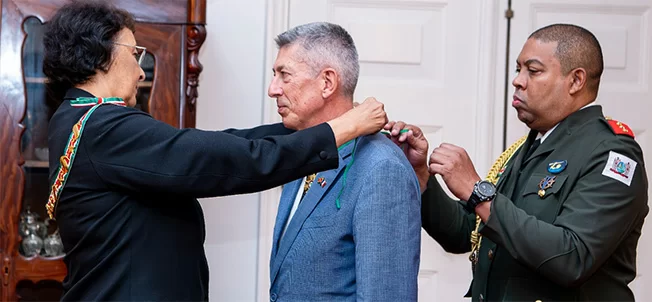
Franse ambassadeur onderscheiden bij afscheid na vier jaar in Suriname
On a formal ceremony held at Suriname’s Presidential Palace on Tuesday, outgoing French Ambassador Nicolas de Bouillane de Lacoste received one of the South American nation’s highest state distinctions, capping off a four-year diplomatic posting focused on deepening cooperation between the two neighboring countries.
Surinamese President Jennifer Simons bestowed the title of Grand Officer in the Honorary Order of the Palm to the ambassador, in formal recognition of his dedicated work to advance Suriname-France relations throughout his tenure, which began with his posting to Paramaribo in 2022.
President Simons emphasized that De Bouillane de Lacoste’s term coincided with a uniquely challenging post-pandemic period, yet the diplomat consistently brought extraordinary commitment to expanding bilateral partnership across multiple priority sectors. Under his leadership, collaboration grew deeper in key areas including border security, cultural exchange, public healthcare, and environmental protection, Simons noted. She also highlighted the ambassador’s successful work advancing French language education in Suriname and intensifying high-level political dialogue between the two governments as major, lasting outcomes of his mission.
Beyond his official diplomatic achievements, the president praised De Bouillane de Lacoste’s deep personal connection to Suriname and its people. “What I have admired most is not only the milestones you reached, but above all the intentional way you made time to truly understand Suriname and its citizens. You learned our national language, and you even surprised countless people across the country with your command of Sranantongo,” Simons said during the ceremony.
France shares a direct border with Suriname through its overseas department of French Guiana, a geographic reality that shapes the close bilateral relationship. Simons underlined that the partnership between the two nations is rooted in long-standing mutual trust and respect, and expressed confidence that the solid foundation De Bouillane de Lacoste built during his term will support even closer collaboration in the years ahead.
For his part, the outgoing ambassador called the award a remarkable personal honor. “This is the first decoration I have ever received in my career, and I am especially proud that it comes from Suriname,” De Bouillane de Lacoste said.
Looking back on his four years in the country, the ambassador expressed deep satisfaction with the progress made in growing the bilateral relationship, and shared his firm belief that cooperation between Suriname and France will continue to gain strength in coming years. He closed his farewell address in Sranantongo, with the message: “Go well and stay well. I send greetings to all my friends until we meet again. Thank you.” -
Assemblee dringt aan op hardere aanpak na toename verkeersdoden
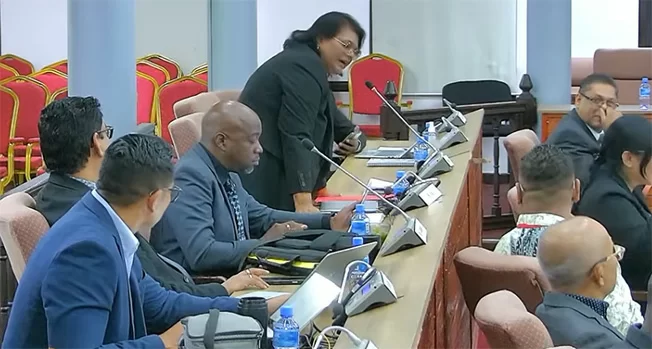
On July 21, members of Suriname’s National Assembly issued a urgent call for the national government to ramp up traffic law enforcement, driven by a steady upward trend in traffic-related deaths that has disproportionately claimed the lives of young people across the country.
Lawmakers across party lines are pushing for sweeping changes: increased daily visible police presence on roads, more frequent speed limit checks, and harsher punitive action against unlicensed drivers and repeat traffic offenders. Krishna Mathoera, a VHP party legislator leading the push, emphasized that most road crashes stem from reckless road user behavior rather than vehicle technical faults, noting that these incidents leave widespread damage, long-term trauma and inconsolable grief in their wake. “The only effective way to change dangerous driving habits is through consistent enforcement and intervention,” Mathoera stated, calling for expanded traffic police units, more intensive patrols, and a higher number of official citations for violations.
Mathoera pointed to a troubling mismatch in official data from the Public Prosecution Service: while traffic fatalities continue to climb, the total number of citations for traffic offenses has actually fallen. She argued that the government must implement daily, sustained checks until deadly crash rates are reduced to manageable levels. Her concerns have been echoed by other Assembly members, including Vice President Ronnie Brunswijk of the ABOP party. Brunswijk drew attention to a recent fatal pedestrian crash in Moengo as a tragic example of the ongoing crisis, noting that reckless excessive speeding is particularly rampant within built-up residential and urban areas.
The parliamentary debate also centered on assigning clear accountability for traffic enforcement. Brunswijk argued that responsibility cannot fall exclusively on the Minister of Justice and Police, noting that police leadership, from the corps commander down to regional commanders, share an obligation to deploy personnel and organize regular checks. Jerrel Pawiroredjo, leader of the NPS parliamentary faction, clarified that criticism is targeted at policy failures, not individual officials. “We are not attacking the person, we are challenging the policy,” he said, while adding that the minister bears ultimate political accountability for the performance of the ministry and national police corps.
In response to the calls for action, Minister of Justice and Police Harish Monorath reported that the national traffic enforcement team inspected 328 vehicles in the first two weeks of July, with regular patrols also carried out by general duty police units. But Mathoera rejected these figures as woefully insufficient, calculating that this averages out to just 50 vehicle checks per day nationwide – a number she said could be matched in a single hour at one busy intersection near the National Assembly building itself. “These are not results we can accept,” she said, stressing that the public needs to see and feel a constant visible police presence on roads.
Minister Monorath acknowledged that more action is needed, pointing out that officers issue daily fines and seize unregistered or unlicensed vehicles, but framed traffic safety as a shared responsibility between the government and broader society. He noted that poor street lighting, damaged road surfaces, insufficient speed bumps, and low public awareness of traffic rules all contribute to unsafe road conditions.
Parliamentarians also put forward proposals to expand public traffic education, including reinstating mandatory structured traffic lessons in primary schools and running recurring public awareness campaigns on radio and other media. The idea of using unmarked police vehicles and motorcycles to catch reckless drivers was also raised. Monorath confirmed that police already run educational programs in schools, but these will be expanded after the national budget is approved, freeing up additional resources for intensified traffic education.
In closing, lawmakers emphasized that improving road safety cannot be achieved with statistical tweaks alone. They called for a holistic approach combining consistent visible police patrols, upgraded road infrastructure, expanded public education, and strict, consistent penalties for dangerous driving behavior to reverse the rising tide of preventable road deaths.
-
ASEAN-diplomaten uiten ‘diepe bezorgdheid’ over oorlog in Iran en energiecrisis
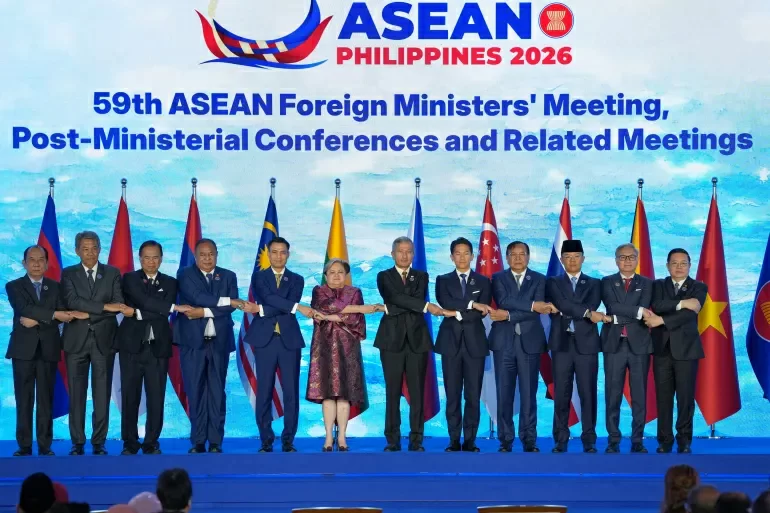
The annual ASEAN Foreign Ministers’ Summit kicked off on Monday in Manila, the Philippines, bringing together top diplomatic leaders from the 10-member Southeast Asian bloc to address a cascade of pressing regional and global challenges that threaten the bloc’s economic stability and security. The five-day gathering opened with urgent discussions over the far-reaching spillover effects of the ongoing US-Iran-Israel conflict and potential disruptions to maritime traffic through the Strait of Hormuz, a chokepoint that carries nearly a fifth of the world’s daily oil trade.
As a collective regional economy with a combined GDP of $3.8 trillion, ASEAN member states are heavily dependent on crude oil imports from the Gulf region. Any prolonged closure or disruption to the Strait of Hormuz would immediately jeopardize the bloc’s energy security, sending ripple effects through manufacturing, transportation and consumer markets across the region. To mitigate potential economic shocks, ASEAN ministers are currently debating proposals for a coordinated regional oil-sharing mechanism that would help buffer individual member states from sudden supply shortages and extreme price volatility.
Risks to energy markets escalated recently after Yemen’s Iran-aligned Houthi rebels announced a new maritime blockade targeting Saudi Arabia, raising fears of a expanded conflict across the Middle East that would push already strained global energy supplies further into crisis. In a joint statement released during the summit, ASEAN foreign ministers voiced deep alarm over escalating tensions in the region, warning that recent developments are undermining international mediation efforts and eroding the prospects for a peaceful negotiated resolution through diplomatic dialogue.
The high-profile attendance of top diplomatic representatives from major global powers including the United States, Russia and China at this year’s summit underscores the degree to which the Middle East crisis has reshaped global diplomatic priorities and disrupted global energy supply chains. Already, the conflict has driven sharp increases in oil and natural gas prices across Southeast Asia, stalling industrial production and cutting into export volumes for many regional economies. This pressure has forced ASEAN member states to actively pursue new energy trade partnerships to diversify their supply sources.
Speaking from Manila on the sidelines of the summit, Al Jazeera correspondent Barnaby Lo noted that despite being thousands of kilometers removed from the conflict zone, Southeast Asia is one of the hardest-hit regions globally due to its deep reliance on Middle Eastern oil. “For example, the Philippines became the first country in the world to declare a national energy emergency amid the current crisis,” Lo explained. “The country is already grappling with persistent supply shortages and skyrocketing fuel prices. Even after turning to non-traditional suppliers like Russia and China, Manila has little ability to counter the global market trends that keep prices at unaffordable levels.”
Beyond the Middle East energy crisis, the summit’s agenda also prioritizes two long-simmering regional conflicts: the ongoing crisis in Myanmar and rising territorial tensions in the South China Sea. Five years after the Myanmar military seized power in a coup, ASEAN continues to face widespread criticism over its engagement with the ruling junta, with opponents arguing that the bloc’s diplomatic outreach inadvertently legitimizes a regime that has overseen widespread human rights abuses and failed to restore democratic rule. ASEAN has struggled to make progress on its five-point peace plan for Myanmar, adopted shortly after the 2021 coup, with little to show for years of diplomatic engagement.
Tensions in the South China Sea have also flared in recent weeks, following a high-profile confrontation between Chinese and Philippine vessels in contested waters, derailing nearly a decade of slow-moving negotiations between ASEAN and China to finalize a binding code of conduct to prevent armed conflict in the strategic waterway. The United States quickly weighed in on the confrontation, condemning what it called China’s “dangerous and aggressive” actions, and accusing Beijing of pursuing a “troubling pattern of provocation” against legally operating Philippine maritime activities.
Founded in 1967, the Association of Southeast Asian Numbers counts 10 member states: Brunei, Cambodia, Indonesia, Laos, Malaysia, Myanmar, the Philippines, Singapore, Thailand, and Vietnam. The regional bloc works to advance economic integration, political cooperation and cultural exchange across Southeast Asia, with the goal of promoting collective stability and shared economic growth across the diverse region.