Global press freedom has fallen to its lowest level in 25 years, leading press freedom non-governmental organization Reporters Without Borders (RSF) has warned in its annual World Press Freedom Index, which ranks 180 countries across the world on conditions for independent journalism. For the first time since the index launched in 2002, more than half of all ranked nations fall into the “difficult” or “very serious” categories for press freedom, marking an alarming global shift that sees journalism increasingly labeled as a criminal act.
Northern European nations continue to dominate the top of the 2026 rankings, with Norway, the Netherlands and Estonia claiming the first three positions. France ranks 25th, earning a “satisfactory” rating, while the United States drops seven places to 64th, a ranking categorized as “problematic”—a decline that RSF ties to the political shifts since Donald Trump took office as U.S. president.
Across the Caribbean and South American region, press freedom conditions vary widely, with growing challenges for many local media outlets. Suriname falls to 34th place, down from 28th two years ago and 32nd last year, categorized as a nation with “moderate” press freedom but facing clear ongoing threats. Journalists in Suriname regularly face pressure and intimidation, particularly when reporting critically on political activity and government corruption. Recent legal actions against media outlets and reporters that hold public officials to account underscore how vulnerable independent press remains in the country. Neighboring Guyana ranks 73rd, grappling with frequent political interference in media operations and documented restrictions on press freedom. Reports of threats against independent journalists and attempts to censor media organizations, especially around election cycles and the exposure of political scandals, have severely restricted free information flow and open public debate in the country. While Barbados and Trinidad and Tobago rank far higher at 19th, delivering relatively better conditions for press, even these nations face growing concerns over journalist safety and pressure from political and corporate economic interests. In Jamaica and Haiti, journalists are regularly targeted with violence and intimidation, especially when investigating organized crime and systemic corruption. In Haiti, the unstable security situation and near-total lack of effective legal protection have left press freedom in an extremely precarious state.
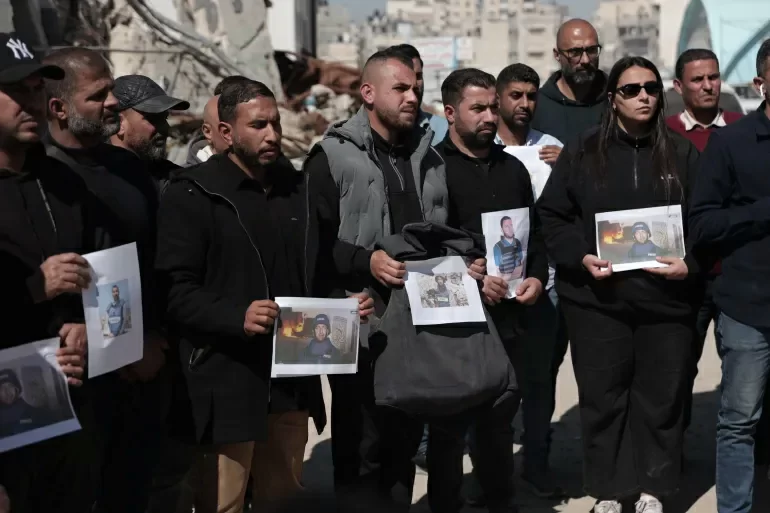
Globally, RSF highlights dramatic plunges in rankings for nations where political pressure on journalists has spiked. Argentina fell 11 places to 94th, while El Salvador has dropped a staggering 105 places since 2014 to land at 143rd, with both seeing rising political unrest and growing violence against members of the press. The NGO identifies Eastern Europe and the Middle East as the most dangerous regions globally for journalists. Russia ranks 172nd and Iran 177th, both placing among the bottom 10 countries on the index. Israel, ranked 116th, faces widespread criticism from RSF for repeated attacks on journalists operating in Gaza, the West Bank and Lebanon. Since October 2023, more than 220 journalists have been killed by Israeli military operations in Gaza, with at least 70 of those deaths occurring while journalists were on active duty, the organization confirms. RSF also notes that the Israeli military has become the world’s single largest killer of journalists this period.
A core finding of the 2026 index is that more than 60 percent of all ranked countries—110 out of 180—criminalize journalists through a range of repressive tactics. These include widespread misuse of emergency legislation to restrict press activity and implement arbitrary limits on reporting. Prominent examples cited by RSF include India (157th), Egypt (169th), Georgia (135th), Turkey (163rd) and Hong Kong (140th).
Anne Bocande, editor-in-chief of RSF, attributes the global collapse in press freedom to four overlapping factors: the rise of authoritarian governments, systemic political incompetence, capture of media and policy by unaccountable economic interests, and insufficient regulation of large online digital platforms. Bocande has called on democratic governments and global civil society to take far stronger action to end the criminalization of journalism, implementing robust legal protections for reporters and imposing meaningful sanctions on actors that target the press. “Current protection mechanisms are insufficient, international law is being undermined, and impunity for attacks on journalists is widespread,” Bocande warned. “Doing nothing is a form of consent. The spread of authoritarianism is not inevitable.”