标签: Suriname

苏里南

  • Wijnerman: US$ 265 miljoen extra nodig voor financiële stabiliteit

    Wijnerman: US$ 265 miljoen extra nodig voor financiële stabiliteit

    The Government of Suriname has successfully expanded its 2035 bond issuance by $265 million, a strategic financial maneuver designed to address urgent debt obligations while creating fiscal space for critical public investments. Finance and Planning Minister Adelien Wijnerman confirmed the operation, characterizing it as a deliberate choice in the nation’s financial strategy.

    This bond expansion carries an interest rate of 8.5% and attracted both existing and new international investors, reflecting continued market confidence in Suriname’s economic trajectory. Minister Wijnerman emphasized that the successful placement resulted from targeted financial operations within international capital markets.

    The newly acquired funds will be allocated across a comprehensive portfolio of socially impactful and economically transformative projects. Key investment sectors include healthcare infrastructure, educational enhancement, digital transformation of government services, energy security, agricultural development, food security programs, support for small and medium enterprises, development of construction-ready land parcels, and youth development initiatives.

    The administration clarified that upon taking office, it inherited substantial deferred payment obligations requiring immediate attention, while anticipated revenues from production activities had not yet fully materialized. This bond extension serves as a bridge mechanism to maintain financial stability without postponing essential investments.

    This financial strategy represents a dual approach: addressing immediate societal needs while simultaneously strengthening the structural growth capacity of Suriname’s economy. The government positions this bond expansion as a significant step toward achieving macroeconomic stability paired with targeted investments that establish foundations for sustainable economic development.

    Minister Wijnerman is scheduled to provide detailed explanations regarding the bond expansion and fund allocation during an upcoming press conference.

  • Column: Journalistiek is niet het beschermen van maatschappelijk onrecht en macht

    Column: Journalistiek is niet het beschermen van maatschappelijk onrecht en macht

    A concerning societal expectation has emerged in Suriname where journalism is welcomed only when it doesn’t challenge protected interests. When media reporting becomes critically uncomfortable, accusations immediately surface alleging personal attacks, political agendas, or attempts to remove officials from power.

    This pattern manifested recently when panelist Giwani Zeggen on the radio program Welingelichte Kringen accused Starnieuws of intentionally damaging the Prosecutor General’s reputation through reporting about excessive compensation amounting to SRD 1.4 million. These allegations reveal more about persistent misunderstandings of journalism’s purpose than about the media outlet itself.

    The controversial reporting centered not on an individual but on the Judicial Position Act (Wet Rechtspositie Rechterlijke Macht). The salary calculation referenced wasn’t fabricated but derived directly from legal percentages, allowances, and tax-free compensations explicitly outlined in the legislation. The fact that administration expert Eugène van der San had previously raised this issue publicly doesn’t diminish the journalistic premise: when a law potentially enables monthly state-funded incomes exceeding SRD 1 million, it becomes inherently newsworthy.

    The suggestion that Starnieuws misled society because political discussions about judicial reforms are ongoing represents a diversionary tactic. Journalism doesn’t await politically convenient moments—it reports when information holds societal relevance, not when it comforts power holders or their defenders. The profession accepts no censorship and practices no self-censorship when matters of public interest are involved.

    What truly emerges here is a dangerous shift where systemic criticism becomes deliberately personalized to avoid substantive discussion. By framing reporting as attempting to undermine the Prosecutor General, attention divertes from the core issue: how can legislation in an economically vulnerable society justify such extreme income disparities within the public sector?

    Journalism exists not to shield officials from uncomfortable facts but to provide citizens insight into how power, laws, and public resources function. Those expecting media silence because certain individuals might become discussion topics essentially request public relations, not journalism.

    The same journalistic principles will apply to numerous mismanagement cases at ministries, government institutions, and state enterprises, including the State Health Insurance Foundation, Suriname Telecommunication Authority, Milk Center, and Grassalco.

    While media criticism remains legitimate and necessary in democratic societies, such criticism should rest on established journalistic standards—truthfulness, independence, fact-opinion separation, and social responsibility—as codified in international codes like the Bordeaux Code and adopted by the Surinamese Association of Journalists. Not all journalists consistently adhere to these standards, but this doesn’t grant anyone authority to position themselves as informal regulatory bodies without explicit reference to proper assessment criteria.

    The fundamental question remains: what institutional position empowers Zeggen to lecture journalists? While free expression rights remain unquestioned, professional authority requires substantive standards, not political suspicions or personal interpretations of intent. Through determined reporting, society has been served significantly, already prompting corrective measures—including cooperation from the judicial system. Journalists will continue their work without seeking approval or regarding personal status.

  • Newmont en vakbond bereiken akkoord over nieuwe tweejarige CAO

    Newmont en vakbond bereiken akkoord over nieuwe tweejarige CAO

    After fifteen months of intensive negotiations, Newmont Suriname and the Newmont Workers’ Organization (N.W.O.) have successfully concluded a new two-year Collective Labor Agreement (CLA), marking a significant milestone in labor relations within Suriname’s mining sector.

    The breakthrough agreement, finalized on Thursday, includes a substantial 7% wage increase effective January 2026, representing one of the most significant compensation adjustments in recent years. Beyond base pay improvements, the parties have modified special wage adjustment mechanisms and introduced an innovative ‘Special Savings Plan’ at the union’s initiative. This additional savings vehicle complements existing pension arrangements and aims to enhance employees’ financial resilience through expanded saving opportunities.

    Shirley Sowma-Sumter, Director of External Relations & Country Manager for Newmont Suriname, emphasized that the agreement transcends conventional wage discussions. “This represents our commitment to investing in our workforce, supporting our communities, and ensuring Newmont continues making positive economic contributions to Suriname,” she stated.

    Union leadership expressed equal satisfaction with the outcome. N.W.O. Chairman Joel Panka acknowledged that the agreement properly recognizes employee dedication while ensuring fair compensation, workplace stability, and enhanced safety protocols.

    The Merian operation, which celebrates ten years of commercial production later this year, remains a cornerstone of Suriname’s economy. Newmont management highlighted the mine’s critical role in national infrastructure development and employment generation. The company stressed that ongoing operational optimization, risk management, and improved investment conditions remain essential for maintaining the mine’s competitiveness and profitability throughout the next decade.

    Both parties agree that this agreement establishes a foundation for stable labor relations and the continuation of responsible mining operations that benefit both workers and the national economy.

  • GuySure kost bijna US$ 300.000 per maand: activiteiten gaan normaal door

    GuySure kost bijna US$ 300.000 per maand: activiteiten gaan normaal door

    Despite independent investigations revealing that GuySure holds no legal subsidiary status with state-owned mining company Grassalco, operations in Guyana continue uninterrupted. Since the suspension of CEO Wesley Rozenhout on January 12 alone, over US$13,000 has been expended on business trips and participation in an energy conference, with monthly expenditures nearing US$300,000.

    Information obtained by Starnieuws indicates that GuySure’s activities persist unabated despite ongoing investigations initiated by the Board of Commissioners. The company’s shares are held by five natural persons, including the suspended Rozenhout.

    Personnel deployments to Guyana continue every two weeks to conduct operations at GuySure’s leased port facility in Georgetown. Currently, only one Guyanese employee operates locally, with the majority of work being performed by Surinamese staff. Prior to recent controversies, minimum five personnel would travel per shift, though this has been reduced to two or three individuals per deployment since January.

    Ten employees have been dispatched to the neighboring country since mid-January at a cost of approximately US$13,000, excluding US$50 per diem allowances for each worker. Additionally, US$4,600 was spent leasing a booth at Guyana’s energy conference. Although participation was formally under Grassalco’s banner with adjusted promotional materials, the decision to proceed was made due to prior reservations. Sources indicate final costs exceeded initial projections.

    Monthly financial obligations extend beyond personnel expenses, including US$243,000 (excluding VAT) for port facility rentals and US$8,000 for two residential properties. Combined with other operational costs, monthly expenditures surpass US$300,000.

    GuySure operates at a significant deficit, with previously reported figures showing approximately US$9 million in expenditures against merely US$2 million in revenue. Current crushed stone prices also fail to meet earlier calculated benchmarks.

    Operations will continue pending government authorization to terminate activities. Rozenhout’s suspension has thus far not prompted policy changes, while legal teams examine termination consequences and relevant international obligations and conditions.

  • Motie over SZF en RZW unaniem aangenomen met 31 stemmen

    Motie over SZF en RZW unaniem aangenomen met 31 stemmen

    In a rare display of political unity, Suriname’s National Assembly has unanimously approved a comprehensive motion addressing systemic governance issues within the country’s healthcare sector. All 31 parliament members present voted in favor of the measure, which was jointly submitted by every political faction in the legislative body.

    The motion emerged from a government interrogation session initiated by Assembly members Rossellie Cotino and Silvana Afoensoewa, both representing the National Democratic Party. During the parliamentary proceedings, Minister of Health, Labor, and Welfare André Misiekaba provided extensive responses to lawmakers’ probing questions while submitting numerous documentation from both the State Health Fund and the Wanica Regional Hospital.

    Central to the parliamentary motion is the government’s constitutional obligation to ensure transparent, efficient, and lawful management of public resources within the healthcare system. The Assembly emphasized that healthcare protection, continuity, and affordability constitute fundamental citizen rights that must be safeguarded.

    The resolution identifies persistent financial shortfalls within the healthcare sector as requiring immediate governance improvements and expenditure transparency. Parliament specifically condemned the practice of improperly withholding citizen premiums from the health fund, mandating their prompt restitution.

    In its decisive action, the National Assembly has issued a formal demand for the government to:

    • Implement robust internal control mechanisms and supervisory structures within state enterprises to ensure proper utilization of public funds
    • Submit within 30 days a comprehensive written report to parliament detailing:
    – The State Health Fund’s financial position, including liquidity, debts, receivables, and current obligations
    – Governance frameworks, internal control systems, and compliance with statutes and board regulations
    • Restore stability and operational normalcy at the Paramaribo Milk Center
    • Engage judicial authorities whenever financial misconduct is suspected
    • Recover unlawfully obtained public resources
    • Initiate legislative discussions establishing governance codes for parastatal institutions

    This unanimous parliamentary decision delivers a powerful message that financial transparency, accountability, and sound governance must become immediate priorities within Suriname’s healthcare administration.

  • Cuba meldt dood van vier ballingen na aanval vanaf Florida-speedboot

    Cuba meldt dood van vier ballingen na aanval vanaf Florida-speedboot

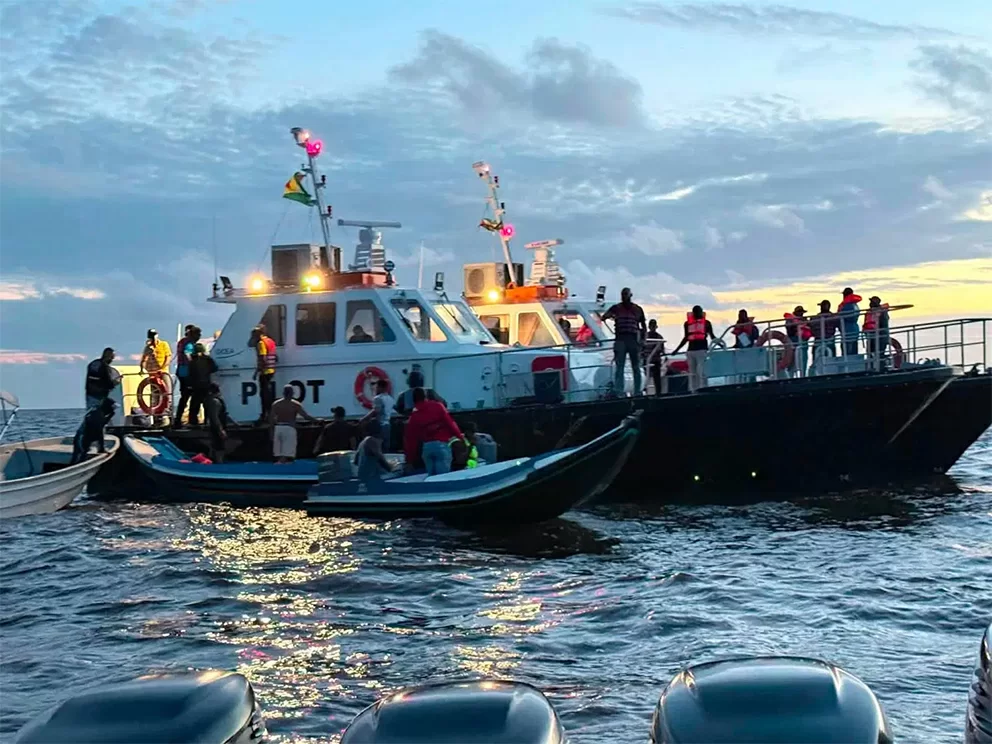
    Cuban authorities have confirmed the lethal outcome of a maritime security incident involving armed exiles from Florida, resulting in four fatalities and six injuries. The confrontation occurred when a speedboat registered in Florida breached Cuban territorial waters and initiated gunfire against a Cuban patrol unit on Wednesday.

    According to Cuba’s Ministry of the Interior, the assailants were heavily armed opponents of the Cuban government, some of whom were previously sought for plotting terrorist attacks. The group was equipped with automatic weapons, handguns, improvised explosives, bulletproof vests, and telescopic sights. An additional suspect has been detained in Cuba for alleged involvement in the planned infiltration.

    The wounded, including the Cuban patrol commander, received medical evacuation and care. Cuban officials stated that interrogations revealed the group’s intention to execute a terrorist infiltration mission.

    Cuba’s embassy in Paramaribo condemned the incident as a terrorist attack and urged the United States to curb anti-Cuban group activities within its borders. An official embassy statement emphasized that “this assault not only violates Cuban sovereignty but also jeopardizes regional peace and stability.”

    US Secretary of State Marco Rubio denied any American government involvement, confirming that no US officials participated in the operation. He announced that the US would conduct an independent investigation to determine the exact circumstances, noting the unusual nature of open-sea shootings.

    This incident follows heightened tensions stemming from US oil sanctions against Cuba and references the recent US arrest of Venezuelan President Nicolás Maduro, a key Cuban ally. Rubio reiterated calls for substantial changes in Cuba’s governance.

    Historical context reveals Miami as a traditional hub for anti-Castro activities, including the failed 1961 CIA-backed Bay of Pigs invasion. While such operations have diminished in frequency, recent energy crises and political tensions appear to have reinvigorated opposition efforts.

    Authorities have identified six suspects detained from the speedboat, including two previously known for alleged terrorist plots against Cuba: Amijail Sanchez Gonzalez and Leordan Enrique Cruz Gomez. The death of Michel Ortega Casanova has been confirmed, while three other deceased individuals remain unidentified. Cuban national Duniel Hernandez Santos was arrested for complicity.

    The speedboat had approached within one nautical mile of Falcones Cay on Cuba’s northern coast when intercepted by a five-member border patrol. The exchange of fire resulted in injuries to the patrol commander.

    Florida politicians have called for independent investigations, with Attorney General James Uthmeier coordinating with federal and local authorities. Congressman Carlos Gimenez, representing southern Florida, advocated for federal scrutiny by the State and Defense Departments, emphasizing the need to identify any American citizens or legal residents among the casualties.

    International human rights organizations demand transparency and independent investigation, warning of potential escalation in an already volatile region. The Organization of American States (OAS) urged restraint and dialogue, while the United Nations emphasized violence prevention and peaceful resolution. The European Union called for calm and adherence to international law, with regional allies Venezuela and Nicaragua expressing solidarity with Havana. The US maintains its position of intensified sanctions and continued pressure on the Cuban government.

  • Skelet aangetroffen langs zijweg van Javaweg in Lelydorp

    Skelet aangetroffen langs zijweg van Javaweg in Lelydorp

    Authorities in Lelydorp have launched a comprehensive investigation following the grim discovery of human skeletal remains on Wednesday afternoon. The finding occurred approximately 300 meters along a private roadway branching off Javaweg, marking a significant development in local law enforcement activities.

    Police units responded to an urgent notification regarding potential human remains in the vicinity of address number 188 along Javaweg. Upon arrival at the specified location, officers encountered a complete human skeleton with a particularly disturbing feature—the skull was deliberately covered with a sweater, adding an unsettling dimension to the discovery.

    The immediate perimeter was secured as a controlled crime scene, with forensic specialists and relevant authorities promptly notified to initiate detailed examination procedures. The comprehensive forensic investigation aims to determine crucial details including cause of death, approximate time since death, and potential identification markers.

    Current investigations face significant challenges as the individual’s identity remains completely unknown. The circumstances surrounding the placement of the remains and the distinctive characteristic of the covered skull have prompted investigators to consider various possibilities, including criminal activity.

    Local law enforcement officials have confirmed the ongoing nature of the investigation, emphasizing their commitment to utilizing all available scientific and traditional investigative methods to establish the facts surrounding this case. The community awaits further developments as authorities work to unravel the mystery behind these unsettling remains.

  • Assembleevoorzitter: Hof bereid te kijken naar rationalisering geldelijke voorzieningen rechterlijke macht

    Assembleevoorzitter: Hof bereid te kijken naar rationalisering geldelijke voorzieningen rechterlijke macht

    In a significant development for Suriname’s governance structure, National Assembly Chairman Ashwin Adhin has confirmed ongoing consultations with the Judiciary regarding financial provisions within the judicial system. The dialogue marks a cooperative effort between two crucial branches of government to address compensation structures for judicial officials.

    Chairman Adhin disclosed to Starnieuws that he conducted formal discussions in his official capacity with the Court of Justice, particularly engaging with Court President Iwan Rasoelbaks. This diplomatic exchange has subsequently been followed by written correspondence from the judiciary, solidifying the commitment to mutual understanding.

    The constitutional framework allows every Assembly member to initiate proposals within this context, though Adhin emphasized his role as presiding officer to conduct more focused negotiations with the judicial branch. These smaller-scale discussions aim to meticulously examine proposals, insights, and factual information before reaching any determinations.

    Adhin reassured the public that the matter is being treated with appropriate seriousness between state powers, operating under the fundamental principle that financial provisions for the judiciary must be governed by statutory regulations. This approach ensures constitutional compliance while maintaining the dignity of judicial institutions.

    The Assembly leadership has deliberately separated two parallel processes to avoid procedural conflicts: the ongoing modernization of judicial infrastructure through parliamentary bills, and the separate consideration of financial provisions including judicial remuneration and emoluments. This sequential treatment allows each initiative to receive dedicated preparation and attention.

    Furthermore, Adhin highlighted that the 2026 national budget remains on the parliamentary agenda, confirming that authorities are maintaining a rigorous yet orderly schedule for these complementary governance initiatives.

  • Heldere visie op rol en taken van business controller in veranderende organisaties

    Heldere visie op rol en taken van business controller in veranderende organisaties

    The Anton de Kom University of Suriname marked a significant academic milestone on February 25, 2026, with Professor Arno Geurtsen RC delivering his inaugural address upon assuming the prestigious Chair in Governance & Control. The ceremony at the university’s Interfaculty for Graduate Studies and Research centered on redefining the evolving role of business controllers in modern organizational structures.

    Professor Geurtsen identified a critical gap in contemporary business practice: widespread ambiguity regarding the precise expectations, responsibilities, and competencies required of business controllers. “Every organization interprets the role differently,” Geurtsen observed, “creating substantial challenges in establishing standardized educational objectives for future professionals.”

    The academic framework presented incorporated three foundational pillars: organizational governance theory, digital transformation impacts, and controller role conceptualization. A novel addition to existing scholarship was the concept of ‘knowledge of inertia’—referring to organizational resistance and stagnation that controllers must navigate to implement successful transformations.

    Geurtsen’s theoretical approach integrated Simons’ ‘levers of control’ model, advocating for reflective control systems that incorporate social context and organizational culture alongside traditional processes. This comprehensive perspective aims to transform governance from theoretical aspiration to practical implementation, ensuring sustainable organizational improvements.

    The address traced the historical evolution of organizational governance, noting the traditional dominance of financial information while acknowledging critiques of this narrow focus. Geurtsen discussed emerging performance measurement frameworks, including Kaplan & Norton’s Balanced Scorecard, and examined contemporary insights regarding behavioral and cultural controls as supplementary management tools.

    Looking toward the future, Professor Geurtsen envisioned the business controller as a hybrid professional—combining analytical expertise with sophisticated social skills to navigate complex human dynamics within organizations. This duality, he argued, forms the essential foundation for functioning as both legitimate and effective business partners.

    The establishment of this academic chair underscores Suriname’s commitment to advancing professional education and research in governance and control, aiming to develop controllers capable of guiding organizations through increasingly complex and digitalized business environments.

  • Werk Melkcentrale hervat na overleg met minister Noersalim

    Werk Melkcentrale hervat na overleg met minister Noersalim

    Operations at Suriname’s Milk Central have returned to normal following successful mediation efforts by Agriculture, Livestock, and Fisheries Minister Mike Noersalim. The resolution comes after partial work stoppages occurred yesterday when staff expressed dissatisfaction with the sudden departure of Director Monché Atompai.

    Minister Noersalim personally engaged with management and employees to address the concerns, emphasizing that the situation did not constitute an industrial conflict. “This is not about an industrial dispute. Not working jeopardizes the company’s stability,” Noersalim stated in comments to Starnieuws. He warned that continued work stoppages would create significant financial losses for the state-owned enterprise.

    The ministerial intervention included the presence of Ebu Jones, Chairman of the National Assembly’s permanent committee on LVV matters, demonstrating the government’s commitment to resolving the matter. Operational leadership has been temporarily assumed by Deputy Director Larissa Barden during this transition period.

    The personnel unrest stemmed from President Jennifer Simons’ recent decision to terminate the contracts of both Director Atompai and Deputy Director Ritshik Adelaar. These dismissals are reportedly connected to developments regarding contracts signed with the State Health Insurance Fund (SZF).

    Minister Noersalim confirmed that stability has been restored, noting: “Everything is calm now. People are working normally.” The resolution prevents further disruption to Suriname’s dairy supply chain while the government addresses underlying administrative concerns.