标签: Suriname

苏里南

  • Lokale productie versterkt voedselzekerheid binnenland

    Lokale productie versterkt voedselzekerheid binnenland

    Against a backdrop of rising global food prices and growing economic risks tied to import dependency, Suriname has taken a concrete step to strengthen domestic agricultural production and shore up national food security, launching a three-day introductory poultry farming training program for rural residents in the country’s interior.

    The initiative, which ran from May 4 to 6 in the Langu area of Boven-Suriname, was officially opened last week by Suriname’s President Jennifer Simons. During the opening ceremony, President Simons emphasized the critical roles that local production expansion, community self-sufficiency and improved food security play in driving sustainable development across Suriname’s inland regions.

    Organized by Suriname’s Ministry of Agriculture, Livestock and Fisheries (LVV), the beginner training forms part of a national series of poultry development programs rolled out by the ministry. The overarching goal of these initiatives is to grow domestic food output and embed sustainable poultry farming practices within rural local communities. A total of 35 local villagers participated in this first held session, receiving hands-on, guided instruction across all core components of small-scale poultry production.

    Over the three-day course, trainees covered a range of essential topics designed to build practical foundational skills, including poultry housing design and management, balanced feeding practices, routine animal care, basic poultry anatomy, and simple farm record-keeping. Theoretical instruction was led by expert trainers from the LVV’s Directorate of Livestock. To ensure all participants could fully access the course content regardless of language barriers, a designated local villager served as an interpreter to clarify complex technical concepts and industry terminology.

    This training program underscores the ministry’s commitment to expanding knowledge transfer and building capacity within Suriname’s agricultural sector. LVV officials stress that accelerating the growth of the domestic livestock sector is no longer an optional policy goal for the country—it is an urgent necessity. In the current global landscape marked by volatile food prices and the inherent risks of overreliance on imported food goods, strategic investment in local production capacity has become a priority for Suriname’s economic and food stability. Through targeted support, adoption of innovative practices, and widespread knowledge sharing, the ministry aims to empower local poultry producers to operate more efficiently, sustainably, and profitably.

    The training concluded with a celebratory closing ceremony. As a gesture of appreciation for the ministry and training team, participating villagers performed a traditional local Seketi dance for attendees and instructors on the final day. LVV has publicly expressed gratitude to all participants, trainers, and local community partners who contributed to the successful execution of the program, and reaffirmed its ongoing commitment to advancing the development of Suriname’s broader agriculture and livestock sectors.

  • Kunnen China en de VS samen een ‘G2’ vormen?

    Kunnen China en de VS samen een ‘G2’ vormen?

    A high-stakes bilateral summit between the leaders of the United States and China in Beijing has reignited global debate over the decades-old idea of a “Group of Two” (G2), an informal power-sharing arrangement that would see the world’s two largest economies jointly steer global governance amid shifting geopolitical tides.

    U.S. President Donald Trump arrived in Beijing on Wednesday for the two-day meeting with Chinese President Xi Jinping, marking their first in-person encounter in six months. The talks come after the two sides reached a temporary truce in their long-running trade dispute, though the summit was originally scheduled for March before being postponed amid escalating conflict involving the U.S., Israel and Iran.

    The broader Middle East crisis has already put fresh strains on bilateral ties: Iran’s closure of the Strait of Hormuz and subsequent U.S. countermeasures have disrupted Chinese commercial shipping and crude oil imports, nearly half of which come from the Middle East. Analysts widely expect Trump to push for a coordinated international military operation to reopen the strategic waterway, a proposal Beijing has opposed until now. For his part, Xi is anticipated to push for progress on core Chinese priorities, including expanded trade access, clarity on rare earth mineral trade rules, and a shift in U.S. policy regarding Chinese claims over self-governing Taiwan.

    The G2 concept has gained new traction as Trump has openly threatened to withdraw the U.S. from NATO over what he calls alliance members’ insufficient support for the U.S.-led campaign against Iran, pushing Washington further away from its traditional transatlantic and Asia-Pacific allies.

    First proposed in 2005 by prominent American economist C. Fred Bergsten, the G2 framework centers on the idea that the world’s two largest economies should share collective responsibility for stabilizing the global economy and addressing cross-border challenges, rather than operating in a zero-sum competition for global dominance. The concept gained significant mainstream attention during the Obama administration, which launched the U.S.-China Strategic and Economic Dialogue in 2009 to foster constructive cooperation on shared global priorities ranging from climate change to the clean energy transition.

    Still, the idea of a U.S.-China G2 faces widespread skepticism from both policymakers and analysts, who warn that such a bilateral arrangement would undermine multilateral global governance and allow the two superpowers to prioritize their own national interests over the needs of smaller and middle-sized states.

    Many global powers have already made their opposition clear. European Union leaders fear a G2 would weaken Europe’s global standing, particularly in trade and technological supply chains, prompting the bloc to accelerate efforts to reduce its dependence on both the U.S. and China for critical inputs including energy and rare earth minerals. Major emerging economies within the BRICS grouping, including India and Brazil, also view a closer U.S.-China bloc as a direct threat to their own regional and global geopolitical ambitions.

    Jing Gu, an analyst based in the United Kingdom, frames the Beijing summit less as a launch of a formal G2 and more as a strategic exploratory meeting. “Both sides are testing one another’s red lines and working to de-escalate existing tensions to avoid open conflict,” he notes.

    Steve Tsang, a leading London-based China expert, predicts the summit will likely produce a limited bilateral trade deal but argues a full-fledged G2 arrangement remains deeply unlikely. “Both Trump and Xi prioritize positioning their own country as the world’s leading superpower, a status that cannot be shared equally between two competing nations,” Tsang explains.

    The pair’s last meeting in Busan, South Korea in October 2025 was widely viewed as a positive step for bilateral relations: Trump himself publicly labeled the encounter a “G2 meeting” even though no formal agreement on the framework was reached, while Xi emphasized the potential for constructive partnership even as underlying great power tensions remained unaddressed.

    Despite China’s rapid rise as a global technological and economic power, Washington has yet to formally recognize Beijing as an equal peer on the global stage, a structural barrier that makes deep, long-term cooperation difficult to sustain.

  • Ryan Abrahams officieel benoemd bij TAS, maar functie gaat naar Scheek

    Ryan Abrahams officieel benoemd bij TAS, maar functie gaat naar Scheek

    Political circles in Suriname are abuzz with speculation after conflicting appointments to the key leadership post of the Telecommunicatie Autoriteit Suriname (TAS) created an unprecedented administrative and political controversy.

    In February 2026, an official ministerial decree from Suriname’s Ministry of Transport, Communication and Tourism formally named Ryan Abrahams as the new president-commissioner of the TAS Board of Commissioners, effective February 5. That same order also granted an honorable discharge to the outgoing officeholder, Donaghy Malone, with official gratitude extended for his past service to the regulator. The decree explicitly outlined the full composition of the new board, confirming Abrahams in the top leadership role.

    However, in a sudden and unpublicized shift, Emanuel Scheek has now been installed in the same president-commissioner position. Crucially, no public announcement has been made confirming that the original 2026 ministerial decree appointing Abrahams has been formally revoked, leaving the legal status of both appointments and the TAS board’s leadership in uncertainty.

    The confusion has been amplified by the recent political appointment of Ryan Abrahams’ father, Ramon Abrahams — who also serves as vice-chair of the National Democratic Party (NDP) — as a state advisor just two weeks prior. The elder Abrahams has publicly denied any involvement in building the current ruling coalition, only re-emerging in public political life over the past fortnight after an extended period out of the spotlight.

    Local media outlet Starnieuws has confirmed that Suriname President Jennifer Simons is scheduled to hold a closed-door meeting with Ryan Abrahams on the day of the report. As of press time, no details have been released about what topics will be on the agenda for the discussion. To date, no government official or TAS representative has issued an official statement explaining the sudden leadership change or clarifying the conflicting appointments, intensifying ongoing political speculation across the country.

  • Religieuze organisaties krijgen grondpapieren voor sociale projecten

    Religieuze organisaties krijgen grondpapieren voor sociale projecten

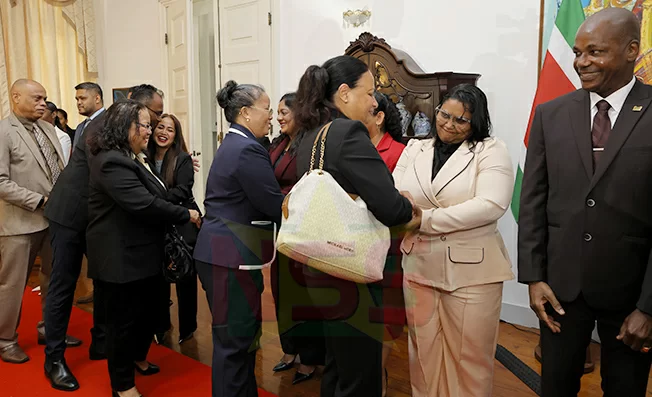
    After nearly two years of waiting for official approval, Suriname’s Sanatan Dharm religious organization has become the first recipient of land allocation documents from the national government, unlocking the green light for a slate of impact-focused community development projects. The formal handover ceremony took place Tuesday at the Cabinet of the President, where Suriname President Jennifer Simons presented the official land papers to representatives from the organization.

    Sanatan Dharm board chair Sherwankoemar Ramsoedit described the long-awaited approval as a transformative breakthrough for the group, which had seen all planned development work stalled for months without the official land disposition. “In one word: wonderful. It could not have gone any better,” Ramsoedit shared in a statement via Suriname’s Communication Service (CDS).

    The organization has outlined a multi-faceted community service plan for the newly allocated land, including a full vocational training institute, a senior citizen care shelter, and an outpatient polyclinic that will provide routine health screenings and blood testing services for local residents. These facilities are designed to form the core of a broader public welfare initiative that will serve vulnerable communities across the region.

    Ramsoedit emphasized that the approval process had stretched on for between 18 and 24 months, and the absence of official land documentation left the organization unable to move forward with any concrete construction or planning work. On behalf of the Sanatan Dharm board, he extended his gratitude to President Simons and Hanisha Jairam, whom he credited with playing a critical role in facilitating negotiations and moving the application process forward.

    Moving forward, the organization’s leadership will turn its full attention to detailed project planning and the next stages of development. Per Ramsoedit, President Simons has committed that the national government will continue coordinating with relevant ministries and regulatory bodies to support the organization in completing the remaining procedural steps for the project, ensuring the community services can open their doors to residents as soon as possible. This land allocation launch marks the start of a national government program to distribute land disposition approvals to religious groups across the country for public projects including shelters, orphanages, and cemeteries.

  • AdeKUS Student Chapter vertegenwoordigt Suriname tijdens PetroBowl 2026 in Argentinië

    AdeKUS Student Chapter vertegenwoordigt Suriname tijdens PetroBowl 2026 in Argentinië

    A student team from the Society of Petroleum Engineers (SPE) Student Chapter at Anton de Kom University of Suriname (AdeKUS) is set to carry Suriname’s flag at the 2026 Latin America and the Caribbean Regional PetroBowl, scheduled for May 15 in Buenos Aires, Argentina. The quiz-style competition is held as a core event of the annual regional SPE Student Symposium, gathering top university student teams from across the region to compete in expertise, collaboration and professional growth.

    Organized globally by SPE International, the PetroBowl is a leading international academic competition centered on technical and industry knowledge specific to the oil and gas sector. Unlike standard academic quizzes, the contest is designed to test deep domain expertise, fast problem-solving, and cohesive teamwork, with a core mission of nurturing the next generation of energy sector professionals.

    The 2026 Surinamese delegation consists of five members: team captain Rishano Hapdoel, competitors Altaaf Sultan, Latusca Reboe, and Ariantxa Djojodikromo, with academic mentors Manisha Ori and Shaïza Simons guiding the team ahead of the competition. This year’s participation builds on a historic milestone for the program: in 2024, AdeKUS’s student team claimed the regional PetroBowl championship title, a win that put Suriname’s emerging energy talent on the international map and highlighted the high caliber of the university’s petroleum-related programs.

    Beyond competition, the PetroBowl serves as a globally recognized platform for talent development. For participating students, the event offers far more than an opportunity to test their knowledge against international peers. It opens doors to structured professional development opportunities, including specialized technical training, cross-border networking events with industry leaders, and pathways to global competitions such as the international PetroBowl and SPE’s Student Paper Competition. These experiences directly prepare young professionals to tackle the complex technical and social challenges facing the modern energy sector.

    The Suriname team’s trip and participation are made possible through collaborative support from local industry and regional SPE bodies, including SPE Suriname (SPESUR), national energy firm Staatsolie, and local enterprise Self-Reliance. For these backers, supporting the student delegation is more than sponsorship—it is an investment in developing local talent and building domestic expertise in Suriname’s growing energy sector. The partnership also underscores the critical value of bridging academic education and industrial practice to advance the sustainable development of Suriname’s energy industry, as the country continues to expand its presence in the global oil and gas market.

  • De Peperpot Innovatie in Natuureducatie

    De Peperpot Innovatie in Natuureducatie

    Suriname has long integrated nature education into both primary and secondary school curricula, and a new off-campus initiative at Pepperpot Nature Park is bringing this core learning objective to life through immersive, hands-on experiences for young learners. Off-campus nature education has been widely recognized as a uniquely valuable learning framework that lets students explore natural ecosystems first-hand, turning the outdoors into a dynamic, interactive classroom that delivers a wide range of developmental and educational benefits.

    Located in Suriname’s Commewijne district, Pepperpot Nature Park spans 24 hectares and sits within an 820-hectare protected forest area. The site has a layered history: from the 17th century through its closure in 1994, it operated as a colonial plantation, and in the decades following, it gradually reverted to its original state as a pristine wild forest. The Pepperpot Nature Forest Foundation was established in 2009 to steward the rich natural ecosystem that regrew on the former coffee and cocoa plantation, which now hosts a unique biodiversity hotspot just 5 kilometers from the capital city of Paramaribo.

    The foundation’s dual mission is to protect the area’s native biodiversity and preserve remnants of the old plantation as cultural heritage. It manages the full 820-hectare landscape, which is divided into three zones: a 706-hectare forest corridor, a 32-hectare buffer zone surrounding the corridor, and an 80.89-hectare visitor park, 26.89 hectares of which are currently open to the public.

    For casual visitors, the park offers a range of recreational activities including hiking, birdwatching, and kayaking, with resting benches placed throughout to encourage visitors to slow down and connect with their surroundings. A diverse array of wildlife calls the park home, with a full photo gallery of native species hosted on the park’s official website, peperpotnaturepark.com. Guided tours led by professional naturalists are also available in morning, early evening, and night-time formats to suit different visitor preferences.

    As a form of experience-based learning, off-campus nature education encourages active exploration in natural, challenging outdoor environments, and research consistently shows that time in nature delivers profound benefits for children’s development. Hands-on interaction with the natural world boosts physical health, sharpens critical thinking skills, fosters creativity, reduces stress, and gives children greater sense of personal freedom that is critical to healthy emotional growth.

    Off-campus nature education encompasses a broad range of accessible activities designed to engage all children, from building shelters and ropes courses to campfire cooking, cooperative games, scavenger hunts, tree climbing, and native plant and wildlife identification. While these activities can take place anywhere from schoolyards to public parks, undisturbed natural areas like Pepperpot’s forests offer the richest learning environments. Through these experiences, students develop inquiry-based, discovery-driven thinking that deepens their connection to the natural world.

    Currently, the program serves fifth-grade primary school students from three Surinamese districts: Commewijne, Para, and Marowijne, and participating students have consistently shown high levels of enthusiasm for the hands-on learning opportunities. In September 2025, the foundation secured two years of funding from the ALCOA Foundation to launch the scaled off-campus nature education program at the park, which is uniquely suited to host the initiative. Each Saturday throughout the school year, classes of students take turns visiting the park, where they are guided by both professional naturalists and their own classroom teachers.

    According to project manager Maureen Silos of Pepperpot Nature Park, a core goal of the program is to help children understand that humans are an intrinsic part of the natural world. By giving school groups the chance to learn and play actively in a wild natural setting, the program helps young learners develop a deeper understanding of the world around them, cultivate a lasting love of nature, and build a lifelong commitment to conservation.

  • PRO rouwt om overlijden van hoofdbestuurslid Marlon Hoogdorp

    PRO rouwt om overlijden van hoofdbestuurslid Marlon Hoogdorp

    Suriname’s Party for Law and Development (PRO) has confirmed the passing of its prominent senior executive board member Marlon Hoogdorp, who died Monday evening at the age of 59. Hoogdorp had been hospitalized for two weeks prior to his death.

    A long-time supporter of PRO’s core mission, Hoogdorp officially joined the party in late 2024, drawn to its founding ideals of “law and development” — a framework that aligned closely with his own vision for equitable progress across Suriname. He quickly rose to a seat on the party’s top executive board, where he played an influential role in the lead-up to the 2025 Surinamese general elections. He was also named a candidate on the joint electoral list of the A20/DOE/PRO opposition coalition.

    Within PRO, Hoogdorp earned widespread respect for his deep expertise in communications and media strategy, as well as his naturally collaborative, community-focused demeanor. Party officials described him as a warm, committed, and driven public servant who remained dedicated to long-term, positive change for Suriname. Prior to his passing, Hoogdorp had been nominated to a senior post at the Surinamese embassy in Paris, and had already completed multiple specialized training programs to prepare for the role.

    In an official statement released this week, PRO expressed profound sadness over the loss of Hoogdorp, extended sincere gratitude for his years of contribution to both the party and Surinamese civil society, and offered condolences to his family, friends, and loved ones, wishing them strength in this difficult period of grief.

  • Wie is schuldig aan wateroverlast?

    Wie is schuldig aan wateroverlast?

    Recent days of heavy downpour have laid bare once again the profound vulnerability of the nation to catastrophic urban flooding. Neighborhood streets have turned into rushing, unmanageable rivers, residential properties have been submerged, schools have suspended classes, working adults are trapped inside their homes, and local business owners face catastrophic threats to both their property and their regular income streams. Motorists who were forced to navigate submerged roadways are now left covering costly repair bills for water-damaged vehicles. Across affected areas, widespread frustration, anger, and a sense of powerlessness have taken hold. But as a society, we must confront one simple, unflinching question: who bears responsibility for this repeated water crisis?

    The answer is far from straightforward, because the unvarnished truth is that this is a collective failure of the entire society. There is no doubt that government holds significant responsibility for the current crisis, but ordinary citizens must also be willing to examine their own behavior honestly. We cannot continually point fingers at the national government when some among us brazenly dump discarded refrigerators, freezers, mattresses and other bulk waste in drainage ditches and storm sewers. We cannot reasonably complain about clogged drainage canals when members of our community casually toss empty bottles, plastic cups and other litter onto streets from car windows as if this careless behavior is socially acceptable.

    Flooding is not triggered by intense rainfall alone; it is also the direct product of harmful human behavior and decades of systemic neglect, a lack of individual discipline, collective accountability, and regulatory enforcement. That said, this shared responsibility does not absolve the national government and public authorities of their outsized responsibility to address the crisis. On the contrary: the core role of government is to set clear direction for society, develop proactive policy, enforce regulatory standards, and educate the public on the dangers of environmental pollution and poor spatial planning.

    So where is the structured, sustained public outreach to inform citizens that clogging drainage ditches and sewers with waste creates life-threatening risks? Where are the national public awareness campaigns to drive home this critical message? Where are the routine inspections and meaningful penalties for individuals and businesses that damage the nation’s critical drainage infrastructure? Why are violators almost never held accountable for their actions? Why are drainage canals not cleared and maintained on a regular, proactive schedule? Why do authorities only act when floodwater is already lapping at residents’ front doors — and in some cases, fail to act even then?

    A government should not only be visible during emergency press conferences or issuing after-the-fact statements. Good governance requires proactive planning, forward thinking, and preemptive action to stop small problems from escalating into full-blown national disasters. It is precisely on this core metric that the current government and public administration have failed.

    After nearly nine months in office, society is fully justified in asking tough questions about the policies of the Ministry of Public Works, Transport and Spatial Planning. Flooding is never just a natural disaster; it is also the outcome of flawed long-term planning, inadequate routine infrastructure maintenance, and a persistent lack of decisive policy action. The claim that “there is no money” can no longer be used as a shield when residents are literally drowning in floodwater in their own communities.

    If it is true that public funding for drainage infrastructure is truly insufficient, then the Ministry of Finance and Planning must also face rigorous scrutiny. How can core public services like functional drainage, resilient infrastructure and residential flood protection not be guaranteed when national budget priorities are set?

    Too often, current leaders blame the previous administration for skipping routine infrastructure maintenance. While that claim may hold a grain of truth, it has long since lost its persuasive power. The public voted for new leadership and gave this government a clear mandate to solve long-standing problems. When leaders accept the responsibility of governing, they also accept the obligation to fix the failures of past administrations, not just repeat them.

    It is easy to criticize from the sidelines. But once you take power and are forced to address pressing national challenges, the true weight of governing becomes clear. Even so, the inherent difficulty of the job can never be an excuse for inaction, negligence or a lack of long-term vision.

    The harsh reality we face is this: climate change will only make extreme rainfall more intense and more frequent in the coming years. Deforestation, destruction of natural green spaces, and lax environmental policy have eroded our natural flood buffer systems to a dangerous degree. If we fail to implement bold, decisive reforms today, the crisis will only grow far worse tomorrow. Repeated flooding will no longer be a temporary inconvenience; it will become an annual recurring national crisis. That is why this moment must serve as a critical wake-up call for every stakeholder: the national government, local public authorities, the private sector, and individual citizens.

    We must stop the pointless blame-shifting that has delayed action for decades. Individual citizens must take responsibility for protecting their shared living environment. The government must finally invest in sustainable policy, proactive infrastructure maintenance, regular inspection, and consistent enforcement. Penalties for illegal dumping and environmental pollution must be visible and impactful enough to deter bad behavior. Spatial planning must be treated as the critical public priority it is. Most of all, we need leadership that does not just name problems, but actually solves them. Because today, we are all drowning — both literally, in floodwater, and figuratively, in inaction.

    The damage already done to homes, vehicles, businesses and public infrastructure is substantial, and it will only grow without action. But the greater damage that is now unfolding is the erosion of public trust in the nation’s leaders. That core question remains unanswered: who is to blame for the recurring flooding crisis?

    Perhaps the most honest answer is that all of us share some responsibility. But that shared blame also means we must work together to find a shared solution.

  • Ecuador’s Maria Fernanda Espinosa kandidaat voor leiderschap VN

    Ecuador’s Maria Fernanda Espinosa kandidaat voor leiderschap VN

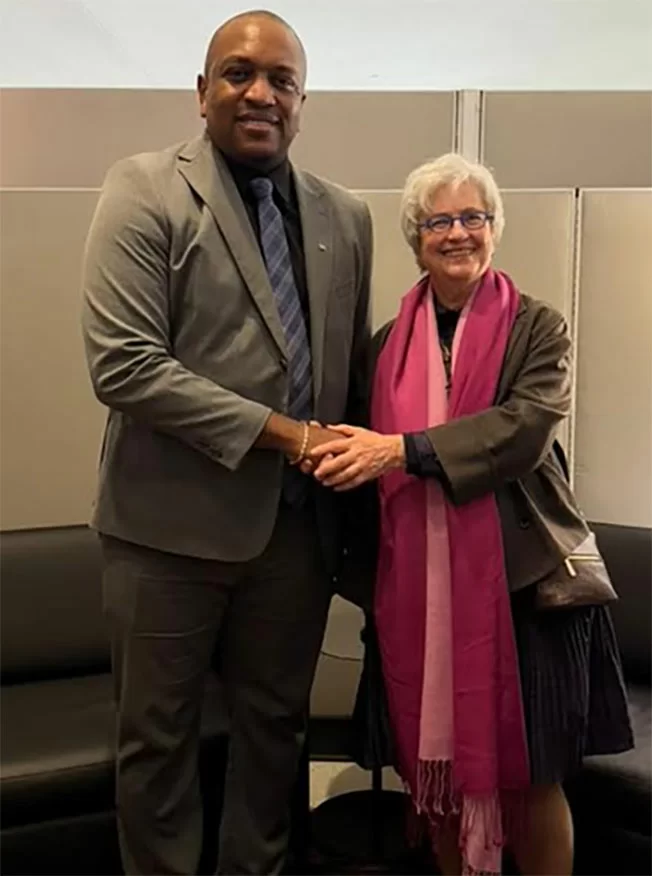
    A historic shift in the race for the world’s most prominent diplomatic role is taking shape, as veteran Ecuadorian diplomat Maria Fernanda Espinosa Garces has officially been put forward as a candidate for the next Secretary-General of the United Nations. The nomination was submitted Tuesday by the government of Antigua and Barbuda, a senior United Nations official confirmed to international news agency Reuters.

    Espinosa brings decades of high-level experience to the contest, with a long and distinguished track record in global diplomacy, multilateral cooperation and human rights advocacy. Between 2018 and 2019, she served as President of the UN General Assembly, holding one of the body’s most visible leadership roles before. She also previously served as Ecuador’s minister of both Foreign Affairs and Defense, giving her deep experience in national and international governance.

    With Espinosa’s entry into the race, the field of candidates vying to succeed incumbent Secretary-General António Guterres now stands at five. Notably, three of the five contenders are women, meaning the 2026 selection process could end with the appointment of the first female Secretary-General in the United Nations’ 81-year history. The election for this critical global leadership post is scheduled to take place later in 2026, and the successful candidate will begin a five-year term starting on January 1, 2027.

    The role of UN Secretary-General is widely regarded as one of the most influential positions in modern world politics. Tasked with leading the UN’s sprawling bureaucracy, the officeholder is responsible for advancing global peace and security, coordinating cross-border cooperation on a wide range of pressing global issues, from human rights protections and sustainable development to large-scale humanitarian response efforts.

    Guterres, who first took office in 2017, has spent his two terms navigating an unprecedented string of global crises, ranging from protracted regional armed conflicts to the accelerating impacts of climate change and the global COVID-19 pandemic. Whoever succeeds him will inherit a complex set of interconnected challenges, and will face the urgent task of rebuilding broad global confidence in multilateral cooperation at a time of rising geopolitical division.

    The presence of three women in the current candidate pool reflects a growing, years-long global demand for greater gender parity at the highest levels of international institutional leadership. For decades, advocacy groups have pushed for the United Nations to break the long-standing pattern of male-only leadership at the organization, arguing that greater gender diversity at the top will lead to more inclusive and effective global governance.

  • President-commissaris Scheek ziet grote uitdagingen bij TAS

    President-commissaris Scheek ziet grote uitdagingen bij TAS

    On May 12, a key leadership appointment was formalized for one of Suriname’s most critical telecommunications regulatory bodies, marking a new chapter in the South American nation’s digital governance efforts. Emanuel Scheek has taken up the post of president-commissioner of the Telecommunicatie Autoriteit Suriname (TAS), during a shareholders’ general meeting held at the Presidential Cabinet.

    The installation ceremony was led by Raymond Landveld, Suriname’s Minister of Transport, Communication and Tourism, who stood in for President Jennifer Simons, who was unable to attend the event. In his remarks at the ceremony, Minister Landveld underscored the outsized regulatory importance TAS holds for Suriname’s fast-evolving telecommunications sector. He noted that both TAS and national telecom provider Telesur rank among the government’s core strategic institutions for the country’s digital ecosystem, emphasizing that TAS carries the formal mandate to oversee operations of Telesur and every other private and public telecommunications company operating across Suriname.

    Beyond routine market oversight, Landveld confirmed that the Surinamese government has tasked TAS with a high-priority additional responsibility: contributing substantially to the drafting and preparation of a landmark new electronic communications law. The new regulatory framework is designed to keep pace with rapid technological advancements reshaping the global and local telecom sector, updating outdated rules to match current industry realities, and TAS will bring its on-the-ground regulatory expertise to shape fit-for-purpose legislation and sector standards.

    In his first public remarks following his appointment, Scheek acknowledged the heavy workload ahead for the agency and his new leadership role, but expressed confidence that collaborative work centered on national interests will deliver tangible progress. “There is a great deal of work waiting to be done. But I am certain that if we work together and put national interest first, we will overcome the challenges ahead,” Scheek told attendees.

    The new TAS chief noted he did not accept the position lightly, saying the immediate coming months will be dedicated to aligning goals with TAS’s governing board, setting clear institutional priorities, and mapping out a strategic path forward. “The goal is for me to contribute my part in my own way, and we will adapt as developments unfold,” he added.

    Scheek also highlighted that he has existing professional ties with multiple members of the TAS board, having collaborated with them on prior initiatives. This existing working relationship, he said, creates a strong foundation to advance the shared goal of strengthening TAS as an independent, effective regulatory authority for Suriname’s telecom sector. “I look forward to a productive collaboration, so that we can deliver strong results and ensure TAS truly lives up to the standard of the authoritative regulatory body it is meant to be,” Scheek said.