标签: Suriname

苏里南

  • Olieprijzen pieken tot hoogste niveau in vier jaar, maar dalen daarna

    Olieprijzen pieken tot hoogste niveau in vier jaar, maar dalen daarna

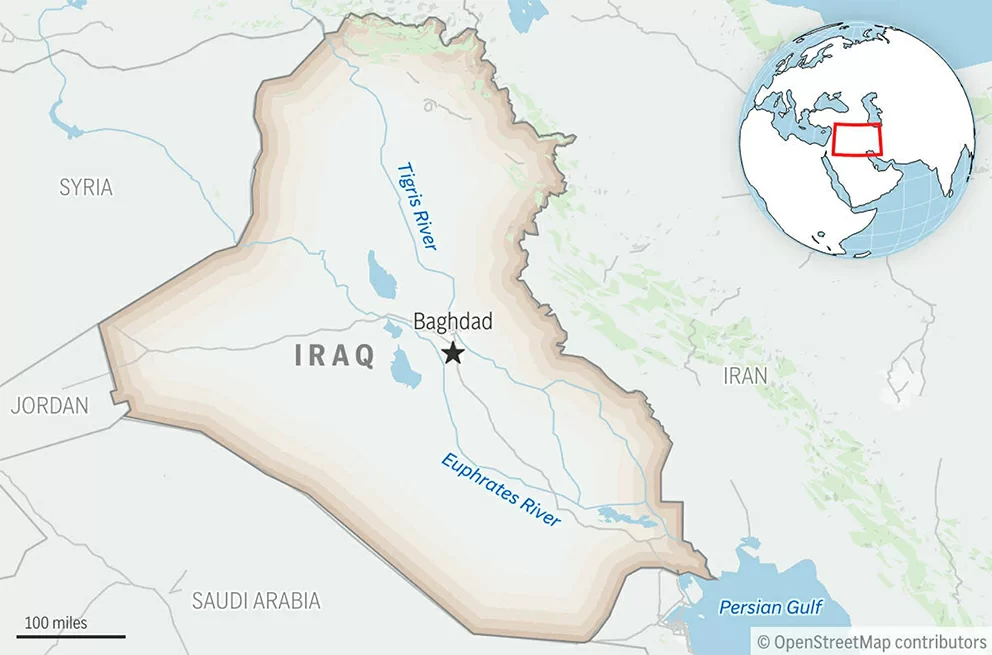
    On Thursday, global oil prices surged to a four-year peak above $126 per barrel, driven by mounting fears that escalating military conflict between the United States and Iran could trigger prolonged disruptions to critical energy supplies from the Middle East. The sharp intraday rally later gave way to an unexpected retreat, capping a session marked by historic levels of volatility that shook global commodity and financial markets.

    The upward momentum gained traction after Axios reported Wednesday that U.S. President Donald Trump was set to receive a briefing Thursday on potential military strikes targeting Iran, with the stated goal of forcing Tehran back to negotiations over its nuclear program. Attendees expected at the briefing included Defense Secretary Pete Hegseth and Joint Chiefs of Staff Chair General Dan Caine.

    Since the start of joint U.S. and Israeli military strikes against Iran on February 28, Brent crude prices have already doubled, while U.S. West Texas Intermediate (WTI) has climbed nearly 90%. The massive gains stem primarily from the effective closure of the Strait of Hormuz, the strategic maritime chokepoint that handles roughly one-fifth of the world’s daily oil and liquefied natural gas exports.

    Sustained elevated oil prices carry severe risks for the global economy, threatening to ignite a new inflationary spiral and push up fuel prices across the United States. The timing is particularly sensitive for the U.S., as it heads into midterm elections later this year. Oil, natural gas, and their refined products are foundational inputs for global transportation, energy distribution, and manufacturing sectors ranging from plastics to agricultural fertilizers.

    John Evans, an analyst at leading oil trading firm PVM, warned that market participants unprepared for even steeper gains should prepare for further shocks. “Anyone who does not believe Brent can reach $150 per barrel would be wise to look away now,” he said.

    During Thursday’s trading session, June-delivery Brent futures hit an intraday peak of $126.41 per barrel, the highest level recorded since March 9, 2022. By the closing bell, however, the benchmark had erased all intraday gains and more, settling $4.14, or 3.5%, lower at $113.89 per barrel. More actively traded July contracts fell 1.6%. WTI futures also pulled back from an early high of $110.93 per barrel – the strongest since early April – to close 2.1% lower at $104.60.

    Even with Thursday’s retreat, both major crude benchmarks remain on track to post their fourth consecutive monthly gain, reflecting widespread market anxiety that the ongoing conflict around Iran will disrupt global energy supplies for an extended period.

    Market analysts have not identified a clear fundamental trigger for the late-day price pullback from the session’s highs. Instead, they attribute the sharp reversal to the extreme volatility that has gripped energy markets since the conflict began. Two large sell orders executed during morning trading coincided with approaching futures contract expiration dates, a period that typically amplifies price swings.

    Ole Hvalbye, a senior analyst at SEB Research, described the day’s price movements as unprecedented. “We are seeing massive intraday swings that are comparable to what we normally see over entire months,” he said, adding that current market conditions amount to “chaos” that make it extremely difficult to build a coherent fundamental market outlook.

    Beyond commodity markets, the volatility spilled over into foreign exchange: the Japanese yen rose 3% on Thursday, its strongest single-day gain in more than three years, after Japanese officials issued warnings about potential currency intervention to support the yen, even in energy-related markets.

    While President Trump announced a ceasefire in the conflict earlier this month, he simultaneously imposed a full blockade on Iranian ports. Negotiations to resolve the standoff have since stalled: the U.S. demands Iran open its nuclear program for new negotiations, while Iran demands concessions on control of the Strait of Hormuz and war reparations. Tony Sycamore, a market analyst at IG Markets, said there is little reason to expect a quick resolution or a near-term reopening of the strait.

    Shipping data confirms that traffic through the critical waterway remains at a fraction of normal levels. Over a 24-hour period this week, only seven vessels passed through the strait, compared to a typical daily volume of 125 to 140 ships. Of the seven vessels that transited, three were bulk carriers, one was a container ship, and two were bitumen tankers, according to data from Kpler and satellite analysis from SynMax.

    The effective closure of Hormuz has overshadowed another recent development in global oil markets: the United Arab Emirates’ announcement earlier this week that it will leave OPEC after nearly 60 years of membership. Analysts note the departure will allow the UAE to ramp up its own production once global export channels normalize, but they expect little immediate impact on current market conditions.

    High prices have already begun to erode global oil demand, a dynamic that analysts say is the only factor currently easing some of the extreme tightness in supply. Analysts at ING estimate that global demand has fallen by roughly 1.6 million barrels per day, as consumers and end-users cut back on oil product consumption amid elevated costs. Even this demand destruction, however, has not been large enough to offset the massive gap left by disrupted supplies from the Middle East.

  • Surinaamse Gids Exclusief gelanceerd als nieuw platform voor bedrijven en diensten

    Surinaamse Gids Exclusief gelanceerd als nieuw platform voor bedrijven en diensten

    After a decade of iterative development and setbacks, a groundbreaking new integrated business platform named Surinaamse Gids Exclusief has officially launched at Suriname’s Prince Ballroom on Wednesday. Created by founder Brayen Wouden, the multi-format ecosystem—consisting of a print magazine, official website, and mobile application, all operating under the same brand—aims to connect, promote, and maintain long-term visibility for business products and services from Suriname-based and international enterprises, bridging local entrepreneurs and the global market.

    For Wouden, the launch marks the fulfillment of a decade-long personal and professional dream. In remarks at the launch event, the founder outlined the platform’s far-reaching mission that extends far beyond a standard business directory or promotional outlet. “This is more than a business magazine, more than an app or an integrated website. It is a full ecosystem, a central hub where visibility and innovation converge,” Wouden explained. “It is a space where local entrepreneurs and members of the Surinamese diaspora can showcase their work in full, build an international network, and access information that is open and accessible to all segments of the population. We designed this platform to stimulate entrepreneurship, and build a critical connecting bridge between the government, private enterprises, and civil society organizations.”

    The Surinamese government holds a prominent presence on the new platform, which currently sources most of its published news content directly from official government sources. Beyond business promotion, the platform offers a wide range of additional public utilities: it hosts listings for job seekers searching for employment opportunities, and features options for people looking to buy or rent residential property. Organizers also confirmed that future updates will add functionality to promote local cultural, business, and community events to both domestic and international audiences.

    To accommodate businesses of all sizes and budget ranges, the platform operates on a tiered pricing package system, with options ranging from a free basic listing to a premium annual plan costing $950 USD. This structure allows enterprises to select the level of visibility and promotional access that aligns with their needs and resources.

    The launch event drew strong official representation from the Surinamese government, with multiple cabinet ministers in attendance. Foreign Affairs Minister Melvin Bouva and Minister of Transport, Communication and Tourism Raymon Landveld both shared their optimistic expectations for the platform’s economic impact, noting that it will act as a public “storefront” for Surinamese companies and services, and projecting that it will make a tangible contribution to driving domestic economic growth in the coming years.

  • Persvrijheid wereldwijd op laagste niveau in 25 jaar, Suriname onder druk

    Persvrijheid wereldwijd op laagste niveau in 25 jaar, Suriname onder druk

    Global press freedom has fallen to its lowest level in 25 years, leading press freedom non-governmental organization Reporters Without Borders (RSF) has warned in its annual World Press Freedom Index, which ranks 180 countries across the world on conditions for independent journalism. For the first time since the index launched in 2002, more than half of all ranked nations fall into the “difficult” or “very serious” categories for press freedom, marking an alarming global shift that sees journalism increasingly labeled as a criminal act.

    Northern European nations continue to dominate the top of the 2026 rankings, with Norway, the Netherlands and Estonia claiming the first three positions. France ranks 25th, earning a “satisfactory” rating, while the United States drops seven places to 64th, a ranking categorized as “problematic”—a decline that RSF ties to the political shifts since Donald Trump took office as U.S. president.

    Across the Caribbean and South American region, press freedom conditions vary widely, with growing challenges for many local media outlets. Suriname falls to 34th place, down from 28th two years ago and 32nd last year, categorized as a nation with “moderate” press freedom but facing clear ongoing threats. Journalists in Suriname regularly face pressure and intimidation, particularly when reporting critically on political activity and government corruption. Recent legal actions against media outlets and reporters that hold public officials to account underscore how vulnerable independent press remains in the country. Neighboring Guyana ranks 73rd, grappling with frequent political interference in media operations and documented restrictions on press freedom. Reports of threats against independent journalists and attempts to censor media organizations, especially around election cycles and the exposure of political scandals, have severely restricted free information flow and open public debate in the country. While Barbados and Trinidad and Tobago rank far higher at 19th, delivering relatively better conditions for press, even these nations face growing concerns over journalist safety and pressure from political and corporate economic interests. In Jamaica and Haiti, journalists are regularly targeted with violence and intimidation, especially when investigating organized crime and systemic corruption. In Haiti, the unstable security situation and near-total lack of effective legal protection have left press freedom in an extremely precarious state.

    Globally, RSF highlights dramatic plunges in rankings for nations where political pressure on journalists has spiked. Argentina fell 11 places to 94th, while El Salvador has dropped a staggering 105 places since 2014 to land at 143rd, with both seeing rising political unrest and growing violence against members of the press. The NGO identifies Eastern Europe and the Middle East as the most dangerous regions globally for journalists. Russia ranks 172nd and Iran 177th, both placing among the bottom 10 countries on the index. Israel, ranked 116th, faces widespread criticism from RSF for repeated attacks on journalists operating in Gaza, the West Bank and Lebanon. Since October 2023, more than 220 journalists have been killed by Israeli military operations in Gaza, with at least 70 of those deaths occurring while journalists were on active duty, the organization confirms. RSF also notes that the Israeli military has become the world’s single largest killer of journalists this period.

    A core finding of the 2026 index is that more than 60 percent of all ranked countries—110 out of 180—criminalize journalists through a range of repressive tactics. These include widespread misuse of emergency legislation to restrict press activity and implement arbitrary limits on reporting. Prominent examples cited by RSF include India (157th), Egypt (169th), Georgia (135th), Turkey (163rd) and Hong Kong (140th).

    Anne Bocande, editor-in-chief of RSF, attributes the global collapse in press freedom to four overlapping factors: the rise of authoritarian governments, systemic political incompetence, capture of media and policy by unaccountable economic interests, and insufficient regulation of large online digital platforms. Bocande has called on democratic governments and global civil society to take far stronger action to end the criminalization of journalism, implementing robust legal protections for reporters and imposing meaningful sanctions on actors that target the press. “Current protection mechanisms are insufficient, international law is being undermined, and impunity for attacks on journalists is widespread,” Bocande warned. “Doing nothing is a form of consent. The spread of authoritarianism is not inevitable.”

  • Suriname en Pakistan praten over rijst, innovatie en Caricom-markt

    Suriname en Pakistan praten over rijst, innovatie en Caricom-markt

    On 30 April, Suriname’s Minister of Agriculture, Livestock and Fisheries (LVV) Mike Noersalim held a high-level meeting with Pakistani Ambassador to Suriname Murad Ashraf Janjua, where the two sides agreed to build a bilateral agricultural partnership centered on knowledge sharing and joint research to address common challenges facing their farming sectors.

    Both South American Suriname and South Asian Pakistan confront overlapping pressing issues in agriculture: the growing negative impacts of climate change on crop yields and farming stability, paired with a sharp decline in young people’s interest in pursuing careers in the agricultural sector. Recognizing these shared obstacles, the two governments have committed to collaborating on targeted, practical solutions, rather than working in isolation.

    A core focus of the new partnership will be basmati rice, a long-grain aromatic variety globally renowned for its quality and flavor. Pakistan has decades of advanced experience cultivating basmati rice, and holds globally recognized elite varieties of the crop. Currently, Suriname meets all domestic demand for basmati rice through imports, with no local commercial production of the grain. Under the new cooperation framework, the two sides will explore opportunities to launch local basmati cultivation in Suriname, drawing on Pakistani expertise.

    Knowledge sharing will also extend to high-quality seed development, a critical foundation for stable, high-yield agriculture. Pakistan’s agricultural research institutions will partner with Suriname’s Anne van Dijk Rice Research Center Nickerie (Adron) to transfer technical know-how for improved basmati seed production, helping Suriname build local capacity to develop its own high-quality basmati seed stock.

    Organic agriculture is another key area for mutual learning. Pakistan has placed significant strategic priority on expanding organic food production, which is grown without synthetic pesticides or chemical fertilizers, and is widely seen as a healthier, more environmentally sustainable alternative to conventional farming. For its part, Suriname already produces 100% organic upland rice, a disease-resistant variety that has been cultivated locally for decades. The Surinamese government recently launched an initiative to scale up production of this organic rice to meet growing global demand for organic agricultural goods, and the two sides exchanged insights on organic sector development during the meeting.

    Beyond technical agricultural cooperation, the talks also explored broader economic opportunities within the framework of the Caribbean Community (Caricom), Suriname’s regional trade bloc. The two sides discussed the potential for Pakistani private companies to enter the Caricom market through public-private partnership (PPP) models with local Surinamese businesses, opening new trade and investment pathways for both sides.

    Following the meeting, Minister Noersalim highlighted that the discussion laid a clear foundation for future collaboration, noting that both sides exchanged open insights on their respective sector experiences and priorities. While market access opportunities within Caricom were explored, Noersalim emphasized that knowledge transfer and joint agricultural research remain the central pillars of the new bilateral partnership.

    This cooperation marks a new chapter in agricultural diplomacy between the two nations, bringing together complementary strengths to address shared global challenges in food security and sustainable farming.

  • Wijzigingen Comptabiliteitswet noodzakelijk voor begrotingsbehandeling

    Wijzigingen Comptabiliteitswet noodzakelijk voor begrotingsbehandeling

    Paramaribo, 30 April – The opening of public debate on Suriname’s 2026 national budget has been delayed, after National Assembly Speaker Ashwin Adhin confirmed that critical preconditions have yet to be met before formal deliberations can begin. In an interview with local outlet Starnieuws, Adhin explained that amendments to the country’s Comptability Act must first be finalized to create a legal framework for the budget process. On top of the required legislative changes, the executive branch has yet to submit several supplementary policy documents and full financial datasets required for parliamentary review.

    Adhin emphasized that budget deliberation is far more than a procedural formality for the legislature. It is the core mechanism through which parliament exercises its constitutional oversight over government spending, sovereign debt management, public revenue streams, and the implementation of administration policy priorities. Launching debate without complete, accurate information would be irresponsible, he said, adding that the government must first provide full clarity on all outstanding line items and planned expenditure allocations. Once all required documentation is received, the 2026 budget will be immediately placed on the assembly’s urgent agenda. Adhin also noted that the council of ministers still awaits a comprehensive national debt plan from Finance and Planning Minister Adelien Wijnerman, a key document required for thorough review.

    The debate over the 2026 budget comes as the Suriname Court of Audit highlighted long-running systemic flaws in public financial management in its recently released 2025 annual report. While the court acknowledged that incremental progress has been made in recent reforms, it found that misalignment between policy priorities and budget implementation remains a persistent shortcoming. Internal control systems within individual government ministries also continue to function inadequately, the audit body found.

    As a result of these weak controls, errors and irregularities in public spending are not always caught in a timely fashion, the court reported. Additional challenges remain around upholding integrity and compliance with existing financial laws and regulations. Recent audits into domain land management, social welfare benefits, and public subsidy distribution confirmed that gaps in oversight and irregular spending practices are still widespread. The court also flagged compliance with financial reporting requirements by state-owned enterprises as an ongoing high-priority concern.

    Against this backdrop, Adhin argued that rigorous, careful scrutiny of the 2026 budget is non-negotiable. Parliament must have full clarity to trace exactly how public resources are allocated, what existing sovereign debt obligations the government carries, and how new financing will be deployed to meet policy goals. The Court of Audit echoed this priority, noting that transparency and accountability are foundational to maintaining public trust in government institutions. It also stressed that discharge approval by the National Assembly is a critical link in the state’s financial accountability cycle; without completing this step, national financial oversight remains incomplete.

    Adhin reaffirmed that while moving the budget process forward in a timely manner is important, speed cannot come at the cost of robust, thorough parliamentary financial oversight. The budget will only be taken up for full debate once all preconditions are met. “We will not rush this process at the expense of sound governance,” Adhin said, adding that once the required legal amendments are passed and all missing documents are submitted, the National Assembly will advance the budget process with full urgency.

  • Olieprijzen stijgen naar hoogste niveau in weken

    Olieprijzen stijgen naar hoogste niveau in weken

    Global crude oil markets delivered a historic jump on Wednesday, with prices climbing more than 6% to close at their highest levels in weeks, driven by escalating fears of prolonged Middle Eastern supply disruptions following stalled negotiations between the United States and Iran. A larger-than-expected drawdown in U.S. commercial oil and fuel inventories further amplified upward price momentum, compounding already tight market conditions.

    June Brent crude futures, the global benchmark for oil prices, notched an eighth consecutive day of gains on Wednesday, settling up $6.77, or 6.1%, at $118.03 per barrel — its highest closing level since March 31. In post-market trading, the benchmark extended its rally to hit $120 per barrel, a threshold not crossed since June 2022. U.S. West Texas Intermediate (WTI) crude futures for the same delivery month rose $6.95, or 7%, to settle at $106.88 per barrel, the highest peak since April 7.

    Market anxiety deepened after a White House official confirmed that former U.S. President Donald Trump has asked domestic oil producers to outline mitigation strategies for a potential months-long closure of Iranian ports by U.S. sanctions. Calculations from Reuters show the ongoing geopolitical conflict centered on Iran has already cut off more than $50 billion worth of crude oil from global markets. “An extended port blockage would worsen existing supply disruptions and push prices even higher,” warned Yang An, a senior analyst at Haitong Futures.

    Data from the U.S. Energy Information Administration (EIA) added further fuel to the rally, reporting that U.S. crude inventories fell by more than 6 million barrels last week. That drawdown far outpaced the 200,000 barrel decline analysts had forecast. Both gasoline and distillate fuel stockpiles, a category that includes diesel, also dropped more sharply than predicted. The inventory declines sparked fresh concerns over potential shortages in the world’s largest fuel consumer just as the summer peak driving season, a period of historically high fuel demand, gets underway. Analysts at RBC Capital Markets noted that growing seasonal summer demand paired with ongoing supply restrictions will likely provide additional upward support for oil prices in coming weeks.

    In another development that underscores the severity of current supply chain disruptions, the Abu Dhabi National Oil Company (ADNOC) has notified some customers that it may shift loading of two crude grades to ports outside the Persian Gulf next month, as the Strait of Hormuz, one of the world’s most critical energy chokepoints, remains closed, according to sources and a document reviewed by Reuters. The prolonged closure of the strait, through which roughly 20% of global oil trade passes daily, has already placed severe pressure on global oil and gas supplies.

    Beyond immediate supply disruptions, investors are also assessing the long-term market impact of the United Arab Emirates’ (UAE) decision to withdraw from OPEC. Callum Macpherson, head of commodities at Investec, noted that most analysts expect little near-term market impact, as Middle Eastern producers are projected to maintain maximum output levels to capitalize on high prices.

    However, research firm Wood Mackenzie warned that the UAE’s exit marks the most significant rupture in OPEC’s decades-long history, and increases the risk of global oversupply that could push oil prices lower starting in 2027. Simon Flowers, chief analyst at Wood Mackenzie, explained that the departure will have minimal impact on 2026 market dynamics even if the Strait of Hormuz reopens, but after that point, losing one of OPEC’s most productive members will make it far harder for the cartel to balance global markets, amplifying risks of oversupply and downward price pressure.

    Amid widespread geopolitical and economic uncertainty, gold has also emerged as a standout asset for investors. On April 30, 2026, gold settled at $4,541 per troy ounce, marking a 44% increase from April 2025 and hitting an all-time record high. The sharp rally is widely attributed to growing geopolitical tensions, persistent inflation concerns, and broad global economic uncertainty. Top Wall Street banks are split on how high prices can go: analysts from JPMorgan and Bank of America project gold will climb toward $5,000 per troy ounce by the end of 2026, while strategists at UBS and Deutsche Bank forecast prices could surge above $6,000 per ounce this year.

  • Column: Samenwerking!

    Column: Samenwerking!

    For a small nation with fewer than one million inhabitants, lifting overall athletic performance to a more competitive regional and international level is an open, widely acknowledged goal. Yet for years, national sports federations have failed to deliver the systemic changes needed to turn this ambition into reality. Currently, scattered, siloed initiatives from disconnected sporting bodies have left the country unable to build a cohesive, high-performing sports ecosystem, even as abundant natural athletic talent exists across the population.

    While exceptional individual talents do emerge periodically to dominate local competitions, these bright spots rarely translate to sustained success at higher regional tournaments. When matched against competitors from larger, better-organized sporting programs, these athletes consistently deliver underwhelming results, revealing the deep structural flaws holding the national sports sector back.

    To stop squandering the limited resources already available, a fundamental course correction is urgently required, argues analyst Mireille Hoepel. Though the country’s small population size is a fixed constraint that cannot be changed, targeted strategic policy can align fragmented efforts toward a shared, effective vision. Instead of spreading thin public and private funding across dozens of under-resourced sports, Hoepel proposes a data-driven approach: conduct a thorough national assessment to identify which sport holds the greatest natural potential for broad participation and competitive success among the population, then redirect coordinated investment to that discipline.

    Central to this new strategy is prioritizing high-quality coach training. A rigorous, standardized training pipeline for coaching staff is non-negotiable, Hoepel emphasizes, if the nation aims to develop athletes capable of competing at the regional level. Existing sports federations would still retain authority over their respective disciplines under the proposed framework, but they would be required to secure independent funding, particularly for costs associated with international competition participation.

    Once a priority sport with broad national appeal is selected, the next step is to engage the private business sector to fund a long-term multi-year development plan. This sustained investment would lay a solid, stable foundation that can be built on gradually and responsibly over time. It also requires deliberate oversight to ensure the selected sport can be accessed and practiced across all regions of the country, fostering widespread public engagement and a larger talent pool to draw from.

    Hoepel stresses that the core challenge is not the nation’s small scale, but the chronic lack of cooperation between disjointed sports organizations. Separate, uncoordinated activities from competing groups spread already scarce financial resources and human capital too thin, resources that could otherwise be pooled for a unified national development strategy. To address this, federations should organize national open trial days across the country to gauge genuine public interest in their sports. The sport that generates the highest levels of public participation and interest would then qualify for coordinated private sector funding to maximize its competitive potential.

    Drawing a parallel to Iceland, a small nation that has punched far above its weight in international sport through targeted, cohesive strategy, Hoepel notes that unified collaboration can deliver far better competitive results, even for a country with a small population.

  • DNA-voorzitter Adhin: Politieke verdeeldheid vertraagt wetgevingsproces in DNA

    DNA-voorzitter Adhin: Politieke verdeeldheid vertraagt wetgevingsproces in DNA

    Suriname’s National Assembly Speaker Ashwin Adhin has outlined the primary factors slowing the country’s legislative process, while pushing back against criticism of the current parliament’s low output of passed laws, arguing that thorough, high-quality lawmaking serves the nation better than rushed, error-ridden legislation. In an exclusive interview with local outlet Starnieuws, Adhin identified deep political division across political factions and extended preparation requirements for bill reviews as the two leading causes of delayed legislative action.

    Adhin explained that differing policy positions between parliamentary factions and frequent absences of elected members regularly force delays to the review of critical draft laws. Even within ruling coalition blocs and opposition groups, competing perspectives on sensitive pieces of legislation are common, requiring extended rounds of additional negotiations and consensus-building before bills can advance to plenary votes. While Adhin stressed that open disagreement is a natural, healthy component of democratic governance, he acknowledged that this political reality directly impacts the speed at which new laws can be enacted.

    Beyond ideological divides, the speaker also highlighted persistent challenges with achieving legislative quorum. When too few assembly members are present to meet the minimum attendance requirement, scheduled sessions cannot proceed and planned votes must be pushed back to a later date. To mitigate this issue, Adhin noted he now proactively coordinates with faction leaders ahead of planned sessions to confirm attendance numbers, and will cancel scheduled meetings if it is clear quorum will not be met. “If I know in advance there will be no quorum, I will not schedule a meeting,” he said.

    Adhin defended the current parliament’s legislative pace, arguing that the body should not be judged solely on the total number of bills passed, but rather on the quality and careful consideration that goes into each new law. Behind the public plenary sessions, he explained, parliamentary committees carry out intensive work to review bill content, propose amendments, and conduct rigorous legal testing to ensure legislation is sound. Rushed lawmaking, he warned, creates far larger problems down the line.

    To illustrate the risks of hasty legislative action, Adhin pointed to past flawed judiciary reform laws. While the Law on the Legal Position of the Judiciary took multiple years to enact, critical provisions related to funding were not fully calculated or detailed during the drafting process. This has required major, costly corrections after the law entered into force, demonstrating the cost of cutting corners. “Better to take a little extra time and get it right, than to fix mistakes after a law has already been adopted,” Adhin said, outlining his core governing principle.

    Currently, anti-money laundering and counter-terrorism financing legislation top the national assembly’s legislative agenda. Adhin emphasized these bills carry urgent priority, as Suriname must meet binding international regulatory obligations to avoid damage to the country’s financial reputation and an increased risk of being placed on an international financial blacklist. A new round of international compliance assessments is scheduled this year, but multiple required bills still need to be finalized to meet the deadline.

    Over the first nine months of the current parliament’s term, 294 meetings have been scheduled, of which 264 have been held. Eighteen draft bills have been introduced for review, but only three have been passed into law to date. Adhin projected that a larger batch of bills will be finalized in the coming months, with priority given to legislation tied to Suriname’s economic, financial, and governance priorities. Over the next nine-month period, he aims to see between 30 and 35 full bills passed and enacted, a major jump from the first term’s output.

    “A parliament should not rush to produce output just to hit numerical targets,” Adhin said. “It should legislate responsibly and sustainably in the interest of the people of Suriname.”

    Adhin is currently out of the country for a private visit to the Netherlands, and will remain away through May 5. While in Europe, he will also meet with Surinamese diaspora community leaders and potential international investors in coordination with the Surinamese embassy in The Hague. Despite his absence, a public plenary session on the new Fire Department Law remains scheduled as planned for the day of the interview.

  • De Nieuwe Leeuw presenteert voorstel voor wet bestuur en toezicht rechtspersonen

    De Nieuwe Leeuw presenteert voorstel voor wet bestuur en toezicht rechtspersonen

    On April 29, Suriname’s opposition political party De Nieuwe Leeuw (DNL) took a key step toward strengthening public sector governance by formally submitting a draft proposal for a new Law on Governance and Oversight of Legal Entities in Suriname to the country’s president, vice president, and the leadership and members of the National Assembly (DNA).

    DNL’s initiative grows from growing public and political concern over blurred role boundaries between governing bodies and oversight institutions in state-linked legal entities and public organizations. Party chairman Dharm Mungra explained that the bill is a response to repeated instances where supervisory boards and boards of commissioners have overstepped their mandates to interfere in day-to-day executive governance matters.

    According to Mungra, this overreach has created unnecessary institutional friction, triggered widespread conflicts of interest across public entities, and ultimately eroded the effectiveness of government governance across the country. To address these gaps, DNL argues that a clear, binding legal framework is urgently needed to codify the distinct roles and responsibilities of oversight bodies, eliminating the ambiguity that enables overreach and dysfunction.

    Party representatives emphasized that the submitted document is not a finalized piece of legislation, but rather an opening discussion draft designed to jumpstart national conversation on governance reform. The core focus of the proposal is exclusively targeted at regulating the functions of supervisory boards and boards of commissioners, with the party framing it as a substantive contribution to the national policy debate and a foundational starting point for further drafting work by the National Assembly.

    In a deliberate choice to keep the proposal focused, DNL has excluded a range of related secondary topics from the current draft. These omissions include rules governing executive management and boards of directors, penalties and enforcement mechanisms, transitional provisions, formal definitions of legal entities and their alignment with existing national legislation, rules for integrity commissions, exceptions for appointment term limits, and civil law consequences for conflicting interest violations.

    DNL affirmed that the next stages of legal structuring, refinement, and harmonization with Suriname’s existing legal code fall properly within the remit of the National Assembly, the country’s formal legislative body tasked with approving and enacting final law.

  • VS en Latijns-Amerika hekelen Chinese druk op Panama

    VS en Latijns-Amerika hekelen Chinese druk op Panama

    A growing geopolitical standoff over control of key Panama Canal ports has drawn in six nations, with Bolivia, Costa Rica, Guyana, Paraguay, Trinidad and Tobago, and the United States issuing a joint statement backing Panama and criticizing what they call unfair Chinese economic retaliation. The conflict traces back to a late January ruling from Panama’s Supreme Court, which voided decades-old contracts granting Hong Kong-based conglomerate CK Hutchison rights to manage the strategic Balboa and Cristobal port terminals along the canal, ruling the agreements unconstitutional.

    In the joint statement released Tuesday, the six countries allege that in response to the court’s independent ruling, China has imposed targeted economic pressure on vessels flying the Panamanian flag. Data from the U.S. Federal Maritime Commission (FMC) confirms that China detained nearly 70 Panamanian-flagged ships in March alone, a volume far exceeding typical inspection levels.

    “These actions, coming after the independent Panamanian Supreme Court’s decision on the Balboa and Cristobal terminals, represent a clear effort to politicize global maritime trade and violate the national sovereignty of countries in our region,” the joint statement reads. U.S. Secretary of State Marco Rubio separately emphasized Washington’s position in a post on platform X, noting that the U.S. is “deeply concerned” by Chinese pressure on Panama. “We stand in solidarity with Panama. Any attempt to undermine Panama’s sovereignty is a threat to all of us,” Rubio stated.

    China has already pushed back against the criticism, accusing the U.S. of bullying and attempting to tarnish its reputation across Latin America. The Chinese government has also publicly labeled the Panamanian Supreme Court’s ruling as “absurd” and “disgraceful”.

    FMC Chair Laura DiBella warned last month that China’s detention of Panamanian-flagged vessels carries significant consequences for both Panama and the United States. “These heightened inspections appear specifically designed to punish Panama following the termination of Hutchison’s port operations,” DiBella explained. She added that because a large share of U.S. container trade moves on vessels registered under the Panamanian flag, the Chinese actions could carry major commercial and strategic ripple effects for the U.S. shipping sector.

    The voiding of CK Hutchison’s contracts came amid heightened global attention to the Panama Canal, driven by former U.S. President Donald Trump’s repeated threats to take control of the strategic waterway during his 2025 presidential campaign. Trump made the 80-kilometer canal a core policy priority for his second term, claiming in his January 2025 inaugural address that China controlled the canal and promising the U.S. would “take back” control.

    Beyond pressure on Panamanian-flagged shipping, U.S. officials confirm China has also retaliated against global shipping giants Maersk and Mediterranean Shipping Company (MSC), the two firms awarded temporary operating contracts for the Balboa and Cristobal terminals after CK Hutchison was removed from the project. The FMC reported in March that both companies were summoned for “high-level talks” by China’s Ministry of Transport, and Chinese state-owned shipping giant COSCO has already suspended all operations at the Balboa terminal in response to the change.

    CK Hutchison, through its local subsidiary Panama Ports Company, has launched an international arbitration case against the Panamanian government, seeking more than $2 billion in damages for the canceled contracts.

    Analysts frame the dispute as part of a broader global trend of nations weaponizing maritime shipping for geopolitical gain. David Smith, an associate professor at the University of Sydney’s United States Studies Centre, calls the Panama Canal conflict the latest example of this shift, which has already played out in hotspots from the Strait of Hormuz to the Red Sea.

    “We have always assumed the global economy runs on freely moving container ships,” Smith told Al Jazeera. “Now, we are seeing that states recognize how vulnerable maritime supply chains are. They understand they can disrupt shipping routes when it serves their political goals. It should come as no surprise if ships and global shipping more broadly become pawns in international great power politics going forward.”