标签: Suriname

苏里南

  • Regen brengt leven terug in de Irakese moerassen na jaren van droogte

    Regen brengt leven terug in de Irakese moerassen na jaren van droogte

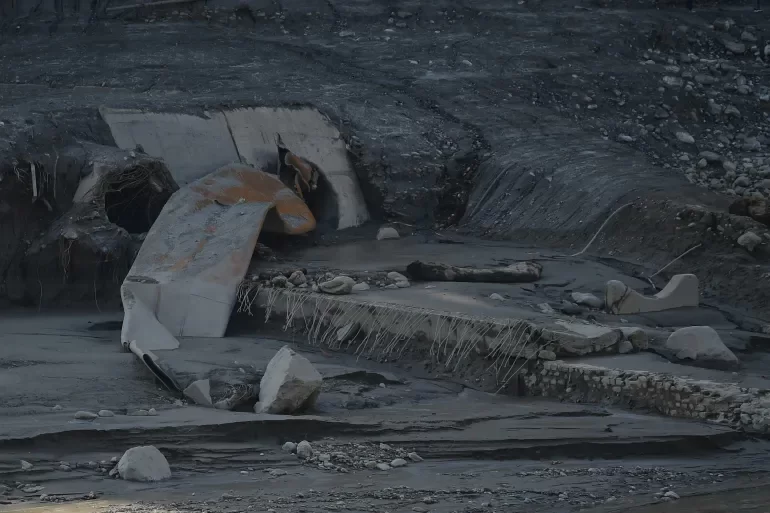
    Tucked between the Tigris and Euphrates rivers in southern Iraq, the millennia-old Hawizeh Marshes — a unique wetland ecosystem long linked to the biblical Garden of Eden — is stirring back to life. This spring, after years of relentless drought that turned most of its landscape into cracked, barren earth, welcome winter rainfall has flooded vast stretches of the wetland, bringing renewed hope to local communities and conservationists alike.

    Today, gliding across the marsh’s calm, sun-dappled waters in a wooden fishing boat reveals a landscape transformed. Lush green vegetation pokes through the spreading surface; water buffalo wallow in shallow pools or graze slowly on nearby thick, rich grass. Flocks of native and migratory bird species dart above the water, their silhouettes reflected clearly on the still surface, a quiet reminder of the biodiversity that this UNESCO-recognized ecosystem supports.

    For decades, the marshes have faced existential threat. Years of accelerating climate change have shrunk rainfall across the region, while upstream dam construction in neighboring Turkey, Syria and Iran cut off critical water flow that once fed the Tigris and Euphrates. By the last decade, more than 90% of the marshland had dried up, destroying fishing livelihoods, displacing thousands of Indigenous Marsh Arab communities, and driving countless native plant and animal species toward local extinction. Even the Hawizeh Marshes, the wettest and most resilient section of the greater Mesopotamian wetland system, had been reduced to a parched shadow of its former self by repeated dry seasons.

    But this year’s unusually heavy winter rainfall shifted the tide. Iraq’s Ministry of Water Resources reports that Tigris River reservoirs are now nearly full, and water levels on the Euphrates are expected to rise further in the coming days if neighboring Syria releases stored water from its upstream dams. Local environmental activist Ahmed Saleh Neema told reporters that the Hawizeh Marshes have not held this much water in more than a decade: approximately 85% of the protected wetland is now covered in water. While depths are still lower than historical averages, Neema notes that this level of water is already enough to guarantee the marsh will not dry out this summer, when regional temperatures regularly climb above 50 degrees Celsius — a threat that has doomed recovery efforts in past wet years.

    For local fishermen like Kazem Kasid, who has spent his life casting nets in the marsh, the return of water is more than an environmental win — it is the restoration of his community’s identity and future. Dressed in a traditional white abaya and keffiyeh as he navigates his wooden boat through newly flooded channels, Kasam told AFP, “Life will come back, along with the fish and the livestock, and people will feel that their homeland and their future have been restored.”

    The Mesopotamian Marshes hold enormous cultural, historical, and ecological value. As one of the largest wetland systems in the Middle East, it supports hundreds of species of fish, migratory birds, and megafauna that cannot survive anywhere else in the arid region. For centuries, Indigenous Marsh Arab communities have built their lives and culture around the marsh’s water and wildlife. While the current rebound is still fragile, and long-term threats from upstream development and climate change remain unresolved, the return of water to Hawizeh has given stakeholders a rare chance to protect and restore one of the world’s most unique cultural and natural landscapes.

  • Afscheid van een markant legerbevelhebber

    Afscheid van een markant legerbevelhebber

    On Thursday, Suriname prepares to lay to rest one of its most decorated military leaders, Colonel Ernst Mercuur, a figure whose name has long been synonymous with respect, integrity, and unwavering service to the nation. The widespread admiration that surrounds Mercuur’s legacy is no coincidence: it is the product of extraordinary achievements, decades of relentless dedication, and above all, a moral character that stood firm through some of the country’s most turbulent moments. Throughout his life and career, Mercuur consistently demonstrated unshakable resolve, steadfast character, and remarkable courage, even during periods of widespread unrest. Those who served alongside him and knew his work hold deep reverence for the consistent commitment to core values, ethical standards, and principled conduct he embodied every day.

    For 11 years, Colonel Mercuur led the Suriname National Army with distinction, placing integrity, professional excellence, and wholehearted service to the Surinamese people at the center of his leadership. Through the most challenging periods of his tenure, he remained unyielding, always prioritizing the needs of the country’s civilian authorities and placing himself at their service. His loyalty to legitimate governing power was never in question; he was a leader that the nation could count on unconditionally.

    At the same time, Mercuur was known as a complex, no-nonsense commander: straightforward in his approach, and clear and uncompromising in his views. Throughout his long career, including during the period of Suriname’s Inner War, he repeatedly proved his courage and unwavering determination. These traits earned him natural, widely respected authority and the deep admiration of his troops, non-commissioned officers, and fellow officers alike.

    The tribute was written by Ivan Fernald, former Minister of Defence of Suriname, who had the privilege of working closely alongside Mercuur for five years. Fernald recounts that Mercuur consistently translated instructions from the presidency and the Ministry of Defence into strong, actionable mandates for military units across the service, always aligned with the Law on Instructions for the Commander of the National Army, while bringing his own distinct approach to every task.

    “A great man has left us,” Fernald wrote. “Mercuur was an outstanding commander who fulfilled a crucial historical role at a moment when a bold, distinctive leader like him was absolutely indispensable.” During his tenure, Mercuur worked tirelessly to uphold military discipline, strengthen the army’s operational capacity, and invest continuously in the human capital of the force through ongoing training programs.

    Fernald highlights three key contributions that stand out as defining parts of Mercuur’s legacy: first, his persistent push to expand access to foreign military training for service members at every rank; second, his successful work to restore public order and security following violent clashes in Papatam, near Albina; and third, his coordinated support to the Suriname Police Corps in line with the army’s mandated special duties during periods of civil unrest, including the unrest in Nieuw Koffiekamp.

    In closing, Fernald offered a final tribute to his former colleague: “Colonel, rest in peace.” To Mercuur’s family, he extended words of comfort and encouragement: “Draw strength from the fact that his contributions are celebrated across the entire nation. As time passes, his achievements will earn a permanent, prominent place in the historical records of the Ministry of Defence. Keep his memory alive, and draw inspiration from it for the road ahead.”

  • Controversiële Venezolaanse pin veroorzaakt diplomatieke storm met Guyana

    Controversiële Venezolaanse pin veroorzaakt diplomatieke storm met Guyana

    A long-simmering territorial dispute between Guyana and Venezuela has reignited diplomatic tensions this week, after Guyana formally raised grave concerns to the Caribbean Community (CARICOM) over a provocative symbolic gesture from Venezuela’s acting president Delcy Rodríguez. During a series of recent official international visits, Rodríguez wore a custom lapel pin shaped after a map that depicts the resource-rich Essequibo region as part of Venezuelan territory – a claim Venezuela has asserted for more than a century that Guyana rejects as unlawful.

    The Essequibo region makes up nearly two-thirds of Guyana’s entire sovereign territory, holding vast untapped reserves of oil, minerals, and other natural resources that have become a core point of friction between the neighboring South American nations. The long-running border dispute has seen a marked escalation in symbolic displays of Venezuelan claims since the high-profile January arrest of Venezuelan leader Nicolás Maduro by United States authorities; the Essequibo-shaped pin is now commonly worn by Venezuelan government officials, state media personalities, ruling party legislators and cabinet members, according to diplomatic accounts.

    In a formal letter addressed to Terrance Drew, Prime Minister of St. Kitts and Nevis and current chair of CARICOM, Guyana’s President Irfaan Ali underscored that Rodríguez’s choice to wear the pin during official engagements amounts to an explicit reaffirmation of Venezuela’s illegal claim to Guyanese territory. Ali further warned that allowing such displays during official visits hosted by third countries could be misinterpreted as quiet acceptance or tolerance of Venezuela’s territorial demands by the receiving nations, undermining Guyana’s position in ongoing international legal proceedings.

    “CARICOM’s principled support for Guyana must be reflected not just in words, but in the protocols and conduct observed during official meetings,” Ali added in the letter.

    The origins of the dispute stretch back to an 1899 border arbitration ruling reached during the British colonial era, which Venezuela has long argued unfairly deprived it of the Essequibo region. Today, the competing territorial claims are being adjudicated by the International Court of Justice (ICJ) based in The Hague, Netherlands, with the case still pending a final ruling.

    For her part, Rodríguez defended her decision to wear the disputed pin, claiming the map that includes Essequibo as Venezuelan territory is “the only map of Venezuela I recognize.” She reaffirmed Venezuela’s long-standing claim to the entire region and expressed confidence the ICJ will ultimately uphold the country’s historic territorial position.

    Ali used his letter to remind CARICOM of the bloc’s long-standing unwavering commitment to upholding Guyana’s sovereignty and territorial integrity. He argued that Venezuelan officials should not be permitted to display territorial symbols and maps asserting claims to Essequibo in official international forums, noting that such actions could prejudice the ongoing legal process at the ICJ. Ali also separately condemned the inclusion of Essequibo as Venezuelan territory on official Venezuelan state maps, calling it a calculated, deliberate provocation that Guyana will continue to reject in full.

    By Tuesday evening, CARICOM issued an official response to Guyana’s complaint, acknowledging receipt of Ali’s letter and affirming that official regional platforms and gatherings should not be used to advance or legitimize territorial claims that are currently the subject of pending international legal proceedings. The bloc reaffirmed its “long-standing and unwavering support for the sovereignty and territorial integrity of Guyana, and for a peaceful negotiated resolution to the dispute through proper international legal channels.”

    In recent years, tensions over the region have spilled beyond diplomatic rhetoric. Venezuela has deployed armed patrols to offshore oil blocks licensed by Guyana and currently operated by United States energy firms, repeatedly issuing demands that oil production activities in the area halt. To date, those threats have been ignored by the energy companies operating the offshore platforms, and production has continued uninterrupted.

  • Verdeeldheid in coalitie over Viskeuringsinstituut; opheldering gewenst

    Verdeeldheid in coalitie over Viskeuringsinstituut; opheldering gewenst

    A heated debate over alleged serious misconduct at Suriname’s Het Viskeuringsinstituut (VKI, Fish Inspection Institute) has taken center stage in the country’s National Assembly, with political factions split over the handling of the allegations against the institute’s long-serving director and the lack of transparent information for full legislative oversight.

    The controversy dates back to January 26, 2026, when a new governing board was installed for the VKI. Since that change, unsubstantiated claims of severe wrongdoing have been levied, with director Juliette Colli-Wongsoredjo publicly named as the party responsible for the purported mismanagement. NDP faction leader Rabin Parmessar opened the debate by criticizing the handling of the allegations, noting that no concrete, documented evidence has been presented to lawmakers to date even as Colli-Wongsoredjo’s professional reputation has been publicly dragged through the mud.

    Parmessar reminded fellow parliamentarians that the director has served competently under multiple successive administrations, with her commitment to the role widely praised for years. Under her leadership, he added, Suriname has achieved a unique regional distinction: it remains the only country in the entire Caribbean and South American region authorized to export fish products to both the European Union and North America, a major economic win for the country’s key fishing sector. Parmessar called on the ruling government to provide clear, full disclosure on any verified misconduct, gaps in financial management, and the extent to which any such issues can be directly linked to the director. He emphasized that full transparency is non-negotiable to protect public servants from unfounded reputational damage.

    Not all lawmakers share the same perspective on the VKI controversy, however. A20 faction leader Steven Reyme told the assembly that he has received different information about the case than what Parmessar presented. Reyme argued that the matter must be handled with deliberate care, and that full, clear information must be gathered before any conclusions are drawn, to avoid creating the perception that oversight officials are being improperly maligned. In response, Parmessar countered that the full parliament has not been granted access to all relevant information, which is exactly why he and other NDP lawmakers are raising formal questions. He stressed that all information related to the public institution must be shared with the entire legislative body, not just individual selected members.

    Jennifer Vreedzaam, another NDP parliamentarian, added that all oversight activity must be rooted in verifiable facts and fair, evidence-based justification. She specifically criticized members of the VKI’s new board, claiming that they have leaked confidential internal information to the press to shape public narrative around the allegations. Vreedzaam also called for greater scrutiny of the institute’s overall financial standing and accumulated reserves, a key component of its long-term operational stability.

    VHP lawmaker Mahinder Jogi drew attention to the massive economic stakes tied to this controversy, noting that Suriname’s fish export sector generates approximately $80 million USD in annual revenue for the country. He warned that ongoing political tension within the VKI and a lack of consistent technical expertise at the institution could have severe downstream consequences for export volumes and international trust in Suriname’s fish certification and quality control systems, which are critical to maintaining market access in the EU and North America.

    Even within the call for transparency, some NDP members expressed support for a full formal probe. NDP lawmaker Ebu Jones backed further investigation into the allegations, referencing a closed briefing already held for the standing committee on Agriculture, Livestock and Fisheries with the responsible minister. Jones noted that if irregularities or corrupt activity are confirmed through a full, fair investigation, decisive action must be taken to address the wrongdoing.

    Following the full day of debate, the national government announced that it will deliver a comprehensive response to all the questions raised by lawmakers during the next public plenary session of the National Assembly.

  • Thalia presenteert masterplan in aanloop naar 190-jarig bestaan

    Thalia presenteert masterplan in aanloop naar 190-jarig bestaan

    One of the Netherlands’ oldest active theater communities is gearing up for a historic new chapter, as its leadership has unveiled an ambitious long-term masterplan to secure the organization’s future for decades to come, timed to the 189th anniversary of Theatergenootschap Thalia’s founding.

    Founded on April 27, 1837, the beloved cultural institution will mark its 190th anniversary in 2027, and preparations for that milestone have already kicked into high gear. During a special general members’ assembly held Monday at the Thalia Building’s foyer, the board led by chair Sherida Mormon presented the far-reaching revitalization strategy that looks beyond the upcoming anniversary all the way to the society’s bicentennial in 2037 and beyond. The event also included a festive celebration, where 93-year-old honorary president Frank Favery — the society’s oldest active member — cut the official anniversary cake, alongside the organization’s oldest overall member, 100-year-old Meli Leeerdam. Attendees raised a toast to the historic group’s legacy and coming future.

    In a major milestone for the society, organizers confirmed this week that Thalia has now been officially re-registered with the Chamber of Commerce and Industry (Kamer van Koophandel en Fabrieken, KKF), bringing the organization into full compliance with modern Dutch regulatory requirements. Mormon noted that the registration process required significant effort to verify the society’s long continuous existence, as Thalia had not maintained continuous formal registration with governing authorities since 1974, when it marked its 137th year.

    Mormon emphasized that the masterplan is designed not just to celebrate the 190th anniversary, but to build a sustainable foundation for the organization’s next century of operations. “This isn’t just about what we need to organize next year. We’re restructuring how we operate as an organization, to make sure Thalia remains a vital community institution for generations to come,” she explained.

    The multi-faceted strategy outlines four core priority areas for the coming years. First, the plan allocates resources for critical renovations, upgrades and ongoing maintenance of the historic Thalia Building, preserving the iconic space while modernizing it for contemporary audiences. Second, the society will develop a new sustainable revenue model focused on expanding its appeal to local audiences and cultural tourists alike. Third, Thalia will position itself as a leading regional center for performing arts talent development, with a particular focus on nurturing young creators and performers. Finally, the organization will prioritize expanding its member base and forging new collaborative partnerships with other cultural and community groups across the region.

    Mormon stressed that the revitalization effort is open to all community members, regardless of experience or formal talent. “You don’t need any special performing arts skills to join Thalia. All you need is passion and a desire to build something fun together,” she said. “Every person who wants to contribute is welcome, because this project takes a whole community to bring it to life.”

  • Nieuw vredesvoorstel Iran botst op Amerikaanse scepsis

    Nieuw vredesvoorstel Iran botst op Amerikaanse scepsis

    In the aftermath of a fragile ceasefire that paused a deadly regional conflict between long-time adversaries Iran and the US-backed Israeli bloc, Tehran has put forward a new peace proposal that is already facing deep skepticism from the Trump White House. The plan, which seeks incremental de-escalation before tackling the most divisive issue in bilateral relations – Iran’s nuclear program – currently appears unlikely to win Washington’s approval, threatening to delay any path to a permanent end to hostilities that have killed thousands and roiled global energy markets.

    Breaking down the details of Iran’s new initiative, the proposal frames the reopening of the strategic Strait of Hormuz as its core confidence-building measure – a step that would reverse Tehran’s recent closure of the vital waterway that has sent energy prices soaring and disrupted global supply chains. In exchange for reopening the strait, Iran is demanding that the Trump administration lift its recent naval blockade of Iranian ports, which cut off the country’s key oil export revenue and a major source of state income, and agree to end the ongoing conflict outright. Crucially, however, Iran has demanded that any negotiations over its nuclear program be delayed until after a ceasefire and blockade withdrawal are fully implemented – a condition that runs directly counter to longstanding US demands that nuclear constraints be part of any immediate de-escalation deal.

    The proposal was transmitted to Washington through Pakistan, which has been serving as a neutral intermediary between the two hostile governments. Iranian state media outlet Fars News Agency has confirmed that the initiative aligns with Tehran’s long-stated red lines on both the Strait of Hormuz and its nuclear program, noting that Foreign Minister Abbas Araghchi has operated fully within the framework of Iran’s diplomatic mandates. The outlet emphasized that the plan should be understood as a de-escalatory initiative to clarify regional positioning, not a formal negotiating package at this stage.

    Iranian analysts frame the proposal as a strategic shift away from the country’s previous negotiating model, which centered on offering nuclear concessions in exchange for relief from economic sanctions. Abas Aslani, a senior researcher at the Centre for Middle East Strategic Studies, told Al Jazeera that Tehran has concluded that older approach is no longer a viable path to a mutually acceptable agreement. “Iran sees this also as a measure to build confidence and bridge the existing trust deficit,” Aslani added. In comments to the UN earlier this week, Iran’s ambassador to the global body Amir Saeid Iravani reinforced Tehran’s position, noting that lasting stability and security in the Gulf region can only be achieved through a permanent end to all hostile aggression against Iran.

    The White House has confirmed that President Donald Trump reviewed the Iranian proposal alongside his top national security advisors on Monday, but early signals from the administration point to a firm rejection of the plan in its current form. An anonymous US official told Reuters that Trump is dissatisfied with the proposal, specifically because it fails to include binding provisions to address Iran’s nuclear program immediately. “He does not really value the proposal as it stands,” the official said. Two anonymous sources familiar with internal deliberations told CNN that Trump is almost certain to reject the plan, arguing that lifting the port blockade before resolving the nuclear issue would remove one of Washington’s most powerful negotiating leverage points.

    Not all administration comments have been uniformly negative, however. Secretary of State Marco Rubio told Fox News Monday that the proposal was “better than we had expected,” but added that he retains deep doubts about Tehran’s underlying intentions. “They are very good negotiators,” Rubio said. “We have to make sure that any agreement is one that permanently prevents them from ever developing a nuclear weapon.” Al Jazeera’s Washington correspondent Mike Hanna noted that extraordinary secrecy has surrounded the White House deliberations, with no readouts or details released about who even attended Monday’s meeting, an unusual departure from standard protocols for high-level national security discussions.

    Beyond the US and Iran, international allies are growing increasingly impatient with the prolonged standoff, according to regional analysts. Mohamed Elmasry, an analyst at the Doha Institute of Graduate Studies, told Al Jazeera that while both Washington and Tehran appear to believe time is on their side, prolonged delay only makes a deal harder to reach. “I really don’t think time works for anyone. The Europeans are clearly losing their patience,” Elmasry said. He noted that recent comments from German Chancellor Merz – who publicly remarked this week that “the Iranians are very skilled negotiators” – reflects growing allied pressure on Trump, who allies hold responsible for creating the current regional crisis and failing to resolve it. “Trump will not be happy about that, and the chancellor hit him where it hurts,” Elmasry added.

    The Strait of Hormuz remains one of the world’s most critical energy chokepoints even in peacetime: roughly one-fifth of all global oil and liquefied natural gas trade passes through the narrow waterway, connecting major Gulf oil producers to global markets. Tehran’s closure of the strait after the outbreak of conflict created immediate inflationary pressure on energy markets worldwide, making a resolution to the standoff a pressing priority for global economies already grappling with post-conflict volatility.

  • NAMLAC waarschuwt regering: risico op blacklisting Suriname bij onvoldoende voortgang

    NAMLAC waarschuwt regering: risico op blacklisting Suriname bij onvoldoende voortgang

    Suriname is at serious risk of being placed on an international anti-money laundering blacklist unless urgent action is taken to strengthen its regulatory framework, the country’s National Anti-Money Laundering Commission (NAMLAC) has warned in an urgent letter addressed to President Jennifer Simons.

    The warning comes nearly four years after Suriname’s last major international assessment by the Caribbean Financial Action Task Force (CFATF), the regional body that enforces global standards set by the Financial Action Task Force (FATF). In 2022, the CFATF placed Suriname under its Enhanced Follow Up process after the country received low marks for both technical compliance and the practical effectiveness of its anti-money laundering, counter-terrorist financing, and counter-proliferation financing (AML/CFT/CPF) regime. At that time, Suriname was granted a deadline extending to 2027 to address all identified gaps and bring its rules in line with FATF’s 40 core recommendations.

    Between 2023 and 2025, Suriname made measurable progress, securing improved ratings for compliance with 27 of the 40 FATF recommendations. However, the country has hit a critical deadlock over the remaining 13 reforms. According to NAMLAC, Suriname was unable to submit any new progress assessment requests to the CFATF in 2026 because Suriname’s National Assembly has not passed any of the required legislation to address the outstanding gaps. Worse, the CFATF’s submission window for new progress updates has already closed.

    Suriname is scheduled to present its fourth Follow Up Report to the CFATF plenary assembly in November 2026. At that meeting, international assessors will conduct a full review of whether Suriname has implemented sufficient reforms to meet global FATF standards. The review will also evaluate the Suriname government’s political commitment to the reforms, the strengthening of domestic regulatory institutions, and the country’s track record on both national and international collaboration to combat illicit financial activity.

    NAMLAC has stressed that all remaining compliance updates must be submitted by no later than August 2026 to allow for the final report to be prepared in time for the November plenary. The commission has made clear that if insufficient progress is documented by the assessment deadline, blacklisting remains a very real possibility for Suriname.

  • VAE stapt uit OPEC en OPEC+ in zware klap voor oliegroep en mondiale energiemarkt

    VAE stapt uit OPEC en OPEC+ in zware klap voor oliegroep en mondiale energiemarkt

    On Tuesday, one of the longest-standing members of the Organization of the Petroleum Exporting Countries (OPEC), the United Arab Emirates (UAE), announced an immediate withdrawal from both OPEC and the broader OPEC+ alliance, delivering a severe blow to the oil cartel and its de facto leader Saudi Arabia. The landmark decision comes at an already volatile moment, as the ongoing conflict between Iran and the United States has triggered a historic global energy crisis that has disrupted core supply chains and thrown the already fragile world economy into further disarray.\n\nFor decades, OPEC has worked to present a unified front to global markets, coordinating production quotas to stabilize global oil prices even as internal disagreements over geopolitical alignment and output targets have simmered beneath the surface. The exit of the UAE, a major Gulf oil producer, puts this carefully cultivated unity under unprecedented strain, with analysts warning it could trigger broader fragmentation and erode the cartel’s collective influence over global energy markets.\n\nGulf OPEC members already face persistent critical challenges to their core export infrastructure: around 20% of the world’s total crude oil and liquefied natural gas supplies pass through the Strait of Hormuz, the narrow waterway separating Iran and Oman. Ongoing threats and targeted attacks on commercial shipping from Iran have severely disrupted this key energy chokepoint, already raising insurance and transit costs for global energy shipments.\n\nThe UAE’s departure is widely viewed as a major diplomatic victory for former U.S. President Donald Trump, who has repeatedly attacked OPEC for artificially inflating global oil prices, accusing the cartel of “cheating the rest of the world.” Trump has long tied U.S. military security guarantees for Gulf states to oil pricing policy, publicly criticizing Arab producers for benefiting from American military protection while maintaining high prices that burden global consumers.\n\nAs a key regional business hub and one of Washington’s closest Arab allies, the UAE has openly criticized fellow Arab and Gulf states for what it calls inadequate responses to repeated Iranian attacks amid the ongoing regional conflict. Anwar Gargash, diplomatic advisor to the UAE president, slammed the response of the Arab League and the Gulf Cooperation Council (GCC) to Iranian aggression as “historically weak, both politically and militarily” during a recent appearance at the Gulf Influencers Forum.\n\”While GCC member states have offered each other logistical support, their political and military posture has remained consistently weak,\” Gargash stated. \”I expected this weak stance from the Arab League, but I did not expect it from the GCC. That is what has come as a real surprise.\”\n\nLooking ahead, the UAE’s exit is expected to accelerate fragmentation within both OPEC and OPEC+, making it far more difficult for the bloc to reach binding collective production agreements and maintain stability in global oil markets. This increased disunity will almost certainly amplify volatility in global energy exchanges and add further upward pressure to already soaring global inflation, which has been pushed higher by persistent energy price shocks over the past months.\n\nBeyond energy markets, the move is likely to escalate existing geopolitical tensions across the Middle East. The UAE has signaled it will pursue closer bilateral energy and security ties with Western nations outside of OPEC’s collective framework, leaving Saudi Arabia facing its most significant challenge in decades: preserving the cohesion and relevance of the oil cartel it has led for more than half a century.\n\nAs the global economy continues to grapple with widespread energy shortages and the cascading economic fallout from the Middle East conflict, governments and market participants around the world are now waiting with high anticipation to see how OPEC, Saudi Arabia, and the broader international community will respond to this unprecedented shift in global energy governance.

  • President en luchtverkeersleiders maken afspraken om rust te herstellen

    President en luchtverkeersleiders maken afspraken om rust te herstellen

    On Monday, Suriname President Jennifer Simons convened a high-stakes meeting at her cabinet with leadership of the Suriname Air Traffic Controllers Association (SATCA) to address escalating recent disruptions and long-running frictions in the country’s aviation sector. The dialogue produced preliminary agreements covering two of the most contentious issues: air traffic controllers’ pay framework and the uninterrupted delivery of critical air navigation services.

    According to official statements from the Communication Service of Suriname, Raymond Landveld, Minister of Transport, Communication and Tourism, described the closed-door talks as candid, solution-focused, and aimed at restoring stability to the country’s civil aviation authority after days of operational disruption.

    During the meeting, President Simons made clear her dissatisfaction with the industrial action taken by air traffic controllers to press their demands. She emphasized that the group should have flagged the persistent challenges to the national government much earlier, which would have allowed policymakers enough time to develop targeted, collaborative solutions before service was interrupted. In a turn that de-escalated tensions, SATCA representatives acknowledged that the action strategy they chose was not the appropriate way to resolve their grievances.

    The core sticking point in the dispute remains the existing pay structure for air traffic controllers. SATCA has argued that there is an unfair pay gap between its members and other technical staff at the civil aviation authority, who earn higher compensation for comparable roles. To move negotiations forward, both sides have agreed to reconvene within two to three weeks to refine and finalize a mutually acceptable proposal that addresses the union’s concerns.

    Minister Landveld additionally confirmed that the ongoing training program for new air traffic controllers will continue as scheduled, and will be accelerated wherever possible to address the chronic staff shortages that have exacerbated the current crisis.

    In recent days, the existing personnel shortfalls and industrial action have created widespread disruptions for Surinamese communities and travelers. Passengers have missed connecting and outbound flights, and a medical air ambulance service was even forced to divert to neighboring Guyana to land during the peak of the disruption. Suriname’s national government is now pinning its hopes on the agreed resumption of normal work to head off further chaos and restore reliable aviation services across the country.

  • Netanyahu’s rivalen bundelen de krachten; zullen zij het veiligheidsbeleid van Israël veranderen?

    Netanyahu’s rivalen bundelen de krachten; zullen zij het veiligheidsbeleid van Israël veranderen?

    Israeli Prime Minister Benjamin Netanyahu faces a new coordinated challenge ahead of upcoming national elections, as two of his most prominent political rivals have announced a merger to form a new opposition party dedicated to ousting his far-right coalition government.

    The new alliance, led by former right-wing lawmaker Naftali Bennett and centrist opposition leader Yair Lapid, has branded itself “BeYachad” — Hebrew for “Together” — and has centered its early policy messaging on domestic priorities, most notably reforming military conscription requirements to include ultra-Orthodox Jewish communities. On major regional security issues that dominate Israeli political discourse, however, analysts widely expect the new party to maintain a policy stance largely aligned with that of Netanyahu’s administration, the most right-wing government in Israel’s history. If the alliance takes power, that continuity means Israeli foreign and security policy would see little substantive shift across core regional fronts.

    As of yet, BeYachad has not released a full formal policy platform. Below is a breakdown of the party’s known positions on key regional issues, drawn from recent public statements from its leaders and insider sources.

    ### Position on Iran
    Bennett, 54, and Lapid, 62, have issued unwavering public support for Netanyahu’s decision to join the United States in carrying out military strikes against Iran, a stance that aligns with broad public backing for the military campaign across Israeli society. Shortly after Israeli airstrikes on Iran commenced, Lapid described the operation as a “just war against evil” in an interview with Reuters.

    Despite this initial backing, both leaders have since criticized Netanyahu for failing to achieve what they frame as Israel’s core strategic objectives in the campaign — chief among them the overthrow of Iran’s clerical-led government. Even so, neither Bennett nor Lapid has called for a resumption of hostilities after an April 8 ceasefire halted exchanges of fire between Israel, the U.S., and Iran following the joint strikes.

    A source close to the new party, speaking on condition of anonymity, described the two leaders as “hawkish” and “uncompromising on Iran” while also noting they bring pragmatic approach to the issue. “They understand that diplomatic agreements and post-conflict statecraft are just as necessary to achieve long-term strategic goals as military force,” the source added.

    ### Position on Lebanon
    Bennett and Lapid also support Israeli military operations in Lebanon, and both have openly criticized the April 17 ceasefire that was intended to end fighting between the Israel Defense Forces and Iran-backed Hezbollah militant group, arguing the agreement has failed to eliminate the persistent threat Hezbollah poses to northern Israel.

    Shortly before the IDF launched its ground incursion into southern Lebanon in March, Lapid stated Israel must take all necessary measures to protect its civilian population along the northern border. After the ceasefire was announced, Lapid emphasized that the only viable long-term solution is the permanent removal of all Hezbollah threats to northern Israeli territory.

    Bennett has been even more scathing in his assessment of the truce. In an April 17 post to Facebook, he wrote: “We can already count down to the next round of fighting. Hezbollah started rebuilding its presence in southern Lebanon this morning, and it is rearming with more rockets to prepare for the next confrontation.”

    ### Position on Gaza
    On the ongoing conflict in Gaza, where Israeli forces have continued to carry out deadly strikes despite an October ceasefire, both Bennett and Lapid have attacked Netanyahu for failing to fully dismantle Hamas following the group’s October 7, 2023 cross-border attack. The two leaders argue Netanyahu’s approach has left Hamas’ governing and military capacity intact.

    In January, Lapid told audiences that Netanyahu’s government had secured the “worst possible outcome” in Gaza, noting Hamas still retains tens of thousands of active fighters and maintains control over a small stretch of coastal Gaza territory under the terms of the current ceasefire.

    Earlier this month, Bennett echoed that criticism in a Facebook post, arguing that Netanyahu’s policy — which included allowing limited humanitarian aid into Gaza after a three-month total blockade in 2025 — has directly helped Hamas reconsolidate its control. “This is being done with the help of hundreds of aid trucks that Netanyahu’s government delivers to them every single day,” Bennett wrote.

    Netanyahu, for his part, has framed the devastating military campaign in Gaza — which has destroyed most of the enclave’s infrastructure and killed more than 72,000 Palestinians according to local health officials — as a strategic success. He has left open the option of a full resumption of large-scale combat if Hamas refuses to disarm under a U.S.-brokered negotiation process, a requirement Hamas has rejected to date.

    ### Position on Palestinian Statehood
    Public opinion polling shows a majority of Israeli voters oppose the creation of an independent Palestinian state in the occupied West Bank, Gaza, and East Jerusalem, and a BeYachad-led government would be unlikely to enact major policy changes on this issue regardless of its leaders’ past nuanced positions.

    Netanyahu has long been a staunch opponent of Palestinian statehood, and his administration has accelerated Israeli settlement construction in the West Bank, a move cabinet ministers have openly acknowledged is intended to permanently undermine any future prospects for Palestinian independence.

    Lapid, who aligns with many centrist and left-leaning Israeli figures, has previously stated support for a two-state solution as the correct path forward, a position he laid out in 2022. Bennett, by contrast, has rejected the two-state framework. When asked by U.S. broadcaster ABC why he opposed the solution in a 2024 interview, Bennett argued any Palestinian state would inevitably become a base for terrorist violence against Israelis.

    “What we have learned over the past 30 years is that every time we handed the Palestinians a piece of land, they did not build it into a peaceful, prosperous Singapore. They turned it into a terror state, and began killing Israelis,” Bennett said at the time.

    Across the West Bank file, all three political leaders — Netanyahu, Bennett, and Lapid — have publicly condemned violence carried out by Israeli settlers against Palestinian communities. Settler attacks have surged in frequency and severity under Netanyahu’s tenure, and critics accuse the prime minister of tacitly tolerating attacks that see settlers burn Palestinian villages and assault local residents. Netanyahu’s office has repeatedly denied these accusations.