标签: Suriname

苏里南

  • Officieel bezoek Indiase minister markeert 50 jaar banden met Suriname

    Officieel bezoek Indiase minister markeert 50 jaar banden met Suriname

    In a landmark diplomatic development set to deepen bilateral ties between two historically connected nations, India’s External Affairs Minister Subrahmanyam Jaishankar will embark on an official four-day visit to Suriname from May 5 to May 8, at the invitation of Suriname’s Minister of Foreign Affairs, International Trade and Cooperation (BIS) Melvin Bouva. This visit comes as both countries prepare to celebrate 50 years of formal diplomatic relations, and it marks the first time that an incumbent Indian foreign minister has traveled to Suriname for an official visit.

    At the core of the visit’s agenda is the ninth session of the Suriname-India Joint Commission meeting, scheduled to take place on May 6. Established as a permanent coordination and consultation platform, the commission has long served as a cornerstone for advancing cooperation across economic, scientific, technical and cultural domains between the two nations. During this year’s gathering, participating officials will review the progress of ongoing joint projects, negotiate new agreements to expand collaborative frameworks, and discuss a wide range of priority topics including bilateral trade, social and economic development, and key multilateral global issues.

    Beyond the commission meeting, Jaishankar’s itinerary includes high-level bilateral meetings with Suriname’s President and the Speaker of the National Assembly, to align strategic priorities and strengthen people-to-people and government-to-government connections. To mark the golden jubilee of diplomatic relations, a special public lecture followed by a curated historical exhibition highlighting the deep historical and cultural links between Suriname and India will also be hosted during the visit.

    One key tangible outcome of the visit will be the formal ceremonial handover of the Markoesa Processing Project, an Indian-backed initiative that sets up a dedicated production line for processing passion fruit (locally called markoesa) in Suriname. The project is designed to boost value addition within Suriname’s agro-processing sector and empower small and medium-sized enterprises (SMEs) across the country, supporting inclusive economic growth.

    India has emerged as a key strategic partner for Suriname across multiple sectors, and collaboration between the two nations extends across various multilateral international forums. Beyond strategic and economic alignment, the bilateral relationship is rooted in centuries-old historical and cultural ties, particularly linked to the Indian diaspora community that has shaped Suriname’s social and cultural landscape for generations. Minister Bouva has expressed strong confidence that Jaishankar’s visit will inject new momentum into bilateral cooperation, delivering long-term sustainable development and shared mutual benefits for the people of both nations.

  • Zorgsector onder druk door braindrain; buitenlandse krachten nodig

    Zorgsector onder druk door braindrain; buitenlandse krachten nodig

    Suriname’s healthcare system is grappling with intense systemic pressure driven by a steady exodus of trained healthcare personnel, a crisis that Health Minister André Misiekaba has publicly acknowledged in official remarks. According to Misiekaba, the shortage of specialized nursing professionals is particularly acute, creating a bottleneck that prevents the country from fully utilizing critical healthcare infrastructure, including operating theaters and intensive care units.

    Speaking before the National Assembly of Suriname, Misiekaba emphasized that the nation cannot resolve its immediate staffing gaps without support from foreign healthcare workers. Currently, around 70 Filipino medical staff are already working at the Academic Hospital Paramaribo, where they have been deployed specifically to offset critical staffing deficits across the facility.

    To expand this short-term relief, the Ministry of Health is currently in active negotiations with a United States-Canadian recruitment firm. The proposed partnership would see the company supply qualified physicians, medical specialists, and specialized nurses to multiple healthcare facilities across Suriname, including the Mungra Medical Center and regional public hospitals that have also reported crippling staff shortages.

    Beyond addressing immediate gaps with foreign personnel, the government is pursuing long-term measures to retain local healthcare workers and grow the domestic workforce. One key priority is rolling out a revised salary scale for nurses, designed to boost compensation for local medical staff and bring their earnings in line with a more sustainable, reasonable income level. The government is also exploring targeted housing solutions to reduce the financial burden on nursing professionals, another step to improve retention of locally trained staff.

    To grow the domestic talent pipeline, the government also plans to expand existing nursing and medical training programs. In addition to upgrading current training offerings, the ministry will launch a pilot nursing education program in the Marowijne district, aimed at training new generations of local healthcare workers to meet the country’s long-term care needs.

  • Liba kwie op beurs:  waarde toevoegen aan een onderbelichte vissoort

    Liba kwie op beurs: waarde toevoegen aan een onderbelichte vissoort

    Suriname’s annual Agricultural Trade Fair, organized by the country’s Ministry of Agriculture, Livestock and Fisheries (LVV), opened its doors to visitors on Friday, running through Sunday May 3, with a standout innovative exhibit that is turning heads and challenging long-held local beliefs about a native aquatic species. At the heart of the buzz is a new smoked fish sausage product drawing crowds of attendees eager to sample the offering. When asked to guess what type of fish the sausage is made from, most visitors stammer out guesses ranging from kandratiki to bang bang and tukunari, none coming close to the actual ingredient: the liba kwie, a fish long viewed by local communities as a destructive pest. The surprise reveal always draws gasps from the crowd, as few have previously considered the invasive-feeling species as a viable food source.

    Developed through a collaborative public-private partnership between the LVV and local food entrepreneurs, the liba kwie sausage has proven to be a hit with fairgoers, sparking widespread public interest in the novel product. LVV Minister Mike Noersalim explained in an interview that this initiative serves a dual purpose: adding economic and culinary value to a fish that has long been maligned for the damage it causes by burrowing holes in critical dam infrastructure across the country. Minister Noersalim noted that his team has worked closely with counterparts from the Ministry of Public Works and Spatial Planning to identify long-term solutions to reduce the species’ negative environmental and infrastructure impacts, and turning it into a popular food source emerged as a win-win outcome.

    Testing and product development confirmed that liba kwie is not only safe and palatable for human consumption, but also versatile enough to be processed into a range of popular products, from fish balls to the smoked sausage that is wowing fair attendees. Compounding this benefit is the fact that liba kwie populations are abundant across Suriname’s waterways. Turning the species into a mass-market food product delivers three interconnected advantages: it reduces the pressure of overpopulation that causes damage to dam walls, expands local food output, and strengthens the nation’s core goal of food security.

    Food security and expanded domestic food production are the central themes of this year’s Agricultural Trade Fair, a focus echoed by Suriname’s President Jennifer Simons during her opening address to attendees and sector stakeholders. President Simons acknowledged that efforts to grow and modernize the country’s agricultural sector have faced setbacks and inconsistent progress in past years. To address these challenges, she emphasized that greater investment and attention must be directed to pre-production planning, targeted research, and every link along the entire agricultural production chain. She stressed that transforming the sector is not a one-year project, but a gradual, step-by-step process that can eventually grow agriculture into one of Suriname’s strongest core economic sectors.

    “ We truly have all the potential we need to feed ourselves, ” President Simons told the crowd. She pointed not only to future export opportunities for Surinamese agricultural products, but centered her remarks on the urgent priority of national food sovereignty. According to President Simons, Suriname must ramp up production of its own food to reduce reliance on imported goods. “ We need to be absolutely certain that if supply ships don’t arrive, Surinamese people will still have enough to eat, ” she said, underscoring the critical importance of expanding local production.

    President Simons called on all agricultural sector stakeholders – from smallholder farmers to large producers, private businesses, and government agencies – to commit their full efforts to lifting the sector to a new level of productivity over the next 12 to 24 months. Once Suriname achieves full domestic food sovereignty and works out the early growing pains in production and processing infrastructure, she explained, the country will be ready to make the strategic shift to expanding agricultural exports to global markets.

    For the LVV, public-private partnership is far more than a policy buzzword: it is a concrete, practical tool to strengthen the country’s entire agricultural production sector. Minister Noersalim added that the national government is also working to strengthen cross-ministerial collaboration to speed up sector development, breaking down bureaucratic silos that have slowed progress in past years. “ By giving entrepreneurs space to showcase their innovations and new products to both investors and the general public, we are building up the economic backbone of Suriname together, ” Noersalim said. “ This trade fair is proof that we achieve more when we work together. Our goal is clear: Suriname will build a modern, productive, and competitive agricultural economy that works for all of our citizens. ”

  • 45 jaar inzet voor schoon en groen Suriname gevierd

    45 jaar inzet voor schoon en groen Suriname gevierd

    On May 2, Suriname’s Directorate of Public Green Space and Waste Management gathered to celebrate 45 years of advancing public environmental services, holding a solemn commemoration that centered gratitude for staff contributions and reaffirmed the agency’s core mission: building a cleaner, greener, and more livable nation for all Surinamese. The event also brought together leadership from national government, district authorities, and labor representatives to discuss plans for deeper collaboration and enhanced public service delivery moving forward.

    Hugo Blanker, president of the ABPM workers’ union, opened remarks by noting that the directorate’s work is visible to Surinamese communities every single day. He emphasized that the agency has remained fully operational through decades of challenge solely thanks to the consistent dedication of its frontline and administrative staff. Looking ahead, Blanker stressed that all stakeholders share a collective responsibility to partner with the national ministry to drive sustained growth and improvement for the directorate.

    Ruchsana Ilahibaks, District Commissioner for Central Paramaribo, congratulated the agency on reaching this major professional milestone, highlighting four and a half decades of unwavering commitment to keeping Suriname clean and well-maintained. She underscored that this critical work must continue for the benefit of future generations, and that progress depends on close, ongoing collaboration between the directorate and local communities. Ilahibaks also expressed gratitude for the directorate’s ongoing support for district initiatives, and confirmed that a new district commissariat will soon be established on the directorate’s premises to streamline local coordination.

    A commemorative thanksgiving service was also held as part of the 45th anniversary celebrations. Interim Director Anwar Moenne extended formal recognition to all current and former staff who have committed their careers to keeping Suriname clean and livable over the past 45 years. Moenne reported that even during periods when routine maintenance faced severe resource pressures, the directorate has reversed declines, rebuilt operational capacity, and made its work increasingly visible and impactful across Surinamese society. He also highlighted growing community engagement with the directorate’s initiatives, noting that staff draw significant motivation from the direct support the agency receives from the national ministry.

    Minister Stephen Tsang also attended the ceremony, sharing words of praise for the directorate and saying he was honored to take part in the special occasion. Tsang framed the directorate’s work as a core pillar of Suriname’s broader national development strategy, pointing out that a clean, well-maintained natural and built environment is a critical asset to grow the country’s tourism sector. He tied the agency’s mission to the national Krin Kondre clean country initiative, a program launched by the President of Suriname to advance national environmental improvement. The minister confirmed that collaboration between the national directorate and district commissioners will be intensified in coming months, allowing environmental and waste management work to be carried out more effectively across every region of the country.

    Overall, the 45th anniversary commemoration centered two core themes: formal recognition of the tireless work of the directorate’s staff, and shared commitment to continuing to strengthen the agency in pursuit of its longstanding goal: maintaining a clean, green, and livable Suriname for all current and future residents.

  • Trump breidt sancties tegen Cubaanse regering uit in nieuwe drukcampagne

    Trump breidt sancties tegen Cubaanse regering uit in nieuwe drukcampagne

    In a significant escalation of Washington’s campaign against Havana, former U.S. President Donald Trump signed an executive order on Friday dramatically expanding existing sanctions targeting the Cuban government and its international allies, the White House confirmed to news agency Reuters. The move comes hot on the heels of Trump’s removal of Venezuelan leader Nicolás Maduro, marking a sharp acceleration of pressure on left-aligned governments across the Latin American region.

    The newly expanded sanctions regime targets individuals, entities, and associates linked to Cuban security services, those involved in alleged corruption or severe human rights violations, as well as sitting Cuban government officials and their supporters. While the full list of sanctioned actors has not yet been released, the executive order explicitly states that any foreign individual operating in key sectors of Cuba’s economy — including energy, defense, mining, financial services and security — can now be placed under sanctions.

    Notably, the new framework also allows for secondary sanctions to be imposed on third-party companies and individuals that facilitate transactions with sanctioned Cuban entities. Jeremy Page, a former sanctions researcher at the U.S. Department of the Treasury, described the provision as the harshest measure targeting non-U.S. businesses since the decades-long U.S. trade embargo on Cuba was first imposed. “Oil and gas firms, mining companies and global banks that previously managed to separate their Cuban operations from their U.S. activities now face major vulnerability to American enforcement,” Page explained.

    Cuba has issued a fierce condemnation of the new measures. Cuban Foreign Minister Bruno Rodríguez, who recently met with his Russian counterpart Sergei Lavrov in Moscow, denounced the sanctions as illegal unilateral coercive measures that violate the United Nations Charter. Rodríguez stressed the measures amount to collective punishment targeting the entire Cuban people, emphasized that Washington has no legal authority to impose such restrictions on the island nation, and made clear that Cuba would not be intimidated into abandoning its sovereign policies.

    The expanded sanctions fit into a broader, increasingly aggressive U.S. campaign against Cuba, which Trump has repeatedly claimed is on the brink of collapse. The move also aligns with recent shifts in U.S. engagement across the region: just days before the order was signed, the first commercial flight from Miami to Venezuela in seven years was completed, a visible signal of growing American intervention in Latin American and Caribbean affairs.

    During Trump’s term, U.S. forces have also carried out military operations targeting suspected drug trafficking originating from Venezuela, leading to the detention of Maduro. At the time, Trump openly warned that “Cuba is next,” accusing Havana of maintaining close ties to Iran and militant groups including Hezbollah. A senior U.S. official further framed the Trump administration’s position, arguing that Cuba provides “an accessible hub for hostile foreign intelligence, military and terrorist activities less than 100 miles from the U.S. coast.”

    Washington has long maintained three core demands of Havana: opening Cuba’s state-led economy to foreign and private investment, providing compensation for properties seized by Fidel Castro’s revolutionary government, and holding what the U.S. describes as free and fair elections. Cuba has consistently rejected external interference, reiterating that its socialist political and economic system is non-negotiable for the Cuban people.

    Friday’s executive order builds on a series of escalating U.S. measures against Cuba implemented earlier this year. After Maduro was removed from power, the U.S. halted Venezuelan oil exports to Cuba, one of the island’s primary energy sources. Trump subsequently threatened steep tariffs on any country that continued shipping oil to Cuba, prompting major suppliers including Mexico to suspend their oil deliveries to Havana. Those earlier restrictions have already triggered severe fuel shortages across the island, leading to nationwide power outages and the cancellation of most international commercial flights.

  • Nieuwe vliegverbinding tussen Guyana en Suriname van start

    Nieuwe vliegverbinding tussen Guyana en Suriname van start

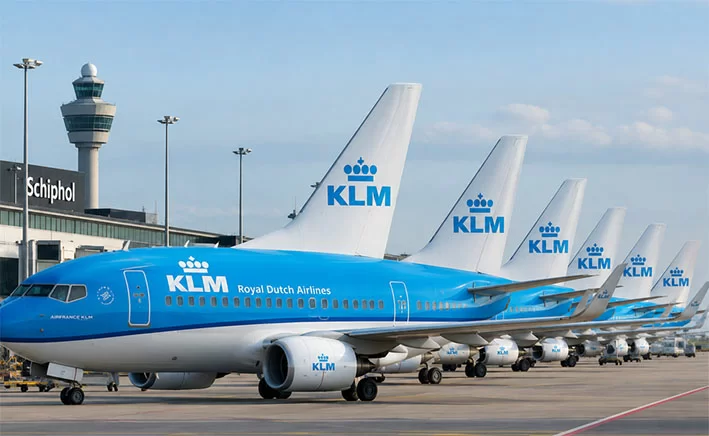
    Starting May 1, cross-border travelers and business operators between Suriname and Guyana have gained a new efficient travel option, following the launch of a direct scheduled charter air connection between the two capital cities Paramaribo and Georgetown by regional aviation service provider MidasSur Aviation Charter Service.

    Operating in partnership with Georgetown-based Jags Aviation, the new service runs three round-trip charter flights per week, scheduled every Monday, Wednesday, and Friday. Per the route layout, outbound flights depart from Guyana’s Eugene F. Correia International Airport (OGL) and arrive directly at Eduard Alexander Gummels Airport (EAX), conveniently located closer to central Paramaribo than the country’s larger international airport.

    Project organizers note that the direct connection fills a gap in fast regional travel, especially for business owners and leisure travelers who want quick access to downtown Paramaribo. By cutting out layovers and eliminating the longer overland trip from larger, more distant international airports, the new route substantially reduces total travel time for passengers. Early departure times are also tailored to align with the growing demand for seamless, practical travel between the neighboring South American nations.

    Headquartered on Cadmiumstraat in Paramaribo, MidasSur maintains two sales outlets: one on Goudenregenstraat in Zorg en Hoop, Suriname, and a second branch on Jackson Street in Guyana. Jags Aviation, MidasSur’s cooperation partner, is a subsidiary of the BK Group of Companies, led by Executive Chairman Officer Brian Tiwarie, with its base of operations in Georgetown.

  • Adhin: Ik heb geen afspraak met DIN over organisatie bijeenkomst

    Adhin: Ik heb geen afspraak met DIN over organisatie bijeenkomst

    A major dispute has broken out over conflicting event announcements tied to Suriname’s National Assembly Speaker Ashwin Adhin’s private trip to the Netherlands, leaving attendees and stakeholders in confusion ahead of two competing gatherings scheduled for Sunday, May 3. Both the Diaspora Institute Netherlands (DIN) and the Surinamese Embassy in The Hague have advertised separate networking events headlined by Adhin, but the speaker himself has explicitly disavowed any connection to the DIN-organized meeting, confirming only the embassy-backed event has his official approval.

    DIN leadership has claimed strong public interest in their May 3 event, with DIN chair John Brewster reporting that more than 100 paid participants have already registered for the gathering. According to Brewster, the venue secured for the DIN event is already struggling to accommodate the unexpectedly high number of attendees. The organization frames the gathering as a targeted networking opportunity for diaspora community members, including Surinamese entrepreneurs, investors, elite professional football players, and other industry professionals. The event is billed as focused on advancing cross-community collaboration, unlocking new economic opportunities for Suriname, and coordinating collective action to support the South American nation.

    However, when contacted by Suriname-based outlet Starnieuws, Adhin pushed back sharply against DIN’s claims, accusing the organization of creating unnecessary confusion by moving forward with the event without any prior coordination or official approval from him or his team. Adhin confirmed that only one networking event has his explicit consent: the gathering scheduled for Sunday in Amsterdam, organized in coordination with Surinamese Ambassador Panka. “I have no agreement whatsoever with DIN to host an event. My team knows nothing about this gathering. No permission was granted to Mr. Brewster to organize an event using my name,” Adhin emphasized in his statement.

    Ambassador Panka subsequently backed Adhin’s account, confirming that the speaker had informed his office that no formal arrangements had been made with DIN. “We are proceeding with our planned event as normal,” Panka noted in a brief response to inquiries.

    Despite the denial from Adhin and the embassy, Brewster has stood by DIN’s version of events, claiming the organization agreed to organize the gathering at the request of one of Adhin’s own advisors. To date, however, DIN has not publicly identified the unnamed advisor, leaving the claim unconfirmed. Adhin has held firm to his position, stating he had no prior knowledge of the DIN event, did not initiate any such gathering, and will not be in attendance at the DIN-organized meeting.

  • Staatsoliebond waarschuwt voor druk op arbeiderspositie; roept op tot waakzaamheid

    Staatsoliebond waarschuwt voor druk op arbeiderspositie; roept op tot waakzaamheid

    On the observance of International Labour Day, the Staatsolie Werknemers Organisatie Suriname (SWOS), the trade union representing workers at Suriname’s state oil company, has issued a stark warning over mounting pressures facing the country’s working population. In a statement released on May 1, SWOS president Roy Caupain outlined the multiple cascading challenges currently confronting Suriname’s labor force: soaring consumer prices, eroding purchasing power, and deepening economic uncertainty, all while critical national infrastructure and strategic assets face increasing strain. For the union, May 1 is far more than a public holiday—it serves as an annual moment of reflection, collective awareness, and renewed commitment to advocating for worker rights, rather than merely a ceremonial occasion. Caupain emphasized that global geopolitical friction, most notably ongoing armed conflicts in the Middle East, has sent ripple effects through the global economy that are being felt directly in Suriname, adding further financial strain to working-class households across the country. The union stressed that the current economic crisis gripping the nation was not created by workers, and it is fundamentally unfair that ordinary laborers should once again be forced to bear the brunt of austerity measures and economic adjustment. SWOS also warned that continued economic deterioration risks opening the door to rising corruption, growing criminal activity, and widespread loss of livelihood security for millions of working Surinamese. Beyond global economic headwinds, the organization raised sharp concerns about internal developments eroding worker representation within Suriname. According to SWOS, the institutional role of trade unions in national decision-making is being systematically weakened, with elected worker representatives increasingly excluded from key governmental advisory councils and policy-making commissions. This exclusion, the union argues, has created a critical gap: decision-makers lose on-the-ground insights into workplace conditions, public support for policies erodes, and essential oversight of state activities is diminished. SWOS also highlighted two additional unaddressed policy challenges that threaten long-term national and worker interests: the uncontrolled influx of foreign labor into the country, and the absence of a clear, cohesive national strategy to manage future revenue streams from key strategic sectors, including oil and gas development and carbon credit sales. Without robust, forward-thinking planning and regulatory frameworks in place, the union warns, the country’s vast natural resource wealth could fail to benefit the broader Surinamese population, slipping away to outside interests rather than driving inclusive growth. Closing its statement, the trade union called on all Surinamese workers to remain organized, maintain collective unity, and stand together to fight for economic and social justice. “We are the driving force of this country. For today, for tomorrow, for 2028 and beyond,” the union said.

  • Misiekaba: Chikungunya-aanpak heeft niet gefaald

    Misiekaba: Chikungunya-aanpak heeft niet gefaald

    A heated debate over Suriname’s public health response to a spreading chikungunya outbreak has unfolded in the country’s National Assembly, where Health Minister André Misiekaba has pushed back against claims of government mishandling of the crisis. Leading the Ministry of Public Health, Welfare and Labor, Misiekaba defended the administration’s actions, confirming that targeted interventions were launched immediately after the first confirmed case of the mosquito-borne viral infection was detected.

    The minister outlined that the entire response strategy has been built around five core pillars: cross-agency coordination, continuous case surveillance, standardized clinical patient management, vector control to reduce mosquito populations, and public risk communication to inform communities of prevention measures. Contradicting assertions that authorities delayed action while waiting for international chemical donations, Misiekaba explained that the government pursued multiple parallel pathways to secure necessary supplies. Alongside requesting direct support from partner nations, Suriname placed an official order for specialized control products through the Pan American Health Organization’s strategic emergency stock fund.

    International partners have already stepped in to assist the outbreak response. Barbados contributed eight barrels of larvicide, which targets mosquito larvae before they mature into biting adults, while Brazil has delivered insecticides for adult mosquito control and deployed a team of public health experts to provide on-site guidance and training for local Surinamese response teams.

    As part of the ongoing vector control campaign, authorities have completed insecticide spraying at major healthcare facilities across the country, including the St. Vincentius Hospital, Academic Hospital Paramaribo, Mungra Medical Center, and Diakonessen Hospital. Remaining smaller care institutions will be treated in the coming days as the campaign rolls out across all regions.

    As of April 29, public health authorities had registered 7,371 suspected samples for testing, with 6,504 samples processed. Of those tested, 3,321 returned positive results, representing a positivity rate of approximately 51 percent. Encouragingly, Minister Misiekaba noted that available infection data suggests the epidemic curve is beginning to trend downward, though he emphasized that officials will continue monitoring case numbers over the coming weeks before drawing any definitive conclusions about the outbreak’s trajectory. The minister did acknowledge two areas where response efforts can be strengthened, conceding that public education outreach and municipal bulk waste collection initiatives—key to eliminating mosquito breeding sites—require improvement.

  • ‘Turbulent en gevaarlijk’: Scheepvaart het nieuwe wereldwijde strijdveld

    ‘Turbulent en gevaarlijk’: Scheepvaart het nieuwe wereldwijde strijdveld

    Weeks after a temporary two-week ceasefire between the United States and Iran that kept the critical Strait of Hormuz partially open, a cargo vessel waits off the coast of Oman to traverse the chokepoint. But this image of uncertainty is far from an isolated incident: geopolitical power struggles are rapidly unraveling the decades-old rules-based order that has kept global maritime trade secure and predictable, analysts warn. The warning comes after a sudden policy proposal from Indonesia that sent shockwaves through global shipping and insurance markets last week. Indoneisan Finance Minister Purbaya Yudhi Sadewa suggested imposing transit tolls on commercial vessels passing through the Strait of Malacca, a key global trade chokepoint, explicitly drawing inspiration from recent Iranian actions in the Strait of Hormuz. While Jakarta quickly walked back the controversial suggestion, industry analysts say it exposed a growing, dangerous shift: the once-stable system of open maritime navigation is becoming increasingly risky, costly and overtly politicized. “We have not seen the oceans this unsettled and dangerous since nations first came together to agree on shared rules for maritime navigation,” said Elisabeth Braw, a senior fellow at the Atlantic Council. For centuries, maritime shipping carried inherent risks, from piracy to rogue attacks. But in the decades following World War II, the international community built a comprehensive framework of treaties and agreements designed to guarantee open, safe passage for commercial vessels across global waterways. The results have been transformative: the World Trade Organization reports that global trade grew from roughly $60 billion in the 1950s to more than $25 trillion last year, with 80 percent of all global trade by volume moving across the world’s oceans. Today, however, experts agree that actions from major global powers including the United States, Iran, Russia and China are systematically undermining the rules that made this growth possible. The most high-profile flashpoint right now is the Strait of Hormuz, the narrow chokepoint through which roughly a fifth of global oil supplies pass. Starting in March, Iran restricted passage for dozens of vessels after joint strikes by the U.S. and Israel on Iranian targets. On April 13, the U.S. imposed a full maritime blockade on Iranian vessels and ports, and has since seized Iranian tankers near the strait and detained other vessels across the Indo-Pacific that it accuses of carrying sanctioned Iranian crude. In response, Iran has seized unauthorized vessels attempting to transit the strait and opened fire on multiple commercial ships passing through the waterway. These escalating tit-for-tat actions have worsened the ongoing global energy crisis, pushing oil and natural gas prices to multi-year highs. “Even without a full closure of the strait, requirements for transit approval and constant political pressure create massive cost increases and widespread uncertainty,” said Jack Kennedy, senior analyst at S&P Global. Kennedy pointed to a recent incident off the coast of Oman, where a container ship was fired on by an Iranian military patrol boat, leaving the vessel’s bridge damaged. He described the attack as “calculated use of force to demonstrate control without shutting down all traffic entirely,” a tactic that creates uncertainty across the entire shipping industry. Tensions are now spreading to other critical maritime infrastructure, including the Panama Canal. Earlier this week, the U.S. and multiple South American and Caribbean nations accused China of using “targeted economic coercion” against Panamanian-flagged vessels, claiming Beijing is detaining Panamanian ships in its ports as part of a broader effort to politicize maritime trade and undermine regional sovereignty. China has forcefully rejected the accusations, calling the U.S. claims hypocritical. A spokesperson for China’s Ministry of Foreign Affairs noted that the U.S. occupied the Panama Canal for decades and repeatedly violated Panama’s sovereignty, pointing to a long history of American interference in the region. The latest dispute comes after Panama’s Supreme Court canceled a concession held by a Hong Kong-based firm to operate two major ports along the canal, a move widely viewed as the result of U.S. pressure to roll back Chinese influence around the strategic waterway. Experts note that the vast majority of global maritime trade still operates within the existing legal framework, but the number of high-profile political exceptions is growing at an alarming rate. In recent years, maritime disruptions have become increasingly strategic and organized. Russian control of large swathes of the Black Sea during its full-scale invasion of Ukraine triggered global food shortages by blocking grain exports. In the South China Sea, China has been repeatedly accused of intimidating commercial vessels to enforce its disputed territorial claims, allegations Beijing has repeatedly denied. “Maritime action has always been a tool to exert pressure on an adversary’s economy and military. What has changed is the scale: the volume of container trade and the size of the global fleet mean disruptions ripple across the entire global economy far faster than ever before,” explained Jean-Paul Rodrigue, a maritime trade expert at Texas A&M University. Non-state actors have also amplified risk in global waterways. Houthi attacks on commercial shipping in the Red Sea have forced major shipping lines to reroute vessels around the Cape of Good Hope, adding thousands of miles of extra travel and billions in extra costs. The biggest long-term risk, analysts agree, is the precedent being set by increasingly frequent violations of the existing rules. The cumulative effect of these developments is a clear shift away from predictable, rules-based navigation toward a system where access, costs and safety are increasingly determined by power, influence and political interests. Non-state groups have also exploited gaps in international enforcement: the International Maritime Bureau’s latest report shows global piracy incidents have already reached their highest level in five years this year. These geopolitical tensions translate directly to tangible costs for global consumers. Vessel rerouting increases fuel consumption and transit times, pushing up operating costs for shipping lines. Insurance premiums and risk surcharges have skyrocketed in high-tension areas, and even short detentions or inspections can create cascading delays across global supply chains. As a result, shipping lines are increasingly reconsidering their routes, flag registrations and port calls to minimize political exposure. “The biggest risk is the precedent that emerges when multiple nations test boundaries through selective enforcement, new permitting requirements or tolls in international straits. When that becomes normalized, outcomes depend entirely on power dynamics and bilateral negotiations, not shared rules,” Kennedy said.