标签: Suriname

苏里南

  • Verkiezingen Colombia: Linkse hervormingen vs rechtse veiligheidsmaatregelen

    Verkiezingen Colombia: Linkse hervormingen vs rechtse veiligheidsmaatregelen

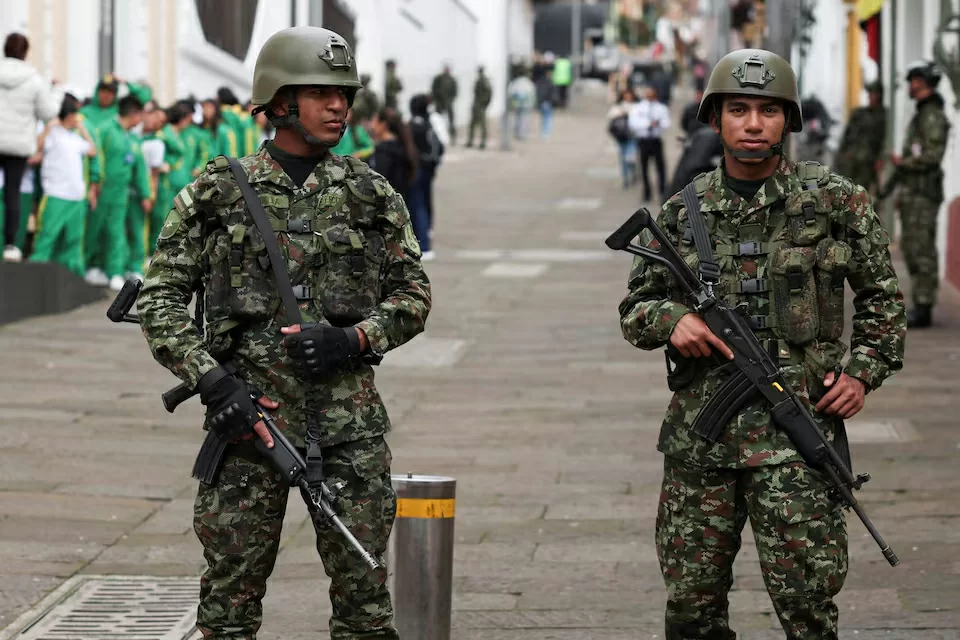
    On May 31, Colombia kicked off the first round of its pivotal presidential election, a vote that will chart the South American nation’s future course on core issues ranging from domestic security to economic policy and international relations. More than 40 million eligible Colombian voters are heading to polling stations, which opened at 8 a.m. local time, with final official results projected to be announced by 8 p.m. the same day. Given pre-election tensions and security concerns, roughly 400,000 military personnel and police officers have been deployed nationwide to safeguard voting operations, with security teams maintaining a visible presence on streets across major cities including Bogota.

    Three leading candidates dominate the race, each offering sharply different policy visions for the country. Topping pre-election opinion polls is 63-year-old left-wing Senator Iván Cepeda, the son of a assassinated communist leader. Cepeda, who has pledged to continue and deepen the progressive reforms begun by current left-wing President Gustavo Petro, currently holds enough support to place first but is not projected to clear the 50% threshold needed to win the election outright in a single round. That outcome would push the race to a runoff round scheduled for June 21.

    Cepeda’s core policy platform centers on advancing peace negotiations with illegal armed groups, a strategy that has made limited progress under the Petro administration. He has also proposed sweeping structural social reforms to reduce Colombia’s entrenched inequality and poverty, including higher taxes on the nation’s wealthiest citizens, the transfer of 1 million hectares of land to victims of the country’s 60-year-long internal armed conflict, and expanded public access to healthcare.

    Trailing Cepeda closely in the polls is 47-year-old independent lawyer and businessman Abelardo De La Espriella, a political outsider who has never held public office. Often compared to El Salvador’s hardline President Nayib Bukele for his blunt rhetoric and policy priorities, De La Espriella has centered his campaign on an aggressive crackdown on illegal armed groups. His platform includes plans to construct 10 new mega-prisons, alongside anti-poverty measures focused on expanding access to education, healthcare, and affordable housing. He has repeatedly warned voters that a Cepeda victory would entrench the controversial economic policies of the Petro administration, including the ban on new oil exploration projects.

    In third place in pre-election polling is right-wing Senator Paloma Valencia, backed by former Colombian President Álvaro Uribe and until recently the front-runner among right-wing candidates. Her policy agenda overlaps broadly with De La Espriella’s, calling for tough action against corruption, drug trafficking, and illegal armed groups. She also supports cutting corporate taxes to spur job growth, and funding new social programs through a resumption of large-scale oil and gas exploration.

    The election is widely viewed as a critical bellwether for Colombia’s long-term direction, with particular focus on how the new administration will approach domestic security and the country’s long-standing diplomatic and economic relationship with the United States. Voters are deeply divided over the future of Petro’s progressive agenda, with sharp disagreements over how to address decades of violence, widespread economic inequality, and the role of fossil fuels in the country’s economy.

  • Wereld Anti-Tabakdag: Suriname scherpt strijd tegen nicotineverslaving onder jongeren aan

    Wereld Anti-Tabakdag: Suriname scherpt strijd tegen nicotineverslaving onder jongeren aan

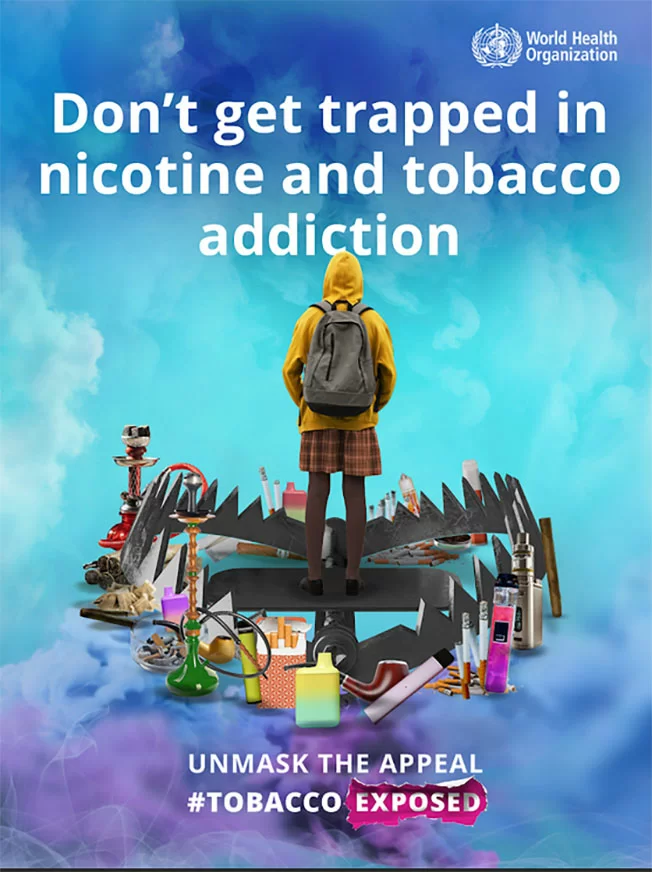
    Every year, World No Tobacco Day (WNTD) serves as a global call to action to curb the devastating public health and economic impacts of tobacco and nicotine use. This year, public health authorities in Suriname are leveraging the observance to accelerate their national campaign against tobacco and nicotine addiction, aligning with the 2024 WNTD global theme: “Unmask the Appeal – Countering Tobacco and Nicotine Addiction”. The campaign this year shines a critical light on deceptive marketing tactics deployed by the global tobacco industry, which specifically target vulnerable young populations to drive adoption of nicotine products.

    According to the World Health Organization (WHO), the tobacco industry has rapidly expanded its product portfolio in recent years, rolling out a wave of new nicotine-based offerings including electronic cigarettes (vapes), nicotine pouches, and products formulated with synthetic nicotine. These products are consistently marketed to consumers as modern, less harmful alternatives to traditional cigarettes, but leading public health experts warn that they carry severe, well-documented risks of addiction, especially for developing adolescent brains.

    Young people remain the primary target for these industry marketing efforts. Tobacco and nicotine product manufacturers leverage enticing flavored formulations, eye-catching trendy packaging, and aggressive targeted advertising across social media platforms to normalize product use and grow customer bases among underage groups.

    Against this backdrop, the government of Suriname is moving forward with comprehensive plans to strengthen its national anti-tobacco regulatory framework. With technical and policy support from the WHO, Suriname’s public health bodies are currently working to update the country’s original 2013 Tobacco Act. Key proposed updates include stricter product regulations, enhanced enforcement to crack down on the illegal trade of tobacco products, mandatory plain neutral packaging requirements, and expanded legal protections to shield young people from tobacco industry influence.

    High-level policy progress has already been made: back in February 2024, Suriname President Jennifer Simons held formal talks with a visiting WHO delegation to discuss further anti-tobacco measures. Public health teams are also developing and rolling out targeted school-based youth education programs in partnership with the Ministry of Education, Science and Culture.

    National data underscores the urgent need for stronger, more comprehensive anti-tobacco action in Suriname. Annually, preventable tobacco-related illnesses claim more than 500 lives across the country, and generate a total economic burden of more than 508 million Surinamese dollars. Data from the 2022 Global Youth Tobacco Survey further highlights the scale of the youth exposure challenge, finding that 13.2 percent of 13 to 15-year-olds in Suriname currently use tobacco products.

    To mark this year’s World No Tobacco Day, public health organizations across Suriname have organized a series of community outreach and awareness activities, including public walks and multi-platform educational campaigns. The core message from Suriname’s health authorities is clear: consumers must not be fooled by the tobacco industry’s deceptive marketing, and collective action is critical to protect young generations from the harms of nicotine addiction.

  • Colombia beschuldigt Ecuador van ‘bewuste inmenging’ in presidentsverkiezingen

    Colombia beschuldigt Ecuador van ‘bewuste inmenging’ in presidentsverkiezingen

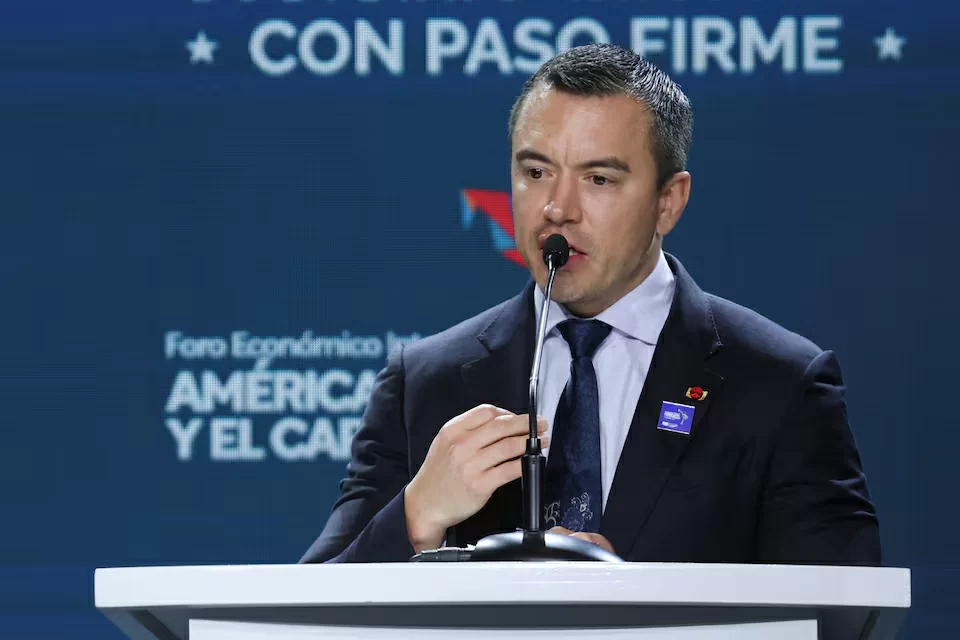
    Diplomatic tensions between neighboring Latin American nations Colombia and Ecuador have escalated sharply after Colombia’s foreign ministry leveled a formal accusation of “deliberate interference” in Colombia’s upcoming presidential election, following a controversial tariff agreement between Ecuadorian President Daniel Noboa and a Colombian opposition candidate. The dispute unfolded over the weekend, just one day before Colombians head to the polls to elect their next head of state.

    On Friday, Noboa announced that Ecuador would lift all bilateral import tariffs starting June 1, a decision reached after a phone call with Abelardo De La Espriella, an independent right-wing presidential candidate running in Sunday’s election. Taking to social media platform X, Noboa framed the policy shift as a response to De La Espriella’s commitment to launching “a genuine joint fight against narcoterrorism.” The two leaders also agreed to a new extradition deal for Ecuadorian criminals hiding out in Colombian territory.

    Colombia’s foreign ministry rejected the framing of the tariff lift as a goodwill gesture from the Ecuadorian government in an official statement, dismissing the presentation as deliberately misleading. In a reciprocal move, Bogotá announced it would roll back its own retaliatory trade measures that it implemented in response to Ecuador’s earlier tariffs, a step that comes laced with political reproach amid the pre-election period.

    Trade and security relations between the two countries have been strained for months, long before this latest diplomatic clash. Last year, Ecuador imposed new import tariffs on Colombian goods, accusing Bogotá of failing to crack down on drug trafficking along their 586-kilometer shared border. Colombian President Gustavo Petro has repeatedly and forcefully denied these accusations, pointing to the inherent complexity of security challenges in the border region.

    This year’s Colombian presidential election pits De La Espriella against two leading contenders: Iván Cepeda, Petro’s ally, and right-wing Senator Paloma Valencia. The long-running tensions between Bogotá and Quito are rooted in decades of unresolved border disputes, as well as ongoing disagreements over how to combat drug trafficking and armed criminal groups that have destabilized the broader region. Ecuador’s original tariffs were explicitly designed as a pressure tactic to force Colombia to adopt harsher measures against cross-border organized crime, a demand Colombia has consistently pushed back against.

    Now, the direct involvement of a presidential candidate in the tariff dispute has amplified volatility at a critical political juncture. Colombia’s election will shape the country’s trajectory for years to come, at a moment when the entire Latin American border region continues to grapple with pervasive violence and persistent economic uncertainty, making external political interference a particularly inflammatory issue for Colombian voters.

  • Diaspora-investeringen in Suriname centraal tijdens bijeenkomst in Nederland

    Diaspora-investeringen in Suriname centraal tijdens bijeenkomst in Nederland

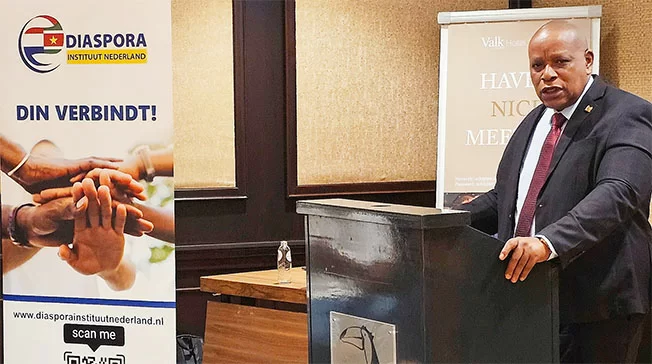
    A new collaborative initiative is opening up fresh financing pathways for Surinamese nationals living in the Netherlands who aim to invest in property back home. During the “Building, Renting, Housing and Investing in Suriname” event held Friday in Hoofddorp, the Surinaamse Postspaarbank (SPSB) and Sur Estate Group of Companies signed a formal partnership agreement designed to drive diaspora investment into Suriname’s real estate sector.

    Organized jointly by Sur Estate Group of Companies and the Diaspora Instituut Nederland (DIN), the in-person gathering brought together roughly 50 diaspora entrepreneurs, prospective investors and other stakeholders with an interest in Suriname’s property market. This event served as a follow-up to a well-attended webinar hosted earlier this year, which saw overwhelming interest from the Surinamese diaspora community based in Europe.

    Suriname’s ambassador to the Netherlands Ricardo Panka attended the event, where attendees discussed the wide range of opportunities for investment, entrepreneurship, infrastructure development and residential expansion across Suriname. Through a series of expert presentations and interactive roundtable discussions, participants covered key topics ranging from large-scale real estate development and rental market opportunities to entrepreneurship support, tax regulation and compliance, and modern construction technical standards.

    The highlight of the one-day gathering was the official signing of the partnership between SPSB and Sur Estate Group. The agreement paves the way for the launch of the Diaspora Housing Program, a tailored financing initiative created exclusively for Surinamese people living abroad who want to invest in residential and commercial real estate projects in their home country.

    According to the program’s founders, the initiative is intended to deepen the Surinamese diaspora’s engagement with the country’s ongoing economic development. The program will prioritize support for residential construction and broader real estate projects, with key developments already planned in Suriname’s Wanica District.

    During his opening remarks at the event, Ambassador Panka emphasized that prospective investors must prioritize thorough preparation and market research before committing capital to Suriname. He encouraged all interested members of the diaspora to seek out reliable, up-to-date information and take deliberate, concrete steps to pursue viable investment opportunities.

    Event organizers also announced that a cohort of participating investors and stakeholders will travel to Suriname in June to attend the annual Suriname Energy, Oil & Gas Summit (SEOGS), where they will have the opportunity to evaluate on-the-ground investment opportunities and inspect active projects across the country.

    DIN chair John Brewster noted that the role of the global Surinamese diaspora has undergone a notable shift in recent years, moving away from traditional community-focused engagement toward active, large-scale economic participation. Brewster highlighted that this shifting dynamic creates new openings for sustainable long-term investment that can drive inclusive, continued economic growth across Suriname.

  • Meerderheid DNA lijkt voor in staat van beschuldigingstelling ex-ministers te zijn; deadline nadert

    Meerderheid DNA lijkt voor in staat van beschuldigingstelling ex-ministers te zijn; deadline nadert

    As the clock ticks down on Suriname’s National Assembly (DNA) to rule on a high-stakes indictment request from Prosecutor General Garcia Paragsingh targeting three former ministers — Bronto Somohardjo, Riad Nurmohamed, and Gillmore Hoefdraad — committee leaders are moving to wrap up work before the legal deadline expires on June 9. Despite the tight timeline, Rabin Parmessar, chair of the parliamentary special committee handling the case, has moved to calm public anxiety, insisting there is ample time to complete the process before the cut-off date.

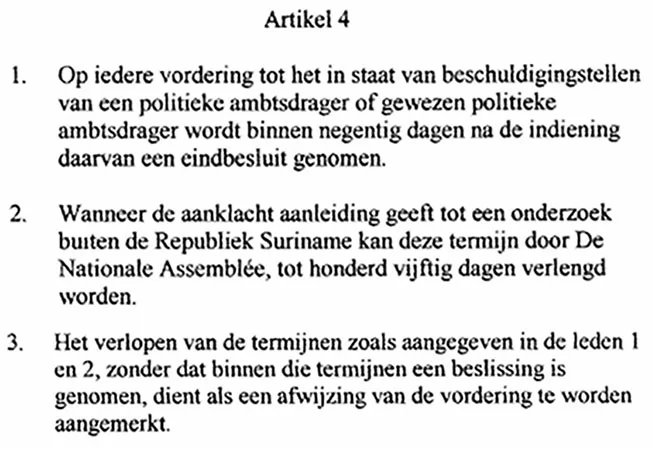
    The committee has already concluded all public hearings on the matter and is now drafting its final report, which will first be presented to DNA’s internal caucus meeting before a final binding vote is held in a full plenary public session. Parmessar told local outlet Starnieuws that the public has no reason to panic, confirming the committee will gather this week to finalize the concluding report for submission. He also emphasized that the body has no intention of allowing the legal deadline to lapse without taking formal action. Under Article 4, Paragraph 3 of Suriname’s Law on the Indictment of Political Office Holders (WIPA), a prosecutor general’s request is automatically rejected if DNA fails to issue a decision before the mandated deadline.

    The cross-party committee is made up of seven members: Rabin Parmessar (NDP), Dew Sharman (VHP), Xiabao Zheng (PL), Jennifer Vreedzaam (NDP), Mahinder Jogi (VHP), Ivanildo Plein (NPS) and Ebu Jones (NDP). With only three seats out of seven, the ruling NDP does not hold a majority on the committee, leaving the final outcome dependent on cross-party support.

    Current indicators suggest there is already broad enough backing within the legislature to approve the prosecution’s request. Both the VHP and NPS have publicly stated their support for allowing the courts to hear the case against the three former officials. Notably, Bronto Somohardjo, one of the three ex-ministers targeted, has openly stated he welcomes the indictment, as he wants the chance to defend himself in open court. He also confirmed his own parliamentary faction will back the prosecution’s request.

    The only undecided position so far belongs to PL committee member Xiabao Zheng, whose final stance remains unannounced. Even if Zheng does not support the request, observers note a parliamentary majority is still well within reach, as Somohardjo retains the right to vote on his own case as a sitting member of DNA. Beyond the VHP, most NPS legislators and the ABOP party have also publicly expressed support for Paragsingh’s request.

    It is important to note that a positive vote from DNA would not automatically mean a guilty verdict for the three former ministers. The assembly’s decision only clears the path for formal criminal prosecution, after which the Court of Justice will review the full facts of the case and issue a final ruling on guilt or innocence. That final judgment rests exclusively with the court, not the prosecution or the national legislature.

    With the June 9 deadline fast approaching, DNA is expected to clarify the next steps for the high-profile procedure against the three former office holders in the coming days. As of now, no internal caucus meeting to consider the committee’s final report has yet been scheduled.

  • Aardbeving van 6.0 bij Barbados ook in Suriname gevoeld

    Aardbeving van 6.0 bij Barbados ook in Suriname gevoeld

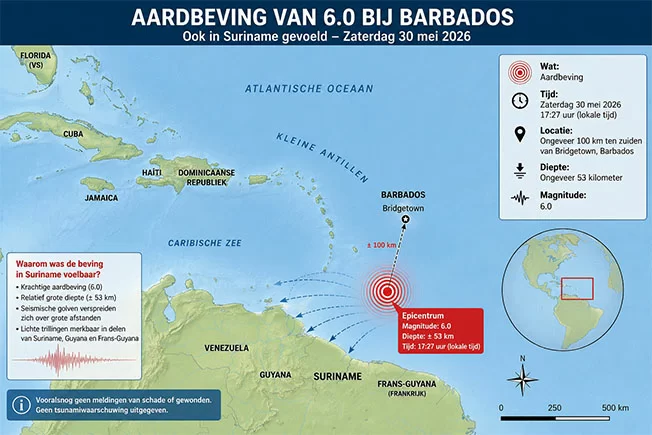
    On Saturday local time, a magnitude 6.0 earthquake was registered south of the Caribbean island nation of Barbados, with faint tremors felt by dozens of residents hundreds of kilometers away in Suriname, according to regional seismic monitoring authorities.

    The Seismic Research Centre at the University of the West Indies (UWI-SRC) confirmed the temblor struck at approximately 17:27 local time, with an epicenter positioned around 100 kilometers south of Bridgetown, Barbados’ capital. The earthquake’s hypocenter was measured at a depth of roughly 53 kilometers. Seismic officials noted that this data remains an preliminary automatic reading, and final figures may be adjusted following full post-event analysis.

    Despite the epicenter being located a substantial distance from Suriname’s territory, residents across multiple regions of the South American country reported detecting light shaking Saturday afternoon. Accounts shared on social media indicate that people positioned on upper floors of tall buildings experienced the movement more distinctly than those at ground level.

    Geographically, Barbados sits along the eastern edge of the Caribbean tectonic plate, a geologically active zone where frequent seismic activity occurs driven by shifting interactions between neighboring tectonic plates. Most earthquakes recorded in this region do not trigger major structural damage, though their tremors can often be detected across wide swathes of the Caribbean basin.

    As of the latest updates, no reports of casualties, structural damage or injuries have been confirmed in Barbados or surrounding areas. No tsunami warnings have been issued by regional ocean and emergency management agencies following the quake.

  • Derde helft WK 2026: Hoe Frankrijk het grootste talentenaanbod in het voetbal creëerde

    Derde helft WK 2026: Hoe Frankrijk het grootste talentenaanbod in het voetbal creëerde

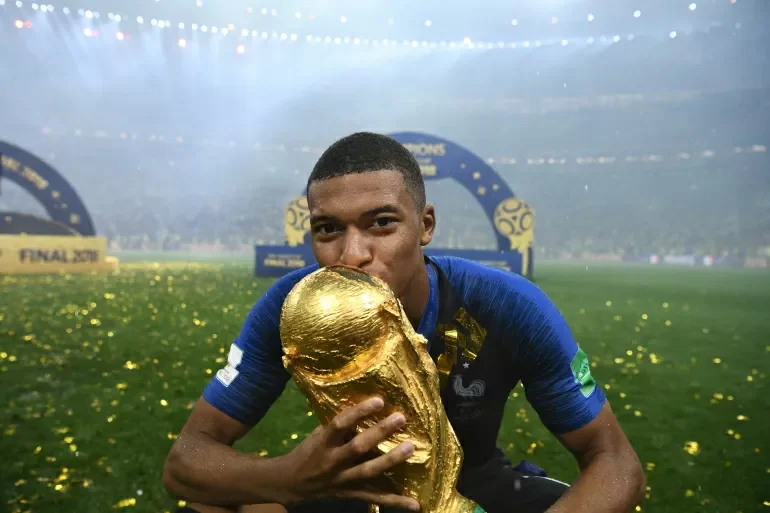
    As the 2026 FIFA World Cup approaches, France has cemented its status as one of the tournament’s pre-tournament favorites alongside Spain, drawing global attention to its decades-long, unprecedented run of producing elite football talent. The depth of Les Bleus’ talent pool is so extraordinary that Belgian defender Thomas Meunier recently sparked widespread debate when he claimed France could field three separate World Cup-competitive squads capable of lifting the trophy.

    While the idea that France’s second or third string would win the World Cup may be hyperbole, data backs up the sheer scale of the country’s talent depth. According to transfermarkt.com, a starting lineup composed entirely of French players who did not even make the 26-man 2026 squad has a combined market value that would rank among the top five highest in the world, outranking Portugal, Brazil, the Netherlands, and even defending champion Argentina. That unselected group includes talents such as Lucas Chevalier (€30 million), Pierre Kalulu (€32 million), Leny Yoro (€50 million), Eduardo Camavinga (€50 million) and Khephren Thuram (€40 million), boasting a total combined value of €418 million and an average player valuation of €38 million.

    France’s current success is not an accident—it is the end result of a systematic overhaul born from decades of heartbreak. From the 1930s through the 1970s, French national teams consistently underperformed on the world’s biggest football stage. In the early 1970s, then-national team manager Georges Boulogne proposed a national network of youth training hubs called Centres de Formation to address the gap. “France had not won any major trophies, so a decision was made to create an entirely new structure,” Franck Bentolila, director of the prestigious INF Clairefontaine academy, explained to Al Jazeera.

    The French government threw its full support behind the program, seeing it as a way to promote French values through sport while also building a competitive national program. Sixteen training centers were ultimately established across the country, with the first opening in Vichy in 1974. These hubs scouted young prospects from mainland France and its overseas territories, laying a foundational pipeline to prepare players for professional careers and eventual national team call-ups.

    Early results were inconsistent. In the 1980s, France claimed both the European Championship and Olympic gold in 1984 and reached two World Cup semifinals, but failed to qualify for the 1990 and 1994 World Cups entirely. The program’s success finally clicked in 1998, when the iconic multi-ethnic “Black-Blanc-Beur” squad won the World Cup on home soil. That diverse team, which reflected the changing face of French society, confirmed the development model worked. Then-manager Aimé Jacquet dedicated the win to “all the amateur clubs and academies—this trophy is yours too,” Bentolila recalled.

    Former French goalkeeper and 1990s captain Bernard Lama noted the 1998 generation had a key advantage over the talented but trophy-less 1980s group led by Michel Platini, Alain Giresse and Jean Tigana: “The difference with our generation was that everyone came through an academy, and we had the hunger to win a title. And we had one exceptional talent: Zinedine Zidane.”

    Following the 1998 breakthrough, France went on to win the 2018 World Cup and finish as runners-up in 2006 and 2022. Lama credits the nation’s continued success to a combination of the academy system and the contribution of immigrant communities: “People coming from overseas territories—Africa, French Guiana, Martinique—bring us two things: music and sport. There is now a new generation that grew up entirely in France, like Ousmane Dembélé and Désiré Doué. They are French, not naturalized, most come from the Paris region, and they are hungry for success, above all because they have raw talent.”

    Lama does warn of the risk of over-structuring youth development that can turn players into rigid “robots,” but notes France still produces more than enough exceptional difference-makers. “We are lucky to have players who can change a game, like Mbappé, Dembélé and Doué. They hate losing, they can make an individual difference physically and technically. That is the strength of the national team and clubs like PSG: our finishing ability. We now have maybe four or five players, like Akliouche and Cherki, who represent a completely different type of talent. When you have that explosion of talent, it gives a manager far more offensive options,” he said.

    While most senior internationals came through the official academy system, talent development starts much earlier in French culture. “It is cultural,” Bentolila explained. “In America, kids have a basketball or football in their hands from a young age. In France, there is a football at your feet from birth, with free access to training facilities everywhere.”

    Veteran coach and scout Stéphane Nado says France’s secret is a simple combination of hard work, structured organization and a player-first approach: “The player is at the center of the entire project. They get a formal education and get to stay close to their family, which is so important for their psychological development. That is why France is one of the best countries in the world at developing players for top leagues across the globe.”

    Training at Clairefontaine, France’s elite national academy, blends the improvisational creativity of street football with structured team organization, with a heavy focus on small-sided 1v1 and 2v2 games. “You have to fight for every ball. If you are good at dribbling and first touch, we work on positional play in overloads like 5v2. As soon as you get the ball, you have to control it well—we drill that constantly,” Bentolila said. Today, Clairefontaine focuses primarily on younger age groups, with older prospects moving into the development systems of top professional clubs.

    Bentolila added that development extends far beyond official academies, particularly in the Paris region: “Paris and São Paulo are the best places in the world for raw talent, because of the huge network of small private academies. Kids aged eight or nine play every single day. Amateur coaches don’t give them full meals, just a snack at 4 p.m., then they do homework and train. By the time they are 12, they play like Mbappé. There are amateur clubs in Paris no one has heard of that can beat Barcelona youth teams and top professional academy sides. They are better than the youth teams of PSG and Paris FC. Kids play football everywhere, all the time, from age 8 to 10. They are like soldiers, they fight every day and get good because they play under constant pressure.”

    Back in the 1980s, Les Bleus were nicknamed the “Brazilians of Europe” for their free-flowing attacking style. After decades of development, France has lived up to that nickname on its own terms. “Brazilian coaches used to tell me: ‘In our country we are poor, but we can succeed in football or music, so we start the day with football,’” Bentolila said. “In France, we go to school first, then train after. We do it every day, and just like Brazil, we play a lot, and we play well.”

    For the 2026 World Cup, France has been drawn into Group I alongside Senegal, Norway and Iraq, a group with a wide range of strength and international experience. Senegal, one of Africa’s strongest national sides, has qualified for multiple recent major tournaments and counts numerous top talents playing in Europe’s leading leagues. Norway is making its return to the World Cup after an 18-year absence, fielding a mix of experienced veterans and exciting young prospects who play across top European competitions. Iraq qualified via the inter-confederation playoffs and is making just its second World Cup finals appearance in history; while the side lacks deep international tournament experience, it still boasts a number of talented players competing domestically and abroad.

    France’s group stage fixtures are scheduled as: June 16 vs Senegal at Metlife Stadium in East Rutherford, June 22 vs Iraq at Lincoln Financial Field in Philadelphia, and June 26 vs Norway at Gillette Stadium in Foxborough.

    Didier Deschamps’ 26-man 2026 French squad includes goalkeepers Mike Maignan, Robin Risser and Brice Samba; defenders Lucas Digne, Malo Gusto, Lucas Hernandez, Theo Hernandez, Ibrahima Konaté, Jules Koundé, Maxence Lacroix, William Saliba and Dayot Upamecano; midfielders N’Golo Kanté, Manu Koné, Adrien Rabiot, Aurélien Tchouaméni and Warren Zaïre-Emery; and attackers Maghnes Akliouche, Bradley Barcola, Rayan Cherki, Ousmane Dembélé, Désiré Doué, Jean-Philippe Mateta, Kylian Mbappé, Michael Olise and Marcus Thuram. Notable absentees from the squad include Eduardo Camavinga, Randal Kolo Muani and Lucas Chevalier, a testament to the depth of talent available to Deschamps.

    This 2026 tournament will mark Deschamps’ final World Cup as France’s manager, capping one of the most successful tenures in modern international football history.
  • Dc’s  dienen begrotingen voor 2027 in bij minister Huur

    Dc’s dienen begrotingen voor 2027 in bij minister Huur

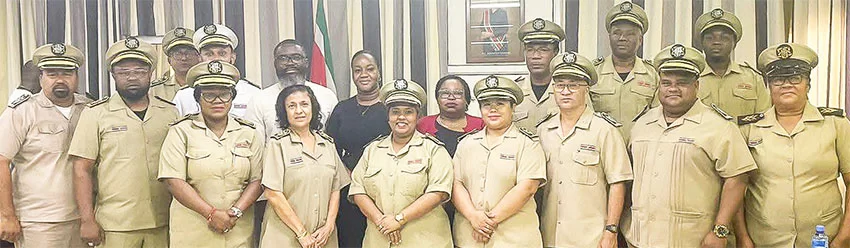
    On Friday, district commissioners across Suriname formally submitted their proposed 2027 fiscal year district budgets to Miquella Huur, Minister of Regional Development, in an official ceremony held in the meeting chamber of the District Councils in Paramaribo.

    By legal mandate under the Suriname Regional Bodies Act, district commissioners are required to present their annual budgets for central review each year, and this submission adheres to that longstanding regulatory requirement. These approved budgets will serve as the core financial foundation for all local development projects and policy implementation across Suriname’s administrative districts in the 2027 fiscal cycle.

    During the ceremony, Minister Huur emphasized that visible, community-engaged local governance is critical to advancing equitable development across all Suriname’s regions. She called on district leadership to pursue creative, innovative approaches to address unique local challenges and meet pre-established development targets.

    In a key policy announcement made alongside the budget submission, Minister Huur confirmed that the Suriname Institute for Civil Servants will soon launch new specialized training programs focused on boosting the professional skills and capacity of local administrative staff. This initiative is designed to strengthen the quality of public service delivery at the district level.

    The minister also extended public appreciation for the consistent work of all district commissioners, singling out three leaders for special recognition: Ravi Bhattoe of Wanica-Midden, Marvin Vyent of Albina, and Clyde van der Kamp of Brokopondo, praising their exceptional commitment to serving their respective administrative districts.

    The 2027 budgets are directly aligned with district development plans drafted earlier this year, which themselves grew out of public hearings organized by ressort councils in every district. These public hearings create a formal channel for local residents to raise pressing concerns, share community needs, and flag unaddressed development priorities in their residential areas. District commissioners submitted the underlying development plans for review on March 31, and the now-submitted budgets translate these planned initiatives into detailed, actionable financial frameworks.

    Patrick Kensenhuis, Dean of the District Commissioners, shared that he has full confidence that all projects and activities outlined in the 2027 budgets will be implemented successfully, delivering tangible benefits to communities across the country.

  • Guyana ziet met enorme oliewinsten van Iran-oorlog de groeidruk toenemen

    Guyana ziet met enorme oliewinsten van Iran-oorlog de groeidruk toenemen

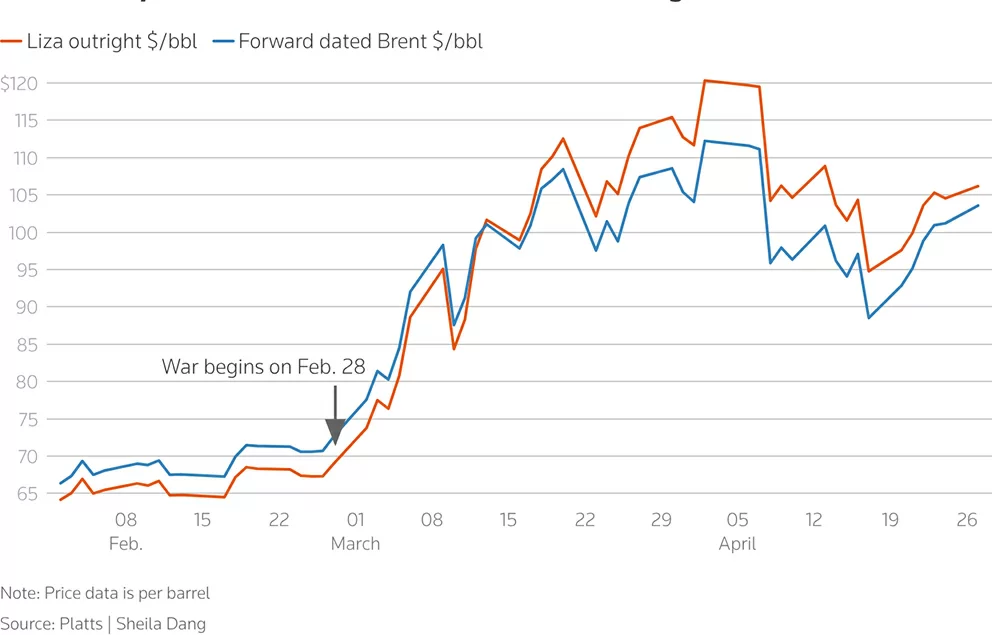
    Geopolitical tensions ignited by the Iran conflict have sent global oil prices surging in recent months, and one small South American nation is positioned to reap disproportionate benefits — while facing uniquely modern challenges tied to its sudden oil wealth. Guyana, a neighboring country to Venezuela with just under 1 million residents, was already the world’s fastest-growing economy before the outbreak of heightened conflict in the Middle East pushed crude prices sharply upward. Today, shifting global energy markets are set to deliver a windfall to the nation, but this unexpected fortune also brings new risks that threaten its long-term stability.

  • Lula: VS-maatregel ondermijnt Braziliaanse strijd tegen misdaad

    Lula: VS-maatregel ondermijnt Braziliaanse strijd tegen misdaad

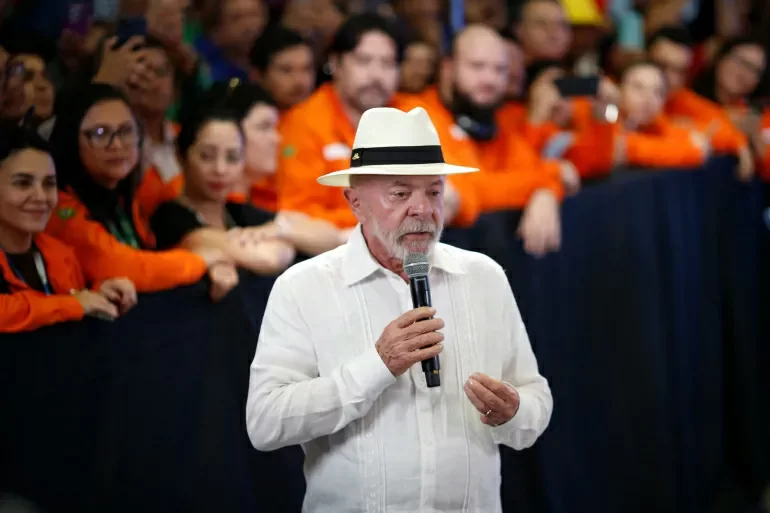
    Brazilian President Luiz Inacio Lula da Silva has issued a sharp rebuke of the United States’ decision to classify two of Brazil’s largest transnational criminal networks — Primeiro Comando da Capital (PCC) and Comando Vermelho (CV) — as official terrorist organizations. In a lengthy statement posted to social media Thursday, Lula argued that the U.S. labeling undermines Brazil’s own domestic efforts to combat organized crime, drawing a clear distinction between profit-driven criminal activity and ideologically motivated international terrorism.\n\n“The terror these groups inflict on local communities is rooted in earning illicit profits from crime, but it cannot be equated to the political, ideological or religious motives that drive international terrorism,” Lula stated in the address. The U.S. announced Wednesday that the classification, which takes effect June 5, will add both groups to its official Foreign Terrorist Organizations list and label them as Specially Designated International Terrorists. Under the designation, any assets linked to PCC and CV held within U.S. jurisdictions will be frozen, and providing material support to the groups will become a federal criminal offense.\n\nSecurity analysts have already warned that the new restrictions could carry unintended negative consequences, potentially harming Brazilian financial institutions as well as civilian businesses and residents who have been extorted by the gangs. Beyond risks to innocent parties, Lula raised grave concerns that the terrorist labeling could open the door to unilateral U.S. military intervention on Brazilian soil. “We stand ready to collaborate on solutions that benefit all involved nations, but we will not accept arbitrary unilateral measures from outside powers that undermine our national sovereignty and our economy,” he warned.\n\nThe controversy unfolds against the backdrop of a highly contested 2026 Brazilian presidential election year, where public security is set to be a defining campaign issue. Lula, a veteran leftist leader, is currently seeking a fourth term as Brazil’s president. He defeated far-right incumbent Jair Bolsonaro in the 2022 election; Bolsonaro was later convicted of orchestrating a failed coup attempt following his loss, and is currently serving a 27-year prison sentence.\n\nPolitical observers widely point to Flavio Bolsonaro, Jair Bolsonaro’s eldest son and a sitting senator who is running for president in 2026 as a right-wing candidate, as the key driving force behind the U.S. decision. Flavio has openly confirmed he pushed for the terrorist classification during a recent visit to the White House, and has made cracking down on organized crime a centerpiece of his campaign against Lula. Lula has accused the Bolsonaro family of actively lobbying for foreign interference in Brazil’s domestic affairs through their long-standing political and personal ties to former U.S. President Donald Trump, calling the move “a sad day” for Brazilian democracy.\n\nThe Bolsonaro family’s close alignment with Trump dates back to Jair Bolsonaro’s presidency, and Trump has spent years backing far-right candidates in elections across the globe. In August 2025, Trump imposed sweeping new tariffs on Brazilian goods in retaliation for the corruption and coup conviction of Jair Bolsonaro. Since returning to the U.S. presidency, Trump has overseen a dramatic expansion of U.S. influence in the Western Hemisphere, reviving the Monroe Doctrine that asserts U.S. primacy over the region. Trump has repeatedly justified unilateral U.S. military action across Latin America and the Caribbean as a necessary measure to combat drug trafficking and organized crime. Since September 2025, his administration has launched 59 strikes on suspected smuggling vessels in the Caribbean and Pacific, resulting in at least 196 civilian and combatant deaths. In a much more high-profile move, the U.S. launched a military incursion into Venezuela in January 2026 that led to the arrest of then-President Nicolás Maduro on drug trafficking charges. Lula has repeatedly decried these unilateral military actions as illegal violations of national sovereignty.\n\nFor Lula, the terrorist classification puts him in a politically delicate position: he must condemn the U.S. designation as overreach without appearing to downplay the severe harm PCC and CV inflict on Brazilian communities. To counter criticism that his administration has not done enough to combat gang violence, Lula has highlighted the significant resources his government has already committed to anti-crime efforts: his administration has invested $11 billion in the national “Brazil Against Organized Crime” initiative, and earmarked an additional $2 billion in March to upgrade prison infrastructure, improve homicide investigations, and dismantle weapons smuggling networks and illicit criminal financial flows.\n\nAs the October general election approaches, the race remains extraordinarily tight. A Datafolha poll conducted May 16 found that in a head-to-head matchup between Lula and Flavio Bolsonaro, each candidate would capture 45% of the vote, with 9% of voters planning to cast blank ballots and just 1% remaining undecided, leaving the outcome of the election highly uncertain.