标签: Suriname

苏里南

  • Parlement en regering vinden elkaar: Comptabiliteitswet krijgt tweejarige overgangsperiode

    Parlement en regering vinden elkaar: Comptabiliteitswet krijgt tweejarige overgangsperiode

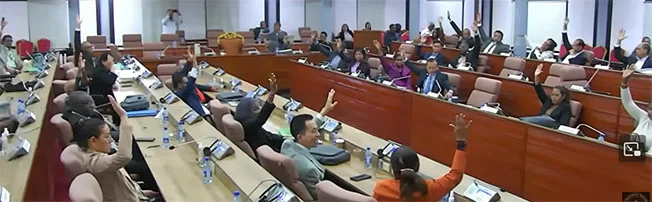
    In a landmark vote held on May 30, Suriname’s National Assembly has given unanimous approval to an amended version of the 2024 Accounting Law, closing a period of negotiations between the executive and legislative branches that produced a key compromise on the legislation’s implementation timeline. All 38 sitting members of the assembly cast votes in favor of the adjusted bill, with no dissenting votes registered.

    The core amendment to the legislation scales back the originally proposed three-year implementation delay to just two years, locking in a timeline that will see the 2024 Accounting Law enter into full force starting with the 2028 fiscal year. Finance and Planning Minister Adelien Wijnerman confirmed during parliamentary debate that the executive branch accepts the assembly’s revisions, including the shorter delay and new accountability safeguards added to the final text.

    Under the terms of the amended law, a formal implementation action plan will be integrated directly into the legislation, and the parliament will receive independent progress evaluation reports every six months, with the first such assessment scheduled for December 2026. The 2019 Accounting Law will remain in effect for all government budgets and financial accountability reporting covering the period from 2022 through 2027, with the new framework taking over fully for 2028 and all subsequent fiscal cycles.

    While the bill earned broad cross-factional support, multiple assembly members raised cautious questions about whether the ambitious implementation timeline is realistically achievable. Rossellie Cotino, chair of the relevant parliamentary committee and member of the NDP party, noted that independent financial experts have already labeled the two-year trajectory as extremely aggressive, warning that the legislature could be forced to consider another extension before 2028. Even with these concerns, Cotino ultimately voted to approve the amended legislation.

    Asis Gajadien, parliamentary faction leader for the VHP party, shared that his caucus initially held strong reservations about any implementation delay, pointing out that limited progress on rolling out the law had been recorded over the previous 10 months. Ultimately, the faction agreed to give the government the benefit of the doubt, a decision shaped by Minister Wijnerman’s commitment to deploy all available technical expertise to meet the 2028 deadline.

    Lawmakers across multiple factions emphasized that the new Accounting Law is a foundational piece of legislation for strengthening government transparency, enforcing fiscal discipline, enabling independent financial oversight, and ensuring responsible management of Suriname’s future oil and gas revenue. Members also highlighted the legislation’s critical role in shoring up the country’s Savings and Stabilization Fund and improving overall public financial governance across all branches of government.

    Faction leaders from both ruling coalition and opposition parties called for unified support for the bill, stressing that successful implementation is not solely the responsibility of the executive branch. Instead, they noted, it requires coordinated action from parliament, the Court of Audit, the private sector, and other independent oversight institutions to deliver on the law’s goals.

    Following the unanimous final vote, Minister Wijnerman described her reaction as one of mixed feelings, acknowledging that the government is ready to take on the significant implementation challenge ahead. She also cautioned that rolling out the new regulatory framework is a complex process, and the executive will not hesitate to return to parliament for additional consultation and new measures if unforeseen barriers emerge during execution.
  • Regering verdedigt lening van US$ 1,8 miljard: groot deel gebruikt voor oude schulden

    Regering verdedigt lening van US$ 1,8 miljard: groot deel gebruikt voor oude schulden

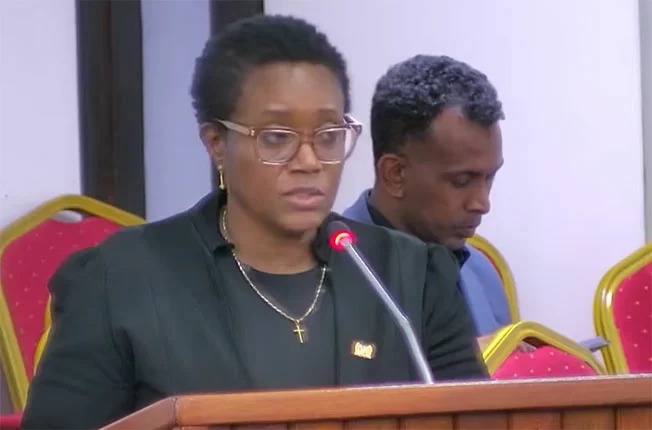
    A heated public debate has emerged in Suriname over the scale and purpose of new government borrowing, after top administration officials delivered conflicting figures during parliamentary discussion of the 2024 Accountability Act. Speaking during the debate, Finance and Planning Minister Adelien Wijnerman laid out a full breakdown of national debt accumulated by both the current and preceding administrations, seeking to address mounting criticism over the current government’s rapid borrowing. Wijnerman confirmed that the previous administration took on a total of approximately $2.2 billion in new debt, split across 35 international loan agreements and 28 domestic borrowing arrangements. Since the current government took office, she added, it has raised roughly $1.8 billion through new lending, the vast majority of which comes from two large bond issuances.
    Wijnerman pushed back against critics who frame the full $1.8 billion as entirely new net debt, arguing that the vast majority of the funds have been allocated to refinancing existing obligations rather than funding new government spending. Of the total $1.8 billion, she explained, around $1.2 billion has been earmarked for early repayment and replacement of maturing old debts, including the country’s 2033 sovereign bond, obligations under the VRI debt framework, and other expiring loan agreements. The remaining funds are split across three core categories: approximately $186 million allocated to high-priority social development projects, $380.5 million covering interest obligations tied to the new bond structure, and $29.6 million covering administrative costs associated with issuing the new bonds. The social projects receiving funding span key public sectors, including public healthcare, primary and secondary education, youth development and sports programming, agricultural modernization, national digitalization initiatives, and affordable public housing construction. The minister also noted that the total projected interest payments for the two new bonds over their 10-year term will amount to roughly $1.3 billion.
    Acting President Gregory Rusland followed Wijnerman’s remarks to address widespread public criticism that the current government has taken on an unsustainable $1.8 billion in new debt in a short period of time. Rusland explained that the current administration inherited a debt schedule that required large principal and interest repayments starting in 2025. Without proactive refinancing, he argued, these mandatory payments would have crowded out core public spending on critical services including education and healthcare, forcing deep cuts that would harm ordinary Surinamese citizens. Echoing Wijnerman, he emphasized that most of the $1.8 billion raised through new borrowing was not directed to new government outlays, but instead went toward retiring old debts. He specifically highlighted a $1 billion debt to investment firm Oppenheimer that was fully repaid using proceeds from the new bonds. Rusland argued that critics focusing solely on the gross $1.8 billion borrowing figure are misrepresenting the government’s fiscal actions, noting that after accounting for debt repayments, only roughly $180 million in net new funds remain available for additional government spending.
    However, a notable discrepancy in official calculations has intensified the ongoing debate over the actual growth of Suriname’s national debt. Shortly after Rusland’s remarks, Wijnerman presented a revised net borrowing calculation that put the effective net new debt after debt repayments and refinancing at roughly $596 million, more than three times the $180 million estimate provided by the acting president. This conflicting official data has fueled continued public and political disagreement over how much Suriname’s total debt position has actually increased under the current administration. Government officials have repeatedly defended their fiscal strategy, stressing that most of the new borrowing is part of a planned debt restructuring to ease near-term fiscal pressure and protect core public services. But critics remain concerned about the sheer size of the new bond issuances and the $1.3 billion in future interest payments that the country will be required to make over the coming decade, warning that the new debt could create long-term fiscal strain for the country.

  • Matawai Traditioneel Gezag en planetGOLD Suriname in gesprek over duurzame goudwinning

    Matawai Traditioneel Gezag en planetGOLD Suriname in gesprek over duurzame goudwinning

    In a landmark step toward equitable, environmentally responsible gold extraction in Suriname, the Traditional Authority of the Matawai people and representatives from the planetGOLD Suriname project have held their first formal collaborative dialogue focused on sustainable gold mining, community-led development and conservation of local ecosystems.

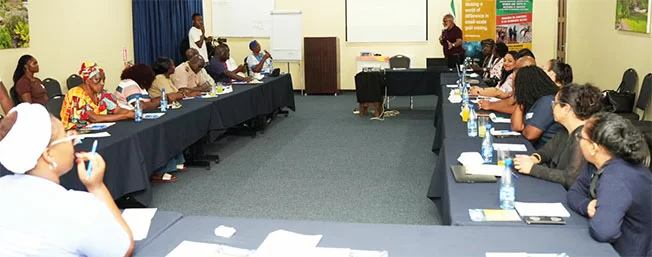
    Hosted at Oxygen Resort, the meeting laid the foundational groundwork for a long-term engagement process centered on mutual trust, inclusive community participation, and full respect for the Matawai people’s traditional governance and decision-making structures. The session was organized jointly by planetGOLD Suriname and the Foundation for Research and Development in Caribbean Communities, bringing together Matawai leadership, project partners and a broad range of cross-sector stakeholders.

    Attendees received a detailed overview of the planetGOLD initiative’s core objectives. This global program is specifically designed to advance responsible and sustainable practices in artisanal and small-scale gold mining (ASGM), with a key priority of cutting mercury use—a pervasive environmental and public health hazard in the small-scale mining sector. Beyond reducing mercury pollution, the initiative works to minimize broader ecological damage from mining activities, improve unsafe working conditions for mining workers, and strengthen the voice and agency of local communities that are directly impacted by gold extraction operations.

    The focus on collaborative governance with Indigenous and tribal communities is particularly relevant for Suriname, where a large share of the country’s gold production takes place on or adjacent to lands stewarded by tribal and Indigenous groups like the Matawai. For this reason, meaningful partnership with traditional authorities and local communities is a non-negotiable core component of the planetGOLD Suriname project’s approach.

    In alignment with the Matawai community’s long-standing decision-making frameworks, traditional leaders were given extended space to raise questions, highlight priority concerns, and share their community’s collective vision for responsible resource management. Discussions covered a range of critical topics, including the potential impacts of mining expansion on ancestral territories, natural resource protection, and long-term community development outcomes.

    The entire dialogue unfolded in an open, constructive atmosphere, with all participants centering mutual respect for Matawai culture, traditions and community interests. The agenda included a formal project presentation, an extended question-and-answer session, an internal deliberation by Matawai traditional leaders, and a collective discussion of potential collaborative models moving forward.

    dei
    Participants across all groups emphasized the critical need to sustain ongoing dialogue between project implementers, local communities and traditional authorities through every stage of the initiative. They underlined that lasting, sustainable solutions can only succeed if they are rooted in and responsive to the unique needs, lived experiences and expectations of the Matawai community that calls the mining region home.

    This introductory meeting marks the official starting point of a process that will center participation, transparency and shared accountability for all stakeholders moving forward. All key insights and concerns raised during the dialogue will be integrated into the next phases of project planning and implementation.

    Overall, the first formal gathering has established a solid foundation for continued partnership between planetGOLD Suriname and the Matawai Traditional Authority, aligned around shared goals of sustainable development, responsible stewardship of natural resources, and meaningful community participation in all decision-making processes related to gold mining.

  • Derde helft WK 2026: Team Brazilië barst van talent, moet zich bewijzen

    Derde helft WK 2026: Team Brazilië barst van talent, moet zich bewijzen

    As the 2026 FIFA World Cup approaches in North America, five-time champions Brazil enter the tournament as one of the tournament’s most surprising underdogs, despite a long and unparalleled history of success on the world’s biggest football stage. The only nation to have qualified for every men’s World Cup since the tournament’s inception in 1930, Brazil holds the record for the most World Cup titles, with triumphs in 1958, 1962, 1970, 1994 and 2002. However, it has now been 24 years since the Seleção last lifted the golden trophy – a drought that matches the dry spell the side broke with their 1994 win on American soil, a parallel that has not been lost on fans and players alike.

    Recent years have brought a string of crushing disappointments for Brazilian football, from the traumatic 7-1 semi-final defeat to Germany on home soil in 2014 to a penalty-shootout quarter-final exit at the hands of Croatia in the 2022 Qatar World Cup. A shaky CONMEBOL qualifying campaign that saw Brazil finish fifth in the regional standings ultimately cost manager Dorival Jr his job, paving the way for a historic appointment: Real Madrid icon Carlo Ancelotti became the first permanent foreign head coach to take charge of the Brazilian national team last year.

    Ancelotti brings one of the most impressive resumes in club football to the role, with five UEFA Champions League titles earned across stints at AC Milan and Real Madrid, plus league trophies in all five of Europe’s top domestic competitions. Renowned for his ability to manage star personalities and build pragmatic, tactically flexible sides that thrive under pressure, Ancelotti does carry one major question mark into the World Cup: he has limited experience in international football. Early results with the Seleção have also been mixed, with friendly wins over Colombia and Chile offset by a 2-1 loss to world champions France in March 2026. One clear advantage for Ancelotti is his existing familiarity with many of Brazil’s top talents, most notably Real Madrid winger Vinicius Jr – the player widely flagged as Brazil’s difference-maker heading into the tournament.

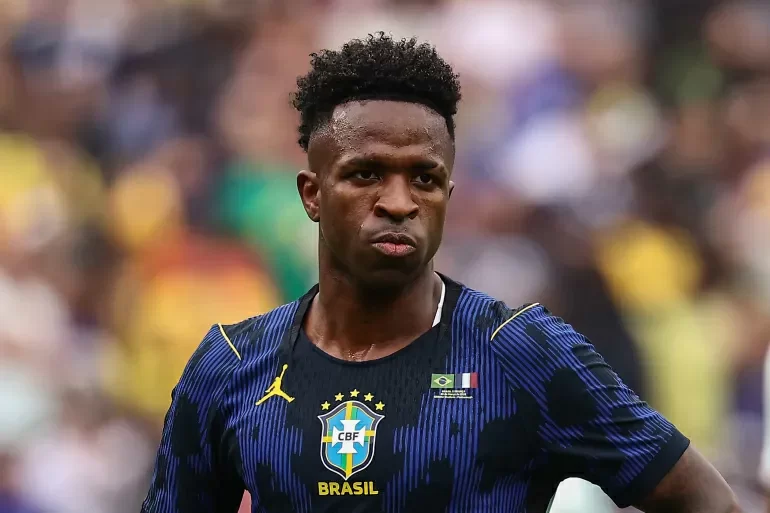
    The 2026 Seleção’s breakout star has had a rollercoaster club season, struggling early on under former Real Madrid manager Xabi Alonso before finding his form once Álvaro Arbeloa took charge, finishing the La Liga campaign with 16 goals. For Brazil, the 28-year-old winger has yet to hit the same heights he reaches at club level, notching just eight goals in 43 senior international caps. Ancelotti has made the bold choice to move Vinicius into a central striker role, a positional shift that has sparked debate, but few doubt that when at his best, his blistering pace, close control and eye for goal make him nearly unstoppable for opposing defenders.

    One of the most controversial selection calls Ancelotti made was the inclusion of veteran Neymar, Brazil’s all-time leading goalscorer with 79 international goals, who has been plagued by a string of serious injuries over the past five years. The 34-year-old has not featured for Brazil since October 2023, and after a difficult spell in Saudi Arabia, he returned to his boyhood club Santos to rebuild match fitness. He was left out of Brazil’s March friendly squad due to lack of rhythm, so his World Cup selection came as a major surprise – especially with Chelsea’s player of the year Joao Pedro left out of the final squad. Ancelotti defended the call, noting that Neymar has shown consistent improvement in fitness and form over the past few months, and that his veteran experience was a priority for the squad. Neymar has spoken of his desire to mirror the 2002 run of Ronaldo, who led Brazil to the title after two years of injury struggles, though concerns remain over his fitness and off-field issues at this late stage of his career.

    Beyond the two star forwards, Brazil’s 2026 squad is packed with quality across the pitch. Raphinha comes into the tournament full of confidence after a standout title-winning season with Barcelona, while young talents like Endrick, Gabriel Martinelli and Matheus Cunha add further attacking depth, even as injuries to Rodrygo and Estevao are major blows to the side’s attacking options. In midfield, Newcastle’s Bruno Guimaraes has established himself as one of the Premier League’s top midfielders, while veteran Casemiro is enjoying a late-career resurgence at Manchester United. Brazil’s defense is anchored by Paris Saint-Germain leader Marquinhos, with Liverpool’s Alisson Becker widely regarded as one of the best goalkeepers in world football, giving the side a solid foundation at the back.

    Brazil has been drawn into Group C for the 2026 tournament, a repeat of the 1998 group stage that paired the Seleção with Morocco and Scotland. Haiti is the surprise qualifier, making their first World Cup appearance since 1974. 2022 semi-finalists Morocco are widely expected to be Brazil’s toughest group test, and will be eager to pull off an upset in their opening clash in East Rutherford, New Jersey on June 13. Brazil will then face Haiti in Philadelphia on June 19, before closing out group play against Scotland in Miami on June 24. Analysts widely expect Brazil to top the group if they perform to their potential, with comfortable wins projected against Haiti and Scotland.

    As the tournament kicks off, the narrative around Brazil remains clear: the five-time champions have all the individual talent and top-tier coaching needed to compete for the title, but their underdog status comes with good reason. Key question marks over Neymar’s fitness, Ancelotti’s inexperience at international level, and the strength of opposing contenders could all derail Brazil’s bid to end the 24-year title drought. For long-time Brazil fans, many of whom have supported the side through decades of highs and lows, belief remains unshaken – if the Seleção can find cohesion and perform at their best when it matters, they could pull off one of the most surprising World Cup triumphs in the tournament’s modern history.

  • Interpol weigert OM wederom opsporingsverzoek tegen Hoefdraad

    Interpol weigert OM wederom opsporingsverzoek tegen Hoefdraad

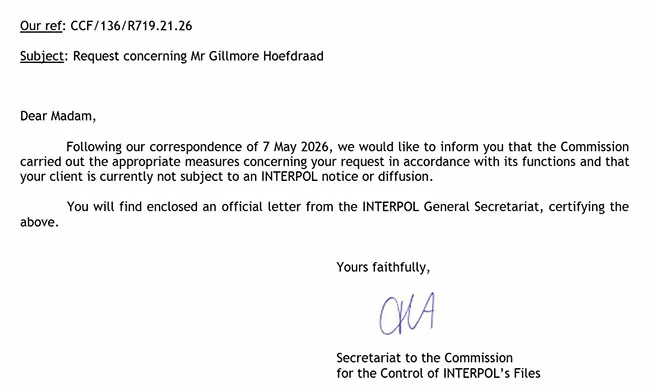
    The international law enforcement cooperation agency Interpol has for a second time turned down a request to issue a so-called Red Notice for former Surinamese Finance Minister Gillmore Hoefdraad, according to an official correspondence sent by Interpol to Suriname’s prosecutor general.

    Details of the rejection were confirmed by Hoefdraad’s legal defense team, which confirmed that Interpol reviewed the renewed request from Suriname to add the former minister to its global wanted person alert system. After assessment, the agency once again found no justifiable grounds to approve the request. This marks the second time Suriname’s attempt has failed, after Interpol revoked an earlier global alert for Hoefdraad months prior.

    Murwin Dubois, a lead defense attorney representing Hoefdraad, told local outlet Starnieuws that this second rejection sends a clear signal: Interpol continues to harbor serious doubts about the objectivity of the criminal prosecution against the former minister. Interpol operates under strict core rules designed to prevent the agency from being drawn into legal matters that carry potential political motivations, a policy that guided the agency’s decision in this case.

    When Interpol rejected Suriname’s first request, it explicitly justified its ruling by concluding that the prosecution against Hoefdraad carried political motives. The agency also noted that Suriname’s Public Prosecution Service failed to submit sufficient documentation and solid legal evidence to disprove that conclusion. Today, Dubois argues that the string of rejections should prompt a full, critical re-evaluation of both the entire criminal case against Hoefdraad and the procedural practices that have guided the prosecution to date. He pointed to longstanding criticism from multiple independent jurists and defense lawyers over flaws in key parts of the investigation and legal process.

    The attorney further called on Suriname’s Public Prosecution Service to release full transparency about all requests submitted to Interpol in the Hoefdraad case, as well as all responses received from the agency. “Suriname’s society has an inherent right to know the full details of proceedings in a case brought in the name of the Surinamese state,” Dubois argued.

    As of this report, the Public Prosecution Service has not issued any official comment on Interpol’s latest rejection. Beyond the short formal notification sent to the prosecutor general, Interpol has not released any additional supporting documentation or public explanation of its second rejection.

  • President Simons onderscheidt Surinaamse wetenschapper Rudi van Els in Brazilië

    President Simons onderscheidt Surinaamse wetenschapper Rudi van Els in Brazilië

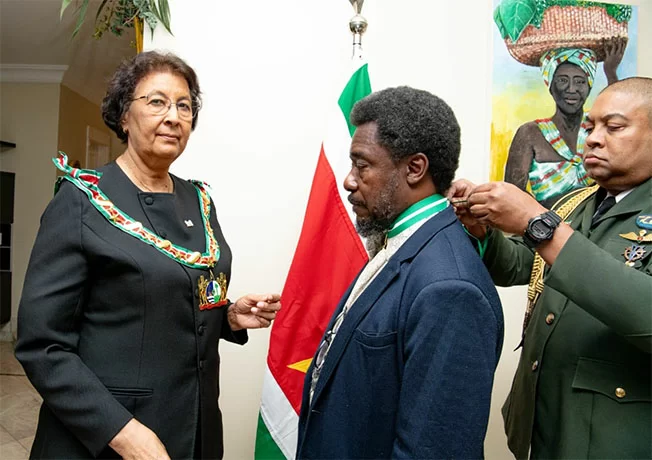
    During an official two-day state visit to neighboring Brazil, Suriname’s President Jennifer Simons has bestowed one of the country’s highest distinctions — the Order of the Palm in the rank of Commander — on veteran Surinamese academic Rudi van Els, in recognition of his decades of selfless service advancing bilateral educational and academic ties between the two South American nations. The investiture ceremony was held at the Surinamese Embassy in Brasilia, as Simons marked the 50th anniversary of formal diplomatic relations between Suriname and Brazil.

    Van Els, an associate professor and engineering researcher affiliated with the University of Brasília, earned the honor for his extraordinary contributions to nurturing Surinamese academic talent, expanding educational access, and strengthening collaborative research and capacity-building between the two countries. A trailblazer himself, Van Els was part of the very first cohort of Surinamese students that traveled to Brazil for higher education in 1984. He built a decades-long academic career in Brazil, yet never ceased dedicating his knowledge, time and expertise to advancing development opportunities for his home country, entirely pro bono for most of his work.

    In her ceremonial address, President Simons highlighted that Van Els has served as a critical people-to-people bridge between Suriname and Brazil throughout his professional life. Beyond his work in core academic fields including sustainable development, renewable energy, and rural electrification, he was a foundational leader in establishing the SuriBraz Academic Network, which has grown into a leading cross-border platform connecting scholars, institutions and civil society organizations from both nations.

    Simons emphasized that Van Els’ consistent, uncompensated mentorship and support for Surinamese students and educational institutions has made a transformative impact on building Suriname’s human capital. Since 1984, more than 130 Surinamese students have completed higher education programs at Brazilian universities, a pathway that Van Els helped open and sustain through decades of on-the-ground support.

    “Due to these extraordinary, long-standing contributions, the Republic of Suriname finds it more than fitting and well-deserved to extend our special gratitude to you,” Simons told Van Els during the ceremony.

    The event coincided with Simons’ broader official visit to Brazil, which included a bilateral summit with Brazilian President Luiz Inácio Lula da Silva. The Surinamese leader expressed full satisfaction with the outcomes of the high-level talks, noting that multiple new bilateral cooperation agreements were signed during the visit, spanning a range of priority sectors for both nations.

    “These signed cooperation instruments across diverse areas clearly illustrate the results we have achieved. These successes are the product of our joint, mutual efforts, for which I extend my special thanks,” Simons said. “My visit in this anniversary year, when we mark 50 years of diplomatic relations, is an ideal moment to reflect on our decades of deep cooperation.”

  • Brazilië ondersteunt Suriname met 100.000 vaccins en malariamedicatie

    Brazilië ondersteunt Suriname met 100.000 vaccins en malariamedicatie

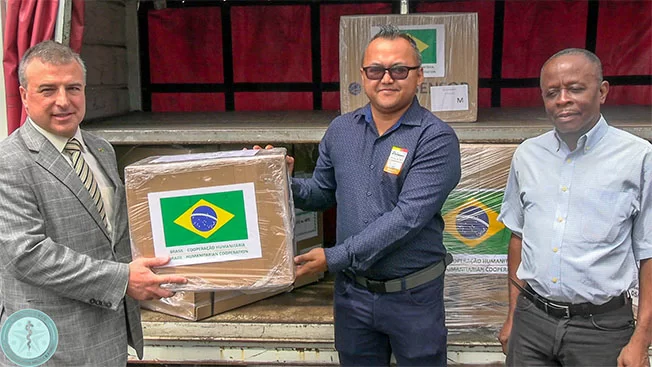
    Suriname’s Bureau for Public Health (BOG) has received a substantial donation of life-saving health commodities from the Brazilian government, aimed at strengthening the country’s national public health and immunization infrastructure. The formal handover of the donation took place on Wednesday, with Brazilian Ambassador Felipe Costi Santarosa presenting the supplies to BOG representatives.

    The donation package includes 100,000 doses of pneumococcal conjugate vaccine (PCV), 1,500 rapid COVID-19 tests, and 200 doses of tafenoquine, a first-line medication used for malaria treatment. These supplies were specifically requested by Suriname’s Ministry of Health to reinforce ongoing national immunization initiatives, according to Richard Kartomo, manager of BOG’s National Immunization Program (NIP), who accepted the donation on NIP’s behalf.

    Kartomo explained that the additional vaccines will help the country expand coverage of its routine vaccination programs, bringing Suriname closer to meeting its key national public health targets. All donated supplies have already been safely stored at BOG facilities, clearing the way for the immediate rollout of targeted immunization activities. The upcoming campaign will prioritize vaccinating children under five years old to protect them against life-threatening pneumococcal infections, a leading cause of child mortality in many low- and middle-income countries.

    Notably, frontline health workers involved in delivering the program have already completed specialized training over recent months, meaning all preparations for the campaign are finalized. With the arrival of the donated vaccines, the program can launch without delay.

    This donation is part of the deepening bilateral public health and cooperation partnership between Suriname and Brazil. Over the past several years, the two nations have steadily expanded collaboration in the areas of public health capacity building and infectious disease control, with this contribution marking another milestone in their shared commitment to improving regional health outcomes.

  • Cubaanse  leerlingen op school: ‘Ze doen alleen mee met rekenen’

    Cubaanse leerlingen op school: ‘Ze doen alleen mee met rekenen’

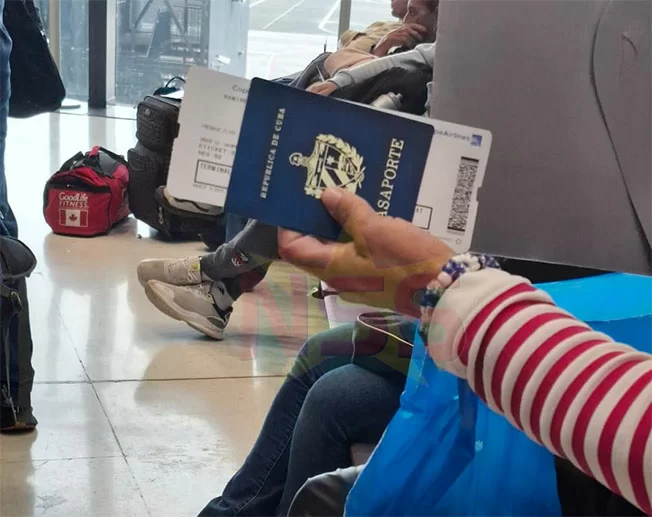
    Since 2020, Suriname has recorded a net inflow of more than 40,000 Cuban migrants, a wave of relocation that has created unforeseen strains on the South American nation’s public education system and social cohesion. Most of these new arrivals lack formal residency documentation, and because official population registration remains incomplete, authorities cannot confirm exactly how many school-aged Cuban children are currently residing in the country. What is clear, local educators say, is that integrating large numbers of Spanish-only speaking migrant children into Suriname’s Dutch-medium education system has emerged as a major unaddressed challenge.

    Merredith Hoogdorp, a primary school teacher and board member of the Surinamese teachers’ union Wi Sa Strei, explained that the first major obstacle begins with classroom placement. Without official school records or age verification documents to draw from, children are often placed into grades that do not match their actual developmental level. Hoogdorp cited the example of a 15-year-old Cuban boy who was assigned to a fifth-grade class – where all other students are between 9 and 10 years old – because he had no documentation to prove his age or prior education.

    Beyond placement mismatches, many educators report widespread reluctance among Cuban migrant children to learn Dutch, the official language of instruction in Suriname. Hoogdorp described her repeated efforts to teach basic Dutch vocabulary to the 15-year-old student, only to be met with silence and disengagement. To date, the student has been held back a grade, as he only participates in mathematics lessons and cannot engage with other coursework taught in Dutch.

    Not all public schools have adopted a passive approach: some campus in northern Paramaribo have taken it upon themselves to adapt curricula for Spanish-speaking students, translating lesson materials and administering assessments in Spanish to help migrant children keep up. Educators at these schools take on this extra workload voluntarily, but Hoogdorp argues that this ad-hoc solution is unsustainable. She notes that Surinamese teachers already receive inadequate pay, and there is no additional compensation for the extra work of translating materials or learning Spanish to support migrant students. Hoogdorp is calling on the Ministry of Education to implement a formal, coordinated strategy to address the crisis rather than leaving individual teachers to bear the burden.

    In response to the gap in public education support for Spanish-speaking migrant children, a new independent facility, the Educational Center – Reparador de Sueños School, recently opened its doors. The school, accredited by Suriname’s Ministry of Education, Science and Culture, primarily serves primary school-aged children from migrant backgrounds. Director Lyolexis Vázquez confirmed that the largest student cohort comes from Cuba, with additional enrolled students from Venezuela, the Dominican Republic, Colombia and Peru. Currently, nearly 100 children between the ages of 3 and 13 attend the school, which delivers most core instruction in students’ native Spanish.

    The new school also offers mandatory Dutch classes, as well as coursework on Surinamese geography and history, to support gradual integration. Vázquez explained that the school was founded to fill a critical educational vacuum created by the influx of migration: as Dutch is the official language of public education in Suriname, Spanish-speaking children face overwhelming barriers to accessing consistent learning in the public system. “Our model acts as a linguistic bridge, allowing children to continue their academic development in their mother tongue while they gradually acclimate to and integrate into Surinamese society,” Vázquez said.

    The language barrier extends beyond the education system and has contributed to social tensions between long-term Surinamese residents and new Cuban migrants. Many Surinamese have expressed frustration that many Cuban arrivals appear unwilling to learn Dutch or the local creole language Sranantongo. Jose, a young Cuban fruit seller who has lived in Suriname for seven years with his entire family, is an outlier: he speaks fluent Sranantongo and Dutch. A Cuban nail technician in Paramaribo told reporters she is embarrassed by the behavior of many of her compatriots, saying “It is unacceptable to come to Suriname, enter Surinamese people’s homes and workplaces, and refuse to learn their language.”

    Cultural differences, often exacerbated by language barriers and lack of context, have also created friction. One Surinamese business owner noted that many Cuban migrants are accustomed to throwing toilet paper in the trash rather than flushing it, a practice rooted in inadequate sewage and water infrastructure in Cuba that many Surinamers do not understand. This small cultural difference has already led to workplace irritation between colleagues.

    Compounding these social and educational challenges is the absence of clear national policy for Cuban and other migrant groups. As a member of the Caribbean Community (CARICOM), Suriname allows free entry for citizens of other CARICOM member states, and integration courses are not mandatory for new arrivals. The government also lacks a centralized, complete system to track who enters the country, leaving authorities without accurate data on the full scope of migration.

    Similarly, there is no official data on the share of crime in Suriname that can be attributed to Cuban migrants. Recent high-profile headlines have linked Cuban suspects to armed robbery, murder, and human trafficking cases, but the Surinamese Police Corps has not released any aggregated statistics on criminal activity among the Cuban migrant population, leaving public perceptions unmoored from verifiable data. This report was produced with support from the Suriname Journalism Stimulation Fund.

  • Houtproductie daalt licht in 2025; Sipaliwini blijft grootste productiegebied

    Houtproductie daalt licht in 2025; Sipaliwini blijft grootste productiegebied

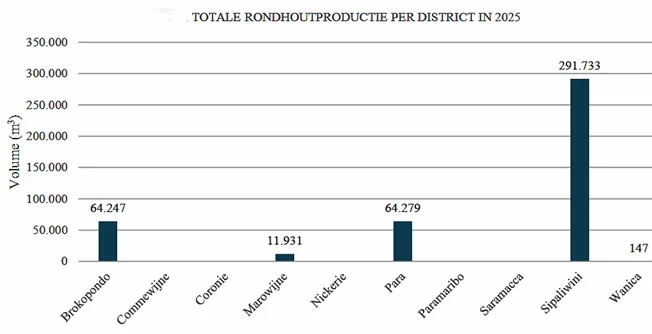
    Fresh data released by Suriname’s Foundation for Forest Management and Forest Control (SBB) shows that the country’s total roundwood output edged slightly lower in 2025, marking a modest shift in the nation’s key forestry sector performance. Per the latest official forestry statistics, total production reached 432,337 cubic meters of roundwood equivalent this past year, down from 435,942 cubic meters recorded in 2024.

    Geographically, production remains heavily concentrated across the country’s districts, with Sipaliwini standing out as the undisputed core production region. The district alone contributed 291,733 cubic meters of roundwood in 2025, accounting for more than two-thirds of Suriname’s total national output. Following Sipaliwini are Para with 64,279 cubic meters and Brokopondo with 64,247 cubic meters, making these two districts the secondary production hubs. By contrast, Wanica registered just 147 cubic meters of production for the year, while multiple other districts recorded barely any or no commercial roundwood output at all.

    When broken down by product type, industrial roundwood — particularly sawlogs and peeling logs — makes up the overwhelming majority of total production. This segment accounted for 430,331 cubic meters of the 2025 total, with smaller volumes of other wood products including utility poles, shingles and sawn timber making up the remaining output.

    Production is also heavily centered on concession areas, which generated more than 362,905 cubic meters of roundwood in 2025. Community forests contributed an additional 42,614 cubic meters, with smaller volumes coming from areas covered by general logging permits, LBB reserves and incidental logging permits.

    A monthly breakdown of production reveals clear seasonal variations across the year. The highest monthly output was recorded in October, at 52,270 cubic meters, followed closely by November with 51,912 cubic meters. July saw the lowest production level of any month in 2025, with just 20,093 cubic meters harvested.

    Among commercial wood species, basralokus retained its position as the most harvested commodity in 2025, with total output reaching 123,962 cubic meters. Other leading commercial species include gronfolo at 69,535 cubic meters, kopi at 32,659 cubic meters, bruinhart at 27,915 cubic meters and wana at 26,294 cubic meters.

    On the export side, Asia continues to dominate as the primary destination for Surinamese timber. Approximately 92 percent of total Surinamese wood exports are shipped to Asian markets, with China, India, Singapore and Vietnam ranking as the largest buyers.

    SBB officials note that the updated statistics provide a critical, transparent overview of ongoing trends in Suriname’s forestry sector, highlighting the steady economic contribution the industry makes to the country’s national economy.

  • Iran en VS bereiken voorlopig akkoord over verlenging staakt-het-vuren

    Iran en VS bereiken voorlopig akkoord over verlenging staakt-het-vuren

    After three months of open conflict that has killed thousands and roiled global energy markets, the United States and Iran have reached a tentative agreement to extend their existing ceasefire for 60 days and lift restrictions on commercial shipping passing through the strategic Strait of Hormuz, multiple anonymous sources familiar with the negotiations told Reuters Thursday. The deal remains far from finalized, however: it still requires formal approval from US President Donald Trump, and Iranian state media has pushed back against claims that a binding accord has been locked in.

    According to four insiders close to the talks, the 60-day extension will open the Strait of Hormuz—through which roughly 20% of the world’s daily oil and liquefied natural gas supplies transit—to unimpeded commercial traffic, creating a window for negotiators to work through thornier sticking points, most notably Iran’s nuclear program. If ratified by leadership in both Washington and Tehran, the deal would mark the most significant step toward de-escalation since hostilities broke out on February 28.

    The reported breakthrough comes on the heels of a string of retaliatory strikes between the two nations, even after the initial April ceasefire took effect. US Vice President JD Vance expressed cautious optimism about the ongoing talks, telling reporters, “We are not there yet, but we are very close and we will keep working toward a deal.” He stopped short of confirming that the agreement would be finalized. This is not the first time the Trump administration has signaled a peace deal is within reach; past claims of imminent progress have been rejected by Iran, which has repeatedly emphasized that no final agreement has been reached.

    Under the terms of the tentative deal, the United States would also lift its blockade on Iranian ports and ease some sanctions on Iran’s oil exports, sources confirmed. News of the potential de-escalation immediately moved global energy markets, pulling oil prices down as investors priced in the restoration of full traffic through one of the world’s most critical energy chokepoints.

    But even as negotiators hailed progress, fresh violence erupted this week, underscoring just how fragile the path to lasting peace remains. The US military announced it had shot down five Iranian attack drones and struck a ground control tower in the Iranian port city of Bandar Abbas, which it said was preparing to launch a sixth drone. Separately, Kuwaiti defense forces intercepted a ballistic missile fired toward Kuwaiti territory, which hosts a major US military base. A senior US official refuted Iranian state media claims that an American military plane had been downed near the Iranian city of Bushehr.

    Following the US strike on Bandar Abbas, Iran’s Islamic Revolutionary Guard Corps said it had targeted US positions and warned that any future US attacks would trigger a “more decisive response.” Kuwait condemned the missile launch, calling it a dangerous escalation and urging Iran to immediately halt such actions. This week’s second outbreak of violence coincided with Eid al-Adha, the major Islamic religious holiday widely celebrated across the region.

    Pakistan, which has served as a neutral mediator between the two sides, announced that its Foreign Minister Ishaq Dar will travel to Washington Friday for talks with US Secretary of State Marco Rubio, though the exact purpose and agenda of the meeting have not been publicly clarified.

    Months of talks have yet to bridge core divides between the two nations. Iran’s key demands include the full lifting of US economic sanctions, the unfreezing of Iranian overseas assets, and the withdrawal of American military forces from the Middle East. The US, by contrast, insists that Iran dismantle its nuclear program—a demand Iran has consistently rejected, maintaining that its nuclear activities are entirely peaceful for civilian energy and medical purposes. Iran also demands that any peace deal end Israeli strikes on Iranian-backed groups in Lebanon, where conflict continues to escalate. Israel reported recent air strikes on Hezbollah infrastructure in the southern Lebanese city of Tyre and the capital Beirut, strikes that killed one Lebanese soldier. Israel’s ongoing large-scale military operations against Hezbollah in Lebanon have already displaced hundreds of thousands of people.

    In a separate development tied to the Hormuz dispute, the US issued a sharp warning to Oman this week, demanding that the Gulf state not assist Iran in any effort to impose tolls on vessels passing through the strait. President Trump even went so far as to threaten airstrikes on Oman Wednesday, despite decades of close economic and military ties between Washington and Muscat. US Treasury Secretary Scott Bessent later said Oman’s ambassador had confirmed the country has no plans to cooperate with Iran on toll collection. Oman has never publicly discussed joint control of the strait with Iran, and has reaffirmed its commitment to the principle of free passage through the waterway. Following the US threats, Iran issued a statement expressing solidarity with Oman against what it called “threats from US officials.”

    The photo accompanying this report shows US President Donald Trump, Secretary of State Marco Rubio, and Secretary of Defense Pete Hegseth attending a cabinet meeting in the White House Cabinet Room in Washington DC, credited to Reuters.