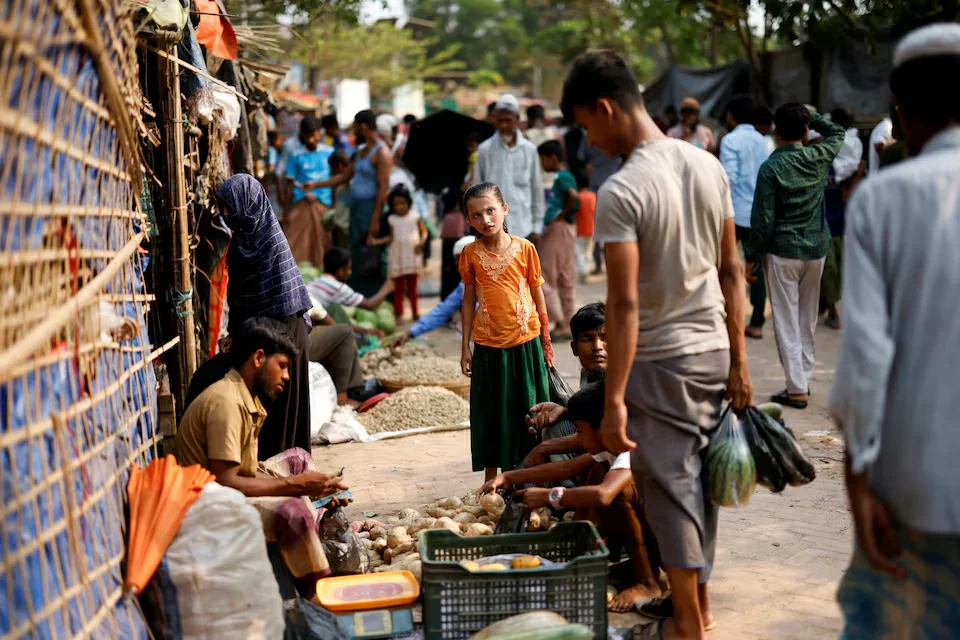
Almost nine years after hundreds of thousands of Rohingya fled systematic violence in Myanmar, the United Nations has issued an urgent warning: shrinking global humanitarian funding could send the living conditions of the 1.2 million Rohingya refugees sheltering in Bangladesh into catastrophic decline.
标签: Suriname
苏里南
-
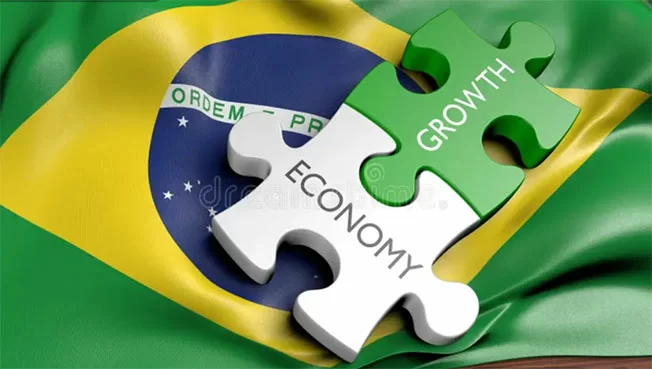
Brazilië op weg terug naar top 10 grootste economieën ter wereld
South America’s largest economy Brazil is on the cusp of a major economic milestone, with latest projections from the International Monetary Fund (IMF) indicating the country is set to reclaim its position among the world’s 10 largest national economies by the end of 2026.
The forecast, compiled and validated by independent economic research institutions using IMF data, shows Brazil is on track to secure the 10th spot in the global GDP ranking this year, outpacing economies like Canada to return to the top tier of global economic rankings. This optimistic projection comes on the heels of stronger-than-expected first-quarter growth performance for 2026. Official data shows Brazil’s economy expanded by 1.4% quarter-on-quarter between January and March, placing it among the fastest-growing large economies globally for the period. The growth momentum was driven by three key pillars: robust expansion in the service sector, rising business investment, and resilient domestic consumer demand that has held up despite broader global headwinds.
Per IMF projections, Brazil’s total nominal GDP is expected to hit approximately $2.64 trillion USD in 2026. This output will place the country just behind Russia in the global ranking, and ahead of a number of other major advanced and emerging economies. Economic analysts note that the GDP gap between Brazil and Russia is relatively narrow, meaning continued consistent growth could push Brazil even higher up the global ranking in coming years.
In its latest regional economic assessment, the IMF emphasized that Brazil’s economy has shown remarkable resilience in the face of multiple global challenges, including ongoing geopolitical tensions, elevated global energy prices, and widespread uncertainty across international commodity and financial markets. After a moderate growth slowdown in 2025, recent leading economic indicators point to a broad-based recovery across multiple sectors. The IMF projects Brazil’s growth will gradually strengthen over the medium term, stabilizing at around 2.5% annual growth in the coming years.
Despite the positive outlook, the country still faces notable downside risks and structural challenges. Inflation is currently under upward pressure driven by rising global oil prices, which have been pushed higher by ongoing geopolitical tensions in the Middle East. The federal government is also working to shore up public finances, implementing new spending restrictions to keep national debt levels manageable. Additionally, the labor market has shown mixed signals, with new job creation falling short of economists’ earlier projections.
For neighboring Suriname, Brazil’s projected economic resurgence carries particular strategic and economic significance. Brazil is already South America’s largest economy, and has emerged as an increasingly critical trade partner and strategic neighbor for Suriname in recent years. A faster-growing Brazilian economy is expected to unlock new cross-border collaboration opportunities across trade, agriculture, infrastructure development, energy, and foreign direct investment for Suriname.
Against the backdrop of deepening bilateral ties between the governments of Paramaribo and Brasília, Brazil’s upward economic trajectory is being closely monitored across northern South America. A stronger, more dynamic Brazilian economy is expected to generate broader economic momentum across the entire northern region of South America, with Suriname positioned to directly benefit from this regional growth impulse.
-
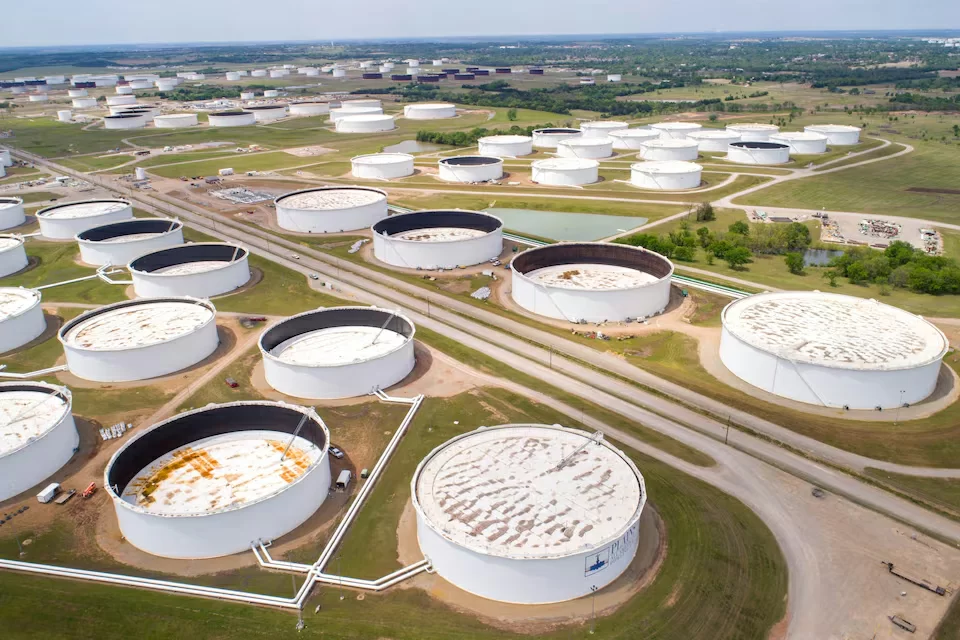
Olieprijzen stijgen ruim 4% door stilvallen VS-Iran gesprekken en dreiging blokkades
Global crude oil markets closed sharply higher on Monday, posting a more than 4% gain after reports emerged that Iran has suspended indirect negotiations with the United States, and regional military alliances led by Tehran are planning a potential full blockade of the strategically critical Strait of Hormuz — a move that has drastically escalated already fraught geopolitical tensions across the Middle East.
The latest developments unfolded against a backdrop of rapidly worsening regional conflict: recent rocket and drone strikes targeted Kuwait, while Israeli forces have pushed deeper into Lebanese territory in their ongoing campaign against Iran-backed Hezbollah. The Strait of Hormuz, located between Iran and Oman, is one of the world’s most vital chokepoints for global energy trade, with roughly 20% of all globally traded crude oil passing through the waterway daily. Reports from Iranian state-linked news outlet Tasnim confirmed that Tehran and its so-called “Resistance Front” alliance — which includes militant and political partners across Yemen, Lebanon, and Iraq — have finalized plans to fully close the strait, and may also disrupt other key shipping lanes including the Bab el-Mandeb Strait at the southern entrance of the Red Sea. The Bab el-Mandeb alone carries between 4 million and 6 million barrels of Saudi crude oil exports daily, making any disruption there a second major shock to global supply chains.
By the close of trading on Monday, international benchmark Brent crude settled at $94.98 per barrel, up $3.86 or 4.2% from Friday’s close. Earlier in the session, prices surged more than 6% at their peak before partially pulling back, after former U.S. President Donald Trump said he had no confirmation that the indirect talks with Iran had been suspended. Trump also added that he had received assurances through intermediaries that Hezbollah would not launch new attacks against Israel, injecting a brief wave of cautious optimism into markets that tempered some of the day’s earlier gains.
Monday’s rally follows a brutal month for oil prices in May, when Brent and West Texas Intermediate (WTI) fell between 17% and 19% — marking the steepest single-month drop since March 2020, when the onset of the COVID-19 pandemic collapsed global energy demand virtually overnight. Even with Monday’s gains, market analysts remain split on the trajectory of prices through the second half of the year, as conflicting supply and demand pressures pull the market in opposite directions.
On the supply side, industry analysts warn that prolonged regional conflict and implemented blockades could rapidly drain global commercial crude inventories and trigger sharp price spikes within a matter of months. Compounding supply-side jitters, U.S. inventory data indicates that domestic crude stocks likely fell by 3.6 million barrels in the week ending May 31, according to early industry estimates. While Kazakhstan has restored crude production to 290,000 tons per day following earlier output disruptions, and Venezuela has slightly boosted its crude exports to the U.S., India and Europe in May, these incremental supply gains are far too small to offset a major disruption in the Strait of Hormuz.
On the demand side, however, slowing economic growth in two of the world’s largest crude importers — China and the Eurozone — has put persistent downward pressure on consumption and prices. Investment bank Goldman Sachs has already warned that weakening demand from these regions poses a major downside risk to its optimistic fourth-quarter Brent price forecast of $90 per barrel, even when accounting for potential Middle Eastern supply disruptions. Adding to downward pressure, Saudi Arabia is widely expected to cut its official selling price for crude cargoes headed to Asian markets for July, while Russia is considering internal restrictions on gasoline exports to meet growing domestic demand at home.
Shipping industry leaders gathered in Athens on Monday emphasized that any lasting resolution to regional tensions must include clear, binding guarantees to restore unimpeded commercial shipping through the Strait of Hormuz. The call for action comes amid new reports that Iran has recently re-laid naval mines in the strait, further raising safety risks for commercial vessels transiting the critical waterway.
-
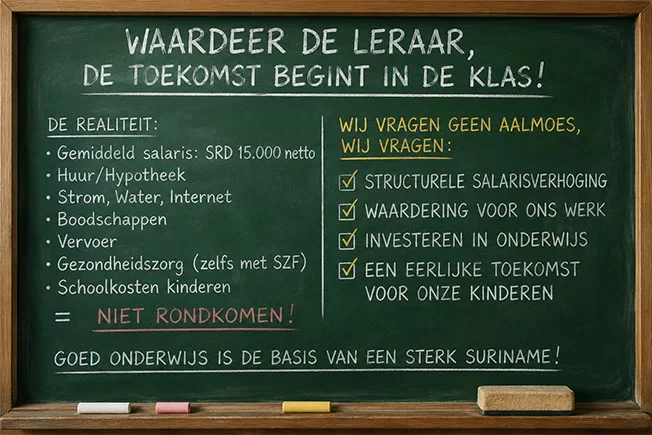
Column: Leerkrachten willen geen aalmoes meer
After years of internal division that derailed collective action, Suriname’s education trade unions have finally closed ranks to demand fair compensation for the country’s public school teachers — a breakthrough that was impossible under the previous Santokhi administration, when prominent union leader Reshma Mangre simultaneously held a seat in the National Assembly for the VHP party. That period of conflicting loyalties eventually spawned a breakaway teachers’ union, the Syndicaat voor Onderwijsgevenden, deepening rifts in the labor movement. Today, old divides appear to have been put to rest, with all teacher representative groups sitting at the same negotiating table to push for shared demands. But while unity has been achieved, the core economic struggle facing educators remains as urgent as ever.
The teachers’ fight for living wages is entirely legitimate, even after years of internal union infighting that at times distracted from the core cause. Educators simply cannot cover basic household needs on their current paychecks. As of 2026, the average net teacher salary sits at roughly 15,000 Surinamese dollars — an income that no longer supports a dignified standard of living for a family. From rent or mortgage payments to school fees, utility bills, groceries and rising medical costs, expenses quickly outstrip even this modest income. Even for teachers covered by the SZF public insurance scheme, patients are still required to pay out-of-pocket for most prescription medications, adding further financial strain. This math has not added up for years, making the current united push for change impossible to dismiss as mere union posturing or political theater. At its core, this fight raises a fundamental question: How much value does Suriname truly place on the professionals who shape the next generation of the country’s workforce?
This pattern of inadequate public sector compensation is not unique to education. Police officers, healthcare workers and other public servants face identical economic pressures, and the outcome is already clear: skilled workers are leaving the sector en masse. Some abandon their professions entirely to seek higher-paying work in other industries, while others leave the country altogether in search of better opportunities. What was once framed as a theoretical “brain drain” in policy papers is now a visible, urgent crisis playing out across the country.
Education unions and the Ravaksur labor federation have been sounding the alarm for years, first under the previous administration and now again under the current government. Over the past years, the response from political leaders has followed a familiar script: interministerial committees are convened, roundtable discussions are held, lengthy reports are published, working groups are appointed, and small, temporary stipends are approved to ease tensions. But none of these half-measures have meaningfully improved the harsh day-to-day reality for most teachers.
Temporary allowances, union leaders argue, are little more than a bandage placed on an open broken leg. They provide a small measure of short-term relief, but the pain returns just as intensely the next month. Unlike permanent base salary increases, allowances do not compound into higher retirement benefits, higher vacation pay or other long-term employment rights. They are nothing more than a temporary political painkiller designed to defuse protests without addressing the root of the problem, and unions are no longer willing to accept this stopgap solution.
The current government’s go-to defense is that public finances simply do not have room for a broad salary increase for teachers. But this argument has grown as worn out as a scratched vintage gramophone record, union supporters point out. Time and again, ruling parties find plenty of money to fund campaign promises during election cycles, stoking public expectations and selling a vision of a brighter economic future for all. Yet as soon as votes are counted and the time comes to follow through on those pledges, the coffers suddenly run dry and all major reforms become impossible.
It is true that the government makes a valid point when it notes that a salary adjustment for educators will open the door for similar demands from other public sector unions, including the CLO and other branches of Ravaksur. But governing is inherently about making choices, and tough choices about national priorities are exactly what leaders are elected to make. If widespread government inefficiency remains unaddressed, and if political leaders continue to operate as if the country is not in the middle of a fragile economic recovery, it is fair to question what the administration’s actual priorities truly are.
Many observers have also noted the striking hypocrisy of some political voices that now express loud outrage over teacher compensation, after spending years as part of the political establishment that allowed this crisis to fester and worsen. This hypocrisy does not, however, make the unions’ fight any less justified. On the contrary: the teachers’ demands are fully fair and long overdue. The only open question is whether the country’s current political leadership is finally willing to confront this reality.
Education is the foundational factory that builds a nation’s future. If the workers staffing that factory cannot even afford to live on their wages, no one should be surprised when production grinds to a halt. As schools remain closed across the country and negotiations continue, the government faces an unavoidable choice. It is not a choice between teachers and balanced public finances — it is a choice about where the country’s true priorities lie. Solving this crisis does not require another hundred-page policy paper, a new presidential commission or another working group to study the problem. All stakeholders have understood the root of the issue for years. The question is not what needs to be done. The question is whether there is finally the political will to act.
No one expects the current administration to solve every structural problem facing Suriname’s education sector overnight. But unions are correct that the era of band-aid solutions, temporary allowances and empty campaign promises is over. What the country needs right now is a credible, time-bound path to permanent structural salary improvement, paired with broader reforms that make teaching an attractive career for young people again. If this government cannot save Suriname’s education sector from its current crisis, who will? And if the public continues to accept that teachers can barely make ends meet, no one should complain about the already poor quality of public education that Suriname’s students receive. If this status quo continues, it is not education that has failed us. It is we who have failed education — and no expensive international education conference can fix that failure.
-

Tweede actiedag onderwijsbonden; regering moet met concrete voorstellen komen
A months-long standoff between education unions and the Surinamese government has entered a new phase of action, with combined education worker unions launching their second national strike day on June 2 following the collapse of preliminary negotiations with the Ministry of Education and the presidential administration. The unions have drawn a hard line: teachers will not return to the classroom until the government puts binding, concrete commitments on the table, stating that vague new promises are no longer sufficient to end industrial action.
“We are open to listening to any new proposals, but we will not call off our strike without tangible results,” a senior union leader told reporters at a press conference held Monday, after negotiations broke down. “We do not want to hear empty promises again. What we need to see are concrete, written agreements and an immediate plan for implementation.”
According to insider information obtained by local outlet *Starnieuws*, the unions’ core demands include a permanent, structural salary increase for all teaching staff alongside broad revisions to education worker allowances. These demands have emerged as the primary stumbling block in talks, with the government repeatedly asserting that there is no fiscal room within the public sector budget to implement a generalized salary increase.
Minister of the Interior Marinus Bee acknowledged the deep divide between the two sides in recent comments, noting that the biggest point of disagreement remains the structure and scale of allowance adjustments. “We have put forward two proposals that would deliver modest increases to education worker allowances, but these do not meet the full scope of what the unions have included in their demands,” Bee explained. “Those proposals were rejected outright. That said, the government is willing to re-examine our current fiscal capacity. The Minister of Finance and the full cabinet will conduct a new assessment to see if we can expand the fiscal space we have available for this agreement.”
For their part, the unions argue that teachers have been coping with years of soaring cost of living, which has steadily eroded their purchasing power. Beyond salary and allowances, the unions also highlight a number of unresolved longstanding issues, including unpaid reimbursements, persistent classification disputes, and the ongoing nationwide shortage of qualified teaching staff.
Union leaders warn that this crisis does not only impact individual education workers—it poses a direct threat to the quality of national education and the long-term future of thousands of Surinamese students. They have sounded the alarm over accelerating teacher attrition, with more experienced educators leaving the sector for higher-paying roles in other domestic industries or emigrating for better opportunities abroad.
The government is currently navigating deeply challenging competing fiscal priorities. President Jennifer Geerlings-Simons has previously emphasized that her administration’s current economic recovery policy is focused on maintaining exchange rate stability and bringing inflation down further. To slow broader consumer price growth, the government still maintains a nearly 20-cent per liter fuel subsidy to prevent additional price hikes at gas pumps.
Even so, political pressure to deliver measures that improve education workers’ purchasing power continues to grow. Administration officials are currently reviewing a range of policy options to free up funds, including a previously tabled proposal to expand existing tax brackets to reduce the overall tax burden for workers.
Widespread expectations suggest that the government will present a revised proposal to unions on Tuesday in a last-ditch effort to break the current negotiation impasse. For the moment, however, education unions remain firm in their position: industrial action will continue until binding, concrete progress is reached.
-

Derde helft WK 2026: Hoe Marokko uitgroeide tot een voetbalkracht
Over the past two decades, Moroccan football has undergone one of the most dramatic transformations in modern global soccer. What began as a program consistently mired in early group-stage exits at the African Cup of Nations (AFCON) and repeated failures to qualify for the men’s FIFA World Cup has evolved into a powerhouse that now sits 8th in the March 2026 FIFA global rankings – the highest-ranked African and Arab nation in the world. Following a historic fourth-place finish at the 2022 Qatar World Cup, the Atlas Lions enter the 2026 FIFA World Cup as one of the most feared and respected contenders, with success stretching across every age group and division of the sport.
Morocco’s impressive trophy haul in recent years confirms the program’s rapid growth: the country inherited the 2025 AFCON title after Senegal was stripped of the championship, finished as runners-up at the 2025 Women’s WAFCON, claimed victory at the 2025 FIFA Arab Cup and 2025 African Nations Championship (CHAN), won the 2025 U-20 FIFA World Cup, took home the 2025 U-17 AFCON title, earned bronze in men’s football at the 2024 Olympics, and won the 2024 Futsal AFCON.
For those wondering how this transformation happened, there is no secret magic formula. According to an anonymous source close to the Royal Moroccan Football Federation, who spoke on condition of anonymity due to restrictions on speaking to media, the success rests on three foundational pillars: strong governance, targeted financial investment, and skilled human capital.
“King Mohammed VI laid out this national strategy during the 2008 Skhirat Sports Conference, which marked the start of a long-term national football development project,” the source explained. “The first pillar was governance reform, including the creation of a national financial oversight department that helped professionalize the entire financial structure of Moroccan football.”
Following governance reform came massive investments in infrastructure at every level of the game. Working in partnership between the federation and the national government, Morocco built thousands of community football pitches dubbed “proximity fields” that are open and accessible to all members of the public, unlocking mass grassroots participation across the entire country.
Beyond these local community facilities, Morocco constructed the state-of-the-art Mohammed VI Complex and Academy in Maamoura, just outside the capital Rabat. Boasting immaculate training pitches, cutting-edge physiotherapy equipment, and an on-site hotel, the facility is regularly compared to the world’s top national training centers, including France’s famed Clairefontaine. The academy has already produced a host of elite talent that now forms the core of the senior men’s national team, including Nayef Aguerd of Olympique Marseille, Azzedine Ounahi of Girona, and Youssef En-Nesyri of Al-Ittihad.
Another critical shift that fueled Morocco’s rise came from a coordinated lobbying effort by African football federations to FIFA to change nationality eligibility rules, allowing players of Moroccan descent from the European diaspora to represent the country. This rule change opened the door for the Atlas Lions to recruit elite talent including Hakim Ziyech, Nordin Amrabat, and Brahim Díaz – the 2025 AFCON top scorer who leads the line for Real Madrid.
The latest high-profile addition to Morocco’s roster is 18-year-old Lille midfielder Ayyoub Bouaddi, rated one of the most promising young talents in French football. Even Zinedine Zidane, who is widely expected to replace Didier Deschamps as France’s head coach after the 2026 World Cup, reportedly contacted Bouaddi’s representatives to convince him to represent Les Bleus. Despite a clear pathway to the senior French national team, Bouaddi remained committed to representing Morocco, a decision that resonated deeply with the country’s football community.
“I don’t think we’ve ever had a young player with this much potential choose Morocco before,” long-time Atlas Lions supporter Tom Yousef Drissi told Al Jazeera. “It feels different, more meaningful, unprecedented. We’ve had talented young players from Europe before, but France is the dominant power in world football right now, and their midfield is aging. Bouaddi would have had a guaranteed spot with them, and he still chose us. With players like Samir El Mourabet, Neil El Aynaoui, and Bilal El Khannous, we have an incredible foundation for the next decade.”
While Morocco’s long-term trajectory is undeniably positive, recent controversy following the 2025 AFCON final has created uncertainty ahead of the 2026 World Cup. In second-half stoppage time of the goalless final, with the match heading for extra time, referee Jean-Jacques Ndala awarded a controversial penalty to Morocco. What followed sent shockwaves through global football: the Senegalese team walked off the pitch in protest, while Senegalese supporters clashed with security staff behind Morocco’s goal.
In a decision that surprised many observers, the match was not abandoned. After a 15-minute suspension, Senegal returned to the pitch, and Brahim Díaz stepped up to take the penalty, attempting a panenka that was saved easily by Senegal keeper Edouard Mendy. Senegal went on to win the match in extra time, and the title was later stripped from them for off-field violations.
In the post-match press conference, Walid Regragui, the manager who led Morocco to its historic 2022 World Cup semi-final run, was immediately asked whether he would resign. He dismissed the question, but stepped down from his post several weeks later. It had been widely reported ahead of the tournament that Regragui would be replaced if Morocco failed to win the AFCON title, with the federation ultimately selecting Mohamed Ouahbi, who led Morocco’s U-20 side to the 2025 World Cup title with an exciting attacking style of play.
There is a notable parallel between Ouahbi’s appointment and Regragui’s 2022 taking of the job: Ouahbi, like Regragui, took charge of the senior side just a few months before the start of the World Cup. “Ouahbi has already begun implementing his tactical ideas and style of play in friendly matches back in March, but everything is still taking shape,” said Said Abadi, a Moroccan sports journalist and author of *The History of African Football*, told Al Jazeera. “He is still working to find the right balance between the experienced veterans from the Regragui era and the exciting new generation of talent. A full overhaul of the squad and tactical setup isn’t possible in such a short timeframe.”
While Ouahbi is widely praised for his work with young talent, questions remain about whether Regragui’s pragmatic, counter-attacking style might have been better suited to the unique pressures of a World Cup knockout tournament. In Qatar, Morocco remained undefeated in every match where they held less than 50% of possession, with their only loss coming against France in the semi-final – a match where they held the majority of possession. It remains to be seen whether Ouahbi’s more adventurous attacking approach can deliver the same resilient results in knockout matches.
Morocco has been drawn into a challenging Group C for the 2026 World Cup, alongside Brazil, Scotland, and Haiti. Their group stage fixtures are scheduled as: June 14 vs Brazil in New York/New Jersey, June 20 vs Scotland in Boston, and June 25 vs Haiti in Atlanta.
Even with high expectations from around the world for the 2026 tournament, Moroccan football officials view this World Cup as just one milestone on a longer development journey that will lead to co-hosting the 2030 World Cup on home soil. “Even the 2030 World Cup is not the final end goal,” the federation source said. “It is a milestone that will accelerate broader development across all key sectors of our country: infrastructure, human capital, transport, mobility, and our international appeal.”
-
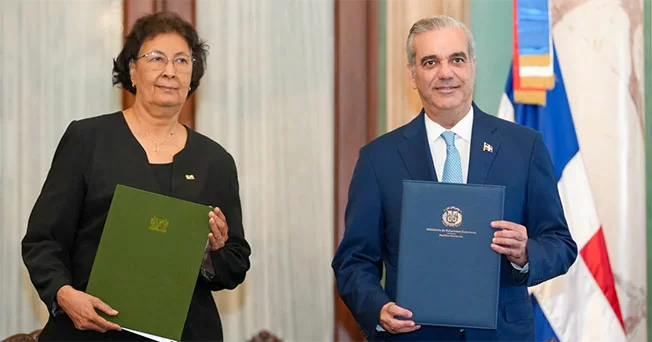
Suriname en Dominicaanse Republiek bezegelen samenwerking met zes overeenkomsten
On June 1, during an official state visit by Suriname President Jennifer Simons to the Dominican Republic, the two Caribbean nations formalized a new era of bilateral partnership by signing six landmark cooperation agreements. The documents lay a structured foundation for expanded collaboration across six core areas: trade, investment, tourism, agriculture, energy, and diplomatic relations, after high-level talks between Simons and her Dominican counterpart, President Luis Abinader.
Speaking after the signing ceremony, Simons emphasized that the new pacts translate shared goodwill and mutual ambition into tangible, actionable outcomes that will drive inclusive development for both nations. The two leaders also used the meeting to outline priority areas for integration and future collaboration, starting with transportation connectivity.
The recent launch of a direct air route connecting Suriname’s capital Paramaribo and the Dominican Republic’s capital Santo Domingo was hailed as a transformative first step toward greater people-to-people and economic connectivity. Moving forward, the two countries will conduct joint assessments to explore opportunities for expanding both air and maritime links between their territories.
Tourism emerged as a key focus of the talks, with both nations leveraging their distinct comparative advantages to grow the sector. The Dominican Republic is already one of the Caribbean’s top tourist destinations, drawing millions of international visitors annually, while Suriname is positioning itself as a leading hub for unspoiled nature and ecotourism. The two sides agreed to explore joint development of combined tourism products and strengthen cross-cultural exchange initiatives to attract more international visitors to both countries.
In agriculture, discussions centered on advancing food security, attracting targeted investment, and facilitating technology transfer. Suriname identified significant opportunities for collaboration in sustainable agriculture, agro-processing, and climate-resilient farming practices, noting growing interest from Dominican private investors in entering Suriname’s growing agricultural sector.
Energy and sustainable development also featured prominently on the bilateral agenda. The two nations committed to deepening cooperation on energy infrastructure development and renewable energy investment. Follow-up technical discussions on energy collaboration are scheduled to take place during the upcoming Suriname Energy, Oil and Gas Summit (SEOGS) to move projects forward.
Beyond economic and infrastructure cooperation, the two countries agreed to expand ties in education, knowledge sharing, and diplomatic training. A key step to formalize deeper diplomatic relations is already underway: Suriname is moving to strengthen its diplomatic representation in Santo Domingo, while the Dominican Republic is in active preparations to open its first resident embassy in Paramaribo.
Both governments have characterized the signing of the six cooperation agreements as a historic milestone that sets the trajectory for far closer economic and strategic partnership between Suriname and the Dominican Republic in the years ahead.
-
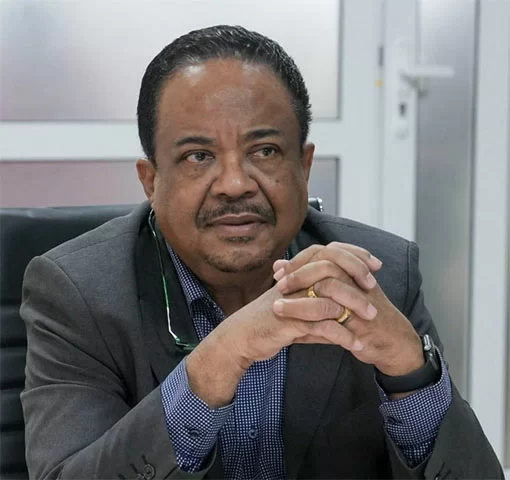
Rusland stuurt aan op snelle oplossing onderwijsconflict
A growing standoff between the national government and education sector unions has spurred top leadership to push for urgent negotiations to resolve outstanding issues, with student learning and exam candidates placed at the center of policy priorities. On Monday, Acting President Gregory Rusland convened a high-stakes coordination meeting bringing together representatives from the government’s negotiation team, the Ministry of Education, Science and Culture, the national negotiation body, and the Ministry of Finance and Planning to discuss unresolved bottlenecks and map out potential pathways to a lasting agreement.
Rusland emphasized that every possible resource and effort must be mobilized to restore normalcy to education operations as quickly as possible, highlighting that the rights and academic progress of enrolled students and upcoming exam candidates are the primary considerations in all ongoing talks. The acting president also reiterated that the national government fully recognizes the critical role educators play in driving long-term national development, and has committed to exploring feasible adjustments that address union demands while working within the country’s current fiscal constraints.
This preliminary intra-government meeting was part of a broader formal negotiation trajectory designed to de-escalate the ongoing conflict between the administration and education unions. Following the internal coordination session, the government’s negotiation team was scheduled to continue direct talks with union representatives later the same day.
Rusland made clear that the administration shares the goal of reaching a tangible resolution in the shortest timeframe possible, but noted that any successful outcome depends on the willingness of all involved stakeholders to compromise to reach a mutual consensus. Despite critical public comments issued by the education unions over the course of the dispute, Rusland reaffirmed the government’s commitment to remaining at the negotiating table rather than pursuing confrontation.
“We must preserve calm across the country and meet each other halfway as much as possible to reach a solution that works for everyone,” Rusland stated in his remarks following the meeting.
The ongoing crisis is also receiving attention from the country’s full presidency. President Jennifer Simons announced via her official Facebook page that she is monitoring developments in the education sector closely, updating the public that she will return to the country on June 2 and has already scheduled a direct meeting with education union leaders for the day immediately following her arrival.
-
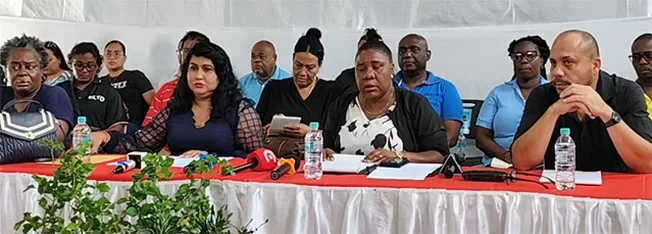
Onderwijsbonden houden voet bij stuk: Zonder resultaat wordt beraad niet opgeheven
In a historic show of unified action across the Netherlands’ entire education sector, major education trade unions have formally launched a nationwide industrial dispute, confirming that talks alone with the government will not be enough to suspend the protest action.
Speaking at a joint press conference held earlier on 1 June, union leaders made clear they will only end the national consultation (industrial action) once concrete results and legally binding agreements are put on the negotiating table. Nearly every segment of the country’s education system—from primary and secondary education through to higher education institutions—has thrown its support behind the collective action. Union representatives describe the moment as unprecedented, marking the first time that diverse education organizations have aligned as a single front to draw urgent attention to the deep-seated challenges plaguing the sector.
While unions confirmed they are scheduled to hold talks on Monday with representatives from the government, the presidential commission and the Ministry of Education, they stressed that previous negotiation rounds have delivered little to no tangible progress. According to the unions, long-standing grievances including back pay, bonus payments, pay grading, permanent employment contracts and other workplace benefits have gone unresolved for years.
“We are willing to listen, but the industrial action will not be lifted without real results,” one senior union leader stated during the press conference. “We do not want to hear empty promises again—we want to see concrete agreements and immediate implementation.”
Beyond the unresolved employment benefits, unions highlight that the education sector has grappled with a severe teacher shortage for an extended period, with fewer and fewer young people choosing to pursue careers in education. They attribute this crisis in part to stagnant low salaries and the repeated delay of entitled compensation for education workers. Union leaders emphasize that the deteriorating situation does not only harm teaching staff—it also undermines the quality of education across the country, putting the long-term future of students at risk.
Despite launching the industrial action, unions stress they have not lost sight of the best interests of students. It is precisely because of their commitment to protecting students’ educational future that they are taking a stand now. “We are fighting for teachers, because without teachers, there is no education,” union representatives affirmed at the press conference.
Unions are set to hold further talks with government representatives later the same day, and the outcome of these discussions will shape the next steps of the industrial action. For the time being, the protest remains in full effect, and teachers are still being called to stay away from work until there is clear progress on tangible solutions. Unions have also been in contact with the president, who is currently visiting the Dominican Republic, and the president has agreed to meet with union leaders promptly upon his return on 2 June.
-
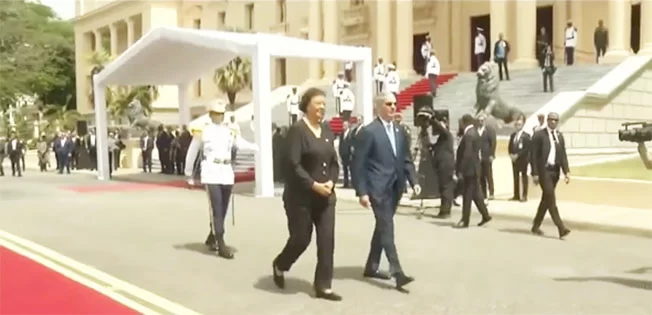
President Simons zoekt in Dominicaanse Republiek naar investeringen voor toerisme en landbouw
Suriname’s President Jennifer Simons has arrived in the Dominican Republic, the second stop of her ongoing foreign investment outreach tour, following an official visit to Brazil. Leading a small, high-level delegation that includes Minister of Foreign Affairs, International Trade and Cooperation Melvin Bouva and Minister of Transport, Communication and Tourism Raymond Landveld, Simons is focused on unlocking new investment opportunities and deepening cross-border cooperation between the two Caribbean nations.
The mission kicked off with a series of preliminary engagements over the weekend, starting with exploratory talks on Saturday with executives from the Punta Cana Group, one of the Dominican Republic’s leading tourism conglomerates. The two sides discussed frameworks for long-term sustainable collaboration in the tourism sector, a key growth priority for the Surinamese government. Following the discussions, the delegation toured Punta Cana International Airport and the Punta Cana Free Trade Zone, gaining on-the-ground insight into how the Dominican Republic has developed its tourism and economic infrastructure to attract global investment.
On Sunday, the Surinamese delegation turned its attention to the energy sector, holding productive meetings with leaders from InterEnergy Group, one of the largest energy operators in the Dominican Republic. With operations spanning power generation, distribution, renewable energy development and energy infrastructure buildout across Latin America and the Caribbean, InterEnergy plays a critical role in powering the country’s major tourism and commercial zones. The talks centered on potential opportunities for the firm to partner with Suriname on expanding its own energy capacity to support economic growth.
The apex of Simons’ visit is scheduled for Monday, when she will hold official bilateral talks at the Presidential Palace in Santo Domingo with Dominican President Luis Abinader. The closed-door meeting is expected to prioritize strengthening bilateral diplomatic and economic relations, as well as highlighting untapped investment opportunities in Suriname for Dominican stakeholders. Suriname’s government has made clear it is actively welcoming private sector investment from the Dominican Republic, with a particular focus on the agriculture and tourism industries, which Suriname identifies as core pillars for driving long-term inclusive growth and sustainable national development.