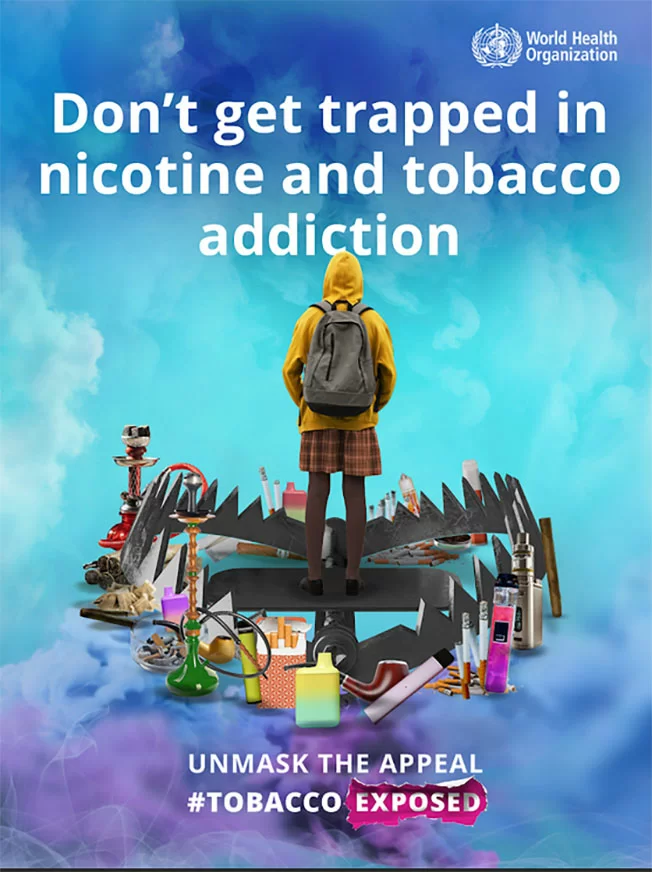
Every year, World No Tobacco Day (WNTD) serves as a global call to action to curb the devastating public health and economic impacts of tobacco and nicotine use. This year, public health authorities in Suriname are leveraging the observance to accelerate their national campaign against tobacco and nicotine addiction, aligning with the 2024 WNTD global theme: “Unmask the Appeal – Countering Tobacco and Nicotine Addiction”. The campaign this year shines a critical light on deceptive marketing tactics deployed by the global tobacco industry, which specifically target vulnerable young populations to drive adoption of nicotine products.
According to the World Health Organization (WHO), the tobacco industry has rapidly expanded its product portfolio in recent years, rolling out a wave of new nicotine-based offerings including electronic cigarettes (vapes), nicotine pouches, and products formulated with synthetic nicotine. These products are consistently marketed to consumers as modern, less harmful alternatives to traditional cigarettes, but leading public health experts warn that they carry severe, well-documented risks of addiction, especially for developing adolescent brains.
Young people remain the primary target for these industry marketing efforts. Tobacco and nicotine product manufacturers leverage enticing flavored formulations, eye-catching trendy packaging, and aggressive targeted advertising across social media platforms to normalize product use and grow customer bases among underage groups.
Against this backdrop, the government of Suriname is moving forward with comprehensive plans to strengthen its national anti-tobacco regulatory framework. With technical and policy support from the WHO, Suriname’s public health bodies are currently working to update the country’s original 2013 Tobacco Act. Key proposed updates include stricter product regulations, enhanced enforcement to crack down on the illegal trade of tobacco products, mandatory plain neutral packaging requirements, and expanded legal protections to shield young people from tobacco industry influence.
High-level policy progress has already been made: back in February 2024, Suriname President Jennifer Simons held formal talks with a visiting WHO delegation to discuss further anti-tobacco measures. Public health teams are also developing and rolling out targeted school-based youth education programs in partnership with the Ministry of Education, Science and Culture.
National data underscores the urgent need for stronger, more comprehensive anti-tobacco action in Suriname. Annually, preventable tobacco-related illnesses claim more than 500 lives across the country, and generate a total economic burden of more than 508 million Surinamese dollars. Data from the 2022 Global Youth Tobacco Survey further highlights the scale of the youth exposure challenge, finding that 13.2 percent of 13 to 15-year-olds in Suriname currently use tobacco products.
To mark this year’s World No Tobacco Day, public health organizations across Suriname have organized a series of community outreach and awareness activities, including public walks and multi-platform educational campaigns. The core message from Suriname’s health authorities is clear: consumers must not be fooled by the tobacco industry’s deceptive marketing, and collective action is critical to protect young generations from the harms of nicotine addiction.