标签: Suriname

苏里南

  • President Simons zoekt in Dominicaanse Republiek naar investeringen voor toerisme en landbouw

    President Simons zoekt in Dominicaanse Republiek naar investeringen voor toerisme en landbouw

    Suriname’s President Jennifer Simons has arrived in the Dominican Republic, the second stop of her ongoing foreign investment outreach tour, following an official visit to Brazil. Leading a small, high-level delegation that includes Minister of Foreign Affairs, International Trade and Cooperation Melvin Bouva and Minister of Transport, Communication and Tourism Raymond Landveld, Simons is focused on unlocking new investment opportunities and deepening cross-border cooperation between the two Caribbean nations.

    The mission kicked off with a series of preliminary engagements over the weekend, starting with exploratory talks on Saturday with executives from the Punta Cana Group, one of the Dominican Republic’s leading tourism conglomerates. The two sides discussed frameworks for long-term sustainable collaboration in the tourism sector, a key growth priority for the Surinamese government. Following the discussions, the delegation toured Punta Cana International Airport and the Punta Cana Free Trade Zone, gaining on-the-ground insight into how the Dominican Republic has developed its tourism and economic infrastructure to attract global investment.

    On Sunday, the Surinamese delegation turned its attention to the energy sector, holding productive meetings with leaders from InterEnergy Group, one of the largest energy operators in the Dominican Republic. With operations spanning power generation, distribution, renewable energy development and energy infrastructure buildout across Latin America and the Caribbean, InterEnergy plays a critical role in powering the country’s major tourism and commercial zones. The talks centered on potential opportunities for the firm to partner with Suriname on expanding its own energy capacity to support economic growth.

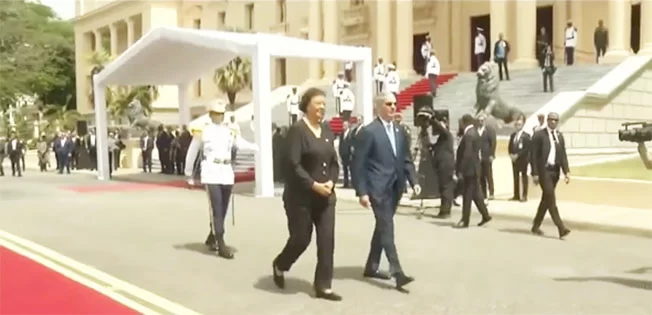
    The apex of Simons’ visit is scheduled for Monday, when she will hold official bilateral talks at the Presidential Palace in Santo Domingo with Dominican President Luis Abinader. The closed-door meeting is expected to prioritize strengthening bilateral diplomatic and economic relations, as well as highlighting untapped investment opportunities in Suriname for Dominican stakeholders. Suriname’s government has made clear it is actively welcoming private sector investment from the Dominican Republic, with a particular focus on the agriculture and tourism industries, which Suriname identifies as core pillars for driving long-term inclusive growth and sustainable national development.

  • Koeweit onder vuur te midden van toenemende spanningen tussen VS en Iran

    Koeweit onder vuur te midden van toenemende spanningen tussen VS en Iran

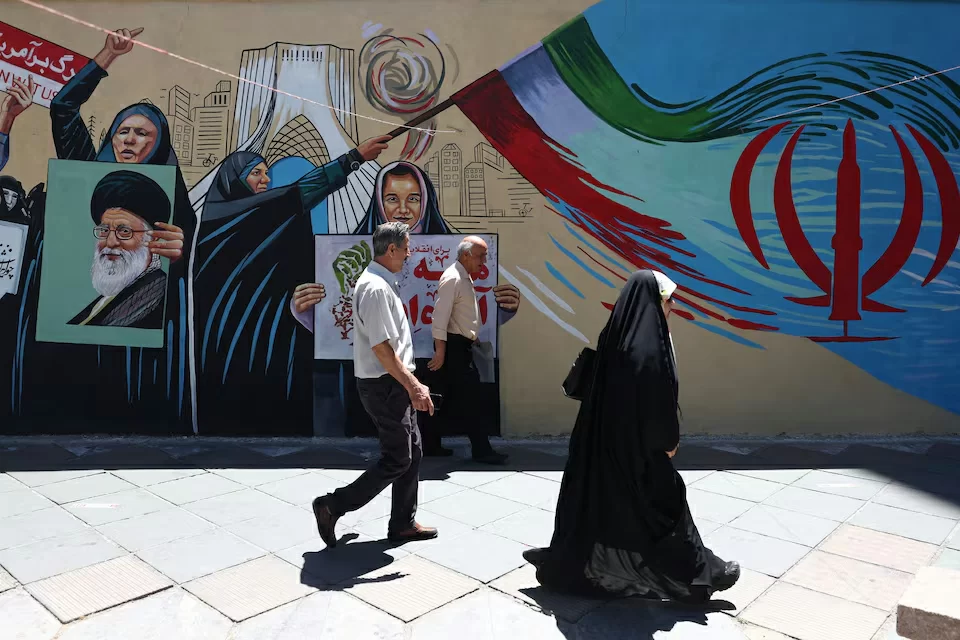
    On June 1, a fresh wave of violence erupted across the Middle East, shattering the fragile ceasefire that had slowed three months of open conflict and derailing ongoing diplomatic efforts to de-escalate tensions. Iran launched coordinated rocket and drone attacks targeting Kuwait on Monday, stating the strike was retaliation for U.S. airstrikes on Iranian military positions carried out over the weekend. Iran clarified that its assault targeted an American air base, though it did not publicly disclose the base’s exact location.

    U.S. military officials confirmed that late Sunday, American defense systems intercepted two Iranian ballistic missiles that were heading toward U.S. troops stationed in Kuwait. No American casualties were reported from the incident. In response to the attacks, Kuwait activated its full air defense network and issued a formal condemnation, accusing Iran of deliberately worsening already volatile regional tensions.

    The new outbreak of hostilities immediately sent shockwaves through global energy markets, pushing international oil prices up by more than 3% as investors braced for further disruption to critical energy supply routes. Parallel to the escalation in the Gulf, Israel has moved additional troops deeper into Lebanese territory to step up operations against Hezbollah, the Iran-aligned militant group. Israeli Prime Minister Benjamin Netanyahu has ordered expanded military action across Lebanon, including strikes on Hezbollah targets in the southern suburbs of Beirut. Iran views Israeli military moves in Lebanon, which are technically covered by an existing ceasefire agreement, as directly tied to U.S. aggression against the Islamic Republic, further linking the two separate fronts of the broader conflict.

    The ongoing conflict, which first erupted on February 28, has already claimed thousands of lives, with the heaviest casualties concentrated in Iran and Lebanon. Iran has imposed significant restrictions on shipping through the Strait of Hormuz, the strategic chokepoint that carries roughly a fifth of global oil supplies and a large share of global liquefied natural gas (LNG) trade, putting massive pressure on the world’s already strained energy infrastructure. In recent days, 15 vessels, including four oil tankers, have transited the strait under supervision from Iran’s Islamic Revolutionary Guard Corps. But shipping analysts warn that any lasting normalization of commercial traffic through the key waterway will require a permanent peace deal that establishes clear, agreed-upon navigation rules.

    Diplomatic efforts to resolve the crisis remain ongoing, but rifts between negotiating parties continue to slow progress. U.S. President Donald Trump has repeatedly expressed confidence that a negotiated deal with Iran can still be reached and has called for all parties to exercise restraint, even as he faces growing criticism from domestic political opponents. For its part, Iran has pushed back against the United States, accusing Washington of maintaining inconsistent and shifting negotiating positions that have dragged out talks unnecessarily.

    U.S. Secretary of State Marco Rubio has recently held meetings with both Lebanese President Joseph Aoun and Prime Minister Netanyahu, where he presented a proposal designed to support gradual de-escalation across the region. Domestically, the Biden administration – corrected, the Trump administration – faces growing political pressure to reopen the Strait of Hormuz and bring down fuel prices for American consumers, as November’s congressional elections draw closer.

  • Colombia kiest tussen rechts en links in tweede ronde

    Colombia kiest tussen rechts en links in tweede ronde

    Colombia’s path to a new president has entered a tense new phase, with preliminary results from Sunday’s first-round vote confirming that a June 21 runoff will pit right-wing political newcomer Abelardo De La Espriella against long-serving left-wing senator Iván Cepeda, according to official data from the country’s national registration office.

    With over 97% of ballots counted, the gap between the two top finishers narrowed to just a few percentage points, setting the stage for a hard-fought campaign over the coming weeks. The first-round contest centered on deeply divisive core issues: public security, economic policy, and competing populist agendas that have sharply split the Colombian electorate.

    De La Espriella, a 47-year-old lawyer who has never held public office, secured 43.7% of the first-round vote. A figure from the political movement Defenders of the Fatherland, he has drawn frequent comparisons to El Salvador’s President Nayib Bukele for his combative rhetoric and hardline policy agenda. Positioning himself as an anti-establishment outsider untainted by traditional political careerism, De La Espriella has pledged aggressive crackdowns on illegal armed groups, a plan to construct 10 new maximum-security mega-prisons, and poverty reduction investments in education, healthcare, and housing for Colombia’s most disadvantaged communities. He has also emphasized that his campaign is fully self-funded, rejecting donations from established political parties and large corporate interests. On the campaign trail, he has warned that a Cepeda victory would lock in the controversial economic policies of current left-wing president Gustavo Petro, including a ban on new oil exploration projects that has drawn fierce pushback from establishment politicians and foreign investors alike.

    His challenger in the runoff, Cepeda, is a 63-year-old veteran activist and senator from the Historic Pact coalition who captured just under 41% of the first-round vote. The son of a murdered communist leader, Cepeda carries on a long legacy of leftist advocacy in Colombia. Echoing elements of Petro’s current governing agenda, Cepeda supports pursuing peace with illegal armed groups through negotiated dialogue — an approach that has made limited progress under Petro’s current term. His policy platform centers on deep structural reforms to reduce systemic inequality and poverty, including higher tax rates for top earners, the transfer of 1 million hectares of land to victims of Colombia’s 60-year internal armed conflict, and expanded public access to healthcare.

    The first round saw low voter turnout, with only a little more than half of Colombia’s 41 million eligible voters casting ballots. This low participation leaves both candidates with a critical opportunity to reorient their campaigns, consolidate support from losing factions, and mobilize disengaged voters ahead of the June 21 runoff. One major casualty of the first round was prominent right-wing candidate Paloma Valencia, who had been backed by former president Álvaro Uribe and was long seen as the leading right-wing contender. She ultimately won less than 7% of the vote, ending her campaign and clearing the way for De La Espriella’s unexpected breakthrough to the runoff.

  • Kookgas opnieuw duurder: prijzen van meerdere cilinders stijgen

    Kookgas opnieuw duurder: prijzen van meerdere cilinders stijgen

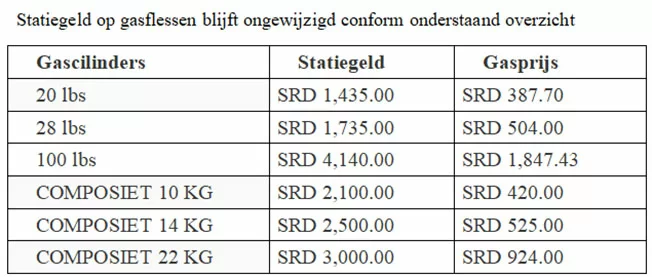
    Starting June 1, consumers across Suriname are facing higher costs for multiple types of cooking gas, following an official announcement made Sunday by N.V. EnergieBedrijven Suriname (EBS). The price adjustment applies to 28-pound steel cylinders and a range of composite gas cylinders, and forms the latest step in the government’s planned gradual elimination of long-standing cooking gas subsidies.

    This incremental subsidy phase-out is rooted in a national energy transition policy approved back in August 2023 by Suriname’s Ministry of Economic Affairs, Entrepreneurship and Technological Innovation, alongside the Ministry of Natural Resources. The overarching goal of the policy is to gradually align cooking gas prices with their actual market value, phasing out the decades of government subsidies that have kept consumer costs artificially low for years.

    Under the new price schedule that took effect June 1, the cost of a 28-pound gas cylinder has risen from SRD 472.50 to SRD 504.00. This will not be the final increase for this product: one last 31.50 SRD price hike is scheduled for September 1, 2026, after which the cylinder will reach its government-mandated final market price.

    Multiple composite cylinders are also seeing upward price adjustments this round. The 10-kilogram composite cylinder has moved from SRD 404.25 to SRD 420.00; the 14-kilogram variant has increased from SRD 493.50 to SRD 525.00; and the 22-kilogram composite cylinder now costs SRD 924.00, up from the previous SRD 892.50. Additionally, the 100-pound cylinder has seen a small 9.93 SRD increase, bringing its new price to SRD 1,847.43.

    Not all cooking gas products are affected by this latest round of changes. The 20-pound and 40-pound cylinders will retain their current prices of SRD 387.50 and SRD 735.00 respectively, as both have already reached the final end price set by the government as part of the transition plan.

    With the June 1 price adjustment, three product lines — the 100-pound cylinder, 10-kilogram composite cylinder, and 22-kilogram composite cylinder — have now hit their final market pricing. Only two categories, the 28-pound steel cylinder and 14-kilogram composite cylinder, will see one additional incremental increase this coming September.

    Oversight of compliance with the new price caps falls to Suriname’s Price Control Department. The agency has reminded consumers that anyone who observes retailers charging prices above the officially mandated rates can file a report directly with the department for investigation.

  • Column: De spirituele crisis achter het verval van Surinaams onderwijs

    Column: De spirituele crisis achter het verval van Surinaams onderwijs

    Fifty years ago, classrooms across Suriname were filled with a generation of students who stared at chalkboards with hungry, ambitious eyes, eager to learn and grow. Today, that eager curiosity has been replaced by something far more somber: in far too many students, educators and activists see boredom, frustration, and worst of all, quiet resignation to a broken system. The decline of Suriname’s education sector is not just a drop in test scores or a bureaucratic challenge. It is an erosion of national dignity, a crisis that cuts beyond budgets and policy papers to reach the very core of the nation’s collective spirit. Empty classroom desks, widespread textbook shortages, and disheartened teachers are not administrative missteps to be brushed aside. They are visible symptoms of a deeper spiritual crisis unfolding across the country’s education system.

    Education at its core is not about memorizing dates or passing standardized exams. It is about helping children discover that the world is logical, understandable, and full of possibility. It opens the door to imagination and wonder, giving every child who learns to read an inner landscape where they can seek answers to their most pressing questions. Without that foundational opportunity, children learn only that arbitrary, unaccountable power rules their lives. For youth in Suriname’s rural interior and low-income urban neighborhoods, who are so often overlooked by national policymakers, quality education is the first step to recognizing their own worth: it teaches them that they exist, that their ideas matter, and that they can shape their own futures. But when a child attends a school every day that lacks basic order and resources, they learn chaos instead of logic – and that chaos leaves a lasting trauma. A child denied a meaningful education learns one devastating lesson early on: that they are not worthy of dreaming. That is the greatest harm a society can inflict on any of its members.

    Teachers do more than instruct individual children; they nurture the future parents, chefs, engineers, and leaders that will sustain the nation. A strong education gives adults the foundation of free choice: the ability to distinguish right from wrong, truth from lies, and cause from effect. That ability is the bedrock of moral consciousness in any society. Today, too many Surinamese graduates leave the system feeling betrayed. They hold a diploma on paper, but lack the intangible spiritual and intellectual tools: patience, discipline, and critical thinking. A society where adults have never learned to think critically quickly devolves into a culture of gossip, envy, and resentment. True education, by contrast, teaches people to carve their own paths without tearing others down to get ahead. It is the quiet voice that tells an adult to pause, reflect, and empathize. Without that voice, Surinamese society grows harder, more impatient, and far lonelier than it needs to be.

    The cumulative impact of frustrated students and burnt-out teachers is a nation unable to move forward, because collective trust in each other’s capabilities has eroded away. Quality education builds trust and connection across a society: a well-educated person trusts their doctor, the cashier processing their payment, and the politician they elected to serve. Today, that broad social trust has faded in Suriname, with many people only trusting their immediate family or religious communities. Education is the glue that binds a pluralistic society together, and that glue has come loose.

    A failing education system does not simply produce less knowledgeable people. It produces people broken by systemic neglect, who have lost connection to their broader community because no one ever taught them that knowledge is meant to be shared, not hoarded. It is long past time to stop blaming Suriname’s young people for the failures of the system that was built to serve them. Instead, the nation must turn its attention to building a new system that actually nurtures young minds and souls. Yes, teachers deserve living wages. Yes, crumbling school infrastructure needs urgent repairs. But more than anything, Suriname needs schools that do more than administer exams – they need schools that shape whole people. A nation that forgets to invest in the souls of its children condemns itself to an endless future of stagnation. But the Surinamese people deserve better than that; they deserve the light of opportunity.

    Teachers are not just civil servants going through the motions of a job. They are the fireflies (loi boto, in Suriname’s native creole) that light the path in the dark for the next generation. If we refuse to give those fireflies the support and resources they need to shine, our children will walk blindly toward the edge of crisis. Give a child a meal, and you feed their body for a single day. Give a child a meaningful, soul-nurturing education, and you feed them for a lifetime. Fifty years of declining education is not just a statistic on a policy report. It is the quiet sound of a nation forgetting who it is and what it can be. Now is the time to break that silence, and start rebuilding the future that Suriname’s children deserve.

  • Atompai steunt onderwijsactie: Leerkrachten kunnen niet blijven wachten

    Atompai steunt onderwijsactie: Leerkrachten kunnen niet blijven wachten

    A senior Surinamese parliamentary figure has publicly thrown his full support behind a national collective action by teachers, calling on the government to end years of broken promises and deliver tangible improvements to educators’ underpaid and under-resourced working conditions.

    Poetini Atompai, a member of the National Assembly for the NPS party and chair of the body’s permanent education committee, told local outlet Starnieuws he aligns entirely with the joint education unions’ call for teachers to stay away from work starting Monday to participate in a national consultation over long-outstanding demands. The action will remain in place until the government implements concrete steps to honor prior agreements and meet long-overdue financial commitments to the nation’s teaching workforce.

    Atompai, who previously led the Surinamese Police Union, argues that after years of empty pledges, the government can no longer delay providing clear answers on when and how educators’ professional and financial standing will be improved. He stressed that financial constraints cannot be an indefinite excuse for the persistent struggles teachers face, noting that many currently survive on a monthly salary of just 13,000 Surinamese dollars, paired with inadequate work infrastructure and support. This current situation is no longer sustainable, he added.

    Since taking office as a lawmaker, Atompai says he has repeatedly raised alarm over teachers’ legal and employment rights, bringing the issue to the attention of relevant authorities across the government. “Teachers have no visibility into any improvements to their situation. We promised them progress, and now we owe them clarity on what will be done, how it will happen and when it will happen. That is why this action is necessary right now,” Atompai stated.

    He pushed back on the government’s justification of limited public finances, arguing that this does not justify abandoning the country’s educators. “If there is no money, are teachers just supposed to die?” he asked. Atompai recalled that the current administration raised expectations for improved living standards during its election campaign, and it therefore has a binding responsibility to deliver on those promises.

    Drawing on his observations over the past year in office, Atompai offered a sharp rebuke of the country’s political leadership. “Based on everything I have seen over the past year in politics, my clear conclusion is this: the political establishment has other priorities. Moving the country forward is not its number one goal,” he said.

    Currently, the government and the Ministry of Education are holding ongoing negotiations with the education unions over the demands.

  • Derde helft WK 2026: Senegal als verrassende outsider met grote ambities

    Derde helft WK 2026: Senegal als verrassende outsider met grote ambities

    As the 2026 FIFA World Cup approaches, Senegal prepares to make its third consecutive appearance at the global tournament, arriving as widely ranked Africa’s strongest contender with a bold goal: lifting the world’s most coveted football trophy.

    This campaign comes 24 years after the Teranga Lions made their iconic World Cup debut in 2002, when they delivered one of the biggest upsets in tournament history by beating defending champions France 1-0 in their opening match. That historic upset kickstarted a remarkable run for the first-time entrants: Senegal topped a challenging group featuring Denmark and Uruguay, knocked out Sweden in the round of 16, and only suffered a narrow 1-0 quarter-final defeat to Turkey, still the nation’s best World Cup performance to date.

    A generation later, Senegal has carried that momentum to the 2026 cycle, completing an undefeated qualifying run and notching a landmark win last June that sent a warning to the world’s elite: the side became the first African men’s team to defeat England at Wembley, running out 3-1 winners against the Three Lions. While their recent Africa Cup of Nations final against Morocco was marred by a temporary team walk-off in protest of a controversial penalty call, few question the depth of individual talent and collective strength Aliou Cissé’s side has built.

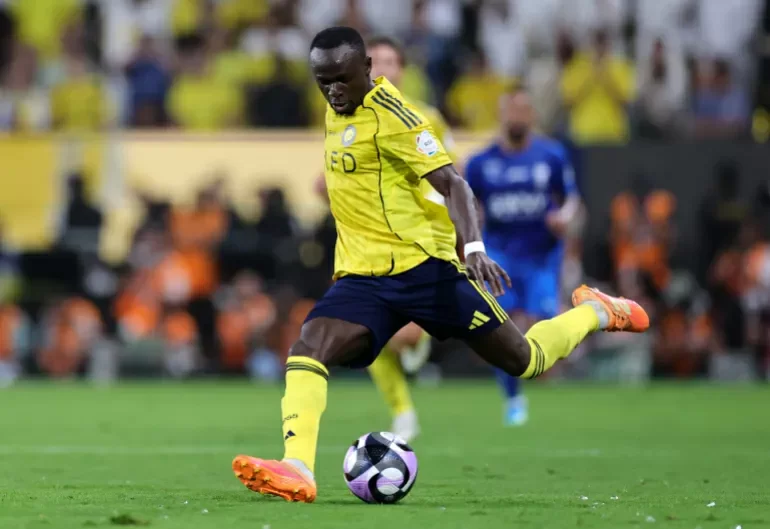
    At the head of this squad is 34-year-old captain Sadio Mané, who is widely expected to play his final World Cup before retiring from international football after the tournament. Despite a natural reduction in pace that comes with age, Mané remains a world-class talent, lauded for his technical ball control, game reading and influential leadership that has defined Senegal’s success in recent years. The Al-Nassr forward, who played alongside Cristiano Ronaldo to help his club claim the 2025-26 Saudi Pro League title, has extra motivation to finish his international career on a high: he missed Senegal’s 2022 World Cup campaign through injury, making this tournament his long-awaited chance to compete on the global stage one last time. Mané, who led Senegal to the 2025 Africa Cup of Nations title and was named the tournament’s best player, is also the nation’s all-time leading goalscorer, with 53 goals in 126 senior caps.

    Manager Pape Thiaw, who took over from long-time coach Aliou Cissé in late 2024, has also been a central figure in the team’s recent trajectory. He guided Senegal to an undefeated qualifying run, the historic Wembley win over England, and led the side to the 2025 AFCON final. Thiaw’s position has not been without controversy, however: he came under widespread scrutiny after ordering his players to walk off the pitch in protest of the controversial penalty in the AFCON final, a move that saw the Confederation of African Football strip Senegal of the title despite their on-field win. Ahead of the World Cup, fans and analysts alike are hoping Thiaw will bring a calmer, more measured approach to the global tournament, as Senegal’s on-pitch talent speaks for itself.

    Many of Senegal’s key players ply their trade in Europe’s top five leagues, bringing a mix of experience, pace and young potential to the squad. Chelsea and Napoli veteran Kalidou Koulibaly, 35, anchors the defense with decades of top-flight experience. In midfield, Idrissa Gana Gueye and Lamine Camara provide solidity, while Tottenham Hotspur’s Pape Matar Sarr offers dynamic energy despite a difficult club season, and Sunderland’s Habib Diarra is marked as one of the breakout young talents to watch. Up front, Crystal Palace’s Ismaila Sarr was instrumental in the win over England, while Everton winger Iliman Ndiaye adds pace and creative threat, and Bayern Munich loanee Nicolas Jackson – a physical, fast striker – is widely expected to be one of Senegal’s key attacking outlets.

    The squad also features a wave of exciting teenage prospects, including 18-year-old Bayern Munich midfielder Bara Ndiaye and Paris Saint-Germain forward Ibrahim Mbaye, signaling the long-term strength of Senegal’s player development pathway.

    Analysts have flagged two key weaknesses for Senegal heading into the tournament: the advanced age of several of its star players, and inconsistency among some of the side’s creative talents. Compounding these challenges is the team’s difficult group stage draw: Senegal has been placed in Group I alongside defending champions France, Norwegian powerhouse led by Erling Haaland, and intercontinental play-off winner Iraq.

    Senegal will be aiming to repeat its 2002 opening-match upset against France, though the 2026 version of Les Bleus will not make the mistake of underestimating the African side, as their predecessors did 24 years prior. The match against Norway will also be a stern test, as Senegal’s solid defense, which proved impenetrable for most of qualifying, will face its toughest test against one of the world’s best strikers in Haaland. Senegal enters its final group match against Iraq as the favorite, but the side may be forced to field its first-choice players for the full 90 minutes depending on results from the first two group fixtures.

    Senegal’s full 28-man preliminary 2026 World Cup squad is as follows:
    – Goalkeepers: Edouard Mendy (Al-Ahly), Mory Diaw (Le Havre), Yehvann Diouf (Nice)
    – Defenders: Kalidou Koulibaly (Al Hilal), Abdoulaye Seck (Maccabi Haifa), Moussa Niakhate (Lyon), Ismail Jakobs (Galatasaray), Mamadou Sarr (Strasbourg), Antoine Mendy (Nice), Ilay Camara (Anderlecht), El Hadji Malick Diouf (West Ham), Krepin Diatta (Monaco), Moustapha Mbow (Paris FC)
    – Midfielders: Idrissa Gana Gueye (Everton), Pape Matar Sarr (Tottenham), Pathe Ciss (Rayo Vallecano), Pape Gueye (Villarreal), Lamine Camara (Monaco), Habib Diarra (Sunderland), Bara Sapoko Ndiaye (Bayern München)
    – Forwards: Sadio Mane (Al Nassr), Bamba Dieng (Lorient), Nicolas Jackson (Bayern München), Iliman Ndiaye (Everton), Ismaila Sarr (Crystal Palace), Cherif Ndiaye (Samsunspor), Cheikh Sabaly (Metz), Ibrahim Mbaye (PSG), Assane Diao (Como)

    Thiaw will cut the squad to the required 26 players before the tournament kicks off. Most analysts predict Senegal will put on an impressive showing at the 2026 World Cup, though the side may ultimately lack the consistent creativity and elite depth needed to claim the overall title.

    Senegal’s 2026 World Cup Group Stage Fixtures:
    16 June: France vs Senegal (New Jersey, USA)
    22 June: Norway vs Senegal (New Jersey, USA)
    26 June: Senegal vs Irak (Toronto, Canada)
  • DNA-voorzitter kondigt evaluatie van nieuw Burgerlijk Wetboek aan

    DNA-voorzitter kondigt evaluatie van nieuw Burgerlijk Wetboek aan

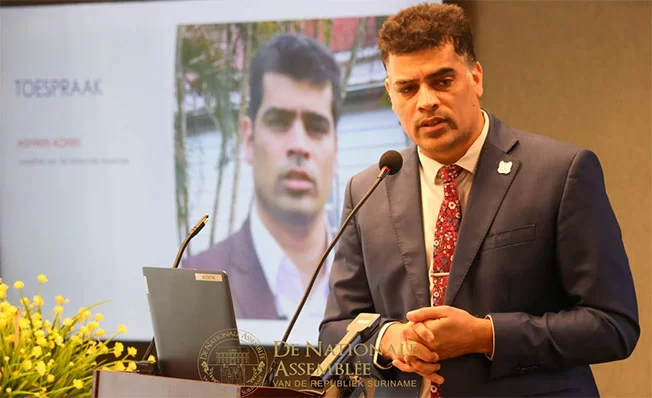
    Suriname’s parliament, the Nationale Assemblée (DNA), is set to conduct a comprehensive, systematic review of how the country’s new Civil Code (BW) functions in real-world practice, DNA Chairman Michael Adhin announced Friday at a legal industry gathering in Paramaribo.

    Addressing attendees of the “Legal Lunch Suriname: From Code to Workplace — Book 2 BW & Governance in Practice” event hosted by the Leadership Academy at the Radisson Hotel, Adhin emphasized that a legislative body’s work does not end when a bill is passed into law. The event brought together legal practitioners, compliance officers, organizational leaders, regulators, and business representatives to discuss the ongoing rollout of the new Civil Code and the role of strong governance across institutions.

    “A law is not an end product, it is simply one phase in a continuous cycle,” Adhin told the gathered audience. He noted that while the public typically only sees the legislative process from bill drafting through official publication in the state gazette, the true value and impact of any law only emerges during day-to-day implementation. This post-enactment assessment, he argued, is a core responsibility of parliament that too often goes unaddressed.

    Adhin pointed out that gaps frequently emerge between the text of a law written in the legislative chamber and its application for ordinary people, businesses, and public institutions. A law can only prove it is workable, delivers meaningful social value, and aligns with on-the-ground realities once it is put into use, making systematic post-implementation evaluation a foundational element of accountable governance and high-quality lawmaking.

    The new Surinamese Civil Code received parliamentary approval in 2024 and officially entered into force on May 1, 2025. Given the sweeping scope of this landmark legal reform, Adhin explained that a structured review is critical to understanding its real-world impact, drawing a parallel to similar legal overhauls in the Netherlands, where reforms are rolled out and assessed in gradual phases to address unforeseen challenges.

    To carry out the evaluation, Adhin announced three concrete initiatives led by the Nationale Assemblée. First, the body will establish a permanent consultation platform structured similarly to parliament’s existing Academic Week, to facilitate ongoing dialogue between stakeholders and lawmakers. Second, a dedicated digital reporting portal will be launched, allowing ordinary citizens, legal professionals, and organizations to flag specific provisions that cause confusion or create practical bottlenecks in daily use. Third, three DNA-appointed independent experts will integrate insights and recommendations shared during the Legal Lunch into the formal evaluation framework.

    Adhin stressed that the discussions at the one-day event would not be merely academic: the insights collected through these channels will be used to refine the Civil Code and strengthen future legislative drafting in Suriname. “What is exchanged here today will absolutely not go to waste,” he said. “These on-the-ground experiences and perspectives will help us build a clear, accurate picture of how the new Civil Code is working, and drive the ongoing development of more effective, responsive legislation for all Surinamese.”

  • Vertrek Zuid-Afrika naar WK 2026 vertraagd door visumdebacle met Mexico

    Vertrek Zuid-Afrika naar WK 2026 vertraagd door visumdebacle met Mexico

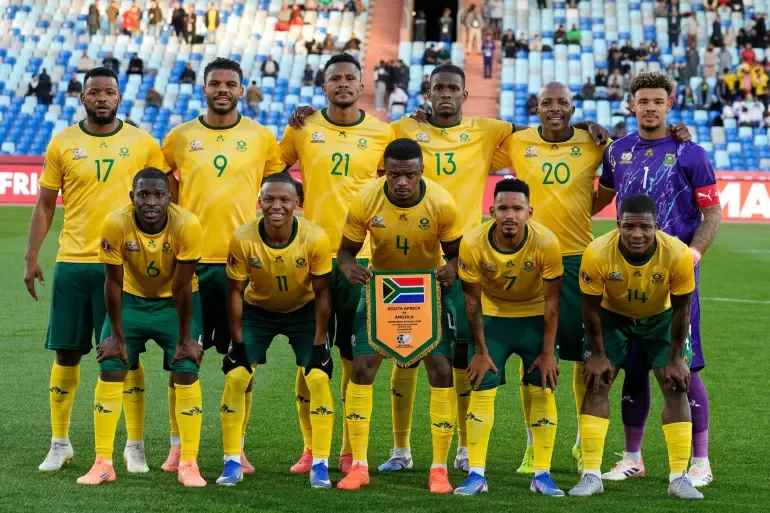
    As the 2026 FIFA World Cup enters its final 11-day countdown, two participating national teams have been thrown into last-minute chaos by unexpected visa processing hold-ups, with South Africa the hardest hit so far. South Africa’s senior men’s national squad, popularly known as Bafana Bafana, was scheduled to depart Johannesburg for co-host nation Mexico on Sunday morning via a chartered flight, ahead of its tournament opening match on June 11. But the departure has been grounded indefinitely after the South African Football Association (SAFA) confirmed visa approvals for several players and team officials are still pending.

  • Onderwijsbonden bundelen krachten: landelijk beraad, leerkrachten blijven thuis morgen

    Onderwijsbonden bundelen krachten: landelijk beraad, leerkrachten blijven thuis morgen

    In a coordinated announcement made on May 31, multiple education unions across Suriname have declared a nationwide work stoppage, set to begin Monday, June 1, following years of broken commitments, overdue pay, and unfulfilled policy agreements with authorities. The unified industrial action, called a “landelijk beraad” or national consultation, requires all participating teaching staff to stay home from work until official negotiations deliver tangible, actionable results, union leaders confirmed.

    The strike brings together a broad coalition of Surinamese education organizations: all five member unions of the Federation of Organizations of Teachers in Suriname (FOLS) – SOB, KOB, COB, BLTO, and IOB – are joined by the Teachers’ Union (BvL), the Alliance for Teachers in Suriname (ALS), the Syndicate for Educators, and the Suriname Higher Education Teachers Union (DoHOS), which has pledged full solidarity. The Association of Scientific Staff at the University (VWPU) has also expressed public understanding for the industrial action, signaling widespread discontent across all levels of the country’s education sector.

    Union organizers emphasize that the decision to strike comes after years of unaddressed demands. A comprehensive list of educator requests has been on the table for policymakers for an extended period, with almost no meaningful progress toward implementation. Most critically, thousands of teaching staff across Suriname still await rightfully owed payments, including end-of-year gratifications, correct salary scale adjustments, overdue allowances, and other legally mandated financial benefits. Some educators have waited for these funds since 2020; many have already retired without receiving what they are owed, and a number have passed away never accessing their entitled compensation.

    Beyond immediate financial grievances, unions warn that the ongoing neglect of educator needs has triggered an alarming brain drain crisis that threatens Suriname’s long-term educational quality. Persistent financial insecurity and professional demotivation have pushed hundreds of qualified, experienced teachers to leave the profession entirely, seeking higher-paying roles in other domestic sectors or relocating abroad to secure stable incomes for their families. This steady outflow of educational expertise, unions argue, does irreversible damage to the life prospects of Suriname’s younger generation, eroding the foundation of the country’s public education system.

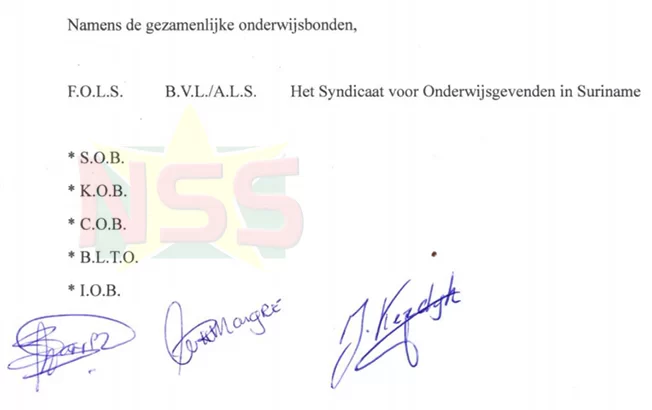
    “Enough is enough,” the coalition stated in a joint signed declaration. Union leaders note that educators have fulfilled their professional responsibilities to students and communities for years, and it is now time for government authorities to meet their legal and contractual obligations. The work stoppage will remain in place until the coalition receives an official invitation to negotiations focused not on new empty promises, but on immediate implementation of the full demands package and resolution of all outstanding financial commitments.

    The unified bloc makes clear it will no longer accept delays, postponements, or non-binding commitments from authorities. Describing the work stoppage as a defining line in the sand, the unions said in their closing statement: “No more words, no more excuses, no more delays. It is time for action, respect, and results.”