标签: Belize

伯利兹

  • Global Institutions: Crisis Easing; Not Yet Over

    Global Institutions: Crisis Easing; Not Yet Over

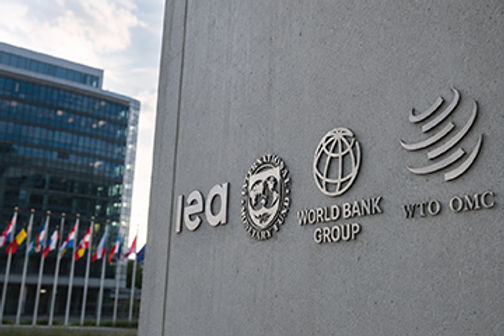
    Four of the world’s most influential multilateral institutions covering energy, finance, development and global trade have issued a rare joint assessment, noting that the immediate market turbulence triggered by the ongoing Middle East conflict has softened, but ongoing vulnerabilities across the global economy demand that national governments stay vigilant against potential new disruptions.

    Following a high-level coordination gathering held July 7, the chief executives of the International Energy Agency (IEA), International Monetary Fund (IMF), World Bank Group and World Trade Organization (WTO) released a public statement highlighting that the global economy has so far displayed unexpected resilience in the face of the conflict. Still, the leaders emphasized that macroeconomic uncertainty remains elevated, and ripple effects from the hostilities are likely to persist for the foreseeable future.

    This working group was first convened in April, created specifically to align a unified institutional response to the war’s spillover effects on global energy markets, cross-border trade flows and overall economic stability. In their latest update, the group confirmed that while global prices for fuel and agricultural fertilizer have pulled back from peaks recorded ahead of their June coordination meeting, the underlying crisis sparked by the conflict has not been fully resolved.

    The institutions added that the conflict’s economic impacts have been deeply uneven across different national economies. It has disrupted critical energy supply chains, threatened global food security, roiled commodity markets and dampened overall economic activity, dragging down growth projections and pushing up inflation rates in many vulnerable economies around the world.

    In the statement, the four bodies called for sustained international diplomatic efforts to end the conflict and reopen unimpeded access to the Strait of Hormuz, the world’s most strategically critical maritime chokepoint, through which roughly a fifth of global oil supplies and large volumes of other traded goods pass every day. They also urged national governments to uphold the principle of freedom of navigation, invest in strengthening collective energy and food security, upgrade port infrastructure and streamline trade facilitation processes, and build broader systemic resilience to absorb future economic shocks.

    This joint statement makes clear that the world’s leading multilateral economic and energy institutions still view the Middle East conflict as a major persistent threat to global economic stability, even as near-term market conditions have improved in recent weeks.

    For small import-dependent economies like Belize, prolonged regional instability could continue to put upward pressure on fuel costs, international shipping rates, fertilizer prices and broader inflation, even as the recent pullback in global energy prices has delivered some temporary relief to vulnerable households and businesses.

    The four institutions concluded by confirming they will maintain close, continuous monitoring of global developments tied to the conflict. They also reaffirmed their commitment to expanding targeted support to member nations if economic conditions worsen again, standing ready to adjust their assistance programs to meet evolving needs.


  • Chicken Prices Increase Again

    Chicken Prices Increase Again

    Consumers across Belize are facing higher grocery bills starting this week, after the Belize Poultry Association (BPA) announced an immediate across-the-board price increase for all poultry products. The country’s leading poultry industry group confirmed in an official press statement that whole chicken will see a 12-cent per pound price jump effective immediately, with proportional price adjustments rolling out for all other poultry goods – including specialty cuts and processed poultry products – that vary by item.

    Industry leaders clarified that the price adjustment is not a discretionary increase, but a necessary response to months of escalating production costs that have squeezed profit margins for local poultry farmers and producers. The BPA’s statement notes that key input costs required for raising and processing chicken have climbed steadily over the past year, leaving producers with no viable option but to pass a portion of these extra costs onto consumers.

    According to senior industry officials, the most dramatic cost surges have hit core production inputs: feed staples corn and soybeans, production fuel, and nutritional premixes added to poultry feed. These steadily rising overhead costs have placed persistent financial strain on small and large poultry operations across Belize for months, prompting the second industry-wide price adjustment of 2026.

    The 12-cent per pound increase marks the second whole chicken price hike this year. Back in March 2026, the BPA approved a more modest 6-cent per pound increase. Combined with the latest adjustment, total whole chicken prices have risen by a full 18 cents per pound in 2026 alone.

    Pre-existing price trend data from Belize’s official statistical body backs up the industry’s claims of growing cost pressures. The Statistical Institute of Belize reports that chicken prices were already climbing steadily before the latest BPA announcement. As of May 2026, the national average retail price for whole chicken hit $3.33 per pound, up from $3.22 per pound in May 2025. Retail prices for popular individual cuts including legs and wings have also recorded year-over-year increases over the same 12-month period.

  • Invoices, Addresses, and Alleged Connections to the Highest Office

    Invoices, Addresses, and Alleged Connections to the Highest Office

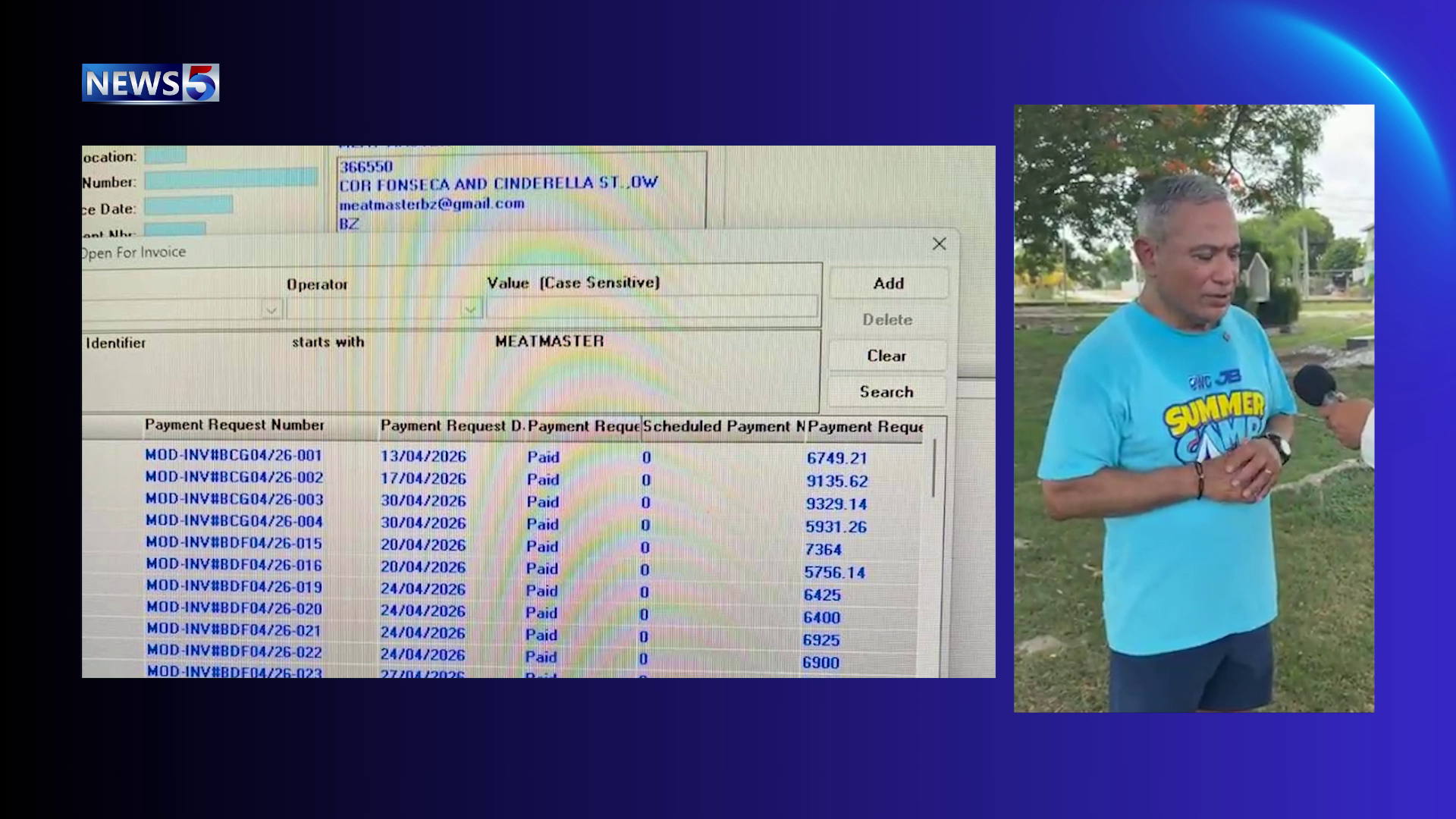
    The ongoing Ministry of Defense procurement corruption controversy in Belize has entered a volatile new phase, with newly leaked official documents linking the prime minister’s immediate family to suspicious public fund payments that appear structured to avoid mandatory oversight. The 33 leaked invoices, published by local outlet News Five on July 9, 2026, lay out a clear pattern of transaction splitting: 93% of the payments come in just under the $10,000 threshold that triggers stricter formal scrutiny under government procurement rules. Only two invoices exceed this limit, both for the exact amount of $13,537.03.

    Altogether, the documents show the Ministry of Defense disbursed a total of $242,230.09 in public funds to two individuals linked by the same residential address in Orange Walk: 61 Queen Victoria Avenue. Unconfirmed sources cited by the outlet identify the two payees, Addy Isora Del Carmen Ku and Javier Reul Briceño, as a married couple. Javier Reul Briceño is the sibling of sitting Prime Minister John Briceño, a connection that pulls the expanding scandal directly to the highest office in the nation.

    A breakdown of the payments shows Ku received $225,462.89 in disbursements between November 2023 and July 2025, while Briceño was paid $16,767 in a single transaction in August 2025. The addition of these two names grows the already long list of individuals and private entities connected to questionable payments through the Ministry of Defense’s Smart Stream payment system, turning what began as an inquiry into irregular invoicing into a full-blown political crisis.

    In a phone interview with reporter Paul Lopez, Prime Minister Briceño confirmed Javier Briceño is his brother, but denied any knowledge of the payments, his sibling’s contracted services to the ministry, or even the name of his brother’s spouse. When pressed on whether the proximity of his family to the scandal raises legitimate public questions, Briceño acknowledged questions are fair but maintained he has no involvement in the day-to-day management of the Smart Stream procurement system.

    “I don’t even know how Smart Stream work, I have never been into the Smart Stream, because that is not my job. That is for the public officers,” Briceño told Lopez. He added that an ongoing investigation led by the Auditor General is already underway, and any individual found to have broken rules—including his brother—will face full accountability. “I nuh cover the fact,” he said, speaking in Belizean Kriol. “If anything was wrong, if it was Javier or anybody, they will have to answer.”

    As the paper trail of irregular payments grows longer with each new leak, the scandal shows no signs of abating, leaving the prime minister to confront growing public pressure over potential gaps in procurement oversight and conflicts of interest at the highest levels of government.

  • Brother’s Property, Government Contracts, and PM Briceno’s Denial

    Brother’s Property, Government Contracts, and PM Briceno’s Denial

    As a formal audit of Belize’s Ministry of Defense spending gets underway, a simmering controversy over a multi-hundred-thousand-dollar meat supply contract has put Prime Minister John Briceño on the defensive, after opposition figures linked him to the winning vendor, Meat Master. At the center of the allegations are reports that the land housing Meat Master’s processing operations belongs to Briceño’s oldest sibling, a connection the prime minister has forcefully and repeatedly rejected.

    In a public address responding to the claims, Briceño pushed back hard against what he frames as a manufactured political smear campaign orchestrated by the opposition United Democratic Party (UDP). He explained that he is the eldest child of his branch of the Briceño family, and the owners of Meat Master belong to an unrelated Briceño clan with roots across several Belizean districts including Punta Gorda, Corozal, and Orange Walk. The prime minister said he had no prior knowledge that Meat Master was supplying meat to the Belize Defense Force (BDF), and argued that the divided, ineffective UDP is grasping at any last-minute narrative to manufacture a scandal where none exists. Briceño also noted that the ongoing audit has been formally handed over to the Auditor General, who recently outlined her general audit process to cabinet under an oath of secrecy that prohibits her from commenting on specific open investigations. Should any wrongdoing be uncovered, Briceño added, those responsible will be held accountable regardless of name.

    Meat Master has joined the prime minister in rejecting all claims of improper connections, issuing a public statement to correct what it calls inaccurate characterizations of its operations. Founded and formally registered in 2022, the company specializes in producing fresh, smoked, and processed meat products for commercial and institutional clients. It firmly denied any familial or financial ties to the Briceño family, emphasizing that no member of the prime minister’s family owns either the business itself or the property where it operates. Meat Master also defended its contracting process, confirming that it secured supply agreements with both the BDF and the Belize Coast Guard through the government’s official competitive tender process, met all mandatory procurement requirements, and submitted all required bidding documentation. All invoicing, the company added, accurately reflects the volume and value of products delivered to the military entities.

    The controversy has kept questions alive around Ministry of Defense CEO Francis Usher, who acknowledges a distant family connection to Meat Master’s owner through his wife. Usher has stated that he played no role in the procurement process for the contract, and only became aware that Meat Master was an approved supplier when payment requests crossed his desk for processing. Despite growing calls from critics to remove Usher from his post while the audit proceeds, Prime Minister Briceño has announced he will retain the CEO for the time being. Briceño praised Usher for his diligent work stabilizing the ministry’s operations, arguing that removing him now would be a disservice to the uniformed men and women serving in the BDF and Coast Guard. The prime minister noted that Usher genuinely cares for the well-being of service members and is actively working to improve ministry operations, and no evidence of improper conduct has been presented to justify his removal.

    This controversy stems from a broader audit into Ministry of Defense contracting practices, where multiple suppliers have reportedly received a total of more than $400,000 in contracts split into invoices kept deliberately under the $10,000 threshold—an apparent tactic to avoid the stricter oversight and competitive bidding requirements that apply to larger government contracts. As the Auditor General’s review continues, all sides are awaiting the final audit report to clarify whether any rules were broken or improper influence was exerted.

  • Smart Stream Fallout Clouds Military Feeding Program

    Smart Stream Fallout Clouds Military Feeding Program

    In a July 2026 admission that lays bare long-simmering vulnerabilities in Belize’s public contracting system, Prime Minister John Briceño has acknowledged that widespread gaps in government bidding and procurement protocols have been fully exposed by the recent Smart Stream invoice leak scandal.

    The controversy centers on hundreds of leaked invoices each valued below the $10,000 threshold that triggers formal competitive bidding requirements. The discovery has reignited urgent questions about potential corruption and improper contract handling across public agencies, and it has specifically cast a shadow over the current administration’s $8 million military feeding program for the Belize Defence Force (BDF).

    Briceño defended his government’s investments in improving military rations, noting that his administration has doubled the annual food budget from the $4 million allocated by the preceding United Democratic Party (UDP) administration. He emphasized that rank-and-file BDF soldiers have confirmed the quality of meals has improved substantially under his watch. Still, he expressed frustration that this progress has been completely overshadowed by allegations that actors within the system — including potential links to military officers and politicians — are deliberately splitting contracts into amounts under $10,000 to evade formal bidding and oversight processes.

    “There is a problem across the entire process. There are clear issues with bidding protocols, and it appears that some parties are deliberately keeping contracts under ten thousand dollars to circumvent the formal bidding and contracting process,” Briceño said, adding that the Auditor General has launched an investigation to identify any parties involved in wrongdoing. “It angers me that all the good we are doing for the soldiers is shrouded in this scandal. This controversy pulls attention away from the tangible progress we have made to ensure BDF members are better fed than ever before, and that we are delivering on the commitments we made.”

    In response to the escalating scandal, Briceño announced that the government is in the final stages of launching a new centralized Central Procurement Unit, a regulatory overhaul years in the making that aims to close gaps in oversight, increase transparency, and guarantee better value for public spending. Contrary to recent claims that the administration is only moving forward with the reform with emergency support from the Inter-American Development Bank (IDB), Briceño clarified that the government has been developing the framework for three to four years, partnering with the IDB only to access technical expertise, and has modeled the system on successful programs already implemented in Jamaica and Guatemala.

    The Central Procurement Unit will be established through formal legislation, and next week, the implementation team will present a full operational plan to Cabinet for approval. Once enacted, the new system will introduce far stricter transparency protocols, and will impose stiff penalties — including potential jail time — for any public official or contractor found to be circumventing contracting rules.

    “Once implemented, the new system will be more open, more transparent, and we will guarantee that taxpayers get full value for every dollar spent,” Briceño noted. “Stiff penalties, including prison time, will be in place for anyone who tries to get around the rules.”

    This report is based on a transcript of an evening television newscast published online July 9, 2026.

  • Flowers Blasts Government’s “Hollow” Transparency Talk

    Flowers Blasts Government’s “Hollow” Transparency Talk

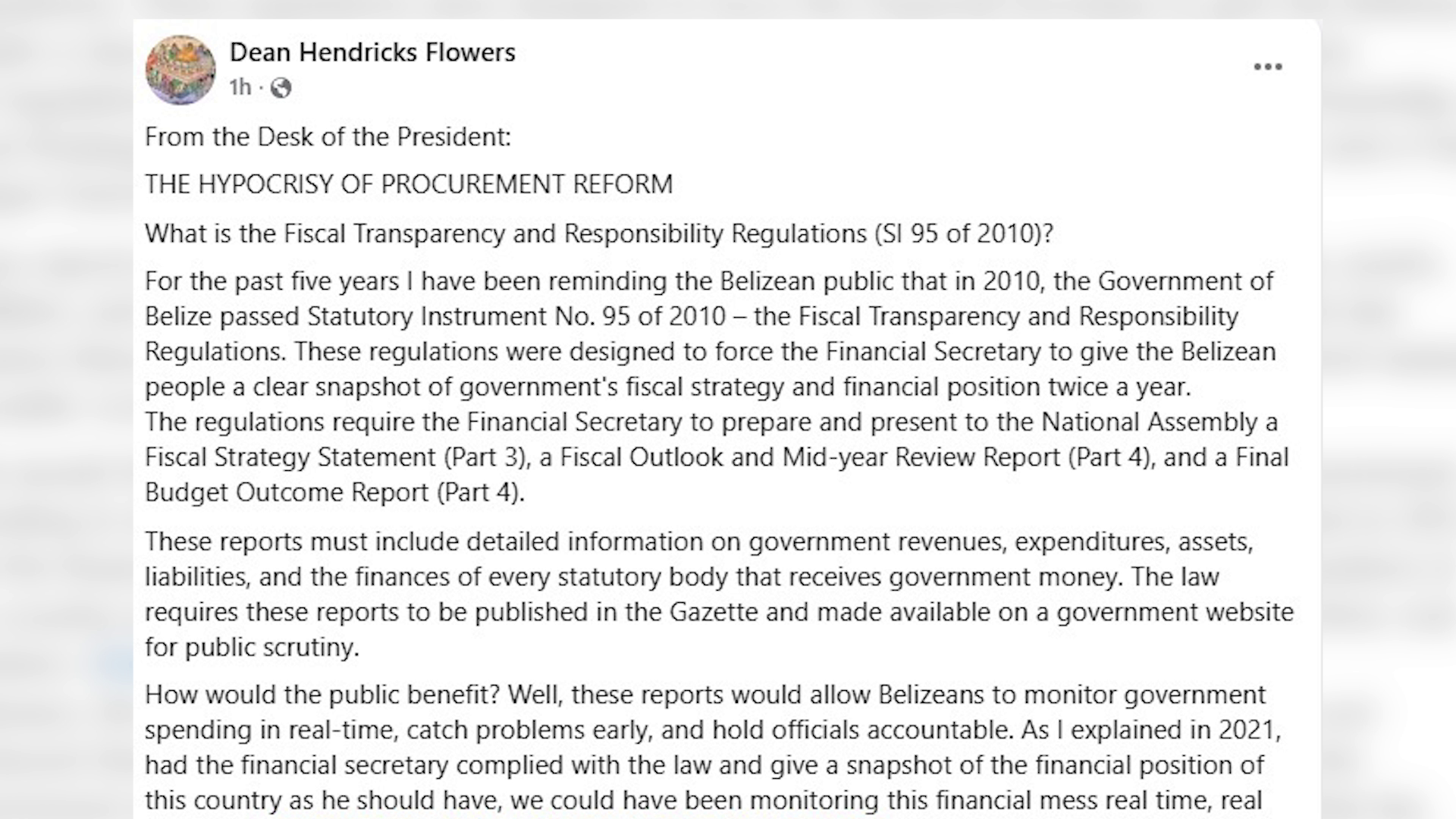
    On July 9, 2026, a sharp rebuke of the Belizean government’s commitment to fiscal openness has emerged from the country’s top public service labor leader, turning a spotlight on long-simmering concerns over public spending accountability.

    Dean Flowers, president of the Public Service Union of Belize, took to social media to deliver a scathing critique, arguing that the administration’s repeated pledges of transparency amount to little more than hollow rhetoric. In his public post, Flowers accuses senior government officials of a glaring double standard: they routinely demand accountability from lower-tier public workers and opposing groups, yet routinely disregard existing laws designed to monitor and regulate how taxpayer money is allocated and spent.

    Flowers outlined multiple core failures driving his criticism, noting that critical fiscal transparency reports have not been published or released to the public for several years. This prolonged lack of disclosure has left ordinary Belizeans completely unaware of how public funds are being managed, spent, or distributed across government agencies, he claimed. Beyond undisclosed fiscal data, Flowers also raised questions about the sudden disappearance of public scrutiny into allegations of procurement irregularities in government contracts, adding that no significant enforcement action has been taken against public institutions that have actively blocked independent public audits.

    In a subsequent comment expanding on the intent of his social media statement, Flowers explained that his goal was to galvanize both the general Belizean public and public sector employees who have long pushed for systemic change within government operations. “I think the intent of my post was to spark some interest in the Belizean public and most definitely in public sector workers who are calling for change and who are desirous of change,” Flowers said. “It is to enlighten them and to inform them that currently there are in fact mechanisms to help us to address the unfortunate corrupt environment in which we currently reside. For too long those who are entrusted with the people’s assets and those who are entrusted with holding those who violate that trust accountable have been failing us.”

    Flowers emphasized that public awareness is a critical first step toward pushing for greater accountability. “I think it is important that as Belizeans we know who those persons are, we must know who those persons are so that when we see them on the streets, at the supermarket, the workplace, that we are able to question them and call them out,” he said. “When we see them driving, utilizing our public assets but not delivering the quality service that we pay them for, we have the right to say to them you are failing us and you need to do better.”

    This report is a transcribed excerpt from an evening television newscast, with all Creole-language statements adapted to a standardized spelling system for accessibility in written form.

  • Nearly a Decade Under Review at Defense Ministry

    Nearly a Decade Under Review at Defense Ministry

    In a stark announcement delivered at the People’s United Party (PUP) National Party Council gathering held in Dangriga, Belize Prime Minister John Briceño has launched a sweeping audit of the Ministry of Defense that will trace financial and operational activity all the way back to 2015, a move that puts former United Democratic Party (UDP) Defense Minister John Saldivar and previous administration officials on formal notice. But in a break from typical partisan political targeting, Briceño made clear that accountability is not limited to the previous governing party – members of his own PUP administration have also drawn criticism for concerning practices uncovered in preliminary reviews, and the prime minister says no individual involved in wrongdoing should feel secure from scrutiny.

    Briceño told attendees that preliminary inquiries have already uncovered deeply troubling practices within the Belize Defense Force (BDF), noting that for years, the majority of BDF contracts were awarded to a single supplier with almost no formal reporting or public transparency around the deals. To root out these opaque practices, Briceño has formally requested that the national Auditor General extend the scope of the ongoing review from its original timeline all the way back to 2015, to capture a full decade of unexamined activity.

    “This kind of behavior has to stop, we cannot continue down this path of unaccountability,” Briceño said in remarks at the council meeting. “When my party, the PUP, campaigned for office, we promised Belizeans we would govern differently. Promises are not enough – we have to deliver on that commitment, and we have to show the public that we are serious about changing the culture of corruption and opacity in government. This audit is a critical opportunity to fix long-standing problems at the ministry. I am not happy with what we have found so far, but it confirms that this work is urgent, and we are moving forward with it immediately.”

    This report is adapted from a transcribed version of an evening television newscast, with Kriol-language remarks standardized to consistent spelling for published distribution.

  • Kolbe CEO George Gomez Out After Just Seven Weeks

    Kolbe CEO George Gomez Out After Just Seven Weeks

    In an unexpected leadership shakeup at the Kolbe Foundation, chief executive George Gomez has stepped down from his post just seven weeks after assuming the position, multiple sources confirmed to local outlet News Five on July 9, 2026.

    Longtime Kolbe Foundation staff member Francis Woods has stepped into the role as interim chief executive while the organization launches a formal search for a permanent successor to Gomez. The sudden nature of Gomez’s exit has sparked widespread questions surrounding the circumstances of his departure and the future direction of the foundation under temporary leadership. In a phone interview with News Five, reporter Paul Lopez pressed Woods for details on the sudden leadership change.

    “George Gomez is no longer employed by the Kolbe Foundation,” Woods confirmed in the interview. He noted that the foundation has a long history of leadership turnover, and that the organization has benefited from the contributions of every chief executive that has led the institution. “All of the positive initiatives that Gomez launched during his time here will continue moving forward, and we are grateful for the service he provided to the Kolbe Foundation,” Woods added.

    When pressed to disclose a specific reason for Gomez’s departure, Woods offered only a vague explanation, saying “it just was not working out.” He emphasized that his own appointment is strictly temporary, and that he remains familiar with the foundation’s operational procedures after being part of the organization since its founding. For the interim period, Woods said the core mission of the foundation will remain unchanged: to operate a humane, secure correctional facility focused on delivering meaningful rehabilitation and successful reintegration support for the people in its care.

    In a separate press statement released the same day, Gomez reflected on his short tenure at the head of the foundation, highlighting the work he had done to advance the organization’s core mission and vision. However, Gomez also confirmed that leadership did not share with him the official reason for his dismissal, leaving key details of the shakeup unresolved.

    This report is a transcribed excerpt from News Five’s evening television broadcast, which is available to view in full on the outlet’s digital platform.

  • Soldiers’ Daily Food Budget: $13.50 for Breakfast, Lunch and Dinner?

    Soldiers’ Daily Food Budget: $13.50 for Breakfast, Lunch and Dinner?

    As skyrocketing food prices and a soaring cost of life continue to squeeze household budgets across Belize, a pressing question has emerged around the adequacy of the daily food allowance allocated to the men and women of the Belize Defense Force (BDF): can a service member really cover three full meals a day on just $13.50?

    For years, the fixed daily food budget per BDF soldier has remained at $13.50, a figure that has not been adjusted to match the massive inflation that has eroded purchasing power across Belize and global markets in the decades since it was first set. Francis Usher, Chief Executive Officer of Belize’s Ministry of Defense, openly acknowledged that the current allowance is insufficient to meet service members’ basic nutritional needs in a recent public briefing, confirming that senior defense officials are now actively reviewing the budget and planning for an inflation-adjusted update.

    Currently, the total annual allocation for direct daily food allowances for all BDF personnel totals just over $8 million, pulled from a total annual food budget of roughly $12.5 million. This leaves an unallocated balance of approximately $4.5 million per year, and defense leaders have put forward a draft proposal to repurpose these remaining funds to boost the quality of food available to soldiers, without immediately changing the fixed $13.50 daily allowance.

    Under the draft plan, around $2 million of the remaining budget would be allocated to purchase high-grade, United Kingdom-sourced Meals Ready to Eat (MREs). These pre-prepared rations have a five-year shelf life and meet strict quality assurance standards, making them ideal for supplying troops deployed to remote observation posts, frontline special patrols, and active operational missions across the country. Usher estimates that this allocation would provide enough rations to cover all deployed troops’ meal needs for a full 12-month cycle.

    The remaining $2.5 million would be used to subsidize meal costs at the BDF’s centralized on-base kitchen facilities. Following an open tender process to select a private operator to run the kitchen, the subsidy would cover the gap between what soldiers can afford to pay from their daily $13.50 allowance and the actual cost of producing nutritious, high-quality meals. For example, under the model outlined by Usher, a soldier would pay just $3 from their allowance for a breakfast that costs $5 or $6 to produce, $5 for a full lunch, and $4 for dinner. The subsidy would cover the remaining cost for the kitchen operator, ensuring soldiers can access full, quality meals without increasing their out-of-pocket expense from the existing allowance.

    This ongoing review comes as households across Belize continue to grapple with sustained food inflation, making the question of adequate support for national security personnel a pressing public concern. While the proposal remains under discussion, defense officials have committed to finalizing adjustments that will address the current shortfall and ensure BDF members receive adequate nutrition to carry out their critical national security duties.

  • PM Defends Former Miss Universe Belize Amid Procurement Debate

    PM Defends Former Miss Universe Belize Amid Procurement Debate

    A public controversy has erupted in Belize after former Miss Universe Belize Isabella Zabaneh called for an upward adjustment to the country’s $10,000 government procurement threshold during a ruling People’s United Party (PUP) National Party Council meeting held in Dangriga, drawing widespread backlash amid existing public anxieties over government spending transparency and accountability.

    Prime Minister John Briceño has publicly stepped forward to defend Zabaneh, praising her willingness to speak openly about a widely acknowledged issue that many hesitate to address publicly. Briceño emphasized that public discourse should encourage greater women’s participation in political and policy conversations, noting that Zabaneh demonstrated rare courage in voicing a perspective shared by many across the country.

    The prime minister confirmed that raising the procurement threshold is already a planned reform being advanced by the government’s Central Procurement Unit, a change driven by the massive growth of Belize’s national budget over the past two decades. Two decades ago, the country’s total annual budget sat below $1 billion; today, it has expanded to $1.8 billion, with government annual spending on goods and services alone reaching $400 to $500 million – a figure that climbs even higher when large infrastructure projects such as road construction are included. Briceño argued that the current $10,000 threshold, set when the budget was far smaller, has become functionally unworkable for the modern size of government operations.

    Under the planned reform, the threshold will be raised to between $20,000 and $30,000, paired with a new centralized transparency requirement to prevent the misuse of small-procurement exemptions. All government procurement, even for projects falling below the new threshold, will be required to be logged on a single, unified public portal. Every government ministry will be mandated to publish all procurement activity on this platform, allowing full public oversight. Briceño used the example of the Belize Defence Force’s regular need for bulk six-month food supply contracts worth up to $1 million to illustrate the inefficiency of the current rules. The new system will also close a longstanding loophole that has allowed some companies to accumulate hundreds of millions in government contracts by splitting work into multiple awards below the $10,000 threshold to avoid competitive bidding and public scrutiny – a practice that will no longer be possible under the new centralized framework.

    Following the public backlash, Zabaneh released a formal statement clarifying that her original comments were not intended to defend any specific individual or interfere with any ongoing government investigation into procurement irregularities.

    This report is based on a transcribed evening television news broadcast from Belize, originally published on July 9, 2026.