标签: Belize

伯利兹

  • Meteorological Service Warns More Rain Coming

    Meteorological Service Warns More Rain Coming

    On July 11, 2026, the National Meteorological Service (NMS) issued an urgent Excessive Rainfall Warning for central regions of Belize, forecasting another 2 to 4 inches of rain within the next four to six hours. This new precipitation will come on top of the 4 to 6 inches of rainfall that already drenched the area earlier the same morning.

    The early downpours have already triggered destructive flash flooding across multiple communities, with Belmopan’s Las Flores neighborhood among the hardest-hit locations. In response to flood damage from the unrelenting rain, the Ministry of Infrastructure Development and Housing (MIDH) announced the complete closure of the George Price Highway at Mount Pleasant for all small vehicles.

    The government statement, released via official online channels, noted that MIDH emergency response teams have already deployed to the affected site. Personnel are currently conducting continuous monitoring of flood levels and infrastructure conditions, and will begin mitigation and recovery work as soon as conditions safely allow. Beyond the closed highway segment, MIDH has issued a broad appeal for all motorists traveling through rain-impacted zones across the country to exercise extreme caution and adjust their driving to match hazardous conditions.

    Local residents in flood-affected neighborhoods have also been advised to avoid unnecessary travel on flooded roadways. Officials emphasized that navigating flood waters present hidden dangers: water depth and submerged hazards cannot be reliably assessed from the surface, putting both drivers and pedestrians at serious risk.

    In addition to the immediate warning for central areas, a broader Excessive Rainfall Watch remains active across the entire nation. Forecasters predict an additional 2 to 4 inches of rain could fall across most of Belize over the next 12 to 18 hours, with southern regions facing the highest risk of heavy accumulation. Complementing the rainfall alerts, the NMS has also issued a Small Craft Caution for coastal waters. The advisory warns of sudden gusty winds and choppy, dangerous sea conditions in the vicinity of heavy showers and thunderstorms, and urges all small watercraft operators to avoid unnecessary voyages and maintain heightened situational awareness during the weather event.
  • Panton Leads Anti-Corruption March Through Belize City

    Panton Leads Anti-Corruption March Through Belize City

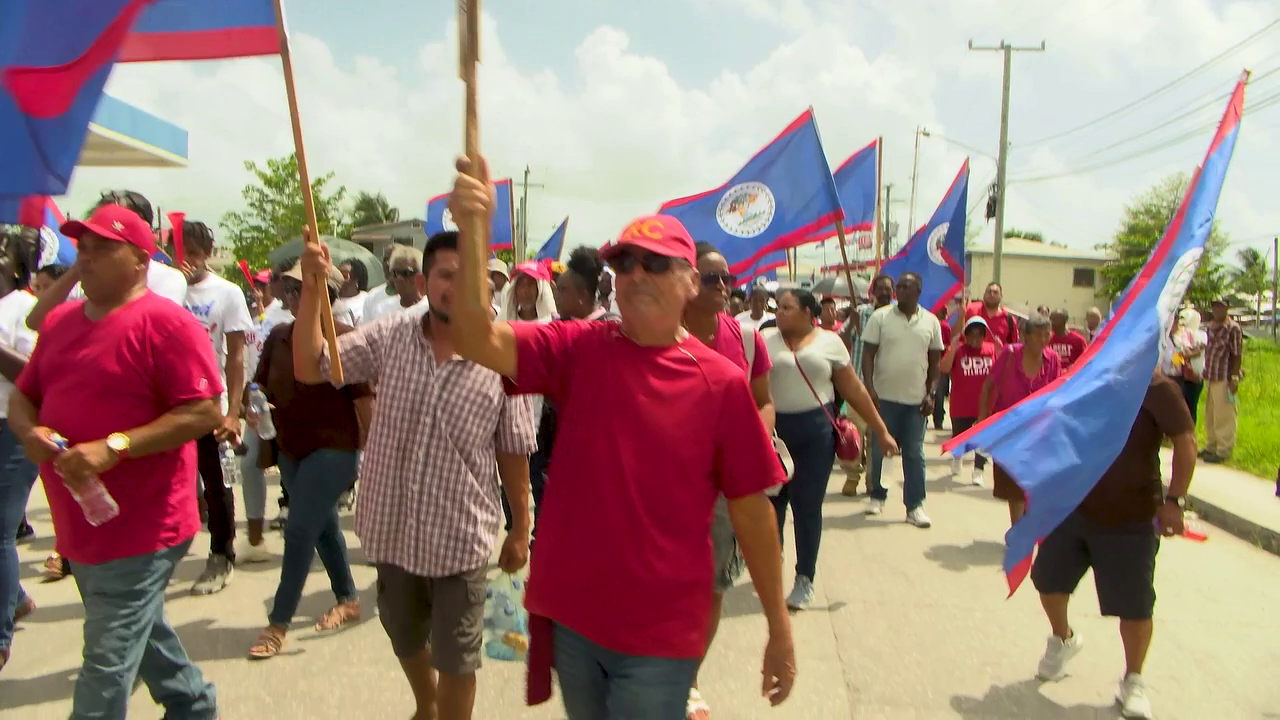
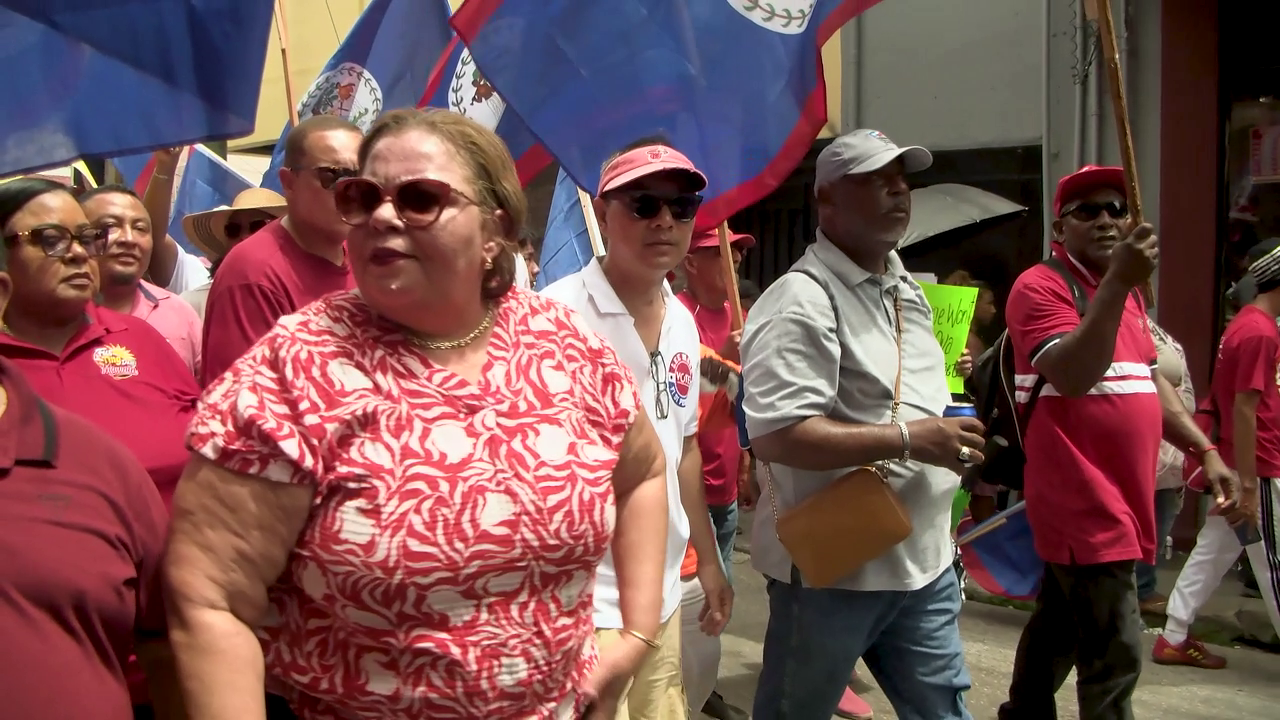
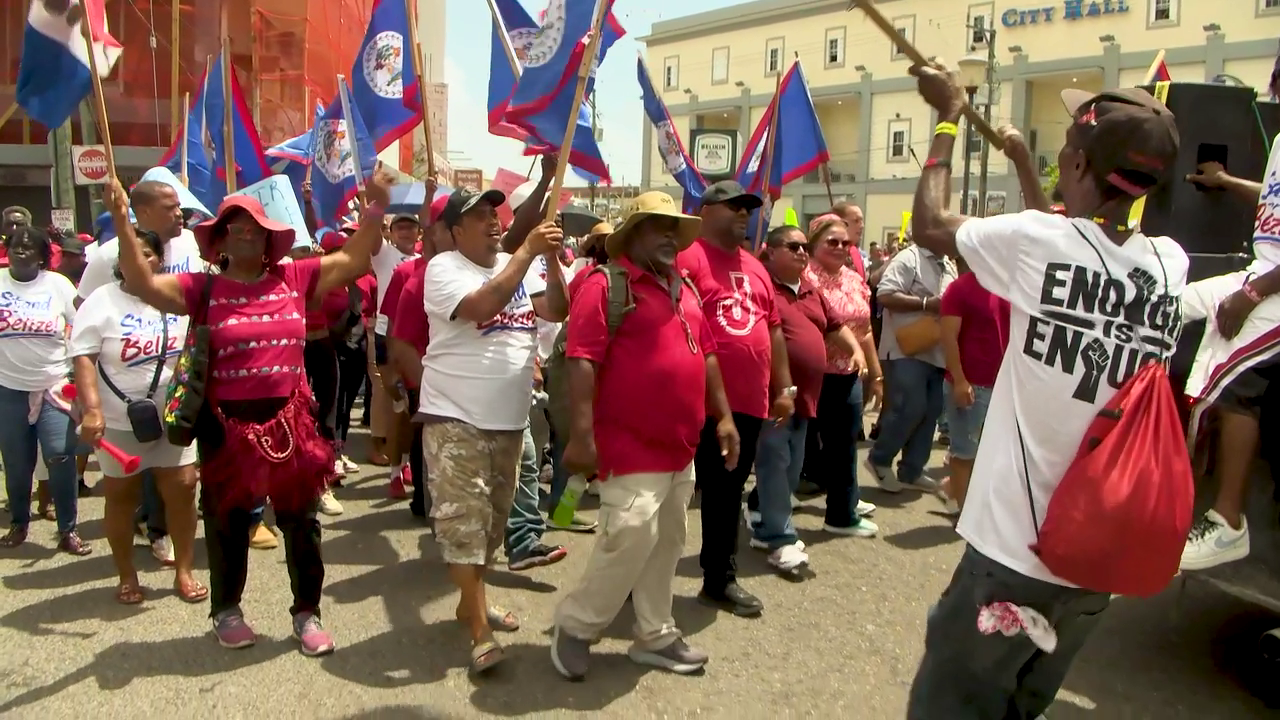
    On July 10, 2026, Belize’s main opposition political bloc, the United Democratic Party (UDP), organized a large anti-corruption march through the streets of Belize City that concluded at Battlefield Park, channeling mounting public anger over systemic graft, skyrocketing living costs, and broken election promises from the ruling People’s United Party (PUP) administration.

    While UDP leader Tracy Panton claimed the march drew 2,000 participants – a figure she says was corroborated by police crowd estimates – on-the-ground reporting from local outlet News Five places attendance closer to 500. Despite the dispute over crowd size, the demonstration highlighted deep and cross-regional dissatisfaction with the current government’s performance, drawing participants and party hopefuls from districts across the country including Punta Gorda, Dangriga, and Belmopan.

    In a notable departure from some past opposition actions, the protest remained entirely peaceful, a result of explicit instructions from UDP leadership to avoid unrest. Longtime party activist Brian “Yellow Man” Audinett confirmed to reporters that organizers had mandated nonviolence, though he added that a harder line could follow if the ruling government refused to address public grievances.

    Interviews with marchers revealed a broad spectrum of frustrations extending beyond corruption. Many attendees called out stark inequalities in the justice system, pointing out that low-level offenders face jail time for minor offenses while officials accused of stealing millions face no consequences. Others detailed the crippling impact of rising costs of basic goods, from gas and utility bills to groceries including poultry. Multiple participants also criticized incumbent representatives for failing to deliver on infrastructure and development pledges made during election campaigns. Several speakers emphasized that the demonstration was not merely a partisan exercise, but a cross-party movement for accountability, noting that corruption harms all Belizeans regardless of political affiliation.

    UDP officials used the rally as a platform to lay out specific demands for reform. Councilor aspirant Phillip Willoughy called on the government to formally legislate compliance with the United Nations Convention Against Corruption (UNCAC), arguing that formal adoption of the international framework is the only meaningful step to curb graft in the country. Other UDP political candidates framed the protest as the first major public pushback against what they describe as an exponential increase in corruption and nepotism under the current administration, with Belmopan mayoral aspirant Richie Galvez noting that taking to the streets is a critical way for the opposition to demonstrate public support for change.

    Following the march to Battlefield Park, Panton told reporters that the turnout reflected a breaking point for the Belizean public. “The truth is, people have had enough, like we really have had enough,” she said, framing the event as the start of a sustained campaign to hold the ruling government accountable. Ruling party officials did not issue an immediate response to the demonstration. This report is adapted from on-the-ground reporting by Paul Lopez for News Five.

  • UDP Keeps Pressure on Government Over Defense Scandal

    UDP Keeps Pressure on Government Over Defense Scandal

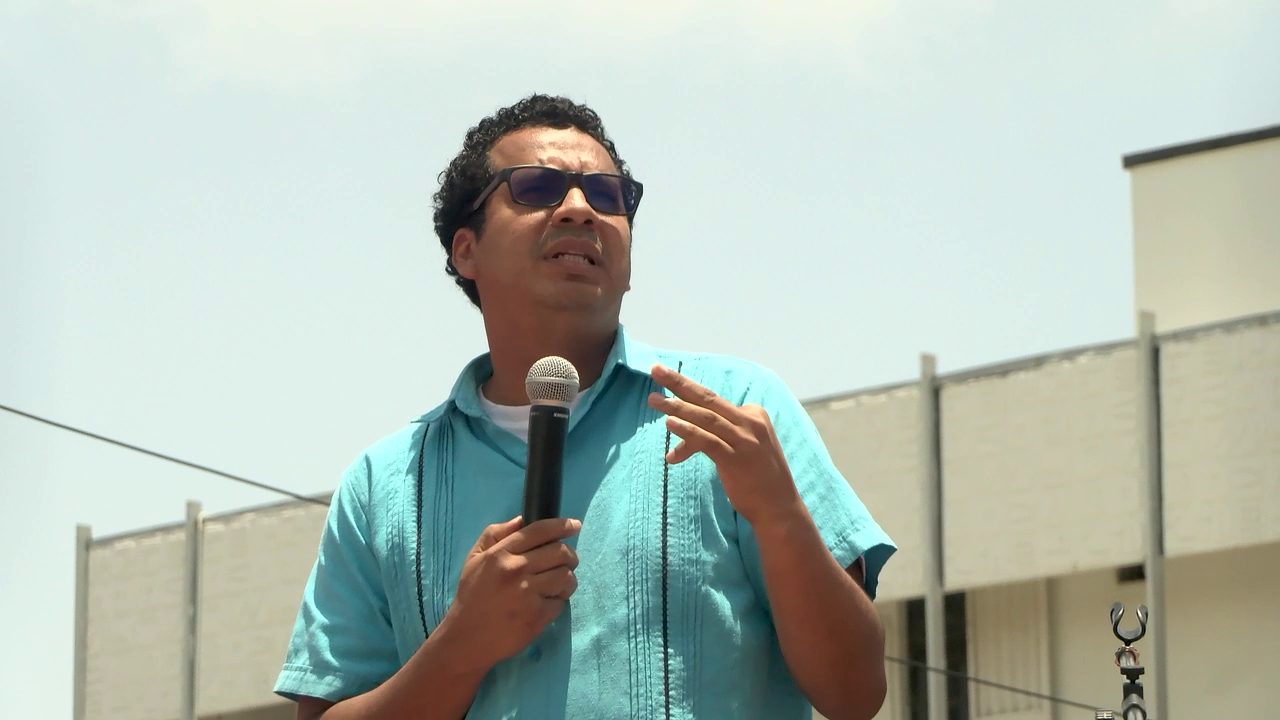
    On July 10, 2026, opposition leader Tracy Panton of Belize’s United Democratic Party (UDP) addressed a crowd of gathered supporters at Battlefield Park, marking a sharp escalation in the party’s campaign over the unfolding Ministry of Defense supplies scandal. What began as grassroots protest chants has evolved into a formal, unyielding political warning to the sitting Briceño administration, with Panton emphasizing that the public rally was only the opening move in a prolonged push for accountability.

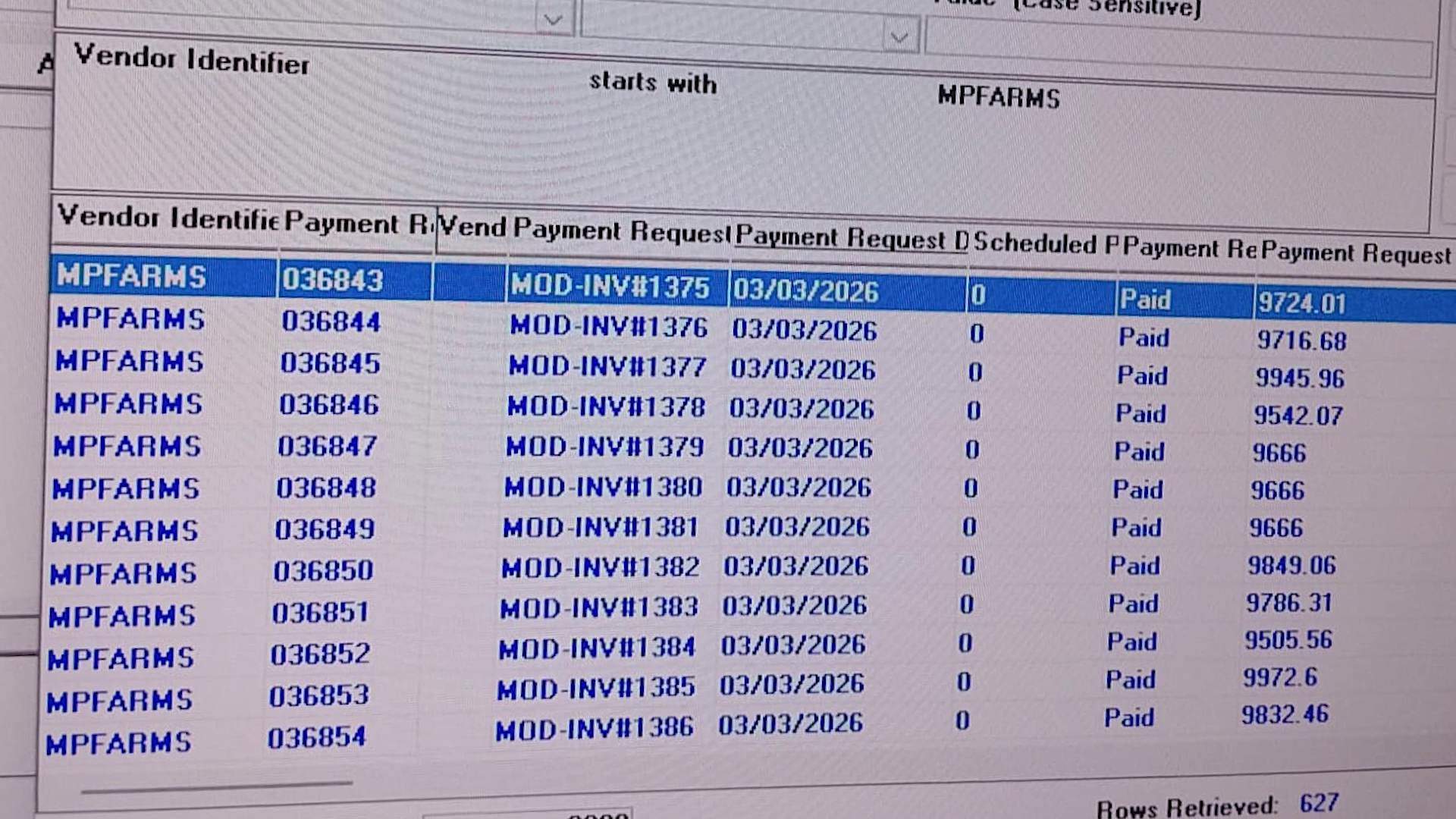
    The scandal, which ignited widespread public anger after leaked official invoices exposed alleged mismanagement and corruption in defense procurement, has become a flashpoint for national discourse over government transparency. Panton opened her remarks to the crowd by expressing deep gratitude for the cross-regional turnout, noting that supporters had traveled from northern, southern, eastern and western districts of Belize, as well as from the country’s offshore cayes, to unite in demand for change.

    “My heart is entirely full. My hope in this country has been renewed, because you came from the north and the south. You came from the east and the west. You came from the cayes to stand up for Belize,” Panton told the assembled crowd. “It is important that as a responsible citizenry we must too hold ourselves to account. When we see corruption, we must stand up. When the connected few are stealing from the public purse, we must speak out and when we sound the call to action, we must march, because we are marching for Belize. We are not marching for the UDP.”

    In an interview with local outlet News Five following the rally, Panton confirmed that the UDP has taken formal steps to engage the prime minister beyond public protest. To date, the opposition party has sent five separate letters to the prime minister requesting a meeting to present joint proposals addressing systemic corruption and the national crime crisis – issues Panton stressed should not be weaponized for partisan gain. Thus far, the prime minister has not issued any response to the UDP’s requests, but Panton made clear that the party will not back down from its demands for full transparency and accountability.

    “Today’s rally is only the beginning of a much bigger political reckoning for the government,” Panton told reporters, reinforcing the UDP’s commitment to continuing pressure until satisfactory answers are provided to the Belizean public.

    This report is based on a transcript of a local evening television news broadcast, with all statements from speakers preserved accurately for publication.

  • Unions and Churches Absent from Today’s Anti-Corruption Protest

    Unions and Churches Absent from Today’s Anti-Corruption Protest

    On July 10, 2026, hundreds of demonstrators gathered at Battlefield Park in Belize for a national anti-corruption protest, drawing large crowds of United Democratic Party (UDP) supporters and frustrated citizens fed up with systemic graft — though two of the nation’s most influential civil society groups were noticeably absent from the demonstration.

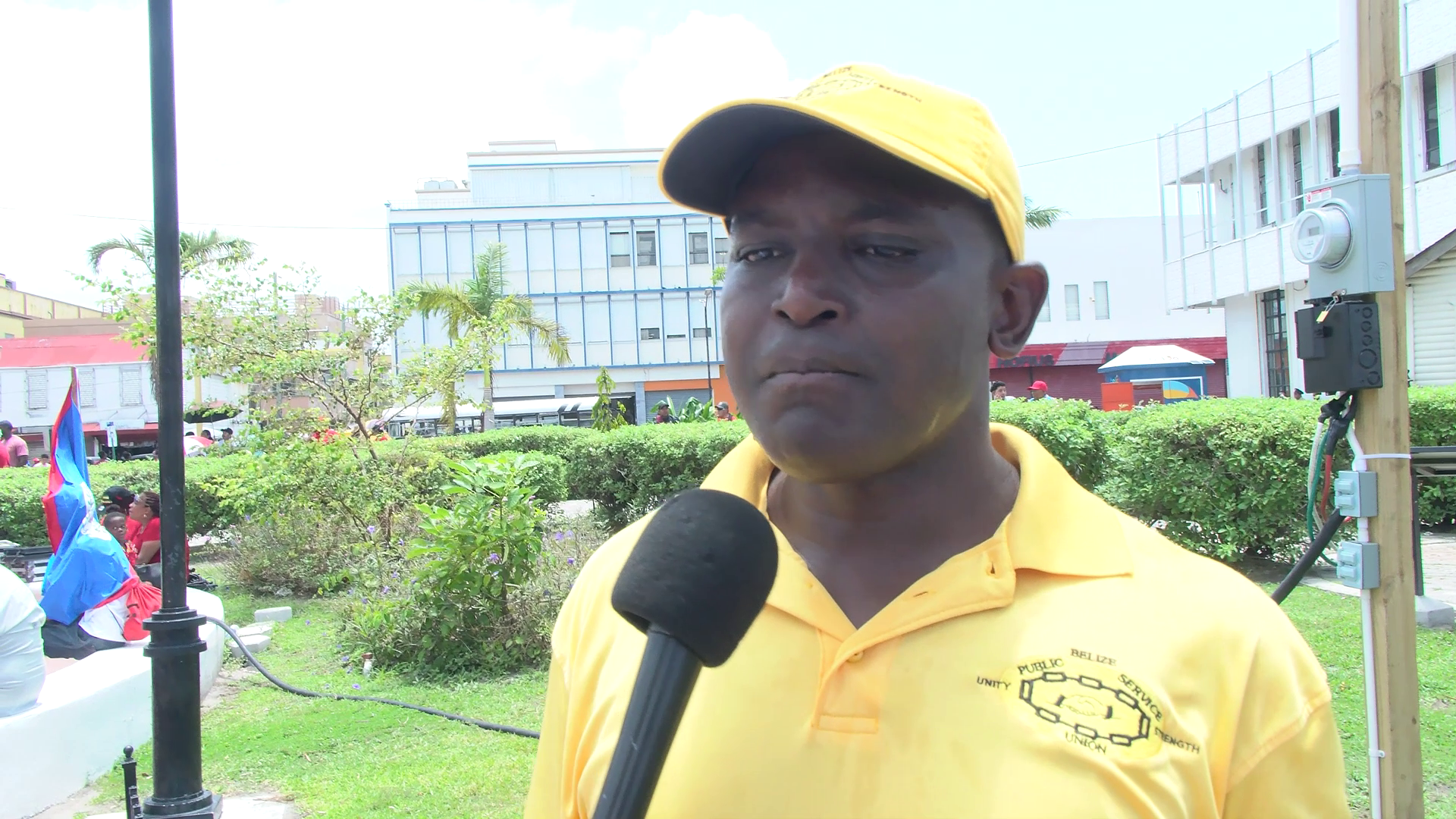
    Organized labor, long a key backer of public accountability movements in Belize, had only minimal presence at the event. Just two senior labor leaders — Public Service Union President Dean Flowers and Union Senator Glenfield Dennison — were spotted among the gathered crowd, with rank-and-file union members and most other major labor organizations skipping the protest. Also missing from the rally were two of the country’s most prominent faith-based bodies: the Belize Council of Churches and the National Evangelical Association of Belize, which have historically lent their moral authority to anti-corruption efforts in the country.

    Despite the absence of these major institutional backers, the core demand for greater government accountability remained front and center, with the two labor leaders stepping in to address the assembled crowd.

    In his remarks, Dennison laid out the far-reaching human cost of systemic corruption, noting that pervasive graft touches every corner of Belizean society, from low-income households to institutions meant to uphold the rule of law. “I see a Belize where somebody like me might make it to be Chief Justice. But unfortunately, that is not the Belize we have right now. Unfortunately, the Belize we have, day after day, the journalists are showing us that corruption is real and hurting every single person you know,” Dennison told the crowd. “When a mom have to decide how she will take a dollar out of fifty cents, it will affect everybody.”

    Even amid widespread frustration, Dennison struck a hopeful tone, framing the protest as a potential turning point for the nation, pointing specifically to the controversial BTL deal as a catalyst for reform. “I still have hope. I have hope that we don’t just see this as a lost cause, that we rally around things like corruption, things like the BTL deal and we use it as a turning point in our history. I think if we don’t stand now to show we are not going to tolerate corruption,” he added.

    Flowers, for his part, delivered a blistering 15-minute, five-page address that called out both systemic government corruption and the ongoing failure of independent oversight bodies to rein in graft. Even while addressing a crowd dominated by UDP supporters, Flowers called for cross-partisan unity to pull Belize out of what he described as a “cesspool of corruption.”

    “Oh how good and pleasant it is for brothers and sisters to be gathered in unity. I bring you warm greeting from the Public Service Union of Belize. I think that today is an opportunity for us as a country to light a fire under corruption and to do what we need to do as a people to come together, putting aside whatever our political biases are to try to rescue this country from the cesspool of corruption that it is currently in,” Flowers said.

    Beyond criticism of current failures, Flowers also laid out concrete policy recommendations to strengthen governance, reinforce checks and balances across branches of government, and increase accountability for public officials in Belize’s public sector. Speaking as a representative of public sector workers who keep core government services running, he emphasized that the fight against corruption is an intergenerational responsibility, not a partisan issue.

    “I see a lot of mature people out here today and it is not about you or me. It is about the children that we have brought into this country and those who are yet to come that we need to be a part of these kinds of rallies,” he said. “As a trade unionist, representing the hard-working men and women that keep this country running, the nurses, the doctors, police officers, clerk, drivers, BDF soldiers, and the countless officers who serve the people of Belize. […] I am here because the system is failing us.”

    Over the course of two hours, speeches from UDP representatives from across Belize echoed across Battlefield Park, as demonstrators unified around the call for urgent anti-corruption reform. This report is a transcript of a televised evening newscast, with all comments from speakers reproduced using standardized spelling for Kriol language remarks.

  • UDP March Becomes Platform for National Frustrations

    UDP March Becomes Platform for National Frustrations

    On July 10, 2026, a protest march organized by the United Democratic Party (UDP) in Belize began as a targeted demonstration over newly surfaced corruption allegations at the nation’s Ministry of Defense, but rapidly expanded into a collective demonstration of widespread national discontent that cut across every segment of Belizean society. Activists, labor union representatives, aspiring political candidates, and everyday citizens from all regions of the country gathered to air a wide range of grievances extending far beyond the initial defense ministry scandal, uniting behind shared demands for greater accountability, transparent governance, and improved living conditions for all Belizeans.

    Cyril “Uruwei” Garcia, one of the leading activists at the demonstration, emphasized that corruption is not an isolated issue limited to a single government department, but a systemic problem plaguing the entire public sector. He called for the immediate activation of the United Nations Convention Against Corruption (UNCAC), a framework designed to enable criminal prosecution of corrupt officials. Garcia argued that currently, no minister or area representative found guilty of corrupt activity has faced jail time, even for severe abuses of power, pointing to high-profile unresolved cases including the Budna and Mira scandals. For Garcia, full implementation of UNCAC is the only path to deliver the transparency and meaningful accountability the public demands.

    Dorla Staine, a representative of Belize Energy Workers For Justice, explained why her labor group chose to join the demonstration. She noted that while government officials report massive streams of public revenue flowing into state coffers, excessive and unexplained public spending raises red flags for ordinary workers. Staine pointed out that if public funds were being managed honestly, members of the military would not have reason to complain about inadequate compensation, just as energy workers have long protested being paid far less than they are rightfully owed for their labor.

    German Tillett, a local bus owner, added his voice to calls for sweeping audits of multiple government agencies, naming the transport department – where the National Bus Company (NBC) manages large public budgets – as a high priority for investigation, citing multiple unexplained and irregular activities within the ministry. He also called for a full audit of the Ministry of Agriculture, arguing that the department’s marketing board has been operated as a personal asset for political leaders connected to the ministry, a practice that is incompatible with ethical public governance.

    Windell Lemoth, a UDP candidate for city council, highlighted the tourism sector as another area in need of independent oversight, noting that massive public spending in the industry has not been matched by transparent accounting. He called for an independent audit to restore public trust in government institutions, and went so far as to describe the corrupt activities uncovered at the Ministry of Defense as equivalent to an act of treason against the Belizean people.

    Even ordinary residents from far-flung regions of the country shared their frustrations. A resident of Stann Creek West summed up the sentiment of many attendees, saying that all current ministers are self-serving and focused only on siphoning public funds for personal gain. The resident explained that working-class Belizeans are struggling to access even small, affordable plots of land to build homes, a basic need that remains out of reach for many amid systemic graft.

    This report is adapted from a transcript of an evening television newscast, with Kriol-language remarks preserved according to standard spelling conventions.

  • Twenty Homes? Juliet Thimbriel Responds to Political Attack Ads

    Twenty Homes? Juliet Thimbriel Responds to Political Attack Ads

    As political tensions boil over in Belize tied to the ongoing Mira Millions controversy, a senior ruling party official has found herself at the center of opposition attack ads, forcefully pushing back against explosive claims of illicit personal enrichment.

    Juliet Thimbriel, national campaign manager for the United Democratic Party (UDP), recently made her return to the party’s top-rated morning radio program *Fus Ting Da Mawnin* following a lengthy hiatus from public broadcast. Her comeback coincides with a deeply charged political climate, as the fallout from the high-profile Mira Millions scandal continues to roil the nation’s political landscape and deepen partisan divisions.

    In recently circulated political attack ads, opponents have leveled serious accusations against Thimbriel: they claim she improperly siphoned public funds during the previous UDP administration to amass personal wealth, and that she currently owns as many as 20 residential properties accumulated through corrupt practices. In a direct on-the-record interview responding to these claims, Thimbriel categorically rejected every element of the allegation, shifting blame back to the incumbent People’s United Party (PUP) government.

    Thimbriel explained her return to public political messaging by saying she felt compelled to speak out because she believes the current administration has exploited the Belizean public. “I came back because I realized the Belizean people were being taken advantage of and we proved our point. We have produced black and white [documentation], thousands [of pages] and we have thousands more to go. We have more ministries to deal with and as the weeks come along we will have many more ministries that we will bring out information on that the Belizean people will realize that they have been taken advantage of,” she stated.

    When asked how she is navigating the coordinated public campaign against her, Thimbriel downplayed any personal concern, noting that she is not a candidate on an upcoming election ballot and that her role is focused solely on informing voters. “I am not worried about the public campaign against me. I am not a politician on ballot. I am in politics and I am informing the Belizean people. And they can say anything they want against me. It does not matter. If they can’t find a father that takes care of them, I have my father that takes care of me,” she said.

    Pressed for a direct denial of the property claims, Thimbriel refuted every incremental suggestion of multiple property ownership. When asked if she categorically denied the 20-home allegation, she responded: “I will be honest with you, I don’t have twenty houses. I don’t have anything close to twenty houses.” When pushed on whether she owned 15 or 10 properties, she again rejected both claims, and went on the record to disclose that she carries a $6,000 monthly mortgage with Belize Bank that she pays personally, inviting any party to conduct independent investigations into her finances.

    Shifting the focus of the conversation away from the personal attacks, Thimbriel emphasized that the real issue facing Belize is the incumbent government’s actions. “But I am not the problem, the problem is the prime minister and the People’s United Party that continue to pressure the Belizean people and take advantage of them,” she asserted.

    This report is derived from a transcript of a televised evening news broadcast, with all dialogue retained and transcribed accurately for public distribution.

  • Can Oscar Mira and Florencio Marin Jr. Survive the Audit?

    Can Oscar Mira and Florencio Marin Jr. Survive the Audit?

    Three weeks have passed since Belize Prime Minister John Briceño ordered a sweeping audit of the nation’s Ministry of Defense, launched amid a public controversy that has left two senior officials – Oscar Mira and Florencio Marin Jr. – at the center of growing scrutiny. With the 12-week review timeline already ticking, the public now faces a nine-week wait before official findings are released, leaving unanswered questions hanging over the future of the two embattled officials and the outcome of the investigation.

    As speculation builds over what investigators will uncover and whether Mira and Marin could eventually be reinstated to their positions, United Democratic Party (UDP) Leader Tracy Panton has publicly shared her expectations for the audit, pushing back against any suggestion that the probe could clear the officials and allow their return.

    In comments carried by local media, Panton emphasized that accountability must be the core priority for the process, arguing that any leadership seeking to hold a sitting government to account must first uphold strict standards of transparency. She framed the audit as a turning point for Belize, saying the public has grown weary of mismanagement and misuse of public funds.

    “The money that is being stolen from the public purse is your money,” Panton told reporters, noting that the details already available to the public represent only a small fraction of the full picture of wrongdoing.

    When asked how the opposition would respond if Prime Minister Briceño ultimately clears the two officials and reinstates them following the audit, Panton rejected the scenario as untenable. While she acknowledged Briceño could choose to issue such a ruling, she argued the Belizean public would not accept that outcome. “I don’t think the prime minister can get away with telling the Belizean people nothing is happening,” she said.

    Panton confirmed that the UDP plans to release additional leaked internal government documents in the coming weeks as the audit progresses, expanding on the information that has already sparked the current controversy. News outlets across Belize will continue tracking developments as the audit moves toward its conclusion and new details emerge.

  • Two Wins, One Loss for Enriquez and Ramlogan at CCJ

    Two Wins, One Loss for Enriquez and Ramlogan at CCJ

    On July 10, 2026, the Caribbean Court of Justice (CCJ) delivered a split verdict on three linked appeals brought by claimant Jeremy Enriquez and senior defense counsel Anand Ramlogan, centered on a high-stakes electoral redistricting dispute in Belize.

    The legal battle traces its origins to Enriquez’s original challenge against the Belizean government, which he accused of failing to revise electoral district boundaries in line with recommendations put forward by the country’s independent Elections and Boundaries Commission. Redistricting is a critical process in democratic systems, designed to ensure equal representation by adjusting boundaries to reflect population shifts, making this case a key test of democratic accountability in the region.

    When the case first moved through Belize’s lower High Court, Justice Hondora issued three contentious rulings that set the stage for the appeals: she dismissed Enriquez’s urgent application for judicial review, ordered Ramlogan to cover a portion of the Attorney General’s legal fees out of his own pocket personally, and implemented a gag order restricting public reporting on the ongoing proceedings. Dissatisfied with this outcome, Enriquez and Ramlogan launched an appeal to Belize’s intermediate Court of Appeal, which ultimately rejected or struck down all three of their challenges.

    In its landmark ruling this week, the CCJ — the final appellate court for many Caribbean nations — overturned the lower appellate court’s decision on two of the three challenges. The court found that one of the appellants’ notice of appeal was legally valid, and even if it had contained minor technical errors, it should have been permitted to be corrected rather than thrown out entirely. On the issue of the personal costs order against Ramlogan, the CCJ ruled that the senior counsel did not require advance court permission to launch an appeal against the ruling, and further found that Justice Hondora had issued the original costs order without following proper procedural protocol or giving Ramlogan adequate advance notice to defend against the penalty.

    Despite the two wins, the CCJ upheld the dismissal of the third appeal, centered on the publication restriction order. The top court ruled that appellants had skipped a required procedural step: before bringing a challenge to the CCJ, they must first petition the original High Court to modify or rescind the ex parte publication order before pursuing an appeal.

    In line with the mixed outcome, the CCJ ordered that legal costs for the appeal be allocated to the parties proportional to their success in the case. The ruling clears the way for the underlying dispute over Belize’s electoral boundaries to move forward, reopening a debate that has major implications for political representation in the country ahead of upcoming elections.

  • Justice Antoinette Moore Retires After Twelve Years on the Bench

    Justice Antoinette Moore Retires After Twelve Years on the Bench

    Twelve years ago, what started as a six-month emergency appointment to clear a case backlog at Belize’s Supreme Court is drawing to a close: Justice Antoinette Moore, one of the nation’s most influential legal figures, will step down from the High Court at the end of August 2026, leaving an indelible mark on Belize’s pursuit of equal justice.

    Moore’s long career in law began long before she took the bench. A legal scholar trained at two of the world’s most prestigious institutions — Loyola University Chicago and the University of Oxford — she first built her reputation as a fierce human rights attorney working in private practice. Throughout these early years, she dedicated much of her work to upholding constitutional protections and amplifying the voices of marginalized, vulnerable communities across Belize. Her most landmark contribution from this era came in her decades-long advocacy for Maya customary land rights, a battle that wound through domestic Belizean courts, regional human rights bodies, and ultimately reached the nation’s highest judicial forum. “That is what you have been struggling for and that certainly… That has gone for the last ten years through the courts, through the regional human rights bodies, through the courts of Belize and until now it reached the last, the highest, that mountaintop in terms of the courts, the highest court,” Moore said of the land rights campaign in a 2015 interview.

    Beyond her human rights work, Moore also stepped into a critical role as lead prosecutor for Belize’s Financial Intelligence Unit, where she took on the complex, high-stakes work of combating financial crime. She led the prosecution of what was then the largest money laundering case in Belize’s history, which involved more than $1.5 million in illegally laundered funds. Her work secured guilty convictions against all five accused, including defendants Michael and Melonie Coye. “We are very pleased that the jury saw the evidence and resulted in guilty verdicts for all five of the accused, which of course includes the corporate accused and the four natural persons,” Moore stated after the 2012 verdict.

    In 2014, Moore was tapped for a temporary six-month assignment to the Supreme Court’s criminal division, tasked solely with clearing a backlog of more than 70 pending criminal cases. What was meant to be a short-term gap-filling role extended far beyond its original timeline: 12 years later, Moore leaves the bench as one of Belize’s most respected and trusted criminal judges, having presided over nearly all of the nation’s most high-profile, consequential criminal trials in over a decade.

    Among her most notable rulings was the life sentence handed down to William “Danny” Mason and four accomplices for the brutal kidnapping, murder, and beheading of Pastor Llewellyn Lucas, a case that shocked the nation and became one of the most sensational criminal events in Belize’s modern history. She also delivered life sentences for a string of high-profile murders, including Enrique DePaz for the killing of Harrison Bowers, Shane Bennett for the murder of Anthony Parks, Wilmer Escobar for the double murder of sisters Cresencia and Josephine Oh, Nicholas Swazo for the murder of Gerald “Shiny” Tillett, and Christopher Bradley for the death of Martha Gonzales. In 2023, Moore drew national attention for her sentencing of former police corporal Kareem Martinez to 18 years in prison for the manslaughter of 14-year-old Laddie Gillett, a ruling that sparked renewed national conversation and scrutiny over excessive use of force by law enforcement.

    Across more than three decades in Belize’s legal system, Moore has served in nearly every critical role: from human rights advocate, to financial crime prosecutor, to judicial educator, to High Court Justice. As she prepares to retire, her legacy extends far beyond the walls of the courtroom, shaping how Belize approaches justice, equity, and accountability for all.
    This report is from Shane Williams, for News Five.

  • Are Statutory Bodies Following the Law or Flying Under the Radar?

    Are Statutory Bodies Following the Law or Flying Under the Radar?

    In the wake of the unfolding Mira millions corruption controversy, public scrutiny in Belize has expanded beyond the initial scandal to cast a probing light on the nation’s network of statutory bodies, raising urgent questions about widespread compliance with financial reporting and public disclosure rules.

    Dean Flowers, president of Belize’s Public Service Union, has emerged as a leading voice demanding a comprehensive, long-overdue review of these state-affiliated agencies. Under existing Belizean law, nearly all statutory bodies are mandated to submit detailed audited financial statements, approved budgets, and annual performance reports to the National Assembly, with many required to publish key documents publicly via the official Gazette. But Flowers argues that non-compliance is systemic, and the corruption exposed at the Ministry of Defense tied to the Mira case is only the first visible layer of a far deeper problem.

    “Ever since I took office as union president, I have warned the Belizean people that dozens of statutory bodies managing millions, and in some cases hundreds of millions of dollars, are failing to account for how those public funds are spent,” Flowers stated in an on-camera interview, portions of which aired during a primetime evening newscast. “If people think the Mira scandal is bad, they need to prepare for what will come when the veil is pulled back on these agencies. The problem isn’t isolated to defense, either. Ministries including Health, Education, and Works—all of which handle hundreds of millions in annual public spending, particularly for large procurement contracts—have not had their full spending properly documented and audited by the Auditor General for decades. We need the government to commit to full, unobstructed investigations to expose the corruption that has festered over the past 20 to 30 years.”

    One high-profile agency already under public examination is the Belize Tourism Board (BTB), a key statutory body that drives one of Belize’s largest economic sectors. An independent review by news reporters found that BTB has not tabled a single audited financial report in the National Assembly for more than six years, despite a clear requirement to do so under the Belize Tourism Board Act. No audited reports are available to the public on BTB’s official website either, leaving the public with no independent insight into how public tourism funding is allocated and spent.

    This report is an official transcript of a televised evening newscast, with all Kriol-language quotes transcribed using a standardized spelling system for public accessibility.