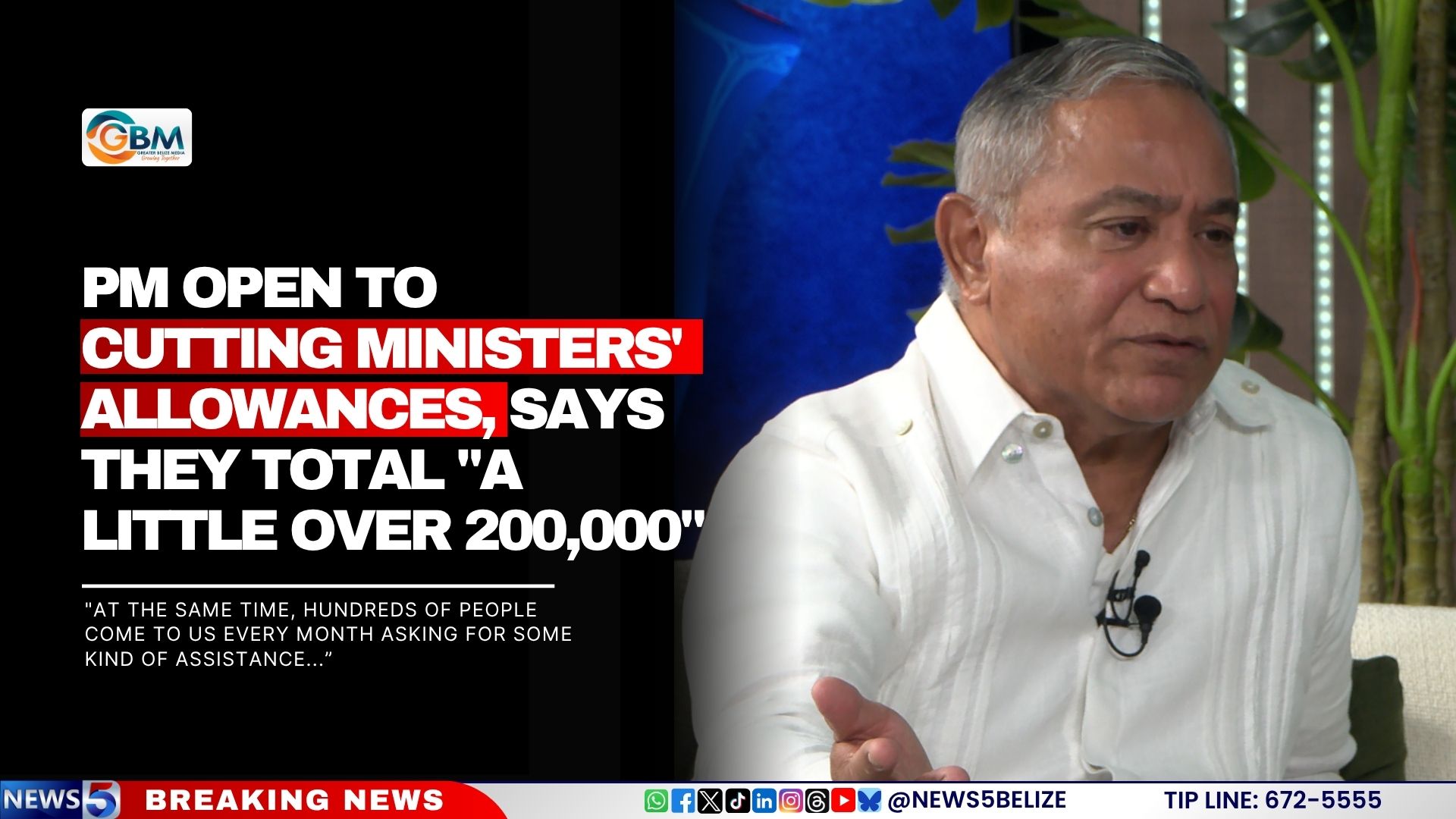
In a televised appearance on the morning talk show *Open Your Eyes* on October 6, 2026, Belizean Prime Minister John Briceño stated he has no objection to reducing the monthly or annual allowances allocated to cabinet ministers, responding to growing public pressure for political leaders to demonstrate solidarity with households facing economic strain. When asked by program hosts whether the government would consider trimming ministerial benefits as a tangible gesture of shared sacrifice amid cost-of-living pressures, Briceño emphasized that all policy options remain under active review, saying “We’re prepared to take a look at everything.”
Briceño contextualized the discussion by pointing to the government’s recent investment in public sector wages, noting the administration had just greenlit a pay increase for more than 16,000 public officers at a total cost of 112 million Belize dollars. On the topic of total ministerial allowances, the prime minister put the cumulative sum at just a little over $200,000, though he did not clarify whether the figure reflects an annual total or what specific expenditures the allowance pool covers. Even with the relatively small overall sum, Briceño confirmed he would not stand in the way of a cut if it would address public concerns. “If that would make a difference, I certainly would not be opposed to the idea,” he said.
The prime minister acknowledged the validity of public expectations that elected leaders should lead by example when ordinary families are cutting household expenses, calling that expectation a “fair comment”. But he also outlined the unspoken financial burden many ministers carry, explaining that hundreds of constituents reach out to cabinet members every month seeking direct personal assistance, and in most cases, ministers cover those costs out of their own pockets.
Briceño noted that his personal financial situation places him in a more comfortable position than many of his parliamentary colleagues. “I’m one of the fortunate ones that I don’t depend on my salary, so I can be able to do more,” he explained. “But some of our ministers, that’s all they have, and then people come knocking at their doors every day for assistance.”
He recalled that a former minister from the opposition United Democratic Party (UDP) had previously raised this same point, arguing that cabinet ministers effectively act as an ad-hoc social safety net for many Belizean constituents who prefer to approach elected leaders for help rather than access formal social services. Briceño agreed there is logic to that framing, but added that this ad-hoc system is not the long-term vision his administration holds for Belize. The government’s core goal, he emphasized, is to drive sustained economic growth that creates widespread formal employment, allowing all Belizeans to support themselves and reduce reliance on personal assistance from political leaders.