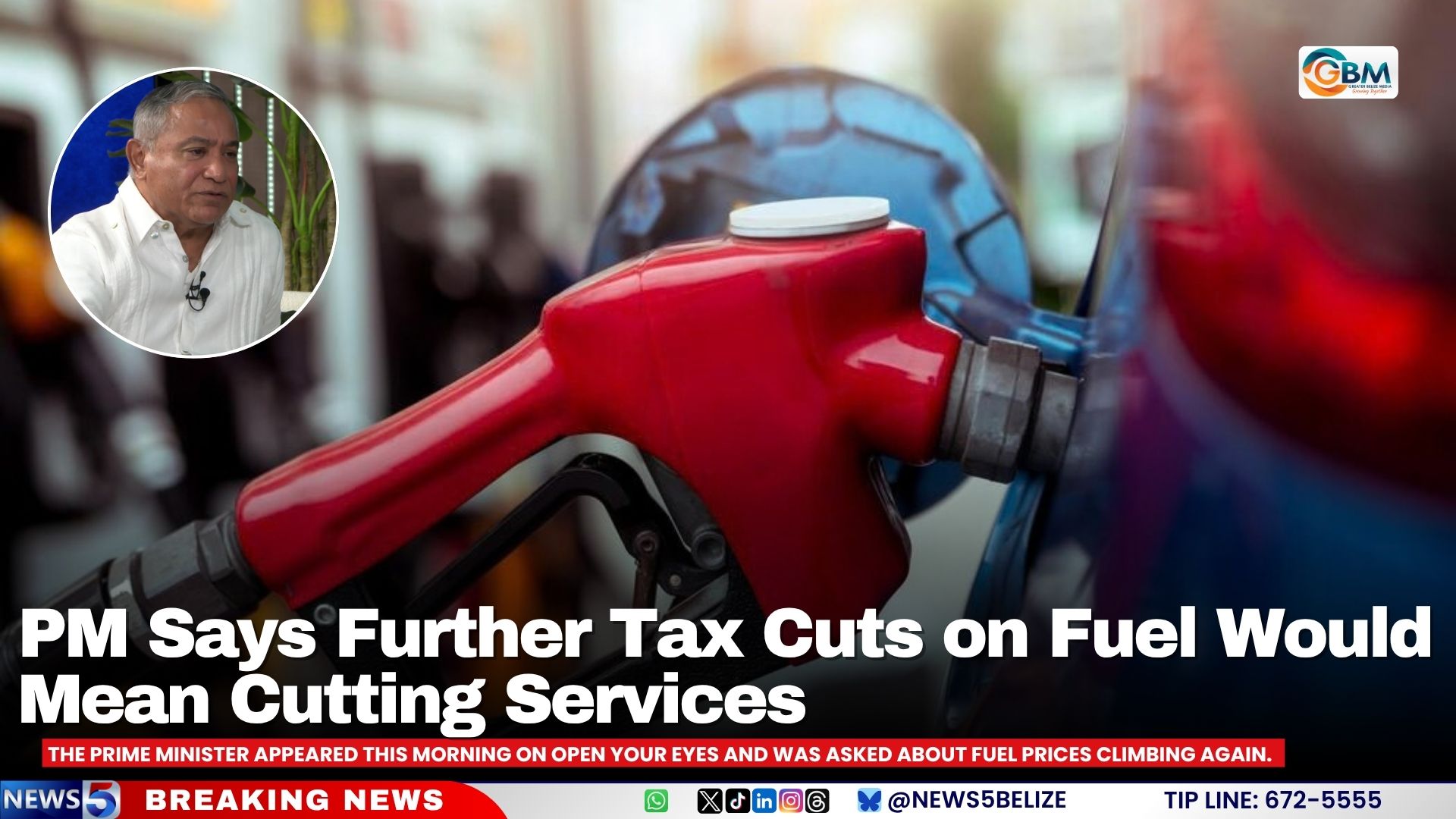
In a morning interview on the public affairs program *Open Your Eyes* on October 6, 2026, Belize Prime Minister John Briceño addressed growing public concern over skyrocketing global fuel prices, explaining the complex trade-offs the government faces between easing consumer cost burdens and protecting critical public services. Briceño traced the sustained upward trend in fuel costs, particularly for diesel, to the ongoing military conflict in Iran, which has created a stalemate that has disrupted global energy supply chains. He emphasized that no major party involved in the conflict has shown willingness to de-escalate, leaving energy markets volatile with no immediate relief in sight. Small, open economies such as Belize, Briceño noted, are disproportionately impacted by these global shocks due to their heavy reliance on imported energy and limited ability to absorb external price fluctuations. Turning to government policy options, Briceño explained that fuel taxes have long been a stable revenue source for successive Belizean administrations: the tax base is predictable, collection is straightforward, and it makes up a significant portion of public funding needed for social programs. While the government has already reduced diesel taxes to bring the per-unit cost below $2, Briceño pushed back against calls for even deeper cuts, warning that deeper reductions would leave a massive gap in public finances that would force cuts to core social services. He stressed the need for policy balance, noting that the government cannot operate with unfunded commitments and is already taking all feasible steps to ease public financial strain. To contextualize the government’s existing relief efforts, Briceño outlined a range of recent measures designed to offset rising living costs. This year alone, the government is allocating roughly $60 million to education assistance, which will reach 80% of all high school and sixth-form students across the country. Other reforms include raising the income tax threshold to $29,000, eliminating the Goods and Services Tax (GST) on electricity for nearly 100,000 low- and middle-income households, and expanding access to National Health Insurance (NHI), though Briceño added that just over 100,000 eligible residents nationwide have yet to complete their registration, with 29,000 registered users from the Cayo district to date. Briceño also called attention to what he described as excessive price increases by some retail businesses, noting that cabinet has received repeated reports of retailers hiking prices far beyond what can be justified by rising input costs. As an example, he cited a common consumer item that rose incrementally from $1 to $1.20, then to $1.25, even though the government has not increased any taxes and many core food items already carry a zero GST rating. “The government is actively working to minimize the burden of rising prices on ordinary Belizeans,” he said. Early this month, Briceño previously confirmed that existing fuel tax cuts have already cost the public purse approximately $40 million in foregone revenue, underscoring the fiscal limit of further tax reductions.