标签: Belize

伯利兹

  • Taiwan Braces for Powerful Typhoon After Deadly China Floods

    Taiwan Braces for Powerful Typhoon After Deadly China Floods

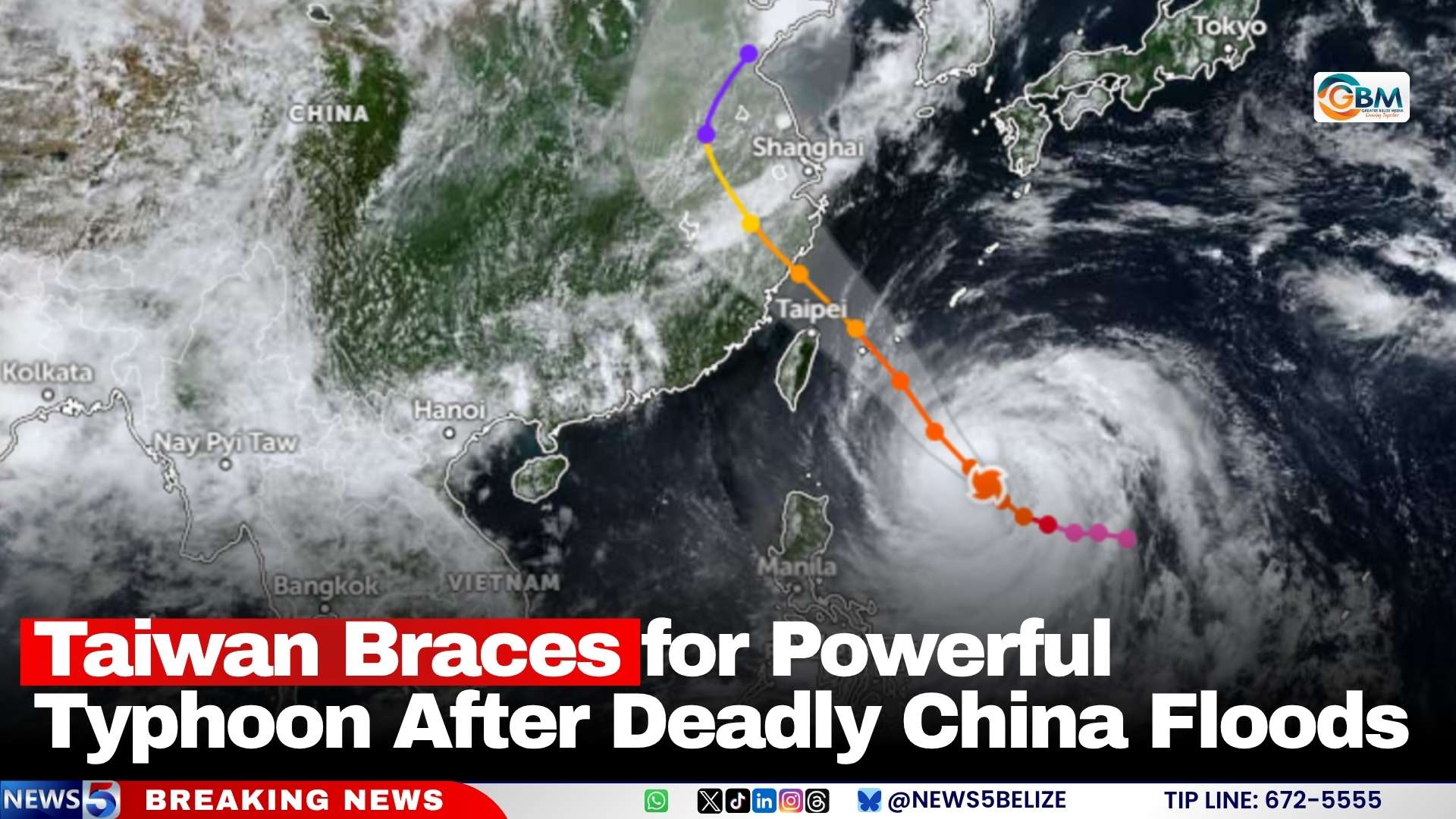
    As communities across southern China continue the painstaking work of recovering from catastrophic flooding triggered by Tropical Storm Maysak, a far more powerful weather system — Typhoon Bavi — is barreling toward Taiwan and eastern China, with forecasters warning it could rank among the strongest storms to strike the region in more than 30 years.

    The aftermath of Maysak has already left a devastating trail: Chinese authorities confirm at least 39 people have died in the southern region of Guangxi, 26 of whom were killed when a dam collapsed near the regional capital Nanning. Nine more residents remain unaccounted for, and days of record-breaking rainfall that overwhelmed local infrastructure have forced more than 130,000 people to evacuate their damaged homes.

    Current projections show Bavi tracking just north of Taiwan before making landfall in China’s coastal Fujian Province on Saturday. The massive storm currently sustains maximum sustained winds of nearly 200 kilometers per hour and extends roughly 1,000 kilometers across the Western Pacific, making it the largest storm to threaten Taiwan since 1987.

    In response, Taiwanese authorities have activated full emergency response protocols: nearly 29,000 military personnel have been placed on standby to assist with rescue and recovery operations, residents across the island have been urged to stockpile at least three days of emergency food, water, and medical supplies, and forecasters have issued extreme rainfall warnings for remote mountainous regions that could see up to one meter of precipitation over the weekend. Hundreds of commercial and artisanal fishing vessels have already returned to sheltered ports to avoid destructive storm surges, and all commercial flight departures from Taiwan’s main Taoyuan International Airport on Saturday have been canceled to protect passenger safety.

    Meteorological experts caution that while Bavi may weaken marginally as it moves across cooler coastal waters, it will retain its status as an extreme, life-threatening storm through the weekend, bringing the risk of catastrophic wind damage, flash flooding, and deadly landslides across both Taiwan and eastern China’s coastal provinces.

    The overlapping weather disasters — ongoing recovery from Maysak paired with the impending threat of Bavi — comes as climate researchers point to long-term shifts in regional weather patterns that are increasing storm risk. Warmer ocean surface temperatures, paired with the approaching El Niño climate pattern, are expected to fuel more intense and frequent tropical cyclones across the Western Pacific in coming years.

    Belizean Prime Minister John Briceño issued a public message of solidarity via the social platform X, writing, “Our thoughts and prayers are with the people of Taiwan as they prepare for the approaching typhoon. Wishing everyone strength, safety, and a swift recovery from any impacts.”


  • Where Will the Police Department’s Five New Trucks Go?

    Where Will the Police Department’s Five New Trucks Go?

    On July 9, 2026, the Government of Belize announced a major public safety upgrade, officially handing over five brand-new Isuzu D-Max pickup trucks to five distinct police units distributed across the country. This targeted infrastructure investment is designed to address a top priority for Belizean communities: cutting emergency response times and creating more secure residential and public spaces.

    The new vehicles have been strategically allocated to policing hubs that play outsized roles in local public safety. Recipients include the Benque Viejo Formation, the Roaring Creek Quick Response Team, the Orange Walk Crimes Investigation Branch, the Corozal Formation, and the national Violence Prevention and Enforcement Unit. Each unit was selected based on operational need, with government planners emphasizing that the assignment aligns with long-term goals to reduce gaps in police mobility and response capability.

    In its official statement announcing the handover, the Belizean government framed the purchase and deployment as a deliberate investment in citizen well-being. “This targeted investment in public safety ensures that officers in these critical areas have the reliable mobility needed to effectively serve and protect their communities,” the statement read. Local government officials note that outdated or insufficient patrol vehicles have long hampered police ability to reach emergency calls quickly, particularly in regional units outside major urban centers. The addition of these new trucks is expected to directly improve response times, support more proactive crime patrols, and strengthen ongoing crime-fighting and violence prevention efforts across the five coverage areas.

  • Higher Threshold, Same Loophole? The $10K Threshold Will Rise

    Higher Threshold, Same Loophole? The $10K Threshold Will Rise

    In a live streamed interview with CTV3 broadcast on his official Facebook page on the morning of July 9, 2026, Belize Prime Minister John Briceño officially confirmed that the long-standing $10,000 government procurement payment threshold will be adjusted upward, ending weeks of public speculation and heated debate triggered by recent controversial comments.

    The controversy erupted after former Miss Universe Belize Isabella Zabaneh publicly called for an increase to the current spending cap. Her remarks sparked immediate widespread public backlash, especially coming as public trust in government procurement processes was already stretched thin following the unresolved ‘Mira Millions’ scandal, which left many Belizeans skeptical about government spending practices.

    In her comments, Zabaneh argued that the existing $10,000 threshold places unnecessary administrative strain on the office of financial secretaries and amounts to excessive top-down micromanagement across all levels of government. Instead of criticizing Zabaneh for her outspoken position, Briceño came to her defense, describing the backlash against her as ‘unfortunate’ and praising her for the courage to speak up about an open secret many in politics are too afraid to address publicly.

    Briceño explained that the $10,000 cap was a reasonable policy when Belize’s national total budget remained below $1 billion. Today, however, the national budget has expanded to $1.8 billion, with the government annually spending between $400 million and $500 billion on goods and services from third-party vendors. At this scale, Briceño noted that enforcing the $10,000 cap for all small purchases has become functionally unmanageable for administrative teams.

    Critics have raised concerns that raising the threshold could reopen the same loopholes that allowed for corrupt spending practices in the past, particularly the widespread tactic of splitting large contracts into hundreds of sub-$10,000 transactions to avoid competitive bidding and public scrutiny. To address these risks, the Prime Minister outlined that all purchases, even those falling under the new higher threshold, will be processed through a unified, publicly accessible portal administered by the incoming Central Procurement Unit. This new centralized system, Briceño assured, will make the once-common loophole of hundreds of under-the-threshold payments going to a single company impossible to continue.

    The reform marks a key update to Belize’s public procurement framework, balancing administrative efficiency with new transparency measures to rebuild public confidence in government spending.

  • Meat Master Serves Up Its Response

    Meat Master Serves Up Its Response

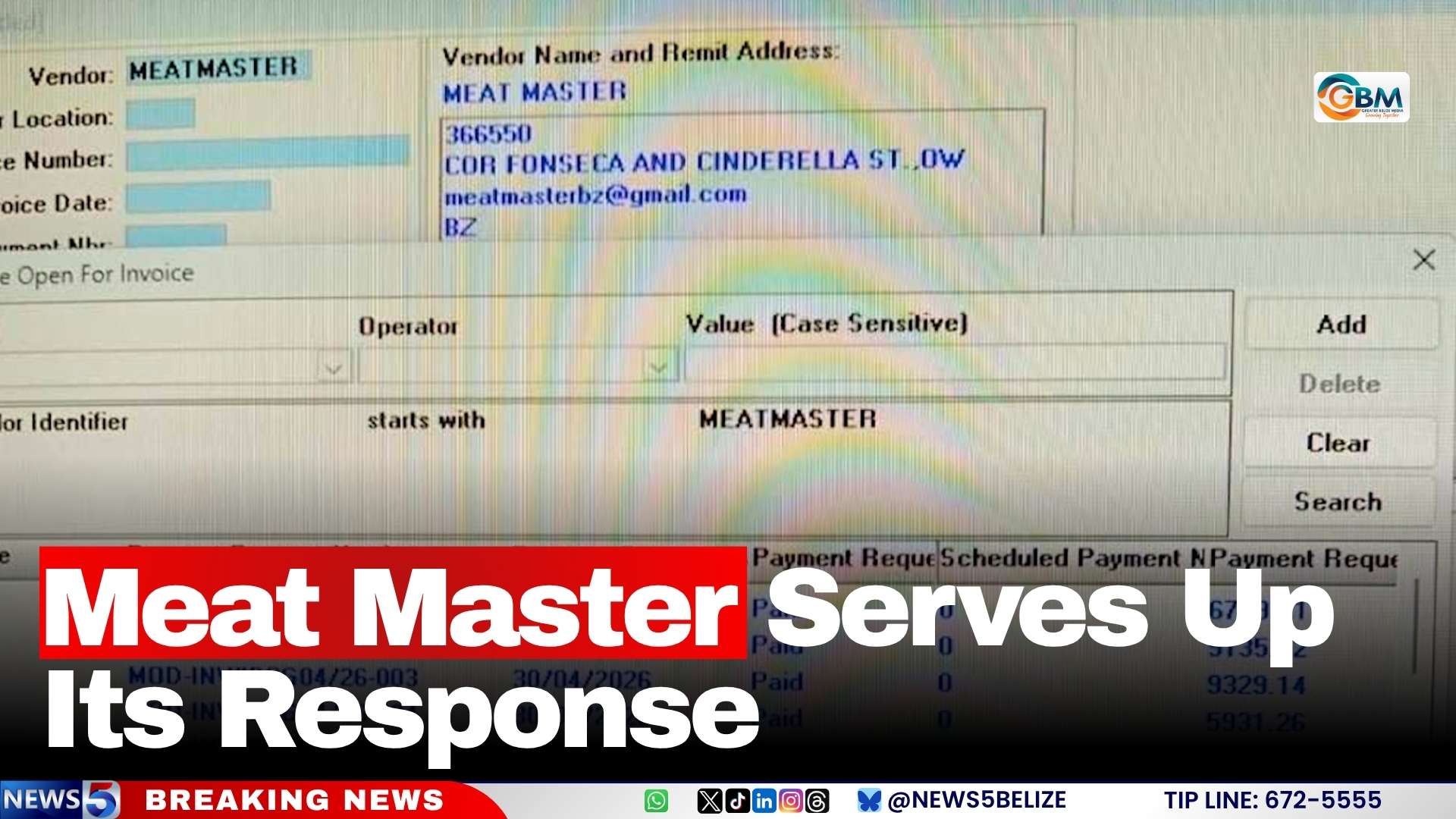
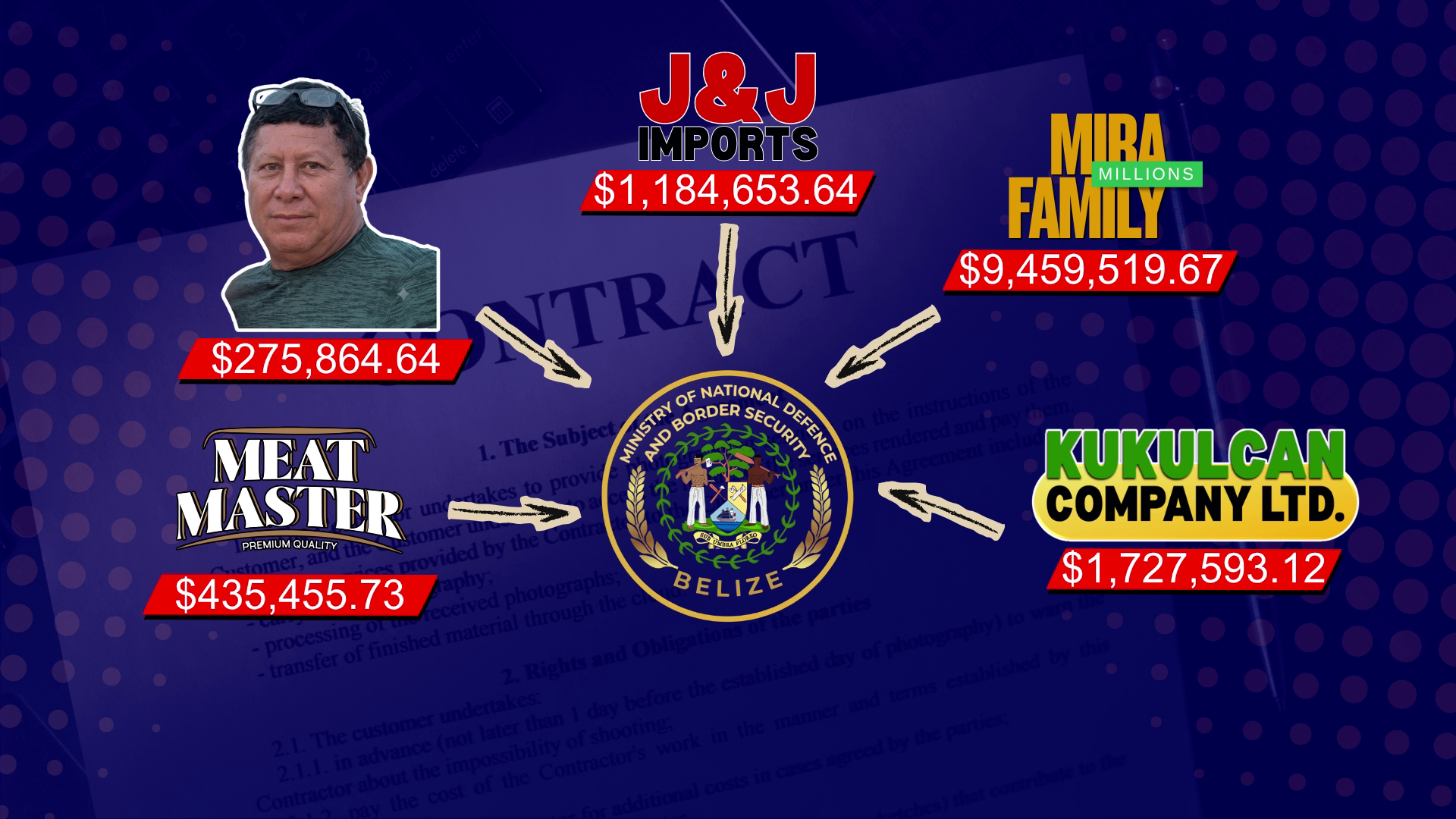
    In the wake of an explosive investigative report published by local outlet News Five that shone a light on more than $435,000 in government payments to Belizean meat supplier Meat Master over just two months, the company has broken its silence with an official public statement pushing back against criticism and defending its business dealings with Belize’s Ministry of Defense.

    News Five’s initial reporting raised multiple red flags about the transactions, prompting widespread public discussion over potential conflicts of interest and procurement irregularities. In its response, Meat Master claims that much of the recent media coverage and public discourse surrounding its contracts with the Belize Defence Force and Belize Coast Guard contains factual inaccuracies, and it is now stepping forward to share what it frames as the complete, correct record of its operations.

    Founded and formally registered in 2022, Meat Master outlines in its statement that its core mission is the production and distribution of fresh, smoked, and processed meat products for domestic clients. The company says it has poured substantial capital and labor into building its operations from the ground up, and forcefully rejects one of the most persistent public claims linked to the contract: that it has hidden financial or ownership ties to the Briceño family. The statement explicitly reads, “At no point has there been ties to the Briceño family; not as part owners of the business nor as owners of the property.”

    On the topic of how the company secured the lucrative defense contract, Meat Master emphasizes that it was selected following a competitive open tender process held by the Belizean government in April 2026. The company confirms it submitted all required bidding documentation, satisfied every formal procurement mandate set out by regulators, and says that every invoice submitted to the defense forces accurately matches the volume and value of meat products delivered.

    Framing itself as a homegrown small business, the company notes that its standing in the local market has been earned through years of consistent work, premium product quality, and reliable professional service. “As a local Belizean business, our reputation has been built on hard work, quality products, and professional service. We remain committed to conducting our business with integrity and transparency,” the statement adds.

    Meat Master closed its response by calling on all media outlets operating in the country to verify all claims before publishing, warning that unfounded inaccurate reporting risks inflicting irreversible unfair harm not just to the company’s brand, but also to its dozens of employees and their families who rely on the business for their livelihoods.

    Despite pushing back against general claims of impropriety, the company’s statement notably avoids directly responding to the specific irregularities highlighted in News Five’s investigation. It makes no mention of 54 separate invoices processed between April and May 2026, each of which carried a value just under the $10,000 mandatory review threshold – a common red flag for procurement splitting to avoid oversight. Additionally, the company offers no explanation for why 35 of those invoices, which together total more than $300,000, were all cleared for payment on a single business day, a highly unusual practice that has fueled further public questions about the contracting process.

  • US-Iran Ceasefire Falters as New Strikes Escalate Middle East Tensions

    US-Iran Ceasefire Falters as New Strikes Escalate Middle East Tensions

    Just days after the United States and Iran reached a fragile truce aimed at de-escalating months of open hostilities, the ceasefire has all but collapsed following a wave of new mutual strikes that have sent tensions across the Middle East soaring once again.

    Iranian officials confirmed Thursday that U.S. military forces carried out fresh airstrikes on targets in the southern coastal province of Bushehr, hitting sites located near the country’s Bushehr Nuclear Power Plant and a key commercial fishing port. While Washington has not yet publicly verified these latest attacks, U.S. Central Command previously acknowledged launching overnight strikes on roughly 90 Iranian targets along the country’s Persian Gulf coastline just hours before.

    In a swift retaliatory move, Iran’s Islamic Revolutionary Guard Corps (IRGC) announced it had fired 10 ballistic missiles at a major U.S. military installation located in neighboring Jordan. Jordanian government officials later corroborated the incident, confirming the missiles entered Jordanian airspace before being intercepted and destroyed by the country’s air defense systems. No casualties or infrastructure damage were reported on Jordanian soil following the exchange.

    The resumption of large-scale hostilities comes barely one week after U.S. and Iranian negotiators, mediated by third-party states, announced a ceasefire agreement designed to end weeks of cross-border strikes and tit-for-tat attacks. Both sides have since traded accusations of violating the truce terms, with each blaming the other for intentionally undermining efforts to restore regional stability.

    Beyond direct military confrontation, the renewed violence has already disrupted critical global energy infrastructure. The Strait of Hormuz, the world’s most important oil chokepoint through which roughly 20% of global oil supplies pass daily, has seen a sharp slowdown in commercial maritime shipping due to heightened military activity and threats of traffic restrictions. In a parallel development, Iranian authorities have reportedly moved to ramp up crude oil exports from Kharg Island, the country’s primary oil export terminal, amid the market uncertainty.

    Even as fighting continues, diplomatic efforts to pull the two sides back from the brink are already underway. Pakistan and Qatar, the two states that mediated the original ceasefire talks between Washington and Tehran, have reactivated backchannels to restart negotiations. Pakistan’s Ministry of Foreign Affairs issued an urgent public call for de-escalation this week, noting “there is no alternative to continued engagement, dialogue and diplomacy to achieve shared goal of peace in the region.”

    The latest escalation also unfolds against a sensitive domestic backdrop in Iran: the country is currently in the national mourning period for former Supreme Leader Ali Khamenei, with final funeral ceremonies scheduled this week. Regional observers are closely monitoring the events for any public appearance by Khamenei’s newly appointed successor, Mojtaba Khamenei, as political analysts assess how the leadership transition may shape Iran’s future foreign policy trajectory amid the ongoing crisis.

  • Major Jones Says BDF Soldiers Are Being Shortchanged

    Major Jones Says BDF Soldiers Are Being Shortchanged

    In a blunt rebuke of the Belize Defence Force’s institutional management, retired Major Lloyd Jones has raised serious alarms about unfair treatment of active-duty soldiers, pointing to problematic military ration provision as evidence of deeper systemic rot within the country’s defense establishment. Speaking to local outlet News Five in comments published July 9, 2026, Jones argued that active service members are being sidelined as an afterthought in budget and resource priorities, with a stark discrepancy between public funds allocated for soldier rations and the actual food that ends up being served to troops. According to Jones, this gap points to unaccounted “leakages” that siphon resources away at every step of the supply chain.

    “What happens is that it starts at the top as we are seeing now, which is the troubling part for me,” Jones explained. “But all along the supply chain, starting with the ministry and for every door it enters, the ration gets smaller and smaller.” The retired major emphasized that the chasm between total spending on rations and the final portion served to soldiers exposes fundamental flaws in how the defense system is run. While Jones stopped short of formally accusing any individual of explicit corruption or illegal wrongdoing, he warned that problematic practices at the most senior levels of leadership create a cultural ripple effect that distorts behavior across the entire supply chain.

    “If people see people at the top ‘feeding’, then when it reach their level they also feel like I should get a little too,” Jones said. “And then it finally reaches the plate of the soldiers and he is wondering, what happened here.” Beyond the ration controversy, Jones also slammed what he frames as a widespread lack of respect and appreciation for the work of BDF members, noting that dozens of skilled, capable service members have resigned from the force in recent years out of mounting frustration over poor working conditions and unaddressed grievances. Most provocatively, Jones openly questioned whether two senior cabinet officials — Florencio Marin Jr. and Oscar Mira, the heads of the relevant defense-linked ministries — still retain the public confidence necessary to effectively lead their portfolios.

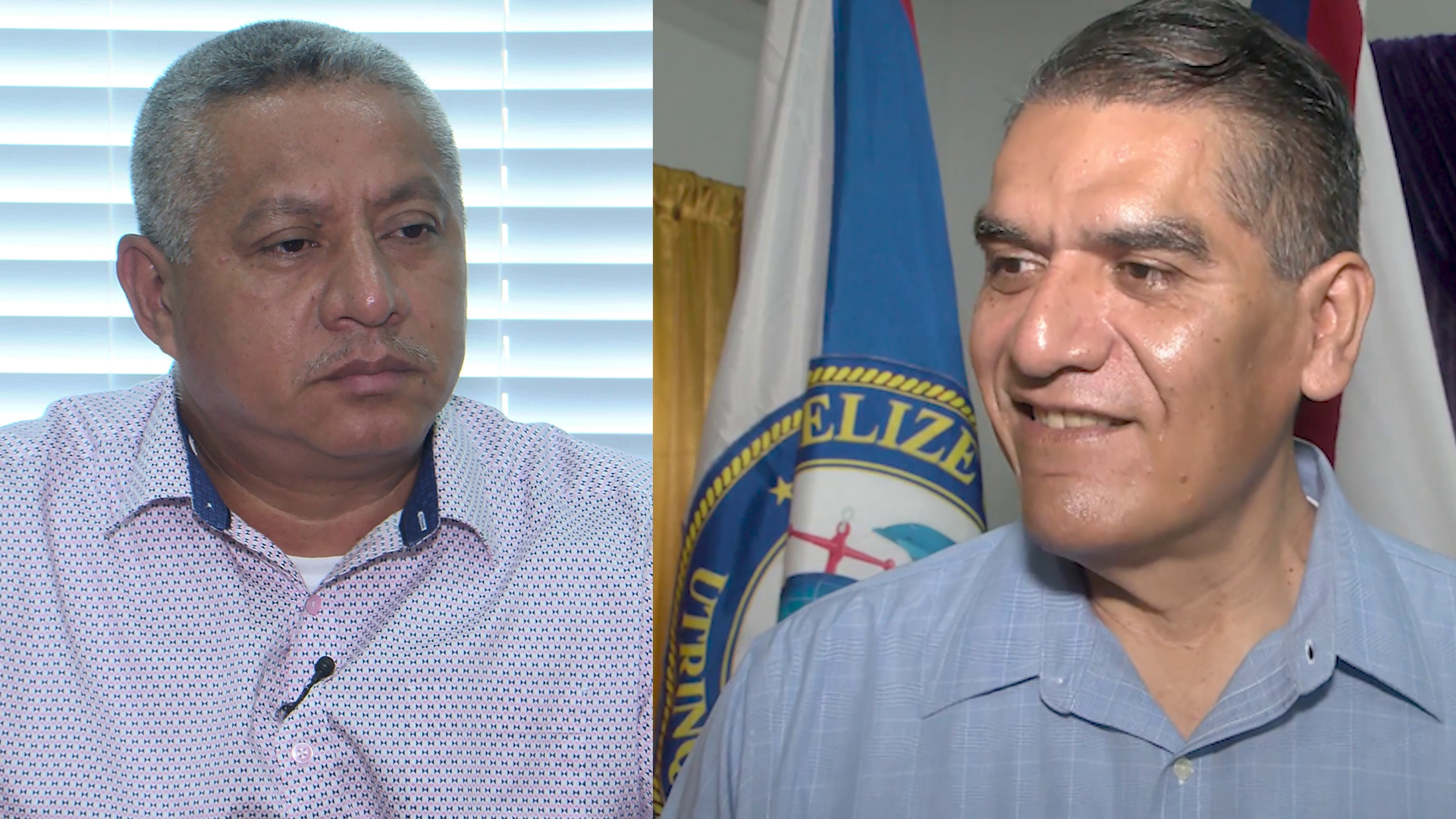
    Marin and Mira have already been placed on administrative leave from their posts as of the time of Jones’ comments, though no official explanation for their leave has been released in the correspondence covered by the reporting. In an official response to Jones’ allegations, Francis Usher, Chief Executive Officer of the Ministry of Defence, pushed back on the retired major’s grim assessment while acknowledging his long professional history with the force. “I think that Major Jones is a very experienced individual. I think he is more than capable of drawing his own conclusions,” Usher stated. “I would not go as far as saying that, but I do understand his position, and he is free to make his opinion.” The exchange has reignited public debate over transparency, resource management, and leadership accountability within Belize’s national defense institutions, with calls emerging for an independent audit of military ration spending to resolve the conflicting claims.

  • Fifty-Four Invoices, One Supplier, and a $435,000 Question

    Fifty-Four Invoices, One Supplier, and a $435,000 Question

    A new controversy has erupted over government procurement practices at Belize’s Ministry of Defense, as a politically connected meat supplier has been revealed to receive more than $435,000 in public funds via a highly unusual structure of 54 split invoices, each falling just below a key spending threshold designed to trigger higher-level oversight. The case, first reported by journalist Paul Lopez for News Five on July 8, 2026, centers on Orange Walk-based meat supplier Meat Master, a company owned by the wife’s cousin of Ministry of Defense Chief Executive Officer Francis Usher. Over just two months—April and May 2026—the company accumulated $435,455.73 in payments from the ministry, with every single invoice submitted for amounts under $10,000. The most alarming detail to emerge is a single day of payouts on May 11, 2026, when the ministry disbursed more than $300,000 to Meat Master split across 35 separate invoices, all kept just below the $10,000 limit that would require additional authorization from the national treasury and ministry of finance. This is not an isolated incident: the supplier is the latest in a growing list of defense contractors linked to close relatives and associates of high-ranking Belizean government officials, including Ministers Oscar Mira, Florencio Marin Junior, and Ramon “Monchi” Cervantes, all of whom have been named in previous reporting on questionable procurement deals. In an on-the-record interview with Lopez, Usher acknowledged the family connection but defended the ministry’s actions, insisting that all procurement processes were followed strictly in line with the law. The CEO argued that vendors themselves choose to split larger orders into smaller invoices to speed up government payment processing, noting that smaller transactions below the $10,000 threshold are processed more quickly by the ministry’s internal accounting department. When challenged on the $300,000 single-day payout, which would normally require formal approval from national financial authorities above the defense ministry’s own accounting department, Usher maintained that all delivered goods were verified and all required procedural steps were completed. “Invoices would not have been paid if the necessary requirements were not met,” Usher stated, adding that he sees nothing questionable about the transaction because the process included full accountability and transparency. He further explained that Meat Master remains an active ministry supplier because standard government vendor contracts are active for 12 months once awarded. Critics of the arrangement, however, argue that the structure of the invoices can only be interpreted as a deliberate effort to sidestep official procurement safeguards designed to prevent corruption and mismanagement of public funds. The case has reignited broader calls for independent audits of defense ministry contracting, as questions mount over whether the pattern of politically connected suppliers and threshold-avoiding invoice practices indicates systemic gaps in accountability rather than isolated coincidence. This report is a transcribed adaptation of an evening television broadcast from News Five.

  • $9,425 Here, $9,750 There: What’s Behind the Pattern?

    $9,425 Here, $9,750 There: What’s Behind the Pattern?

    On July 8, 2026, public scrutiny has emerged around a controversial payment pattern at Belize’s Ministry of Finance, where a single vendor received more than $300,000 in government funds via 35 separate invoices processed in a single business day. An independent review of the payment records uncovered recurring identical amounts across multiple invoices, most notably $9,425 and $9,750, leading to widespread speculation that the large total contract was intentionally split into thousands of smaller sub-payments to evade public transparency and financial accountability requirements.

    In an official response to media inquiries, Francis Usher, Chief Executive Officer of the Ministry of Finance, has pushed back against claims of improper activity, outlining the administrative practice that led to the clustered payment structure. According to Usher, the multiple same-value invoices did not represent an attempt to split a large contract. Instead, he explained, vendors routinely consolidate delivery documentation for batch submission to the ministry’s accounting department, rather than filing separate payment requests after every individual delivery.

    The payments in question, Usher confirmed, correspond to supplies delivered to the Belize Defence Force (BDF) and the Belizean Coast Guard by local vendor Meat Master, covering completed orders spanning a full two-month period. The standard procurement process requires every delivery to follow strict verification protocols: suppliers start with a formal quotation, receive an official purchase order, complete delivery, then have the order jointly certified as matching the purchase order by both the vendor and the receiving agency (the BDF or Coast Guard) via a signed waybill. Instead of submitting payment requests for each small delivery immediately, vendors accumulate all completed order paperwork to submit in a single bi-monthly or monthly batch, leading to dozens of invoices being processed for payment on the same day when the batch is cleared.

    Despite Usher’s denials of intentional wrongdoing, widespread public concern over the perception of a lack of transparency has pushed the Ministry of Defense to implement immediate changes to its payment processing policies. The longstanding practice of processing repeated individual payments of less than $10,000 will be discontinued immediately. Going forward, the ministry’s accounting team will consolidate all outstanding invoices from a single vendor into one single combined payment, a reform that many public accountability advocates argue should have been in place from the beginning.

    Usher acknowledged that the public has interpreted the small, repeated payment pattern as an attempt to avoid disclosure and oversight, but he reaffirmed that no such intent existed. He explained that vendors had developed the practice of requesting small individual payments because they received cleared funds faster, which helped small businesses maintain the working capital they need for ongoing operations. Now, even when individual invoices still come in below $10,000 per delivery, the ministry will aggregate all invoices per vendor before issuing a single combined payment to strengthen clarity and eliminate any perception of improper activity.

    “If anything we welcome the scrutiny and accountability and we want to demonstrate that it is a transparent process,” Usher said.

    As of July 8, an official audit into the payment practices remains ongoing, and Usher confirmed that the Ministry of Defense continues to cooperate fully with auditors conducting the review.

    This report is adapted from a transcribed evening television newscast, with original Kriol language remarks standardized to English for publication.

  • Did “Human Error” Leave Belize’s Defenders Behind?

    Did “Human Error” Leave Belize’s Defenders Behind?

    In the small Central American nation of Belize, a $13 million financial controversy tied to the ruling People’s United Party (P.U.P.) administration has thrown the government’s credibility into crisis, with opposition voices and even long-time party supporters questioning the official explanation of simple human error for improper payments funneled to political allies and relatives of elected officials. The scandal first came to public light following a series of Smart Stream data leaks, and it has already led to the controversial overnight arrest of prominent opposition figure Alberto August, former deputy chairman of the United Democratic Party (UDP).

    Over the weekend of July 8, 2026, Prime Minister John Briceño addressed growing public anger during the P.U.P.’s National Party Council meeting, leaning on a familiar framing for the misallocated funds that passed through the Ministry of Defense. “I will be the first to admit that we’re not perfect, we make mistakes. And that’s natural, that’s human nature,” Briceño told party supporters. His line of reasoning was echoed by embattled Belmopan Area Representative Oscar Mira, who faced questioning over his complaint against August. “I think we can always reflect on what has happened in the past. We are humans and we can always look back and see how it could have been done better,” Mira stated in comments from July 1.

    But for many Belizeans, a sum as large as $13 million cannot be written off as an accidental clerical error. The scandal has eroded public trust in the P.U.P., which campaigned on a promise of cleaner governance than its predecessors. Even loyal party allies have raised alarm: Major Lloyd Jones, a retired Belize Defence Force (BDF) officer and former P.U.P. candidate for Belize Rural North, said the scandal breaks the core promises the party made to voters. “We promised that we were going to be different. We promised we were going to do better and hopefully this is the extent of it and it does not go to other ministries. But, it is troubling for me as a supporter of the party,” Jones explained.

    Top financial officials have also cast doubt on the “human error” narrative. Financial Secretary Joseph Waight described the irregular payments as suspicious in comments from June 23, noting, “Certainly it does not look good. In my view somebody dropped a ball, fell asleep or they moved together on it.”

    August, the opposition figure who was arrested amid the unfolding scandal, argued that the exposure of the payments is a rare turning point for Belize’s public accountability. “This is by Belizeans, as somewhat of a blessing in disguise, all of this was happening unknown to the Belizean people, unknown to the taxpayers of this country who are being saddled with increasing cost of living, increasing prices of fuel, and here we have these people engaging in this kind of activity,” August said.

    Beyond the political fallout, the greatest harm of the misallocated funds may fall on the BDF personnel tasked with protecting Belize’s borders and territorial waters. Jones, drawing on his decades of experience with the force, explained that the millions earmarked for defense supplies have not reached the frontline troops. “If you speak with soldiers they will tell you what they are seeing on the news in terms of the quantum, the millions they spent, that is not being translated on their plates. So somewhere along the line we are losing value. And if you don’t feed your soldiers well, you lose morale. You undermine the morale of a soldier who is away from his family, I want to remind you that these are our children, your brother, your sister, your friend. Parents send their children to the BDF with the hope that those who are in command will look after them.”

    As the controversy continues to dominate national public discourse, the core question lingers: if the misallocation was nothing more than innocent human error as the prime minister claims, why are ordinary service members, taxpayers, and the cause of good governance paying the price for the mistake? This report is a transcript of an evening television broadcast from News Five, reported by Paul Lopez.

  • Espat on Cabinet Turmoil After Mira and Marin Jr. Step Aside

    Espat on Cabinet Turmoil After Mira and Marin Jr. Step Aside

    In a significant political shakeup rocking Belize’s ruling administration dated July 8, 2026, two senior cabinet members—National Defense Minister Florencio Marin Jr. and Home Affairs head Oscar Mira—have stepped aside amid escalating fallout from a leaked internal document scandal originating from the Ministry of Defense. Following the departures, incumbent Infrastructure Development and Housing Minister Julius Espat has been appointed to hold the additional Home Affairs portfolio, expanding his responsibilities within the cabinet.

    The controversy, triggered by the unauthorized release of internal defense ministry files, has thrown the government into turmoil, forcing the reshuffle just weeks after the first allegations came to light. In an exclusive interview with journalist Shane Williams, Espat opened up about the mood among cabinet members following the two high-profile departures.

    When asked about the collective reaction to the latest resignation, Espat described the prevailing sentiment across the cabinet as one of sadness. “Sad. You would wish that nothing like this ever happens,” he stated, noting that the unfolding situation is now a matter for Prime Minister John Briceño to resolve, as he gathers full information and verifies the facts surrounding the leak.

    As a longstanding advocate for anti-corruption reforms within the current administration, Espat acknowledged that temptation for misconduct is a universal human challenge, and it falls to the government to put safeguards in place to minimize such risks. He expressed full confidence in the prime minister’s ability to reach a conclusion that will align with the expectations of all Belizean citizens. “We are all concerned. At the end of the day all of us are human beings and temptation exists. So it is the responsibility of the government to make sure that it is minimized. And that’s why we have a Prime Minister. That’s why we have a Cabinet and the people of Belize. And I know he will make a good decision. I believe in that,” Espat said.

    When pressed for details on his expectations for the ongoing official audit into the defense ministry’s activities, Espat declined to comment, stating that any formal updates should come directly from the prime minister. Prime Minister Briceño has previously confirmed that the independent audit will examine ministry records covering a full decade, from 2015 through 2025, to get to the bottom of the controversy.

    This report is a transcribed excerpt from an evening television newscast, with all Kriol-language remarks rendered using a standardized orthography system for accuracy.