标签: Belize

伯利兹

  • Marin Faces Questions Over Controversial Mira Transactions

    Marin Faces Questions Over Controversial Mira Transactions

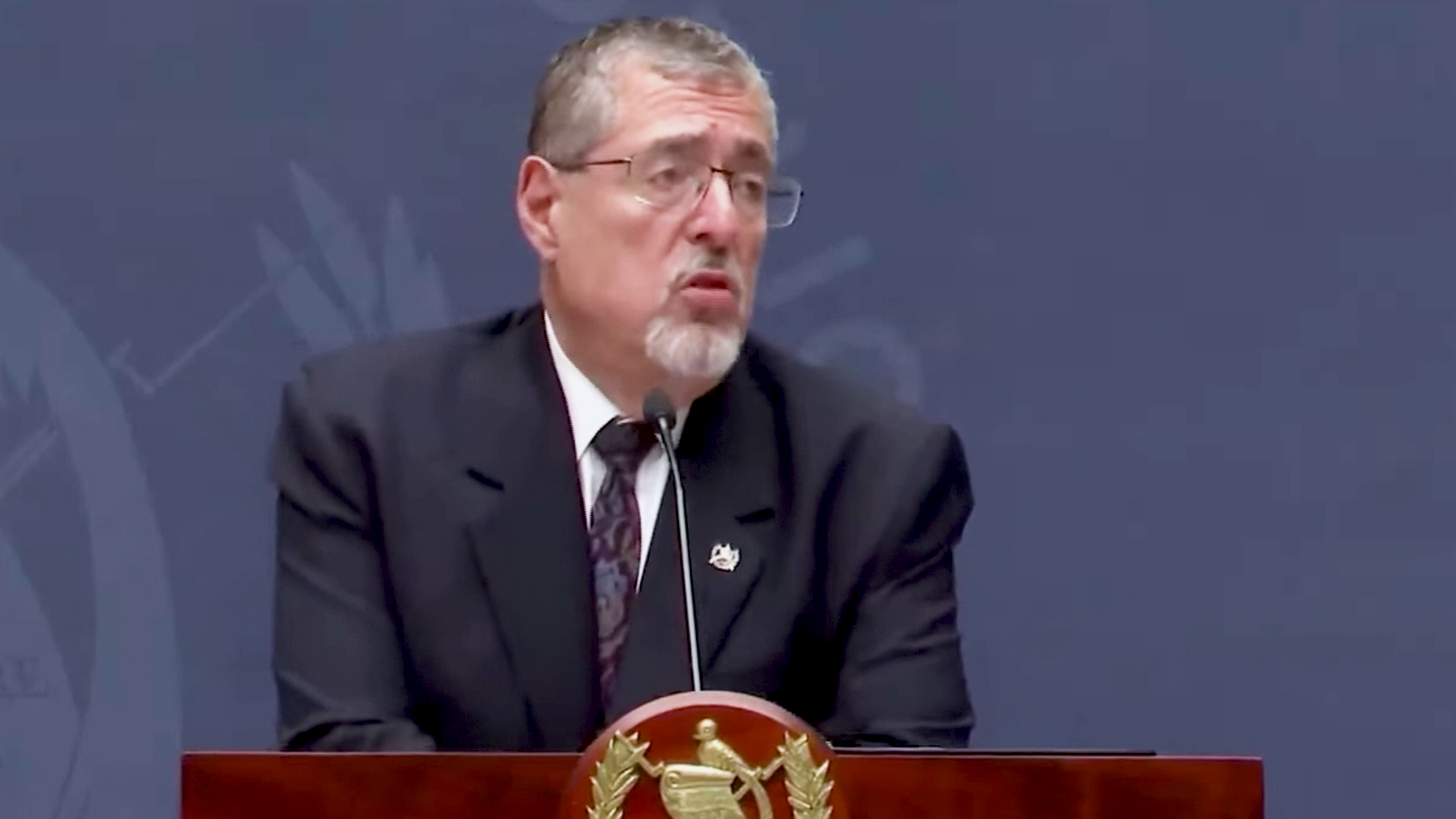
    As of June 26, 2026, political pressure is rapidly building around Florencio Marin Junior, the long-serving Minister of Belize’s Ministry of National Defense and Border Security, over questionable financial transactions linked to the Mira family that all occurred during his tenure leading the department.

    An official audit has been launched to investigate the controversial spending within the ministry, and Marin is required to provide direct testimony to the Auditor General regarding the handling of these deals. During an on-the-record press interview with reporter Paul Lopez on Wednesday, Marin declined to answer most pressing questions, insisting he would not make any public comments that could prejudice the ongoing independent investigation.

    When pressed to guarantee that all products and construction works paid for through public funds were actually delivered and completed, Marin stated: ‘I am prepared to speak, but please let us have the audit finish first. I believe it is ongoing and right now we reserve our comments for when that comes out.’ He also confirmed that the Prime Minister has publicly estimated the audit process will take approximately 90 days to complete, and any decision to release the full final report to the Belizean public falls to the Prime Minister, not his office.

    In addition to the transaction scrutiny, a separate cabinet-level debate has emerged over a proposal from Blue Economy Minister Andre Perez to raise the current $10,000 mandatory spending threshold for government ministries. Perez argues that widespread inflation and rising operational costs have made the current cap too restrictive to allow government departments to carry out work efficiently. When asked for his position on the proposal, Marin again declined to comment, noting that as the minister currently under audit investigation, he prefers not to make any public statements related to government spending rules until the inquiry concludes. He told reporters: ‘I have my opinion on that, but I would rather wait for afterwards. I don’t want for anything in anyway, to comment something that would prejudice the audit.’

    New questions have also arisen about the whereabouts of the former Financial Officer who approved the questioned transactions during the audit period. Marin told reporters that when he returned to lead the ministry in 2025, the officer had already been transferred out of the department, and he has no knowledge of where the officer is currently assigned. When asked if the former Financial Officer will be interviewed as part of the audit, Marin directed all questions about the audit’s scope and process to the Auditor General’s office.

    In response to queries about current operations for the Belize Defense Force, specifically the regular supply of meals and nutrition for service members both at base and in the field, Marin stated that daily operations remain unchanged, and all troops continue to receive their required rations. He directed further questions about military operations to the defense force command. When reporters contacted Commander Velasquez for comment during a public event in Belmopan on Wednesday, he declined to participate in an interview and referred questions to Lieutenant Colonel Burns.

    This report is a transcribed version of an evening television news broadcast, with all Kriol-language statements transcribed using a standardized spelling system for accuracy.

  • One Dead, Two Hurt as Gunman Targets Group in Lords Bank

    One Dead, Two Hurt as Gunman Targets Group in Lords Bank

    A devastating act of violence has shaken the small community of Lords Bank Village in Belize District, where a gunman opened fire on a group of people socializing outdoors Wednesday evening, leaving one young man dead and two other people wounded. According to official police reports, the attack unfolded at approximately 7:55 p.m. on June 24, 2026, when an unidentified shooter pulled up to the residential yard where the group had gathered and immediately began firing multiple rounds into the crowd.

    Nineteen-year-old Giovanni Gillett, one of the three people struck by gunfire, was rushed by emergency responders to Belize’s main public care facility, Karl Heusner Memorial Hospital. Though medical teams worked to stabilize him upon arrival, Gillett succumbed to his injuries a short time later. A second victim, 24-year-old Alfredo Flores, was also hit multiple times and remained hospitalized in stable condition as of Thursday evening. A third man, Edgar Flores, suffered non-life-threatening injuries in the attack but made the decision to forgo formal medical care, police confirmed.

    Immediately after carrying out the shooting, the gunman fled the scene, leaving local law enforcement to launch a wide-ranging investigation into the attack. As of the latest update, investigators have not confirmed any clear motive for the targeted shooting. Prior records show Gillett was already known to Belizean police; just a few months before the fatal attack, he was arrested and charged following a traffic stop where officers seized an unlicensed firearm and unused ammunition from his possession.

    Local authorities have not announced any suspects in the case as of Thursday night, and say they are continuing to interview witnesses and process forensic evidence from the crime scene to identify the shooter and uncover the sequence of events that led to the killing. Community leaders have expressed alarm over the outbreak of violent crime in the quiet residential village, with residents calling for faster progress in solving the case to bring accountability for Gillett’s death.

  • High-Profile Murder Case Falls Apart, Three Accused Men Walk Free

    High-Profile Murder Case Falls Apart, Three Accused Men Walk Free

    In a dramatic twist that has left a high-profile criminal case unresolved, three men charged in a shocking 2023 riverside murder have been cleared of all charges after prosecutors abruptly dropped their case mid-trial. The unexpected development unfolded on June 26, 2026, 24 days after the High Court trial of Tyrone Young Senior, his son Tyrone Young Junior, and Aaron Smith Junior got underway. The Director of Public Prosecutions formally entered a nolle prosequi, a legal order halting all court proceedings against the three accused permanently. The case centered on the fatal shooting of 48-year-old Denver Montero during a riverside gathering in Gracie Rock, an incident that began as a robbery and spiraled into deadly violence that shocked the small community.

    Court documents and initial witness statements painted a chaotic picture of the fateful event: more than a dozen people were present at the informal outdoor gathering when armed assailants opened fire, killing Montero and leaving multiple other attendees injured before stealing valuables from the group. Prosecutors had alleged that Smith first initiated the robbery, that Young Senior was passed a firearm and fired the fatal shots that killed Montero as the group of suspects fled the scene, and that Young Junior aided in planning and carrying out the attack. But from the moment the 2023 killing was reported, the investigation faced significant obstacles. Law enforcement officials confirmed as early as 2023 that multiple witnesses to the shooting refused to cooperate with detectives, citing fear of retaliation. As the trial moved forward, that lack of cooperation evolved into a fatal blow for the prosecution: four of the state’s most critical witnesses, including one person who was reportedly wounded in the shooting, could not be located anywhere by authorities ahead of their scheduled court testimony.

    Even with testimony from lead investigating officers and a small number of cooperating witnesses, the prosecution’s entire case relied on the testimony of the missing witnesses to establish probable cause, link the accused to the crime scene, and prove the elements of murder and robbery beyond a reasonable doubt. Without their testimony, the DPP concluded there was no viable path to secure a conviction, leading to the decision to end the trial early. As of Wednesday night, the three accused men have been released from custody and are free to return to their lives, but the case that once captured national attention remains far from closed. No new suspects have been named in Montero’s killing, and the public is now left with unanswered questions about who killed Denver Montero, why the key witnesses vanished, and whether justice will ever be delivered for the slain man.

  • UDP Mayoral Race Heats Up: Gough, Willoughby Enter the Fray

    UDP Mayoral Race Heats Up: Gough, Willoughby Enter the Fray

    As the People’s United Party (PUP) continues deliberations over whether to hold a party convention or issue a direct endorsement for its Belize City mayoral candidate, the opposition United Democratic Party (UDP) has already seen competition emerge for its nomination, kicking off a high-stakes political contest in Belize’s old capital.

    Two contenders have officially thrown their hats into the ring for the UDP mayoral nomination: Damian Gough, a seasoned businessman and political analyst, and Jaquelyn Willoughby, a prominent attorney with roots in the labor movement. Gough is no stranger to UDP leadership, currently holding the post of Chair of the party’s Policy Committee. His decades-long tenure in both the private sector and internal party governance gives him a strong foundation of policy and operational experience that he brings to the mayoral race.

    In contrast, Willoughby first rose to public prominence as an outspoken trade union advocate before transitioning to a career in law. If she secures the UDP nomination and goes on to win the general mayoral election, she will make history as only the second woman ever to hold the position of Belize City mayor.

    Notably, both candidates publicly align with current UDP Party Leader Tracy Panton. Political observers note that a competitive contested convention for the mayoral nomination will serve as an early, critical stress test for the unity of Panton’s expanding intra-party coalition, offering clear insight into how well her leadership can accommodate competing candidacies while maintaining party cohesion ahead of the general election cycle.

  • Belisle Eyes Comeback as PUP Faces Heat in Belmopan

    Belisle Eyes Comeback as PUP Faces Heat in Belmopan

    Months before Belmopan’s 2026 municipal elections are set to take place, the capital city’s political contest is already intensifying, with shifting alliances, mounting controversy and unexpected challengers upending what was once projected to be a straightforward race.

    The People’s United Party (PUP), which currently holds both the mayoralty and the city’s area representative seat, is facing growing headwinds. Questions surrounding sitting Area Representative Oscar Mira have created an opening for opposition candidates, turning the Belmopan mayoral race into one of the most closely watched electoral contests in the entire country.

    At the center of the opposition push is former Belmopan mayor Khalid Belisle, the United Democratic Party (UDP) caretaker for the city, who has formally launched a bid to reclaim the executive seat he previously held. With roughly eight months remaining until election day, Belisle says his campaign strategy will center on direct, grassroots engagement with city residents.

    “You are really going to see not only our full city council team, but myself out on the streets going house to house visiting residents,” Belisle shared in an interview with News Five. “I prefer to listen rather than to speak. I would much rather hear what is on the minds and in the hearts of residents of the city as we prepare to contest an election. That way, if we are successful on election day, the incoming city council will be able to address those concerns in as timely a fashion as they possibly can.”

    Isidoro Richie Galvez has also joined the race as another mayoral candidate, adding further unpredictability to a field already roiled by political uncertainty.

    Fending off Belisle’s challenge is incumbent PUP Mayor Pablo Cawich, who confirmed that he and his full sitting city council team have filed their applications to run for re-election under the PUP banner. Cawich emphasized that his administration has prioritized improving public services for Belmopan residents, and is preparing to roll out new administrative systems designed to streamline access to city services for all constituents.

    What makes this election cycle notable so far is both leading candidates’ public rejection of the negative, mudslinging political tactics that have long plagued local races in Belmopan.

    “Politics is politics and it is a very nasty game. I don’t – I personally don’t like the negativity in politics,” Cawich said, echoing comments from Belisle, who similarly distanced himself from attacks-focused campaigning.

    “I personally don’t lean into those negative aspects of our politics. Anybody that knows me will understand that’s not what I’m about,” Belisle said. “I have never been about trying to elevate myself by bringing down other candidates.”

    Still, political observers note that pressure from party operatives and campaign teams often pushes candidates to deploy negative tactics as election day draws closer, especially in a capital city with a long history of scandal-driven local politics. With months of campaigning still ahead, all sides are already positioning for what is set to be a hard-fought contest for control of Belmopan City Hall.

  • Belizean Men Urged to Take Action on Their Health

    Belizean Men Urged to Take Action on Their Health

    On June 26, 2026, more than 150 Belizean men gathered at the Belize Civic Center for the annual Men’s Health Forum, an event organized by the Belize Cancer Society and its partner organizations aimed at moving beyond general health awareness and encouraging tangible, life-saving action around preventive care. For decades, public health data across Belize has shown that men in the country consistently delay routine health screenings and avoid seeking medical care until conditions reach advanced, hard-to-treat stages – a trend that has driven higher mortality rates for preventable conditions like prostate cancer, the most common cancer among Belizean men over 40. The forum was designed to confront the cultural and psychological barriers that fuel this trend head-on.

    Opening the day’s discussions, Dr. Irvin Gabourel, a leading local health professional, addressed one of the most common reasons men avoid prostate cancer screenings: widespread anxiety about the traditional digital rectal exam. He walked attendees through newer, far less intimidating alternative screening options, easing concerns and opening a raw, honest conversation about screening accessibility for men across age groups. Current medical guidelines recommend that all men over 40 complete an annual prostate cancer screening, but public health workers say the biggest hurdle is not the exam itself – it’s convincing men to walk through the doors of a medical clinic in the first place.

    Dr. Claudina Cayetano, a mental health advisor with the Pan American Health Organization, unpacked the deep-rooted cultural stigma that keeps men from seeking care. She explained that harmful gender norms have long taught Belizean men to frame emotional and physical vulnerability as weakness, expecting men to act as constant protectors who never need support. This social conditioning leads many men to view routine checkups or seeking early care as a failure of masculinity, a mindset that ultimately leaves them far more vulnerable to advanced, untreatable disease. “What we want them to know is that seeking help is what a strong man does,” Cayetano emphasized. “A strong man wants to be healthy, and being healthy means that it’s okay to ask for help to take care of themselves.”

    The event centered personal testimonies from survivors to drive this message home, including that of Earl Jones, a former chief executive of the Kolbe Foundation and Secretary General of Belize’s Football Federation, who is now a cancer survivor after seeking early diagnosis. Jones told attendees that early testing and proactive lifestyle changes were the key to his survival, crediting his faith with helping him maintain mental resilience through his treatment journey. “Early testing is very important. A change of lifestyle is also very important, But most importantly is to put your trust in the Lord and Savior Jesus Christ,” Jones said, adding that his faith helped him manage stress and anxiety throughout his treatment. When asked how his faith supported his recovery, Jones noted, “My faith helped me to remain sane. I trusted in the Lord, I placed my burdens at His feet, and I worried less. That helped me through tremendously.”
    Jones also issued a stark warning to men who have put off preventive care: “This is the time to start thinking about taking care of yourself if you have not been doing so before because cancer is nothing – nothing nice. It takes away your finances and after it’s done it kills you.”

    Dr. Hugh Sanchez, a longtime pathologist and member of the Belize Cancer Society, said he hopes survivor stories like Jones’ will cut through cultural silence and encourage more men to schedule routine screenings. He noted that even men who feel perfectly healthy can develop asymptomatic, early-stage cancers that only screening can detect, making annual checkups non-negotiable for long-term health. “From the testimony by Mr. Jones in regards to his journey, I would hope that that was enough to sensitize us to be mindful that even though you may appear to be well, you still need to do your yearly checks and do your screening for those diseases or cancers that are prevalent among men,” Sanchez said. “And the Society is always there and the Men’s Forum panelists is always at the Society, and we are there to advise, encourage and to be a part of the journey with you.”

    Beyond prostate cancer screening, the full-day forum included interactive discussions on a range of men’s health topics, from primary care access and nutritional health to mental wellness and men as family caregivers. Across every session, the core message remained consistent: preventive care is not a sign of weakness – it’s an act of responsibility that saves lives. Organizers plan to expand the forum’s outreach in coming years, targeting rural communities where access to screening and health education is even more limited, to reduce Belize’s rate of preventable cancer deaths among men.

  • Are Belize’s Roads Keeping Up? Rising Traffic, Rising Risks

    Are Belize’s Roads Keeping Up? Rising Traffic, Rising Risks

    As vehicle ownership and traffic volumes climb steadily across Belize, a troubling upward trend in deadly head-on collisions has put intense public focus on whether the nation’s aging road infrastructure can keep pace with growing demand. The crisis has reignited calls for a transformative shift to modern, four-lane divided highways with physical medians that separate opposing traffic streams, a design widely proven to cut fatal crash rates. Right now, the Belizean government is funneling millions of dollars into rehabilitation work on the country’s two busiest corridors, the George Price Highway and Phillip Goldson Highway, leading safety advocates to question why full safety upgrades are not on the immediate agenda.

    On Belize’s current two-lane highways, where one narrow lane serves traffic in each direction, even a small driver error or misjudgment during risky overtaking maneuvers can end in tragedy. Close calls and near-misses are now a daily occurrence for regular commuters, prompting road safety advocates to push for sweeping infrastructure changes. They argue that installing four-lane highways with median dividers would eliminate the risk of head-on collisions by keeping opposing traffic fully separated, directly saving dozens of lives each year.

    But government officials say full conversion to four-lane highways is not a simple matter of political will, balancing competing demands of public demand, infrastructure costs and current traffic volumes. Julius Espat, Minister of Infrastructure Development, explained that international financial and technical bodies require rigorous traffic analysis to justify large-scale infrastructure investments. “When a highway is designed, you can’t just automatically decide you want a six-lane highway,” Espat noted. “Financial experts and technical experts assess whether current traffic flow, based on the country’s population and usage, justifies a project of that magnitude.”

    Espat pointed out that Belize’s relatively small population makes the massive cost of a full four-lane conversion difficult to justify economically. “If we are already complaining that current highway costs are too high — and we have every right to question costs — imagine how tremendous the cost would be for four full lanes across the network,” he said.

    Instead of full four-lane expansion, the government is rolling out a targeted, lower-cost alternative: adding dedicated passing lanes in high-traffic or high-risk stretches along the two major highways. “On certain sections of the George Price Highway, you will see dual lanes on one side for passing, and on other stretches you will see passing lanes on the opposite side,” Espat explained of the incremental approach. He framed infrastructure improvement as a long-term, generational process: “It’s a gradual process. When our term ends, we hope to have achieved a solid baseline of improvements, and the next administration — whether from the same party or another — can build on that work to improve infrastructure further over time.”

    Newly released 2025 traffic data underscores the urgency of the road safety debate. Officials recorded more than 3,000 traffic accidents across the country last year, 94 of which were fatal. For many ordinary road users, these grim statistics make the case for immediate safety upgrades: they argue that divided lanes would directly prevent most head-on fatal crashes along the busy George Price and Phillip Goldson corridors.

    For the current administration, near-term policy priorities remain focused on expanding connectivity rather than full conversion to four-lane highways, particularly opening new routes to improve access for rural communities and agricultural producers that drive Belize’s economy. But as traffic volumes continue to climb and fatalities hold steady, the core question looms large: as Belize’s population and economy grow, can its road network keep up not just with demand for greater connectivity, but with the growing need for life-saving road safety? This report was prepared by Paul Lopez for News Five.

  • Climate Change Act Drives Belize’s Sustainable Development Vision

    Climate Change Act Drives Belize’s Sustainable Development Vision

    Against a backdrop of growing global climate vulnerability, small Central American nation Belize has taken a historic step to embed climate action into its national legal framework, advancing its long-term vision for equitable, low-carbon sustainable development.

    On June 18, 2026, Governor-General Dame Froyla Tzalam signed the Climate Change and Carbon Market Initiatives Act 2026 – the country’s first ever comprehensive piece of climate legislation – with the law officially gazetted two days later, bringing it into formal effect. This landmark legislation establishes a clear, structured governance system for Belize’s national climate policy and its participation in the fast-growing global carbon market.

    Key provisions of the new law include bolstering the institutional capacity of Belize’s Climate Change Department, strengthening national inter-agency coordination on climate initiatives, and mandating standardized, transparent climate impact reporting. Critically, the act also sets out unambiguous regulatory guidelines for carbon offset projects, including strict protocols for benefit sharing, progress tracking, and accountability to ensure local communities see tangible gains from carbon market activity.

    Speaking on the new legislation, Minister of Sustainable Development Orlando Habet emphasized that the framework equips Belize to take full ownership of its domestic climate agenda, rather than relying on external direction. It paves the way for the country to pursue intentional low-emission economic growth across all sectors, from tourism to agriculture, while guaranteeing that revenue and opportunities generated through carbon market participation directly benefit Belizean citizens.

    With the core legal structure now in place, the government’s focus has shifted to implementation. In the coming months, officials will develop supporting secondary regulations, build out digital monitoring and reporting systems, and foster collaborative partnerships with local communities, the private sector, civil society organizations, and international development stakeholders to roll out the law’s provisions across the country.

  • More Farmers to Benefit as Agriculture Grant Program Expands

    More Farmers to Benefit as Agriculture Grant Program Expands

    Scheduled for official expansion in 2026, Belize’s Sustainable and Inclusive Belize (SAIB) Project, a grant initiative backed by the Inter-American Development Bank, is set to extend critical financial support to hundreds of additional small-scale farmers across the Central American nation after delivering promising early results from its first round of funding.

    When the program launched its initial application round, project organizers carried out nationwide outreach to connect with eligible growers, offering multiple accessible pathways to apply: a dedicated online application portal and a telephone help line for farmers requiring assistance with the submission process. A specialized evaluation committee then reviewed all submissions to select candidates that met the program’s strict eligibility criteria, after which selected recipients completed mandatory training before receiving funding.

    In its first cohort, the initiative successfully disbursed small grants to 666 individual small-scale farmers across Belize. Each participating grower can receive up to $4,000 USD, allocated to investments that boost agricultural output, strengthen climate resilience, and build long-term sustainable livelihoods. To date, participating farmers have directed their grant funding toward high-impact climate-smart upgrades, including new irrigation infrastructure, solar-powered water pumps, rainwater catchment systems, and climate-resistant hybrid seed varieties that can withstand shifting weather patterns linked to global climate change.

    Following the successful rollout of the first round of individual farmer grants, the SAIB Project will now open a new application round that expands eligibility beyond independent small-scale growers. Agricultural micro, small and medium enterprises (MSMEs) and organized farmer associations will also be able to apply for funding to scale up their own sustainable production initiatives.

    In addition to its agricultural support programming, the SAIB Project, which is fully financed by the Inter-American Development Bank, also allocates grant funding to small and medium-sized tourism-related businesses across Belize to support inclusive economic growth across multiple key sectors of the nation’s economy. The program’s expansion comes as small-scale producers across Central America face growing pressure from climate change, making targeted financial support for climate-smart agriculture a critical policy priority for long-term food security and rural economic stability.

  • Belize Swears In 100 New Citizens from 22 Countries

    Belize Swears In 100 New Citizens from 22 Countries

    On June 26, 2026, Belize hosted a landmark citizenship swearing-in ceremony that cemented the nation’s long-standing identity as a welcoming destination for global migrants. One hundred and eleven men and women hailing from 22 countries spanning Central America, Africa, and Asia took their formal oath of allegiance, officially joining the Belizean community surrounded by loved ones and fellow citizens. The historic event was far more than a routine administrative formality: it served as a public celebration of the cultural diversity that has shaped Belize from its founding, and a tangible investment in the country’s long-term social and economic growth.