标签: Belize

伯利兹

  • Will Taxpayers Pay More for Transport Office Relocation?

    Will Taxpayers Pay More for Transport Office Relocation?

    A controversial proposal to relocate the Belize Department of Transport’s offices out of National Bus Company (NBC)-managed bus terminals has triggered heated debate over whether ordinary taxpayers will be forced to cover the cost of new rental spaces, with department leadership pushing back against critics to defend the move as a fiscally responsible long-term strategy.

    As of July 9, 2026, public observers have raised urgent questions about the financial implications of the relocation, arguing that shifting department operations out of their current terminal locations would leave the public on the hook for ongoing rent at new facilities. But Transport Chief Executive Officer Chester Williams has categorically refuted these claims, framing the relocation as a necessary step to accommodate rapid service expansion and deliver a better experience for residents accessing government transport services.

    Williams outlined the core drivers for the move in an interview with local reporters, pointing to crippling overcrowding at existing office locations in three major population centers: Belize City, Dangriga, and Corozal. The department is planning a three-fold expansion of frontline staff at these regional offices to support growing service demand, a change that would turn already cramped terminal spaces completely unworkable. Beyond issues for staff, Williams noted that current overcrowding forces community members seeking transport services to wait in long lines outside, in uncomfortable conditions that create unnecessary barriers to accessing government support. He emphasized that the relocation is not being forced by the NBC as control of terminal operations transitions to the company, but is a proactive choice by the department to improve service delivery.

    When pressed to share details of the department’s cost-benefit analysis for the move, Williams explained that the shift will actually reduce the government’s overall long-term financial burden as control of the bus terminals transfers to NBC. For years, the government has covered all operational costs for the terminals, including staff wages, regular building maintenance, and day-to-day operating expenses. Once the terminals are fully transferred to NBC management, these costs will be eliminated from the government’s budget. Williams acknowledged that the government will lose roughly $1 million in annual revenue that it previously generated from terminal operations, but offset this by noting that the move will cut roughly $2 million in annual terminal-related expenses – resulting in a net savings of $1 million for public funds.

    This report is adapted from a transcribed evening television news broadcast originally published online.

  • The Two-Month Window That Can Shift Elections

    The Two-Month Window That Can Shift Elections

    As Belize prepares for its 2027 municipal elections, scheduled for March next year, a key electoral process is already underway that could reshape the outcome of races across the country’s cities and towns. From July through August 2026, the Elections and Boundaries Department (EBD) is managing the only two-month window each electoral cycle where registered voters are permitted to transfer their voting registration from one constituency to another, a process designed to accommodate voters who have changed their permanent residence. With eight months still remaining before ballots are cast, political candidates and party operatives have already begun aggressive outreach in competitive districts, and the EBD has seen its operational workload surge dramatically in response to the opening of the transfer period.

    For eligible voters who have relocated since the last election, this two-month window represents their final chance to update their registration to vote in the municipality where they currently reside. Briony Neal, a registering officer with the EBD, explained that the process exists to ensure voters can exercise their voice in the local elections that impact their daily lives. “If someone moved from Camalote to Belize City and no longer lives in their original constituency, they would not be able to travel back to vote in their old district, and they would not have a say in the Belize City municipal government that serves them now,” Neal outlined. “This transfer period is the only opportunity to adjust that registration ahead of March’s vote.”

    While the formal purpose of the transfer process is rooted in accommodating residential relocation, electoral officials and observers warn that the window is frequently exploited for partisan advantage through tactics that skirt ethical and legal boundaries. Political operatives across major parties are widely expected to drive a sharp spike in voter transfers from rural villages to competitive municipal constituencies over the next two months, with operatives offering financial and material incentives to voters from other districts to transfer their registration, padding party voting numbers in tightly contested races. This practice places the EBD in the position of vetting thousands of transfer applications to separate legitimate residential changes from fraudulent, politically motivated re-registrations.

    Dennis Leslie, Acting Registering Officer for the EBD, explained the department’s current verification process: electoral officers conduct up to three home visits at the address listed on a transfer application to confirm the voter actually resides at that location. If no one at the address can confirm the applicant’s residence after three checks, registering officers have the authority to reject the fraudulent application.

    However, critical gaps in both enforcement power and existing legislation leave the system vulnerable to widespread abuse. Leslie noted that verification efforts are extremely limited in scope, and rejected applications remain very rare. While it is a criminal offense for a voter to provide false information to register at an ineligible address — carrying a penalty of up to a $1,000 BZD fine or two years of imprisonment — and the law already penalizes registering officers who intentionally block the registration of eligible voters, there is no existing legal provision to penalize officers who approve applications from unqualified, ineligible voters. This loophole means most verification checks remain little more than formal procedural requirements, with little deterrent for partisan actors seeking to pad vote tallies.

    The EBD is set to release its first public list of approved July transfer applications on July 15, 2026, which will give political observers and opposition groups a first look at the scale of transfers into competitive municipalities this cycle.

  • No Invitation to Chester for Former Commissioners’ Lunch

    No Invitation to Chester for Former Commissioners’ Lunch

    As Belize’s interim Minister of Home Affairs Julius Espat moves forward with sweeping planned reforms for the Belize Police Department, he has turned to institutional memory to guide his policy making. In early July 2026, Espat convened a working lunch for a cohort of former police commissioners, bringing decades of on-the-ground experience together to act as an advisory brain trust to map out a clear path for the department’s future improvement.

    However, one high-profile former top official was noticeably absent from the gathering: Chester Williams, the most recent police commissioner who now serves as a chief executive officer within the national government. Williams, who holds the record as the longest-serving commissioner in Belize’s history with more than six years leading the department, told reporters he only learned of the meeting after seeing media reports shared by contacts, and had never received a formal invitation.

    When pressed by journalist Shane Williams on his exclusion from the meeting of former top police leaders, Williams stated he could not explain the snub, adding that he was open to the possibility it was simply an accidental oversight rather than an intentional exclusion. The former commissioner emphasized that he maintains a warm, professional relationship with Espat, who also oversees the Ministry of Infrastructure. Williams noted he regularly reaches out to Espat for support when needed, and has repeatedly made clear to the interim minister that he stands ready to contribute his expertise to police reform efforts whenever called upon.

    “As a Belizean, my only priority is seeing the police department move forward in the right direction,” Williams said. “If Minister Espat needs to draw on my experience at any point during his time leading the Home Affairs Ministry, I am fully available to him.” The absence of such a tenured, knowledgeable former leader from the advisory meeting has drawn public attention, as Espat works to implement changes to one of the country’s core public security institutions.

  • Caribbean Comes Together for Venezuela Earthquake Relief

    Caribbean Comes Together for Venezuela Earthquake Relief

    In the wake of destructive powerful earthquakes that have left widespread devastation across Venezuelan communities, Caribbean nations have unified under the Caribbean Community (CARICOM) banner to launch a coordinated humanitarian relief operation, with Belize committing critical emergency supplies to the effort.

    On Wednesday, three 40-foot containers carrying Belize’s donated aid departed from the Port of Georgetown in Guyana, marking a key milestone in the regional mission. The Belizean contribution is integrated into a much larger convoy: a single cargo vessel carrying a total of 88 containers of emergency provisions collected from donor nations across the Caribbean is now en route to the quake-stricken regions of Venezuela.

    Senior diplomatic and government officials attended the departure ceremony to mark the solidarity of the Caribbean bloc. In attendance were Her Excellency Gale Miller Garnett, Belize’s High Commissioner to Guyana, and Mark Phillips, Prime Minister of Guyana, whose country has served as a coordination hub for the regional relief effort.

    In remarks following the ceremony, Ambassador Miller Garnett emphasized the deep reciprocal solidarity driving Belize’s contribution. She noted that the moment carried profound emotional weight, as the country was finally able to return the decades of support Venezuela extended to Belize through the PetroCaribe initiative and other assistance programs.

    “It was a wonderful feeling because it was a symbol of Belize standing with the Venezuelan people during this incredibly difficult time,” Miller Garnett said. “Just yesterday, I signed the book of condolences at the Venezuelan Embassy in Georgetown, and the Venezuelan ambassador shared firsthand reports of just how devastating the damage is back home. It was an emotional moment. Venezuela was there for us for so many years through PetroCaribe, through so many different forms of assistance. So it was a proud moment for us to step up to help them now, with the logistical support of Guyana.”

    Details of Belize’s donation confirm the containers are stocked with supplies prioritized by Venezuelan emergency response teams: a range of pharmaceutical products for treating injuries and preventing post-quake disease outbreaks, non-perishable food items to feed displaced communities, and bulk cleaning supplies to support sanitation efforts in damaged residential areas.

    Historically, Venezuela held status as one of Belize’s most critical trading partners throughout the duration of the PetroCaribe energy cooperation agreement, which provided affordable petroleum access to Caribbean nations for decades and supported economic stability across the region. Today, that historical partnership has translated to tangible solidarity as the Caribbean comes together to support Venezuela through its current crisis.

  • D-Max Pickups Assigned to Crime-Fighting Units

    D-Max Pickups Assigned to Crime-Fighting Units

    For law enforcement agencies around the world, patrol vehicles are far more than just transportation. These hardworking assets are pushed to their absolute limits every single day, responding to urgent emergency calls, traversing unforgiving off-road terrain, and carrying officers into high-stakes situations where a single minute of delay can mean the difference between life and death. Long before they are spotted parked by the roadside or navigating congested urban streets, they have already logged hundreds of miles of grueling service that wears down even the most durable vehicles.

    On July 9, 2026, the Belize Police Department took a major step forward in strengthening its frontline operational capacity, with the handover of five brand-new Isuzu D-Max pickup trucks purpose-built for patrol work. Funded and purchased by the Government of Belize, the new vehicles were officially transferred to the department in a ceremony held Wednesday, and have already been deployed to five high-priority locations across the country. These deployment areas include Benque Viejo, Roaring Creek, Orange Walk, Corozal, and the Violence Prevention and Enforcement Unit based in Belize City.

    Department officials emphasize that this addition is much more than a routine fleet update. It represents a tangible enhancement to the force’s on-the-ground crime-fighting capabilities. The new, more reliable pickups are expected to dramatically improve officer mobility across both urban and rural districts, cut down critical emergency response times, and give frontline personnel a dependable tool to meet the evolving and demanding requirements of modern daily policing.

  • UDP Seeks Crowd Power Against Briceño Administration

    UDP Seeks Crowd Power Against Briceño Administration

    On July 9, 2026, Belize’s main opposition United Democratic Party (UDP) is preparing to mobilize public pressure against the sitting Briceño administration, bringing allegations of systemic corruption directly to the streets of Belize City with a planned public demonstration. As the nation counts down to the rally, political observers and ordinary citizens alike are laser-focused on one critical question: can the opposition turn out a large enough crowd of demonstrators to force the governing administration to acknowledge and address their grievances. A massive turnout would send an undeniable, potent signal of public discontent that could reshape the country’s political landscape, while low attendance would conversely weaken the UDP’s claims and reinforce the government’s position.

    In the lead-up to the protest, local journalists caught up with Dean Flowers, president of Belize’s Public Service Union (PSU), to ask whether the influential labor organization would throw its weight behind the opposition’s demonstration. Flowers, speaking on behalf of the union, made clear that while his organization does not endorse the UDP as a political party, it fully supports the core goal of the rally: combating widespread corruption in Belize’s national government.

    Flowers emphasized that every Belizean citizen has a personal stake in pushing back against corruption, making it in their best interest to back any gathering organized to oppose graft. He called on public sector workers who are able to arrange time off work to attend the event, stressing that attendance does not equate to political support for the UDP. Flowers openly acknowledged that the UDP’s past national administration, led by its former leadership, was just as guilty of corruption and reckless fiscal mismanagement as the current governing party. He noted that past UDP officials violated the very laws designed to enforce transparent fiscal and financial governance, leaving the party with no claim to moral high ground on the issue.

    That said, Flowers pointed out that the UDP now operates under new leadership, which has publicly pledged to govern more responsibly in the best interest of the Belizean people. As such, he argued, the broader civil society has an obligation to hold all parties accountable for promises of reform. For its part, Flowers said the PSU is developing long-term strategies to build social contracts with the current government, the opposition, and other key civil society partners, all designed to keep elected leaders accountable and force them to follow through on anti-corruption commitments.

    For Flowers, the fight against corruption is deeply personal, rooted in the long-term damage decades of graft and reckless borrowing have done to current and future generations of Belizeans. “My children and unborn grandchildren already owe tens of thousands and hundreds of thousands of dollars that they have no say in the borrowing by successive administration,” he explained. That generational burden is why he plans to personally attend and support the anti-corruption rally, and why he is urging all public officers and ordinary Belizean citizens to join him and make their opposition to corruption counted.

    This report is adapted from a transcript of an evening television news broadcast, with original Kriol language statements standardized to conventional English spelling for clarity.

  • Belize Steps Up for Venezuela While Death Toll Rises to Over 3,800

    Belize Steps Up for Venezuela While Death Toll Rises to Over 3,800

    In the wake of a devastating series of earthquakes that have left more than 3,800 people dead and widespread destruction across Venezuela, the small Central American nation of Belize has stepped forward to contribute critical humanitarian supplies as part of a broader regional relief effort coordinated through the Caribbean Community (CARICOM).

    Belize’s donation, which fills three shipping containers, includes essential pharmaceutical products, non-perishable food staples for displaced families, and cleaning supplies to help communities restore basic sanitary conditions after the disaster. The combined aid shipment departed Georgetown Port in Guyana on Wednesday, carried aboard a dedicated CARICOM relief vessel that holds a total of 88 containers of assistance bound for earthquake-ravaged Venezuelan towns and neighborhoods.

    Gale Miller Garnett, Belize’s High Commissioner to Guyana, joined Guyana’s Prime Minister Mark Phillips at the port to oversee the shipment’s departure. She framed the contribution as an act of reciprocal solidarity, noting that Venezuela has supported Belize for decades through initiatives like the Petrocaribe energy cooperation agreement, which has delivered critical energy assistance to Caribbean nations through multiple iterations of regional partnership. “It was a wonderful feeling because of the fact that it was a symbol of Belize as a country supporting the Venezuelan people,” Garnett said of the occasion. “Venezuela was there for us through Petrocaribe and all of so many different iterations of assistance. So it was a proud moment for us.”

    As regional partners deliver life-saving aid on the ground, Venezuelan interim President Delcy Rodriguez has renewed urgent calls for international sanctions relief and the release of billions of dollars in Venezuelan assets frozen in overseas financial institutions. Rodriguez has emphasized that these assets would be more than sufficient to fund full-scale reconstruction of infrastructure damaged and destroyed by the earthquakes if they are unblocked.

    At the center of Rodriguez’s campaign is a request addressed to King Charles III for the release of approximately 31 tonnes of Venezuelan gold reserves held at the Bank of England. The gold has been tied up in a protracted international legal dispute for years, with no resolution reached to date. Rodriguez has also raised the issue of frozen assets with the International Monetary Fund, pushing for global institutional support to unblock funds critical to Venezuela’s recovery.

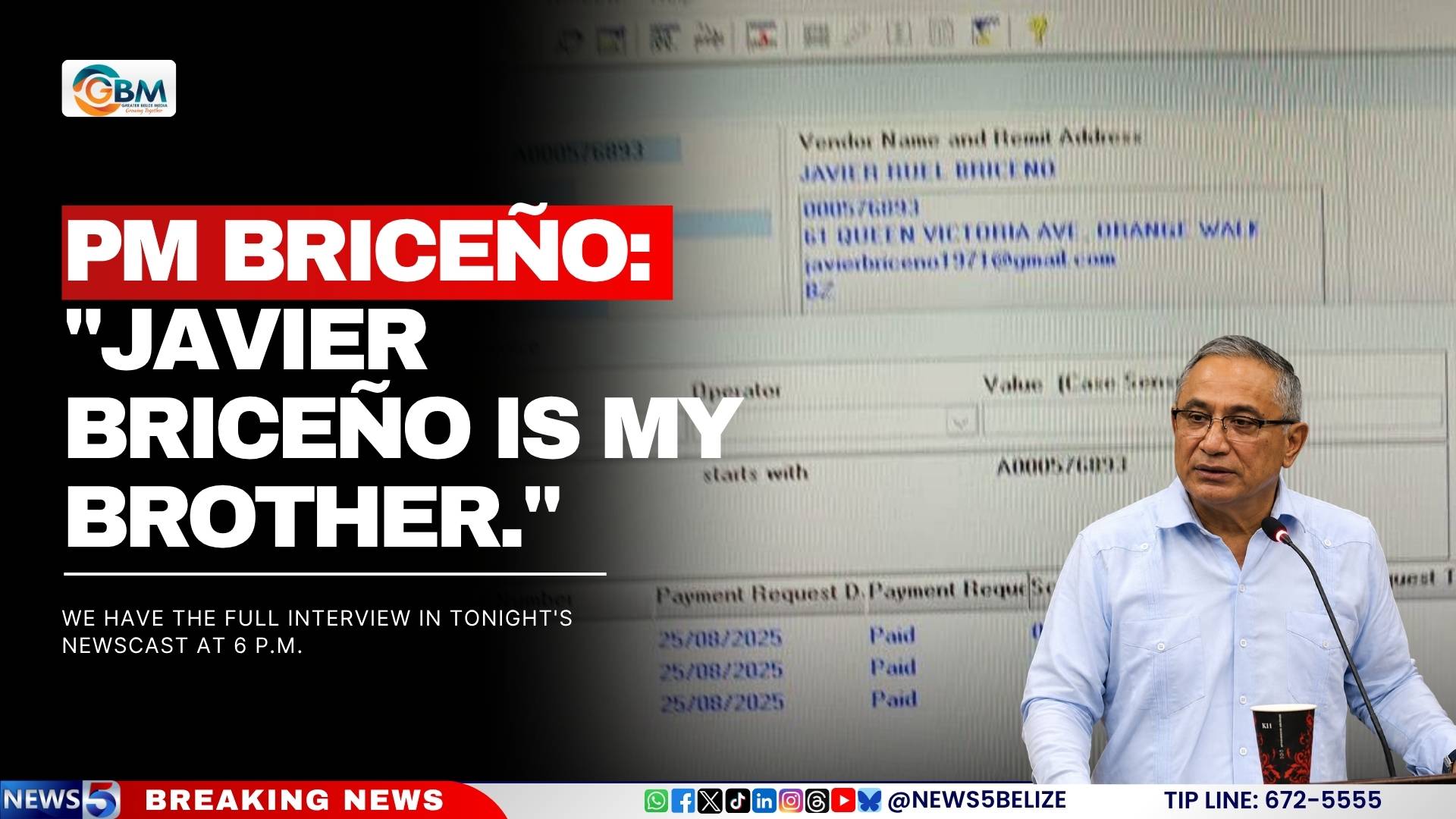
  • PM Briceño: “Javier Briceño is my Brother.”

    PM Briceño: “Javier Briceño is my Brother.”

    On July 9, 2026, a fresh wave of leaked procurement documents from Belize’s Ministry of Defense has reignited public scrutiny of government spending, dragging Prime Minister John Briceño’s sibling into the expanding corruption controversy.

    The recently obtained financial records detail two payments totaling $242,230.09 directed to individuals registered to the same residential address in Orange Walk. Among these recipients is Javier Reul Briceño, the younger brother of the sitting prime minister, a link that has raised urgent questions about nepotism and improper contracting within the government.

    In an immediate response to reporters, Prime Minister Briceño publicly confirmed the familial relationship but denied any prior knowledge of the controversial transactions. He pushed accountability for the unfolding probe to the Office of the Auditor General, the independent body tasked with auditing government spending, noting that the ongoing investigation would be the final arbiter of whether any illegal or unethical activity occurred.

    “I have repeated this statement many times, and I stand by it again: the Auditor General is conducting a full, independent investigation. Any individual found to have engaged in misconduct will be held fully responsible for their actions,” the prime minister told reporters.

    Briceño further clarified that he holds no oversight over the government’s SmartStream financial management platform, which is used to process all public sector payments, and claimed he lacks familiarity with how the system operates. “I do not even know how the SmartStream system works,” he added. When pressed for details on what goods or services his brother provided to the Ministry of Defense to justify the payments, Briceño again stated he had no information about the transaction.

    “ I do not know. If any wrongdoing occurred, whether it involves Javier or any other person, they will be required to answer for their actions,” he said.

    Full unedited footage of the prime minister’s interview will be broadcast during the outlet’s 6 p.m. evening newscast for audiences seeking to view the full exchange.

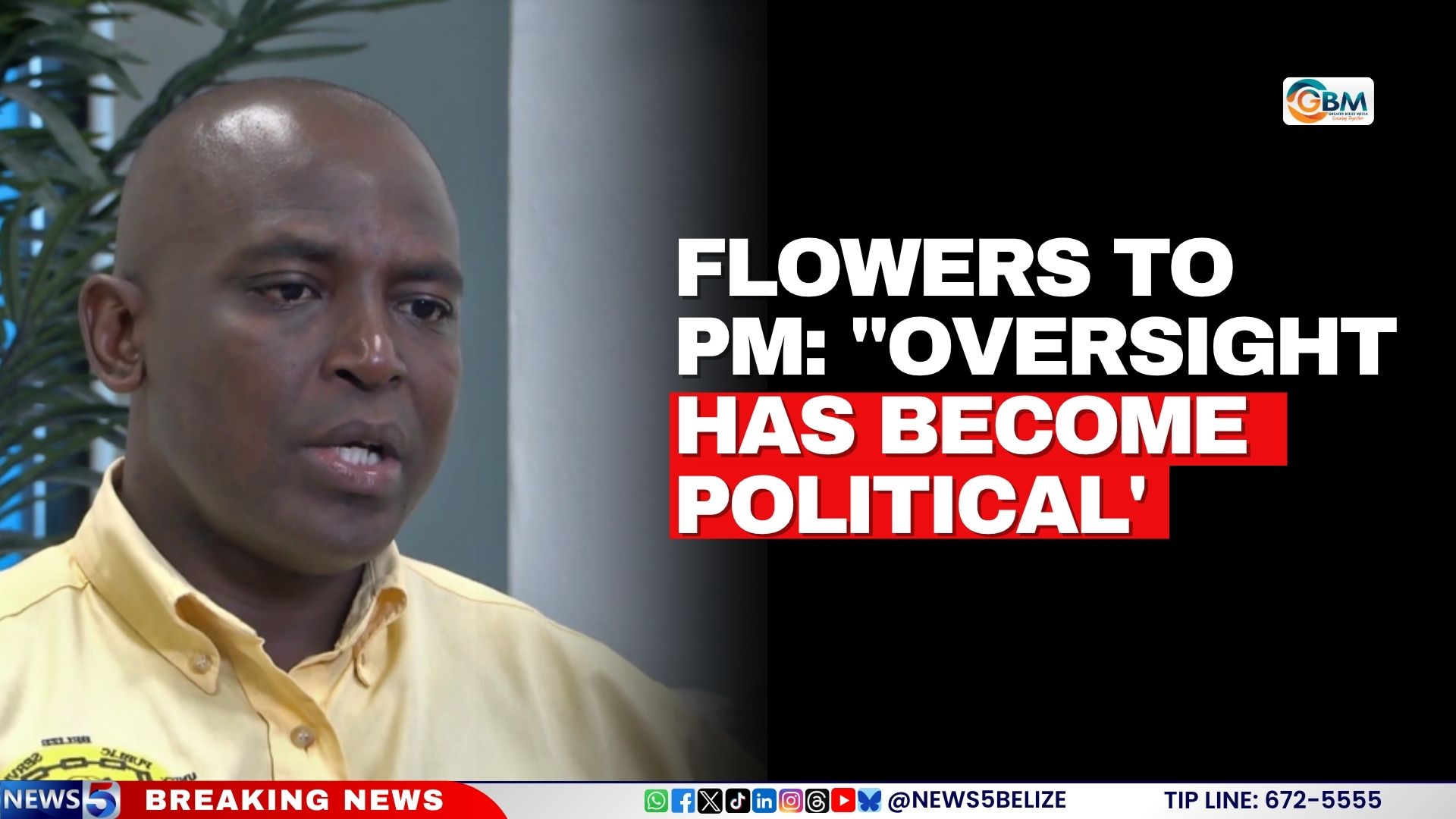
  • Flowers to PM: ”Oversight Has Become Political’

    Flowers to PM: ”Oversight Has Become Political’

    On July 9, 2026, a major controversy erupted in Belize’s public sector after Dean Flowers, president of the country’s Public Service Union (PSU), launched a scathing broadside against three of the nation’s most senior financial oversight officials, accusing them of allowing political interests to undermine their independent regulatory mandates.

    In a detailed statement delivered to local media outlet News 5, Flowers first called out Financial Secretary Joseph Waight for intentional disregard of long-standing fiscal transparency rules. Under Belize’s 2010 Fiscal Transparency and Responsibility Regulations — outlined in Statutory Instrument No. 95 — the national government is legally required to publish bi-annual public reports detailing all state revenue, public expenditure and national debt. According to Flowers, however, no such report has been released to the Belizean public since 2014, a violation that has gone unaddressed entirely on Waight’s watch.

    Flowers argued that Waight has been complicit in years of mismanaged public finances across multiple successive national administrations, noting that the Financial Secretary has never once pushed back against politically driven fiscal decisions that have left ordinary Belizean residents burdened with growing national debt.

    The second official targeted by Flowers is Contractor General Maria Arthurs, who made headlines earlier this week when she delivered a formal lecture to cabinet ministers on the importance of strict compliance with public procurement rules during a special cabinet meeting. Flowers slammed this public performance as hollow hypocrisy, pointing to a formal complaint the PSU filed with Arthurs’ office months ago over alleged procurement splitting connected to payments made to relatives of former Minister of State for Defence Oscar Mira.

    According to the complaint, the payments were intentionally split into multiple increments all valued under the $10,000 reporting threshold to evade regulatory scrutiny. Yet Flowers says Arthurs has never even acknowledged receipt of the formal complaint, let alone launched a public inquiry into the allegations. If Arthurs determines the complaint falls outside her jurisdiction, Flowers added, she has a responsibility to state that decision publicly and provide a formal explanation for the public.

    The third oversight official accused of failing to uphold her mandate is Auditor General Maria Rodriguez. Flowers claims that Rodriguez’s team was blocked from carrying out routine cash audits at two key government agencies — the Belize Agricultural Health Authority (BAHA) and the Border Management Agency — when the agencies claimed they were “not government entities” to deny auditors access. To date, Flowers says, Rodriguez has not taken any formal action to resolve the access impasse and complete the required audits.

    Beyond the specific allegations against the three officials, Flowers used the statement to call for sweeping reform of how Belize appoints oversight body leaders. He argued that current appointment processes allow for excessive political influence, as officials often fear pushing back against ruling parties to avoid having their contracts not renewed when they expire. To secure true independent oversight, Flowers said, all senior oversight positions should be appointed exclusively by the Senate or an independent social partner body insulated from political pressure.

    The accusations mark one of the most high-profile public challenges to Belize’s financial governance systems in recent years, raising urgent questions about the effectiveness and independence of the country’s anti-corruption and fiscal transparency mechanisms.

  • PSU President Urges Public to Support UDP Anti-Corruption Protest

    PSU President Urges Public to Support UDP Anti-Corruption Protest

    As Belize gears up for a high-stakes anti-corruption demonstration organized by the main opposition United Democratic Party (UDP) this Friday, Public Service Union (PSU) President Dean Flowers is pushing for broad public participation, framing the protest as a collective stand against graft rather than a show of political endorsement for any single party.

    In an exclusive interview with local outlet News 5, Flowers emphasized that opposing systemic corruption is a fundamental civic duty for every Belizean, regardless of political affiliation. He specifically called on public sector employees who are eligible to take personal leave to join the gathering, arguing that any movement dedicated to rooting out corruption deserves the backing of the country’s population.

    Crucially, Flowers did not shy away from calling out the UDP’s own history of corruption when the party held national power. Under the UDP’s previous leadership and administration, the union head acknowledged the party was just as corrupt and dismissive of accountability as the incumbent government. He went further to note that successive Belizean administrations from both major political blocs have consistently failed to uphold the nation’s fiscal and financial regulations, stressing that both ruling and opposition parties must be held accountable for graft and mismanagement.

    That said, Flowers acknowledged that the UDP has come under new leadership recently, and the party has publicly committed to reforming governance practices for the good of the country. For its part, the PSU is developing long-term strategies to formalize social accountability contracts with all major stakeholders – including the sitting government, the opposition, and civil society partners – to ensure political actors remain committed to transparency and anti-corruption goals.

    Flowers will personally attend Friday’s protest, which is being held in Belize City in response to ongoing corruption allegations against the ruling Briceño administration, attending as a private citizen rather than in his official capacity as union head. He pointed to the nation’s ballooning public debt burden as a key motivation for his participation, noting that unaddressed corruption has exacerbated fiscal pressures that will disproportionately harm future generations of Belizeans. As of July 9, 2026, turnout for the demonstration remains uncertain, with organizers and observers waiting to see how many citizens heed calls to join the anti-corruption rally.