标签: Belize

伯利兹

  • After 24 Years, Belize Central Prison Gets a New CEO

    After 24 Years, Belize Central Prison Gets a New CEO

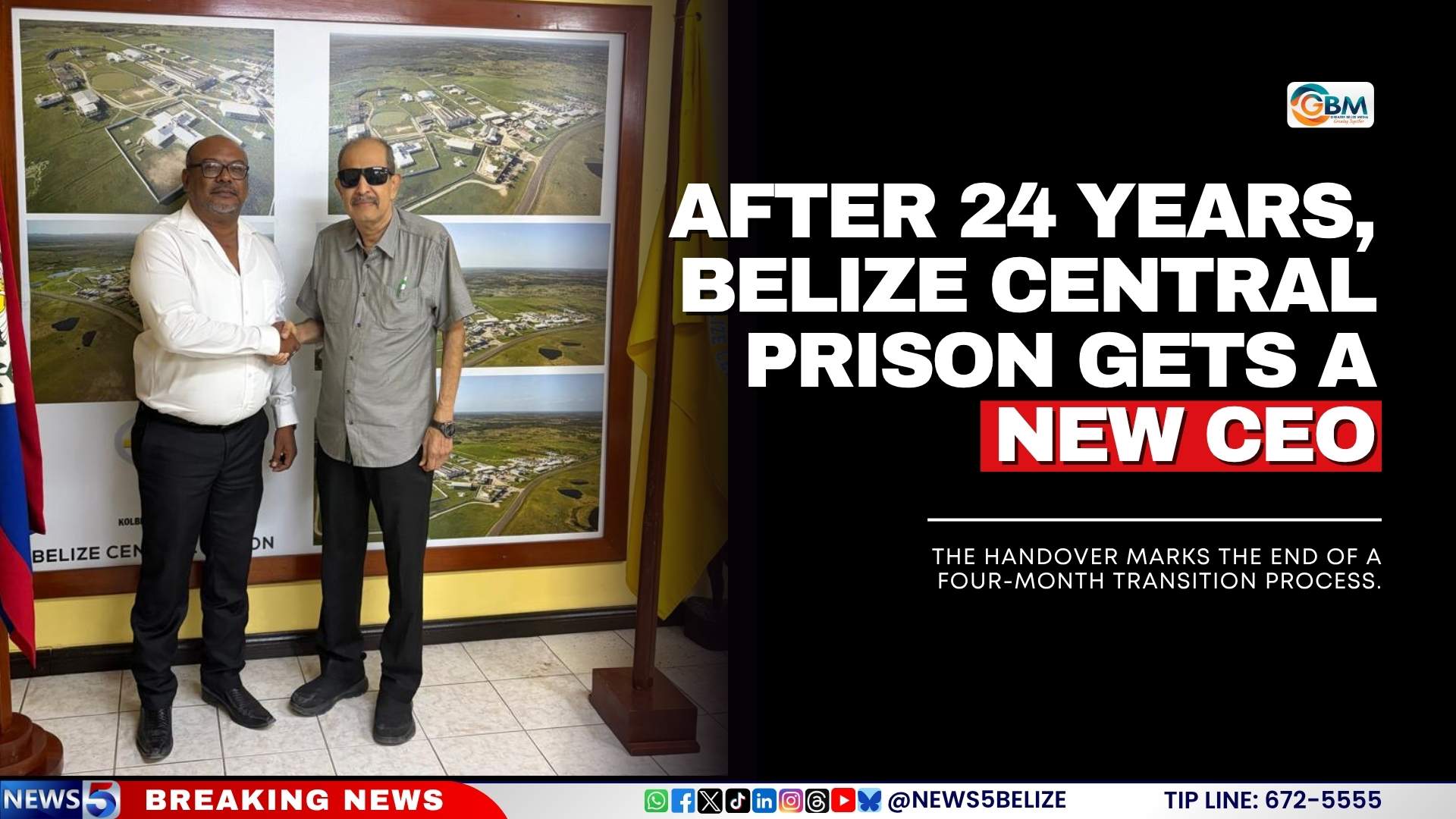
    A historic leadership transition has concluded at one of Belize’s most important correctional facilities, bringing a close to nearly a quarter-century of steady governance. After 24 years at the helm, Virgilio Murillo has stepped down as chief executive of the Kolbe Foundation, the non-governmental entity that manages Belize Central Prison through a long-standing public-private partnership with the national government. On May 19, 2026, George Gomez officially assumed the role of CEO, marking a new chapter for the country’s largest correctional institution.

    The handover between the two leaders did not happen abruptly. It was the final outcome of a carefully planned four-month transition process designed to ensure continuity of operations and a smooth transfer of responsibilities. Both the Ministry of Home Affairs and Enterprise and the Kolbe Foundation’s Board of Directors have publicly lauded Murillo’s transformative impact on the prison system over his 24-year tenure. Under his leadership, the facility saw widespread reforms that improved both institutional management and inmate conditions, reshaping what was once considered a struggling correctional system into one aligned with modern correctional practices.

    Moving forward, Gomez has made clear that his core priorities as the new CEO will center on expanding evidence-based rehabilitation programs and strengthening reintegration support for incarcerated individuals preparing to rejoin society after completing their sentences. To preserve institutional memory and ensure ongoing access to Murillo’s decades of expertise, the foundation has named him CEO Emeritus. He will remain actively involved with the organization in the new role of Special Advisor to the Board of Directors, providing guidance and insight as the new leadership pursues its reform agenda. This transition reflects the foundation’s commitment to balancing institutional continuity with forward-looking progress in correctional services.

  • Belize’s Economy is Valued at US $3 Billion

    Belize’s Economy is Valued at US $3 Billion

    On May 20, 2026, the World Bank Group’s Board of Executive Directors greenlit a new five-year Country Partnership Framework that maps out a collaborative path with Belize’s government to drive private sector-led economic expansion across the small Central American-Caribbean nation.

    Per World Bank data, Belize’s total gross domestic product currently sits at roughly US$3 billion, marking meaningful progress in macroeconomic stability after years of targeted government policy reforms. In recent years, the country has cut its public debt-to-GDP ratio sharply from 103% down to 62%, while unemployment has dropped to an unprecedented 2.1% — a historic low for the nation. Economic activity has also rebounded strongly from recent global shocks, positioning Belize for further expansion if persistent structural and climate-related risks can be addressed.

    The largest pillar of Belize’s economy, tourism, accounts for nearly 50% of total national output, but the sector remains exceptionally exposed to the accelerating impacts of climate change. Ongoing degradation of Belize’s iconic barrier reef, a top global tourist attraction and critical natural infrastructure, poses direct threats to not only tourism but also commercial fishing and agricultural production. Reef damage also amplifies the country’s vulnerability to storm surges and other climate-fueled extreme weather events that can derail economic activity.

    To tackle these climate risks, the new partnership framework allocates World Bank financing to upgrade critical public infrastructure: improving drinking water systems, expanding sanitation access, overhauling waste management practices, and supporting climate-resilient agricultural techniques, with a specific focus on vulnerable coastal communities that bear the brunt of climate impacts. The strategy also outlines a goal to position Belize as a key transportation and trade hub connecting the Caribbean region and mainland Central America, unlocking new cross-border economic opportunities.

    Energy security represents another core priority of the new partnership. The World Bank notes that despite a nearly 50% jump in peak energy demand over the past decade, Belize has not added significant new domestic electricity generation capacity, and currently imports half of its power through volatile global spot markets. This leaves the country exposed to extreme price swings and supply disruptions. To resolve this gap, the framework supports policy overhauls for the energy sector, upgrades to national electricity grid management, and creates new incentives to attract private sector investment in domestic energy generation.

    The plan also confronts long-standing labor market challenges, including a widespread shortage of skilled workers and a stark gender participation gap. As of mid-2025, less than 50% of working-age women were active in the labor force (either employed or actively seeking work), compared to nearly 75% of working-age men. World Bank analysis identifies unequal responsibility for unpaid childcare as one of the primary drivers of this persistent gap.

    To close this divide, the strategy allocates funding for expanded investment in early childhood education and affordable childcare services in low-income and underserved communities. This investment is designed to remove barriers that keep women out of the workforce or from pursuing further education and professional training, boosting inclusive economic growth across the country.

    Belizean Prime Minister John Briceño expressed strong support for the new partnership, reaffirming his administration’s commitment to building on recent economic gains while expanding opportunity for all Belizeans. “This partnership with the World Bank Group will support us in that effort,” Briceño said.

    Lilia Burunciuc, World Bank Director for the Caribbean, emphasized the institution’s long-term commitment to Belize’s development trajectory, saying “The World Bank Group is steadfast in supporting Belize’s next phase of growth.” The full strategy will pool resources from four key World Bank Group institutions — the International Bank for Reconstruction and Development (IBRD), International Development Association (IDA), International Finance Corporation (IFC), and Multilateral Investment Guarantee Agency (MIGA) — under a coordinated “One World Bank Group” delivery model.

  • Fuel Tax Cuts Drain $80M from Belize Revenues

    Fuel Tax Cuts Drain $80M from Belize Revenues

    BELIZE CITY – May 20, 2026 – Sustained fuel tax cuts implemented by Belize’s ruling administration to buffer households from skyrocketing global fuel prices have already stripped $80 million from the national treasury, Prime Minister John Briceño has confirmed. Speaking to media this Wednesday morning, Briceño made clear that the government has no plans to reverse the policy, arguing that passing the full weight of global price volatility onto ordinary citizens is economically and politically untenable.

    “We simply cannot transfer the entire cost burden to Belizean families. That is why this government made a deliberate choice to cut the fuel taxes we collect,” Briceño stated. The most recent round of cuts shaved approximately one dollar off the per-gallon cost of fuel, taking effect at midnight this Wednesday. Even with these reductions, official price adjustments released overnight show that overall fuel market trends remain upward: regular gasoline has jumped by more than one dollar per gallon, though the adjustment brought unexpected drops for premium gasoline and diesel, leaving premium fuel actually cheaper than regular at retail pumps. Kerosene prices also declined in the latest adjustment.

    Current tax and government levies still account for roughly 25 percent of the average price motorists pay per gallon of fuel, even after the multiple rounds of cuts implemented by Briceño’s government. As the government continues absorbing massive revenue losses to keep fuel costs manageable, the parliamentary opposition has ramped up pressure on the administration over the growing cost of living crisis.

    United Democratic Party (UDP) Leader Tracy Panton framed the current crisis of soaring fuel and living costs as “COVID 2.0” during an appearance on the popular *Open Your Eyes* morning talk show Wednesday. Panton echoed the prime minister’s own framing of imported inflation, noting that just like the COVID-19 pandemic originated outside Belize’s borders, the current fuel price surge is driven by the volatile ongoing conflict in the Middle East that pushes up global crude acquisition costs.

    But Panton emphasized that regardless of the external root of the crisis, the Belizean government bears a clear responsibility to protect working people and vulnerable communities from the fallout. “Inflation may be imported, but we have a responsibility as a government to mitigate the impact on Belizeans, the working class, the vulnerable,” Panton said.

    Briceño pushed back against criticism Wednesday, defending his administration’s actions by noting the government is already doing everything possible to cap fuel costs for consumers. To offset the $80 million in lost revenue and balance the national budget, Briceño confirmed the government is targeting cuts to non-essential spending on goods and services, but drew a line at slashing critical social support programs, which will remain fully protected from budget trimming.

    “Even as fuel prices continue to climb, we are keeping taxes cut because we are committed to finding a sustainable balance between the global market cost of fuel and the tax burden our people face,” Briceño added. Full coverage of the ongoing fuel price crisis and government response will air this evening on News 5 Live at 6 p.m.

  • Leadership Crisis Hits National Bus Company Weeks After Launch

    Leadership Crisis Hits National Bus Company Weeks After Launch

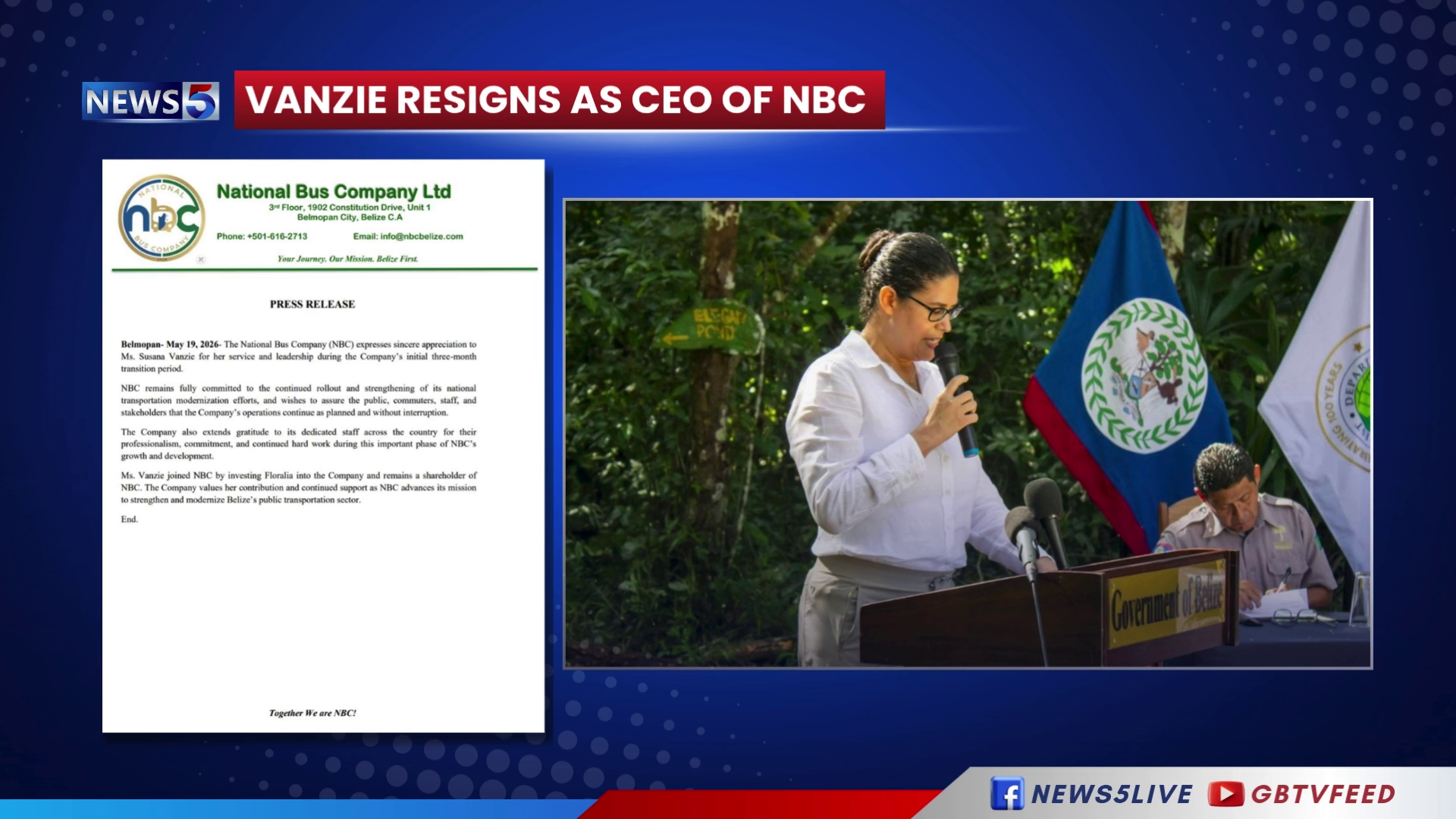
    Weeks after its national rollout, Belize’s flagship National Bus Company (NBC) finds itself in the midst of a leadership transition that has reignited questions about the future of the country’s public transportation overhaul. Less than three months after the service launched, founding CEO Susana Vanzie has stepped down from her post — a departure that comes at a critical juncture, just days after the company secured promising momentum from talks with rural bus operators aimed at expanding its network and bringing more private operators into the fold.

    Belize’s Minister of Transport Dr. Louis Zabaneh has moved quickly to downplay concerns over the sudden change, emphasizing that Vanzie’s tenure was always intended to be temporary. In an interview, Zabaneh explained that Vanzie agreed to step in only to guide the NBC through its early development stages, and notified government officials weeks ago that she would conclude her service by May 15. Vanzie and her brother remain shareholders in the company and will continue to support its growth as stakeholders, the minister added.

    Despite official assurances, the leadership change has sparked unease among industry stakeholders, who question the long-term stability of the ambitious nationalization project. While NBC confirms that day-to-day operations remain uninterrupted, with experienced regional managers overseeing core services, Zabaneh acknowledged that a permanent chief executive is essential to steer the company through its planned rapid expansion. The NBC board has launched a formal open search for a new CEO, accepting applications from both internal candidates and external applicants from across Belize’s economy. While the board already has internal candidates with demonstrated commitment to the project in its sights, the open process is designed to cast a wide net to find the best candidate to lead the transition, Zabaneh said. No timeline has been set for announcing the new appointment.

    Critics of the project say the CEO exit is a red flag that exposes deeper flaws in the Briceno administration’s rushed rollout of the national bus scheme. German Tillett, co-owner of private operator Tillett’s Bus Line, argues that Vanzie’s departure comes amid a growing list of unaddressed issues, from persistent mechanical problems with existing vehicles to a lack of transparency around the company’s financial management.

    Tillett has also raised sharp questions about the government’s upcoming plan to approve public financing for a new fleet of electric buses, noting that the administration has yet to release public data from an earlier pilot program that deployed two electric buses with private operator Westline. “I am not against innovation, but modernization without information is recklessness,” Tillett said. He pointed to the lack of published data on how the buses perform in Belize’s climate, including the impact of high heat, heavy rainfall, and local operational demands on battery life and long-term viability. He also questioned why the government has moved away from the original public-private partnership (PPP) model that was initially proposed for the project, shifting the full financial burden of the new electric fleet to Belizean taxpayers.

    As the search for a permanent CEO gets underway, the leadership vacuum adds another layer of uncertainty to a project that is meant to transform Belize’s public transportation landscape. While the government maintains the transition was pre-planned and operations remain on track, critics say the changes raise urgent questions about governance, planning, and transparency for one of the administration’s high-profile infrastructure initiatives.

  • $160K Immigration Scandal: Who Took It, Who Knew?

    $160K Immigration Scandal: Who Took It, Who Knew?

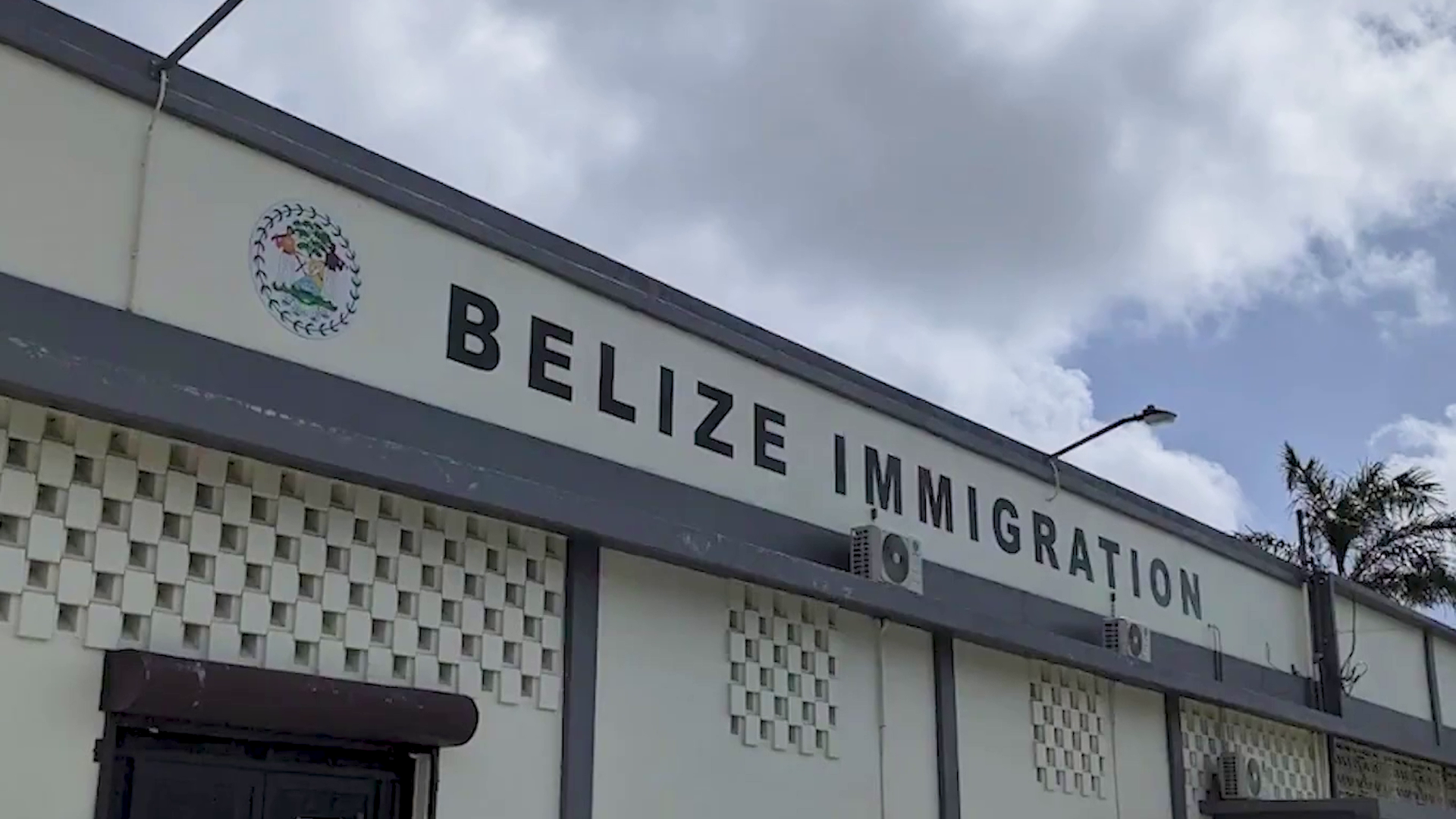
    A deepening public fund misappropriation scandal centering on Belize’s Immigration Ministry has placed the national government under growing public and political pressure, with calls mounting for a full, independent audit of the agency’s financial operations.

    Dated May 19, 2026, the unfolding controversy began when a preliminary investigative report was delivered to Immigration Chief Executive Officer Tanya Santos-Neal, documenting the unauthorized diversion of at least $160,000 in public funds. In an interview with reporters, Santos-Neal confirmed that investigators have already pinpointed one individual linked to the misappropriation, who could soon face formal criminal charges. The bigger question hanging over the case, however, remains how far the misconduct extends.

    Santos-Neal explained that the preliminary probe, which cross-checked financial records through the ministry’s CITO digital system, found no evidence that applicants failed to receive the immigration documentation they paid for. Instead, the embezzlement occurred behind the scenes, through manipulated receipt reversals. Investigators are still working to untangle what exactly took place: whether the scheme involved forged supervisor signatures, simply inadequate oversight from supervisory staff, or active complicity by senior leaders within the department.

    When asked how many people may be involved, Santos-Neal noted that one person with direct access to cash payments has been confirmed as a person of interest. But the ministry’s multi-layered supervision structure means that misconduct could reach either the first or second tier of oversight – or both. As a result, Santos-Neal confirmed the agency will formally recommend a full, in-depth audit to uncover all gaps and wrongdoing in the department’s financial practices.

    Opposition Leader Tracy Panton, head of the United Democratic Party, has seized on the scandal to argue that the misappropriation is not an isolated incident, but evidence of systemic, endemic corruption that permeates multiple branches of the current government. Panton pointed to longstanding allegations of misconduct across other key public agencies, including the Lands Department and Police Department, as well as unaccountable payments from statutory bodies to private marketing firms with no clear justification for the spending.

    “These are not the private purses of government officials,” Panton stated. Citing the common adage that “a fish stinks from the head,” she argued that the spread of corruption across public services stems from a lack of accountability at the highest levels of national leadership. She claimed that when low-level public workers see senior ministers and even the prime minister benefiting from corrupt practices without consequence, they feel justified in seeking illicit gains to support their own families and improve their living standards. The result, Panton said, is corruption that has become embedded in every stage of public service delivery.

    Panton has previously pledged on social media that if the United Democratic Party wins power under her leadership, her administration will launch a sweeping effort to eliminate systemic corruption from Belize’s public sector. As the investigation expands, public attention has shifted from focusing solely on the individual identified in the initial probe to questioning whether broader regulatory and cultural changes are needed to restore public trust in government institutions.

  • After a Decade of Delay, OSH Bill Hits Senate Snag

    After a Decade of Delay, OSH Bill Hits Senate Snag

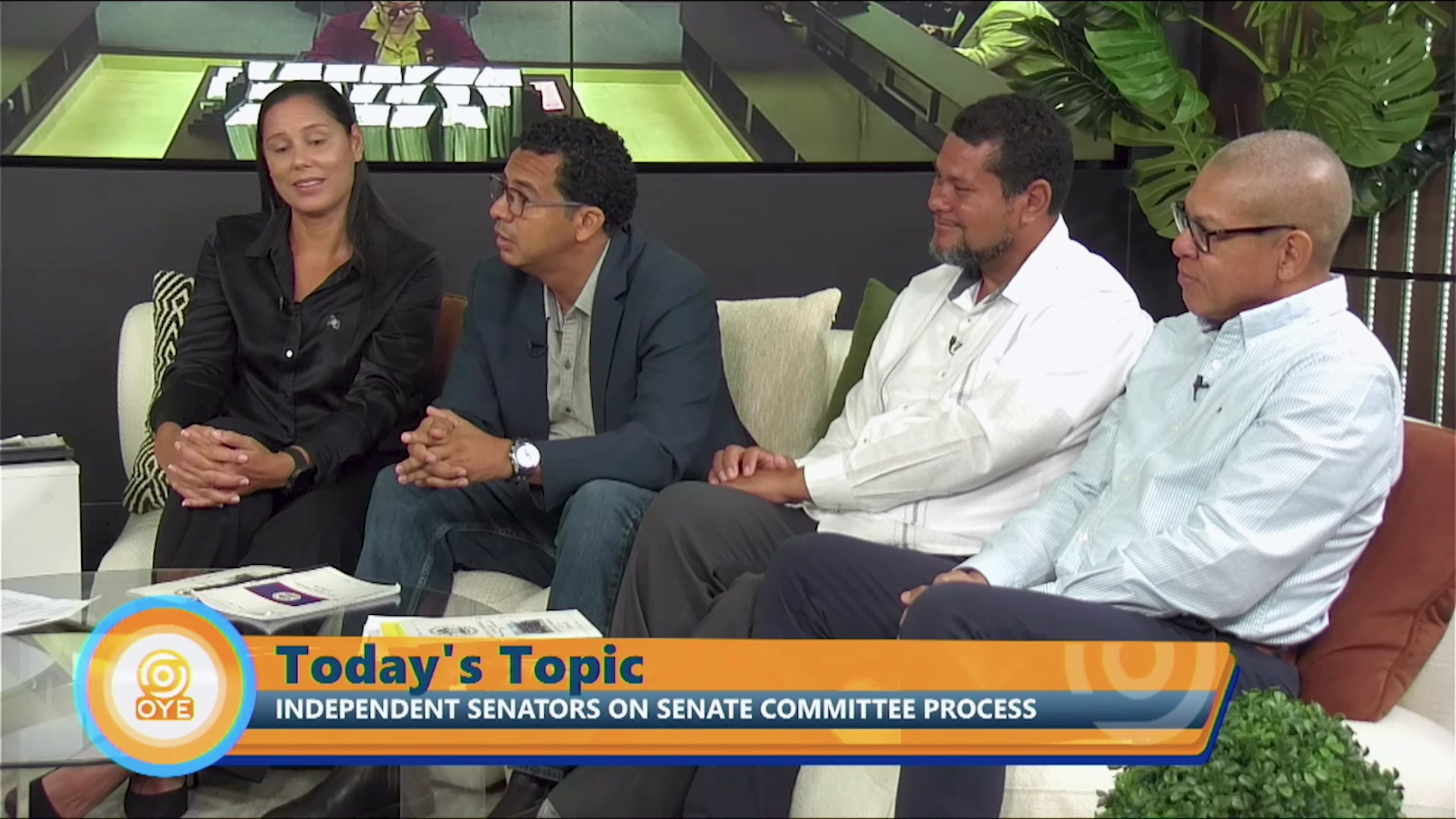
    More than ten years after it was first drafted, the long-awaited Occupational Safety and Health (OSH) bill has finally advanced to the national Senate — only to become bogged down in procedural and substantive gridlock that has cast new doubt over the future of landmark worker protection legislation. For two full weeks, the proposal has been stuck in Senate committee review, leaving workers and employers across the country waiting without the critical regulatory safeguards the bill is designed to put in place. While public narratives have circulated blaming broad Senate inaction for the delay, sitting Union Senator Glenfield Dennison pushed back against that framing during a joint press appearance with independent colleagues Wednesday, arguing the holdup stems from deep, unresolved flaws embedded in the legislation itself.

    Dennison refuted claims that individual senators were deliberately dragging their feet on the bill, noting that the proposal spent 12 years in preliminary stages before reaching the upper chamber just this spring. “Don’t drop that on me — I don’t want anybody suggesting that it is me holding up the OSH,” Dennison said. “Let’s take that narrative and throw it in the trash.” The most obvious contradiction he highlighted centers on the treatment of domestic workers: the bill’s opening definition section explicitly frames domestic work as a covered employment category, but Section 3 includes a clear exemption that excludes domestic workers from the law’s protections entirely. This direct logical conflict, Dennison argued, is just the most visible of a long list of unresolved issues that have stalled the legislation’s progress.

    The bill’s delay has drawn criticism from across the Senate aisle, with UDP Senator Sheena Pitts doubling down on concerns about the exclusion of domestic workers and pointing blame directly at the Ministry of Labor and its leadership, including Labor Minister Kareem Musa. Pitts emphasized that Senate lawmakers are not intentionally stalling the bill — instead, the executive branch’s team failed to prepare answers for core questions raised during committee review. When senators pressed for clarification on key provisions, Pitts said, ministry representatives “told us, we can’t answer that right now.” Adding to the chaos, Minister Musa was out of the country during the initial review period, leaving no senior official able to resolve outstanding concerns.

    Pitts also tied the exclusion of domestic workers to the country’s international human rights commitments, noting that the nation has ratified the United Nations Convention for the Elimination of Discrimination Against Women, which requires governments to advance gender equity. “You know who domestic workers are — women,” Pitts said. “It is so unfortunate that even the minister does not understand the legislation,” she added, criticizing the lack of preparation from the Labor Ministry’s top administrative team, including the Chief Executive Officer and Labor Commissioner, who attended the committee hearings but could not respond to basic questions about the bill’s text.

    The gridlock comes after more than a decade of legislative back-and-forth on the OSH bill, which was first introduced in 2014 to update outdated occupational safety rules and expand protections to vulnerable worker groups. The current delay has renewed concerns that the legislation will stall indefinitely, leaving millions of workers without improved safety standards and regulatory recourse for workplace hazards. For the time being, committee leaders have not scheduled a new vote or markup, leaving the bill’s fate uncertain as the legislative session progresses.

  • Shyne Barrow Blasts Panton’s UDP Faction as Self-Serving

    Shyne Barrow Blasts Panton’s UDP Faction as Self-Serving

    Internal fractures within Belize’s main opposition United Democratic Party (UDP) have accelerated into open, public conflict, with two of the party’s most prominent senior figures launching blistering attacks on the leadership of current party head Tracy Panton just six months into her tenure.

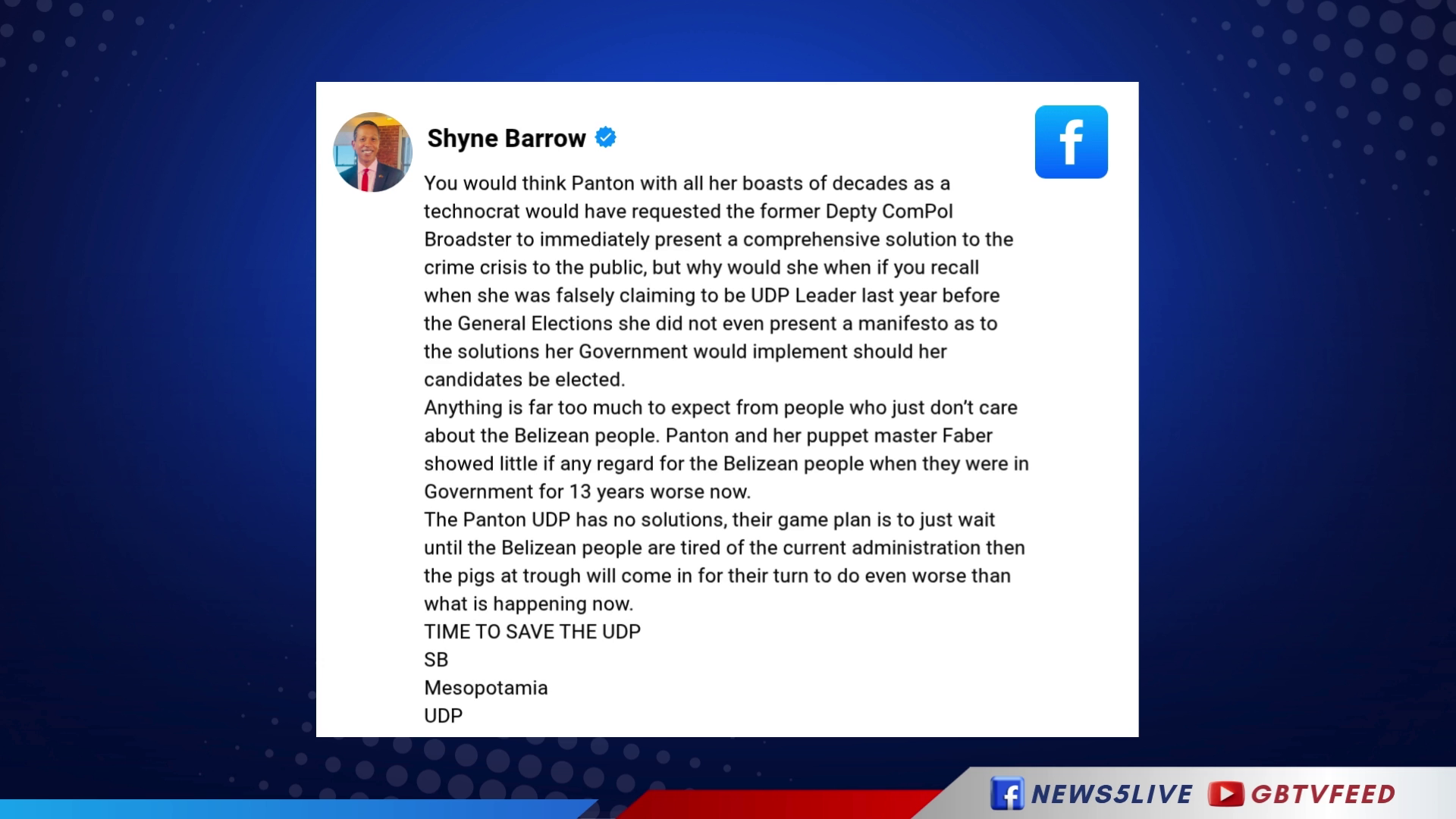
    Former UDP party leader Moses “Shyne” Barrow joined forces with ex-deputy party chairman Alberto August to publicly denounce Panton and her aligned faction, airing long-simmering internal frustrations with unvarnished candor. Barrow, one of the UDP’s most high-profile figures, delivered his rebuke directly to voters via a public Facebook post, arguing that the party currently offers no credible alternative to the ruling government for Belizean voters. He went further to label Panton’s faction as an out-of-touch, self-interested bloc of politicians, who are primarily waiting for their turn to access power and personal gain rather than working to advance the party’s policy goals and reconnect with voters.

    August fully backed Barrow’s criticism, centering his own remarks on Panton’s qualifications to lead the party. He publicly questioned whether Panton has the necessary experience to rebuild the fractured organization, and called on her to step down temporarily, build up political experience over time, and mount a leadership bid again in the future.

    As the wave of internal backlash against Panton grows, political observers have noted that the public infighting has ramped up pressure on the new leader to respond to the criticisms from within her own party. When approached for comment by reporters, Panton pushed back firmly against the calls for her departure, framing her focus as staying committed to the multi-year project of rebuilding the UDP rather than engaging in petty internal squabbles.

    Panton pointed out that she has only served as party leader for less than six months, and inherited a party in complete disarray when she took the top role. She outlined the depth of the challenges she inherited: the party’s bank account was left completely empty, its national headquarters was in a state of ruin, the party’s constitution had been effectively discarded, and previous caretaker leadership had operated without any commitment to fair play, transparency or accountability. Despite these steep challenges, Panton emphasized that the UDP remains a broad, inclusive organization that welcomes all members who want to contribute constructively to rebuilding the party’s credibility and regaining the trust of the Belizean electorate.

    She did not mince words for critics within the party, however, warning that internal dissent that undermines the rebuilding effort will have consequences. “There is also a thing called natural attrition. Not everyone will get on the ship and if you don’t get on the ship you do so at your peril, because one thing I will tell you, this ship will sail,” Panton said, reaffirming her commitment to holding the leadership and moving forward with the party’s rebuilding regardless of internal opposition. She added that the door remains open to any member willing to contribute meaningfully to the party’s progress.

    This report is a transcript of an evening television news broadcast, with all dialogue transcribed accurately per standard transcription conventions.

  • Illegal Dredging Claims Mexico Rock Near Ambergris Caye

    Illegal Dredging Claims Mexico Rock Near Ambergris Caye

    Belize’s coastal ecosystems are facing an urgent, unaddressed threat from unregulated development and illegal dredging, environmental advocates have warned, pushing authorities to tighten enforcement of existing conservation rules and halt harmful activity immediately. In a public joint statement released this May, the Ambergris North Alliance (ANA), a local environmental advocacy group, has named Mexico Rocks near Ambergris Caye as the site of the most recent confirmed violation, where dredging operations have continued long after their original official permits expired.

    ANA President Catherine Paz detailed the most recent incident, which unfolded just one week before the group’s formal announcement, at a newly constructed bulkhead located roughly 600 yards from X’tan Ha Resort, right along the boundary of the Mexico Rocks Marine Reserve. From the moment the bulkhead was built, ANA raised red flags, submitting formal concerns to Belize’s Department of the Environment (DOE), the local mayor, and the area’s elected representative. No action was taken to remove or modify the structure, leaving a persistent problem that has now escalated into illegal activity.

    Paz explained that the bulkhead’s placement causes recurring navigational issues for barges accessing the site: shifting sand frequently traps vessels, forcing crews to dig out the channel again and again. The ANA captured clear video evidence of the most recent unauthorized dredging, which continued illegally until midnight, pausing only briefly for a couple of hours before resuming. Paz confirmed that while the project held valid permits during its initial phase, those approvals have expired, and no new permit has been granted for ongoing work.

    This single incident is not an isolated case, according to ANA. The organization points to a long pattern of unregulated dredging, land reclamation, and quarrying across northern Ambergris Caye and other sensitive coastal zones across Belize, including Hol Chan, Bacalar Chico, Placencia, and Corozal Bay. Cumulative damage from these activities is already putting the region’s unique biodiversity and natural climate resilience at severe risk, Paz says, and the repeated failure of authorities to respond to community concerns has eroded public trust in government environmental oversight.

    The ecological risk of the illegal dredging is particularly acute because of the site’s proximity to the Belize Barrier Reef, one of the world’s most important coral reef systems. Paz noted that the reef sits less than a quarter-mile from the shore at Mexico Rocks, and moves even closer to land further north. Sediment stirred up by dredging (a process called siltation) is carried directly to the reef by natural currents, smothering corals and disrupting the entire marine food web that supports both local wildlife and the coastal tourism and fishing industries that are the backbone of the local economy.

    After years of quiet outreach and repeated requests for meetings with authorities that went unanswered, ANA moved to issue its public call for action. The group is demanding an immediate halt to all development activity in the country’s most sensitive coastal and marine protected areas, alongside much stricter enforcement of existing environmental protection laws.

    In response to inquiries from reporters, Belize’s Department of the Environment and Mining Unit confirmed that they have received ANA’s formal reports of illegal activity, and stated that the incident is now under active investigation.

  • Placencia Lagoon Controversy Exposes Permit Violations

    Placencia Lagoon Controversy Exposes Permit Violations

    Scheduled for publication on May 19, 2026, a simmering dispute over unauthorized sand extraction from Belize’s Placencia Lagoon has erupted into a broader conflict over coastal development governance, pushing environmental accountability and community representation into the national spotlight. What began as local outrage over a private contractor violating the terms of its dredging permit has grown into a coordinated demand from local leaders for a formal voice in critical environmental and resource development decisions.

    After the country’s Department of Environment and national Mining Unit stepped in to address the initial violation, the Placencia Village Council launched an independent investigation that uncovered multiple additional permit breaches. Now, the council is pushing for a permanent seat at the table when government agencies review environmental clearances and mining permits for the peninsula.

    Placencia Village Councilor Kristine Small emphasized that the stakes of the conflict extend far beyond the boundaries of a single local jurisdiction. Any development activity along the Placencia Peninsula, she explained, shapes the economic and environmental well-being of all residents across the region. Small noted that the unregulated dredging has already damaged critical coastal ecosystems, including seagrass beds that serve as core habitat for manatees, commercial fish species and other forms of marine life that form the foundation of the peninsula’s livelihoods. Many local residents, tour guides and artisanal fishers rely on the lagoon’s natural resources for both food and income, she added.

    At the center of the community’s complaint is the lack of local oversight over high-impact coastal development. Small pointed to long-standing government claims that understaffing prevents consistent monitoring of permitted projects, a gap that the Placencia Village Council is ready to fill. “We want to appoint a trusted local representative to carry out consistent oversight to ensure all projects follow the rules moving forward,” Small said, stressing that cross-jurisdictional impacts make local input non-negotiable for projects along the peninsula.

    The controversy in Placencia Lagoon has coincided with growing opposition criticism of the government’s approach to coastal development across Belize. Gabriel Zetina, United Democratic Party caretaker for Belize Rural South, has accused the ruling government of trading long-term environmental sustainability for quick short-term economic gains, amid parallel complaints from residents of Ambergris Caye and the Placencia Peninsula over unregulated dredging operations.

    Zetina said that no level of government has been willing to accept accountability for the flawed permitting process. When questioned, national officials in Belmopan shift blame to local leaders, while local leaders point back to the national Department of Environment (DOE) as the authority responsible for granting permits. The DOE, in turn, claims that permits are only approved when local leaders issue a letter of no objection, creating a circular blame game that leaves no one responsible for monitoring and enforcement.

    “We are killing the goose that lays the golden eggs just to sell the feathers,” Zetina said, noting that Placencia residents have watched for weeks as dredging equipment damages one of the country’s most biologically diverse coastal ecosystems. He added that residents across Belize Rural South will continue pushing for full transparency around dredging and coastal development projects, where critical public information has been largely inaccessible.

    For its part, the Placencia Village Council says it remains optimistic that national authorities will agree to include local stakeholders in future decision-making processes, addressing the governance gap that allowed repeated permit violations to occur.

  • New Health Plan, New Costs? Panton Questions NHI Scheme

    New Health Plan, New Costs? Panton Questions NHI Scheme

    As debate over Belize’s national healthcare overhaul gains momentum ahead of a key parliamentary vote, the country’s main opposition leader is raising urgent red flags about the potential financial burden the proposed framework could place on working families. United Democratic Party (UDP) head Tracy Panton has emerged as a leading critic of the draft National Health Insurance Authority Bill, homing in on a controversial clause that grants the scheme’s governing board — with final approval from the relevant government minister — the power to mandate mandatory financial contributions from enrollees.

    With cost-of-living pressures already stretching household budgets across Belize, Panton argues that the current draft legislation is ill-considered and would exacerbate financial hardship for a population already grappling with rising everyday expenses. In sharp remarks criticizing the government’s legislative approach, Panton emphasized that the opposition cannot back a bill rushed through parliament under the banner of universal healthcare that lacks critical transparency and guardrails.

    Panton points to three core flaws in the current proposal: insufficient accountability mechanisms, vague, underdeveloped language around long-term financing, and a complete lack of clarity about the true out-of-pocket cost the scheme will impose on ordinary Belizeans. Most critically, she warns the legislation creates a pathway for what amounts to a new tax on citizens to fund the national health system. The proposed structure would establish a parallel contribution system to the country’s existing Social Security Board (SSB), requiring working Belizeans to make mandatory payments to both funds simultaneously.

    “This is not National Health Insurance — this is what I call a national hustle insurance,” Panton stated, calling on the government to level with the public about the true terms of the reform. The National Health Insurance Authority Bill is scheduled for its first debate in Belize’s National Assembly in early June, setting the stage for a tense showdown over the future of the country’s healthcare system. This report is adapted from a televised evening news broadcast transcript, with original Kriol-language statements rendered in standard spelling for clarity.