标签: Belize

伯利兹

  • Cyberbullying Case Crumbles After Chester Williams’ Absence

    Cyberbullying Case Crumbles After Chester Williams’ Absence

    A high-profile cyberbullying case centered on a former top law enforcement official in Belize has been abruptly dismissed, after the key complainant failed to appear for the scheduled trial. The case, which was set to open on May 19, 2026 at the Belize City Magistrate’s Court, targeted Barry Flowers, a serving police officer based in Orange Walk, who was accused of committing online harassment against ex-Commissioner of Police (COMPOL) Chester Williams.

    Court proceedings never moved past the initial check-in, however, after court officials called Williams’ name three times outside the courtroom and received no answer. Prosecutors confirmed to Magistrate Neeshad Mohammed that Williams had received formal legal notification of the trial date, and that court staff had made repeated attempts to reach him ahead of the hearing to confirm his attendance. All outreach went unanswered.

    Under local judicial rules, a criminal complaint cannot proceed without the attendance of the named complainant to give evidence and answer cross-examination. With no alternative path forward, Magistrate Mohammed formally dismissed the charge against Flowers. In unusually blunt remarks delivered from the bench, the magistrate criticized Williams’ absence as a blatant act of disrespect to the court, noting that the former top cop’s position should have carried an even higher expectation of respect for judicial process. He emphasized that the country’s courts will not be weaponized to advance personal grudges between public officials.

    Flowers left the courthouse as a free man immediately after the ruling, and told reporters following the hearing that he is now exploring his own legal options to pursue action against Williams over the baseless charge. The underlying dispute dates back to 2025, when Flowers allegedly published a Facebook post that was critical of Williams’ tenure as police commissioner. This is not the first time a cyberbullying complaint filed by Williams has ended in dismissal for the same reason: it marks the second such case involving the former COMPOL that has collapsed in court after he failed to appear to support his own complaint.

  • Confronting Grooming to End Child Violence in Belize

    Confronting Grooming to End Child Violence in Belize

    As reports of sexual violence against minors climb steadily in Belize, a growing public outcry has emerged to confront the hidden, predatory tactic of grooming that paves the way for abuse – and to protect the nation’s most vulnerable young population. With community leaders and law enforcement now prioritizing proactive education and awareness, Belizeans are breaking the long-held culture of silence that has allowed these crimes to thrive. News Five journalist Britney Gordon dives into the growing crisis and the collective work underway to keep children safe.

    Grooming, a calculated manipulation strategy used by predators to exploit children, begins with the gradual erosion of boundaries: perpetrators first build trust with a young person to lower their defenses, normalize inappropriate interactions, and ultimately create conditions for sexual abuse. To help frontline officials identify and stop this process before harm occurs, law enforcement officers serving southside Belize City recently completed specialized training focused on recognizing early grooming warning signs and responding more effectively to child sexual abuse cases.

    Carla Alvarez, the lead consultant for the training, emphasized that underage victims never bear responsibility for the harm committed against them. “Children lack the emotional and cognitive capacity of adults, and it is our collective responsibility as grown community members to care for and protect them,” Alvarez explained. She added that predators specifically target children with unmet needs, noting that many victims lack consistent love, care, or attention at home – gaps that predators exploit by stepping in with gifts and focused affection that meets a child’s basic human craving for connection.

    “Predators will shower that isolated child with attention, build a false sense of loyalty, and gradually push boundaries to open the door for severe abuse,” Alvarez said, stressing that even trusted family members cannot be assumed safe. UNICEF data underscores this danger, showing that roughly 90% of child sexual abusers are already known to their victims, with family members accounting for a disproportionately high share of offenses.

    Mental health counselor Aimee Jex pointed out that engaged parents and caregivers are uniquely positioned to spot grooming red flags early. Small, easy-to-miss changes can signal trouble, she explained: “If a child suddenly comes home with an unexpected gift like a candy bar or new toy, that should prompt a conversation. It is our job as adults to notice irregular patterns of interaction that children would never identify as dangerous on their own.”

    Jex added that parents should not limit their vigilance to strangers, advising careful monitoring of all close relationships between children and adults, including teachers, extended family, and friends’ parents. Key warning signs include a child’s uncharacteristic hesitation around a specific person, or a close relationship between an adult and child that a parent knew nothing about.

    Alvarez and Jex both agree that ending child sexual violence in Belize requires more than just individual vigilance: the nation must end the stigma that keeps survivors silent and hold accountable all adults who fail to protect children. Communities that come together to prioritize transparency, education, and collective care can create the safe, protected childhood every young Belizean deserves. Britney Gordon, News Five, Belize.

  • Blue Teddy Bear Campaign Confronts Child Abuse Crisis in Belize

    Blue Teddy Bear Campaign Confronts Child Abuse Crisis in Belize

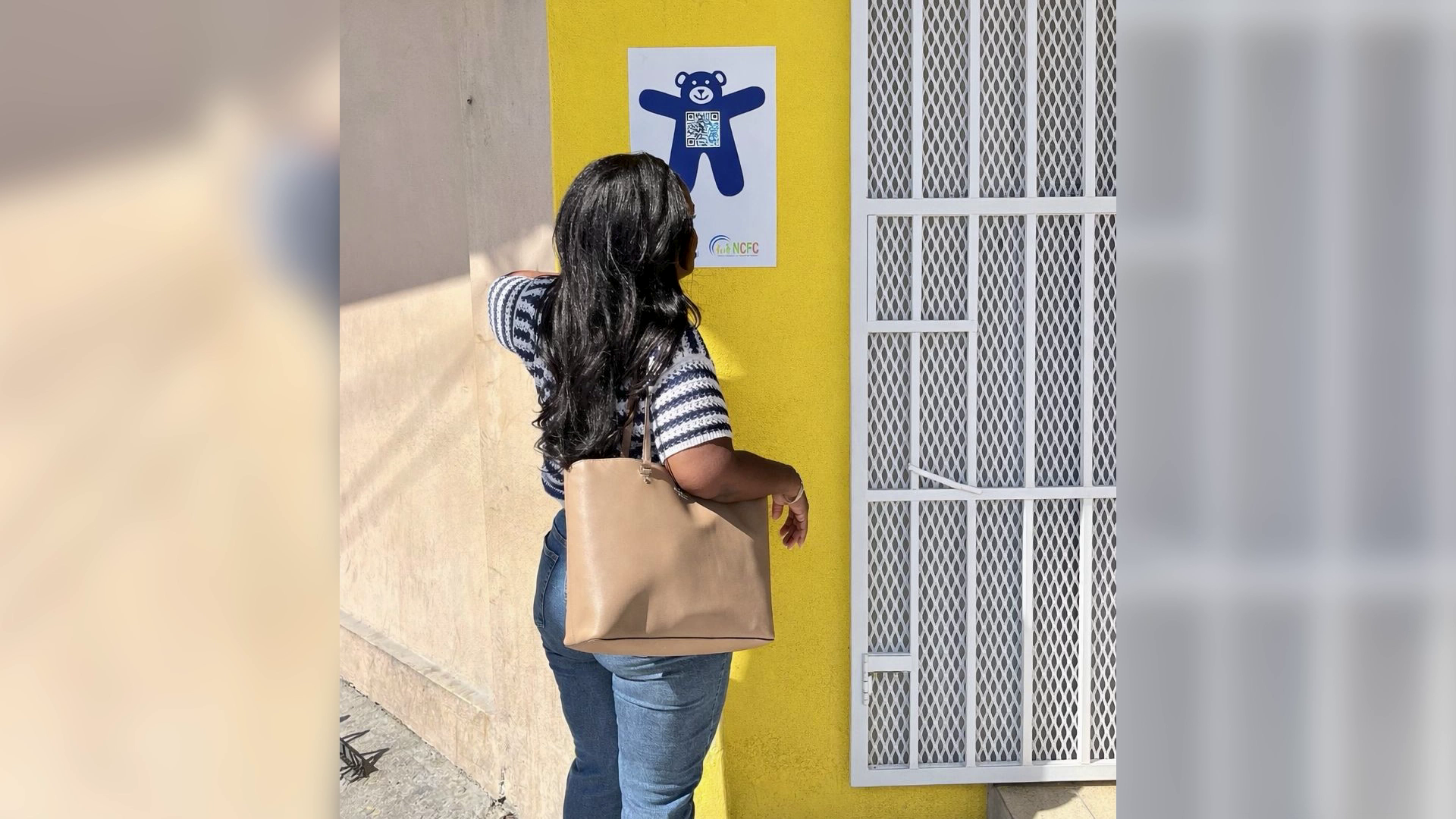
    In the Central American nation of Belize, a surge of public anger over widespread crimes against children has catalyzed collective action, following a string of recent arrests for alleged sexual violence against minors that has put national security and child protection officials on high alert. At the heart of this grassroots and institutional response is the Blue Teddy Bear Campaign, a coordinated effort led by UNICEF to empower ordinary community members as frontline defenders of vulnerable young people.

    On Wednesday, a new cohort of local community workers gathered for a day-long intensive training designed to teach participants how to identify hidden warning signs of child abuse, navigate safe reporting protocols, and challenge cultural stigmas that have long silenced potential witnesses. Lead national consultant Carla Alvarez, who heads the training program, emphasized that equipping everyday Belizeans with practical knowledge and confidence is the most effective way to strengthen the country’s fragmented child protection system.

    Addressing participants during the opening session, Alvarez centered her remarks on one of the biggest barriers to intervention: pervasive social stigma around reporting suspected abuse. “So many community members tell us they see something concerning, but they hold back out of fear of being publicly exposed or targeted for speaking up,” Alvarez explained. She went on to note that shifting social dynamics and the rise of digital technology have exposed children to risks that previous generations never faced, making collective vigilance more critical than ever.

    Alvarez pushed back against long-held harmful misconceptions about abuse, stressing that the issue crosses all socioeconomic boundaries. “Too many people still believe child abuse only happens in low-income households, but that could not be further from the truth. It occurs in every community, at every income level, across all social groups,” she said. She also clarified that abuse extends far beyond the most widely discussed physical and sexual violence, encompassing psychological harm, emotional abuse, and neglect—harmful experiences that often go unrecognized and unreported for years.

    Rooted in the UN Convention on the Rights of the Child, the campaign’s core message is that child protection is not the exclusive responsibility of police, social services, or international organizations. “This is everybody’s business,” Alvarez emphasized, calling for open national dialogue to demystify what counts as abuse and encourage bystanders to act. This training session is one of dozens planned across the country over the coming months, which will also include specialized programming for law enforcement officers to help them more sensitively and effectively investigate cases of child violence.

    As Belize continues to grapple with a growing national crisis of child victimization, the Blue Teddy Bear Campaign aims to build a sustained, community-led movement that prioritizes the safety and well-being of the country’s youngest citizens.

  • Mayor Cawich Under Pressure as Pastors Call for Billboard Removal

    Mayor Cawich Under Pressure as Pastors Call for Billboard Removal

    In the Belizean capital of Belmopan, a public controversy that ignited on social media over an alcohol billboard deemed sexually suggestive has escalated into a formal, organized advocacy campaign demanding its immediate removal, pitting community moral standards against commercial expression and putting local city leadership in the political spotlight. As of May 19, 2026, a coalition of 20 religious leaders from Belmopan and its neighboring communities has submitted an official petition to Mayor Pablo Cawich, pressuring the municipal government to take swift action against the advertising display that the clerics argue violates widely accepted public decency norms and has sparked widespread public anger. Campaign organizers have publicly stated they expect the mayor, who is facing growing public and political pressure, will comply with the demand to authorize the billboard’s removal.

    Leading the coalition is Church Senator Louis Wade, who laid out the group’s legal and ethical argument for municipal intervention in an on-the-record interview. Wade explained that the formal petition, signed by religious leaders across the capital region, was crafted to remind Mayor Cawich of his core obligations to the city’s residents, including his public duty to uphold community standards in shared public spaces. “At present moment the letter to the Mayor of Belmopan is almost finished formulated. It will be signed by pastors across the city and surrounding communities, reminding the mayor of his responsibility and his fiduciary responsibility to the residents of Belmopan,” Wade said. “It is a public space. There has been a public outcry. It appears that the mayor does not know the law. The criminal code speaks specifically to indecent exposure of photographs, pictures or so on in public space. And so we want to do the right thing first. And so that’s the process we are taking.”

    Addressing counterarguments that frame the billboard as a protected exercise of free expression, Wade pushed back on the claim by noting context specific to Belize’s legal framework. While Belize recognizes freedom of expression, Wade argued that the widespread public opposition to the display outweighs the advertiser’s right to place the content in a shared public space. Responding to the framing of the demand as a restriction of free speech, he noted: “We don’t have such [First] amendment in Belize, but we have freedom of expression in Belize. The freedom of expression that trumps the billboard is the freedom of expression of the residents who say they do not want the billboard.”

    Wade also emphasized that the scale of public backlash itself serves as proof of the content’s indecency, noting that public anger over the billboard has spread across the entire country, covered by every major media outlet and spawning thousands of social media posts discussing the controversy. “The outcry is so loud that it has gone around the country. Every media house has touched it, thousands of posts on the issue and that alone, the public outcry, demonstrates the fact that it is indecent because if it was decent, there would not be a public outcry,” Wade said. “So there is already enough for the mayor of Belmopan to act. You have people that are writing ‘RIP’ all over the place but don’t connect the deaths to the moral and ethical issues, and it’s the job of the church to bring that out whether people are comfortable with what we have to say or not.”

    Interestingly, a nearly identical alcohol billboard has been installed along Central American Boulevard in Belize City, the country’s former capital, but as of the date of this report, no formal public complaints or organized opposition to that display have emerged. This report is adapted from a transcript of an evening television news broadcast, with all original quoted content preserved for accuracy and context.

  • Years of Hard Work at ACC, One Graduation List: Who Made It?

    Years of Hard Work at ACC, One Graduation List: Who Made It?

    On a charged, emotionally charged morning in May 2026 at Belize’s Anglican Cathedral College, hundreds of students packed the campus’s central notice area, every gaze locked on the piece of paper that would cap years of early mornings, late-night study sessions, and relentless academic pressure: the annual graduation list. For most of these young people, this is the culminating moment of years of secondary education—when years of sacrifice either translate to the achievement they’ve chased, or force another year of effort to reach that goal. This year’s cohort, however, is already being remembered by school leadership for the extraordinary grit shown by its top graduates, each of whom overcame distinct personal and academic barriers to claim their spots on the graduation list and earn top rankings.

    The air hummed with a mix of tension and unfiltered joy on graduation list day, with screams of celebration, tight hugs, and even tears of relief echoing across campus as students found their names. For Principal Paulette Augustus, the moment is never just about a list—it’s the payoff for half a decade of relentless effort from every graduating student.

    “It’s been a long, exciting week and a half that we have been anticipating this day,” Augustus shared in an on-campus interview. “It’s the culmination of the years of study, the blood, sweat, and tears, per se.”

    Leading this year’s graduating class is valedictorian Ayeesha Longsworth, whose path to the top ranking was far from straightforward. Longsworth opened up about facing significant academic struggles during her first year of secondary school, particularly in mathematics, where she struggled to keep pace with coursework and found herself falling behind her peers.

    “I faced academic challenges in first form. I struggled a lot with math. And over the years, with the help of Ms. Martinez, she really brought out that excellence in me,” Longsworth explained.

    Beyond classroom support, Longsworth credited her tight-knit family and unshakable faith for keeping her motivated through the lowest points of her academic journey. She highlighted her parents, who worked through their own unspoken struggles to ensure she never missed a day of school, and her grandmother, who served as her spiritual guide.

    “I’d like to thank my parents for ensuring that I always came to school. And even if they struggled, they didn’t let me see. And I want to say thanks to my grandmother, who is my spiritual guide. She taught me to keep the faith, to keep God the center of my life,” she said.

    Claiming third place in the graduating cohort is Bristol Salazar, who noted that maintaining a consistent top-tier average across all subjects was a challenge in its own right. Salazar, who pushes herself to earn high marks in every class regardless of the subject, said the hardest part of her journey was holding herself to that high standard across the board.

    “The most difficult thing was trying to make sure you have a ninety and above across each classes, because I’m a person, I always want to be on a roll no matter which class I’m in,” Salazar said. When asked how she felt after learning she had earned a spot in the top five, she gushed: “Oh my gosh, I was so excited and grateful that I became one person out of the top five.”

    The only male student to earn a spot in this year’s top five is fourth-place finisher Justin Lee, who opened up about his own biggest challenge: building the consistent discipline needed to show up and focus on school work, even when he would rather have been enjoying time with friends.

    “A few challenges that I faced were dedication problems. Coming to school every day was a hard thing for me because I like play. And the focus on school mi hard, but my best friend helped me out. And my ma and my parents helped, push me to the right direction,” Lee said, speaking in Kriol that was transcribed per the outlet’s standard spelling conventions. When asked how he felt now that his years of effort had paid off, Lee shared a simple, joyful response: “Feel good. I feel happy that I did graduate and noh have to go through this again.”

    Principal Augustus says this year’s graduating class will stand out in her memory for its remarkable resilience, and she urged all graduates to carry the same perseverance that got them across the graduation stage into their next chapters.

    “My message to my 2025-2026 graduation class is perseverance, determination, self-will. Knowing that God has a plan and a purpose for each and every one of your lives and what is it that he plants there, it only grows,” Augustus said.

    Shane Williams of News Five reported from Anglican Cathedral College. This report is a transcript of the outlet’s evening television broadcast.


  • ‘Silence Is Protecting Predators’: Belize Is Fighting Back

    ‘Silence Is Protecting Predators’: Belize Is Fighting Back

    As the Central American nation of Belize confronts a troubling upward trend in child sexual violence, public safety and child protection officials are rolling out targeted training to equip law enforcement and community members with the tools to stop abuse before it occurs. This week, officers based in southside Belize City gathered for specialized sessions focused on identifying and intervening in grooming, the manipulative process that predators rely on to build trust with a child and their family ahead of committing harm.

    Carla Alvarez, the lead consultant leading the training, emphasized that predators intentionally target vulnerable children who lack consistent attention and emotional support at home. “When a child isn’t getting the love, care, and focus they need from their own household, an older adult who steps in to give them that attention can make the child feel seen and valued,” Alvarez explained. She went on to challenge a common dangerous misconception that keeps many families vulnerable: “We cannot fall into the trap of assuming that just because someone is a family member, a child is automatically safe around them.”

    Data from the United Nations Children’s Fund (UNICEF) underscores the urgency of this public awareness push, revealing that roughly 90 percent of child sexual abusers are already known to their victims. Family members account for an alarming share of these perpetrators, contradicting the widespread myth that most abuse is committed by strangers.

    Mental health counselor Aimee Jex is urging parents and guardians to actively monitor changes in their children’s behavior to spot early warning signs. “We have to be intentional about noticing irregular behaviors and shifting patterns that something is wrong,” Jex said. She also stressed that accountability must always fall on the perpetrator, not the child: “The child is never to blame, because a child cannot consent to harm from an adult.”

    A full deep dive into key warning signs of grooming and community-led strategies to hold abusers accountable will air during News 5 Live’s 6 p.m. broadcast this evening, as Belize works to break the culture of silence that experts say enables predators to continue harming children.

  • Twenty Pastors Demand Removal of ‘Sexually Suggestive’ Billboard in Belmopan

    Twenty Pastors Demand Removal of ‘Sexually Suggestive’ Billboard in Belmopan

    BELMOPAN – May 19, 2026 What started as scattered public outrage shared across social media platforms has evolved into a coordinated civic campaign aimed at removing a provocative alcohol industry advertisement from a prominent public location in Belize’s capital city.

    A coalition of 20 senior faith leaders from Belmopan and its neighboring communities submitted an official formal petition to Belmopan Mayor Pablo Cawich on Tuesday, calling on the mayor to exercise his municipal authority to take down the billboard, which the group describes as overtly sexually suggestive and out of line with local community standards. The religious leaders argue that the advertisement violates long-standing public decency norms for public spaces, and add that the widespread national backlash the billboard has sparked only confirms that it has no place on public display.

    Leading the campaign is Senator Louis Wade, who serves as both a sitting legislator and a church leader. Wade emphasized that the mayor carries both legal and moral responsibility to address the public’s concerns and remove the advertisement immediately.

    “This is publicly owned land, and the public has made their objections extremely clear,” Wade stated in comments following the delivery of the petition. “It seems the mayor may be unclear on the existing law. Belize’s criminal code specifically addresses the public display of indecent images, photographs and other content, and this advertisement falls squarely into that category.”

    When pressed to respond to counterarguments that the advertiser holds a legal right to freedom of expression, Wade rejected the framing, noting that the right to free speech applies to all members of the public — not just commercial advertisers.

    “The freedom of expression that matters most here is the freedom of expression of thousands of Belmopan residents who have said they do not want this offensive content in their public spaces,” Wade explained. “The outcry has echoed across the entire nation: every major media outlet has covered the controversy, social media platforms are flooded with thousands of posts opposing the billboard, and that collective public voice is clear proof that this content is indecent and inappropriate for public display.”

    Additional details on the mayor’s response and next steps in the campaign will be shared during News 5 Live’s 6:00 pm evening newscast, which viewers can tune into for full coverage of the developing story.

  • Tracy Panton: “Corruption Has Become Endemic in Every Phase of Public Service”

    Tracy Panton: “Corruption Has Become Endemic in Every Phase of Public Service”

    In a press briefing held by the United Democratic Party on May 19, 2026, Belizean Opposition Leader Tracy Panton issued a scathing rebuke of the ruling government’s failure to curb public sector corruption, following the revelation of a six-figure embezzlement scheme at the Belize City Immigration Office. The scandal, which involves the alleged misappropriation of no less than $160,000 in public funds, has sparked fresh claims of systemic rot across government agencies, according to Panton.

    Panton argued that the recent embezzlement case is far from an isolated incident, pointing to deep-seated integrity issues that have spread across multiple branches of the public service. “It is not only the Immigration Department; it is the Land’s Department, the Police Department,” she told reporters. “Corruption has become endemic in every phase of public service delivery. And my theory is that is the case because politicians, ministers, Heads of Department, Finance Office Officers, and Administrative Officers are not held to account for their failures or potential complicity.”

    The controversy first emerged last week, when the Ministry of Immigration confirmed it had launched internal probes into suspected financial irregularities at two of its key locations: the Belize City and Belmopan district offices. Investigators have documented that at least one long-serving employee engaged in fraudulent receipt reversal for more than 12 months to siphon public money into their own accounts.

    This week, Immigration Minister Kareem Musa went public with updates on the investigation, confirming that the implicated employee will face formal criminal charges over the scheme. Musa also noted that he had commissioned an independent, third-party audit to fully unpack the scope of the fraud. Crucially, the minister acknowledged that the suspect may have colluded with other parties inside the department, and investigators are currently examining the validity of supervisor signatures on altered documents to identify any additional co-conspirators. According to Musa, the suspect has been employed by the Ministry of Immigration for five years.

  • Reporter Aaron Humes Dies After Heart Attack at Home

    Reporter Aaron Humes Dies After Heart Attack at Home

    The Belizean media community is mourning the unexpected loss of one of its most recognizable voices: award-winning veteran reporter Aaron Humes passed away at his home Wednesday afternoon at just 39 years old, following an acute heart attack. Local reports confirm that shortly after 2 p.m., Humes’ mother grew alarmed when she received no answer after knocking on her son’s bedroom door. After several minutes of waiting and attempts to get his attention, Humes was ultimately able to unlock and open the door, where his mother found him already in the throes of the life-threatening cardiac emergency.

  • “Child Protection is Everybody’s Business”

    “Child Protection is Everybody’s Business”

    A recent surge of arrests connected to sexual violence against children has sent shockwaves through local communities across Belize, driving child protection advocates to push for collective action rather than just public outrage. The movement has taken tangible form this week with the launch of capacity-building training led by the UNICEF-backed Blue Teddy Bear Campaign, a national initiative designed to equip ordinary Belizeans with the skills to identify signs of child abuse and file official reports when concerns arise.

    On the morning of May 19, 2026, staff members from the Yarborough Community Resource Center joined the first training session hosted at the Department of Youth Services. The campaign is a collaborative effort between UNICEF, Belize’s National Commission for Families and Children, and the Ministry of Human Development, aiming to break down systemic and cultural barriers that allow abuse to remain hidden.

    Carla Alvarez, the lead consultant guiding the training, outlined a key, underrecognized barrier to child safety that the initiative seeks to address: it is not a lack of public care that enables abuse, but widespread fear of involvement among ordinary people. “Sometimes we see things, but we are afraid to report because there’s that fear that we’re gonna be exposed as the reporter,” Alvarez explained. She also noted that shifting social and technological landscapes have left modern children vulnerable to risks that previous generations never encountered at young ages, requiring a more proactive public response than ever before.

    Alvarez pushed back firmly against the common misconception that child protection is the exclusive responsibility of official bodies like police forces or specialized nonprofits. “Child protection is everybody’s business. It’s not just the business of the police or community-based organizations or UNICEF. It’s everybody’s business,” she emphasized.

    The training also challenged two widespread harmful assumptions about child abuse that contribute to underreporting. First, Alvarez reminded participants that abuse does not only occur in low-income or so-called “troubled” households—it impacts every socioeconomic segment of Belizean society, a cross-cutting reality that helps keep abuse unaddressed and unspoken. Second, the training expanded public understanding of what counts as child abuse, stressing that harm extends far beyond visible physical or sexual violence. Psychological mistreatment, emotional abuse, and neglect are equally damaging to children’s long-term well-being, yet these forms of abuse are far less likely to be recognized or reported by community members.

    “There has to be that talk and that dialogue about what exactly is child abuse and violence,” Alvarez said. “One of the goals of this training is to ensure that everybody understands the ramifications of what encompasses abuse and violence.” The initiative comes as Belize grapples with growing public awareness of child safety gaps, with organizers hoping that widespread public education will turn passive concern into active protection for vulnerable children across the country.