标签: Belize

伯利兹

  • Can Real-Time Tracking Change How Fishing is Managed in Belize?

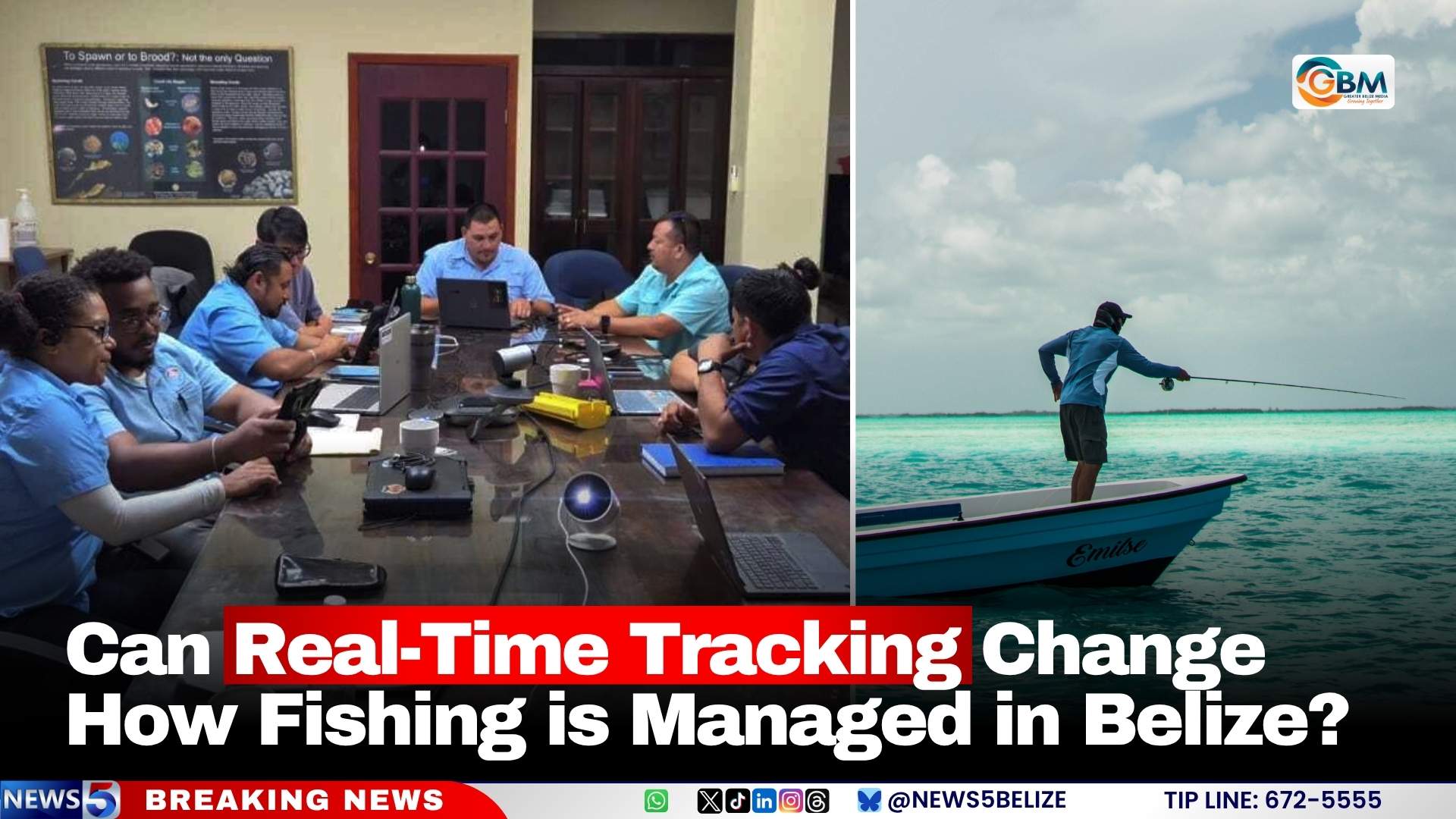
    Can Real-Time Tracking Change How Fishing is Managed in Belize?

    By 2026, Belize’s fisheries management sector is undergoing a major digital transformation, as the country’s Fisheries Department phases out traditional paper-based logging in favor of an integrated digital data collection platform. This shift, designed to overhaul how fishing activity data is gathered and utilized nationwide, has reached a key implementation milestone with a specialized training workshop held on May 14, 2026.

    Hosted by the department’s Capture Fisheries Unit, the workshop brought together fisheries officers to build hands-on skills with the new SMART digital system, which replaces handwritten paper catch logs with digital recording and instant cloud uploading. Unlike the legacy paper system that required weeks or even months to process data, the new platform enables near-instant uploading of both catch volume and fishing effort data from coastal and offshore operations.

    This near real-time data access is a game-changer for fisheries regulators, according to department officials. Faster access to actionable information means management teams can make more timely, evidence-based decisions to address overfishing risks, adjust catch limits, and protect vulnerable marine ecosystems. Beyond speed, the digital transition is projected to cut down on common errors that plague handwritten records and repeated manual data entry, streamlining the entire reporting workflow for both fishers and regulatory staff.

    The long-term vision for this initiative is full end-to-end automation of fisheries data collection across all of Belize’s fishing zones. Officials emphasize that this digital upgrade is not just an administrative overhaul: it is a core investment in the long-term sustainability of Belize’s Blue Economy, ensuring marine resources remain productive for future generations while supporting the livelihoods of coastal communities that depend on fishing.

    The project is a collaborative effort between Belize’s Fisheries Department and the Wildlife Conservation Society, with specialized technical support from veteran fisheries expert Julio Maaz, who led the facilitation of the recent SMART system training workshop. As rollout continues across coastal regions, stakeholders are monitoring how the real-time tracking system will reshape sustainable fishing practices in one of the Caribbean’s most biodiverse marine territories.

  • Belize’s Young Creatives Are Having Their Moment This Week

    Belize’s Young Creatives Are Having Their Moment This Week

    A new wave of young creative energy is sweeping across Belize this week, as the country’s annual Primary School Festival of Arts kicked off on Monday at Belize City’s iconic Bliss Centre for the Performing Arts. The week-long celebration of youth creativity opened with a packed showcase of talent from the Belize District, featuring a continuous line-up of dynamic live performances alongside the official launch of a national student visual arts exhibition.

    The exhibition draws together 50 original artworks created by students from every corner of the country, giving young visual artists a rare national platform to share their work with audiences from across the nation. Kim Vasquez, director of Belize’s Institute of Creative Arts, emphasized that the event was built from the ground up to center inclusivity across every artistic practice. “We want to have broad participation in the performing arts, but it is just as critical that we elevate the work of young visual artists alongside their peers,” Vasquez explained.

    Monday also marked a key milestone for the festival’s literary arts segment, with the launch of a new student literary publication. This release is only the second literary collection published since the discipline was brought back to the festival last year, after being absent from the event for nearly three decades. The collection showcases original short stories and poetry written by student writers across Belize, and will be available for free digital download via the 501 Academy platform to expand access to the work.

    While daily live performances will continue at the Bliss Centre throughout this week, parallel showcase events are also being held in the popular coastal communities of San Pedro and Caye Caulker to make the festival accessible to young creators and audiences outside of Belize City. For community members who cannot attend daytime events, festival organizers have planned a special series of highlight events that will kick off early next week.

    Organizers are bringing back the fan-favorite Golden Nights series this year, a set of evening showcase events that feature only the top-rated gold-award winning works from across the festival. “The best of the best will take the stage for a Golden Night in your own city or town, so there is something for everyone to look forward to,” Vasquez shared. The first Golden Nights events are scheduled to launch as early as next week, wrapping up the week-long festival with a celebration of the country’s most outstanding young creative talent.

  • Belize Made Its Pitch to Investors and Diplomats in Washington

    Belize Made Its Pitch to Investors and Diplomats in Washington

    On May 19, 2026, the capital of the United States played host to a unique trade and investment promotion event that put Central American nation Belize in the global spotlight. Organized by the Belize Trade and Investment Development Service (BELTRAIDE) in collaboration with Belize’s Washington-based embassy, the gathering was integrated into Passport DC, the city’s month-long annual cultural celebration that brings international communities to the forefront of the district’s public life.

    The event drew a diverse cross-section of attendees, from high-ranking foreign diplomats and C-suite business leaders to cross-border investment specialists and members of the large Belizean diaspora based in the U.S. Unlike traditional promotional events that focus almost exclusively on Belize’s well-established reputation as a top Caribbean tourism destination, this gathering was designed to showcase the country’s untapped potential across a wide range of emerging commercial sectors.

    Opening the event, Belize’s Ambassador to the U.S. Nestor Mendez framed the showcase as a critical step in deepening bilateral economic and diplomatic ties between Belize and the United States. He emphasized that expanded trade and mutual investment would create shared benefits for both nations, strengthening people-to-people connections while driving inclusive economic growth in Belize.

    Following Mendez’s opening remarks, BELTRAIDE Executive Director Ishmael Quiroz delivered a detailed presentation outlining Belize’s competitive advantages for international investors. He positioned the small nation as a forward-thinking destination that balances strategic opportunity with sustainable development, telling the assembled audience that “Belize continues to position itself as a country of opportunity, innovation, sustainability, and authentic experiences.”

    The event concluded with a interactive networking reception that gave attendees the chance to hold one-on-one conversations with BELTRAIDE’s investment promotion teams, asking detailed questions about regulatory frameworks, export incentives and high-potential projects across multiple industries. Guests also got a taste of Belize’s thriving local manufacturing sector during the reception, sampling premium rums from two of the country’s leading distilleries: Copalli and Traveller’s Liquors Ltd.

  • Second Cyberbullying Case Linked to Chester Williams Tossed Out

    Second Cyberbullying Case Linked to Chester Williams Tossed Out

    In a Wednesday 2026 court ruling that has sparked public conversation around the misuse of legal process for personal conflicts, a cyberbullying charge against serving police officer Barry Flowers-Mai has been dismissed outright after the high-profile complainant, Ministry of Transport CEO Chester Williams, failed to show up for the trial he initiated. This dismissal marks the second time in less than a month that a cyberbullying case brought by Williams has been thrown out by Trinidad and Tobago’s judicial system.

    Williams, a former national police commissioner, first brought the allegations against Flowers-Mai in the wake of alleged social media activity dating back to April 2025. He claimed the officer had used a digital platform to publish content that was obscene and personally degrading, a charge that Flowers-Mai has denied throughout the proceedings.

    Delivering the ruling, Senior Magistrate Neeshad Mohammed did not mince words in criticizing Williams’ absence, calling the non-appearance a clear act of disrespect to the court. As a former top law enforcement official, Mohammed emphasized, Williams ought to understand the fundamental requirement of respect for judicial procedure, adding that the court would not allow itself to be weaponized as a tool to settle personal scores between public figures. “I cannot and this court will not be used as grounds for any personal vendetta,” Mohammed stated in his official ruling.

    Speaking to reporters immediately after the ruling outside the courthouse, Flowers-Mai expressed relief at the court’s fair decision. He argued that the case had been brought against him purely out of personal dislike, noting that legal action should never be used to target someone just because a powerful public figure disagrees with their official administrative work. “If someone does not like you, you cannot bring him to court because they don’t like the way you administrate,” Flowers-Mai said. “Thank God the court is fair; they struck it out.”

    The case’s dismissal adds to a growing pattern of failed legal actions initiated by Williams. Just six days prior on May 13, 2026, 38-year-old Nichole Gilda McDonald was rearrested and recharged on similar cyberbullying charges stemming from a critical Facebook comment directed at Williams. That same case had already been dismissed in November 2025 after Williams skipped 17 consecutive scheduled court hearings, only to be reinstated last Wednesday in a surprise procedural move.

    Beyond the cyberbullying allegations, Flowers-Mai has also been publicly linked to the high-profile kidnapping case of social media personality Joseph Ryan Budna, who is currently incarcerated in a Guatemalan prison on separate charges. When reporters asked Flowers-Mai to respond to the kidnapping connection outside court, he declined to elaborate on the matter, emphasizing that mere association does not equal guilt. “I don’t want to comment on that as yet, because calling someone’s name does not mean the person is guilty… A day will come when I will address that one,” he added.

  • 50 Households Start Turning Food Scraps Into Compost in Orange Walk

    50 Households Start Turning Food Scraps Into Compost in Orange Walk

    In a groundbreaking shift toward sustainable waste management, 50 households in Orange Walk Town have begun a trailblazing home composting initiative that turns everyday food scraps into nutrient-rich soil instead of contributing to overflowing local landfills. The project marks the municipality’s first official organic waste management program, designed to tackle one of the community’s longest-standing waste challenges at its source – residential kitchens.

    The pilot initiative was formally launched over the weekend, coinciding with the handover of a new industrial wood chipper that will support program operations beyond individual household activities. To set participating families up for success, the municipal government has provided all required composting supplies, alongside tailored in-person training that teaches residents how to properly process organic kitchen waste at home. The core goal of the training and resource distribution is to cut the overall volume of residential waste being hauled to local dumps, easing pressure on overstretched landfill infrastructure.

    Beyond reducing strain on waste management systems, municipal leaders emphasize the program’s critical climate benefits. When organic materials decompose in oxygen-poor landfill environments, they release large volumes of methane – a greenhouse gas over 25 times more potent than carbon dioxide at trapping heat in the atmosphere, making it a major driver of global climate change. By diverting food scraps to home composting systems, the town avoids these methane emissions while creating a useful end product that can improve soil health for home gardening and local green spaces.

    The new program is the result of more than 12 months of collaborative work between local municipal officials and the regional Recycle Organics Program. Orange Walk Councillor Joesie Cantun and municipal officer Antonio Baeza led the project’s development from initial planning to full implementation, while trainer Tara Hoisington played a central role in developing hands-on curriculum and co-designing program elements with input from participating residents. The 50 households that joined the pilot cohort will now serve as the first testers of the scheme, with their feedback expected to shape future expansion of the program across the district.

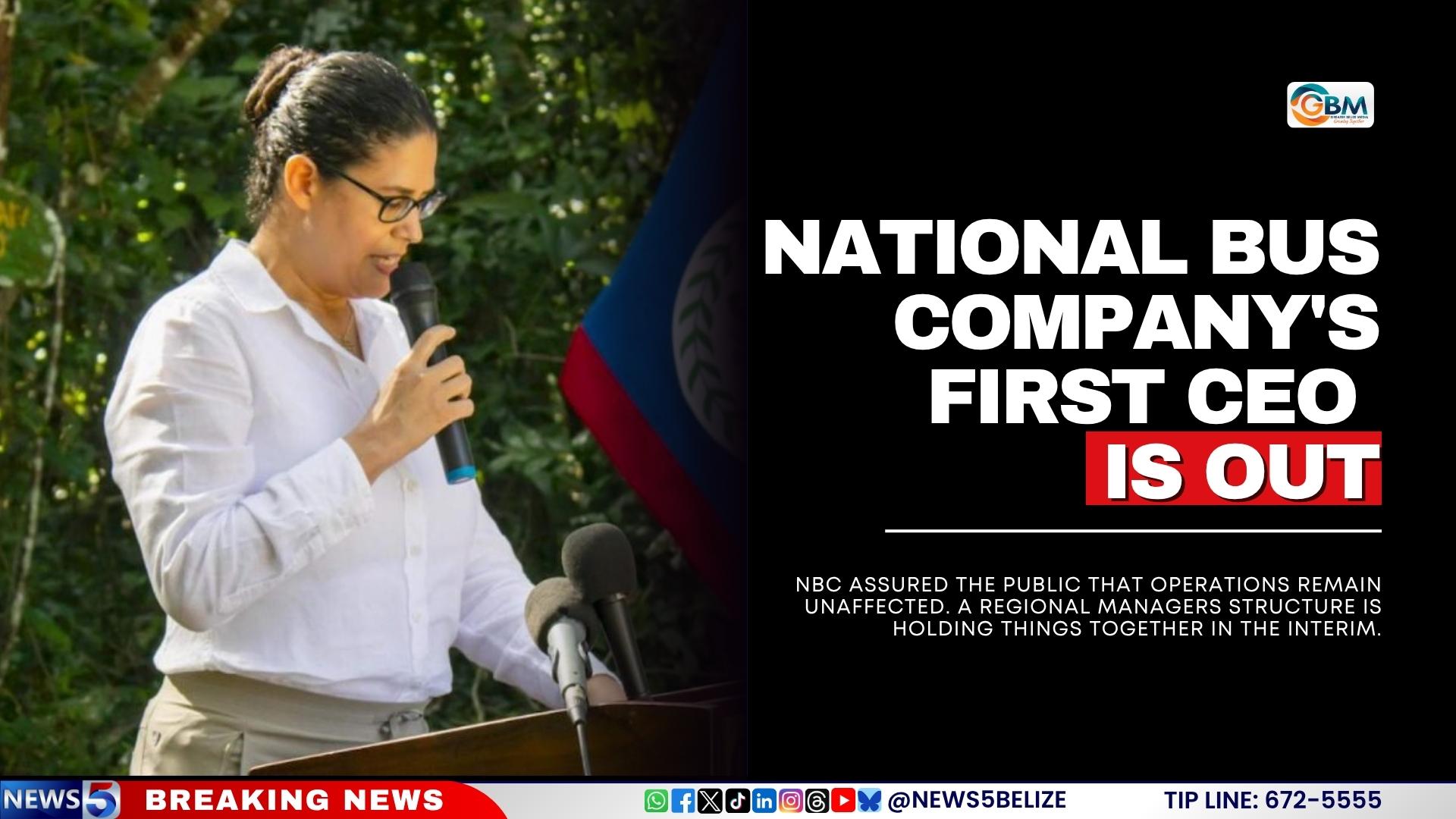
  • National Bus Company’s First CEO Is Out

    National Bus Company’s First CEO Is Out

    Three months after commencing public operations, the newly established National Bus Company (NBC) has announced the departure of its inaugural chief executive, Susana Vanzie. The transition, which was foreshadowed months in advance by top government transportation officials, has left the organization searching for a permanent replacement to lead the state-owned bus service.

    Vanzie, a professional with roots in Floralia, was handpicked by the NBC board of directors to guide the company through its critical launch phase. She oversaw the start of public service operations when NBC officially opened for business on March 1, 2026. Her departure was formally confirmed in an official company press release issued on May 19, 2026, and within hours of the announcement, the organization published a public job posting to recruit her successor.

    The exit of Vanzie comes as no surprise to industry observers, as Transport Minister Dr Louis Zabaneh explicitly framed the initial launch leadership team as a temporary arrangement from the outset. Speaking just days after NBC kicked off services in early March, Zabaneh clarified that the entire initial management cohort was hired on a three-month probationary footing. He noted at the time that Vanzie’s selection as the founding CEO had been completed by the independent NBC board, and any decision on a permanent appointment would hinge on whether the board determined her performance met required operational standards.

    Despite the leadership change at the top, NBC has moved quickly to reassure passengers and stakeholders that all regular bus services continue to operate as scheduled with no disruptions. In the interim period between Vanzie’s departure and the appointment of a new chief executive, the company’s existing regional management structure has been empowered to oversee day-to-day operations and keep services running smoothly. Notably, Vanzie will not sever all ties with the organization following her exit from the CEO role; she will retain her stake in NBC as a company shareholder.

  • Is Belize Sacrificing Its Coastline for “Development”?

    Is Belize Sacrificing Its Coastline for “Development”?

    A broad coalition of leading Belizean environmental and conservation organizations has issued an urgent public call for the Belizean government to freeze all new coastal development approvals, sounding the alarm that unregulated construction is systematically destroying the nation’s irreplaceable marine ecosystems while regulatory authorities fail to enforce existing protections.

    Organized under the banner of the Ambergris North Alliance, the coalition counts major global and local conservation groups including Oceana, World Wildlife Fund, and the Belize Flat Fishery Association among its signatories. In a joint statement released Monday, the alliance detailed a persistent pattern of environmental violations spanning illegal dredging operations, unpermitted clearing of critical mangrove habitats, unregulated wastewater dumping, and a systemic failure of government monitoring to ensure required environmental mitigation measures are actually implemented.

    “ We the undersigned, on behalf of our respective organizations, write to formally and forcibly register our profound and collective frustration and disappointment regarding the management and protection of our sensitive marine and coastal ecosystems, ” the statement reads.

    Beyond the direct ecological damage caused by unregulated development, the coalition’s core grievance centers on the lack of accountability and transparency from government agencies. Community leaders, independent marine scientists, and conservation organizers report that repeated requests for public information about proposed projects and the status of required development permits have been ignored by authorities. The coalition also emphasized that environmental violations are almost never addressed until irreversible harm to coastal ecosystems has already been done, and that repeat offenders almost never face meaningful penalties for breaking the law. This pattern of non-enforcement has created a dangerous culture of impunity that the groups say can no longer be tolerated, per the statement.

    The coalition has targeted specific government bodies with its demands: the Ministries of Sustainable Development, Blue Economy and Marine Conservation, and Natural Resources, as well as the national Department of the Environment. The groups are calling for an immediate freeze on all new development approvals in the nation’s most sensitive and protected coastal zones, including the Bacalar Chico protected area, Hol Chan Marine Reserve, Placencia Peninsula, Corozal Bay Wildlife Sanctuary, and the country’s vulnerable offshore cayes.

    Beyond the immediate moratorium, the coalition is pushing for robust enforcement of existing Belizean environmental laws, including issuing stop work orders for illegal projects, suspending or revoking permits for non-compliant developers, and imposing substantial financial penalties that will deter future violations. The groups also are advocating for a formal, legally binding process that guarantees local community stakeholders — including fishing cooperative leaders, local tour operators, village councils, and coastal residents — a formal voice in all future coastal development decision-making, a requirement aligned with the terms of the regional Escazú Agreement on environmental access and rights.

    In closing the statement, the coalition said: “On behalf of the people of Belize, we expect an urgent and meaningful response detailing how the administration intends to address this exigent national situation.”

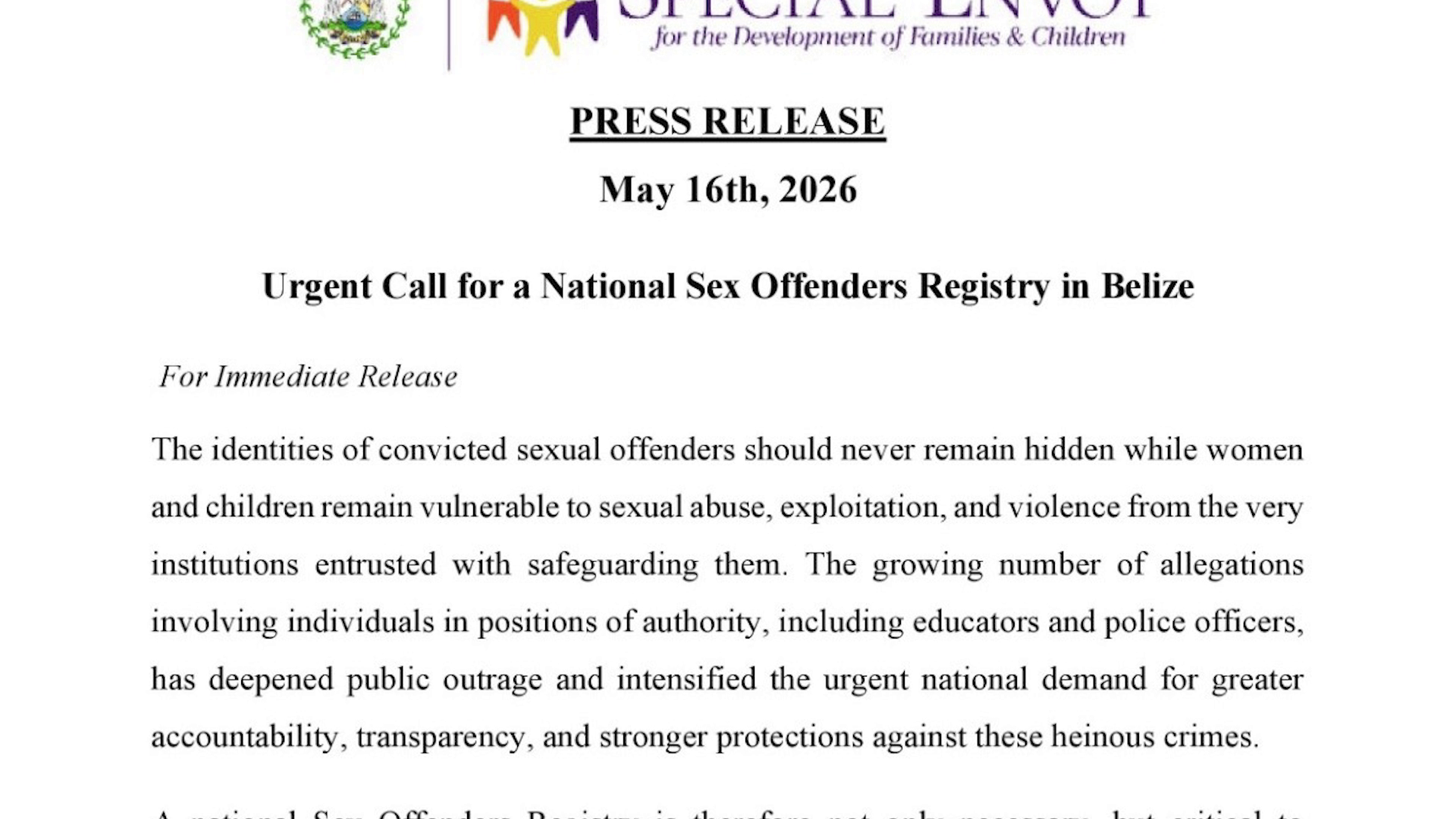
  • “Call Them Out”: Belize Renews Call for Sex offender Registry

    “Call Them Out”: Belize Renews Call for Sex offender Registry

    A surge in high-profile child sexual abuse cases involving trusted adults across Belize has reignited urgent public and official demands for the implementation of a long-discussed national sex offender registry, with child safety advocates and government leaders warning that inaction is putting the country’s youngest populations at growing risk.

    The latest controversy that pushed this long-simmering issue to the forefront of public discourse stems from recent charges against 41-year-old Elias Tzib, a Santa Elena-based teacher based in the Bullet Tree Falls area. Tzib was arrested following a report from a student, and now faces four counts of assault and two counts of rape. The case has sent shockwaves through the community, as residents question how an educator with access to vulnerable children could face such serious allegations in a space that is supposed to be one of the safest for young people.

    This arrest is far from an isolated incident. Just weeks earlier, a suspended police officer, Dexter Diego, was returned to prison on four additional counts of child rape involving a 10-year-old and an 11-year-old, with offenses occurring between 2024 and 2025. This was not Diego’s first brush with allegations: he had previously been accused of abuse against a 14-year-old, revealing a troubling pattern that could have been flagged earlier if a public registry was already in place, according to advocates. Other high-profile cases have already made headlines this year: in January, 47-year-old San Pedro educator Alex Noralez was found guilty on two out of three counts of sexual assault, and is currently appealing his conviction to stay out of prison. In 2025, former UDP senator and teacher Macario Coy was also hit with sexual misconduct allegations; while he was ultimately cleared, the case still raised serious questions about weak oversight of adults who work closely with children.

    Officials confirm that documented cases of reported child sexual abuse are on a steady upward climb. Adele Catzim Sanchez, CEO of Belize’s Ministry of Human Development, noted that the ministry’s internal tracking database shows consistent annual growth in the number of abuse reports brought to authorities. “What we know historically and from research is that people who have a tendency to be sex offenders seek out professions in which they will have access to children and people who can become their victims,” Catzim Sanchez explained. “And so it’s in the professions that are supposed to be helpful, like teaching professions, health professions, other professions civil society, where we might see people gain access to children or those who become their victims.”

    For the first time, multiple government agencies have aligned behind the push for a fully operational public registry. The Office of the Special Envoy for Women and Children has led the renewed call for action, which has gained formal backing from both the Ministry of Human Development and the Ministry of Home Affairs. Catzim Sanchez said the ministry is eager to collaborate with partner agencies to move the registry from proposal to implementation: “we’re ready to work or collaborate with our partner agencies including the Office of the Special Envoy and the Ministry of Home Affairs to make sure that this, the sex offender registry is operational.”

    Oscar Mira, Minister of Home Affairs, expressed unwavering support for the initiative, emphasizing that zero tolerance for child abuse requires transparent public accountability. “I cannot understand how someone would look at a child, you know without saying any names, but children as young as four years old,” Mira said. “We have to make sure that we treat their people in a different kind of way. We cannot tolerate the abuse of children from anybody, you know, and be it male or female. I think that I fully support her call. I think that if you are convicted of something like that, then the public should know who you are.”

    Child safety advocates echo this urgency, arguing that a centralized, publicly accessible registry is a critical tool to prevent repeat offenses. Currently, the lack of a centralized system allows convicted offenders to move between communities and continue working in roles that give them regular access to children, putting new populations at risk. Proponents say the registry will not only give families critical information to protect their children, but also allow law enforcement and institutional leaders to conduct more thorough background checks for adults working with minors. After years of discussion, the recent wave of high-profile abuse cases has turned public conversation into a widespread demand for immediate action, with leaders across Belize now signaling that the registry is finally moving forward.

  • Child Sex Crime Victims Can Now Testify Behind Closed Doors

    Child Sex Crime Victims Can Now Testify Behind Closed Doors

    In a landmark shift toward victim-centered justice for survivors of child sexual abuse, the Central American nation of Belize has approved sweeping amendments to its Criminal Code that will permit young survivors to give sensitive testimony behind closed court doors. The policy change, set to enter formal parliamentary debate in June 2026, represents one of the most significant updates to the country’s child protection legal framework in recent years, crafted to address longstanding gaps in how the justice system supports vulnerable victims.

    According to Adele Catzim Sanchez, Chief Executive Officer of Belize’s Ministry of Human Development, the core motivation for the reform is to eliminate the secondary trauma that many child survivors experience during open court proceedings. When cases are heard in public, children are forced to recount traumatic experiences under the glare of public scrutiny, a process that can re-traumatize young victims even as they seek accountability for the crimes committed against them. By closing courtrooms to the general public for these sensitive hearings, policymakers aim to remove the pressure and fear that often prevent children from testifying fully and honestly.

    Beyond protecting child well-being, officials project that the reform will strengthen the entire judicial process for sexual offense cases. When victims feel safe to speak openly, prosecutors are able to build stronger, more credible cases against accused offenders, which officials anticipate will lead to higher conviction rates. The reform also addresses another critical barrier to justice: the reluctance of many survivors and their families to report abuse in the first place. By creating a more supportive courtroom environment, policymakers hope to encourage more survivors to come forward, breaking the cycle of silence that allows many offenders to avoid accountability.

    The closed-door testimony amendment is not the only child protection reform advancing through Belize’s government right now. The Ministry of Human Development has also introduced a separate Families Bill that aims to speed up resolution of cases involving minor victims. Advocates for child protection have long criticized systemic court delays for prolonging children’s trauma and denying them timely closure, as drawn-out proceedings leave young survivors in limbo for months or even years. The new bill would mandate that all child-focused protection cases be resolved within a fixed timeline, streamlining judicial processes to deliver faster justice and improve outcomes for victims.

    Sanchez confirmed that the reform effort has secured bipartisan institutional support, with backing from both the national cabinet and the Attorney General’s Ministry. Once tabled in Parliament next month, the amendment will proceed through standard parliamentary debate and voting procedures before going into effect. For child protection advocates across the country, the approval of this reform marks a long-overdue recognition that justice cannot come at the cost of re-traumatizing the very survivors the system is meant to protect.

  • Clinging On: The Dangerous Reality of School Runs on Motorcycles

    Clinging On: The Dangerous Reality of School Runs on Motorcycles

    Across Belize, daily school pickups have exposed a troubling public safety gap, driven by widespread economic necessity that puts young children at severe risk of fatal road accidents. For countless low-income Belizean households, two-wheeled motorcycles are not recreational vehicles or a leisure choice — they are the only affordable option for commuting to work and ferrying children to and from school. But what starts as a routine daily trip has devolved into a life-threatening gamble, with traffic and transportation officials warning that the status quo will inevitably lead to preventable tragedy.

    Every weekday afternoon, when school gates swing open to release hundreds of students, chaotic rush-hour congestion clogs roads across the country. Amid the scramble of parents hurrying to collect their children, motorcycles weave through packed traffic, most carrying multiple young passengers with little to no safety precautions. Many children ride without helmets entirely, while others rely on uncertified head protection that cannot absorb impact or prevent traumatic brain injury in a crash. Children are often crammed between the driver and an adult passenger, forced to dangle their legs over the edge of the bike because they cannot reach the motorcycle’s standard foot pegs for rear passengers. In the most extreme cases, officials report seeing one motorcycle carrying a driver and three children, with kids stacked both in front of and behind the adult rider.

    Local transportation leaders say the hazards extend far beyond a lack of proper head protection. Overloading motorcycles beyond their manufacturer-set passenger limits throws off the vehicle’s critical balance, making it far harder for drivers to react to sudden road changes, avoid collisions, or maintain control in emergency scenarios. Leon Gentle, Chief Transport Officer of Belize, laid out the scope of the daily risks in an interview with local outlet News Five. “Sometimes you see these motorcycle riders taking along a child with an uncertified helmet, a helmet that cannot save their lives – with their feet stuck out because they cannot even reach the foot stand for the pillion rider on the bike. And so these are things that we have to look closely at,” Gentle explained.

    Mauricio Gonzalez, Traffic Enforcement Manager for the Belize City Traffic Department, confirmed that the dangerous practice is seen on city streets every single school day. He emphasized that addressing the issue requires a sustained public education effort, rather than just punitive enforcement. “It’s an education process so that they understand that, you know what? You’re risking your family. You’re risking your own family’s lives even if they all have on a helmet. With the control of motorcycle comes with balance, and that’s the reason why they have the passenger limit set. So with additional passengers, then it brings the opportunity for the driver to lose control,” Gonzalez said. “But it does pose a challenge to us. It’s something that we see every morning and something that we continue to educate the residents of Belize City about.”

    For enforcement teams, the situation creates a difficult ethical balancing act: officers must prioritize road safety, while also recognizing the underlying socioeconomic reality that pushes many families to rely on motorcycles. Many parents argue that motorcycles are the only accessible, low-cost transport option they can afford, especially when cheaper public transit or private school shuttle services are unavailable in their communities. Still, transportation officials stress that convenience and cost cannot justify putting children’s lives at risk. Gentle urged families to explore all alternative options whenever possible: “If there’s accessibility to shuttle runs or public transportation that may be available to take them to and from as well try our utmost best to use those modes of transportation.”

    For traffic officials, witnessing the unsafe school runs first-hand sparks urgent concern. “When you see these types of practices, three children on a motorcycle – a parent, a child in between, it brings out a fear in all of us. What are they thinking? What are they doing? I mean that’s the thought running through our head,” Gonzalez said. Closing his on-the-ground report from Belize City’s busy streets, correspondent Shane Williams noted that while motorcycles will remain the most budget-friendly transport option for many Belizean families for the foreseeable future, safety must be the non-negotiable top priority when transporting children.