标签: Belize

伯利兹

  • Belize Bets on Tech with Talent Up Launch

    Belize Bets on Tech with Talent Up Launch

    On May 20, 2026, the government of Belize joined forces with international development partners to officially launch Talent Up Belize, an ambitious workforce development program designed to equip the nation’s young population with high-demand digital skills and unlock access to high-wage employment. Positioned as a cornerstone of Belize’s long-term economic strategy, the initiative seeks to reshape the country’s workforce, foster homegrown technological innovation, and strengthen Belize’s competitive standing in the global digital economy.

    Addressing attendees at the launch event, Prime Minister John Briceño emphasized that the program centers on strategic investment in Belize’s human capital to prepare the nation for the digital future. “We are positioning Belize for tomorrow by investing in our people, strengthening our workforce, and expanding opportunity to ensure we can hold our own in an increasingly digital, technology-driven global economy,” Briceño said. He noted that rapid technological shifts, from automation and artificial intelligence to cloud computing and cybersecurity, are reshaping economies worldwide. Acknowledging public discussion around his own familiarity with emerging AI technologies, Briceño highlighted that the nation’s young people will lead the transition, bringing fresh expertise to drive growth. Citing global industry projections, he added that nearly 60% of the global workforce will need reskilling by 2027 to keep pace with technological change, while tech and digital roles remain among the fastest-growing professions worldwide.

    The Inter-American Development Bank (IDB), a key international partner backing the initiative, has aligned its four-year country strategy for Belize around two core priorities: improving Belizeans’ readiness for and access to digital markets, and supporting the government’s broader digital transformation. Karla Gonzalez, IDB representative for Belize, explained that the organization’s existing support already targets Belize’s fast-growing business process outsourcing (BPO) sector, which currently provides employment for roughly 20,000 Belizeans. Last week, the country’s Cabinet approved the launch of the national Global Digital Service initiative, and Gonzalez noted that Talent Up adds a critical complementary layer to this work, building the skilled workforce needed to support the BPO sector’s next phase of expansion.

    Prime Minister Briceño reaffirmed that sustained investment in people and emerging technology is the most critical step to secure Belize’s competitive position in the fast-evolving global economy, framing Talent Up as a pivotal investment in the nation’s future prosperity.


  • 382 Pounds of Cannabis Seized in Corozal Drug Bust

    382 Pounds of Cannabis Seized in Corozal Drug Bust

    Law enforcement authorities in Belize have made a major drug seizure in the country’s northern Corozal District, pulling 382 pounds of suspected cannabis off the streets following a targeted investigation. The operation, which was guided by actionable intelligence, was executed by members of the Belize Police Department’s Mobile Interdiction Unit on the evening of Tuesday, May 19, 2026, according to Assistant Superintendent Stacy Smith.

    Smith detailed that the search operation was centered on the Ramonal Landing area of Patchakan Village, a rural community located close to Belize’s northern border. It was during this systematic search that officers uncovered eight heavy black bags, all of which contained the suspected controlled substance.

    Following the seizure, the entire cannabis haul has been formally logged and held as found property by police authorities. As of Thursday, May 20, 2026, no suspects have been taken into custody, and no arrests have been announced in connection with the recovered drugs. Investigations remain ongoing as authorities work to trace the origin of the cannabis and identify individuals linked to the stash.

  • UDP “Gearing Up” for 2027 Municipals, PUP Signals Confidence

    UDP “Gearing Up” for 2027 Municipals, PUP Signals Confidence

    Ten months out from Belize’s 2027 municipal elections, the country’s two dominant political parties have already begun laying strategic groundwork for their campaigns, marking an early start to what is shaping up to be a closely watched contest.\n\nSpeaking to reporters on Tuesday, Sheena Pitts, a representative of the United Democratic Party (UDP), announced that the opposition party is already “gearing up” for the March 2027 ballot, framing the party as an agile organization ready to capitalize on early momentum. “We are a party that strikes when the iron is hot,” Pitts stated, noting that internal discussions around potential candidates are already underway across the country’s municipalities. While names of prospective nominees are currently being circulated within party leadership, Pitts said the UDP is holding off on public announcements to coordinate a strategic rollout. “We will do so after we have all our ducks in a row and we are able to do so strategically in each municipality,” she explained.\n\nOn the ruling party side, Prime Minister John Briceño of the People’s United Party (PUP) expressed firm confidence in his party’s prospects as preparations advance. Briceño confirmed that the PUP will fully endorse the incumbents of the current Orange Walk Town Council in the upcoming election. For the Belize City mayoral race, the party will hold a nominating convention to select its candidate, with two young hopefuls already shortlisted for the position. Briceño added that incumbency will be a key advantage for the PUP across most of the country, noting that “many of the present councils that are going to run again,” with conventions scheduled for a small number of districts where new candidates will be selected.\n\nFor the UDP, the 2027 municipal elections are widely framed as a critical measuring stick for the party’s standing among voters ahead of the next general election, as the opposition looks to rebuild momentum after recent national contests. With 10 months still left before voters head to the polls, both parties are expected to ramp up candidate recruitment, community outreach, and policy platform development in the coming weeks.

  • Minister Fonseca “Looking Quite Relaxed” After Major Heart Surgery

    Minister Fonseca “Looking Quite Relaxed” After Major Heart Surgery

    Nearly three weeks after Belize’s top diplomat underwent urgent major heart surgery, the country’s prime minister has shared an encouraging update on Foreign Affairs Minister Francis Fonseca’s ongoing recovery. On May 20, 2026, Prime Minister John Briceño confirmed that Fonseca is progressing smoothly following the triple bypass procedure he underwent earlier this month.

    Briceño, who visited the recovering minister just days after the operation, said he was relieved to see Fonseca in good spirits. “I went to see him on a Friday after the surgery, and he looked quite, quite relaxed,” the prime minister shared in his remarks. A subsequent check-in via message confirmed that the minister’s condition continues to improve, he added.

    As the foreign ministry remains without its permanent leader while Fonseca recovers, Briceño has emphasized that the minister’s full recovery takes priority over a quick return to official duties. “What I’m telling him is his health comes first. Once he feels that he is in a position to come back to work, he’s welcome back. We certainly need his help,” Briceño said. To date, no firm timeline has been established for Fonseca’s resumption of his ministerial responsibilities.

    Since Fonseca entered medical leave to undergo the procedure, Briceño has stepped in to temporarily oversee the foreign affairs portfolio. Earlier this month, Economic Transformation Minister Dr. Osmond Martinez addressed growing speculation about a potential interim appointment, confirming that the prime minister was the appropriate official to hold the role during Fonseca’s absence, and dismissing questions about any other interim replacement.

  • ‘A Fish Rotting From the Head’ or Theft?

    ‘A Fish Rotting From the Head’ or Theft?

    A developing public accountability scandal in Belize’s Immigration Department has sparked sharp political division, after approximately $160,000 in public funds went missing and investigations into the disappearance are currently ongoing. The incident, which rose to the agenda of the country’s cabinet for discussion, has drawn public commentary from both Prime Minister John Briceño and opposition leader Tracy Panton, who hold starkly different views on the root of the problem.

    Briceño, speaking directly to reporters on the ongoing probe, has publicly characterized the missing funds as an isolated case of individual theft rather than systemic corruption within the government agency. According to preliminary findings shared by the prime minister, investigators believe a single Immigration Department employee manipulated internal administrative protocols to siphon off the cash. The alleged scheme involved the employee issuing official payment receipts, canceling those receipts after the fact, and keeping the funds that had been paid for the services.

    The prime minister emphasized that the formal investigation remains active and ongoing, and he declined to share additional sensitive details that could compromise the investigative process. When pressed on the opposition’s sharp criticism, Briceño opted to avoid direct confrontation, stating he would not dignify the opposition’s claims with a public response.

    However, Panton has rejected the government’s framing of the incident as an isolated rogue employee act. The opposition leader has leveled a blistering critique that the corruption extends far beyond a single staff member, using the well-known idiom “a fish is rotting from the head” to argue that wrongdoing originates at the highest levels of the current administration. Her comments have escalated the political standoff over the missing public funds, turning a procedural administrative probe into a high-stakes political debate about institutional accountability in Belize.

  • San Pedro Hospital Costs Spiral Over Budget

    San Pedro Hospital Costs Spiral Over Budget

    A major infrastructure project in Belize is facing unexpected financial headwinds, as the newly constructed San Pedro Hospital has recorded substantial cost overruns that far outstrip its original budget. The facility, which draws the vast majority of its original funding from a grant provided by Taiwan, has left officials grappling with an unplanned budget shortfall that remains unconfirmed by the country’s top leadership.

    Belizean Prime Minister John Briceño has publicly acknowledged the cost overrun issue, but has so far declined to share an official figure for the growing budget gap. Independent local reports have pegged the overrun at approximately 15 million U.S. dollars, a significant increase from the project’s original agreed-upon budget.

    Briceño attributed the ballooning costs to broad-based price inflation across the global construction sector, pointing to dramatic spikes in key building material prices as a core driver. To illustrate the scale of the increases, he noted that the price of construction sand alone has doubled in just a few months, jumping from $850 per unit to $1,700. “Everything has been going up. I mean, you don’t need to be a genius to know that,” Briceño told reporters.

    The central unresolved question now facing the Belizean government is which party will cover the unplanned extra costs. The entire original budget for the hospital was covered by the grant from Taiwan, Belize’s diplomatic ally in the region. With costs now exceeding the original agreement, Belizean officials are preparing to enter negotiations with Taiwan to negotiate how the additional expenditure will be split between the two parties.

    Briceño made clear that the Belizean government will cover any remaining portion of the shortfall after talks with Taiwan conclude. “It’s something that we will sit down with the Taiwanese and see what they’re prepared to help and whatever the shortfall, obviously the government will have to pay,” the prime minister said.

  • Briceño: Belizeans Must Keep Up With Technology

    Briceño: Belizeans Must Keep Up With Technology

    In a landmark push to align the Central American nation with global digital advancement, the government of Belize has announced a new collaborative digital skills training program called TalentUp, developed in partnership with tech giant Google and the Inter-American Development Bank (IDB). Scheduled to prioritize young Belizeans, the initiative forms a core component of Belize’s newly unveiled Digital Transformation Roadmap, which was formally presented to stakeholders this Tuesday and outlines the country’s strategic technology development targets through 2030.

    Prime Minister John Briceño, who directly oversees the nation’s e-governance portfolio, made a point of personally attending the TalentUp launch to underscore the critical urgency of the project. Addressing reporters on site, Briceño emphasized that rapid global technological evolution leaves no room for delay for small developing nations like Belize. “If we do not keep up, we’re going to be left behind,” he warned, framing the initiative as a make-or-break opportunity for the country’s long-term economic and social competitiveness.

    For Belize, a small nation with a persistent pattern of youth brain drain, where many young people have traditionally felt forced to relocate abroad to access professional and economic opportunities, this program marks a strategic shift. Backed by two major global institutions, TalentUp is fundamentally a targeted investment in creating high-quality digital opportunities within Belize’s borders. But Briceño stressed that this bet on local development will only succeed if Belizeans, and particularly the country’s youth, actively engage with the training and seize the opportunities it creates.

    “I felt it was important for me to be here to express our support as a government, and also to encourage Belizeans, especially young people, to participate, to be able to scale up,” Briceño added. The launch comes as governments across the developing world increasingly prioritize digital skills development as a core strategy for retaining talent, boosting local economic growth, and integrating more fully into the global digital economy.

  • PM Briceño Defends NHI Bill After Opposition Calls It a “National Hustle”

    PM Briceño Defends NHI Bill After Opposition Calls It a “National Hustle”

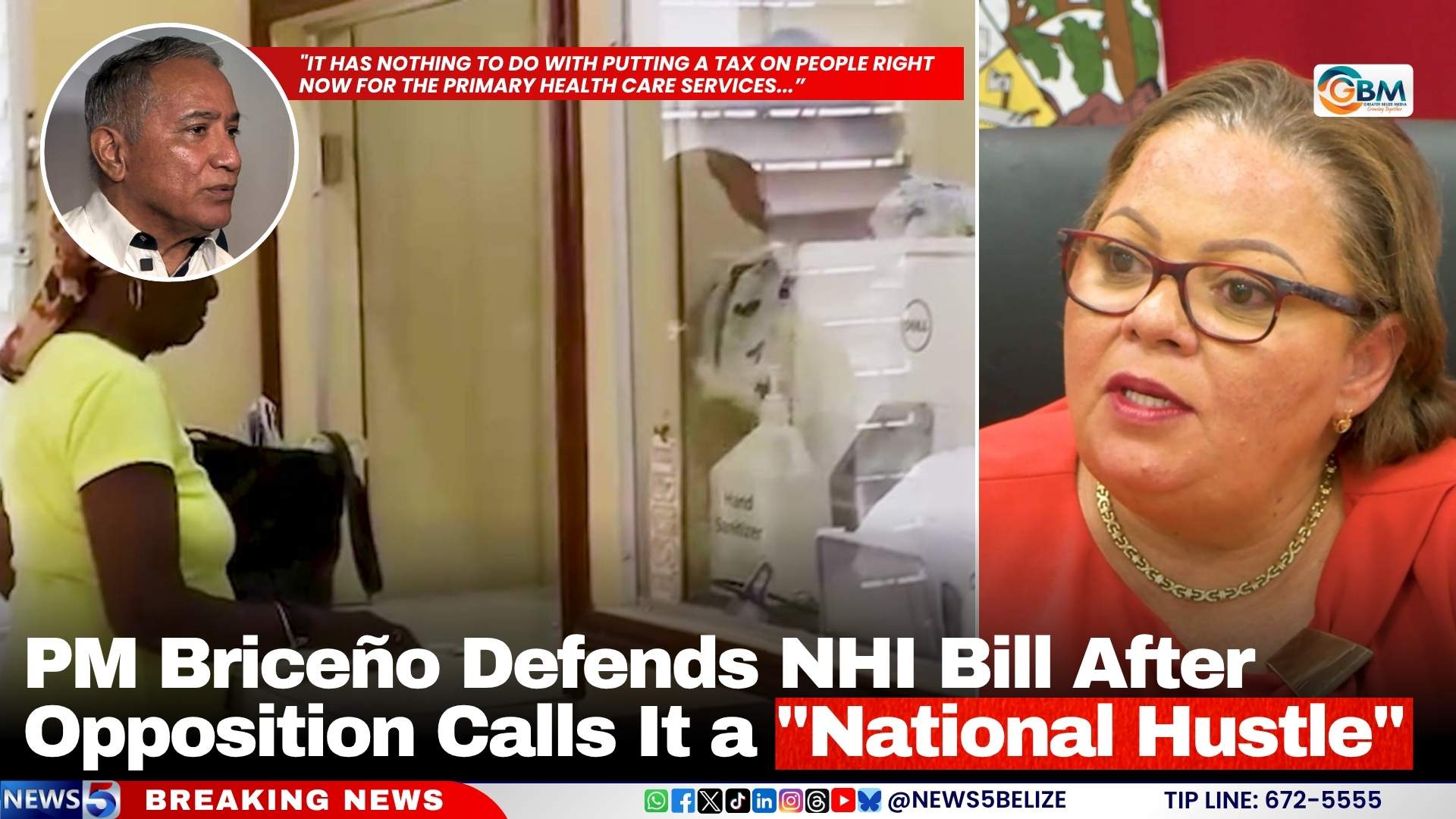
    A heated political debate has erupted in Belize centered on the proposed National Health Insurance Authority (NHI) Bill, pitting Prime Minister John Briceño against the country’s opposition leader over the future of the nation’s healthcare financing framework.

    The controversy ignited earlier this week when United Democratic Party (UDP) Leader Tracy Panton lambasted the legislation, dismissing it as a so-called “national hustle.” Panton argued the bill lacks clear transparency mechanisms for oversight and contains ambiguous language around long-term funding structures. She claimed the legislation would ultimately force Belizean residents to pay two separate mandatory contributions: existing Social Security Board (SSB) payments and a new additional tax earmarked for the NHI program. In her remarks, Panton stressed that the government has been dishonest about the bill’s true implications for household finances, rejecting its framing as a progressive expansion of national healthcare.

    Speaking publicly on the proposed legislation on May 20, 2026, Briceño pushed back forcefully against Panton’s accusations, clarifying that mandatory additional contributions are not part of the current iteration of the bill. The prime minister emphasized that the core goal of the legislation in its current form is to expand access to primary healthcare services that are already offered to Belizeans at nearly no cost out of pocket, and no new tax is being imposed on these services under the current plan.

    Briceño explained that the contested provision referenced by the opposition is a forward-looking policy placeholder designed to enable future expansion of the NHI program. Currently, the Belizean government allocates roughly $20 million in annual taxpayer funding to support the NHI program, which is limited to primary care services. The placeholder language would allow the government to eventually extend coverage to include secondary and tertiary medical services, a structure modeled after the successful universal healthcare systems implemented in neighboring Costa Rica. Once the primary care framework is fully established and operating smoothly, Briceño noted, policymakers will revisit the question of expanding services and adjusting funding structures to support that growth.

    The clash over the NHI Bill underscores deep divides between the ruling People’s United Party and the opposition UDP over how to expand accessible, affordable healthcare to all Belizeans while balancing fiscal responsibility. As the legislation moves through the legislative process, the debate over its funding provisions and long-term implications is expected to remain a central political issue in the country in the coming weeks.

  • PM Encourages Sugar Farmers to Explore Cattle Farming

    PM Encourages Sugar Farmers to Explore Cattle Farming

    Amid ongoing uncertainty and persistent challenges across Belize’s sugar industry, Prime Minister John Briceño has issued a renewed call for small-scale sugar producers to explore economic diversification, with cattle farming identified as a high-potential alternative for growth.

    Briceño’s remarks build on guidance recently shared by former Agriculture Minister Jose Abelardo Mai, who previously advised low-income sugar farmers to reduce their overreliance on sugar cane cultivation by expanding into adjacent agricultural sectors. Speaking to journalists on Thursday, Briceño emphasized that for decades, national leaders have repeated the warning to agricultural stakeholders against concentrating all their livelihoods in a single commodity – a core principle that remains just as critical for sugar producers today.

    According to the Prime Minister, cattle farming stands out as one of the most promising untapped opportunities for sugar farmers in 2026, driven by fast-growing cross-border export demand in neighboring Mexico and Guatemala. Briceño recommended that farmers holding underutilized or low-yield sugar cane land should evaluate converting a portion of that property into grazing pasture for cattle production, noting that domestic producers are well-positioned to satisfy rising regional demand for beef. “We can meet the demand,” Briceño confirmed to reporters.

    Beyond agricultural policy, the Prime Minister also addressed public questions surrounding the health of former Agriculture Minister Jose Abelardo Mai, who recently underwent knee surgery. Briceño clarified that medical teams made the decision to prioritize knee surgery before addressing an ongoing chronic back condition, explaining that the minister’s impaired gait – caused by severe knee pain – meant that any intervention on his back would not deliver meaningful improvement until the knee issue was resolved. “The doctor said the first thing they need to do is the knee because he was walking sideways. So if you do anything with your back and you’re still walking sideways, you’re not doing anything,” Briceño said.

    When pressed about a potential return for Mai to the national cabinet, Briceño declined to set a timeline, saying that any decision on the former minister’s political future will be made at a later date once his recovery progresses further.

  • Law Passed, But Protection System Still Not Active

    Law Passed, But Protection System Still Not Active

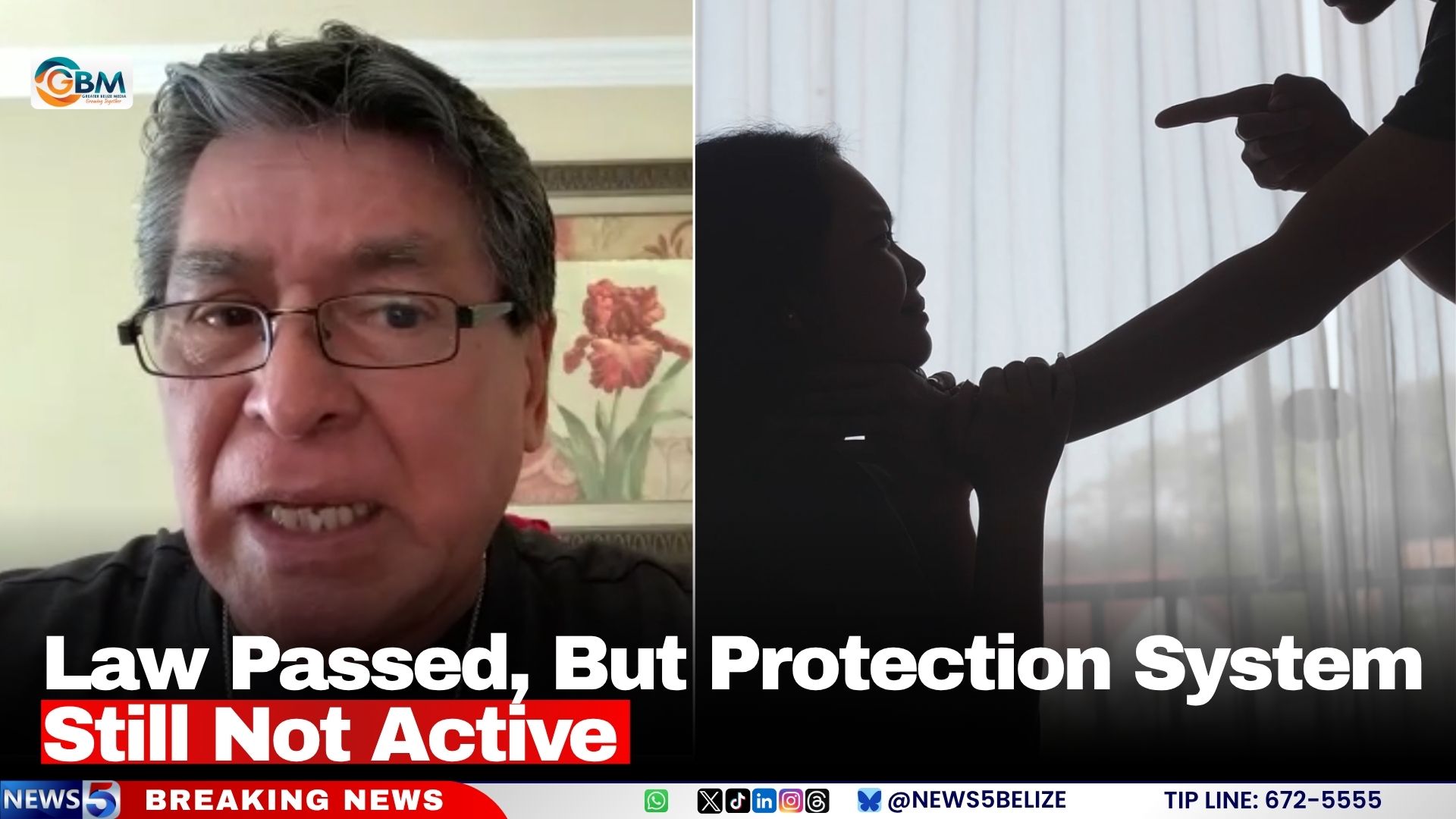
    In November 2025, Belize’s Parliament passed a landmark piece of legislation aimed at closing critical gaps in access to emergency protection for domestic violence survivors. The reform promised faster, more accessible intervention by allowing specially trained Senior Justices of the Peace (JPs) to issue urgent short-term protection orders during periods when formal courts are closed — including weekends and public holidays, when incidents of domestic violence often spike and survivors have historically been left without immediate legal recourse. But half a year after the bill was signed into law, the entire system has yet to be activated, leaving vulnerable people waiting for the protections they were promised.

    The rollout of the new framework has stalled at the first critical step: the mandatory specialized training for qualified senior JPs has not yet begun, according to leaders of Belize’s official JP association. NGO Senator Janelle Chanona has publicly raised alarm over the delay, warning that the urgent gaps in the domestic violence justice system the law was meant to fix remain unaddressed six months on.

    Adrian “Danny” Madrid, president of the Association of Justices of the Peace and Commissioners of the High Court, outlined the multiple barriers holding up implementation in an interview. He explained that this initiative is unprecedented in Belize, requiring careful navigation of new regulatory and operational structures that do not fit the country’s existing justice system model.

    Currently, Belize has more than 3,000 active JPs across the country, but only a small fraction meet the strict eligibility requirements to serve as senior JPs with the new authority to issue protection orders. Under the law, JPs must complete a minimum of 10 years of service to be considered for senior status, in addition to holding an unblemished police record. Even eligible candidates must complete intensive specialized training before they can begin handling domestic violence cases, a step that has yet to get off the ground.

    Madrid noted that the strict eligibility and training rules are intentional: senior JPs will be stepping into high-stakes, often dangerous situations when courts are unavailable, effectively taking on the role of sitting magistrates for emergency protection orders. Beyond regulatory barriers, however, the program faces a more immediate challenge: widespread hesitation among qualified senior JPs to take on the new role, driven by fears for personal safety.

    “One of the first things that some of them will tell you is, ‘I’m afraid because suppose I am with this person who is reporting a domestic violence act, and then the person who did the violence comes to me and then beat me and the person up,’” Madrid shared.

    To mitigate these safety concerns, program planners have structured all interactions under the new system to take place at official police stations, where survivors and JPs will have immediate access to law enforcement protection. Moving forward, the intensive required training is expected to be led jointly by Belize’s Ministry of Domestic Violence and the Attorney General’s Ministry once logistics are finalized, though no firm timeline for the start of training or full activation of the system has been announced.