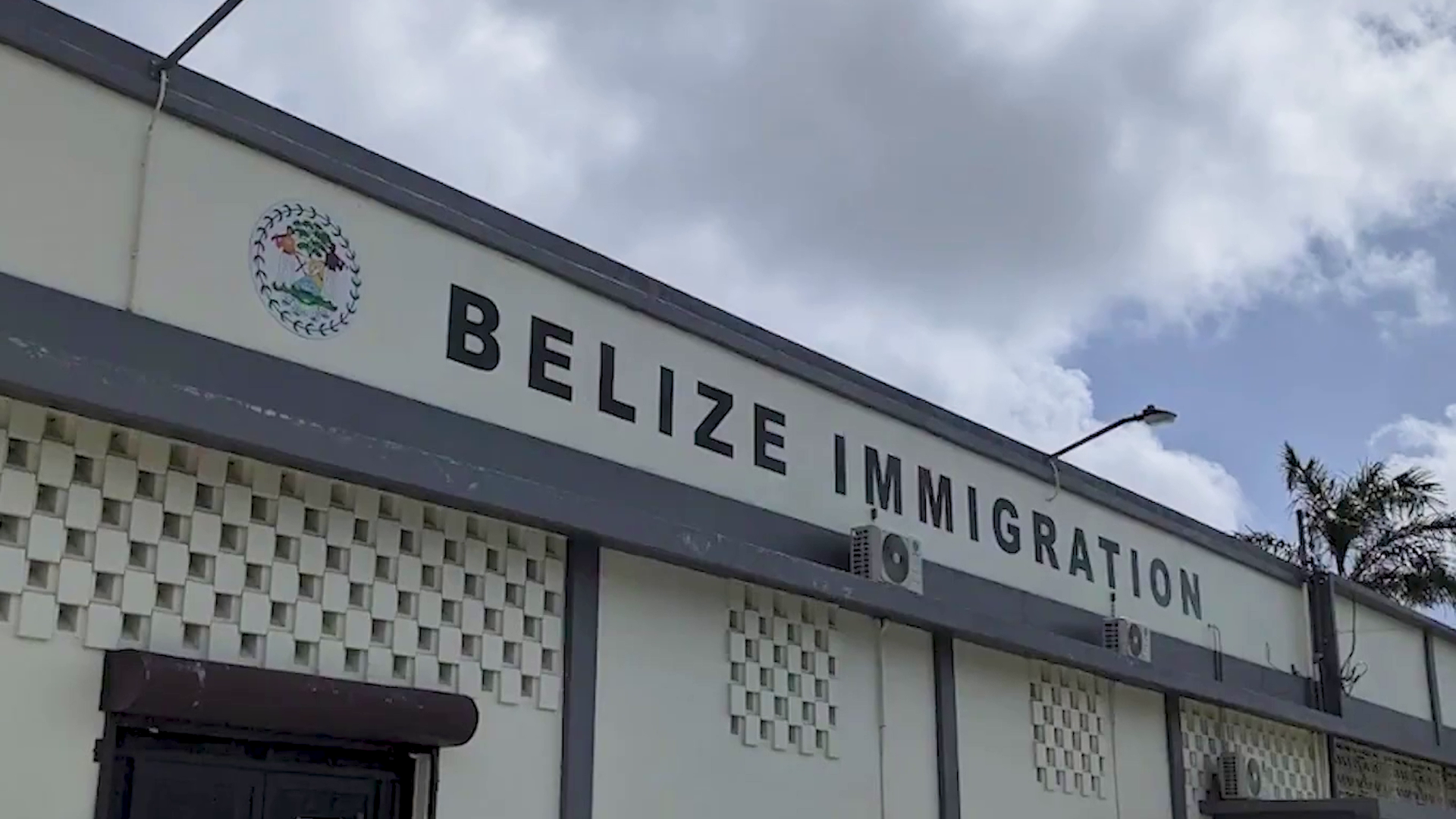
A deepening public fund misappropriation scandal centering on Belize’s Immigration Ministry has placed the national government under growing public and political pressure, with calls mounting for a full, independent audit of the agency’s financial operations.
Dated May 19, 2026, the unfolding controversy began when a preliminary investigative report was delivered to Immigration Chief Executive Officer Tanya Santos-Neal, documenting the unauthorized diversion of at least $160,000 in public funds. In an interview with reporters, Santos-Neal confirmed that investigators have already pinpointed one individual linked to the misappropriation, who could soon face formal criminal charges. The bigger question hanging over the case, however, remains how far the misconduct extends.
Santos-Neal explained that the preliminary probe, which cross-checked financial records through the ministry’s CITO digital system, found no evidence that applicants failed to receive the immigration documentation they paid for. Instead, the embezzlement occurred behind the scenes, through manipulated receipt reversals. Investigators are still working to untangle what exactly took place: whether the scheme involved forged supervisor signatures, simply inadequate oversight from supervisory staff, or active complicity by senior leaders within the department.
When asked how many people may be involved, Santos-Neal noted that one person with direct access to cash payments has been confirmed as a person of interest. But the ministry’s multi-layered supervision structure means that misconduct could reach either the first or second tier of oversight – or both. As a result, Santos-Neal confirmed the agency will formally recommend a full, in-depth audit to uncover all gaps and wrongdoing in the department’s financial practices.
Opposition Leader Tracy Panton, head of the United Democratic Party, has seized on the scandal to argue that the misappropriation is not an isolated incident, but evidence of systemic, endemic corruption that permeates multiple branches of the current government. Panton pointed to longstanding allegations of misconduct across other key public agencies, including the Lands Department and Police Department, as well as unaccountable payments from statutory bodies to private marketing firms with no clear justification for the spending.
“These are not the private purses of government officials,” Panton stated. Citing the common adage that “a fish stinks from the head,” she argued that the spread of corruption across public services stems from a lack of accountability at the highest levels of national leadership. She claimed that when low-level public workers see senior ministers and even the prime minister benefiting from corrupt practices without consequence, they feel justified in seeking illicit gains to support their own families and improve their living standards. The result, Panton said, is corruption that has become embedded in every stage of public service delivery.
Panton has previously pledged on social media that if the United Democratic Party wins power under her leadership, her administration will launch a sweeping effort to eliminate systemic corruption from Belize’s public sector. As the investigation expands, public attention has shifted from focusing solely on the individual identified in the initial probe to questioning whether broader regulatory and cultural changes are needed to restore public trust in government institutions.