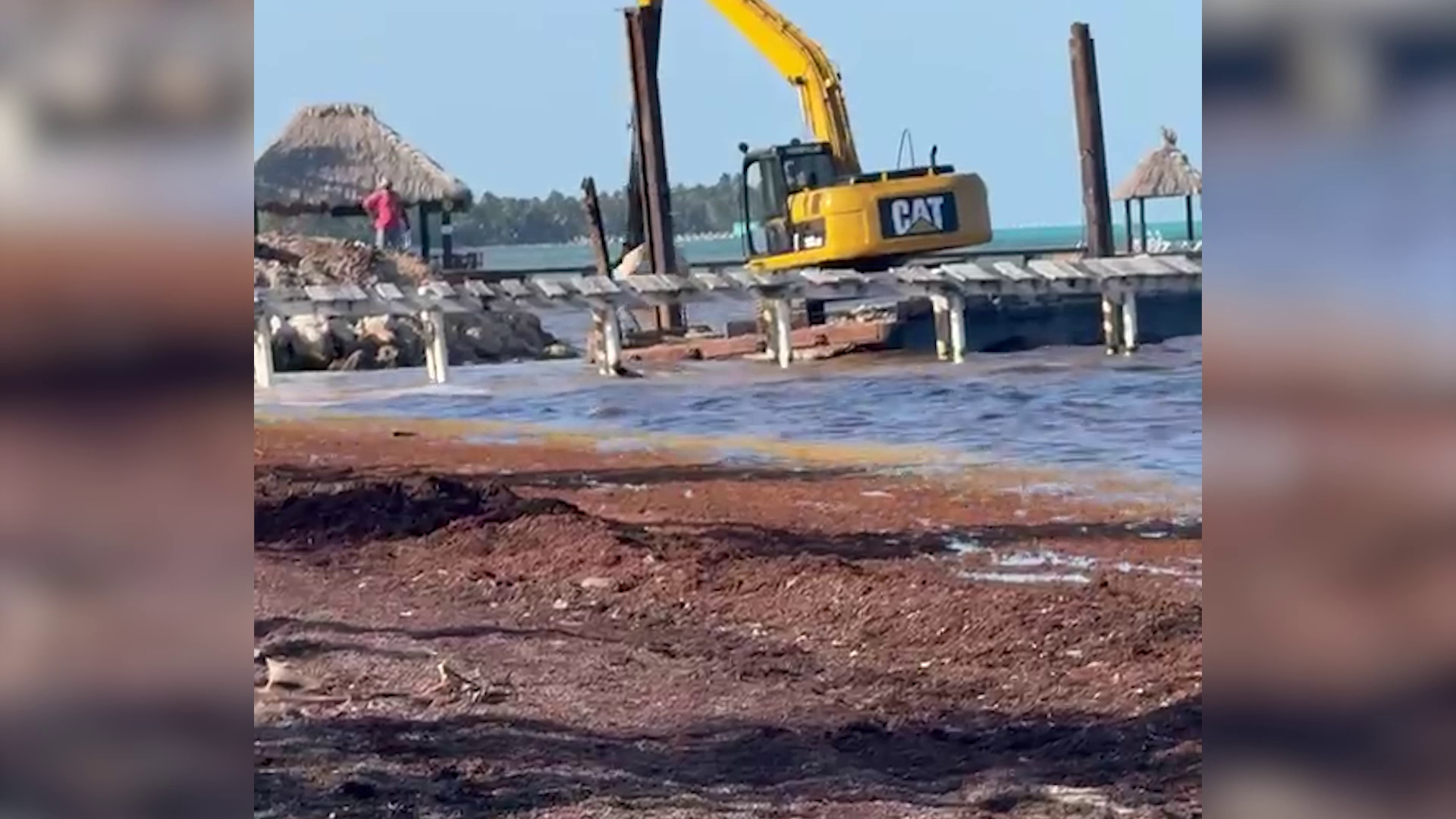
Belize’s coastal ecosystems are facing an urgent, unaddressed threat from unregulated development and illegal dredging, environmental advocates have warned, pushing authorities to tighten enforcement of existing conservation rules and halt harmful activity immediately. In a public joint statement released this May, the Ambergris North Alliance (ANA), a local environmental advocacy group, has named Mexico Rocks near Ambergris Caye as the site of the most recent confirmed violation, where dredging operations have continued long after their original official permits expired.
ANA President Catherine Paz detailed the most recent incident, which unfolded just one week before the group’s formal announcement, at a newly constructed bulkhead located roughly 600 yards from X’tan Ha Resort, right along the boundary of the Mexico Rocks Marine Reserve. From the moment the bulkhead was built, ANA raised red flags, submitting formal concerns to Belize’s Department of the Environment (DOE), the local mayor, and the area’s elected representative. No action was taken to remove or modify the structure, leaving a persistent problem that has now escalated into illegal activity.
Paz explained that the bulkhead’s placement causes recurring navigational issues for barges accessing the site: shifting sand frequently traps vessels, forcing crews to dig out the channel again and again. The ANA captured clear video evidence of the most recent unauthorized dredging, which continued illegally until midnight, pausing only briefly for a couple of hours before resuming. Paz confirmed that while the project held valid permits during its initial phase, those approvals have expired, and no new permit has been granted for ongoing work.
This single incident is not an isolated case, according to ANA. The organization points to a long pattern of unregulated dredging, land reclamation, and quarrying across northern Ambergris Caye and other sensitive coastal zones across Belize, including Hol Chan, Bacalar Chico, Placencia, and Corozal Bay. Cumulative damage from these activities is already putting the region’s unique biodiversity and natural climate resilience at severe risk, Paz says, and the repeated failure of authorities to respond to community concerns has eroded public trust in government environmental oversight.
The ecological risk of the illegal dredging is particularly acute because of the site’s proximity to the Belize Barrier Reef, one of the world’s most important coral reef systems. Paz noted that the reef sits less than a quarter-mile from the shore at Mexico Rocks, and moves even closer to land further north. Sediment stirred up by dredging (a process called siltation) is carried directly to the reef by natural currents, smothering corals and disrupting the entire marine food web that supports both local wildlife and the coastal tourism and fishing industries that are the backbone of the local economy.
After years of quiet outreach and repeated requests for meetings with authorities that went unanswered, ANA moved to issue its public call for action. The group is demanding an immediate halt to all development activity in the country’s most sensitive coastal and marine protected areas, alongside much stricter enforcement of existing environmental protection laws.
In response to inquiries from reporters, Belize’s Department of the Environment and Mining Unit confirmed that they have received ANA’s formal reports of illegal activity, and stated that the incident is now under active investigation.