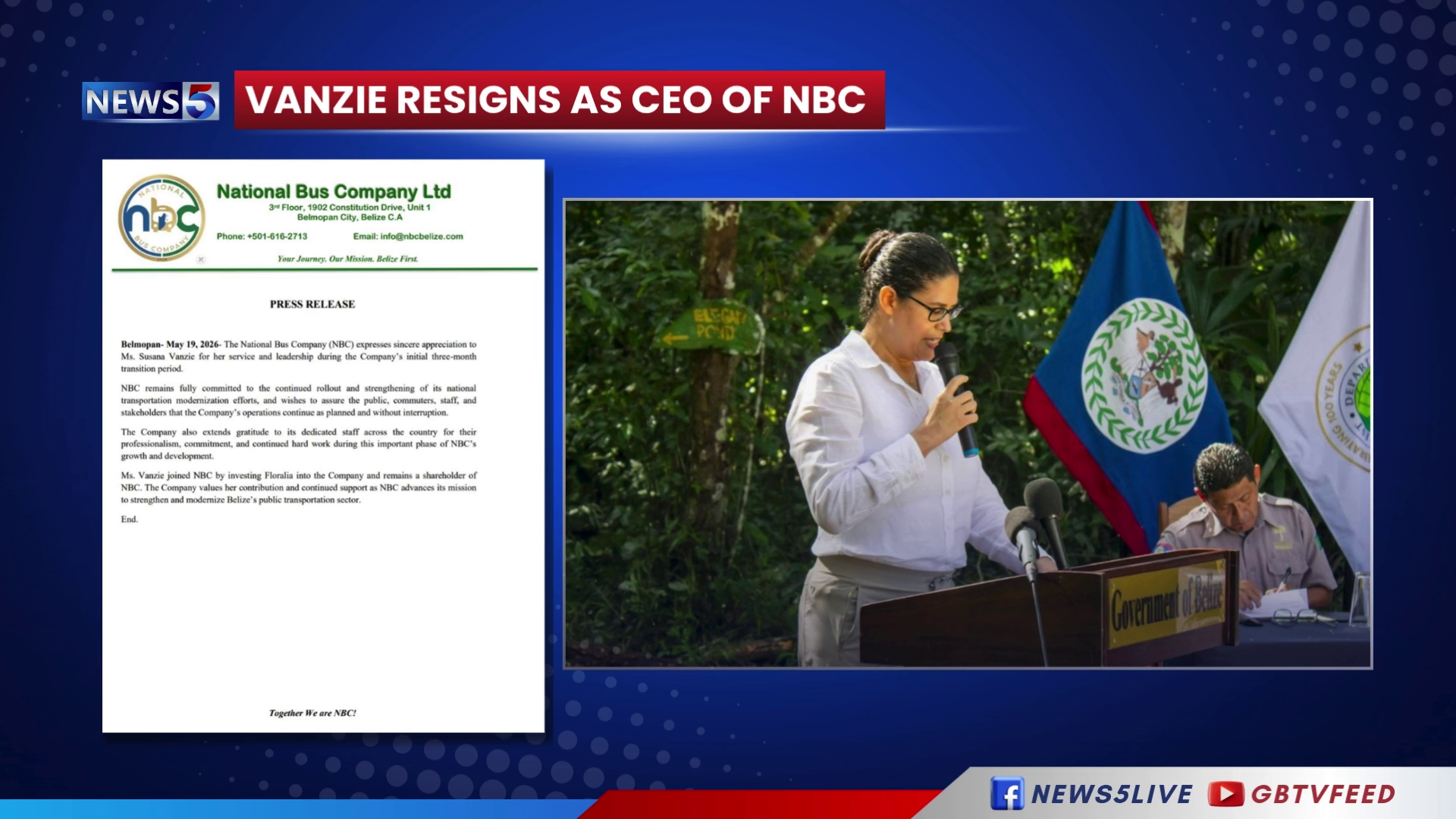
Weeks after its national rollout, Belize’s flagship National Bus Company (NBC) finds itself in the midst of a leadership transition that has reignited questions about the future of the country’s public transportation overhaul. Less than three months after the service launched, founding CEO Susana Vanzie has stepped down from her post — a departure that comes at a critical juncture, just days after the company secured promising momentum from talks with rural bus operators aimed at expanding its network and bringing more private operators into the fold.
Belize’s Minister of Transport Dr. Louis Zabaneh has moved quickly to downplay concerns over the sudden change, emphasizing that Vanzie’s tenure was always intended to be temporary. In an interview, Zabaneh explained that Vanzie agreed to step in only to guide the NBC through its early development stages, and notified government officials weeks ago that she would conclude her service by May 15. Vanzie and her brother remain shareholders in the company and will continue to support its growth as stakeholders, the minister added.
Despite official assurances, the leadership change has sparked unease among industry stakeholders, who question the long-term stability of the ambitious nationalization project. While NBC confirms that day-to-day operations remain uninterrupted, with experienced regional managers overseeing core services, Zabaneh acknowledged that a permanent chief executive is essential to steer the company through its planned rapid expansion. The NBC board has launched a formal open search for a new CEO, accepting applications from both internal candidates and external applicants from across Belize’s economy. While the board already has internal candidates with demonstrated commitment to the project in its sights, the open process is designed to cast a wide net to find the best candidate to lead the transition, Zabaneh said. No timeline has been set for announcing the new appointment.
Critics of the project say the CEO exit is a red flag that exposes deeper flaws in the Briceno administration’s rushed rollout of the national bus scheme. German Tillett, co-owner of private operator Tillett’s Bus Line, argues that Vanzie’s departure comes amid a growing list of unaddressed issues, from persistent mechanical problems with existing vehicles to a lack of transparency around the company’s financial management.
Tillett has also raised sharp questions about the government’s upcoming plan to approve public financing for a new fleet of electric buses, noting that the administration has yet to release public data from an earlier pilot program that deployed two electric buses with private operator Westline. “I am not against innovation, but modernization without information is recklessness,” Tillett said. He pointed to the lack of published data on how the buses perform in Belize’s climate, including the impact of high heat, heavy rainfall, and local operational demands on battery life and long-term viability. He also questioned why the government has moved away from the original public-private partnership (PPP) model that was initially proposed for the project, shifting the full financial burden of the new electric fleet to Belizean taxpayers.
As the search for a permanent CEO gets underway, the leadership vacuum adds another layer of uncertainty to a project that is meant to transform Belize’s public transportation landscape. While the government maintains the transition was pre-planned and operations remain on track, critics say the changes raise urgent questions about governance, planning, and transparency for one of the administration’s high-profile infrastructure initiatives.