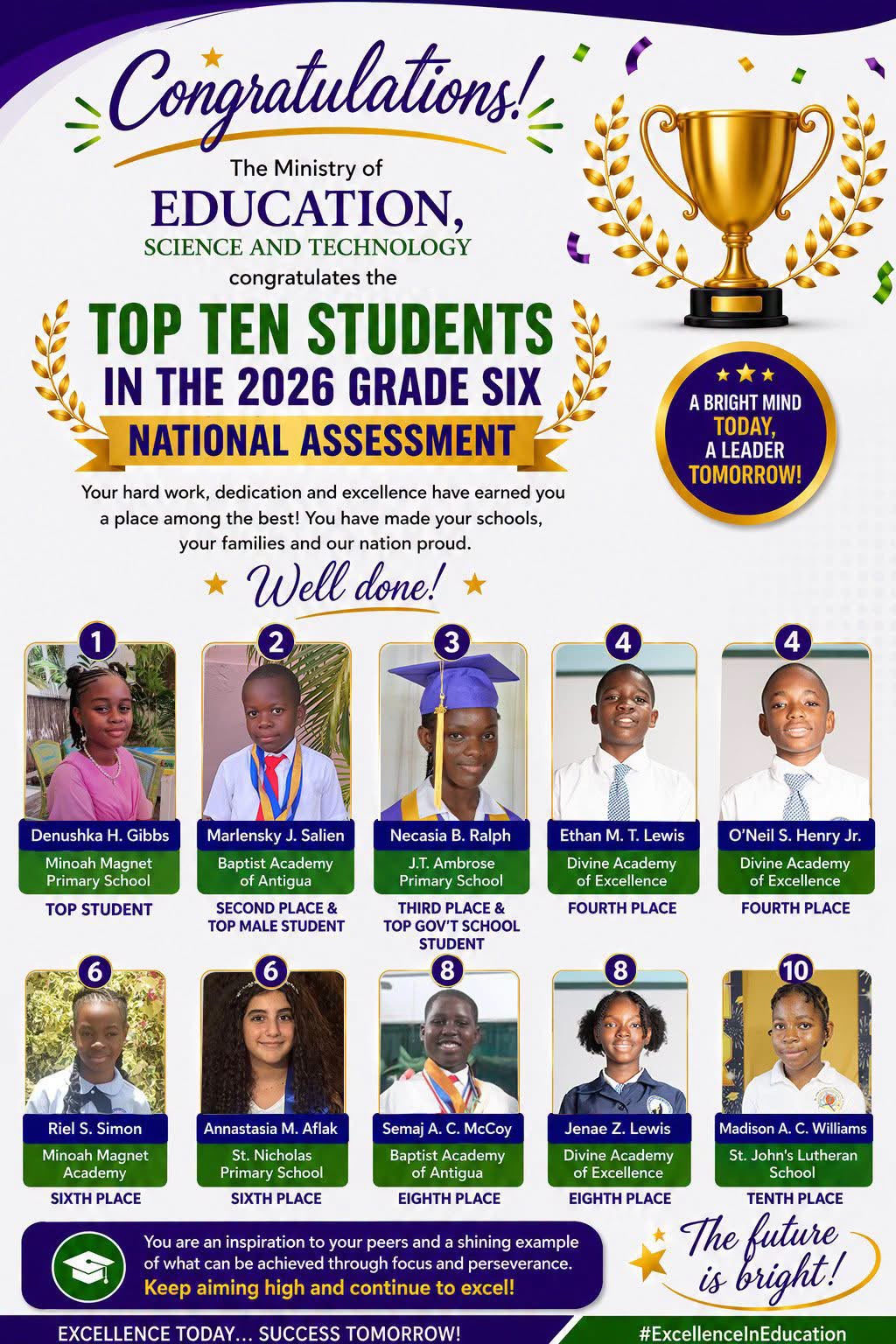
Officials from the Ministry of Education, Science and Technology have extended formal congratulations to the 10 highest-achieving students across the country following the release of results for the 2026 Grade Six National Assessment, highlighting the outstanding academic rigor and consistent dedication that brought the cohort to their impressive milestones. In an official statement circulated to media and education stakeholders this Wednesday, the ministry emphasized that the standout results posted by these young learners are not accidental, but a direct reflection of months of intentional hard work, steady perseverance, strict personal discipline, and an unwavering commitment to meeting high academic standards. Beyond celebrating the students themselves, the government body also took the opportunity to acknowledge the critical behind-the-scenes support system that helped pave the way for these successes, giving public recognition to school principals, classroom teachers, and the students’ family members and guardians who offered guidance, encouragement, and resources throughout the entire primary school journey. “This outstanding achievement is a testament to your hard work, perseverance, discipline, and commitment to excellence,” the ministry noted in its official message to the honorees. “You have made your families, schools, teachers, and the entire nation proud.” Looking ahead to the next phase of the students’ academic careers, the ministry extended well wishes for continued growth and success as the group prepares to transition from primary education to secondary school, a key milestone that will set the foundation for their future professional and personal pursuits. The full list of top 10 performers, along with their affiliated institutions and special distinctions, has been released to the public alongside the official congratulatory statement. Claiming the overall top spot in the national assessment was Denushka H. Gibbs, a student at Minoah Magnet Primary School. Securing second place and the title of top-performing male student nationwide was Marlenky J. Salien of Baptist Academy of Antigua. Third place went to Necasia B. Ralph from J.T. Ambrose Primary School, who also earned recognition as the highest-scoring student from a government-run primary campus. Fourth place was awarded jointly to Ethan M. T. Lewis and O’Neil S. Henry Jr., both enrolled at Divine Academy of Excellence. Two students tied for sixth place: Riel S. Simon of Minoah Magnet Academy and Annastasia M. Aflak of St. Nicholas Primary School. Eighth place was another tie, claimed by Semaj A. C. McCoy of Baptist Academy of Antigua and Jenae Z. Lewis of Divine Academy of Excellence. Rounding out the top 10 at tenth place is Madison A. C. Williams from St. John’s Lutheran School.
分类: education
-
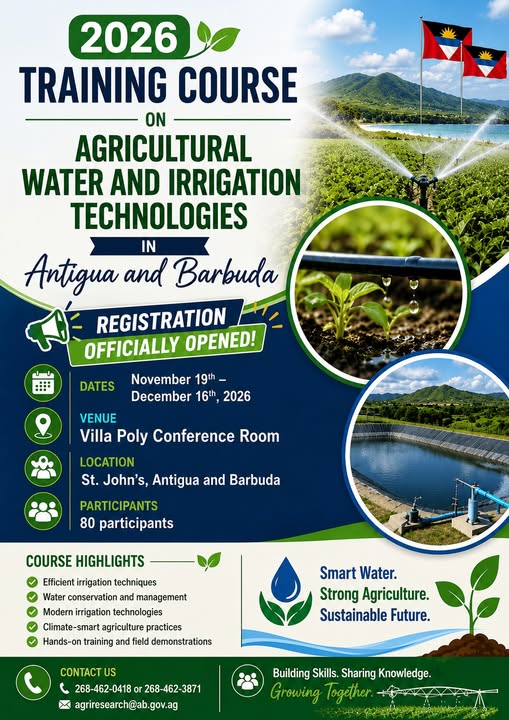
Registration Opens for Antigua and Barbuda’s 2026 Agricultural Water and Irrigation Training
Aspiring agricultural professionals and industry stakeholders in Antigua and Barbuda have received a new opportunity to advance their expertise, as the nation’s Ministry of Agriculture, Lands, Fisheries and the Blue Economy has officially launched registration for a targeted 2026 training course focused on agricultural water management and cutting-edge irrigation technologies.
Designed to address growing challenges around water scarcity and climate volatility impacting the Caribbean agricultural sector, the program centers on equipping participants with both foundational knowledge and actionable practical skills in three core areas: modern irrigation system deployment, strategic water conservation, and climate-smart agricultural practices. Unlike traditional classroom-only learning models, the course prioritizes hands-on experience, giving attendees direct access to innovative tools and technologies that are reshaped sustainable agriculture globally. By the end of the program, participants are expected to leave with the capabilities needed to help build a more resilient, productive, and environmentally sustainable agricultural sector across Antigua and Barbuda.
The 4-week training session is scheduled to run from November 19 through December 16, 2026, and will be hosted at the Villa Poly Conference Room in St. John’s, the nation’s capital. The curriculum is structured to cover a wide range of high-impact topics, including water-efficient irrigation techniques, integrated water resource management, the latest smart irrigation technologies, adaptive climate-smart farming practices, hands-on skill-building workshops, and live field demonstrations of new equipment and methods.
Aligned with the government’s long-term vision for the sector, the program is rooted in the guiding slogan: “Smart Water. Strong Agriculture. Sustainable Future.” It reflects a broader commitment to capacity building, knowledge sharing, and collaborative growth across the national agricultural community, aiming to uplift smallholder farmers, agricultural extension workers, and industry professionals alike. Interested individuals can access registration via the official link shared by the ministry, and additional inquiries can be directed to the program’s administrative contact for further details.
-

Education secretary urges Dominican teachers to view AI as a learning tool
At the opening ceremony of the annual Dominica Association of Teachers (DAT) Summer Training Institute, held this Monday at Dominica’s Convent High School, a top government education official has called on local educators to reframe their perspective on artificial intelligence, embracing the emerging technology as a supportive tool rather than a disruptive threat to teaching.
Robert Guiste, Permanent Secretary of Dominica’s Ministry of Education, used his keynote address to push for broader adoption of AI in educational settings, telling attendees, “I want us as teachers to focus on AI. AI should be our friend.”
Guiste pointed out that even original writing from iconic literary figures would trigger AI detection flags in today’s testing landscape. He explained, “Teachers, no matter what you do, if you were to call William Shakespeare now and you were to write something off his head, you run it through an AI checker, you are going to get 30 percent AI, at least.” His comments highlight a growing recognition that overreliance on AI detection tools can produce misleading results for genuinely original work, as AI systems are trained on vast corpora of existing text that overlap with even new, human-generated content.
Beyond encouraging responsible AI use among educators and students, Guiste emphasized the value of regional collaborative platforms for upskilling teachers. He noted that the Organization of Eastern Caribbean States (OECS) maintains a dedicated professional development hub that offers educators across the region access to expanding high-quality learning opportunities, curated digital resources, and cross-institutional collaborative networks. This infrastructure is designed to support continuous career growth for teachers at every stage of their careers, Guiste said, adding, “It reflects our shared commitment within the OECS to building teacher capacity and ensuring that educators have access to continuous, relevant, and flexible professional development.”
Notably, the OECS hub’s built-in AI feature was not developed by outside international consultants. It was created by young tech professionals from across the Eastern Caribbean region, including two expert developers based in Dominica. This homegrown innovation aligns with the regional bloc’s goal of building locally led, context-appropriate educational tools that meet the specific needs of Caribbean educators and students.
Guiste closed his remarks by stressing the importance of digital literacy around AI, urging teachers to master when and how to leverage the technology, and to pass that critical understanding on to their students. By teaching responsible AI use from an early stage, he argued, schools can prepare the next generation for a workforce where AI literacy will be an essential skill.
-

Dominica State College celebrates milestones at 24th commencement ceremony
On Wednesday, July 8, Dominica State College (DSC) will host its 24th annual Commencement Ceremony, an occasion that will not only honor the hard-won achievements of hundreds of graduating students but also stand as a landmark event for the institution, celebrating multiple unprecedented milestones in its development.
One of the most notable landmarks of this year’s graduation is the record-breaking cohort of bachelor’s degree recipients. In total, 21 students will cross the stage to collect their four-year degrees, a figure that represents the largest group of bachelor’s graduates in DSC’s institutional history. Of this cohort, 10 graduates hail from the Bachelor of Science in Nursing program, while 11 completed requirements for the Bachelor of Science in Business Management. This breakout class underscores the steady, intentional expansion of DSC’s higher education offerings over recent years.
College officials note that the 24th commencement will also shine a spotlight on the institution’s long-term commitment to growing its Technical and Vocational Education and Training (TVET) division. Graduates from a range of in-demand technical disciplines will receive their professional qualifications, including Building and Civil Engineering, Architecture, Electrical Engineering, Plumbing, and Refrigeration and Air Conditioning. DSC leadership emphasizes that these TVET programs fill a critical national need, equipping local workers with the hands-on specialized skills that Dominica’s growing economy demands as infrastructure and industry development accelerates across the island.
In a testament to the high quality of the college’s TVET programming, this year’s valedictorian is a student from the Building and Civil Engineering program, a choice that the institution highlights as proof of the outstanding academic and practical excellence achieved by students pursuing technical career pathways.
Another historic first on the ceremony’s agenda is the recognition of the inaugural graduating class of DSC’s Accelerated Associate Degree in Primary Education. Eleven currently practicing primary school teachers have completed the program, which was specifically designed to remove barriers to professional advancement for in-service educators. By offering flexible, accessible upskilling opportunities, the initiative directly supports the government of Dominica’s ongoing efforts to strengthen the country’s foundational education sector and improve learning outcomes for young students across the island.
Beyond celebrating individual student success, DSC frames this year’s commencement as a reflection of the institution’s core mission: to continuously expand accessible educational opportunities, build a competitive local workforce, and adapt its programming to meet the changing social and economic needs of Dominica through a mix of robust academic higher education and practical technical training.
-
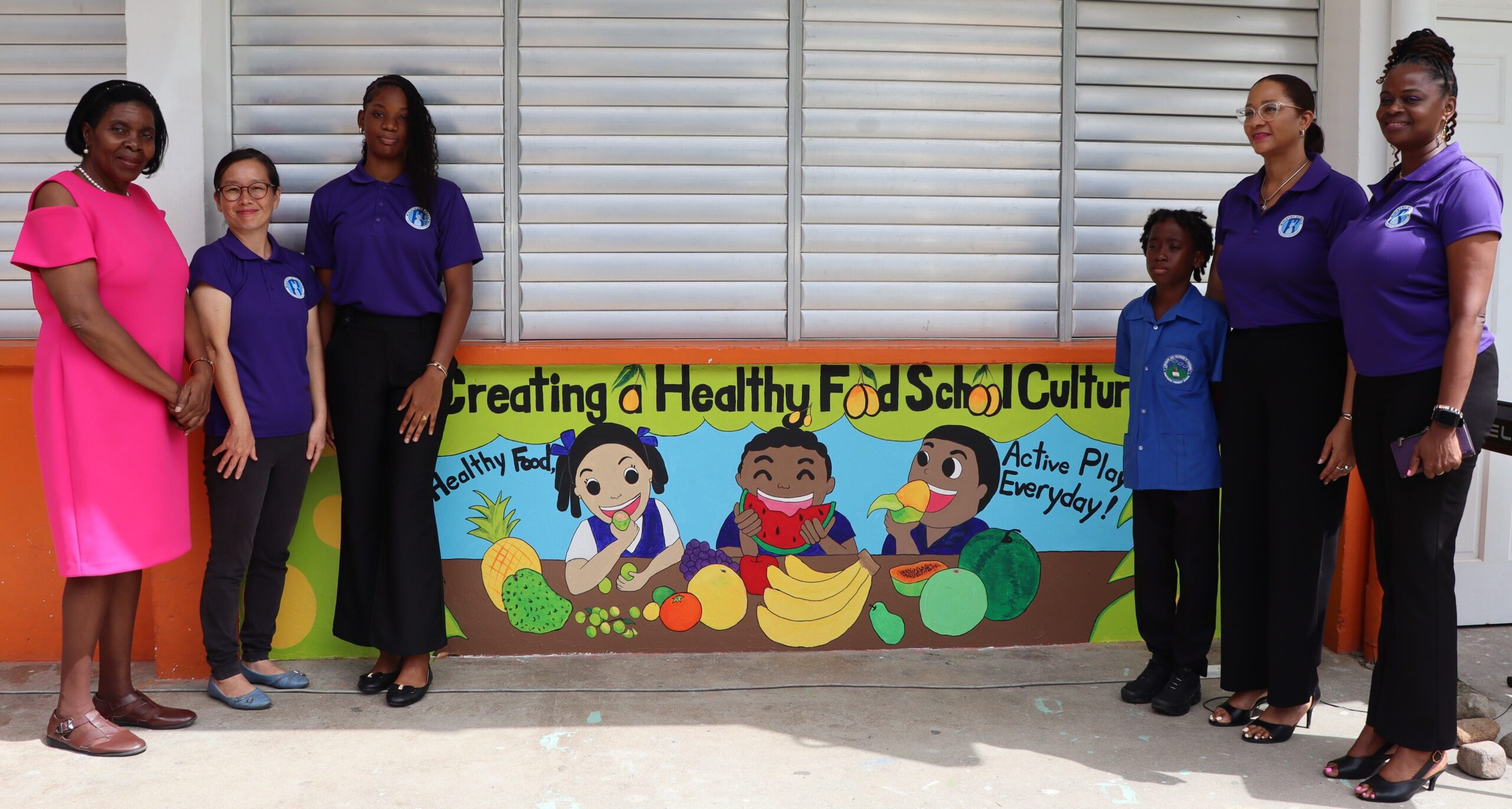
Healthy eating mural unveiled at Soufriere Primary School
In a collaborative effort to embed lifelong healthy habits among young learners, a custom-designed healthy eating mural has been formally unveiled at Soufriere Primary School in Saint Lucia, capping off the island nation’s annual Nutrition Awareness Month. Spearheaded by the Ministry of Health, Wellness and Nutrition, the project represents a public commitment to equipping children with the resources, knowledge, and environmental support to make informed, nutritious food choices from an early age.
Lisa Hunt, the country’s Chief Nutritionist, explained that the permanent wall artwork is intended to act as a constant, accessible teacher for everyone who enters the school grounds. “Every time a child walks past this mural, we want it to spark a small reminder to prioritize fresh produce, hydration, regular movement, and the high-quality local foods grown right here in Saint Lucia,” Hunt shared during the unveiling. “It’s not just for students, either. We hope it encourages teachers, visiting parents, and the entire surrounding community to re-examine their own daily habits and commit to healthier lifestyles together.”
Cecilia Clovis-Haynes, principal of Soufriere Primary, called the initiative perfectly timed and deeply aligned with the school’s existing work to nurture student well-being. She emphasized that the mural is far more than decorative artwork: it is a functional pedagogical tool that reinforces classroom lessons about nutrition and growth. “What children eat directly impacts how they grow, how well they focus in class, and their ability to chase their future goals,” Clovis-Haynes noted. “This piece ties directly into everything we’ve been teaching our students about health, so it’s an incredible reinforcement of our work here.”
Joel Charles-Charlemagne, Education Officer for District 8, echoed this perspective, noting that consistent visual exposure is one of the most effective ways to embed long-term healthy habits. “Whether students are walking to first period, gathering for morning assembly, or eating lunch in the schoolyard, they’ll see these bright, engaging images of colorful local produce and active kids playing,” Charles-Charlemagne explained. “This mural turns our entire school environment into a living learning space that actively pushes back against unhealthy routines and choices.”
Emma Hippolyte, Parliamentary Representative for the Soufriere/Fond St Jacques constituency, praised the project while stressing that meaningful change to children’s eating patterns requires cross-sector collaboration beyond a single art installation. Hippolyte noted that the partnership between the Ministry of Health and Ministry of Education behind the mural is a strong foundational step, but long-term progress requires engagement across all parts of a child’s life. “We can teach kids about healthy eating in school, but we also need to work with parents to rethink what goes into school lunch kits, and with school staff to ensure nutritious options are the default in school canteens,” she explained. “Change has to come from multiple angles to stick.”
The mural was created by Yukari Charles, a visual arts teacher at Soufriere Comprehensive Secondary School, with support from former student Jackie Lawrence, bringing together creative talent from across the local education community to advance the public health goal.
-
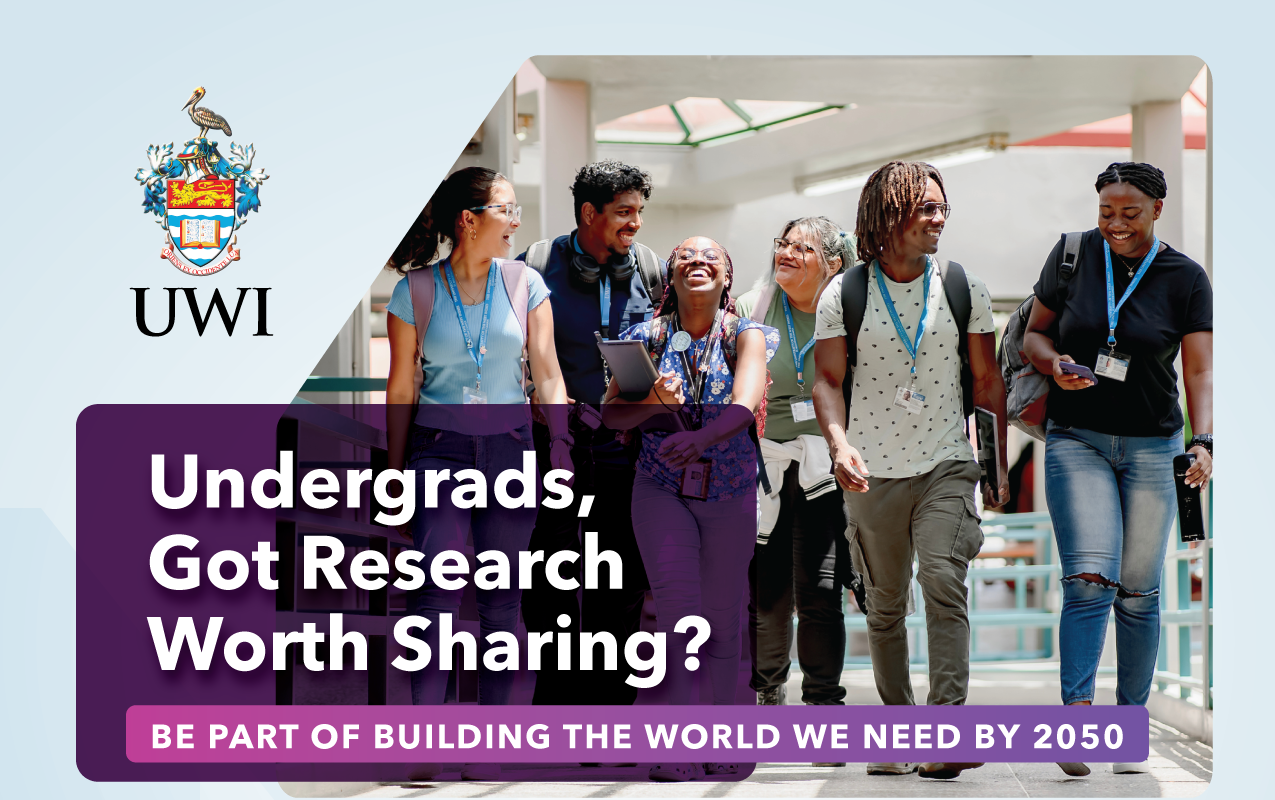
UWI to Host First International Undergraduate Student Leadership Conference
The University of the West Indies (UWI), the Caribbean’s leading higher education institution with a 75-year legacy of regional impact, is making history with the launch of its first-ever International Undergraduate Student Leadership Conference and Entrepreneurship Exhibition (IUSLCEE). Scheduled to take place from September 23 to 25, 2026, at the university’s Regional Headquarters in Jamaica, the landmark event is organized by UWI’s Office of the Board for Undergraduate Studies, with registrations and proposal submissions already open to undergraduate learners across the globe.
Convened under the forward-looking theme “Today’s Students, Tomorrow’s World, Towards 2050: Imagining Roles, Rights, Responsibilities and Relationships,” the conference will adopt a flexible hybrid format to maximize global accessibility. In-person programming will take place at the Jamaica headquarters, while remote attendees from any country can join virtually, breaking down geographic barriers for participation. Unlike traditional academic gatherings that cater primarily to graduate and established researchers, IUSLCEE centers undergraduate voices, designed to nurture global citizenship, spark student-led advocacy, and build the next generation of collaborative leadership.
The core mission of the event is to elevate student-driven research, accelerate early-stage innovation, and cultivate civic-minded leadership skills that prepare attendees for advanced graduate study and purpose-driven careers. Undergraduates from all academic disciplines are invited to share their original scholarly work, launch new entrepreneurial ventures, and contribute to collective conversations about shaping a sustainable, equitable global future by 2050. Beyond presentations and exhibitions, the conference offers unparalleled networking opportunities, connecting emerging young scholars and founders with industry leaders, experienced academic mentors, and like-minded peers from every region of the world, laying the groundwork for long-term international collaborations and professional growth.
Organizers are currently accepting two types of submissions: research and scholarly paper abstracts, and proposals for the entrepreneurship exhibition. All submissions must include a 300-word maximum abstract that outlines the research topic, core objectives, methodological approach, and key preliminary findings, or for entrepreneurial proposals, a summary of the proposed venture. All work is expected to align with the conference’s overarching 2050-focused theme, with suggested topic areas including innovation for sustainable development, global digital transformation, social entrepreneurship, youth leadership development, and community-led impact initiatives. The final deadline for all submissions is September 3, 2026.
Interested participants can complete conference registration via the official online portal at bit.ly/43FiYSX. For additional questions about registration, abstract submissions, or exhibition applications, inquiries can be directed to Ms. Karen Smith, Chair of the Conference Secretariat, through the official event website: https://www.uwi.edu/obus/iuslc.
As context, The University of the West Indies has grown dramatically from its founding in 1948, when it launched as a London-affiliated university college in Jamaica with just 33 medical students. Today, it stands as an internationally ranked global institution with nearly 50,000 students spread across five physical campuses: Mona in Jamaica, St. Augustine in Trinidad and Tobago, Cave Hill in Barbados, Five Islands in Antigua and Barbuda, and a distributed Global Campus, plus collaborative research and education centers with partner institutions across North America, Latin America, Asia, Africa, and Europe.
UWI offers more than 1,000 academic programs spanning certificate, diploma, undergraduate, and postgraduate levels across a wide range of fields, including arts and culture, food and agriculture, engineering, education, humanities, law, medical sciences, science and technology, social sciences, and sports. As the Caribbean’s leading higher education provider, it hosts the region’s largest concentration of research expertise, focused on solving pressing challenges facing the Caribbean and the broader global community.
Since 2018, UWI has consistently been featured in the Times Higher Education (THE) annual global university rankings, confirming its status as one of the world’s top higher education institutions. It is the only English-speaking Caribbean university to be listed across four prestigious THE ranking categories: the World University Rankings, which evaluates more than 2,000 research-intensive universities globally; the Golden Age University Rankings, which recognizes institutions founded between 50 and 80 years ago; the Latin America and Caribbean Rankings; and the Impact Rankings, which assesses universities based on their contributions to the United Nations’ Sustainable Development Goals (SDGs). This global recognition supported the launch of UWI’s International School for Development Justice (ISDJ), a global online graduate business school that trains future leaders to advance equitable sustainable development. A long-standing SDG-engaged institution, UWI is consistently ranked among the top global universities for its work on the UN’s development goals. More information about the university is available at www.uwi.edu.
-
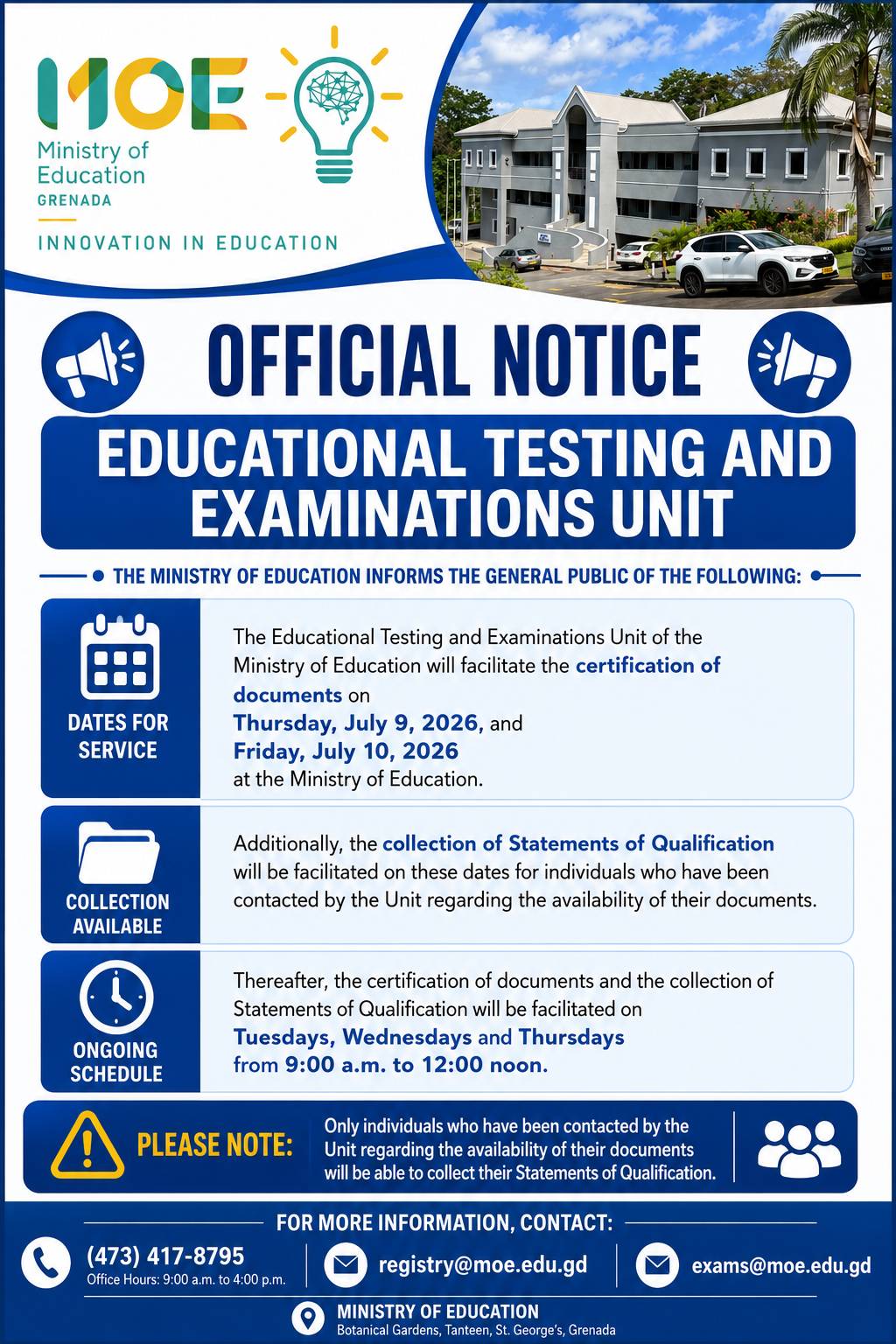
Educational Testing and Examinations Unit: Certification of documents
Grenada’s Ministry of Education has released an official public notice outlining adjusted and upcoming schedules for two key educational document services, offering clarity for applicants waiting to process official paperwork. The department’s Educational Testing and Examinations Unit has confirmed that two special dedicated sessions for document certification will be held at the Ministry of Education headquarters on Thursday, July 9, 2026, and Friday, July 10, 2026. Alongside this certification service, these two days will also open for pre-notified applicants to collect their official Statements of Qualification, a critical document for education and employment purposes. Only individuals who have already received direct communication from the Educational Testing and Examinations Unit confirming their documents are ready for pickup will be able to access the collection service during these special dates. After the conclusion of these two special sessions, both document certification and Statement of Qualification collection services will shift to a regular weekly schedule. Moving forward, members of the public will only be able to access these services between 9 a.m. and 12 p.m. on Tuesdays, Wednesdays, and Thursdays each week. This notice comes as part of the ministry’s ongoing effort to help residents plan ahead for official educational document processing, reducing wait times and confusion around service availability. As a standard publishing note, NOW Grenada, the outlet that carried the original announcement, has clarified that it does not take responsibility for opinions, statements, or third-party contributed content published on its platform. The platform also invites users to report any content that violates its community guidelines via an online reporting portal.
-

COMMENTARY: Kiswahili Language Day 2026
Across cultures, proverbs capture timeless truths about human connection. For East Africa and the broader African continent, the old Kiswahili saying *“Milima haikutani, lakini binadamu hukutana”* — translated as “Mountains do not meet, but humans do” — perfectly encapsulates the core purpose of Kiswahili itself: bringing diverse people together across divides. As the world marks annual World Kiswahili Language Day on July 7, the 2026 observance centers on the theme “Kiswahili for Peace, Solidarity and Global Economic Diplomacy,” shining a brighter spotlight than ever on this transcontinental language’s expanding global influence and cultural significance.
UNESCO data estimates that of roughly 8,324 documented languages worldwide, only around 7,000 remain actively used today, making the preservation and growth of widely spoken indigenous African languages like Kiswahili all the more critical. More than a mere communication tool, Kiswahili is a living vessel of African identity, collective unity, and centuries of shared cultural heritage. Today, it counts more than 200 million speakers globally, ranking it among the most widely used languages across Africa and the world.
Kiswahili has long served as a critical unifying communication medium across East, Central, and Southern Africa. It holds official language status for three major regional blocs: the African Union (AU), the Southern African Development Community (SADC), and the East African Community (EAC). As of November 2025, it gained a new marker of global recognition when it joined Arabic, Chinese, English, French, Russian, and Spanish as the seventh official language of UNESCO’s General Conference — a milestone that cements its status beyond African borders.
This year’s theme is intentionally designed to highlight Kiswahili’s unique strengths: it bridges cultural divides, fosters cross-border dialogue, and creates new pathways for global economic collaboration. It also emphasizes the language’s underrecognized contributions to peacebuilding, sustainable development, and modern economic diplomacy, particularly as Africa deepens its regional integration and expands its global influence. Economic diplomacy relies on strong cross-country relationships to boost national competitiveness and global influence, and language is the foundational tool for building and sustaining those partnerships. Kiswahili’s neutral, unifying structure makes it uniquely suited to this role.
The history of Kiswahili reflects its long tradition of bringing different cultures together. Two prevailing theories shape academic understanding of its origins. The first frames Kiswahili as a primarily Bantu language that emerged along the East African coast between 100 and 500 CE. It developed organically as a lingua franca to enable communication between Bantu-speaking communities and traders from Arabia and Asia, gradually growing into a central language for trade, diplomacy, and cultural exchange. The second theory centers the profound influence of Arabic on the language’s evolution: the name “Swahili” itself derives from the Arabic word sawāḥilī, which translates to “of the coast,” a nod to centuries of deep trade and cultural ties between the region and Arab traders. Over centuries, Arabic vocabulary, grammatical structures, and writing systems shaped Kiswahili, especially in coastal communities, helping it evolve into a robust both spoken and written language that could serve local and international communication needs alike.
Today, Kiswahili’s global footprint continues to grow, driven in part by its accessible structure: its logical, phonetic construction makes it one of the easiest African languages for new learners to master. Universities across every inhabited continent now offer Kiswahili courses, opening new doors for academic collaboration, cross-cultural exchange, and mutually beneficial economic cooperation between global partners and African communities. For millions of native and second-language speakers, this growing global visibility represents long-overdue recognition of the immense intellectual and cultural value of African languages. Today, it is already the most widely spoken language in sub-Saharan Africa and acts as a shared lingua franca across 14 African nations.
On this 2026 World Kiswahili Language Day, leaders and language advocates are calling for renewed global commitment to preserving and promoting Kiswahili. In an era marked by rising division and conflict, advocates argue that Kiswahili offers a model for how language can foster peace, unity, and open dialogue. Dr. Caroline Asiimwe, Executive Secretary of the East African Kiswahili Commission, notes that Kiswahili fills a unique role as a symbol of unity, peace, and shared understanding. “It belongs to no single ethnic community; it creates a neutral space where different cultures can meet without linguistic hierarchy,” Asiimwe explains. That neutral, connecting role makes it the perfect bridge between diverse communities across the continent and the world — living out the ancient proverb that says, even when mountains stand apart, humans always find a way to meet.
-

UWI to host first international undergraduate leadership and entrepreneurship conference in September
The University of the West Indies (UWI) is set to mark a historic milestone for global undergraduate education this September, with the launch of its inaugural International Undergraduate Student Leadership Conference and Entrepreneurship Exhibition (IUSLCEE). Scheduled to run from September 23 to 25, 2026, the three-day gathering will be hosted at UWI’s Regional Headquarters in Jamaica, and organized by the institution’s Office of the Board for Undergraduate Studies, according to an official UWI press statement.
A first-of-its-kind initiative for the regional higher education institution, the IUSLCEE will adopt a hybrid access model that eliminates geographic barriers, enabling student participants from every corner of the globe to join either in person at the Jamaica venue or remotely via digital platforms.
Centered on the overarching theme “Today’s Students, Tomorrow’s World, Towards 2050: Imagining Roles, Rights, Responsibilities and Relationships,” the conference is crafted to uplift and empower undergraduate learners by creating a dedicated global platform for three core activities: sharing original academic research, showcasing early-stage entrepreneurial projects, and facilitating critical dialogues around modern leadership and global citizenship.
UWI confirmed that both event registration and content submission portals are now open to eligible students. The core mission of the gathering is to bring together undergraduate learners across diverse academic disciplines, fostering cross-disciplinary idea exchange and collaborative development of solutions that can deliver tangible, positive impact to communities worldwide.
Professor Canute Thompson, Pro Vice-Chancellor for Undergraduate Studies and Chairman of the conference, noted that opportunities for undergraduates to present their academic work and entrepreneurial ideas outside traditional classroom settings are often scarce. “This conference changes that, centring student voice and building bridges to graduate studies, industry, and community,” Thompson explained.
The full conference program will include a diverse lineup of activities tailored to student needs: student-led research presentations, the public entrepreneurship exhibition, moderated panel discussions with industry and academic leaders, and structured one-on-one and group mentoring opportunities that connect participating students with experienced leaders across academia, private industry, and civil society. Students can choose to take part in the event in three different capacities — as presenters, general attendees, or event volunteers — regardless of whether they join in person or online.
Event organizers have set a target of attracting at least 200 total participants, alongside approximately 30 accepted student research presentations. Preliminary outreach indicates expected attendance and representation from higher education institutions across the Caribbean, Latin America, the United States, Canada, and Europe.
Beyond providing a presentation platform, the conference carries three core long-term objectives: to foster a culture of undergraduate research across regional and global institutions, to advance student innovation and entrepreneurial thinking, and to strengthen the development of civic-minded leadership among young learners. It also aims to equip students with the connections and preparation they need for successful graduate study and competitive entry into the global workforce. Crucially, it creates structured space for students to build lasting professional networks with mentors, industry practitioners, and peer learners from across the world.
Currently, UWI is actively accepting submissions for both research papers and entrepreneurship exhibition proposals. All applicants are required to submit a concise abstract of no more than 300 words, which outlines their research topic, core objectives, methodological approach, and key preliminary findings — or for entrepreneurs, a clear overview of their proposed business or social venture.
All submissions and exhibits are required to align with the conference’s overarching 2050-focused theme. Eligible topic areas include innovation for sustainable development, global digital transformation, social entrepreneurship, student leadership development, and measurable community impact. The final deadline for all submissions is September 3, 2026.
General conference registration is also open to interested students. Additional information about registration procedures, abstract submission guidelines, and entrepreneurship exhibition proposal requirements is available directly from the Office of the Board for Undergraduate Studies. Interested parties may also contact Conference Secretariat Chair Ms. Karen Smith via email at [email protected] or by telephone at 876-970-0244, with full updated details published on the official UWI conference website.
-

2026 Sonia Boddie Promising Youth Leader Scholarships Awarded
BASSETERRE, St. Kitts – July 7, 2026 – A decades-long commitment to nurturing young community leaders reached a meaningful milestone Tuesday, as two local graduating primary school students were named the 2026 recipients of the Sonia Boddie Promising Youth Leader Scholarship.
At an intimate ceremony hosted at Edgar T. Morris Primary School in the coastal Tabernacle Village, benefactor Sonia Boddie-Thompson officially awarded certificates and monetary grants to the two new honorees, Tanella Welcome and Josiah Finch. The award is designed specifically to support students transitioning from primary to secondary education, covering early education costs including school uniforms, textbooks and other learning supplies.
For Boddie-Thompson, this year’s award cycle carries extra personal significance. Tuesday’s ceremony fell 30 years to the period after she graduated as valedictorian from the same campus, which was known as Tabernacle Primary School at the time of her graduation. The institution, she says, was foundational in shaping her personal and professional growth, and launching her scholarship initiative 13 years ago was her way of giving back to the community that lifted her up.
“This is the thirteenth year that I have been awarding this scholarship, and I am extremely happy to be able to continue providing this assistance to deserving students,” Boddie-Thompson shared during the event. “This year is particularly special because it marks 30 years since I graduated as valedictorian of this school… which has played a significant role in shaping the woman I have become. It is therefore my prayer that this scholarship will motivate the awardees to continue striving for excellence and inspire them to pay it forward one day.”
Boddie-Thompson went on to reaffirm her unwavering commitment to supporting the school and its students, saying she intends to continue funding and awarding the annual scholarship for the rest of her life.
Dale Phipps, principal of Edgar T. Morris Primary School, extended his gratitude to Boddie-Thompson for her consistent generosity and long-standing collaborative partnership with the school. Since the scholarship was first launched in 2014, it has now provided financial assistance to 36 local students making the critical transition to secondary education, removing financial barriers that could otherwise hinder their academic progress.
This report is based on a press release submitted to SKNVibes.com; the outlet has not edited original content for spelling or grammar, and the views expressed do not necessarily reflect those of SKNVibes.com or its partners.