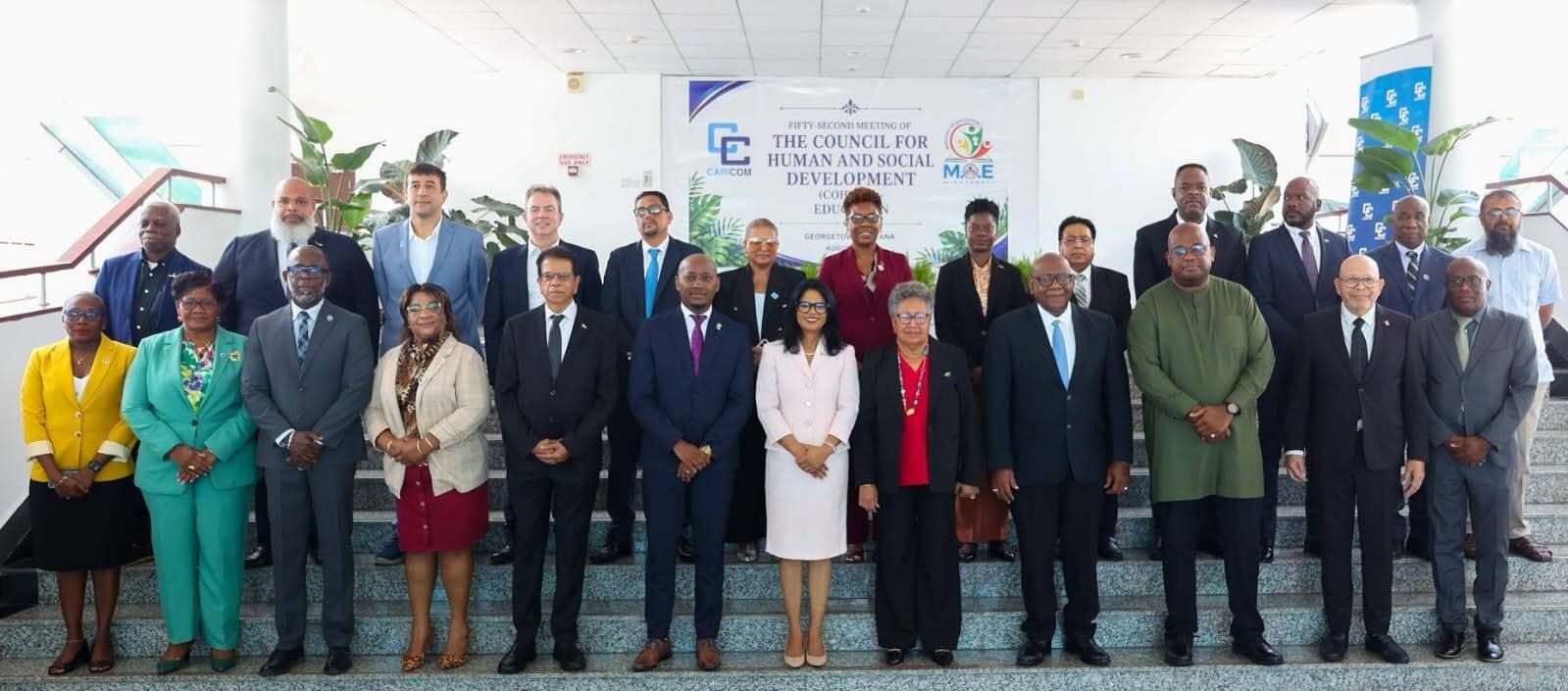
At a recent regional education meeting hosted in Guyana, the Caribbean Community (CARICOM) has made a bold, unified push to prioritize technical and vocational education and training (TVET) across member nations, framing skills development as a cornerstone of sustainable, future-ready economic growth.
The gathering, known as the Council for Human and Social Development meeting on Education, brought together education ministers and senior officials from across CARICOM member states, with Saint Lucia’s Education Minister Danny Butcher leading his country’s delegation. Convened under the overarching theme “Educating for life, purpose and Caribbean progress,” the meeting centered on how regional education systems can adapt to fast-shifting global economic conditions.
In her opening address to attendees on Wednesday, CARICOM Secretary-General Dr. Carla Barnett doubled down on a urgent call to refocus regional education policy around expanding accessible, high-quality TVET programming. Dr. Barnett argued that as the global economic and technological landscape grows more complex and evolves at an accelerating pace, regional education systems cannot afford to stick to outdated frameworks. All learners, regardless of age, must be equipped with the practical and critical competencies needed to succeed personally and drive collective national and regional progress, she emphasized.
Dr. Barnett urged ministers to acknowledge the rapidly growing demand for technical, vocational and digital skills across the Caribbean’s evolving industries. This growing demand, she noted, creates a unique opening to close the long-standing gap between education outputs and labor market needs, forging stronger ties between skills development, training and gainful employment.
“Technical and Vocational Education and Training is equipping our citizens with the practical and critical competencies needed to navigate an economy where careers, technologies and even industries are evolving at an unprecedented pace,” Dr. Barnett told delegates. She added that TVET is now widely recognized as a strategic investment that boosts both regional economic resilience and global competitiveness. Beyond employability, TVET builds the core skills required to advance digital transformation across the region, support the shift to a green, climate-resilient economy, and drive the innovation and productivity gains that underpin long-term sustainable growth, she explained.
Against this regional push, Saint Lucia has emerged as a leading example for other CARICOM nations to follow, with a coordinated national TVET strategy that stretches back more than 15 years. The country laid the foundational framework for its national initiative in 2007, when it established the Saint Lucia Council for Technical Vocational Education and Training to oversee systemic development. Most recently, in 2023, Saint Lucia restructured four existing secondary schools—Anse Ger Secondary School, Grande Riviere Secondary School, Piaye Secondary School and Stanley Jon Odlum Memorial Secondary School—into dedicated regional TVET hubs to expand access to hands-on training.
According to Saint Lucia’s Department of Education, a central objective of these newly converted centers is to build deep, mutually beneficial partnerships with local industries, aligning education and training curricula with the needs of both local communities and the formal national education system. The model has already drawn praise across the region, aligning directly with Dr. Barnett’s vision for a more skills-focused Caribbean education landscape that can deliver inclusive, long-term progress.