标签: Suriname

苏里南

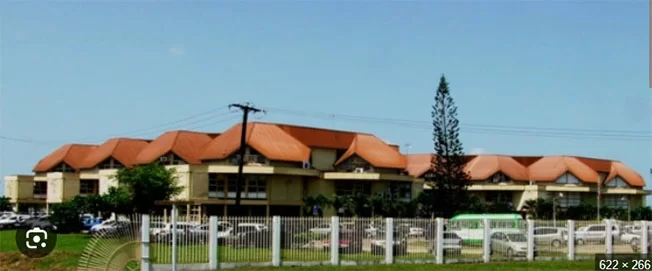
  • Beroependag op Kangoeroe High: leerlingen maken kennis met diverse beroepen

    Beroependag op Kangoeroe High: leerlingen maken kennis met diverse beroepen

    Kangoeroe High School successfully hosted its seventh annual Career Day on Wednesday, creating dynamic interfaces between students and active professionals across diverse sectors. The event featured direct engagement opportunities with lawyers, software engineers, journalists, cryptocurrency traders, customs officials, fashion designers, drone pilots, and agricultural producers.

    A particularly popular segment involved immersive role-playing activities where students temporarily transformed into ‘journalists’ conducting press conferences with a student-acting ‘president.’ These simulated exchanges featured probing questions addressing real-world concerns including inflation rates, infrastructure development, and environmental issues surrounding mercury usage.

    School Principal Giovanni Robinson emphasized the event’s core objective: “This initiative fundamentally introduces children to the vast spectrum of existing professions. Through dialogue with practicing professionals, students gain clearer perspectives on requirements for reaching their career aspirations. The diversity and range of represented occupations expands annually, with participants consistently expressing desire for continued involvement.”

    Robinson noted growing student interest in technical fields including ICT, oil & gas, and geology. Beyond introductory conversations, the program offered practical exposure through ‘sniff internships’ – day-long shadowing experiences in self-selected professions. These immersive opportunities allow students to evaluate career compatibility through firsthand observation of daily professional realities.

    The comprehensive career fair attracted over twenty companies and professionals, with notable presence from Telesur Plus and Subisco alongside a complementary braderie (open-air market). Kangoeroe High, serving approximately 250 students aged 12-17 across lower and upper secondary education, continues expanding industry partnerships to broaden student orientation and maximize future career choices.

  • BiZa pakt  ‘spookambtenaren’ aan: focus op personeel in buitenland

    BiZa pakt ‘spookambtenaren’ aan: focus op personeel in buitenland

    The Ministry of Home Affairs in Suriname has launched an intensive crackdown on ghost workers within its civil service system, with particular focus on officials who continue receiving government salaries while residing abroad indefinitely. During a high-level coordination meeting attended by Military Police, E-Government, the Directorate of Civil Affairs, and senior ministry officials, authorities evaluated progress and aligned further actions in this ongoing purification drive.

    The operation specifically targets two categories of irregular employment: those unlawfully collecting government pay while living overseas, and civil servants holding full-time positions in private institutions, making their government role functionally impossible to perform. Home Affairs Minister Marinus Bee emphasized the government’s determination to instill greater order and transparency within the public sector apparatus.

    Preliminary findings reveal that a significant portion of registered civil servants may be residing abroad while continuing to receive state compensation. So far, the ministry has removed 2,130 names from government payrolls, projecting approximately SRD 300 million in savings. The current civil service structure comprises about 51,300 individuals, with only 15,000 to 20,000 having completed online registration.

    With nearly two-thirds of state expenditures allocated to wages and salaries, Minister Bee stressed the critical need for a more efficient civil service apparatus. He asserted that government resources must be directed exclusively toward those actively contributing to public service delivery. The recovered funds are expected to create fiscal space for better compensation of active civil servants while simultaneously strengthening public service delivery mechanisms for Surinamese society.

  • Schoten gelost op woning na familieruzie

    Schoten gelost op woning na familieruzie

    Gunshots rang out at a residential property on Hirasinghstraat this morning, in what authorities believe was a family dispute that turned violent. According to police reports, the incident occurred when an argument between an uncle and nephew escalated dramatically, resulting in multiple shots being fired at the dwelling.

    Fortunately, preliminary investigations confirm that no injuries resulted from the shooting, though the psychological impact on residents and the broader community remains significant. The alleged perpetrator, identified as one of the family members involved in the altercation, fled the scene immediately following the incident.

    Law enforcement officials have launched a comprehensive investigation into the matter, though details remain scarce at this early stage. Forensic teams are examining the property for evidence while detectives conduct neighborhood inquiries to piece together the sequence of events.

    The incident has raised concerns about domestic conflicts escalating into public safety threats, particularly in residential areas where such violence endangers not only those directly involved but also innocent bystanders. Community leaders have called for increased conflict resolution resources and greater awareness of domestic violence prevention measures.

    Police have assured residents that they are pursuing all leads to apprehend the suspect and prevent any further escalation of the situation.

  • WTO-chef: wereldorde is onherroepelijk veranderd

    WTO-chef: wereldorde is onherroepelijk veranderd

    WTO Director-General Ngozi Okonjo-Iweala delivered a stark assessment of the global trading landscape during Thursday’s opening of the 14th Ministerial Conference in Yaoundé, Cameroon, declaring that the multilateral system has been fundamentally and irreversibly transformed.

    Addressing delegates at the Palais des Congrès, Okonjo-Iweala stated: ‘The world order and multilateral system as we knew it has irrevocably changed. We will not get it back… We must look to the future.’ Her remarks came as trade representatives from 166 member nations gathered amid mounting challenges to global commerce.

    While acknowledging that 72% of world trade still operates under WTO rules and highlighting positive developments in AI-related trade growth, the director-general outlined significant uncertainties plaguing the trading system. She specifically cited Middle East conflicts and the widespread impact of U.S. tariff policies as major disruptive factors.

    The organization faces multiple structural challenges, including the continued paralysis of its dispute settlement body and critical transparency failures in subsidy reporting. Only 64 members had submitted timely subsidy notifications for 2025, leaving 102 nations non-compliant with reporting requirements.

    ‘Lack of transparency leads to lack of trust, and that fuels suspicions of unfairness and anti-competitive behavior,’ Okonjo-Iweala warned delegates. This dynamic creates a ‘vicious circle’ of distrust that prevents members from agreeing on new rules and essential reforms, she added.

    Geopolitical tensions are exacerbating trade pressures, with Middle Eastern conflicts disrupting vital shipping routes and energy supplies. Meanwhile, ongoing trade conflicts—including high import tariffs implemented by the United States and other nations—continue generating uncertainty and disrupting global supply chains that haven’t fully recovered from recent crises.

  • Suriname benadrukt sterkere samenwerking regio en Afrika

    Suriname benadrukt sterkere samenwerking regio en Afrika

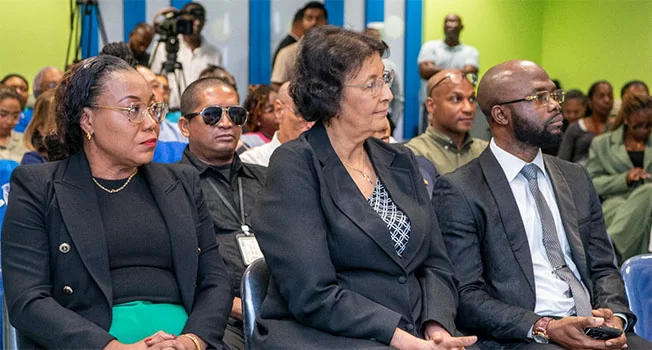
    At a landmark summit in Colombia, Suriname has emerged as a vocal advocate for strengthening multilateral cooperation between Latin America, the Caribbean, and African nations. The special assembly of heads of state and government from the Community of Latin American and Caribbean States (CELAC) and Africa served as a platform for developing nations to articulate a unified vision for South-South collaboration.

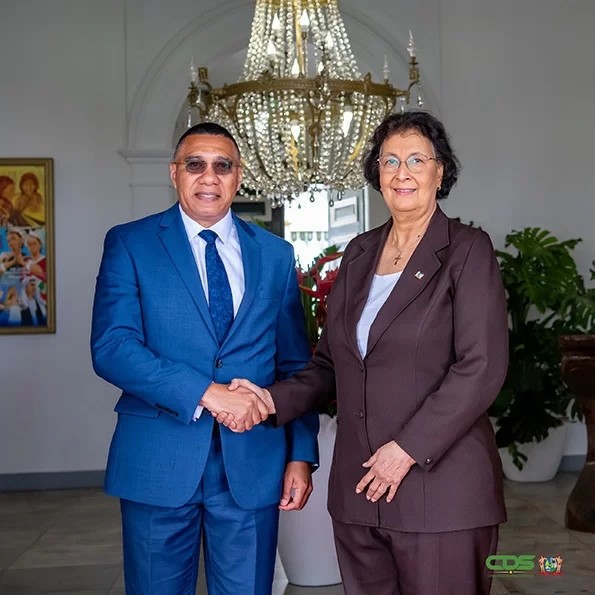
    Foreign Minister Melvin Bouva emphasized that the gathering reflected a shared commitment to multilateralism and solidarity amid global uncertainties. “During an era marked by geopolitical tensions, climate challenges, and economic instability, our partnership possesses the transformative potential to foster cooperation, development, and worldwide stability,” Bouva stated, highlighting the historical ties and collective potential between the regions.

    Suriname positioned the enhancement of CELAC-Africa relations as not merely desirable but fundamentally essential. The meeting produced calls for deepened political dialogue and institutional cooperation through regular consultations at all governance levels. Key focus areas included strengthening trade agreements, stimulating investments, and boosting collaborative efforts in tourism, agriculture, and technological advancement.

    Additionally, Suriname advocated for joint initiatives to reform the international legal order, including restructuring the UN Security Council to better reflect contemporary realities and the interests of developing nations. This diplomatic push confirms Suriname’s dedication to fostering closer integration between CELAC and Africa, with clear objectives toward sustainable development and a more equitable global architecture, according to official reports.

  • Recensie: Democratische leeservaring

    Recensie: Democratische leeservaring

    A groundbreaking historical analysis has revealed disturbing details of institutional racism within Dutch colonial policy during World War II, drawing powerful connections to contemporary democratic challenges worldwide. The revelations come from Dr. Hans Ramsoedh’s newly published work “Democracy, Politics and Political Culture in Suriname – The Ethnic Logic of Power,” which examines Suriname’s complex democratic journey from 1866 to the present.

    The research documents how Dutch authorities in London systematically rejected military reinforcement requests from Surinamese Governor Kielstra, despite growing security concerns. Shockingly, the Dutch cabinet dismissed the necessity of military conscription for Surinamese men based on explicit racial prejudice. Government officials expressed that ‘little negroes’ would fail to impress Americans with their racial segregation policies, consequently maintaining Suriname’s troop composition as ‘white as possible.’

    In 1941, when approximately 500 Surinamese volunteers enlisted for the Princess Irene Brigade in Canada, all but a few dozen were rejected by the Dutch government-in-exile. Prime Minister Gerbrandy allegedly feared their presence would cause racial tensions among Dutch conscripts from South Africa—prioritizing white sensibilities over liberating the Netherlands with colored troops.

    Dr. Ramsoedh’s comprehensive 317-page study, complete with extensive notes and references, provides a chronological examination of Suriname’s democratic development through distinct historical periods: colonial guardianship (1866-1945), post-colonial awakening (1945-1975), failing democracy after independence (1975-1987), and democratic transition with ongoing fragility (1987-present).

    The work gains particular relevance through its exploration of endemic problems including ethnic fragmentation, clientelism, corruption, and organized crime that continue to undermine democratic institutions. The author emphasizes democracy as a ‘way of life’ in the spirit of philosopher John Dewey, highlighting citizenship education’s crucial role in cultivating democratic attitudes and societal engagement.

    Notably, the study examines how poverty, social inequality, and criminal capital influence political parties, while addressing the psychological impact of chronic stress on ethical behavior. The author argues that without discretionary time for recovery and reflection—impossible when working multiple jobs merely to survive—self-control diminishes and indifference becomes the human condition.

    The work concludes that emotional self-regulation and humanization of society are essential for integrity under pressure, ultimately reminding readers that it is people who shape democracy, politics, and political culture.

  • Van Pakistan tot Egypte: oorlog met Iran drijft prijzen op in het mondiale Zuiden

    Van Pakistan tot Egypte: oorlog met Iran drijft prijzen op in het mondiale Zuiden

    The escalating military conflict between the United States, Israel, and Iran has triggered a global energy crisis that disproportionately impacts the world’s most vulnerable economies across Asia, Africa, and the Middle East. As supply disruptions from the Strait of Hormuz closure and attacks on Gulf energy facilities drive oil prices upward, developing nations with high import dependency and limited fiscal capacity face unprecedented economic challenges.

    Pakistan exemplifies the crisis, importing approximately 80% of its energy from the Gulf region while battling persistent economic instability. With fuel reserves projected to deplete within weeks, authorities have implemented emergency measures including school closures, a four-day government workweek, and drastic reductions in official travel allowances. Prime Minister Shehbaz Sharif has temporarily absorbed price increases ahead of Eid al-Fitr celebrations, though economists warn this reprieve may be short-lived.

    Neighboring Bangladesh, which imports 95% of its oil, has already exhausted fuel supplies in several districts despite implementing rationing systems. Similarly, Sri Lanka—still recovering from its 2019 economic collapse—has declared weekly holidays and introduced mandatory fuel passes for vehicle owners as reserves dwindle dangerously low.

    In Egypt, among the Middle East’s most indebted economies, the government has ordered commercial establishments to close early and reduced public lighting. Officials announced 15-22% price hikes for gasoline, diesel, and cooking gas in March, with President Abdel Fattah el-Sisi acknowledging public hardship while insisting these measures prevent “more serious and dangerous consequences.”

    The crisis compounds existing vulnerabilities through currency depreciation against the US dollar, with currencies like Indonesia’s rupiah and the Philippine peso hitting near-record lows even before the conflict. This depreciation makes oil imports substantially more expensive, creating what economist Yeah Kim Leng describes as “a powerful combination of inflation, currency pressure, and budgetary pressure” for nations already struggling with debt and high import dependency.

    According to the Washington-based Centre for Global Development, Pakistan, Bangladesh, Sri Lanka, Jordan, Senegal, Egypt, Angola, Ethiopia, and Zambia face the highest risk due to their fuel import reliance, debt levels, and foreign exchange reserve ratios.

    The human impact remains severe across less developed economies, where households spend significantly larger portions of income on fuel and food. Governments possess limited capacity to provide safety nets, creating conditions ripe for social unrest when subsidy programs become unsustainable amid depleted budgetary reserves.

    As analyst Khalid Waleed notes from Islamabad, rising diesel costs—the backbone of freight and agricultural economies—will soon translate to higher food prices. With Pakistan’s wheat harvest commencing in April, equipment running on diesel will operate at peak costs, potentially driving food inflation to levels that households cannot absorb.

  • Column: Aftellen

    Column: Aftellen

    Football enthusiasts worldwide are marking their calendars for the planet’s most anticipated sporting spectacle—the 2026 FIFA World Cup. With precisely 76 days remaining until the tournament’s June 11th kickoff, anticipation builds for what promises to be the most inclusive and commercially significant edition in football history.

    This edition breaks records with 16 additional teams compared to previous tournaments, dramatically expanding regional representation and creating unprecedented opportunities for smaller footballing nations. While most participants are confirmed, several countries continue battling through intercontinental playoffs for the final coveted spots. Host nations from the Caribbean region received automatic qualification, further diversifying the participant pool.

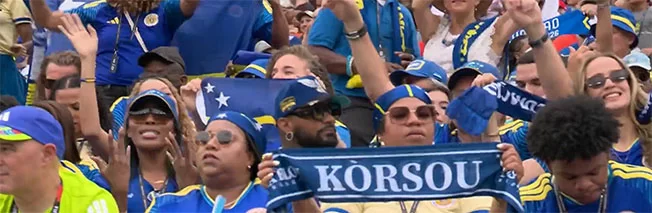
    Suriname narrowly missed direct qualification and now faces a decisive playoff against Bolivia, with Iraq awaiting the winner for a chance at historic participation. The expanded format has intensified global engagement, particularly among nations celebrating their inaugural World Cup appearance, such as Curaçao.

    The commercial landscape anticipates unprecedented returns, with FIFA securing lucrative sponsorship deals from global corporations eager to capitalize on worldwide viewership. Local entrepreneurs likewise prepare for economic benefits through artisanal souvenir production and hospitality sector growth.

    Beyond commercial implications, the tournament serves as a global showcase for emerging talents seeking professional advancement through international exposure. Players recognize the World Cup’s unique platform for demonstrating their value to elite clubs worldwide.

    The convergence of sporting excellence, commercial opportunity, and cultural celebration establishes the 2026 World Cup as a multifaceted global phenomenon with far-reaching impacts across sports, business, and international relations.

  • Natio op scherp voor play-off om WK-kwalificatie tegen Bolivia

    Natio op scherp voor play-off om WK-kwalificatie tegen Bolivia

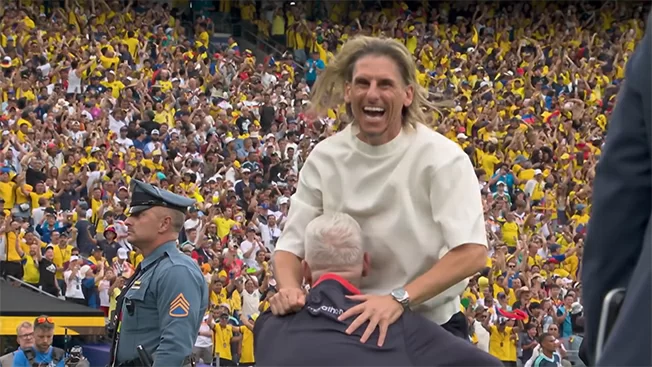
    Suriname’s national football team, under the guidance of head coach Henk ten Cate, is preparing for their crucial World Cup qualifying match against Bolivia with unwavering determination. Since his appointment in December, Ten Cate has instilled a singular focus throughout the entire squad and technical staff: securing Natio’s place in June’s final tournament.

    The coach has made World Cup qualification his personal mantra, emphasizing to players: “The boys need to go to bed with it and wake up with it. It won’t be easy, but we’re going to make it happen. We have the players for it.”

    Players arrived in Monterrey, Mexico, on Sunday and Monday in staggered groups following an exhausting journey from the Netherlands. Lengthy layovers in Houston and Atlanta, combined with the challenging seven-hour time difference, tested the team’s resilience, though the internationals have grown accustomed to such demanding travel conditions.

    Despite Ten Cate’s preference for keeping media at a distance to minimize distractions, journalists including an NOS camera team—set to broadcast the Bolivia match live—were granted a brief press opportunity on Tuesday afternoon.

    Newcomer Joel Piroe, Leeds United striker joining alongside goalkeeper Janilho Wiegel and midfielder Melayro Bogarde for their first national team selection, expressed eagerness about his impending debut: “It’s true I hesitated for a while. The possibility of being called up for the Netherlands played a role, but I’m already thrilled to be here. This is a unique opportunity we intend to capitalize on.”

    Winger Gyrano Kerk, returning to the squad after battling a persistent muscle injury late last year, praised the extensive Zoom preparation sessions with Ten Cate and assistant coaches Winston Bogarde and Jimmy Hasselbaink: “These are legends I look up to. Those conversations have been crucial for group cohesion and atmosphere.”

    Central defender Myenty Abena reflected on the team’s journey: “We’ve worked years for this. Look how far we’ve come—we’ve grown tremendously as a team, and the organization keeps becoming more professional. We’ve long moved past the loss to Guatemala. We’re grateful for this second chance and determined to achieve our goal this time.”

    Abena described the emotional pre-match rituals: “When we’re in the locker room praying together, I always get goosebumps. Recently, I’ve been the one giving the powertalk. That’s when I remember we’re doing this for our country and everyone supporting us—the country where I was born and raised. How incredible to have this opportunity to represent Suriname.”

    The team is accommodated in a comfortable hotel in San Pedro, Monterrey’s most upscale district, with training facilities just fifteen minutes away. At manager Brian Tevreden’s explicit request, a brand-new artificial turf pitch was installed after his inspection last month revealed unsatisfactory conditions: “It was a sandy field full of holes, but FIFA left nothing to chance—they fixed it rapidly for us.”

    Natio faces Bolivia at 7:00 PM Surinamese time tonight. A victory would set up a Tuesday confrontation with Iraq, while Jamaica and New Caledonia meet in the other semifinal. The winners will ultimately compete against Congo for a place in the final tournament.

  • Iran beoordeelt VS-voorstel voor beëindiging oorlog; sluit onderhandelingen uit

    Iran beoordeelt VS-voorstel voor beëindiging oorlog; sluit onderhandelingen uit

    Iran has begun evaluating a comprehensive 14-point peace proposal from the United States aimed at de-escalating the Gulf conflict, though Tehran continues to reject direct negotiations with Washington. Iranian Foreign Minister Abbas Araqchi confirmed the development during a state television broadcast on Wednesday, emphasizing that message exchanges through intermediaries do not constitute formal diplomacy with the U.S.

    The proposal, transmitted through Pakistani channels, demands significant concessions from Iran including the elimination of its highly enriched uranium stockpiles, cessation of uranium enrichment activities, constraints on its ballistic missile program, and termination of financial support to regional allies. While the White House has withheld specific details from public disclosure, officials have warned that rejection would trigger intensified military pressure.

    Despite this diplomatic overture, regional violence continues unabated. Israel maintains skepticism regarding Iran’s willingness to comply with the terms and insists on preserving its option for preemptive military strikes. Meanwhile, Iran has threatened to open a new conflict front at the strategic Bab al-Mandab Strait connecting the Red Sea to the Gulf of Aden, according to anonymous military sources cited by the semi-official Tasnim news agency.

    The Pentagon is simultaneously reinforcing its military footprint in the Gulf region by deploying thousands of additional air force personnel, with the first Marine contingents expected by month’s end. This enhancement provides President Trump with expanded options for potential ground operations.

    Financial markets responded optimistically to the diplomatic developments, with global equities rising and oil prices declining as investors anticipated potential resolution to the conflict that has disrupted worldwide energy supplies and fueled inflationary pressures.

    UN Secretary-General António Guterres issued a grave warning on Wednesday, stating that the world is “staring down the barrel of a broader regional war” and calling for immediate de-escalation and commencement of diplomatic dialogue. The statement came as Iranian media reported fresh airstrikes on residential areas in Tehran, while the Revolutionary Guard announced new attacks targeting Israeli and American bases across Kuwait, Jordan, and Bahrain.