标签: Suriname

苏里南

  • Boeren in het binnenland houden vol ondanks vele uitdagingen

    Boeren in het binnenland houden vol ondanks vele uitdagingen

    In the heart of Suriname’s Brokopondo district, what appears to be barren ground covered with bauxite, pebbles, and dry sand belies an agricultural transformation underway just meters away. Here, amidst seemingly infertile conditions, farmers Elvia Asodanoe and Duku have cultivated remarkable plantations featuring diverse crops including pineapple, okra, Chinese tayer, and bitter gourd.

    During a field visit this past Saturday, Agriculture Minister Mike Noersalim praised the perseverance of these farmers, stating: “It’s commendable that farmers persist despite all challenges.” Accompanied by Edmund Duiker, chairman of the NOFA Fund, the minister assessed the obstacles confronting local agricultural producers in the interior regions.

    Asodanoe, one of the visiting female farmers, expressed ambitions to not only expand her pineapple cultivation but also introduce new crops like soursop and markoosa. She remains confident about receiving necessary support for these ventures. Similarly, her partner Duku seeks to expand fruit production while modernizing his traditional farming methods.

    Minister Noersalim clarified that the Ministry of Agriculture, Livestock and Fisheries (LVV) actively encourages interior farmers to scale production and enhance market access. The NOFA Fund plays a pivotal role in this initiative by providing affordable loans to horticulture and agricultural entrepreneurs. Beyond financial assistance, the fund offers guidance on cooperative collaboration, production consolidation, and market distribution—enabling farmers to market products more efficiently and access both local and international markets.

    A significant challenge identified particularly for women farmers in interior regions remains the lack of land titles, which complicates financing applications for expansion. Duiker emphasized that the NOFA Fund specifically targets those engaged in agriculture, livestock, or fisheries, offering substantially lower interest rates than commercial banks. He described the fund as a crucial accelerator for agricultural development, supporting investments in machinery, irrigation, and knowledge transfer to ensure sustainable and commercially viable production.

    Noersalim stressed the ministry’s role in giving agricultural entrepreneurs “a push forward” to achieve accelerated development. “Not only planting is important,” he noted, “but we will also stimulate product marketing and processing support in the coming period.”

    The ministry announced forthcoming visits to Pokigron to consult with village farmers planning expansion and commercial operations. Both LVV and NOFA urge all agricultural entrepreneurs throughout Suriname to leverage the opportunities provided by the fund.

  • Eerste ananastelers krijgen lening voor opschaling productie

    Eerste ananastelers krijgen lening voor opschaling productie

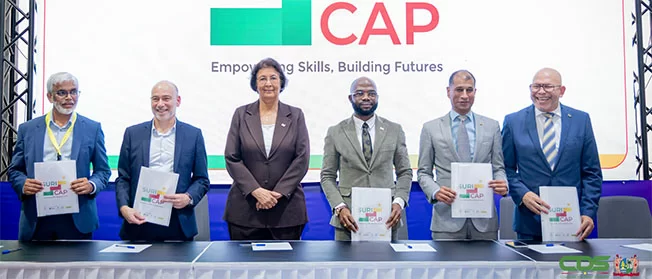
    Six indigenous pineapple growers in Suriname have formalized loan agreements to expand organic pineapple production, marking a significant advancement in strengthening the country’s agricultural value chain. The milestone signing ceremony occurred on Monday as part of the Agrifood Systems Transformation Accelerator (ASTA) Joint Programme, a collaborative initiative involving four United Nations agencies—FAO, UNIDO, UNFPA, and ILO—in partnership with the Surinamese government.

    Funded by the Joint SDG Fund and Islamic Development Bank, the program specifically targets sustainable development within Suriname’s pineapple sector. Approximately 90% of pineapple farmers in Suriname are indigenous communities operating collectively owned lands in Para’s village territories. Their lack of individual land titles has historically prevented access to traditional bank financing due to insufficient collateral.

    To overcome this barrier, ASTA established a Collateral Facility Fund managed by Trustbank Amanah (TBA), which serves as guarantee security for financial institutions. Roshnie Gangapershad, Acting Agri Business Manager at TBA, explained that loan applications undergo rigorous feasibility assessments before approval.

    The Horticulture Innovation HUB, established in 2024 under the ASTA project, provides comprehensive support through two core pillars: enhanced agricultural practices and strengthened agro-entrepreneurship. National agronomist Hemwatie Goeptar detailed the technical assistance process, which begins with thorough agronomic analysis covering field conditions, planting design, and fertilization programs developed in consultation with farmers and village leadership.

    Practical implementation is already underway. Farmers Jerry Birambie and Harvey Read from Pierre Kondre have prepared one-hectare plots for soil enhancement and planting. Despite equipment accessibility challenges in remote regions—Jeanne Patra from Marowijne requires machinery transported from Para—the program maintains momentum through adaptive solutions.

    Continuous field support remains crucial to the project’s success. Goeptar and field agents assist growers with irrigation, fertilization, and maintenance protocols. The application of artificial flower induction technology enables year-round production, with flowering induced after nine months and harvest occurring approximately fourteen months post-planting.

    Additional growers are preparing for expansion. Stuart Makosie from Powaka will commence land preparation shortly, while Cyrell Sabajo from Matta has established an on-site bio-factory for organic fertilizers and natural pesticides following training sessions.

    According to Swami Girdhari of the Horticulture Innovation HUB, the project aims not only to increase production but also to modernize the sector and attract youth participation. Innovative digital applications facilitate knowledge sharing, communication, and monitoring. Future phases will focus on processing and value-added pineapple products to enhance market opportunities both domestically and for export.

  • Energie, water, obligaties: Wat zijn de doelen van Iran als Trump elektriciteitscentrales aanvalt?

    Energie, water, obligaties: Wat zijn de doelen van Iran als Trump elektriciteitscentrales aanvalt?

    In a dramatic escalation of Middle East tensions, former U.S. President Donald Trump has ordered a five-day pause in planned attacks on Iran’s energy infrastructure, according to his statements on Monday. This development follows Trump’s 48-hour ultimatum issued Sunday demanding Iran reopen the Strait of Hormuz—a critical global oil transit route—or face targeted strikes on Iranian power facilities.

    Trump claimed on Truth Social that Washington and Tehran had engaged in “very good and productive talks” regarding a “complete and total resolution of our hostilities in the Middle East,” adding that “this time Iran is serious; they want to settle. They want peace.” These assertions were immediately contradicted by Iranian officials, with the Tasnim news agency reporting no negotiations were occurring and Parliament Speaker Mohammad Bagher Ghalibaf dismissing the claims as “fake news” designed to manipulate financial markets.

    The confrontation stems from Iran’s March 2nd announcement closing the Strait of Hormuz, through which 20% of global oil and gas passes, contributing to oil prices surpassing $100 per barrel. Trump’s Saturday threat specified that if Iran didn’t fully reopen the strait within 48 hours, the U.S. would “ATTACK AND DESTROY their various ELECTRIC POWER PLANTS, STARTING WITH THE LARGEST.” Potential targets include Iran’s Damavand plant near Tehran (2,900 MW capacity), Kerman plant (1,910 MW), and Ramin plant (1,890 MW).

    Iran’s Islamic Revolutionary Guard Corps (IRGC) responded with counter-threats, vowing to target Israeli power plants and facilities supporting U.S. military bases in the region. The IRGC stated the strait would remain closed “until our destroyed power plants are rebuilt,” while Iranian officials clarified the passage remains open to all except “ships belonging to our enemies.”

    The situation has triggered regional energy disruptions, with QatarEnergy halting LNG production after attacks on Ras Laffan and Mesaieed facilities, and Saudi Arabia suspending operations at its Ras Tanura refinery following fires allegedly caused by intercepted Iranian drones. Iranian officials denied involvement in these incidents.

    Iran has expanded its potential retaliation targets to include financial entities supporting U.S. military activities, specifically mentioning U.S. Treasury bond holders. Companies like Berkshire Hathaway ($360 billion in holdings), Tether ($100 billion), and Circle—all with regional investments—could potentially be affected. The IRGC-linked Tasnim agency also listed technology firms including Google, Microsoft, Palantir, IBM, Nvidia, and Oracle as “new targets for Iran” due to their Israeli connections and military applications.

    Critical water desalination infrastructure has already been impacted, with both Iran and Bahrain reporting attacks on facilities. This is particularly significant for Gulf states which rely on desalination for 50-100% of their water needs due to extreme water scarcity.

  • Column: Drie namen, maar waar zijn de anderen?

    Column: Drie namen, maar waar zijn de anderen?

    Suriname’s National Assembly confronts a constitutional crossroads today as it deliberates on whether to authorize criminal proceedings against three former high-ranking officials. The decision transcends individual cases involving Riad Nurmohamed, Bronto Somohardjo, and Gillmore Hoefdraad, representing instead a fundamental test of how the nation handles the serious constitutional process of charging political officeholders.

    While no one disputes the necessity of thorough investigation or advocates for impunity, the Assembly cannot be expected to rubber-stamp the Public Prosecutor’s requests without proper scrutiny. Significant unanswered questions persist across all three cases, and the legislature maintains the constitutional authority to establish an investigative commission for further examination.

    The Nurmohamed case presents particularly complex allegations regarding the Pan Am project, raising concerns about whether the investigation has adequately addressed potential accomplices beyond the primary suspect. The Somohardjo matter relies heavily on a CLAD report that remains inaccessible to lawmakers, despite the defendant’s persistent claims of innocence and his unusual request for formal charges to clear his name. The Hoefdraad situation proves most problematic as the former official remains missing, making cross-examination impossible despite this being the third attempt to bring charges against him.

    This unprecedented situation crosses political boundaries, with each former minister representing different parties: Hoefrabd (NDP), Nurmohamed (VHP), and Somohardjo (Pertjajah Luhur). The Assembly’s decision must therefore demonstrate legal rigor rather than political motivation, avoiding any appearance of partiality.

    The incomplete nature of the current files suggests this process represents merely the beginning of a broader accountability effort. Strong indications point to wider involvement in the Pan Am case, suggesting that charging a single former official would be inadequate. The political ramifications will undoubtedly be significant as Suriname establishes precedents for handling allegations against political figures.

    [Editor’s Note: The article concludes with a tribute to former police spokesperson Ro Gajadhar, recognizing his unparalleled contribution to police communications and media relations.]

  • Productie Krediet Fonds keurt SRD 41 miljoen goed: groei productie en werkgelegenheid

    Productie Krediet Fonds keurt SRD 41 miljoen goed: groei productie en werkgelegenheid

    Suriname’s Production Credit Fund (PKF) has demonstrated significant economic impact in its second year of operation, approving over SRD 41 million in loans that substantially enhanced production capacity and job creation across the nation. According to the fund’s second impact report presented to President Jennifer Simons by the National Development Bank, credit demand has surged dramatically, enabling businesses to expand their production output by nearly 50 percent on average.

    The fund, specifically targeting small and medium-sized enterprises, has experienced accelerated activity with credit applications increasing by approximately 63 percent. The average loan size has grown to SRD 1.7 million, reflecting both increased business confidence and expanding operational needs.

    Beyond production growth, the PKF has made substantial contributions to Suriname’s labor market. Companies receiving financing have expanded their workforce by an average of 25 percent, with recent projects estimated to create between 63 and 108 new jobs collectively.

    While the majority of loans have benefited businesses in Paramaribo and Wanica, districts such as Nickerie, Para, and Marowijne are showing increased application rates. However, the report highlights ongoing concerns regarding regional distribution and gender equity, with female entrepreneurs experiencing lower approval rates.

    The fund has identified structural challenges facing Surinamese entrepreneurs, including bureaucratic procedures, land allocation issues, and inadequate financial management systems. In response, PKF has expanded its mandate beyond credit provision to include technical assistance and policy improvement initiatives.

    Recently introduced youth credit programs target entrepreneurs aged 18-27, while future priorities include innovation support, enhanced assistance for women and youth entrepreneurs, and strategic partnership development. After two years of successful operation, the PKF has transitioned from pilot project to recognized instrument for economic growth and diversification in Suriname.

  • Colombia: Militair toestel crasht, 34 doden

    Colombia: Militair toestel crasht, 34 doden

    A devastating aviation tragedy struck Colombia’s southern Amazon region on Monday when a Colombian Air Force Hercules C-130 transport aircraft crashed shortly after takeoff, resulting in at least 34 confirmed fatalities. The aircraft, carrying military personnel, went down in Puerto Leguizamo, a remote municipality in the Putumayo province that borders both Peru and Ecuador.

    According to Defense Minister Pedro Sánchez, the ill-fated aircraft experienced catastrophic failure merely 1.5 kilometers from its departure point. The crash triggered explosions aboard the aircraft due to ignited ammunition, complicating rescue efforts. Sánchez confirmed through official channels that preliminary investigations ruled out any ‘attack by illegal actors’ and indicated the aircraft had been airworthy with a qualified crew prior to departure.

    Initial reports indicated 125 passengers aboard, but the Air Force later clarified the actual manifest listed 121 individuals—110 soldiers and 11 crew members—who were being transported to another location within Putumayo province. Local authorities, including Putumayo Governor Jhon Gabriel Molina, reported that identification processes remained ongoing for 21 victims.

    The crashed Hercules C-130, manufactured by Lockheed Martin, represents part of Colombia’s military fleet that has undergone modernization in recent years. Colombia initially incorporated Hercules aircraft into its military operations in the late 1960s and has since updated older models with newer variants imported from the United States.

    This incident marks the second major Hercules C-130 catastrophe in South America within months. In February, a Bolivian Air Force counterpart crashed in El Alto, narrowly avoiding residential structures while claiming over 20 lives and injuring 30 others. The recurrence of such incidents has raised questions about the operational safety and maintenance protocols of military transport aircraft across the region.

  • Luchthavenbeheer mikt op groei: 1 miljoen reizigers en nieuwe terminal

    Luchthavenbeheer mikt op groei: 1 miljoen reizigers en nieuwe terminal

    Suriname’s Johan Adolf Pengel International Airport (JAP) has unveiled ambitious expansion plans targeting one million annual passengers and construction of a new terminal, positioning the facility as a key driver for national economic growth. The announcement came during the airport’s 30th anniversary celebrations where officials emphasized its strategic role as Suriname’s gateway to the world.

    Transport, Communication and Tourism Minister Raymond Landveld highlighted the critical importance of enhanced connectivity and improved service efficiency, describing the airport as “the portal to the global community.” The government is prioritizing strengthening the airport’s operational foundation with focused investments in safety protocols, facility upgrades, and expansion of international routes.

    Airport Management Director Vijay Chotkan identified the new terminal construction as a top priority within the Airport Expansion Project. The Commissiedienst Suriname reports that stakeholders have already initiated discussions to accelerate the project, potentially through international tender processes.

    The expansion strategy includes increased involvement of local communities surrounding Wit Santi and Hollandse Kamp, ensuring residents benefit from the airport’s economic development. Chotkan emphasized the urgency of rapid development, particularly given anticipated growth in Suriname’s oil and gas sector, citing Guyana’s similar sector-driven expansion and increased international air connections as a successful model.

    Both the board of commissioners and trade unions have endorsed the modernization and growth initiatives, characterizing the airport as a strategic pillar for Suriname’s development and international connectivity.

  • Trump stelt aanvallen op Iran uit na ‘erg goede gesprekken’; Teheran ontkent

    Trump stelt aanvallen op Iran uit na ‘erg goede gesprekken’; Teheran ontkent

    In a significant diplomatic development, U.S. President Donald Trump has ordered a five-day suspension of planned military strikes against Iranian energy facilities and critical infrastructure. The decision followed what Trump characterized as “very good and productive discussions” between Washington and Tehran over the past two days.

    Announcing the temporary de-escalation via his Truth Social platform on Monday, Trump declared in all caps: “I am pleased to report that the United States and Iran have held very good and productive discussions regarding a complete and total cessation of hostilities in the Middle East.” The president explicitly instructed the Defense Department to postpone all military operations for five days, contingent upon the progress of ongoing negotiations.

    While the announcement brought global relief, particularly to a region severely impacted by Iranian attacks, Iranian officials immediately contradicted Trump’s claims. The semi-official Mehr News Agency suggested the delay primarily serves to curb rising energy prices and buy time for military preparations. Iran’s Foreign Ministry placed full responsibility for the conflict on Washington, labeling the U.S. as “the party that started this war.” Tehran further denied engaging in direct negotiations with American officials, directly contradicting Trump’s assertions of productive dialogue.

    The Islamic Revolutionary Guard Corps issued stern warnings that any American attack would trigger Iranian countermeasures targeting electricity supplies powering U.S. bases, alongside economic, industrial, and energy infrastructure with American interests. Iran’s Defense Council additionally threatened maritime mining operations that would effectively blockade Persian Gulf shipping routes if attacks targeted Iran’s southern coast or islands.

    The escalating Middle East tensions had already triggered a global energy crisis, driving oil prices upward. Trump had previously given Iran a 48-hour ultimatum on Saturday to reopen the Strait of Hormuz to all vessels, threatening to “destroy” Iranian energy installations otherwise. This critical waterway facilitates approximately one-fifth of global oil and liquefied natural gas shipments.

    Al Jazeera analyst Osama Bin Javaid described Trump’s decision as a potential “exit route” from the conflict, noting: “This is the news everyone has been waiting for… Trump can unilaterally end this war, which he started without legal basis, without conditions.” However, Washington correspondent Alan Fisher cautioned that Trump’s deadlines often prove flexible, suggesting that five days might not yield resolution.

    Doha Institute analyst Mohamad Elmasry speculated that Trump might be seeking a “dignified excuse” for withdrawal, with the critical question being whether Iran and Israel would continue the conflict without U.S. support. Trump told Fox Business Network that Iran showed strong interest in a deal that could materialize within five days, with emissaries Steve Witkoff and Jared Kushner recently engaging Iranian representatives.

    Despite tensions, multiple Middle Eastern and international nations continued pursuing diplomatic de-escalation efforts during Eid celebrations. Diplomats warned Trump that further escalation would prove detrimental to both Iran and Israel. The International Energy Agency characterized the current Middle East situation as “extremely serious,” with impacts potentially exceeding both the 1970s energy crises and the aftermath of the Ukraine war combined.

  • Pokigron vraagt aandacht minister Noersalim voor cassaveziekte

    Pokigron vraagt aandacht minister Noersalim voor cassaveziekte

    Residents of Pokigron village have urgently appealed to Agriculture Minister Mike Noersalim for governmental intervention against the spreading Cassava Witches’ Broom Disease, a devastating plant pathogen threatening food security in Suriname’s interior regions.

    During the minister’s official visit to the village, Captain Albert Jeroe presented the gravity of the situation, revealing that numerous female farmers have been forced to uproot and discard their entire cassava plantations. The disease, while not yet affecting every community, has established a concerning presence throughout the Upper Suriname region.

    “We require immediate assistance to eliminate this disease before it destroys our primary crop,” Captain Jeroe stated. “We anticipate requesting in-vitro cassava plants from your ministry that demonstrate stronger resistance characteristics.” The community leader pledged full cooperation from traditional authorities and villagers in implementing any containment measures.

    Regional Development Minister Miquella Huur joined the appeal, confirming that her ministry has partnered with Agriculture officials to conduct extensive awareness sessions for farmers. Extension workers are currently visiting affected areas to educate agriculturalists on pest management techniques. Minister Huur characterized the pathogen as a significant challenge for interior farmers and expressed hope for near-term solutions.

    The government is collaborating with multiple organizations including the Center for Agricultural Research in Suriname (CELOS), Amazon Conservation Team foundation, and international agencies to develop countermeasures. However, Minister Noersalim acknowledged the global scientific community has yet to produce effective treatment options.

    Survey data indicates the disease has infiltrated eight of Suriname’s ten districts, with only Nickerie and Coronie remaining unaffected. Current efforts focus on identifying resistant cassava varieties and preventing human-assisted transmission through educational programs.

    “We’re emphasizing strict protocols against moving infected plant materials between districts,” Minister Noersalim explained. “Contaminated specimens must be destroyed through incineration immediately upon detection. Simultaneously, we’re screening alternative varieties for natural resistance with the ultimate goal of providing farmers with durable planting materials.”

    The disease manifests through stunted growth, abnormal development, shortened stem segments, and clustered yellow leaves resembling a witch’s broom—hence its name. Internal browning appears in stems and roots, with severe cases showing blackened, dying shoot tips. While tubers may form, they remain undersized and discolored, rendering them unusable despite some yield production.

    The Ministry of Agriculture recommends immediate removal and controlled burning of infected plants to prevent further epidemiological spread.

  • New York: Passagiersvliegtuig botst op brandweerwagen, beide piloten dood

    New York: Passagiersvliegtuig botst op brandweerwagen, beide piloten dood

    A catastrophic runway collision between an Air Canada Express passenger jet and an emergency response vehicle has resulted in two fatalities and multiple injuries at New York’s LaGuardia Airport, further intensifying scrutiny over aviation safety protocols nationwide.

    On Sunday evening, March 23, 2026, Flight AC-7127, operated by Jazz Aviation under the Air Canada Express banner, struck a fire truck during its landing approach at approximately 39 kilometers per hour. The impact proved fatal for both pilots aboard the CRJ-900 aircraft and left 41 individuals injured, including passengers, crew members, and two fire officials stationed in the emergency vehicle.

    Kathryn Garcia, Executive Director of the Port Authority of New York and New Jersey, confirmed that 32 of the injured have been discharged from medical facilities while nine remain hospitalized with serious but non-life-threatening conditions. The aircraft was carrying 72 passengers and four crew members at the time of the incident.

    Preliminary investigations reveal the fire truck had received authorization to cross Runway 4 near taxiway ‘Delta’ moments before the collision occurred. The vehicle was responding to a separate United Airlines flight that had reported unusual odors onboard. Air traffic control transmissions captured urgent stop commands issued just minutes before impact, suggesting possible communication failures.

    Visual documentation from Reuters depicts substantial damage to the aircraft’s nose section, with the plane resting at an awkward angle following the collision. Both Air Canada and Jazz Aviation have acknowledged the incident and pledged full cooperation with investigative authorities.

    The National Transportation Safety Board (NTSB) has deployed a specialized technical team to determine the exact sequence of events, while the Federal Aviation Administration (FAA) anticipates airport closures extending through Monday afternoon. This grounding has already triggered 537 flight cancellations, creating significant travel disruptions.

    This incident marks the latest in a series of aviation safety concerns plaguing U.S. air travel. January 2025 witnessed a fatal collision between a regional aircraft and military helicopter claiming 67 lives, followed by a cargo plane accident in Louisville that resulted in seven fatalities. FAA data indicates 97 runway incursion incidents have occurred this year alone, amplifying pressure on regulators to implement enhanced safety measures. Congressional lawmakers recently proposed legislation incorporating 50 aviation safety improvements in response to these recurring incidents.