标签: Suriname

苏里南

  • Ebu Jones: wetsvoorstellen noodzakelijk voor herstel vertrouwen in rechtsstaat

    Ebu Jones: wetsvoorstellen noodzakelijk voor herstel vertrouwen in rechtsstaat

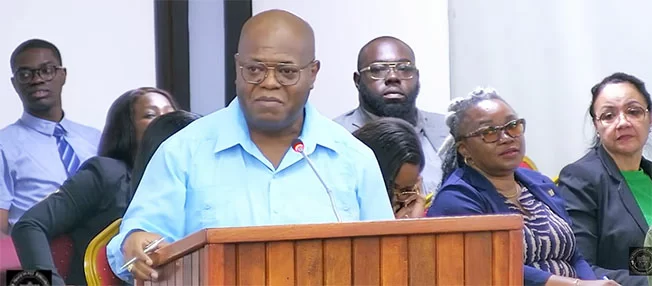
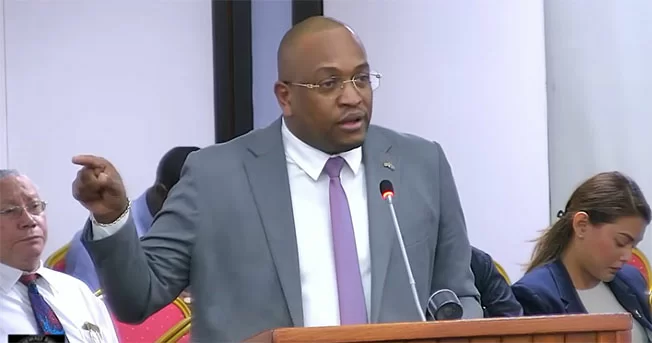
    In a comprehensive address to the National Assembly on Friday, Surinamese lawmaker Ebu Jones of the National Democratic Party (NDP) presented a compelling case for fundamental judicial reform, arguing that the current system’s structural vulnerabilities demand immediate institutional reinforcement rather than representing any political whim or power struggle.

    Jones emphasized that the debate surrounding proposed legislative changes must transcend emotional reactions, isolated incidents, or personal considerations, focusing instead on institutional principles and legal protections. “Laws are not crafted for today’s officeholders,” he asserted, “but for the system that must function tomorrow, regardless of who holds positions of authority.”

    The parliamentarian identified several critical areas requiring transformation, beginning with the concept that the right to a fair trial commences well before courtroom proceedings—during investigation and prosecution phases where the Public Prosecutor’s Office (OM) wields concentrated power. Jones highlighted the OM’s extensive authority in deciding whom to prosecute, detain, keep incarcerated, or whose cases to dismiss, noting this power demands clearer legal safeguards, transparency, and checks and balances.

    A central pillar of Jones’ argument focused on Suriname’s exceptional regional position as lacking a third judicial instance. Following appeals, legal pathways in criminal and civil cases become essentially exhausted, creating compliance concerns with international treaties like the International Covenant on Civil and Political Rights (ICCPR). Jones clarified that a third instance wouldn’t constitute relitigating facts but would ensure proper review of legal rules, procedural diligence, and reasoning—thereby enhancing legal certainty, jurisprudence development, and judicial uniformity.

    Regarding proposed structural changes within the OM, Jones advocated for either multiple attorneys-general or a collegiate model, framing this not as an attack on current leadership but as institutional strengthening against arbitrariness, political pressure, and excessive individual burden. Such models, already commonplace in other legal systems according to Jones, would create more balanced decision-making, enhance internal controls, and prevent excessive power concentration.

    Jones addressed societal complaints about slow procedures, unequal treatment, and prolonged pretrial detention as symptoms of systemic strain rather than isolated incidents. He referenced previous administration practices where individuals were detained without judicial review under so-called ‘gag laws,’ only released after offering apologies days later.

    The reform advocate called for an integrated approach encompassing judicial strengthening, OM modernization, capacity expansion, improved training, and clearer legislation. Jones emphasized that proposed constitutional amendments aim primarily to create constitutional space for reform, with specific implementation details—whether establishing a domestic cassation instance, joining the Caribbean Court of Justice, or developing a hybrid model—to be carefully elaborated subsequently.

    “This debate isn’t about today,” Jones concluded, “but about the rule of law we wish to leave as our legacy.” He positioned judicial reform as essential for restoring public trust, deepening legal protections, and better preparing Suriname for future societal and economic developments.

  • Regionale  veiligheid centraal bij ontmoeting president Simons en CARICOM IMPACS

    Regionale veiligheid centraal bij ontmoeting president Simons en CARICOM IMPACS

    Suriname has positioned itself at the forefront of regional security coordination following a high-level consultation between President Jennifer Simons and CARICOM IMPACS Executive Director Lieutenant Colonel Michael Jones. The meeting, held on Friday, established Suriname’s strategic role in addressing transnational security challenges during its upcoming presidency of the Council for National Security and Law Enforcement (CONSLE) in 2026.

    The discussions, attended by Carmen van Dijk, Deputy Director of Security Policy at Suriname’s Directorate of National Security, focused on developing comprehensive responses to organized crime, illegal migration, and firearms trafficking. Lieutenant Colonel Jones emphasized the necessity of collaborative approaches, stating: ‘The security challenges confronting our region demand joint solutions and efficient utilization of limited resources.’

    Technical cooperation formed a significant component of the dialogue, with commitments to enhance Suriname’s capabilities through specialized training programs and material support from CARICOM IMPACS. Particular attention was given to the Advanced Passenger Information System, which Jones identified as critical for improving border security through strengthened legislation and expanded data collection mechanisms.

    A landmark achievement discussed was the recent implementation of a digital firearms and ammunition management system, enabling comprehensive tracking from registration to destruction. This technological advancement is expected to significantly improve monitoring of illegal weapon flows throughout the Caribbean community.

    The meeting concluded with preparations for CARICOM IMPACS’ 20th anniversary celebrations, including the announcement that Suriname will host a physical convening of the CONSLE in November 2026. This gathering will assess progress on regional security initiatives and establish future priorities for collective action.

  • Twee woningen volledig verwoest door brand aan Florris Zwakkestraat

    Twee woningen volledig verwoest door brand aan Florris Zwakkestraat

    A severe residential fire erupted at approximately 7:52 PM on Florris Zwakkestraat in Flora, resulting in the complete destruction of two adjacent homes. Emergency services responding to the incident found both properties fully engulfed in flames upon arrival.

    The fire department deployed multiple units to combat the blaze and remains on scene conducting extensive follow-up operations to prevent further fire spread to neighboring structures. The precise origin and cause of the fire remain undetermined at this early stage.

    Authorities from both police and fire services have confirmed no casualties resulted from the incident. Law enforcement has established a security perimeter around the affected area while collaborating with fire investigators to determine the circumstances that led to the devastating blaze.

    Additional details regarding the investigation and property damage assessment are expected to be released as the official inquiry progresses. The coordinated response between emergency services successfully prevented potential tragedy despite the substantial property loss.

  • 17 februari nationale vrije dag: Jaar van de Vuurslang

    17 februari nationale vrije dag: Jaar van de Vuurslang

    The Surinamese Ministry of Internal Affairs has formally declared Tuesday, February 17th as an official public holiday in recognition of Chinese New Year celebrations. Government offices will remain closed throughout the day, with the date carrying equivalent status to Sunday operational hours.

    This lunar new year marks the commencement of the Year of the Fire Snake according to the Chinese zodiac calendar. Within Chinese astrological traditions, the snake embodies wisdom, strategic acumen, intellectual precision, and profound inner resilience. The additional fire element infuses these qualities with heightened passion, transformative energy, determined action, and exceptional perseverance.

    Astrological interpretations suggest 2026 will favor deliberate decision-making over impulsive actions. The Fire Snake symbolizes calculated transformation emerging from thorough analysis, insightful planning, and impeccable timing. This period appears particularly conducive to structural reforms, strategic revisions, and institutional strengthening across personal, societal, and economic dimensions.

    However, astrologers concurrently caution that the fire element could potentially intensify tensions during conflicts of interest or emotionally charged situations. Success throughout the Fire Snake year may consequently demand heightened self-discipline, diplomatic communication, and sustained patience.

    Traditional Chinese New Year observances typically feature family reunions, temple visits, prosperity rituals, and ceremonies aimed at dispelling negative energies. For Suriname’s Chinese community and diaspora populations worldwide, these celebrations represent renewed beginnings filled with aspirations for improved health, stability, and economic prosperity.

  • Ramadan: NDP start landelijke voedselondersteuning voor moskeeën

    Ramadan: NDP start landelijke voedselondersteuning voor moskeeën

    In preparation for the holy month of Ramadan, Suriname’s National Democratic Party (NDP) will commence nationwide distribution of food supplies to 285 mosques starting February 17th. This initiative aims to support the organization of iftar meals, enabling Muslim communities to break their fast with dignity and communal spirit.

    The party stated that this program aligns with its core principles of solidarity, social justice, and respect for religious diversity. Ramadan is recognized as a period of reflection, discipline, and compassion for others. By supporting mosques during this significant time, the NDP seeks to foster social cohesion and strengthen community bonds.

    Emphasizing Suriname’s multicultural fabric, the party highlighted that religious and cultural differences serve as foundations for mutual understanding and national unity. The Ramadan assistance program reflects NDP’s commitment to actively engaging all communities in building a just and harmonious society.

    Through this annual support initiative, the NDP reinforces its connection with the community and maintains visible presence during moments of importance to large segments of the population.

    The food distribution will be coordinated through the party’s regional structures across various districts. NDP members have been tasked with organizing and implementing the program to ensure efficient, orderly, and equitable distribution of food packages to all recipient mosques.

  • Brazilië opent deur voor gedeeltelijk handelsakkoord tussen Mercosur en China

    Brazilië opent deur voor gedeeltelijk handelsakkoord tussen Mercosur en China

    In a significant policy reversal, Brazil is now contemplating support for a partial trade agreement between the Mercosur bloc and China, according to senior Brazilian government officials. This strategic pivot marks a substantial departure for Latin America’s largest economy, which had previously blocked formal negotiations with Beijing to shield domestic industries from potential surges in Chinese imports.

    The development emerges amid Uruguayan President Yamandu Orsi’s recent visit to Beijing, where both parties expressed optimism about expediting free trade talks between China and the Mercosur alliance—comprising Brazil, Argentina, Paraguay, Uruguay, and soon-to-join Bolivia.

    While a comprehensive trade pact remains distant, Brazilian officials view a partial agreement as a viable long-term option. This reconsideration is partly driven by U.S. import tariffs that are disrupting global trade flows and reshaping international alliances. A limited-scope agreement could focus on non-tariff barriers such as import quotas, customs procedures, and health and safety regulations, potentially unlocking meaningful market access in China.

    Insiders note that Brazil’s shift reflects a ‘new global scenario’ where diversifying trade partners has gained urgency. China offers the advantage of allowing negotiations to commence with selected tariff lines rather than requiring full-scale commitments.

    However, significant obstacles persist. Mercosur requires unanimous consent among members, complicated by political divergences. Paraguay maintains official diplomatic relations with Taiwan, complicating negotiations with China—though Paraguay hasn’t ruled out an agreement provided its Taiwan relationship remains respected.

    Argentina, Latin America’s third-largest economy, presents another challenge. Under President Javier Milei, who seeks closer U.S. ties, Buenos Aires remains hesitant to support China-led trade discussions within Mercosur, particularly if they might strain relations with Washington.

    Trade experts emphasize that this new dynamic is partly driven by former President Trump’s trade policies, which pressured Latin American nations to limit Chinese ties. This has prompted China to strengthen regional trade relationships, positioning Mercosur as a potential key partner.

    The ultimate form of any Mercosur-China trade agreement remains uncertain, but Brazil’s recent signals indicate growing willingness to reconsider traditional positions and explore new commercial opportunities in an evolving global landscape.

  • Dodelijk verkeersongeval aan Kwattaweg eist leven van bromfietser

    Dodelijk verkeersongeval aan Kwattaweg eist leven van bromfietser

    A tragic single-vehicle accident has resulted in the death of a scooter rider during the early morning hours along Kwattaweg. The victim, identified as 25-year-old M.R., succumbed to his injuries at the scene despite emergency response efforts.

    Preliminary police investigation indicates that the young man was traveling from Derderijweg toward Henry Fernandesweg when the incident occurred. Near the Kwattamarkt area, authorities suspect excessive speed caused the rider to lose control of his handlebars. The scooter veered off the roadway and collided with tremendous force against an EBS utility pole located in the left shoulder.

    The impact proved immediately fatal for the scooter operator. Paramedics and an emergency physician dispatched to the location determined the injuries were incompatible with life. Medical personnel confirmed death at the scene, unable to provide any life-saving measures due to the severity of the trauma sustained.

    This early morning tragedy marks another sobering reminder of road safety concerns, particularly regarding two-wheeled vehicles and speed management on urban thoroughfares. The investigation remains ongoing as authorities work to determine the exact contributing factors behind this fatal loss of control incident.

  • VS breidt hulp aan Cuba uit ondanks olieblokkade

    VS breidt hulp aan Cuba uit ondanks olieblokkade

    The United States has announced a significant expansion of humanitarian assistance to Cuba while simultaneously tightening restrictions on the island nation’s fuel supplies. Jeremy Lewin, a high-ranking official at the U.S. State Department, revealed on Thursday that Washington would provide an additional $6 million in aid, bringing total humanitarian support to $9 million since Hurricane Melissa struck in October.

    This assistance is being channeled directly to the Cuban population through the Catholic Church, with Lewin confirming that the Cuban government has not impeded the distribution process. The humanitarian initiative aims to address critical shortages that have left state stores completely empty and unable to supply basic necessities to citizens.

    Concurrently, the Trump administration has escalated efforts to block Cuba’s access to petroleum resources. President Trump has declared that Cuba will no longer receive oil shipments from Venezuela following last month’s operation that resulted in the arrest of Venezuelan President Nicolás Maduro. The U.S. has further threatened tariffs against other nations, including Mexico, that continue to provide fuel to Cuba.

    In response to the growing crisis, Cuban President Miguel Díaz-Canel announced temporary measures to address fuel shortages and accompanying power outages affecting multiple provinces. Díaz-Canel characterized the situation as “extremely challenging” and called for national solidarity during this period of hardship.

    Despite providing humanitarian aid, the U.S. government places partial responsibility for the crisis on Cuban leadership. Lewin stated, “The fundamental issue is the government’s failure to stock store shelves. State stores are completely empty and unsupplied. What we’re witnessing is a humanitarian disaster.”

    The ongoing fuel shortage continues to severely disrupt essential services and supply chains across Cuba, creating a precarious situation for the population. The dual approach of providing humanitarian assistance while maintaining economic pressure highlights the complex dynamics in U.S.-Cuba relations as ordinary citizens bear the consequences of this geopolitical tension.

  • Betterson waarschuwt: geen emotionele wetgeving rechterlijke macht en meerdere pg’s

    Betterson waarschuwt: geen emotionele wetgeving rechterlijke macht en meerdere pg’s

    ABOP Assembly Member Stanley Betterson has issued a compelling appeal for restraint in Suriname’s judicial reform process, cautioning against legislation driven by emotional reactions rather than factual analysis. During Thursday’s session of the National Assembly, Betterson emphasized that legal amendments must be grounded in thorough research and demonstrable necessity rather than temporary outrage or political anger.

    The seasoned parliamentarian pointed to Suriname’s historical pattern of enacting legislation prompted by indignation, citing the Recall Law, Amnesty Law, and establishment of the Constitutional Court as examples of reactive laws that failed to achieve their intended purposes. “When emotions take precedence, we often miss the fundamental objective of legislation,” Betterson asserted.

    Addressing specific proposals to reform the Public Prosecutor’s Office and expand the number of attorneys general, Betterson expressed skepticism. He challenged the assumption that appointing multiple prosecutors-general would automatically improve the institution’s performance. Instead, he called for objective and systematic investigation into complaints about prosecution policies and conduct before considering structural changes.

    Betterson highlighted that the Public Prosecutor’s Office already possesses extensive powers, including through the opportunity principle, but noted these authorities carry inherent risks. This reality makes it essential, in his view, to first identify whether potential problems lie in existing laws, organizational structure, management practices, or implementation processes.

    While acknowledging potential needs for strengthening the rule of law, Betterson underscored that any reform must be evidence-based rather than politically pressured. He committed to supporting legislative proposals if research demonstrates changes would genuinely contribute to improved administration of justice.

    The ABOP representative urged government officials and initiative proponents to set aside emotional responses and adopt a rational, mature approach to judicial reform. Only through this methodical process, he concluded, can Suriname avoid creating laws that merely shift problems rather than resolve them.

  • VES kritisch over verlaging goudroyalty: Regering beloont illegaal gedrag

    VES kritisch over verlaging goudroyalty: Regering beloont illegaal gedrag

    The Association of Economists in Suriname (VES) has expressed strong opposition to the government’s recent decision to reduce royalty rates on gold exports from small-scale mining operations. Secretary Swami Girdhari characterized the policy shift as fundamentally flawed, arguing that it effectively rewards illegal gold smuggling activities rather than combating them.

    President Jennifer Simons defended the measure during a radio interview on ABC Actueel, explaining that the royalty reduction from 5.5% to 4.5% aims to discourage gold smuggling by easing the financial burden on legitimate mining operators. The administration believes lower rates will incentivize compliance with tax obligations.

    However, the VES maintains that this approach represents a dangerous precedent. Girdhari emphasized that “gold smuggling constitutes a criminal offense that damages society. Entrepreneurs engaged in such activities should face prosecution and punishment, not accommodation.” The association further notes the contradiction between this policy and the government’s stated principle that those with greater resources should bear heavier fiscal responsibilities.

    The economists highlight additional inconsistencies with the government’s 2026 draft budget, which specifically calls for strengthened tax collection policies, enhanced monitoring mechanisms, and sector-specific approaches to improve compliance within the gold industry. “By reducing royalties now, the government undermines its own announced policy agenda,” Girdhari stated.

    The VES recalls that the previous administration’s recovery plan initially proposed increasing royalties from 2.75% to 7.5%, though ultimately settled at 5.5%. This historical context demonstrates the considerable influence of gold industry lobbying efforts, which appear to persist within the current government structure.

    Notably, international gold prices have more than doubled in recent years, currently exceeding USD 155,000 per kilogram, while production costs have remained relatively stable. This market dynamic generates substantial profits—even windfall gains—for gold operators, making royalty compliance economically feasible without reduction measures.

    The association concludes that smuggling represents an economic crime requiring stringent enforcement rather than concessionary policies. Girdhari posed a rhetorical question: “If retailers suddenly stopped paying value-added tax, would the government reduce VAT rates? If entrepreneurs ceased income tax payments, would those taxes be lowered accordingly? Equal justice must apply to all.”