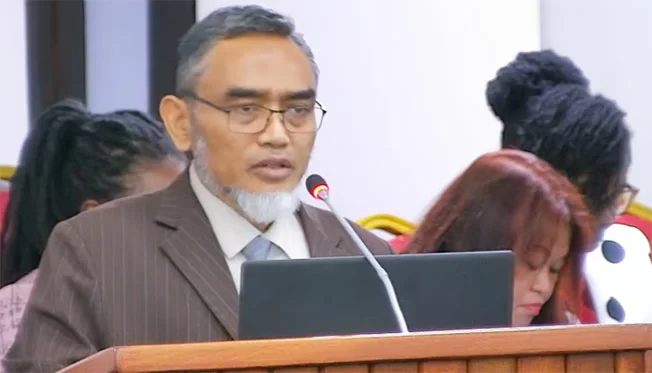
During a 2026 budget debate held in Suriname’s National Assembly on June 30, Minister of Land and Forest Management (GBB) Stanley Soeropawiro announced that his ministry is currently conducting comprehensive investigations into past land grants issued inside two key protected natural areas: the Peruvia Nature Reserve and the North Coronie Multi-Use Management Area (MoMA). The minister confirmed that he does not rule out revoking any grants that are found to violate existing laws or the protected status of these ecologically significant zones.
Soeropawiro confirmed that historical records already show multiple land parcels within the boundaries of these protected areas have been allocated to third parties, largely for agricultural use. Both reserves hold formal protected status under Suriname’s national environmental regulations, making unapproved commercial or private development inside their borders legally questionable. The ongoing probe is focused on verifying whether all required legal procedures were followed during the granting process, and whether each allocation aligns with the conservation mandates of the sites.
Preliminary reviews of the grant dossiers have already uncovered a notable red flag: no advisory opinions were found from the government agencies that are legally required to weigh in on such applications. These mandatory stakeholders include the National Forest Service, the Ministry of Agriculture, Livestock and Fisheries, and the National Environmental Authority. Soeropawiro emphasized that these input are non-negotiable for any land development project, especially within protected zones, so their absence raises serious questions about the legitimacy of the existing grants.
The minister stressed that the investigative process is being carried out with deliberate care to ensure all findings are accurate and procedurally sound. Should investigators conclude that any grants were issued unlawfully or in conflict with the protected status of the areas, the ministry will follow all formal legal pathways to revoke those allocations. He also framed the protection of Suriname’s natural protected areas as both a domestic responsibility and a binding commitment under international environmental agreements that Suriname has signed onto.
During the plenary debate, multiple members of the National Assembly raised additional priorities for land and environmental policy, calling for stronger management of protected natural areas, more robust conservation measures for Suriname’s ecologically critical mangrove forests, and greater transparency across all land governance processes. Lawmakers also pushed for a full, system-wide evaluation of all historical land grants and the country’s existing land conversion policy to address broader gaps in regulation.