标签: Suriname

苏里南

  • Column: Duurzaamheid clubvoetbal

    Column: Duurzaamheid clubvoetbal

    Suriname’s football landscape reveals a paradoxical reality where undeniable talent coexists with systemic limitations. While the nation has produced exceptional players since the Caribbean Cup-winning generation decades ago, the sporadic emergence of standout performers has failed to translate into consistent regional success.

    The historical achievements of Transvaal in the 1970s and more recently Robinhood’s 2019 CONCACAF Caribbean Club Shield victory and 2023 Caribbean Cup triumph demonstrate Suriname’s potential. Remarkably, these accomplishments were achieved while maintaining amateur status—a testament to the players’ dedication but also highlighting structural constraints.

    Despite these flashes of brilliance, neither club has sustained their peak performance levels. Robinhood’s disappointing follow-up to their magnificent 2022-2023 season raises serious questions about the sustainability of current approaches within Surinamese football.

    The core issue lies in the semi-professional reality masked by professional labels. Suriname Major League clubs are officially professional organizations but operate as amateur entities in practice. Players juggle full-time jobs with limited training schedules—typically a few afternoon hours several days weekly—creating an impossible competitive disadvantage against genuine professional opponents.

    This structural deficiency directly impacts national team prospects. Selection for international duty requires players to maintain professional standards: full football dedication without external employment, multiple daily training sessions, and complete athletic focus. Without meeting these fundamental conditions, local players remain ineligible for national team consideration.

    The solution requires transformative change. Clubs must grant genuine professional status through living wages that support families, eliminating players’ need for secondary employment. Where financial constraints exist, strategic partnerships could provide necessary funding infrastructure. Such modernization would simultaneously advance regional competitive goals and enable international careers for Surinamese athletes.

  • Openbaar Ministerie gaat in hoger beroep na vrijspraak Danielle Veira

    Openbaar Ministerie gaat in hoger beroep na vrijspraak Danielle Veira

    The Public Prosecution Service has formally filed an appeal against the full acquittal of Danielle Veira, former head of the Directorate of National Security (DNV), by the Court of Martial Appeals. This move signals the prosecution’s refusal to accept the court’s finding that insufficient evidence existed to prove Veira’s involvement in the April 16, 2020 hostage operation targeting Rodney Cairo.

    Presiding Judge Cynthia Valstein-Montnor emphasized during Friday’s ruling that the central consideration was whether the operation genuinely constituted an official DNV action. The court determined that only one convicted co-suspect, Imro Miedema, had testified about Veira’s potential involvement when police requested explanations, while other objective evidence confirming her role as instigator remained absent.

    The court also dismissed allegations regarding Veira’s unauthorized distribution of weapons and firearm permits, noting that providing arms to informants and civilians had been an established practice within DNV—sometimes even under presidential instruction. The judiciary deemed it unreasonable to hold Veira solely criminally responsible for what constituted an institutionalized organizational practice.

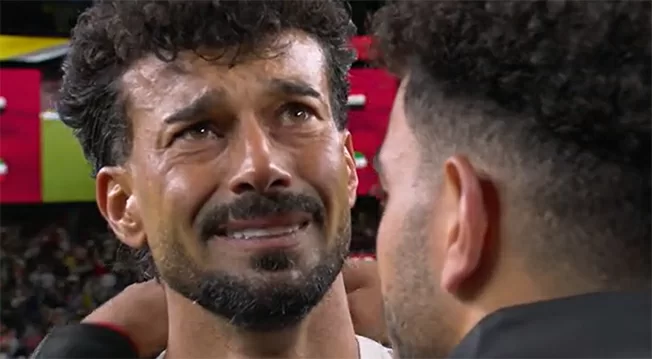
    Following her emotional release, Veira expressed profound gratitude outside the courthouse, repeatedly referencing her religious faith. She described enduring five arduous years and affirmed her belief in divine justice, while also thanking the judges for their discernment and her family for their unwavering support.

    The case remains unresolved as it proceeds to appellate review, where the higher court will reexamine both factual evidence and legal assessments. The prosecution had initially sought a nine-year prison term with immediate custody.

  • Digitaal systeem gelanceerd voor volledige controle op vuurwapens

    Digitaal systeem gelanceerd voor volledige controle op vuurwapens

    Suriname has officially launched a comprehensive digital firearm tracking system designed to monitor weapons throughout their entire lifecycle—from import and ownership to eventual destruction. The system, developed in collaboration with CARICOM’s Implementation Agency for Crime and Security (IMPACS), represents a significant advancement in regional security cooperation.

    Justice and Police Minister Harish Monorath emphasized that the registry will provide complete traceability for every firearm in the nation. “From production and purchase to import, ownership, use, and final destruction—even after destruction, it remains recorded that the weapon was actually destroyed,” Monorath stated during the system’s inauguration.

    The registry encompasses all firearms in Suriname, including handguns and hunting rifles owned by civilians, weapons from shooting associations, and arms belonging to police, military, correctional facilities, and other legally authorized entities. Any weapon not registered in the system will automatically be considered illegal, with stricter sanctions to be implemented in the future.

    The digital infrastructure forms part of a broader regional strategy and interfaces with similar systems across Caribbean nations—a critical feature given the influx of illegal weapons from neighboring Brazil, French Guiana, and Guyana.

    Trained personnel operating the system adhere to international standards, with the Directorate of National Security assuming coordinating responsibilities. The registry integrates with Suriname’s recently digitized firearm license system, which now enables complete online application and payment processes.

    Minister Monorath addressed security concerns by highlighting multiple protective layers and warning mechanisms designed to prevent cyber threats and data breaches. Parallel to the registry implementation, authorities are advancing additional projects including the destruction of illegally obtained weapons.

    Michael Jones, Executive Director of CARICOM IMPACS, noted that the digital transition significantly enhances operational efficiency and analytical capabilities. “The shift from paper to digital enables faster information analysis and recognition of patterns that previously remained invisible,” Jones explained. The regional interconnection substantially improves tracking capabilities for illegal firearm distribution networks across Caribbean borders.

  • Wereld Kanker Dag: Suriname zet in op versnelde strijd tegen baarmoederhalskanker

    Wereld Kanker Dag: Suriname zet in op versnelde strijd tegen baarmoederhalskanker

    Suriname faces a severe healthcare challenge as cancer ranks as the nation’s second leading cause of death, with distinct patterns emerging across genders. Women predominantly suffer from breast, cervical, and colorectal cancers, while men most frequently develop prostate, lung, colorectal, and head-neck cancers. This alarming situation comes into sharp focus on World Cancer Day, observed globally on February 4th, which emphasizes cancer’s profound impact and the critical importance of prevention, early detection, timely treatment, and comprehensive care.

    The World Health Organization reveals that approximately 40% of all cancer cases are preventable through avoiding key risk factors including tobacco use, excessive alcohol consumption, unhealthy diets, physical inactivity, and exposure to air pollution. Vaccination against Hepatitis B and Human Papillomavirus (HPV) plays a pivotal role in preventing liver and cervical cancers respectively. Regular screening significantly enhances early detection and successful treatment outcomes for cervical, breast, and colorectal cancers.

    Across the Americas, cervical cancer diagnoses exceed 78,000 annually among women, resulting in over 40,000 deaths. The situation is particularly dire in Latin America and the Caribbean—where Suriname is located—where mortality rates triple those in North America, highlighting substantial disparities in prevention and care access.

    The Pan American Health Organization has issued an urgent call to accelerate efforts toward eliminating cervical cancer by 2030. This ambitious goal requires achieving three targets: 90% HPV vaccination coverage for girls under 15, 70% screening coverage with high-quality tests for women at ages 35 and 45, and 90% treatment access for women with pre-cancerous or invasive cancer. While 24 countries have implemented single-dose vaccination schedules and regional first-dose coverage reaches 70%, screening and treatment programs lag significantly behind.

    PAHO is supporting member states through technical assistance and leveraging regional funds to ensure affordable vaccines, screening equipment, and treatment tools. Collaborations with partners including Unitaid and Spain’s AECID strengthen this comprehensive approach to make quality care accessible through primary healthcare systems.

    Meanwhile, Suriname’s Ministry of Health emphasizes the crucial role of mental and emotional support for cancer patients and their families, recognizing that psychological care is indispensable within overall cancer management.

    Marking World Cancer Day 2026, WHO/PAHO is hosting the webinar ‘Supporting the Elimination of Cervical Cancer’ to accelerate action on vaccination, screening, and care access to eliminate cervical cancer as a public health problem.

  • Na COP30 krijgt Suriname–Brazilië-overleg concreet vervolg

    Na COP30 krijgt Suriname–Brazilië-overleg concreet vervolg

    In a significant diplomatic development, Suriname and Brazil have embarked on a new chapter of strengthened bilateral relations through high-level ministerial discussions in Brasília. Foreign Minister Melvin Bouva of Suriname, overseeing International Trade and Cooperation, engaged in substantive working consultations with his Brazilian counterpart, Mauro Vieira, and accompanying delegations.

    The high-stakes meeting convened at the prestigious Palácio do Itamaraty, the headquarters of Brazil’s Ministry of Foreign Affairs, marking a concrete implementation of agreements established during presidential discussions between President Jennifer Geerlings-Simons of Suriname and President Luiz Inácio Lula da Silva of Brazil. These previous negotiations occurred alongside the COP30 climate summit in Belém during November 2025.

    Central to the ministerial dialogue was the meticulous preparation for an anticipated presidential summit scheduled for the first half of this year. Both diplomatic teams examined specific cooperative projects and programs destined for approval by the respective heads of state. The comprehensive agenda spanned multiple strategic sectors including agricultural development, healthcare innovation, defense coordination, public administration, cybersecurity enhancement, and educational exchange programs.

    As neighboring nations and strategic partners within the South-South cooperation framework, both countries demonstrated renewed commitment to deepening their bilateral relationship. The diplomatic engagement will continue with a Brazilian Foreign Ministry delegation scheduled to undertake a working visit to Suriname in late February.

    Following the productive discussions in Brazil, Minister Bouva and his delegation immediately departed for Dubai to participate in the 10th International Cooperation Conference of the Association of Caribbean States, where the minister will remain engaged through February 7th.

  • Trump en Petro: onverwachte verstandhouding in Witte Huis

    Trump en Petro: onverwachte verstandhouding in Witte Huis

    In a remarkable diplomatic turnaround, U.S. President Donald Trump and Colombian President Gustavo Petro convened for an unexpectedly cordial two-hour private meeting at the Oval Office on Tuesday, marking their first face-to-face engagement amid previously strained relations.

    The closed-door discussion, conducted without media presence, yielded positive assessments from both leaders despite months of public acrimony. President Trump confirmed collaborative efforts to combat drug trafficking from Colombia, stating, ‘We were working together and it clicked. We were never friends because I didn’t know him, but I didn’t feel insulted.’

    President Petro subsequently shared on social media platform X a photograph featuring Trump’s handwritten note: ‘Gustavo – a great honor – I love Colombia.’ In interviews with Colombian radio network Caracol, Petro emphasized that their ideological differences proved less significant than media portrayals had suggested.

    The Colombian leader presented specific requests during the meeting, seeking U.S. assistance in locating major drug criminals operating beyond Colombia’s borders. Additionally, Petro asked Trump to mediate an ongoing diplomatic dispute between Colombia and Ecuador, whose president maintains strong allegiance to the U.S. administration. According to Petro, Trump agreed to initiate contact with Ecuadorian President Daniel Noboa.

    This diplomatic engagement represents a substantial shift from previous exchanges. In October, Trump had baselessly labeled Petro an ‘illegal drug trafficker’ and earlier this year suggested potential military action against Colombia. Petro had conversely criticized U.S. military interventions throughout Latin America.

    The Washington meeting follows an unexpectedly positive telephone conversation in January, signaling gradual reconciliation. Petro even complimented the recent refurbishment of the Oval Office, particularly noting its gold accent features.

    Outstanding issues remain unresolved, including U.S. sanctions against Petro himself due to unproven allegations of drug trade connections—claims the Colombian president vehemently denies.

    Regional security analysts note that failed reconciliation could have severe consequences for regional stability. As the world’s largest producer of coca—the primary ingredient for cocaine—Colombia hosts multiple U.S.-designated terrorist organizations while simultaneously serving as a crucial U.S. ally in anti-narcotics operations.

    Under Petro’s administration, coca production has increased according to some metrics, though interpretations vary. Colombia has shifted from forced eradication policies toward more sophisticated interception mechanisms and seizure operations.

    The meeting occurred against a complex backdrop: Last week, Petro urged Colombian migrants in Chile, Argentina, and the United States to return home to avoid ‘slave-like’ treatment abroad. He also declared he would prefer residing in Havana over Miami, which he characterized as traffic-congested and culturally deficient.

  • Rapport: Wereldwijde conflicten drijven humanitair recht tot het uiterste

    Rapport: Wereldwijde conflicten drijven humanitair recht tot het uiterste

    A comprehensive study by the Geneva Academy of International Humanitarian Law and Human Rights reveals that international humanitarian laws established post-World War II are experiencing unprecedented strain. The research, examining 23 global conflicts from July 2024 to December 2025, documents systematic violations across multiple war zones with minimal accountability for perpetrators.

    The report titled ‘War Watch’ details how the years 2024-2025 proved devastating for civilians, with combatants showing little willingness to restrain brutality against vulnerable populations. Israel’s genocidal campaign in Gaza has resulted in over 71,000 Palestinian deaths, while Sudan’s ongoing violence since 2023 continues unchecked. Conflicts in Myanmar, Nigeria, Ukraine, Ethiopia, Haiti, and Yemen similarly demonstrate patterns of civilian targeting with apparent impunity.

    Drone strikes against civilian infrastructure have become defining features of modern warfare, particularly in Ukraine where casualty rates exceeded previous years combined. Sexual and gender-based violence reached epidemic proportions in multiple regions, with documented cases of systematic rape in Sudan’s Darfur region and the Democratic Republic of Congo. The paramilitary Rapid Support Forces in Sudan stand accused of public gang rapes and civilian massacres in El-Fasher.

    The United States’ retreat from its historical role as enforcer of humanitarian norms has significantly contributed to this deterioration. America’s unconditional support for Israel’s Gaza operations has particularly undermined principles it traditionally championed. Meanwhile, Donald Trump’s second presidential term has raised grave concerns among observers, evidenced by his administration’s disregard for international legal standards—including the abduction of Venezuelan President Nicolás Maduro and explicit statements prioritizing personal morality over established international law.

    Despite this crisis, the report suggests the core framework of international humanitarian law may yet endure. Institutions like the International Court of Justice and International Criminal Court continue playing crucial roles in civilian protection when properly respected and funded. States maintaining commitment to international legal norms can still influence ally behavior, as demonstrated by Ukraine’s relatively restrained civilian casualty rates compared to Russian forces in their ongoing conflict.

    Richard Gowan of the International Crisis Group notes the tragic proliferation of armed groups targeting civilians without fear of political or legal consequences. This erosion creates a vicious cycle where combatants increasingly resort to atrocities for tactical advantage. Ultimately, experts warn that losing international humanitarian law would represent a universal failure—costing Global Southern nations lives and blood while depriving Western powers of moral authority.

  • Opmerking Jarbandhan over ‘politieke kleur’ pg leidt tot commotie in DNA

    Opmerking Jarbandhan over ‘politieke kleur’ pg leidt tot commotie in DNA

    A political firestorm engulfed Suriname’s National Assembly (DNA) on Tuesday following controversial remarks by VHP Assembly member Ameerani Jarbandhan regarding the Prosecutor-General’s alleged political leanings. The parliamentary session, initially convened to debate judicial reform bills, rapidly devolved into heated exchanges concerning the politicization of independent state institutions.

    Jarbandhan’s commentary emerged during deliberations on legislative amendments concerning the Public Prosecutor’s Office. While addressing case backlogs attributed to resource constraints, expertise shortages, and operational limitations within law enforcement, the assembly member questioned whether proposed changes—including adjustments to the Prosecutor-General’s retirement age—concealed ulterior motives. She explicitly suggested these amendments might represent a subtle effort to remove the official, potentially linked to her political convictions.

    The controversy deepened with revelations that ruling coalition members (BEP, ABOP, PL) had previously supported raising the retirement age from 65 to 70 in 2024, only to reverse their position through current legislative initiatives. Jarbandhan framed this reversal as a threat to separation of powers, warning that implementing drastic judicial changes without broad national consultation jeopardizes constitutional integrity.

    Assembly Chairman Ashwin Adhin intervened decisively, declaring any discussion of the Prosecutor-General’s political affiliation fundamentally unacceptable. “The Prosecutor-General exists outside political discourse,” Adhin asserted. “As an independent institution lacking representation in this chamber, she merits protection rather than political characterization.” His admonition to maintain technical and policy-focused debate was reinforced by cross-party objections, including suspension requests from VHP member Cedric van Samson and neutrality reminders from NDP leader Rabin Parmessar.

    Post-recess, acting VHP leader Dew Sharman attempted damage control by distancing his party from Jarbandhan’s phrasing. Attributing her comments to “juvenile enthusiasm,” Sharman emphasized institutional rather than personal scrutiny should guide deliberations. He proposed retracting or reformulating problematic statements to preserve parliamentary decorum.

    Tensions reignited when PL leader Bronto Somohardjo explicitly associated the Prosecutor-General with VHP affiliations, prompting VHP member Krishna Mathoera to demand corrective action. Mathoera condemned political labeling of absent independent officials as “unacceptable, improper, and inappropriate,” urging audio review of contentious statements—a request ultimately denied as Somohardjo refused retraction.

  • Atompai lijnrecht tegen fractieleider: geen CCJ en wel college van pg’s

    Atompai lijnrecht tegen fractieleider: geen CCJ en wel college van pg’s

    In a significant parliamentary debate on judicial reform, Surinamese Assemblymember Poetini Atompai of the National Party of Suriname (NPS) has articulated a controversial position regarding the nation’s judicial future. During Tuesday’s session, Atompai explicitly rejected joining the Caribbean Court of Justice (CCJ) as Suriname’s final appellate court, instead proposing an alternative arrangement with the Supreme Court of the Netherlands featuring a specialized Surinamese chamber.

    Atompai’s argument centered on historical and substantive legal alignment, noting that Suriname’s judicial system fundamentally derives from Dutch legal traditions. He emphasized that Surinamese courts already routinely reference Dutch jurisprudence in practice. The parliamentarian shared firsthand experiences from his tenure as former chairman of the Surinamese Police Union, alleging political interference in the Public Prosecutor’s Office by former President Chan Santokhi.

    The NPS representative characterized the CCJ option as politically motivated and pragmatically challenging for many Surinamese citizens due to geographical distance and substantial costs. While acknowledging that a fully independent Surinamese Supreme Court remains a long-term aspiration, Atompai maintained that this would only become viable after substantial organizational and substantive strengthening of the domestic judicial system.

    Additionally, Atompai vigorously advocated for establishing a College of Attorneys-General to replace the current single Attorney-General structure. He argued that concentrated power in one individual poses significant risks to judicial independence and oversight. A multi-member governance model based on the primus inter pares principle would, in his view, enhance transparency and prevent political influence.

    These positions notably diverge from those expressed by NPS faction leader Jerrel Pawiroredjo just one day earlier, creating visible tension within the coalition. VHP acting faction leader Dew Sharman immediately questioned whether Atompai represented personal opinions or official party policy, noting contradictory messages from the same political faction.

    Atompai responded sharply to the interruption, defending intra-party diversity of thought. He asserted that his party maintains space for individual viewpoints without enforcing uniform positions, contrasting this with what he implied were more rigid disciplinary approaches in other parties. The parliamentarian emphasized NPS’s tradition of internal debate and open opinion formation, which he credited for the party’s historical significance in national governance.

  • Druk op Guyanese parlementsvoorzitter om mediabeperkingen op te heffen

    Druk op Guyanese parlementsvoorzitter om mediabeperkingen op te heffen

    Guyana’s parliamentary authorities have ignited widespread condemnation from media organizations and journalists after implementing stringent new regulations that severely limit press access to legislative proceedings. The controversial measures, enacted by Parliamentary Speaker Manzoor Nadir, impose dual restrictions: drastically reducing the number of journalists permitted in the chamber while simultaneously banning all television cameras from news organizations.

    The backlash erupted immediately following Tuesday’s announcement, with particularly fierce criticism emerging across social media platforms. On an official Facebook post by Guyana’s Parliament, media professionals challenged the institution’s justification for the new rules. Parliament officials had claimed that designated press seating remained consistently unoccupied, supporting their decision with a late-night photograph showing empty chairs. Journalists quickly refuted this assertion, explaining that the image was captured after reporters had left to file their stories, calling the representation deliberately misleading.

    Further objections center on the prohibition of independent video recording. Journalists now depend exclusively on the legislature’s official livestream, which they describe as technically unreliable with frequent interruptions and substandard quality. Additionally, promised video clips of debates have consistently failed to materialize, leaving news organizations without crucial visual documentation.

    Former executives of the Guyana Press Association have joined the chorus of dissent, accusing Parliament of deliberately misleading the public and openly characterizing the restrictions as censorship. The institution’s reference to 2020 COVID-19 protocols as justification has been dismissed by critics as both inappropriate and deceptive.

    Multiple journalists report that these measures represent not temporary adjustments but systematic limitations on media access. They warn that excluding cameras and minimizing physical presence of independent media establishes a dangerous precedent that fundamentally undermines democratic oversight and transparency in governmental operations.