标签: Suriname

苏里南

  • Column: De toon maakt de muziek; geschaad vertrouwen in de pg

    Column: De toon maakt de muziek; geschaad vertrouwen in de pg

    A profound crisis of confidence has engulfed Suriname’s judicial institutions following revelations about former President Chan Santokhi’s alleged interference with the Office of the Prosecutor General. The controversy centers on Santokhi’s repeated public statements suggesting he directed prosecutorial decisions, despite his recent parliamentary denials labeling such claims as “gross lies.

    Multiple recorded instances show Santokhi employing language that implied direct control over prosecutorial matters. During press conferences and public appearances, he consistently used phrases such as “I have asked the Prosecutor General to investigate this case” and “I have given instructions to the Prosecutor General,” creating a perception of executive override of judicial independence.

    The damage to institutional credibility was starkly demonstrated by Prosecutor General Garcia Paragsingh’s response when questioned by journalists. Rather than defending the former president, Paragsingh explicitly stated that no instructions should be given to the Prosecutor’s Office and emphasized that Santokhi should have been more careful with his wording, acknowledging that such statements undermine the prosecution apparatus’s image and credibility.

    Two emblematic cases illustrate the concerning overlap between presidential and prosecutorial functions. The detention of NDP parliamentarian Ashwin Adhin occurred after Santokhi publicly announced the arrest before formal procedures were complete. Similarly, the case involving Xaviera Jessurun saw the Prosecutor General writing a letter to the president designating her as a suspect without subsequent legal action.

    The resulting erosion of trust has spurred legislative initiatives to reform the judicial system, including a proposal to replace the single Prosecutor General with a college of prosecutors. This initiative represents an institutional cry for help rather than mere academic exercise, signaling deeply damaged public confidence.

    Despite the seriousness of these allegations, Thursday’s parliamentary proceedings saw coalition parties, particularly the NDP, adopt an unexpectedly mild approach toward Santokhi. The former president departed the public meeting immediately after his speech, anticipating harsh criticism from subsequent speaker Bronto Somohardjo that never materialized.

    Constitutional Article 148 provides the government with authority to establish general prosecution policy and issue commands to the Prosecutor General in matters of state security. However, legal experts emphasize this was never intended as carte blanche for political posturing about individual criminal cases.

    The fundamental question remains unanswered: why did Santokhi persistently speak as if the Prosecutor’s Office operated under his direct authority throughout his presidency? Until this receives honest addressing, public distrust represents not a malady but a logical consequence—one justifying profound political and institutional reform.

  • Santokhi: Grove leugen dat ik pg ooit opdracht heb gegeven

    Santokhi: Grove leugen dat ik pg ooit opdracht heb gegeven

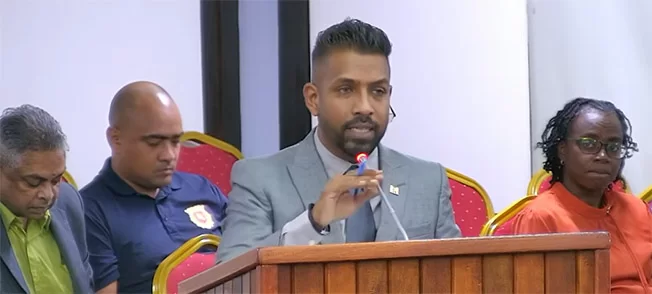
    In a tense session of Suriname’s National Assembly on Thursday, Assembly Member and former President Chan Santokhi (VHP) vehemently denied allegations that he had issued directives to the Prosecutor General during his presidential term. The confrontation emerged during debates on judicial reform, with opposition members maintaining their accusations despite Santokhi’s forceful rebuttal.

    Santokhi characterized claims of his interference as a “gross falsehood,” explicitly stating he never exercised constitutional provisions allowing presidential instructions to the Prosecutor General in matters of national security. “I can produce documents demonstrating that other presidents did issue commands. I did not,” Santokhi asserted, drawing a clear distinction between his approach and that of previous administrations.

    The former president addressed specific references to his past statements about “giving orders” to the Prosecutor General, clarifying that during critical security situations—such as the February 17, 2023 disturbances—he had merely requested investigations rather than issuing commands. “That is not an order. That is a request any citizen can make,” Santokhi explained, emphasizing the procedural difference.

    The debate referenced November 2024 remarks by Prosecutor General Garcia Paragsingh, who had previously emphasized that the president cannot direct the Public Prosecutor’s Office in individual criminal cases. Paragsingh had noted that while political discussions might include claims of instructions, these do not reflect the official stance of the judicial system. She highlighted how repeated uncorrected statements about “giving orders” could potentially damage the perception and independence of the prosecution apparatus.

    Regarding judicial reform, Santokhi reiterated his opposition to appointing multiple prosecutors-general, advocating instead for comprehensive systemic overhaul rather than piecemeal legislative changes. He warned that current proposed laws fail to address structural challenges including workload pressure, capacity constraints, specialization needs, decentralization requirements, administrative justice, and preparation for oil and gas sector developments.

    Santokhi emphasized that meaningful judicial strengthening requires eliminating political influence and genuinely enhancing independence. “Discussions about three or four prosecutors-general do not solve the fundamental problems of the rule of law,” he concluded.

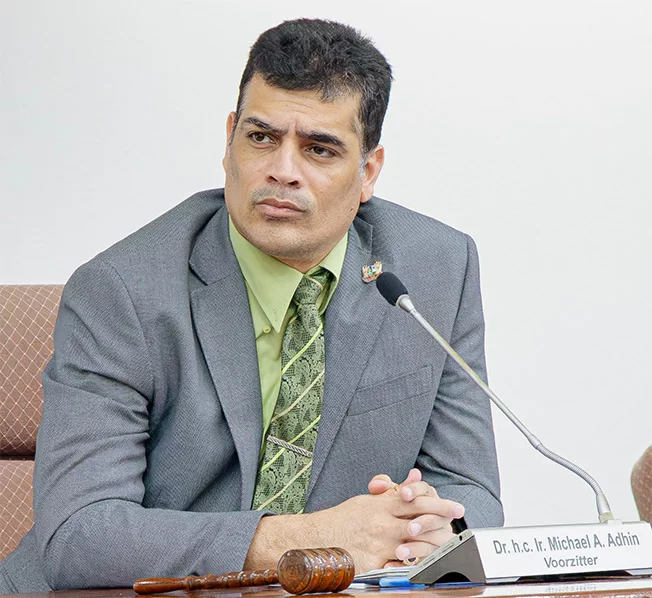
    The session concluded with procedural controversies as VHP members applauded Santokhi’s speech—against assembly rules—and most of the VHP faction demonstratively walked out when PL faction leader Bronto Somohardjo began speaking. Assembly Chairman Ashwin Adhin closed Thursday evening’s session, with deliberations scheduled to resume Friday morning.

  • Indiase lerares die honderden leercentra heeft opgericht wint Global Teacher Prize

    Indiase lerares die honderden leercentra heeft opgericht wint Global Teacher Prize

    Indian educator and activist Rouble Nagi has been awarded the prestigious $1 million Global Teacher Prize for her transformative work establishing hundreds of learning centers and creating educational murals in underserved communities across India. The ceremony took place during the World Governments Summit in Dubai on Thursday, where Dubai’s Crown Prince Sheikh Hamdan bin Mohammed Al Maktoum presented the honor.

    Nagi’s Rouble Nagi Art Foundation has established over 800 learning centers nationwide, providing structured education to both out-of-school children and those already enrolled in formal education systems. Her innovative approach includes painting educational murals on slum walls that teach literacy, numeracy, science, and history through visual storytelling.

    In her acceptance speech, Nagi reflected on her journey that began 24 years ago with 30 children in a small workshop and has since impacted over one million young lives. “Each step has only motivated and inspired me to get every child in India into school,” she stated. “As a child, it was my dream to see every child attend school, and as you grow older and make that dream come true for as many children as possible, it’s a very humbling experience.”

    The Varkey Foundation, established by GEMS Education founder Sunny Varkey, administers the annual award. Varkey praised Nagi as representing “the very best of what teaching can be: courage, creativity, compassion, and an unshakeable belief in every child’s potential.” He noted that her work has “not only transformed individual lives but strengthened families and communities.”

    Nagi plans to utilize the prize money to establish a vocational training institute offering free skill development programs. The award received endorsement from UNESCO’s Assistant Director-General for Education Stefania Giannini, who emphasized that Nagi’s recognition “reminds us of a simple truth: teachers matter.”

    Now in its tenth year, the Global Teacher Prize has previously honored educators including a Kenyan teacher who donated most of his earnings to the poor, a Palestinian teacher promoting non-violence education, and a Canadian educator working with Inuit students in remote Arctic communities. Last year’s recipient was Saudi teacher Mansour al-Mansour for his work with underprivileged communities.

  • VN waarschuwt voor humanitaire ineenstorting in Cuba

    VN waarschuwt voor humanitaire ineenstorting in Cuba

    The United Nations has issued an urgent warning about an impending humanitarian collapse in Cuba as the United States intensifies efforts to completely blockade all oil supplies to the Caribbean nation. This alarming development comes amid severe fuel shortages that have triggered prolonged power outages across the island, including in the capital Havana, while simultaneously driving sharp increases in food and transportation costs.

    UN Secretary-General Antonio Guterres’ spokesperson Stéphane Dujarric characterized the situation as ‘extremely concerning’ and cautioned that conditions would deteriorate further unless Cuba’s oil supply chain is secured. The warning follows more than three decades of repeated calls by the UN General Assembly for an end to the American trade embargo against Cuba, with Guterres now urging renewed dialogue and adherence to international law.

    The current crisis stems from the longstanding political enmity between Washington and Havana dating back to the 1959 revolution. The U.S. imposed a comprehensive economic embargo in 1962 after Fidel Castro’s government nationalized American-owned enterprises, and this sanctions regime has remained largely intact ever since.

    Cuba’s economy, already severely impacted by these measures, had previously relied on Venezuelan oil imports. These critical supplies were disrupted following controversial U.S. actions involving Venezuelan President Nicolás Maduro. President Donald Trump subsequently asserted control over Venezuelan oil resources and explicitly pledged to deprive Cuba of fuel, labeling the island nation an ‘unusual and extraordinary threat.’ The administration has further threatened imposing high tariffs on countries attempting to supply Cuba with oil, causing particular concern in Mexico.

    Mexican President Claudia Sheinbaum confirmed her government would employ all diplomatic channels to maintain oil shipments to Cuba while avoiding potential economic repercussions from U.S. tariffs. Mexico has announced plans to send humanitarian assistance and is negotiating with Washington for permission to deliver oil, though no agreement has been reached thus far.

    Cuban President Miguel Díaz-Canel condemned Trump’s threats as an attempt to ‘strangle the Cuban economy under false pretenses’ and declared an ‘international emergency.’ According to data from analytics firm Kpler, Cuba currently possesses sufficient oil reserves for only 15-20 days of consumption.

    The U.S. Embassy in Cuba has additionally advised American citizens to prepare for ‘significant disruptions’ due to power outages and fuel shortages. Despite these tensions, both nations acknowledge maintaining backchannel communications, though these contacts have not yet evolved into formal diplomatic dialogue.

  • SLM en LIAT Air verkennen samenwerking voor betere regionale luchtverbindingen

    SLM en LIAT Air verkennen samenwerking voor betere regionale luchtverbindingen

    In a significant development for Caribbean aviation, Surinam Airways and LIAT Air have initiated formal discussions to establish an interline partnership agreement. This strategic collaboration aims to substantially enhance air connectivity between the Caribbean region and South America, creating a more integrated transportation network for travelers.

  • Landvreugd voorzitter van MAS: focus op financiën en groei scheepvaart

    Landvreugd voorzitter van MAS: focus op financiën en groei scheepvaart

    President Jennifer Simons has formally installed Delano Landvreugd as the new Chairman of the Board of Commissioners for Suriname’s Maritime Authority (MAS). The appointment signals continuity with the strategic direction established by previous leadership while introducing strengthened governance protocols. Landvreugd immediately emphasized transparency, rigorous oversight, and organizational professionalism as foundational pillars of his mandate.

    The newly constituted board comprises members P. Dawsa, A. Dankerlui, S. Biervliet (Pakkitow), S. Sitaram, S. Badjalala, and J. Koese. According to Suriname’s Communication Service, Landvreugd committed to fostering constructive collaboration both within the board and with MAS executive leadership. He acknowledged that operational adjustments would be implemented where necessary to enhance organizational effectiveness.

    A key presidential directive requires the board to address specific concerns identified in submitted reports, with particular attention to enhanced monitoring of financial flows within the institution. Landvreugd acknowledged there is always room for improvement and pledged full board engagement toward achieving established objectives.

    The Chairman anticipates structured and transparent dialogue between the Board of Commissioners and executive management, expecting complete openness in all collaborative efforts. Notably, the maritime authority will intensify its focus on developments within Suriname’s burgeoning oil and gas sector, anticipating increased vessel traffic in national waters. Beyond ensuring navigational safety, Landvreugd identified potential revenue generation opportunities that could contribute significantly to state coffers.

  • Vakbeweging vraagt structurele aanpak vastlopende sociaal-economische dossiers

    Vakbeweging vraagt structurele aanpak vastlopende sociaal-economische dossiers

    Suriname’s largest labor coalition, Ravaksur Plus, has issued an urgent appeal to President Jennifer Simons for immediate government intervention to address the nation’s deepening socioeconomic crisis. In a comprehensive letter dated February 4th, the coalition detailed multiple systemic failures affecting workers across all sectors and proposed establishing a joint commission to develop actionable solutions.

    The coalition identified several critical areas requiring immediate attention. Foremost among these is the absence of a dedicated Ministry of Labor, which has resulted in fragmented labor policies and inadequate enforcement mechanisms. Ravaksur Plus advocates for reinstating this ministry with enhanced authority to strengthen social dialogue and better protect workers’ rights.

    Persistent inflation and volatile exchange rates have created a severe purchasing power decline, with cumulative losses affecting all workers. The current minimum wage, poverty threshold, and tax measures no longer reflect economic realities, creating widespread financial hardship. The tax burden on employed individuals particularly hampers economic recovery, prompting calls for adjusting tax-free thresholds and implementing targeted fiscal relief.

    Public sector employees face specific challenges including unimplemented wage agreements from 2020, revoked official ranks and periodic benefits, unequal healthcare provisions, and unresolved backlogged promotions and permanent appointments. Multiple government departments, including Regional Development and Social Affairs, reportedly have structurally stalled cases.

    Education represents a separate crisis point, with teachers’ incomes becoming insufficient for basic subsistence. This has triggered significant brain drain and staff outflow from the education sector. The coalition demands income restoration measures, clearance of overdue payments, and structural improvements to working conditions.

    Private sector workers similarly confront constrained wage growth, high fiscal pressure, and inadequate inflation protection. The minimum wage has become completely disconnected from actual living costs, creating additional financial strain.

    Ravaksur Plus additionally called for progress on previously agreed arrangements with the former administration and outstanding benefit packages from affiliated unions, requesting clear timelines and implementation agreements.

    The letter was coordinated by Armand Zunder and endorsed by all major education unions including the Federation of Suriname Teachers’ Organizations (FOLS) and its member organizations, the Teachers’ Union (BvL), and the Alliance for Teachers in Suriname (ALS).

  • Pakistaanse leger: 216 strijders gedood in Balochistan

    Pakistaanse leger: 216 strijders gedood in Balochistan

    Pakistan’s military has successfully concluded a week-long comprehensive security operation in the restive southwestern province of Balochistan, announcing the elimination of 216 militants during targeted offensives. The operation, codenamed Radd-ul-Fitna-1 (Elimination of Chaos), was launched on January 29th in response to coordinated attacks by the separatist Balochistan Liberation Army (BLA) that targeted educational institutions, banking facilities, public markets, and military installations across the province.

    According to an official military statement released Thursday, the carefully planned operation utilized actionable intelligence to dismantle terrorist sleeper cells through sustained search and clearance missions. Security forces conducted precision strikes based on meticulous planning, significantly degrading the leadership hierarchy, command structures, and operational capabilities of terrorist networks in the region.

    The military reported seizing substantial quantities of foreign-origin weapons, ammunition, explosives, and military equipment during the operations. Preliminary analysis indicates the militants benefited from systematic external facilitation and logistical support, though the military did not specify the sources of this assistance.

    Tragically, the conflict resulted in significant collateral damage, with 36 civilian casualties including women and children, alongside 22 fallen members of security forces and police personnel.

    Balochistan has endured decades of separatist insurgency, with escalating violence in recent years as armed groups protest against perceived exploitation of the province’s abundant natural resources. The region possesses substantial deposits of coal, gold, copper, and natural gas, generating considerable revenue for the federal government.

    Prime Minister of Balochistan Sarfraz Bugti revealed to journalists on Sunday that security forces have eliminated over 700 terrorists in the province during the past twelve months, with approximately 70 neutralized in the preceding 48 hours alone. He emphatically stated that these attacks would not weaken the government’s counterterrorism resolve.

    The provincial leader further accused neighboring nations India and Afghanistan of providing support to the militants—allegations consistently denied by both governments. The operation represents the latest chapter in Pakistan’s ongoing struggle to maintain stability in its strategically important but volatile southwestern region.

  • Van Trikt onder politiebegeleiding naar specialist; detentie volgt na weigering uitstel door OM

    Van Trikt onder politiebegeleiding naar specialist; detentie volgt na weigering uitstel door OM

    Robert van Trikt, the convicted former governor of Suriname’s Central Bank, was taken into police custody this morning to begin serving his prison sentence. Despite having a scheduled medical specialist appointment today, Van Trikt was escorted by law enforcement to complete the visit before commencing his term. The former bank official informed Starnieuws that he had intended to surrender voluntarily tomorrow but acknowledged the authorities’ decision to enforce the sentence immediately.

    The Public Prosecution Service had previously granted Van Trikt a one-week window to report to the Santo Boma penitentiary after rejecting his request for a three-month postponement of sentence execution. The prosecution emphasized that after this deadline expired, the verdict would be implemented without further delay.

    Through his attorney Chandra Algoe, Van Trikt had sought postponement citing personal circumstances and his intention to challenge the conviction through international legal channels. The prosecution dismissed these appeals, insisting on immediate enforcement following the expiration of the granted period.

    On January 19, the Court of Justice upheld Van Trikt’s conviction in the appellate hearing concerning the Central Bank of Suriname case, reducing his sentence from eight to six years imprisonment. Having already spent approximately three and a half years in pre-trial detention, he had been temporarily released on humanitarian grounds prior to this final ruling.

    Van Trikt’s defense team maintains that his actions resulted from policy decisions made with full knowledge and explicit approval of the government, particularly former Finance Minister Gilmore Hoefdraad. The international appeal will reference a Kroll advisory report that the defense claims received insufficient consideration during domestic proceedings, along with the court’s acknowledgment that his nearly two-year pre-trial detention was unlawful.

    Separately, Van Trikt faces additional investigations stemming from a 2020 complaint filed by Finabank and fourteen citizens regarding the use of cash reserve funds during his tenure as central bank governor, demonstrating the ongoing legal challenges confronting the former financial official.

  • Rusland trekt zich terug, New START-verdrag loopt af

    Rusland trekt zich terug, New START-verdrag loopt af

    The expiration of the New START treaty—the final major nuclear arms control agreement between Russia and the United States—has officially taken effect, marking a critical juncture in global security dynamics. Russia declared on Wednesday that it no longer considers itself bound by the treaty’s deployed warhead limits, citing the U.S.’s lack of response to President Vladimir Putin’s proposal to extend the pact for an additional year.

    Signed in 2010 by former President Barack Obama and Russian President Dmitry Medvedev, New START imposed strict limits on the number of strategic nuclear weapons each nation could deploy. The treaty, which came into force in 2011, was designed to regulate nuclear arsenals and prevent a renewed arms race between the world’s two largest nuclear powers.

    With the treaty’s lapse, both Moscow and Washington are now technically free to significantly expand their missile and warhead arsenals—though such moves would entail considerable logistical challenges and time. Russian Foreign Minister Sergey Lavrov accused the U.S. of “consciously ignoring” Moscow’s extension proposal, labeling Washington’s stance as “deeply flawed and regrettable.”

    Despite the expiration, U.S. President Donald Trump has expressed openness to negotiating a new agreement. In an interview with The New York Times, he emphasized the need for a “better deal” and insisted that China must be included in future nuclear negotiations.

    Arms control experts warn that the collapse of New START could trigger a dangerous new nuclear arms race, exacerbated by China’s rapidly expanding nuclear capabilities. Matt Korda of the Federation of American Scientists cautioned that both nations could now deploy hundreds of additional warheads, potentially doubling their strategic arsenals in a worst-case scenario.

    The looming expiration also drew concern from Pope Francis, who issued an urgent appeal urging both countries not to allow the treaty to lapse. “It is more urgent than ever to replace the logic of fear and distrust with a shared ethic focused on the common good,” the pontiff stated during his weekly audience.

    The international community now watches anxiously to see whether the U.S. and Russia can negotiate a successor agreement to maintain nuclear oversight—or whether the end of New START will usher in an era of heightened nuclear tension and global instability.