标签: Suriname

苏里南

  • Dossier houtexport 15: Na vernietiging: eiswijziging of einde verhaal Jeva Trading?

    Dossier houtexport 15: Na vernietiging: eiswijziging of einde verhaal Jeva Trading?

    A dramatic legal confrontation between Jeva Trading NV and the Surinamese government has reached a critical juncture following a landmark appellate court decision that fundamentally undermined the company’s case foundation. What began as a routine summary proceeding has transformed into a complex legal battle questioning the very validity of the trading company’s claims.

    The case originated from Jeva Trading’s attempt to leverage a December 31, 2025 summary judgment that had compelled the State to issue phytosanitary Mora certificates to six timber exporters. Jeva claimed identical factual and legal circumstances and sought analogous application of that verdict. However, the Court of Justice’s January 27, 2026 ruling completely nullified the original judgment, declaring that the administrative practice cited could not produce legal effects—effectively removing the foundation of Jeva’s case.

    In response, Jeva’s attorney Joan Nibte filed an incidental claim modification, withdrawing the request for Mora certificates and seeking to continue proceedings based on damages and other legal consequences. Nibte argued this adjustment was necessary for procedural order, legal certainty, and respect for judicial hierarchy following the appellate court’s decisive ruling.

    The State’s legal representatives, Deepak Jairam and Sangeeta Nanda, mounted a vigorous defense, asserting that Jeva’s claim had been exclusively built upon the annulled judgment. They contended that without this foundation, the claim became ‘a bodiless demand resting on nothing’ and that claim modification cannot serve to construct an entirely new case within existing proceedings.

    The State further accused Jeva of procedural abuse and unnecessary delay, noting that the company filed its summary proceeding on January 22, 2026, while the appeal was already pending and the original judgment was ‘on the operating table.’ The State suggested Jeva was attempting to effectively appeal the Court of Justice’s decision through a backdoor channel—something beyond the summary judge’s authority.

    Summary Judge Suzanne Chu has postponed all decisions regarding both the claim modification and the main case until after February 13 oral hearings where both parties will be heard on the incidental matter. The court now faces a fundamental choice: either reject the claim modification due to vanished legal grounds, ending the case without substantive treatment, or accept that claims can be ‘recalibrated’ after the destruction of their original basis and allow the case to proceed on a new track.

  • ExxonMobil neemt volledige controle over Guyana offshore vloot

    ExxonMobil neemt volledige controle over Guyana offshore vloot

    ExxonMobil has significantly strengthened its dominance in Guyana’s burgeoning offshore oil sector by acquiring its fourth and largest Floating Production, Storage, and Offloading (FPSO) vessel in the Stabroek Block. The $2.32 billion purchase of the ‘One Guyana’ FPSO marks the completion of the company’s strategy to own all four operational vessels in one of the world’s most productive new oil regions.

    The recently acquired One Guyana FPSO, constructed by Dutch engineering firm SBM Offshore, commenced operations in August 2025. While the original lease agreement was scheduled to expire in August 2027, ExxonMobil Guyana—a subsidiary of the American energy giant—opted for early ownership acquisition. SBM Offshore will continue to handle vessel operations and maintenance until 2035 under the revised arrangement.

    According to SBM Offshore, the substantial proceeds from the sale have been primarily allocated to retire a $1.74 billion project financing facility, substantially improving the shipbuilder’s debt position and financial stability.

    The One Guyana FPSO represents a cornerstone in Guyana’s production expansion strategy, contributing to a combined daily production capacity of approximately 900,000 barrels across the four-vessel fleet. Remarkably, the acquisition was finalized just six months after the vessel became operational, demonstrating ExxonMobil’s aggressive investment timeline.

    This transaction represents the culmination of ExxonMobil’s systematic vessel acquisition program. The company began with the $1.26 billion purchase of the FPSO Liza Unity in November 2023, followed by the $1.23 billion acquisition of the Prosperity FPSO and the $535 million purchase of Liza Destiny in 2024. Collectively, these four vessels represent a total investment of approximately $5.345 billion.

    Although ExxonMobil Guyana now holds ownership of all FPSOs, the financing mechanism operates within the framework of the 2016 Petroleum Agreement. This contract permits the operator to utilize up to 75% of monthly oil production for cost recovery, with any unrecovered costs carried forward to subsequent months until full investment repayment is achieved.

    The consolidated ownership of Guyana’s entire FPSO fleet substantially enhances ExxonMobil’s strategic position in the region and underscores the Stabroek Block’s emerging status as a global energy powerhouse with transformative economic implications for both the company and the South American nation.

  • Column: Wegkijken is medeplichtig

    Column: Wegkijken is medeplichtig

    PARAMARIBO – In a startling urban development, Suriname’s capital is witnessing the emergence of its first favela-style settlement at the Waterkant, one of the city’s most prestigious addresses. What began as an informal structure has evolved into a symbol of systemic failure in urban planning and social responsibility.

    The settlement offers residents unparalleled natural surroundings: mangrove forests teeming with nesting waterbirds provide continuous musical accompaniment, while the Suriname River flows merely five meters from doorsteps. All construction materials were creatively sourced at no cost, and residents enjoy free access to water and electricity without utility payments. The central location provides immediate access to urban services and constant social interaction.

    However, this seemingly ideal existence comes with severe compromises. The area is plagued by massive pollution from discarded plastic bottles and waste indiscriminately dumped by passersby. The lack of environmental enforcement has created an ecological disaster zone where moral responsibility appears nonexistent.

    Urban experts recognize this development as Suriname’s first true favela – informal settlements typically associated with Brazilian cities. These communities typically lack official permits, basic infrastructure, and access to essential services including clean water, sanitation, and reliable electricity. They represent poverty cycles, social exclusion, and institutional neglect, often accompanied by increased crime and public health challenges.

    The most alarming aspect is the location’s visibility. Hundreds of citizens and officials pass daily without intervention, raising questions about governmental awareness and responsibility. The settlement didn’t appear overnight but developed gradually through layered construction, making the lack of response particularly concerning.

    Urban planner Indra Toelsie condemns the situation: ‘This isn’t mere negligence but complicity. The Waterkant isn’t a garbage dump to ignore but a mirror reflecting our collective responsibility. Stop looking away. Act now or accept that we’re betraying our city and its people.’

    The favela’s emergence signals critical failures in affordable housing provision, regulatory enforcement, and environmental stewardship. It represents both a cry for help and a warning about urban inequality reaching Suriname’s most valued spaces.

  • Assembleelid ontvangt bijkans SRD 95.000 netto per maand; Atompai wil wet herzien

    Assembleelid ontvangt bijkans SRD 95.000 netto per maand; Atompai wil wet herzien

    A contentious debate over parliamentary compensation has resurfaced in Suriname, revealing that members of De Nationale Assemblee (DNA) receive nearly SRD 95,000 (approximately $2,800) monthly after deductions, alongside extensive additional benefits. The disclosure comes as legislator Poetini Atompai of the National Progressive Party (NPS) announces plans to submit a formal proposal revisiting these remuneration packages.

    Official documentation confirms that assembly members earn a gross monthly income of SRD 132,139, with net compensation of SRD 94,876.96 after deductions for income tax, pension contributions, and social security. The figures emerge amid growing scrutiny of parliamentary benefits during the country’s challenging economic climate.

    Atompai, who had criticized the compensation structure prior to elections, maintains his position that governing officials and parliamentarians should not retain elevated incomes while citizens face financial hardships. “What we stated before elections, we must continue to assert afterward,” Atompai told Starnieuws, emphasizing that “when times are difficult, the government, assembly, and population should feel this collectively.”

    Beyond base compensation, assembly members receive comprehensive secondary benefits including complete medical coverage for themselves and families, free dental and optical care, international medical treatment when necessary, transportation allowances, VIP airport facilities, and diplomatic passports. Fraction leaders Rabin Parmessar (NDP) and Asis Gajadien (VHP) receive additional 30% representation allowances, while regular members receive 20%.

    The current financial arrangements for the National Assembly, government, and judiciary were previously approved by the former parliament with 28 votes in favor and 12 against. The NDP faction had opposed the measures, warning they would generate public discontent regarding compensation levels. Despite earlier indications that these provisions would be reversed, no corrective action has been implemented to date.

  • Japanse ‘Iron Lady’ Takaichi behaalt verbluffende verkiezingsoverwinning

    Japanse ‘Iron Lady’ Takaichi behaalt verbluffende verkiezingsoverwinning

    TOKYO – Japanese Prime Minister Sanae Takaichi has led her ruling coalition to a landmark electoral triumph, securing an unprecedented mandate for her controversial economic and security agenda. The conservative leader’s Liberal Democratic Party (LDP) captured a commanding 328 seats in the 465-member Lower House according to projections, marking one of the party’s strongest electoral performances in history.

    The victory grants Takaichi’s coalition, which includes the Japan Innovation Party (Ishin), a supermajority exceeding two-thirds of parliamentary seats. This overwhelming mandate enables the government to bypass opposition-controlled Upper House resistance and implement sweeping policy changes, including tax reductions that have unsettled financial markets and increased military spending aimed at countering China’s regional influence.

    Addressing supporters in a televised address, the 64-year-old leader acknowledged the significance of her mandate: “This election has brought major policy shifts – particularly in economic and fiscal areas, plus strengthened security policies. These are measures that faced considerable opposition… Having gained public trust, we must address these issues with full determination.”

    Takaichi called the rare winter election to capitalize on her soaring popularity since assuming leadership of the LDP late last year. Voters have responded positively to her straightforward style and work ethic, though her nationalist leanings and security focus have strained relations with neighboring China. The election occurred during unprecedented snowfall that disrupted transportation nationwide, yet citizens braved harsh conditions to participate in the democratic process.

    Financial markets remain concerned about the Prime Minister’s pledge to suspend the 8% consumption tax on food for two years to alleviate rising living costs. Investors question how Japan, which carries the highest public debt among developed economies, will finance these measures while maintaining fiscal sustainability.

    International reactions have been mixed. Former US President Donald Trump offered his “full support” and announced plans to host Takaichi at the White House next month. Meanwhile, Chinese officials are carefully analyzing the election outcome, having previously imposed travel restrictions on Japanese citizens following Takaichi’s comments about potential responses to Chinese aggression toward Taiwan.

    Taiwanese President Lai Ching-te was among the first world leaders to congratulate Takaichi, expressing hope that her victory would bring “a more prosperous and secure future for Japan and its regional partners.”

    The strengthened mandate is expected to accelerate Japan’s military modernization plans, which Beijing views as attempts to revive Japan’s militarist past. Defense Minister Shinjiro Koizumi stated intentions to proceed with defense strengthening measures while maintaining dialogue with China.

    Geopolitical analysts suggest China now faces the reality that Takaichi commands solid political authority and that efforts to isolate her internationally have ultimately failed.

  • Teruggeroepen Nutrilon-batches ook in Suriname, overheid monitort situatie

    Teruggeroepen Nutrilon-batches ook in Suriname, overheid monitort situatie

    The Surinamese government has officially confirmed that specific batches of Nutrilon infant formula, subject to an international voluntary recall, entered the country through standard distribution channels. This development follows a product safety initiative by manufacturer Danone in coordination with the Netherlands Food and Consumer Product Safety Authority (NVWA).

    The recall was triggered by recently updated safety standards from the European Food Safety Authority (EFSA) concerning cereulide, a toxic substance that can develop in food products under certain conditions. While the recall primarily targeted the Dutch market, subsequent investigations revealed that affected products had reached Surinamese retailers through regular import channels.

    Suriname’s Ministry of Economic Affairs, Entrepreneurship and Technological Innovation, working through its Food Safety Authority (VWA), has initiated comprehensive monitoring of the situation. Authorities emphasize that no health incidents or adverse effects have been reported within the country to date. The current measures are described as precautionary, implemented to safeguard infant and young children’s health and safety.

    Government officials maintain detailed information about the involved distribution parties and are collaborating with relevant agencies to ensure close surveillance. Health authorities are advising parents and caregivers to remain vigilant and contact retailers or appropriate government agencies if they possess potentially affected products.

    The public can access the complete list of recalled Nutrilon batches through official government channels, including a dedicated downloadable document detailing the specific products involved in the safety initiative.

  • Portugal stemt in eerste presidentiële eindronde in 40 jaar; Japan start telling

    Portugal stemt in eerste presidentiële eindronde in 40 jaar; Japan start telling

    Portugal witnessed a historic presidential runoff election on Sunday, marking the country’s first such electoral showdown in four decades. Approximately 11 million eligible voters faced a decisive choice between socialist candidate Antonio Jose Seguro and right-wing nationalist Andre Ventura, leader of the Chega party.

    The electoral process unfolded against the backdrop of devastating storms that have battered Portugal with severe flooding, causing billions of euros in damage. Despite official requests for postponement due to the extreme weather conditions, authorities urged citizens to fulfill their democratic duty and cast their ballots. Results are anticipated later in the evening.

    While the Portuguese presidency is primarily ceremonial, political analysts are closely monitoring the performance of Ventura, whose rising influence represents a significant shift in the nation’s political landscape. His potential strong showing could signal growing support for nationalist policies in Portugal.

    Simultaneously, Japan concluded its parliamentary elections Sunday evening as polling stations closed and vote counting commenced. Prime Minister Sanae Takaichi, Japan’s first female premier, is projected to secure a substantial victory according to exit polls and preliminary results.

    The election occurred during unusually heavy snowfall across many regions, potentially affecting voter turnout patterns. Takaichi’s conservative coalition appears poised to maintain a strong majority in the Lower House, enabling the continuation of her policy agenda featuring tax reductions and enhanced defense capabilities. Final results are expected overnight into Monday morning.

  • Verkiezingen in Thailand en Japan: risico op politieke onzekerheid en versterking conservatieve leiders

    Verkiezingen in Thailand en Japan: risico op politieke onzekerheid en versterking conservatieve leiders

    Two of Asia’s major democracies embarked on critical electoral journeys Sunday, with Thailand and Japan conducting nationwide votes that signal contrasting political trajectories for the region. While Japan appears headed toward stable conservative leadership under Prime Minister Sanae Takaichi, Thailand faces a fragmented political landscape with no clear majority in sight.

    In Thailand, voters confronted a complex three-way contest between Prime Minister Anutin Charnvirakul’s conservative Bhumjaithai party, the progressive People’s Party, and the populist Pheu Thai faction backed by former premier Thaksin Shinawatra. Political analysts project that none of these competing forces will secure an outright parliamentary majority, potentially prolonging the nation’s political instability.

    The election timing itself carries strategic significance, called by Charnvirakul amid escalating border tensions with neighboring Cambodia. Experts suggest this move aimed to capitalize on nationalist sentiments among the electorate. The progressive People’s Party, advocating for structural reforms, currently leads opinion polls but may fall short of the seats needed to form a government independently.

    Adding another layer of complexity, Thai voters simultaneously considered a constitutional referendum that could replace the current military-drafted charter from 2017. This decision carries profound implications, as Thailand has experienced twenty different constitutions since the end of absolute monarchy in 1932, typically following military interventions.

    Meanwhile, Japan’s Lower House elections presented a different scenario, with Prime Minister Takaichi positioned to secure a substantial victory. The nation’s first female prime minister leads a conservative coalition expected to maintain its parliamentary dominance, enabling continued pursuit of her policy agenda including tax reductions and enhanced defense capabilities particularly directed toward countering China’s influence.

    Takaichi’s campaign received a significant boost from former U.S. President Donald Trump’s endorsement, potentially strengthening her conservative base while possibly alienating moderate voters. However, severe winter weather conditions across parts of Japan threatened to suppress voter turnout, adding uncertainty to the electoral process.

    These parallel elections underscore the political divergence within Asia’s democratic systems. Japan moves toward consolidated conservative governance while Thailand grapples with political fragmentation, with both outcomes carrying significant implications for regional stability, economic policies, and democratic development in the coming years.

  • Zheng: hervormingswetten versterken rechtsstaat en internationale positie Suriname

    Zheng: hervormingswetten versterken rechtsstaat en internationale positie Suriname

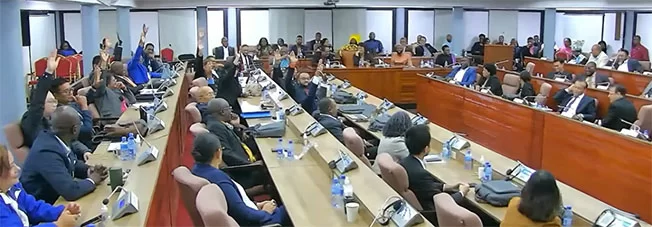
    In a significant address to the National Assembly on Friday, Assembly member Xiaobao Zheng of the Pertjajah Luhur party presented a comprehensive case for judicial reform, emphasizing the urgent need to strengthen Suriname’s rule of law framework. As co-initiator of the proposed measures, Zheng clarified that these reforms are institutionally focused rather than personally targeted, designed specifically to align the nation’s legal systems with international standards.

    The assembly member first addressed the proposed constitutional amendment recognizing indigenous peoples as Suriname’s original inhabitants. Zheng explained this amendment not only provides constitutional acknowledgment but also fulfills Suriname’s obligations under international treaties. “This constitutional change facilitates the national implementation of international commitments concerning the protection and recognition of indigenous peoples’ rights,” he stated.

    Zheng then turned to the introduction of cassation jurisprudence, highlighting how Suriname currently lags internationally with a judicial system that features only one appellate instance. Under the present structure, the Cantonal Court serves as the first instance while the Court of Justice functions as the appellate body. Zheng argued this structure is insufficient, noting that most international systems maintain at least two appellate instances. The proposed third judicial tier would review whether the Court of Justice has applied law correctly, thereby enhancing legal certainty and jurisprudential development.

    The proposal to establish a College of Attorney General also received detailed attention. Zheng stressed this initiative aims to holistically strengthen the Public Prosecutor’s Office rather than target any individual. He noted the Attorney General currently manages an extensive portfolio including criminal investigation, prosecution, sentence execution, leadership of the Public Prosecutor’s Office, and combating serious crime. “Concerns exist not only about excessive power concentration in a single Attorney General but also about an overwhelming accumulation of responsibilities within one office,” Zheng contended.

    The assembly member emphasized that prosecutorial independence is paramount, requiring judgments based solely on law and facts without political interference. To reinforce this independence and effectiveness, Zheng deemed a collective model essential. This approach would not only distribute workload more effectively but also improve the quality and continuity of the Public Prosecutor’s Office’s functioning.

    Zheng underscored that these proposed legal amendments form part of a broader rule of law reform package intended to strengthen Suriname both juridically and institutionally. He expressed openness to questions and further discussion regarding implementation feasibility but maintained that institutional strengthening constitutes the necessary first step, with subsequent legislative elaboration to follow.

  • Japan in sneeuwstorm naar stembus in verkiezingstest voor premier Takaichi

    Japan in sneeuwstorm naar stembus in verkiezingstest voor premier Takaichi

    Japanese voters are heading to the polls today in a snap winter election that could deliver a resounding victory for Prime Minister Sanae Takaichi, the nation’s first female leader, despite unprecedented snowfall threatening voter turnout across multiple regions.

    Current polling projections indicate Takaichi’s conservative coalition may secure over 300 of the 465 seats in the Lower House, significantly expanding from their current 233-seat holding. Should her Liberal Democratic Party (LDP) alliance with the Japan Innovation Party (Ishin) achieve 310 seats, they would gain the supermajority needed to override the opposition-controlled Upper House.

    The February election—only the third winter poll since World War II—represents a critical mandate-seeking opportunity for Takaichi, who assumed leadership in October. Her direct governing style and reputation as a diligent worker have resonated particularly with younger demographics, though historical turnout patterns show older voters traditionally form the LDP’s core support base.

    Takaichi’s policy platform has emphasized accelerated military spending to counter China’s influence—a stance that has heightened diplomatic tensions—alongside economic stimulus measures and tax reductions that have created volatility in financial markets. Her campaign pledge to suspend the 8% consumption tax on food for two years aims to alleviate household financial pressures exacerbated by the weak yen.

    Political analyst Seiji Inada of FGS Global notes that a substantial victory would provide Takaichi with enhanced political capital to implement her agenda, including comprehensive tax reforms.

    Complicating election dynamics, Thursday’s endorsement from former U.S. President Donald Trump may bolster Takaichi’s conservative base while potentially alienating moderate voters. Meanwhile, forecasted snowfall reaching 70 centimeters in northern and eastern regions has prompted campaign officials in affected areas like Nagaoka to encourage early voting.

    Voter participation, which historically ranges between 50-55%, could be further depressed by weather conditions, potentially amplifying the influence of organized voting blocs. Notably, the Buddhist-aligned Komeito party—previously in coalition with LDP but now aligned with center-left opposition forces—maintains strong connections with the 8-million-member Soka Gakkai organization.

    The electoral process encompasses 289 single-seat districts with remaining seats allocated through proportional representation. Polling stations will close at 8:00 PM local time, with media outlets expected to release immediate exit poll results.