标签: Suriname

苏里南

  • Asabina: Geen gelegenheidswetgeving, maar noodzakelijke versterking rechtsstaat

    Asabina: Geen gelegenheidswetgeving, maar noodzakelijke versterking rechtsstaat

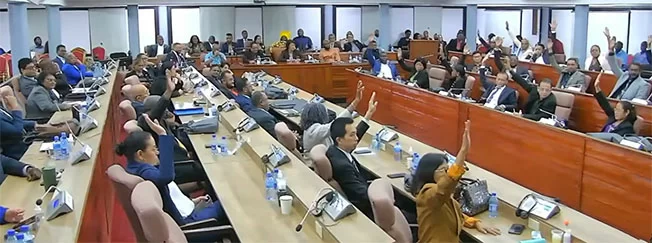
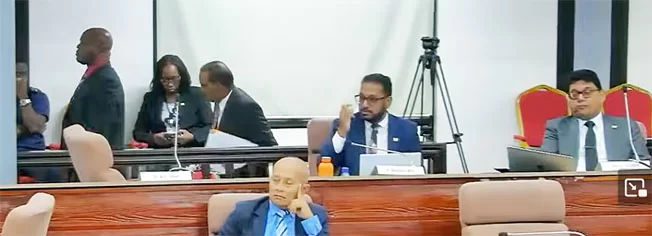
    In a significant address to the National Assembly on Friday, Ronny Asabina, co-initiator of Suriname’s judicial reform package and BEP representative, emphatically defended the proposed legislative changes as essential measures to reinforce the nation’s rule of law rather than undermine individuals or institutions. Asabina revealed that the preparatory phase left “nothing to chance,” involving extensive consultations with stakeholders, experts, and civil society actors.

    The parliamentarian expressed strong disapproval of what he characterized as a climate rife with “political games” and “false perceptions” surrounding the legislative debate. He specifically countered claims that the proposals aimed to relinquish “power over the Public Prosecutor’s Office and judiciary” or diminish the authority of the Attorney General. Despite the contentious atmosphere, Asabina acknowledged the process remained productive, with meaningful contributions emerging from multiple factions including opposition members.

    Central to Asabina’s argument was addressing societal concerns about damaged legal perception and unequal application of justice. He emphasized institutional strengthening as crucial for restoring public trust, particularly referencing whistleblowers and citizen expectations that justice should be tangibly experienced by all. The need for expedited processing times and clear resolution deadlines within the criminal justice system emerged as recurring discussion points, with Asabina warning against perceived differential treatment between theft and corruption cases.

    The proposed constitutional amendment recognizing indigenous peoples as original inhabitants held particular significance for Asabina, who shared personal experiences from interior communities questioning their Surinamese identity. He framed constitutional recognition as a matter of principle, noting Suriname’s international treaty obligations make such provisions legally defensible.

    Regarding the introduction of cassation jurisprudence, Asabina highlighted broad support for this additional legal review mechanism, noting Suriname lags behind other nations in judicial modernization. He clarified that while the constitutional provision is currently debated, the specific model selection remains open for discussion.

    The proposed College of Attorney General primarily aims to strengthen and restructure the Public Prosecutor’s Office through modernization, with expected benefits including efficiency, legal certainty, and improved checks and balances. Asabina stressed the importance of maintaining prosecutorial independence while acknowledging parliamentary support remains varied across proposal components.

    Addressing criticism about changing his position on the retirement age reduction from 70 to 65, Asabina defended the possibility of correction based on new insights, noting judicial willingness to discuss age limits.

    Concluding his address, Asabina emphasized that the process involves creating enabling conditions for improved legal protection rather than rushing to produce “ideal laws.” The initiators plan to pause after this round for further consultation with relevant actors, inviting all National Assembly members to share insights for developing a more broadly supported final product.

  • SVJ 35 jaar: van verdeeldheid naar professionele eenheid in de journalistiek

    SVJ 35 jaar: van verdeeldheid naar professionele eenheid in de journalistiek

    PARAMARIBO – The Suriname Association of Journalists (SVJ) celebrates its 35th anniversary on February 8, marking a transformative journey from deep professional divisions to unified advocacy for press freedom and ethical journalism.

    Founded in 1991 through the visionary efforts of journalist Nita Ramcharan, the SVJ emerged from the dissolution of two rival organizations: the Surinamese Journalists Circle (SJK) and the Association of Progressive Media Workers (VPM). This consolidation ended years of ideological conflict that had paralyzed collective action for journalists’ rights.

    The association’s creation responded to a dark period in Surinamese media history. The 1980s witnessed severe press suppression, including the 1982 murder of five journalists, arson attacks on Radio ABC, Radio Radika, and newspaper De Vrije Stem, followed by widespread censorship and media bans. These events created an atmosphere of fear and distrust that drove many journalists to flee the country.

    Under Ramcharan’s pioneering leadership as first chairperson, the SVJ established itself as an independent professional body committed to transcending political divides through journalistic ethics, professionalism, and press freedom advocacy.

    Over three decades, the SVJ has evolved into a cornerstone institution within Suriname’s media landscape, consistently defending journalists—members and non-members alike—against pressure campaigns while serving as a crucial dialogue partner with authorities.

    Current SVJ Chair Naomi Hoever, a 19-year journalism veteran who has led the organization for two years, identifies new challenges in the digital era. “With the emergence of social media, many now consider themselves journalists, threatening to overshadow the work of true professionals,” Hoever told Starnieuws.

    In response, the SVJ has initiated a landmark accreditation system to distinguish professional journalists. An accreditation committee comprising former SVJ chairs Wilfred Leeuwin (chair), Nita Ramcharan, and Ivan Cairo will distribute the first official press badges during anniversary celebrations to members meeting professional criteria.

    This accreditation represents more than administrative formalities—it establishes a quality marker identifying who practices journalism according to professional standards versus those who don’t. The initiative aims to restore authority, credibility, and respect for the profession amid growing concerns about misinformation, opinion disguised as news, and uncontrolled online publications.

    Thirty-five years after its founding, the SVJ again stands at a crossroads: where it once bridged ideological divisions, it now guards professional quality, maintaining that free, professional journalism remains indispensable to Suriname’s democratic institutions.

  • Bouva in  Dubai: Suriname zet in op regionale projecten voor toerisme, transport en sargassum

    Bouva in Dubai: Suriname zet in op regionale projecten voor toerisme, transport en sargassum

    Suriname’s Foreign Minister Melvin Bouva has led a diplomatic delegation to the 10th International Cooperation Conference of the Association of Caribbean States (ACS), held during the World Governments Summit in Dubai. The high-level gathering focused on enhancing collaborative frameworks between Caribbean nations and the MENA region (Middle East and North Africa).

    During the conference’s opening sessions dedicated to regional projects for 2026–2030, Minister Bouva strategically positioned Suriname as both a key partner and beneficiary of initiatives across three critical sectors: tourism development, coastal and river transportation systems, and sargassum seaweed management. The minister articulated how tourism diversification could stimulate economic transformation, emphasized Suriname’s geographic advantages for improved transport connectivity, and highlighted the necessity of scientific capabilities and coastal protection measures for sustainable development.

    On the second day, Bouva contributed to dialogues addressing urgent priorities for the Greater Caribbean region. He advocated for a collective approach to regional challenges, proposing that nations should move beyond raw material exports and instead leverage their natural resources, strategic locations, and cultural heritage as foundational elements for sustainable economic growth.

    Suriname’s participation underscored its commitment to economic strengthening through regional integration and international partnerships. The delegation noted that Suriname had hosted a previous edition of this conference in 2024, reinforcing its ongoing dedication to regional cooperation mechanisms.

  • Reyme: perceptie van klassejustitie ondermijnt rechtsstaat

    Reyme: perceptie van klassejustitie ondermijnt rechtsstaat

    In a comprehensive address to the National Assembly on Friday, Assembly member Steven Reyme (A20) articulated the critical necessity for immediate judicial reform in Suriname. As a co-initiator of the legislative package, Reyme emphasized that the proposed reforms target the fundamental structure of the nation’s judicial system rather than individual personalities or power dynamics.

    Reyme presented five compelling arguments for urgent judicial modernization. First, he highlighted the essential restoration of public trust, noting widespread perceptions of ‘class justice’ among citizens. “Without independent judges and equal rules for all, confidence will not return,” he asserted. Second, he stressed the economic imperative of legal certainty, particularly as Suriname develops its oil, gas, and tourism sectors, where predictable jurisprudence is prerequisite for foreign investment.

    Third, Reyme addressed the critical need for protection against political influence—both actual and perceived—stating that even the appearance of interference undermines judicial integrity. Fourth, he pointed to institutional professionalization and capacity building within a judiciary struggling with resource shortages, outdated structures, and limited career advancement opportunities. Finally, he emphasized future-proof legal development through cassation and consistent legal interpretation.

    The proposed reforms include constitutional amendments granting indigenous recognition as Suriname’s original inhabitants—a correction Reyme described as addressing historical omission rather than symbolic gesture. Other measures include appointing the Attorney General for life upon judicial advice, reducing the mandatory retirement age from 70 to 65 to encourage rejuvenation, and implementing fixed 30-day deadlines for judicial appointment recommendations to prevent delays.

    Regarding the introduction of cassation and a supreme court, Reyme expressed personal preference for a domestic High Council while remaining open to regional alternatives if they enhance legal quality and accessibility. He concluded by emphasizing the package’s institutional focus: “This legislation requires trust not in persons, but in institutions. We bear responsibility to leave a judiciary stronger than ourselves.”

  • Start ATC-opleiding voor versterking luchtvaart

    Start ATC-opleiding voor versterking luchtvaart

    Suriname’s Ministry of Transport, Communication, and Tourism (TCT) has inaugurated a specialized Air Traffic Controller (ATC) training program under the Basic Air Traffic Services (BATS) framework, marking a significant advancement in the nation’s aviation infrastructure. The initiative, launched on Friday, represents a strategic investment in enhancing safety protocols, operational continuity, and professional excellence within both domestic and international air transport systems.

    Thirteen candidates with prior practical experience in aviation operations have been selected for this comprehensive training curriculum. The Civil Aviation Safety Authority Suriname (CASAS) will oversee the entire program and conduct final assessments to certify participants’ mastery of essential knowledge and technical competencies. Successful graduates will qualify as Tower Controllers, with clear pathways for career progression to full Air Traffic Controller roles.

    Transport Minister Raymond Landveld emphasized during the opening ceremony that human capital development is fundamental to building a resilient and secure aviation industry. He noted that effective air traffic management is critical for supporting key economic sectors—including tourism, oil and gas, medical evacuations, and international connectivity—while also strengthening global confidence in Suriname’s airspace integrity.

    Concurrently, the ministry is advancing training for Aeronautical Information Services personnel, aligning with stringent International Civil Aviation Organization (ICAO) standards. These efforts collectively aim to bolster the international reputation and operational credibility of Suriname’s aviation sector, reinforcing its commitment to world-class safety and efficiency.

  • Bezorgdheid over Nutrilon-babyvoeding in Suriname na internationale terugroepactie

    Bezorgdheid over Nutrilon-babyvoeding in Suriname na internationale terugroepactie

    Health authorities across multiple nations have escalated a major recall of Nutrilon infant formula products after discovering potential contamination with cereulide toxin, sparking significant concern among parents in Suriname where the affected batches remain commercially available.

    The international recall initiative, originally initiated in European countries including the Netherlands, now encompasses various Nutrilon formulations specifically designed for infants. The products under scrutiny include Nutrilon Stage 1 and specialized AR variants intended for babies with reflux conditions. This regulatory action follows comprehensive evaluations identifying specific batches containing ARA fatty acid sourced from a particular supplier believed to be the contamination origin.

    Medical experts warn that cereulide exposure can trigger severe gastrointestinal complications in infants, particularly those under six months of age. Symptoms may include persistent vomiting, diarrhea, and abdominal discomfort, necessitating immediate medical attention if observed.

    In Suriname’s Wanica district, one concerned mother shared her apprehension with local media after discovering she possessed contaminated products. She has immediately discontinued usage and initiated contact with both the retail outlet where she purchased the formula and regional suppliers, though official guidance from distributors remains pending at this time.

    The Surinamese Ministry of Health has acknowledged the developing situation and is currently conducting its own assessment. Officials have indicated that formal public guidance regarding the recalled products will be issued shortly. Meanwhile, parents are advised to scrutinize batch numbers and expiration dates on all Nutrilon products and refrain from using any items matching the officially recalled batches circulating internationally.

  • Caricom stuurt waarnemersmissie voor parlementsverkiezingen in Barbados

    Caricom stuurt waarnemersmissie voor parlementsverkiezingen in Barbados

    The Caribbean Community (CARICOM) has initiated a comprehensive electoral monitoring initiative in Barbados ahead of the nation’s pivotal parliamentary elections scheduled for February 11, 2026. At the formal invitation of the Barbadian government, a specialized three-member observer delegation arrived on February 5th and will maintain presence through February 13th to ensure electoral integrity.

    This CARICOM Election Observation Mission (CEOM) comprises distinguished senior electoral officials from three member states: Antigua and Barbuda, Belize, and Jamaica. The mission is spearheaded by Ian S. Hughes, Supervisor of Elections from the Antigua and Barbuda Electoral Commission, with Josephine Tamai of Belize serving as deputy chief and Andrew Smith of Jamaica completing the core assessment team. Administrative and logistical support is being provided by staff from the CARICOM Secretariat.

    Since their arrival, the observers have engaged in substantive dialogues with senior police officials, the Barbados Christian Council, and media representatives. The mission’s agenda includes forthcoming high-level meetings with Prime Minister Mia Amor Mottley of the ruling Barbados Labour Party (BLP), opposition leader Ralph Thorne of the Democratic Labour Party (DLP), the Electoral and Boundaries Commission, and various civil society organizations.

    These consultations aim to evaluate the pre-electoral environment and assess the nation’s preparedness for the democratic process. On election day, the mission will conduct comprehensive monitoring of all procedural phases—from polling station operations and voting procedures to ballot counting and results declaration. The assessment will extend to post-election developments as well.

    Following the conclusion of voting but prior to departure, the mission will issue a preliminary statement containing initial observations about the electoral process. A detailed final report with comprehensive findings and recommendations will subsequently be presented to CARICOM Secretary-General Carla Barnett before public dissemination.

    Barbados, an island nation of approximately 287,000 inhabitants, has maintained parliamentary democracy since gaining independence in 1966. The 2026 elections represent a significant examination of the country’s democratic institutions under Prime Minister Mottley’s BLP administration. Mottley, who has governed since 2018, enjoys substantial popularity due to her policies promoting economic stability, climate action, and social development. Her international stature was enhanced during Barbados’ transition to a republic in 2021.

    Nevertheless, opposition leader Ralph Thorne remains determined to challenge the incumbent government, highlighting economic concerns and advocating for political alternation. The electoral process is being closely monitored by regional and international stakeholders given its implications for democratic governance in the Caribbean.

    CARICOM, established in 1973, continues to reinforce its commitment to regional cooperation and democratic strengthening through such observation missions, underscoring the organization’s dedication to electoral transparency and institutional confidence-building across member states.

  • Gedeeltelijke vergunningenstop voor kip uit vogelgriepgebieden

    Gedeeltelijke vergunningenstop voor kip uit vogelgriepgebieden

    Suriname’s Ministry of Agriculture, Livestock, and Fisheries (LVV) has implemented immediate temporary restrictions on imported poultry products from avian influenza-affected regions. Effective February 6, 2026, the ministry has suspended import permits for fresh chilled and frozen poultry meat originating from Europe and designated areas in America where bird flu outbreaks have been confirmed.

    Minister Mike Noersalim clarified that processed poultry products—including smoked chicken and heat-treated items—remain exempt from these restrictions and may continue normal importation. The partial licensing freeze will remain effective until affected countries regain official disease-free status for highly pathogenic avian influenza.

    Concurrently, Suriname has enhanced veterinary requirements for hatching egg imports from Europe. While cargo flights from the Netherlands have been temporarily suspended for egg transports, sea freight shipments remain permitted as an alternative channel.

    These preventive measures, grounded in legislative frameworks and technical advisories, aim to minimize disease introduction risks while maintaining import capabilities under modified conditions. The LVV Veterinary Service has identified alternative sourcing options including the United States and Brazil for hatching egg importers.

    Poultry industry representatives from the Suriname Poultry Sector Association (APSS) expressed concerns during emergency consultations with the ministry. The organization highlighted potential supply chain disruptions, noting that pre-ordered eggs already await shipment and longstanding supplier relationships could be compromised.

    Minister Noersalim emphasized that these measures prioritize national biosecurity rather than industry obstruction. Suriname currently produces approximately 40% of its domestic chicken consumption locally. A potential avian influenza outbreak could devastate the entire poultry sector, potentially forcing 100% import dependency—a scenario the government aims to prevent.

    The ministry proposed multiple alternatives to industry stakeholders:
    – Increased avian influenza testing frequency at Dutch export facilities
    – Transition to sea freight transportation for hatching eggs
    – Diversified sourcing from the United States and Brazil

    Long-term strategies emphasize increased local production and reduced import reliance, with LVV developing a comprehensive masterplan incorporating industry input. Future collaborations with disease-free countries will be explored to secure safer import channels.

  • Lahore viert heropleving van Basant festival na verbod van 18 jaar

    Lahore viert heropleving van Basant festival na verbod van 18 jaar

    The skies above Lahore, Pakistan, were transformed into a vibrant tapestry of color on Friday as the historic Basant kite festival returned after an 18-year prohibition. The traditional spring celebration marked its triumphant revival with thousands of participants flooding rooftops throughout the city’s historic Walled City and surrounding neighborhoods.

    The festival, banned in 2008 following fatal accidents caused by metal-coated kite strings, resumed following substantial public pressure and government intervention. Punjab’s Information Minister Azma Bukhari officially inaugurated the three-day event by launching the first kite at midnight, signaling the restoration of this cultural tradition.

    Enthusiastic crowds gathered on rooftops, beating drums and chanting the traditional victory cry ‘bo-kata!’ whenever a competitor’s string was severed. Abdul Aziz, 57, expressed profound fulfillment at the festival’s return, while Sharmeen Mehmood, 55, noted the nighttime activities represented the celebration’s peak moments.

    Authorities implemented stringent safety protocols including a complete ban on metal or chemically-coated strings, mandatory QR codes on all kites and strings for traceability, and safety poles required for motorcyclists. Over 4,600 manufacturers have registered to legally sell festival materials, and rooftops hosting more than 30 celebrants must obtain official registration, with dozens already closed following inspections.

    The festivities were somewhat overshadowed by a suicide bombing in Islamabad that claimed at least 31 lives, prompting the cancellation of a concert scheduled as part of Basant celebrations.

    Economically, the festival has generated significant activity, with hotels at full capacity and families enjoying elaborate meals. According to district government spokesperson Haris Ali, kite sales had already exceeded 3 billion rupees (approximately $10 million) by Thursday evening. Demand for poultry reached levels comparable to the major Muslim festival of Eid-ul-Fitr.

    At Mochi Gate, Pakistan’s largest kite and string market, supplies were rapidly depleted. Kite enthusiast Zubair Ahmed reported selling his entire stock within two days, noting unprecedented customer demand despite higher prices.

  • CBvS-verslag 2025: Economie groeit beperkt; druk overheidsfinanciën en inflatie neemt toe

    CBvS-verslag 2025: Economie groeit beperkt; druk overheidsfinanciën en inflatie neemt toe

    Suriname’s economy demonstrated modest expansion during the second quarter of 2025, though significant vulnerabilities persist due to mounting inflationary pressures, deteriorating fiscal balances, and an increasingly precarious debt situation. According to the Quarterly Report 2025 released by the Central Bank of Suriname (CBvS), the economy grew by 0.6%, representing a slight deceleration compared to the same period in 2024.

    The growth was primarily driven by performance in trade, transportation, and hospitality sectors. Conversely, industrial production, mining operations, and agricultural activities contributed negatively to economic output. This decline was largely attributable to reduced gold production and diminished round timber harvesting during the period.

    Inflationary pressures reemerged as a critical concern, with quarter-end inflation reaching 3.6% while average inflation stood at 2.4%. The depreciation of the Surinamese dollar, coupled with increased costs for food, transportation, water, and cooking gas, served as primary drivers of price increases. Adverse weather conditions, including persistent rainfall, further exacerbated food price inflation. The central bank anticipates continued inflationary pressure throughout the third quarter of 2025, with recent data indicating a rise from approximately 10% at end-December to 11.4%.

    Fiscal metrics revealed concerning developments as government revenues totaled SRD 12.8 billion against expenditures of SRD 15.2 billion, resulting in an overall budget deficit of SRD 2.4 billion. The primary deficit reached SRD 782.5 million. While revenue generation improved through enhanced tax collections, expenditure growth outpaced revenue increases—primarily fueled by personnel costs, subsidy programs, and election-related spending. Temporary purchasing power measures for civil servants and pensioners significantly contributed to this expenditure growth.

    The national debt burden escalated to SRD 140.6 billion, equivalent to 95.8% of GDP according to national definitions. Notably, over 80% of this debt is denominated in foreign currencies, creating substantial exposure to exchange rate fluctuations.

    In response to these challenges, the CBvS implemented significant interest rate reductions during the quarter to manage high financing costs. While OMO rates declined substantially, the transmission to lower commercial lending rates remained limited. Simultaneously, excess liquidity within the banking system increased markedly, complicating monetary policy implementation.

    The central bank’s outlook remains cautious, emphasizing that without structural reforms and improved expenditure management, inflationary pressures, debt accumulation, and budgetary constraints will persist through subsequent quarters. CBvS officials underscored the critical importance of fiscal discipline and economic stability, particularly as the country approaches the post-IMF program period.