One of the most anticipated cross-border infrastructure projects connecting two South American neighbors, Guyana and Suriname, has hit an unexpected point of disagreement after Suriname announced a sudden policy shift that Guyana’s top leader says he had no advance knowledge of.
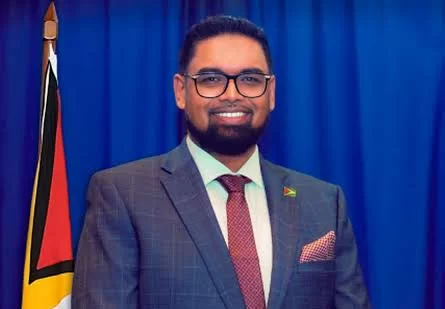
In an exclusive interview with local Guyanese media outlet Demerara Waves on Tuesday, Guyanese President Irfaan Ali confirmed that he had not been informed of the Surinamese government’s decision to fund and execute the planned Corantijn River Bridge entirely on its own. “That is news for me,” Ali told the outlet.
The bombshell announcement came one day earlier, when Suriname’s Minister of Public Works and Spatial Development Stephen Tsang told the country’s National Assembly during budget deliberations that the administration had formally approved a 100% domestic funding plan for the cross-border infrastructure. Tsang noted that a new tender will likely be required depending on what funding structure Suriname ultimately selects, adding that multiple financing models — including a toll-based system — are currently under review. “The fact is that this must and will be a Surinamese bridge,” Tsang emphasized in his address to lawmakers.
Ali pushed back on the sudden policy change, stating he is still operating under the terms of the most recent agreement he reached with Surinamese President Jennifer Simons. According to Ali, Simons recently told him that her administration was finalizing its portion of the joint agreement, while Guyana had already wrapped up all required preparations on its side.
The Guyanese president made clear that his government remains fully committed to the original bilateral framework for the project. “We are only interested in one thing, and that is the joint development of the bridge. That has been the agreement since day one,” Ali said. The statement suggests Guyana’s capital Georgetown does not yet recognize Tsang’s announcement as an official change to the Surinamese government’s official position.
Tsang’s comments came in response to questions from opposition VHP parliamentary leader Asis Gajadien, who asked for an update on the status of the project. Gajadien pointed out that the previous Surinamese administration had already launched an initial tender process for the bridge, and pressed for details on current bilateral agreements with Guyana, as well as whether the new funding approach would require restarting the procurement process. Tsang confirmed that a new tender would be a likely outcome pending the final funding model.
Long hailed as a transformative regional infrastructure project, the Corantijn River Bridge is designed to replace the existing ferry connection between South Drain in Suriname and Moleson Creek in Guyana. The project is expected to boost bilateral trade, expand cross-border tourism, and deepen regional integration between the two neighboring countries. As recently as September last year, during the first official meeting between Simons and Ali, both heads of state reaffirmed their shared commitment to accelerating the construction of the bridge. In a joint statement released after that meeting, they highlighted the project’s “transformative potential” to improve connectivity, expand economic opportunity, and strengthen people-to-people exchanges between Guyana and Suriname.