标签: Guyana

圭亚那

  • Legal minds explore age 18 limit for full social media access

    Legal minds explore age 18 limit for full social media access

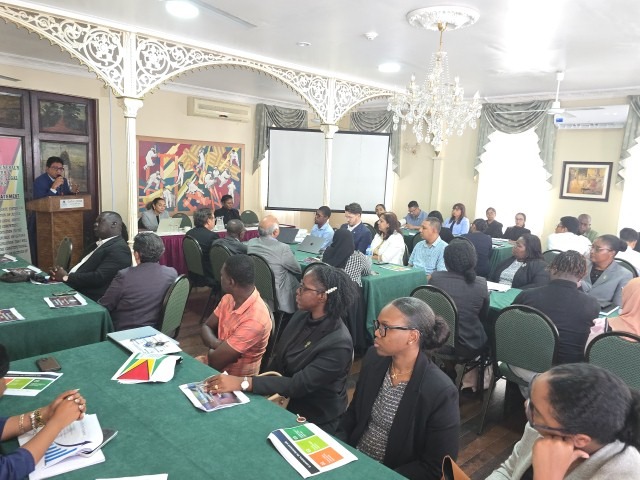
    On a recent consultation hosted by Guyana’s Attorney General’s Chambers focused on social media’s impact on children, top legal officials and regional stakeholders have laid out competing perspectives and actionable proposals for regulating underage access to major social platforms, kicking off a public drafting process for new national legislation.

    The gathering, which brought together senior judiciary figures, government legal advisors, private attorneys and Caribbean Community (CARICOM) representatives, centered on balancing two core priorities: protecting developing minors from well-documented harms of unregulated social media use, and avoiding unnecessary barriers to young people’s digital development in an increasingly connected global economy.

    Opening the evidence-based discussion, Chief Justice Navindra Singh made a forceful case for setting the minimum age of unmonitored independent social media access at 18, grounding his proposal in developmental neuroscience. Singh pointed to established research showing that the human brain does not complete its full structural and cognitive development until around age 25. For young people between 12 and 17, he explained, the brain is still maturing its socio-emotional regulation system, a period marked by heightened sensitivity to social reward, increased vulnerability to peer pressure and stress, and a greater tendency toward impulsive risk-taking. “That’s particularly one of the problems with social media,” Singh noted. “It pushes these children to do nonsense.”

    Beyond a hard age cap, Singh proposed that minors should be restricted to education-focused discussion platforms and structured communication tools linked to schools and parent-monitored learning networks, rather than open commercial social platforms such as TikTok. Attorney General Anil Nandlall, leader of the government’s law reform initiative, echoed the core principle that regulation must apply to all people under 18, clarifying that the incoming framework would not impose a one-size-fits-all foreign model, nor would it include intrusive home enforcement by police. Compliance, he emphasized, would rest with parents, elders and community guardians acting in the best interest of children.

    Deputy Chief Parliamentary Counsel Joann Bond framed the consultation as a response to a growing global movement toward minor digital protection, noting that Guyana is already obligated to safeguard children under its own constitution and the UN Convention on the Rights of the Child. She highlighted that other nations have already advanced binding regulation: the United Kingdom has implemented a ban on social media use for children under 16, Brazil has enacted a comprehensive Digital Statute for Children and Adolescents, and China operates a nationwide system of dedicated youth modes for digital platforms. Bond also outlined the range of harms that regulation seeks to address, including rising youth mental health concerns, impaired cognitive and interpersonal development, cyberbullying, online harassment, grooming and sexual exploitation, unfiltered exposure to violent or inappropriate content, and intentionally addictive platform design engineered to keep young users engaged for hours.

    Former Chancellor of the Judiciary Carl Singh added a key complementary proposal, arguing that legislative reform must be paired with widespread public education for parents. While regulation can set clear boundaries, he noted, “One of the things I believe that is important, which we can’t legislate on, but I would respectfully urge is an aggressive education and awareness program for parents.” He emphasized that not all digital platforms are inherently harmful, noting many offer meaningful educational benefits for young users, making targeted parental guidance more effective than blanket restrictions.

    Regional perspectives brought key practical challenges to the table. CARICOM General Counsel Justice Lisa Shoman pushed for inclusion of regional youth voices in the drafting process, calling for formal engagement with the Caribbean Regional Youth Council to secure youth buy-in. Shoman emphasized that protection must not come at the cost of young people’s ability to participate in the digital economy: “In terms of digital transformation and the digital economy that we must all develop… protecting our children and minors is protecting them, yes, but not at the expense of retarding their own development in this digital future that we are expecting them to be able to operate in.”

    Most critically, Shoman flagged a major structural barrier to enforcing any local regulation: the relatively small combined market size of Caribbean nations may give large global social media platforms little incentive to comply with individual national domestic laws. “Australia, the U.K., the U.S., China, these are markets. We in the Caribbean, I don’t even know if we, all of us together, would give rise to a market,” she said. But she added that this challenge is not insurmountable, urging coordinated collective action across CARICOM and knowledge sharing with nations that have already successfully implemented regulation. Shoman also echoed a proposal from prominent intellectual property attorney Teni Housty that called on local internet service providers to assist with enforcement, by blocking access to restricted content within Guyana’s jurisdictional borders. Housty noted that platforms already routinely geoblock content based on national jurisdiction using IP address tracking, making this a feasible first step toward enforcement. Nandlall confirmed that global platform operators will be consulted as the legislation develops, and Shoman added that framing regulation as a child protection measure can help build goodwill from platforms eager to demonstrate corporate social responsibility.

    Enforcement mechanisms were further debated by other legal experts. Government consultant Attorney Darshan Ramdhani proposed that regulations require large social media platforms to maintain a registered physical office within Guyana, making them legally vulnerable to domestic service of process and enforcement action. Meaningful penalties, including content suspension and full platform blocking, would need to be written into law to ensure compliance, Ramdhani argued, a point Nandlall acknowledged as a critical component of upcoming legal policy.

    Stakeholders also pushed for flexibility in setting age limits. Attorney Emily Dodson proposed that the University of Guyana conduct a national public survey to gauge majority public support for a regulatory age, ensuring the final law reflects public priorities. Retired Justice Kenneth Benjamin, head of the University of Guyana’s Department of Law, urged against a rigid “carte blanche” age ban, noting that children mature at different paces, and many academically advanced 16- and 17-year-olds already access higher education and rely on digital tools for their studies. He called for the law to include targeted exceptions for younger mature users.

    As the consultation concluded, Nandlall confirmed that once an initial draft of the legislation is completed, a second round of public consultation with the legal profession and broader stakeholders will be held before the bill is finalized.
  • Second Venezuelan charged in AK-47s bust

    Second Venezuelan charged in AK-47s bust

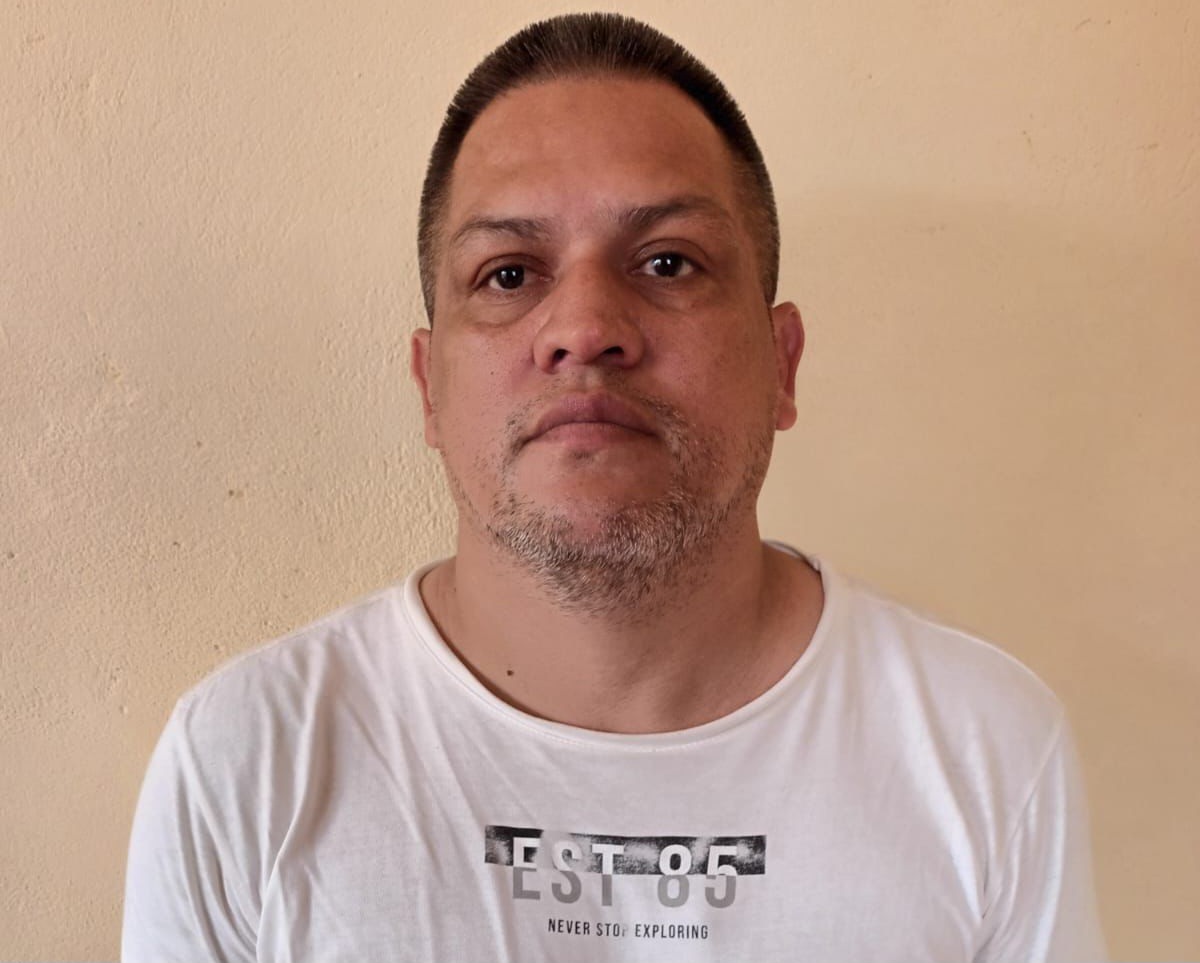
    On Monday, June 22, 2026, Guyana law enforcement announced that a second Venezuelan national has been formally charged and remanded to custody in connection with a major illegal arms seizure earlier this month that uncovered 23 AK-47 assault rifles.

    The accused individual is 54-year-old Juan Felipe Gonzalez, a resident of Tuschen Housing Scheme located on Guyana’s East Bank Essequibo. According to official statements from the Guyana Police Force, Gonzalez faces one count of Conspiracy to Commit a Felony, a charge brought under Section 33 of the country’s Criminal Law (Offences) Act, Chapter 8:01.

    The charge stems from an ongoing multi-agency investigation into the unauthorized possession of firearms and ammunition, an incident that was first uncovered on June 11, 2026, in Schoonard, a community on Guyana’s West Bank Demerara. Gonzalez was taken into law enforcement custody one week after the initial seizure, on June 18, 2026, and appeared before Magistrate Rhondell Weaver at the Wales Magistrate’s Court this Monday to hear the formal charges read.

    Court procedures saw Gonzalez not required to enter a plea at this stage of proceedings. Requests for bail were rejected by the court, and Gonzalez was immediately remanded to prison to await further action in the case. The legal matter has been adjourned until July 14, 2026, when a progress report on the investigation is scheduled to be submitted to the court.

    Gonzalez is the second person to face charges connected to this high-profile arms cache. The first suspect, 27-year-old construction worker Jonathan David Gans, a resident of Great Diamond on East Bank Demerara, was arrested on the same day the cache was discovered. Gans has already been charged with two separate offenses: possession of an unlicensed firearm and possession of unlicensed ammunition.

    The illegal arms stockpile, which included 23 fully automatic AK-47 assault rifles alongside more than 500 rounds of matching ammunition, was seized during a coordinated joint operation conducted by the Guyana Police Force and the Customs Anti-Narcotics Unit, launched to target illicit contraband smuggling in the region.

  • Ali woos Jamaican business executive to build a Sandals eco-hotel in Guyana

    Ali woos Jamaican business executive to build a Sandals eco-hotel in Guyana

    During a public appearance Saturday marking the launch of a new automotive joint venture, Guyanese President Irfaan Ali made a direct public appeal to Adam Stewart, Executive Chairman of Jamaica-headquartered hospitality giant Sandals Resorts International, to develop a luxury all-inclusive eco-tourism resort in Guyana. In his remarks, the president emphasized that local private sector stakeholders are already prepared to commit an initial $15 million in joint investment to back the project.

    Ali framed the potential Guyanese venture as a historic opportunity for the Sandals brand, arguing that locating the resort in Guyana would create the brand’s top-tier eco-tourism destination that no competing property could match. “You will be doing your brand a great disservice if you don’t draw on the bold capacity I know your brand carries to make the best possible investment decision Sandals has ever made,” Ali said during the event. “That decision is to work with our private sector as partners in creating Sandals’ number one eco destination, all-inclusive resort here in Guyana. I can assure you that none will come close to you.”

    The meeting came ahead of the official opening of CAMS Motors, a new automotive dealership that operates as a joint venture involving Stewart’s ATL Group, the parent company of ATL Automotive. Stewart confirmed during the event that Ali has actively lobbied for Sandals to enter Guyana’s fast-growing hospitality sector, and while the discussions remain in early stages, he has not ruled out moving forward with the project.

    “As I arrived here, we were here to sell cars, but the president reminded me that one of these days we need to build a hotel down here, and I want to follow suit,” Stewart explained. “That’s not a public service announcement just yet. It’s a ‘we love the idea of it’.”

    Ali noted that the pitch to Sandals is the continuation of conversations that began roughly one year ago, when he first floated the concept of Sandals entering Guyana’s tourism market. He added that Guyana’s private sector has already demonstrated robust confidence in the country’s tourism growth trajectory, having completed construction on more than 14 new hotels across the country in recent years to accommodate rising visitor demand tied to Guyana’s expanding oil sector and growing global profile as a biodiversity and eco-tourism hotspot.

  • ‘Prepare to target the Cuban market’- President Ali tells Guyanese, Jamaican business executives

    ‘Prepare to target the Cuban market’- President Ali tells Guyanese, Jamaican business executives

    On Saturday, June 20, 2026, just 48 hours after Cuba unveiled a landmark package of market-oriented economic reforms that open the door to expanded private sector activity and increased foreign investment, Guyana’s President Irfaan Ali has called on the country’s domestic private sector to seize the emerging regional opportunity by building local vehicle assembly lines. Speaking at the Georgetown launch event for Chinese vehicle brands Foton and Jetour, hosted by local automotive firm CAM Motors, Ali urged the newly formed joint venture between CAM Motors, Jamaica’s ATL Automotive, the Continental Group of Companies, and Guyana-based MMKJ Inc to move forward with establishing a regional assembly hub on Guyanese soil.

    Ali told attendees that he has already tasked MMKJ Inc director Vishok Persaud and his team with conducting a feasibility study to turn Guyana into a central assembly base for the growing range of new vehicle brands entering the Caribbean market. “We have the capacity to support full-scale assembly lines, and we can hit the critical market mass we need if we collaborate to scale up our regional footprint,” Ali said. “We have to look ahead – Cuba is opening its economy, and Haiti is also moving toward reopening its markets, which creates massive new demand we can meet from here.”

    Beyond the newly opening Caribbean markets, Ali noted that the hub could also tap into underutilized demand in neighboring northern Brazil and the Dominican Republic, a large Spanish-speaking Caribbean economy that offers additional growth opportunities. To set the stage for these investments, he emphasized that the Guyanese government has already put in place a supportive ecosystem for manufacturing and assembly, including investor-friendly regulatory policies, competitive tax structures, low energy costs, accessible digital infrastructure, and direct government backing for new industrial projects.

    Ali framed the assembly hub initiative as a core part of Guyana’s long-term economic strategy to diversify beyond its booming oil and gas sector, building a more resilient and sustainable economy that generates broad-based growth beyond the energy industry. “This is the kind of transformative project that will carry our economy past reliance on oil and gas, and move us solidly into long-term, inclusive sustainability,” he said.

    Cuba’s reform package, announced by President Miguel Diaz-Canel on June 18, 2026, represents the most sweeping opening of the Cuban economy in decades, rolled out in response to years of economic pressure and mounting external challenges. As reported by Al Jazeera, the plan expands permitted private enterprise activity across multiple sectors, introduces new measures to attract foreign direct investment – including investment from Cuban nationals living abroad – paves the way for private real estate development, allows for the conversion of state-owned enterprises into privately held shareholding companies, and permits private banks to enter a financial sector that has long been exclusively state-controlled.

    Persaud, the MMKJ director, confirmed that the joint venture is committed to supporting Guyana’s local content goals, beyond just building out vehicle assembly infrastructure. The partnership will not only deliver after-sales support and service for vehicle owners across the country, but also act as a domestic partner to embed local participation across the automotive supply chain. “This project lets us fully deliver on our local content legislation, expand domestic private sector participation, and ensure that Guyanese businesses get to take part in every layer of this growing industry,” Persaud said.

    Ali added that shifting domestic consumer demand in Guyana already creates a strong foundation for a new vehicle assembly sector. Rising incomes have left more Guyanese with greater disposable income, driving a steady shift away from imported used Japanese vehicles toward brand-new cars and commercial vehicles. “We are already seeing a rapidly expanding market for new vehicles among both private consumers and domestic businesses, that demand is only going to grow as our economy expands,” he noted. To support this market shift, the Guyanese government already eliminated the 14 percent Value Added Tax on vehicles with engine sizes of 1500 CC and larger earlier this year, cutting purchase costs for consumers and stimulating new vehicle sales.

  • Region 3 accounts dept staff to face suspension for missing 10-day salaries

    Region 3 accounts dept staff to face suspension for missing 10-day salaries

    A major administrative shakeup is unfolding in Guyana’s Region Three (West Demerara-Essequibo Islands), where four accounting department employees are set to begin unpaid suspension Monday amid a delayed police probe into the disappearance of GY$2.3 million earmarked for National Pathway worker salaries, a senior regional official has confirmed.

    Region Three Chairman Sheik Mohamed Inshan Ayube told reporters the missing funds were intended for more than 50 program participants, each set to receive a GY$40,000 payment in March 2026. According to the official’s account, after counting and securing the full cash sum in a locked accounting cage ahead of disbursement, the responsible staff left the facility for a midday meal, only to return and find the money no longer located.

    Ayube clarified that the four implicated female employees have already fully restituted the missing sum, ensuring the eligible workers received their scheduled payments without disruption. The staff were initially reassigned to other non-financial roles while the regional administration awaited completion of a police investigation. With the probe dragging on past expected timelines, however, the administration has moved forward with unpaid suspensions that will remain in effect until law enforcement issues a formal, conclusive finding. Any staff members ultimately cleared of wrongdoing will be reinstated to their original positions and receive back pay for the suspension period, Ayube added.

    The current cash-based disbursement process sees the regional administration receive a lump-sum cheque for National Pathway salaries, which is then cashed, split into individual envelope amounts, and distributed directly to workers. This practice has now come under sharp criticism from opposition lawmaker Ganesh Mahipaul of A Partnership for National Unity (APNU), who has formally requested the Auditor General of Guyana launch a full independent audit into the incident.

    In his formal request, Mahipaul called for a comprehensive review of how the program funds were allocated, distributed, and managed, with final findings released through official oversight channels. The opposition MP stressed that any financial irregularities must be addressed quickly, with systemic fixes implemented to prevent similar losses of public money in the future. Speaking to Demerara Waves Online News, Mahipaul questioned how such a large sum could go missing under standard financial protocols, arguing that the case almost certainly points to failures in existing accounting and security practices that rely on liquid cash.

    Mahipaul argued that cash disbursements are an unnecessary and high-risk practice in the current policy context, noting that all Guyanese citizens are already required to hold bank accounts to access the government’s universal GY$100,000 cash grant. Switching to individual cheque payments or direct bank transfers would create a mandatory paper trail, he said, that would greatly reduce the risk of misappropriation or loss and make it far easier to trace irregularities when they do occur.

    In response, Chairman Ayube defended the longstanding cash policy, pointing to significant barriers for workers in remote and riverain communities across Region Three. For these residents, traveling to a commercial bank branch to cash a salary cheque represents a major logistical and financial burden that the regional administration seeks to avoid. Ayube noted that the regional government will open discussions with the Ministry of Local Government and Regional Development to review the disbursement model moving forward, in light of the recent incident.

    Mahipaul emphasized that the disappearance of funds intended for vulnerable program participants raises serious questions about public financial management. The incident demands urgent, thorough scrutiny to clarify the full circumstances, verify whether required financial protocols were followed, and assign accountability where wrongdoing is found, he said. Public trust in government anti-poverty and employment programs, Mahipaul added, depends entirely on transparent processes, robust independent oversight, and responsible stewardship of taxpayer resources.

  • Alphonsos, Azruddin Mohamed in row over gold mining rights at quarry concession

    Alphonsos, Azruddin Mohamed in row over gold mining rights at quarry concession

    A high-stakes legal and territorial conflict over overlapping land rights for gold and quarry mining has erupted in Guyana’s Itaballi, Mazaruni district, pitting prominent local business and political figure Azruddin Mohamed against the long-established family-owned Alphonso Mining firm. The dispute, which dates back years, burst into public view in mid-June 2026 after Mohamed filed a formal complaint alleging Alphonso Mining had deployed mining equipment to conduct unauthorized gold extraction on a quarry concession he controls.

    In an official statement released Saturday, Alphonso Mining forcefully rejected all of Mohamed’s claims of illegal trespass, asserting it has held fully valid legal rights to extract gold and diamonds from the disputed plot for more than a decade. According to the company, Alfro Alphonso & Sons acquired the subsurface mineral rights to the land in 2014 through an open, competitive public auction, paid all required fees in full, and has continuously maintained those rights ever since. The firm emphasized that Guyanese law explicitly allows for separate and coexisting mineral rights and quarry material rights, noting that the later quarry license issued to Mohamed’s company Hadi’s World Inc. does not override its pre-existing, legally held mining rights. Alphonso Mining also announced it plans to pursue legal action over what it calls “false and deliberately damaging statements” published on social media pages connected to Mohamed.

    Guyana’s Minister of Natural Resources Vickram Bharrat confirmed the government has launched an official probe into the conflicting claims. Speaking to Demerara Waves Online News, Bharrat said the Guyana Geology and Mines Commission (GGMC) has deployed an inspection team to conduct an on-the-ground physical survey of the area, with officials currently cross-checking documentation to verify whether all required permits are in order for operations on the site. The minister reaffirmed the country’s existing legal framework that permits separate mineral and quarry rights to be held on the same parcel of land.

    Mohamed, who serves as Guyana’s Opposition Leader and heads the We Invest in Nationhood (WIN) political party, acknowledged he is aware that Guyanese law allows for overlapping mineral and quarry rights, but claims he had no prior knowledge that any third party held valid mineral rights to his concession area. “I am not aware of anyone having mineral rights. How all of a sudden persons have mineral rights?” he told reporters, questioning how the rights were granted without his knowledge.

    Mohamed’s company secured its quarry license for the site in June 2021, and has since invested nearly US$25 million to dredge the shallow Mazaruni River channel to allow access for mining barges. However, his operations have been crippled since June 2024, when the U.S. Department of the Treasury’s Office of Foreign Assets Control (OFAC) imposed sanctions on Azruddin Mohamed and his father over alleged financial crimes linked to their gold export business. The pair have since been indicted by a U.S. federal grand jury and are currently fighting extradition proceedings in Guyanese courts.

    Since the sanctions were imposed, Mohamed says he has been unable to continue production because the licensed importer for mining explosives refused to process his payments from the U.S.-based supplier. He also claims the GGMC has declined to accept future concession payments from him due to the sanctions, an odd contrast he notes to the Guyana Revenue Authority and Attorney General’s Chambers, which have continued to accept his payments.

    The timeline of the incursion, per Mohamed’s account, began after he was forced to move his heavy machinery off-site once he could not acquire explosives, leaving the concession’s infrastructure unprotected. A group of small-scale miners, including local Indigenous Amerindian miners, began mining on the unoccupied land without Mohamed’s permission. After local contacts alerted him to the unauthorized activity, he requested government intervention, prompting the ruling PPP administration to deploy a 50-member armed task force made up of personnel from the GGMC, Guyana Police Force, Guyana Defence Force, and Ministry of Natural Resources to arrest the small miners and bring charges against them.

    It was after this intervention that Mohamed discovered Alphonso Mining had moved its own gold mining equipment onto the concession, triggering the current public dispute. Mohamed warned that the gold mining operations planned by Alphonso Mining pose a major risk of toxic pollution to the Mazaruni River and adjacent agricultural farmlands in the area.

    Alphonso Mining, for its part, is calling on the GGMC and other relevant authorities to launch a separate investigation into what it frames as illegal incursion by the small miners. The firm says key unanswered questions remain: who supported or funded the small miners’ entry to the site, and who purchased the illegally extracted gold from the area. “These are the real questions that deserve answers,” the company stated.

    The dispute also carries tangential links to Guyana’s growing offshore oil sector. Mohamed was once a partner in NRG Holdings, a consortium that included the Alphonso and Deygoo-Boyer families, to develop the US$300 million Vreed-en-Hoop Shorebase, which is contracted by ExxonMobil to support production at the oil major’s Yellowtail offshore oilfield. After news of potential U.S. sanctions against Mohamed broke, Hadi’s World exited the project.

  • Gold miners being asked to build large high-tech Guyanese mining company-Ali

    Gold miners being asked to build large high-tech Guyanese mining company-Ali

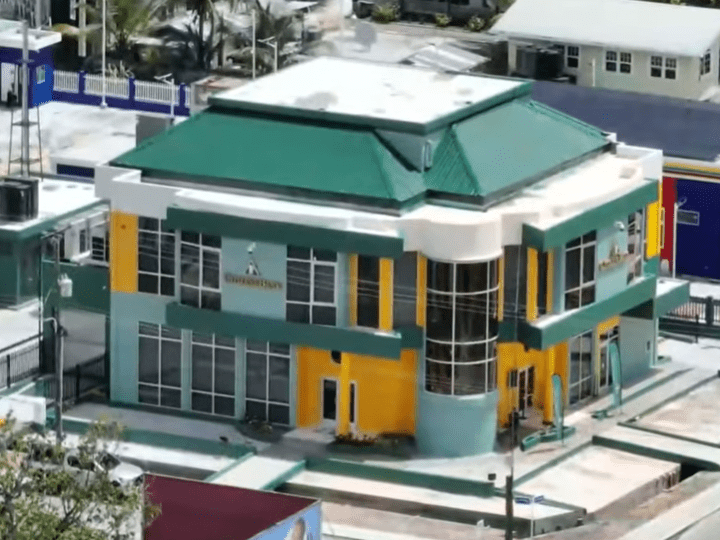
    On June 19, 2026, Guyanese President Irfaan Ali used the official commissioning ceremony for Citizens Bank Guyana’s newly renovated Bartica branch to announce a landmark national economic initiative: the formation of the country’s first large-scale domestic gold mining consortium, uniting large, medium, and small local miners under a single Guyanese-owned entity.

    Speaking to attendees at the Bartica event, President Ali emphasized that the consortium marks a strategic shift toward local control of Guyana’s critical gold sector. Rather than ceding large-scale mining opportunities to international operators, the government is supporting the unified group to acquire cutting-edge mining technology, complete required technical planning, and build a globally competitive gold company fully owned and operated by Guyanese citizens. The President added that the initiative will also expand access to financial services across the mining sector, driving deeper financial inclusion for small-scale operators who have historically been sidelined by unequal industry dynamics. He also voiced frustration over reports that larger, established mining operators have been exploiting small-scale local miners, a problem the consortium is designed to address.

    The ceremony also brought announcements of expanded collaboration between the Guyanese government and Citizens Bank, one of the country’s leading financial institutions. President Ali confirmed that the bank has agreed to open a dedicated service desk at the government’s regional service center in Kamarang, to better serve residents of the Upper and Middle Mazaruni region. In turn, the government is in active negotiations to place a development bank service desk and an Electronic Identification Card processing desk at the newly commissioned Bartica branch, bringing critical public services closer to regional residents.

    President Ali also provided an update on the proposed Guyanese Diaspora Bond, a financial instrument designed to give Guyanese living overseas the chance to invest in key domestic development projects including fertiliser production facilities, gas bottling plants, agricultural expansion, and national infrastructure upgrades. During a previous address on May 26, 2026, President Ali had stated the bond would launch within seven days, but no new launch timeline was shared during Friday’s event.

    Eton Chester, Managing Director of Citizens Bank Guyana, used the commissioning to outline the branch’s longstanding role driving regional economic growth. First established 26 years ago in a small, cramped facility, the branch has now relocated to a purpose-built ultra-modern facility that opened to the public in April 2026. Over its 26 years of operation, the Bartica branch has disbursed more than GY$5.5 billion in loans to local individuals and businesses, financing home purchases, small business expansion, transportation fleets, mining and industrial equipment, and other productive investments across Region Seven (Cuyuni-Mazaruni). Nearly GY$1.8 billion of that total lending has been issued in just the past five years alone, a trend Chester says reflects the accelerating pace of economic activity across the resource-rich region. Today, the expanded branch serves 7,000 total customers and has grown its local staff complement from 9 to 17 employees to meet rising demand for financial services.

  • Mining district roads will be fixed after rain eases- Natural Resources Minister

    Mining district roads will be fixed after rain eases- Natural Resources Minister

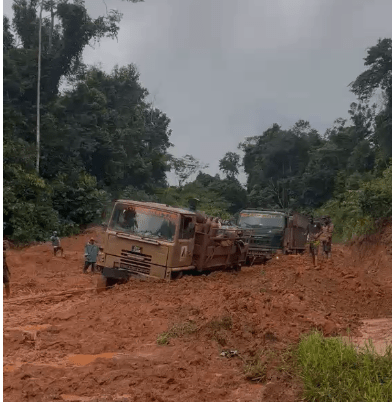
    As of Friday, June 19, 2026, Guyana’s government has formally committed to repairing severely damaged road infrastructure in key mining regions once the ongoing period of extreme heavy rainfall comes to an end, according to Natural Resources Minister Vickram Bharrat.

    In an interview with local outlet Demerara Waves Online News, Bharrat confirmed that President Irfaan Ali has already assembled a multi-agency assessment committee tasked with laying the groundwork for the upcoming repairs. The cross-ministerial working group includes representatives from the Ministry of Natural Resources, Ministry of Public Works, Ministry of Agriculture, Ministry of Amerindian Affairs, and the Ministry of Local Government and Regional Development, ensuring coordinated action across all relevant sectors.

    Bharrat emphasized that large-scale repair work is unfeasible while precipitation remains heavy, telling reporters, “It’s too much to do during the rainy season but it will be fixed after the rain.”

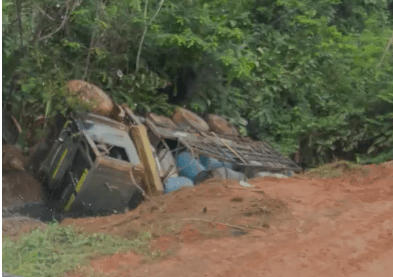
    The government’s announcement comes in direct response to an urgent public appeal from the Guyana Gold and Diamond Miners Association (GGDMA), which has raised alarms over the growing threat to national gold output at a time when global gold prices are at a high. The industry body reports that countless roads and navigable waterways across major gold mining zones have become completely impassable due to weeks of excessive rainfall.

    While the association has not yet released a concrete numerical projection for how the poor conditions will cut into production, GGDMA Managing Director Avalon Jagnandan warned that continued bad weather and delayed road repairs will almost certainly deliver a measurable blow to output. “Miners would not be able to properly access their work grounds and get key supplies in their camps. These will certainly hinder production,” Jagnandan explained.

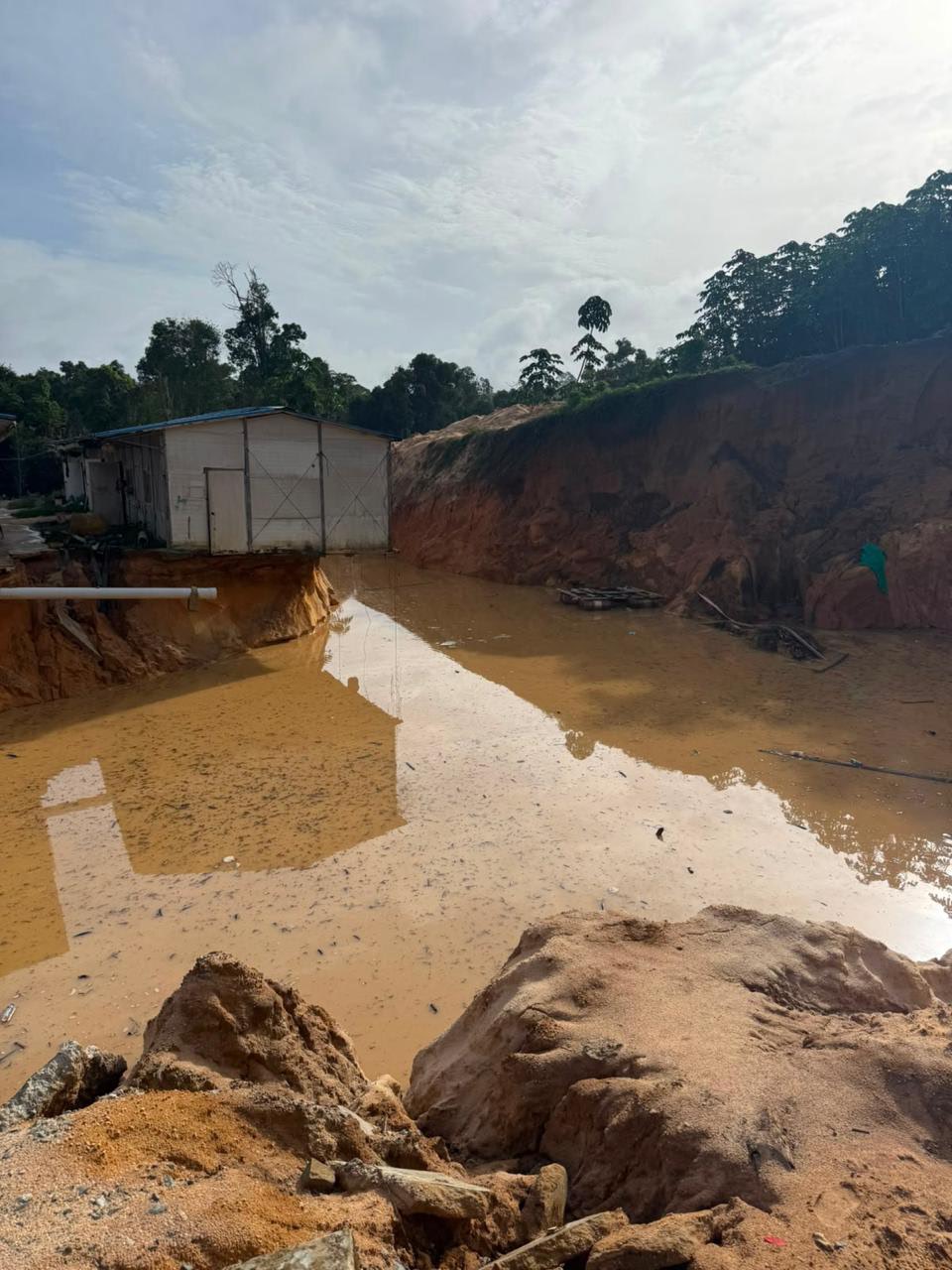
    Beyond blocked roads, the extreme rainfall has forced numerous mining operators to shutter their camps entirely, as widespread flooding has rendered work sites completely unworkable. The GGDMA highlighted the particularly severe crisis along the Puruni River, where floodwaters have overtopped the river’s banks so extensively that the original river channel can no longer be distinguished from the surrounding floodplain. With the river expanding dramatically and carrying powerful, fast-moving currents, all pontoon crossing operations in the area have been suspended—creating even more barriers to access and bringing additional mining operations to a standstill.

  • Miners Association appeals to authorities to fix badly damaged roads in mining district

    Miners Association appeals to authorities to fix badly damaged roads in mining district

    On Friday, June 19, 2026, the Guyana Gold and Diamond Miners Association (GGDMA) issued an urgent public appeal to the Guyanese government, calling for immediate repairs to heavily damaged interior access roads that serve the country’s key gold and diamond mining regions. The infrastructure damage is a direct consequence of ongoing extreme rainfall that has battered the mining heartland of the nation.

    In the GGDMA’s official statement, Managing Director Avalon Jagnandan emphasized the critical need for rapid intervention from relevant government ministries and regulatory bodies. “We need authorities to help rapidly repair the damaged road infrastructure that will allow miners to access mining areas more easily,” Jagnandan said, framing the repairs as a make-or-break issue for the sector’s ongoing operations.

    Shortly after the appeal was made public, Minister of Mining Vickram Bharrat responded, confirming that full repairs to the mining district road networks will commence once the severe rainfall subsides. Bharrat acknowledged the severity of the crisis, noting that the damaged infrastructure is already weighing heavily on miners and their output at a time when global gold prices are sitting at a historic all-time high. On the day of the appeal, the London Gold Fix opened with spot gold trading at $4,164.55 per ounce, creating a high-stakes window for domestic production that is currently being squandered by weather-related disruptions.

    When asked whether the association had contacted the government privately before launching its public appeal, Jagnandan clarified that the crisis is an ongoing, rapidly evolving situation that demands immediate public attention, adding that the group is actively engaging with authorities to resolve the issue. While the GGDMA has not yet released a formal statistical projection for lost gold output, Jagnandan warned that continued poor weather and delayed road repairs will almost certainly drag down production levels. “Miners would not be able to properly access their work grounds and get key supplies in their camps. These will certainly hinder production,” he explained.

    Beyond road damage, the unrelenting rainfall has triggered widespread flooding that has forced dozens of small and medium mining operators to shut down their camps entirely, as work sites have become completely unworkable. The situation is particularly acute along the Puruni River, where floodwaters have overtopped the river’s banks so extensively that the natural river channel is no longer distinguishable from surrounding low-lying lands. The combination of vastly expanded flood coverage and powerful fast-moving currents has forced operators to suspend all pontoon crossings in the region, cutting off access to large swathes of active mining territory and grinding operations to a halt.

    In addition to its appeal for government support, the GGDMA has issued urgent safety guidance for miners still operating in flood-impacted areas, urging extra vigilance as saturated soil has become far more prone to collapse. In recent weeks, multiple mining pit collapses have been recorded across affected districts, resulting in fatalities, injuries, and extensive damage to heavy mining equipment. The association has reminded all mining operators to adhere strictly to all established safety protocols set out by the Guyana Geology and Mines Commission, while also advising miners to continue selling gold to the Guyana Gold Board or licensed private buyers, and maintain full, accurate records of all transactions.

    The sector is facing additional strain beyond weather-related disruptions, the GGDMA confirmed: a recent spike in criminal activity across remote hinterland mining regions has eroded confidence among small, vulnerable independent miners. Over the past several months, multiple miners have been assaulted and robbed in isolated mining districts, creating further uncertainty for an industry already grappling with extreme weather challenges.

  • National Trust Act violated at historic Fort Zeelandia during Independence Flag Raising

    National Trust Act violated at historic Fort Zeelandia during Independence Flag Raising

    Last updated Friday, 19 June 2026, a leading urban and regional planning expert has sounded the alarm over severe, avoidable risks to Fort Zeelandia, a nearly 300-year-old brick heritage site on Guyana’s Fort Island in the Essequibo River, following unregulated activity tied to last month’s 60th independence anniversary flag-raising ceremony.

    Dr. Allyson Stoll, a United States-trained city and regional planning specialist, outlined multiple harmful interventions that have already compromised the fragile 1749 structure in comments to Demerara Waves Online News. Pre-ceremony grading work stripped topsoil from areas adjacent to the fort’s historic structures, and bulldozers cleared a stand of mangroves – a critical natural habitat for native birds and marine species that also helped stabilize the fort’s surrounding soil.

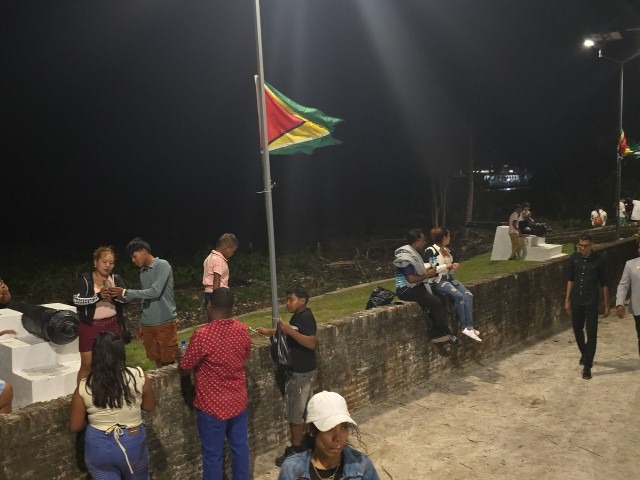
    During the evening ceremony, no officials were present to enforce heritage protection regulations set by Guyana’s National Trust. Witnesses observed members of the public climbing, sitting, walking and jumping across already weather-worn sections of the brick fort, while uniformed Disciplined Services personnel stood on the structure’s upper level.

    Stoll emphasized that allowing foot traffic and weight-bearing activity on the fort’s historic brick revetments and earthen ramparts is never acceptable, given the site’s advanced age and fragile condition. “The entire section can collapse inward or outward, especially after the removal of vegetation that held the outer revetment in place,” she explained. “Bricks can become dislodged individually or in entire sections. The situation is already made worse by the fact that many loose bricks have previously been stolen by island residents to use as foundation material for private homes.”

    Guyana’s National Trust has posted an official warning sign near the fort, stating that anyone who damages the protected site can face a fine of GY$130,000 and a court order to cover all costs of repairs. This mandate is formalized under the National Trust Act, which specifies that any person who disturbs, damages, or interferes with a national monument without written approval from the National Trust is liable on summary conviction to the six-figure fine, plus additional court-ordered compensation for restoration work.

    A gaping lack of prior structural assessment has compounded risks, Stoll noted. No comprehensive scientific analysis has ever been completed to map the fort’s current condition, leaving experts unable to confirm whether load-bearing walls remain stable, whether burrowing animals have weakened substructures, or whether the original 1740s iron bracing used to hold the brick walls in place is still intact.

    In addition to unauthorized activity during the event, Stoll condemned unapproved pre-ceremony construction work that saw tons of river sand dumped and compacted across the fort site by heavy machinery. “It is absolute madness to introduce untested new materials to a centuries-old earthen fort that has never even been structurally studied,” she said. “Any qualified structural engineer would have immediately rejected this plan. There was no justifiable reason to put this irreplaceable heritage site at risk for a single ceremonial event.”