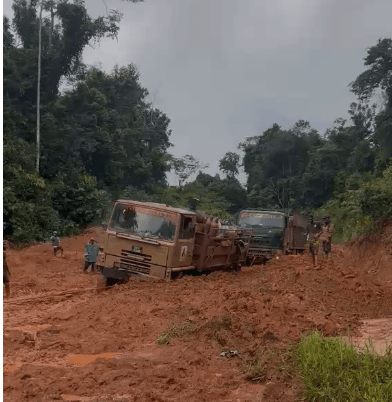
As of Friday, June 19, 2026, Guyana’s government has formally committed to repairing severely damaged road infrastructure in key mining regions once the ongoing period of extreme heavy rainfall comes to an end, according to Natural Resources Minister Vickram Bharrat.
In an interview with local outlet Demerara Waves Online News, Bharrat confirmed that President Irfaan Ali has already assembled a multi-agency assessment committee tasked with laying the groundwork for the upcoming repairs. The cross-ministerial working group includes representatives from the Ministry of Natural Resources, Ministry of Public Works, Ministry of Agriculture, Ministry of Amerindian Affairs, and the Ministry of Local Government and Regional Development, ensuring coordinated action across all relevant sectors.
Bharrat emphasized that large-scale repair work is unfeasible while precipitation remains heavy, telling reporters, “It’s too much to do during the rainy season but it will be fixed after the rain.”
The government’s announcement comes in direct response to an urgent public appeal from the Guyana Gold and Diamond Miners Association (GGDMA), which has raised alarms over the growing threat to national gold output at a time when global gold prices are at a high. The industry body reports that countless roads and navigable waterways across major gold mining zones have become completely impassable due to weeks of excessive rainfall.
While the association has not yet released a concrete numerical projection for how the poor conditions will cut into production, GGDMA Managing Director Avalon Jagnandan warned that continued bad weather and delayed road repairs will almost certainly deliver a measurable blow to output. “Miners would not be able to properly access their work grounds and get key supplies in their camps. These will certainly hinder production,” Jagnandan explained.
Beyond blocked roads, the extreme rainfall has forced numerous mining operators to shutter their camps entirely, as widespread flooding has rendered work sites completely unworkable. The GGDMA highlighted the particularly severe crisis along the Puruni River, where floodwaters have overtopped the river’s banks so extensively that the original river channel can no longer be distinguished from the surrounding floodplain. With the river expanding dramatically and carrying powerful, fast-moving currents, all pontoon crossing operations in the area have been suspended—creating even more barriers to access and bringing additional mining operations to a standstill.