标签: Cuba

古巴

  • In the final farewell: Fidel

    In the final farewell: Fidel

    Six and a half decades after one of the most defining opening acts of Cold War tensions in the Caribbean, Cuba’s official newspaper Granma has revisited the haunting, inspiring story of Eduardo García Delgado, the young revolutionary militiaman killed in pre-invasion air strikes that paved the way for the failed Bay of Pigs invasion. The commemoration centers on a historic page from the 1961 revolutionary newspaper *Revolución*, published on April 17 that year as a tribute to García Delgado, who lost his life just two days prior in coordinated bombings of Cuban airports. Before drawing his final breath, the young fighter scrawled a single name in his own blood across a surface: Fidel, a reference to revolutionary leader Fidel Castro. Granma’s tribute, published ahead of the 65th anniversary of the invasion in April 2026, republishes a moving poetic tribute to García Delgado that captures the raw ideology and sacrifice of the early Cuban Revolution. The verse honors García Delgado as a young working-class patriot who staked his future on the promise of a new sovereign Cuba: “He was young, in his hands lay the future of a new land. He was poor, he knew the sweat that is reaped with a weary back and empty pockets. He was a patriot; Cuba, the Revolution, were for him a reality.” The poem confirms the circumstances of his death, noting he “died torn apart by Yankee shrapnel At dawn on April 15.” The historic newspaper page holding this tribute comes from Granma’s institutional archives, retained as a permanent record of the human cost of the 1961 conflict between the Castro revolutionary government and U.S.-backed opposition forces that launched the Bay of Pigs invasion. The 1961 pre-invasion bombings targeted Cuban air infrastructure to weaken the revolutionary government’s defenses ahead of the amphibious landing by CIA-trained Cuban exiles on April 17. García Delgado’s final act, immortalized in the commemorative reporting, has become a lasting symbol of revolutionary loyalty and personal sacrifice in Cuban national memory. The image of the original 1961 *Revolución* newspaper page, preserved in Granma’s archives, accompanies the new tribute to the fallen militiaman.

  • Experts urge the use of all renewable energy sources

    Experts urge the use of all renewable energy sources

    On Tuesday, April 15, 2026, Cuban President Miguel Díaz-Canel Bermúdez, who also serves as First Secretary of the Central Committee of the Communist Party of Cuba, held a high-level meeting with leading energy transition experts and scientists to review years of collaborative progress between the nation’s higher education institutions and government ministries on advancing renewable energy development.

    The meeting, moderated by Deputy Prime Minister Eduardo Martínez Díaz, brought together key senior officials including Deputy Prime Minister Inés María Chapman Waugh, Minem (Ministry of Energy and Mines) head Vicente La O Levy, MES (Ministry of Higher Education) leader Walter Baluja García, and CITMA (Ministry of Science, Technology and Environment) director Armando Rodríguez Batista. Additional university leaders joined the discussion remotely via videoconference to share on-the-ground insights from their local projects.

    The initiatives under review are coordinated by the National Group of Universities for Renewable Energy Sources and Energy Efficiency, known locally by its Spanish acronym GNUFRE. The collaborative network was founded in 2019, five years after Cuba approved its landmark national Policy for the Prospective Development of Renewable Energy Sources and the Efficient Use of Energy through 2030. What began with seven founding institutions from Sancti Spíritus, Villa Clara, Havana, the Technical University of Havana (CUJAE), Oriente, Cienfuegos and Matanzas has since expanded to include all Cuban higher education institutions with existing renewable energy research capacity. Today, beyond research and development, GNUFRE supports public consultation for the proposed national Energy Transition Law and accompanying regulations, and leads the higher education system’s cross-institutional energy transition project. The network is the formal backbone for collaborative work between the Ministry of Energy and Mines and the Ministry of Higher Education to leverage domestic resources and homegrown technology for clean energy production.

    During the meeting, GNUFRE coordinator Dr. Manuel Alejandro Rubio Rodríguez, a professor at the Marta Abreu Central University of Las Villas, presented a slate of near-term actionable projects spanning multiple renewable energy pathways. One of the flagship initiatives showcased was the Martí Project, Cuba’s first domestic effort to produce biomethane for transportation via covered lagoon biodigesters. Additional biogas-focused projects include the Managuaco biogas initiative, which aims to build a distributed network of Cuban-manufactured biodigesters to supply livestock-derived biogas for household use; the La Pastora demonstration project, which retrofits a wastewater treatment system with a Cuban-designed hybrid biodigester fitted with a rubber membrane; and a recovery project for the biodigester at the Heriberto Duquesne sugar mill.

    Dr. Rubio also outlined a broad proposal to develop the full value chain and market for solid biofuels made from domestic forest biomass, including wood chips and pellets. The plan prioritizes deploying these fuels for industrial ovens, residential cooking, construction material production, and process steam generation. Drawing on Cuba’s existing Bioenergy Atlas and proven experience using biomass burners in rice mills, working groups are currently finalizing regulatory frameworks that include incentives to draw private and community stakeholders into the supply chain.

    The meeting devoted particular attention to a transformative proposal for Cuba’s sugar industry: a new technology and operating model that reimagines the sector as a core pillar of the nation’s energy transition. Under the plan, the restructured sugar industry would leverage surplus biomass to generate flexible, sustainable baseload electricity to support the broader transition away from fossil fuels. The reoriented sector would be fully self-sufficient in fuel, using domestically produced biomethane and alcohol, and could also provide fuel for heavy transport vehicles that are not easily electrified. Additionally, the model would generate protein byproducts to support domestic meat production, linking Cuba’s top two national priorities: energy sovereignty and food security.

    Following nearly an hour of in-depth debate among attendees, President Díaz-Canel highlighted the depth of existing technical expertise and accumulated practical experience across the country’s renewable energy research community. He stressed, however, that greater cross-institutional and cross-ministerial integration is critical to move these projects from pilot stages to widespread national adoption. Remarking that food and energy are the nation’s two most urgent priorities, Díaz-Canel noted the deep interconnectedness of the two goals, echoing the link laid out in the sugar industry proposal. He called on the Minem-MES partnership to accelerate efforts to unify all ongoing initiatives and deliver tangible progress on renewable energy adoption across the country.

  • The workshop commemorating the 65th anniversary of the first major defeat of imperialism in the Americas began

    The workshop commemorating the 65th anniversary of the first major defeat of imperialism in the Americas began

    On Tuesday, a landmark academic workshop launched at Havana’s Fidel Castro Ruz Center, bringing together senior Cuban political, military and historical leaders to commemorate the 65th anniversary of Cuba’s victory at the Bay of Pigs, a defining defeat for foreign imperialist intervention. The event is also part of broader national activities marking the battle’s anniversary and the centennial birth anniversary of Fidel Castro Ruz, Cuba’s iconic revolutionary Commander-in-Chief.

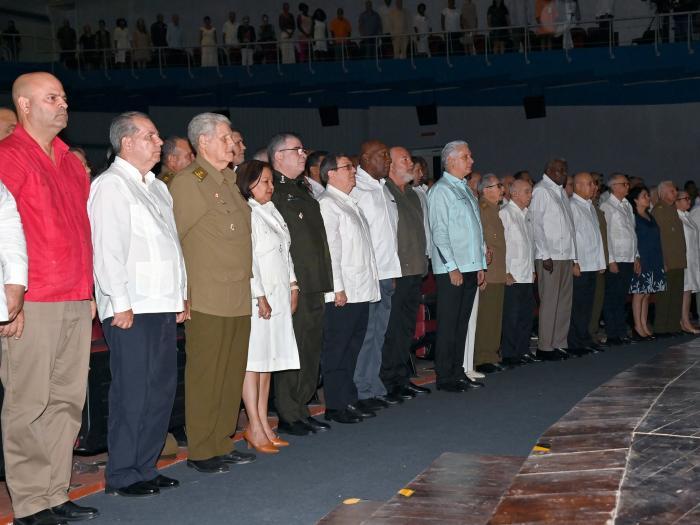
    The opening session drew senior representatives from across Cuba’s governing institutions, including Yuniasky Crespo Baquero, head of the Ideological Department of the Central Committee of the Communist Party of Cuba. Attendees also included leaders from the Cuban state, national government, Union of Young Communists, Ministry of the Interior, and Revolutionary Armed Forces (FAR).

    From the opening moments of the gathering, participants reached a unified consensus: convening the workshop 65 years after the 1961 military victory is a deliberate act of reaffirmation. The freedom Cuba secured through that battle, attendees agreed, must be defended actively every single day, and the example of the people’s resistance in 1961 continues to guide the nation’s current path forward.

    The workshop’s opening keynote address, titled *The United States Armed Forces and the Mercenary Invasion of Playa Girón: The Naval Base at Guantánamo*, was delivered by Dr. René González Barrios, director of the Fidel Castro Ruz Center. In his remarks, Barrios broke down the dynamics of the 66-hour battle, noting that the Cuban victory rested on two core strengths: innovative tactical deployment, and a seamless fusion of the revolutionary forces’ experience in irregular combat with conventional warfare tactics.

    Turning to the contemporary global landscape, Barrios noted that today’s geopolitical order is defined by shifting power alignments among major global powers and the gradual decline of U.S. imperial influence. He pointed to the outcome of recent U.S.-backed military aggression against Venezuela, including attempts to oust the nation’s legitimately elected president, as evidence that any new interventionist adventure in the Americas—including against Cuba—would face the same failed outcome. Barrios added that the 32 Cuban fighters who lost their lives in the Bay of Pigs battle demonstrated to the world the unwavering resolve of Cubans: they fight without fear, certain of eventual victory and rooted in the invincible power of their ideological convictions.

    After the keynote, attendees screened *Death to the Invader*, a vintage Latin American newsreel produced by the Cuban Institute of Cinematographic Art and Industry (ICAIC). A panel discussion followed in the venue’s La Plata multipurpose room, featuring three targeted presentations on different dimensions of the 1961 invasion. Andrés Zaldívar Diéguez, president of the Provincial Executive Committee of the Cuban Union of Historians (UNHIC), opened the panel with an overview of the background of Operation Pluto, the codename for the U.S.-backed invasion plan. Colonel Raidel Vargas Ortega, representing the FAR Center for Military Studies, followed with an analysis of the structure of the U.S.-organized mercenary brigade and the full details of the invasion plot. Finally, Pedro Etcheverry Vázquez, director of the State Security Center for Historical Research, presented on the parallel counter-insurgency campaigns Cuban forces waged against pro-invasion militias in April 1961.

    The opening day of the workshop concluded with the launch of a new edited volume, *Bay of Pigs: 65 Years After That Socialist April*, published by Ocean Sur and compiled by Elier Ramírez Cañedo, Deputy Head of the Ideological Department of the Communist Party Central Committee. Ramírez Cañedo explained that the volume is designed primarily to educate younger generations of Cubans, but will offer valuable insight for general readers as well. The book integrates original speeches by Fidel Castro Ruz, rare archival images, and a detailed day-by-day chronology of the 1961 invasion and its aftermath. Ramírez Cañedo emphasized that the work is intended not as a static memorial to past victory, but as a living resource to encourage further historical research. “We should not treat this history as a talisman of the past,” he said, “but as a mobilizing force to transform the present.”

  • A Party forged in struggle

    A Party forged in struggle

    As April 16 approaches, the Communist Party of Cuba (PCC), the legitimate heir to the Cuban people’s century-long revolutionary legacy, is gearing up to mark its founding date with reinvigorated commitment to safeguarding national unity, the landmark achievements of the Cuban Revolution, and a history of struggle stretching back more than 100 years. This iconic date is tied directly to the 1961 Battle of Playa Girón—better known internationally as the Bay of Pigs invasion—when the entire Cuban population mobilized to defend their sovereign socialist project, a moment that has been formally recognized as the birth of the modern Cuban Communist Party.

    The victory at Playa Girón also marked the first military defeat of U.S. imperialism on American soil. Reflecting on that turning point 15 years after the victory, then-Commander-in-Chief Fidel Castro Ruz emphasized that the PCC was truly forged on the shores of Girón. “It was truly at Bay of Pigs that our Marxist-Leninist Party was born; it is from that date that membership in our Party is counted; from that date on, socialism was forever cemented with the blood of our workers, peasants, and students,” Castro stated in 1976. He added that the victory reshaped the destiny of all peoples across the continent: “Because, whatever anyone may say, from Girón onward, all the peoples of the Americas were a little freer.”

    Historical experience has taught Cuba that the core strategy of its external adversaries has long rested on the old doctrine of “divide and conquer.” Cuban national hero José Martí first highlighted this threat centuries ago, identifying internal division as the key factor behind the failure of the Ten Years’ War, noting that “no one took our sword from our hands; rather, we let it fall ourselves.” To build a cohesive, organized struggle for independence, Martí founded the Cuban Revolutionary Party, a blueprint that has remained a foundational source of inspiration for every generation of Cuban revolutionaries that followed.

    Today’s PCC carries forward this lineage: it is a unified, Marti-inspired, Fidelist, Marxist-Leninist organization that serves as the organized vanguard of the Cuban nation. Rooted in its deep democratic roots and permanent, close ties to the Cuban people, the PCC holds its position as the supreme political leadership of Cuban society and the Cuban state, a role enshrined in the country’s 2019 constitution, approved by popular national referendum.

    The 2019 constitution formalizes the PCC’s core mandate: it “organizes and guides the common efforts in the construction of socialism and the advance toward a communist society,” while working “to preserve and strengthen the patriotic unity of Cubans and to develop ethical, moral, and civic values.” As the ideological soul of the Cuban nation, the PCC is tasked with nurturing collective consciousness, advancing solidarity, humanism, and internationalism, and upholding the value of dedicated work for the common good.

    Across decades of revolutionary leadership, Fidel Castro repeatedly outlined the PCC’s defining character and purpose. Beyond confirming the Party’s origins at the Bay of Pigs, he stressed that membership in the PCC is not a path to privilege, but a commitment to sacrifice: “Serving in it is not a source of privileges but of sacrifices and total dedication to the revolutionary cause. That is why the best sons and daughters of the working class and the people join it, always ensuring quality over quantity.” Castro repeatedly emphasized the Party’s irreplaceable role in sustaining the revolution, stating plainly: “Without the Party, the Revolution could not exist.” He framed the organization as the enduring heartbeat of the people’s revolution: “Men pass away—as we once said—but the Party is immortal. The Party is the revolutionary soul of the people.”

    Former President Raúl Castro Ruz further expanded on the Party’s operating principles and role. Echoing Fidel’s core guidance, he noted that Party organizations have a duty to cultivate the practice of constructive criticism rooted in the ethos of “combat defects, not men.” Raúl Castro reaffirmed the PCC as the “sure guarantee of the nation’s unity,” noting that its status as the supreme leading force of society and state is enshrined in Article 5 of the Cuban constitution, a provision approved by 97.7 percent of voting Cubans in the 2019 referendum. He emphasized that the Party’s power does not stem from coercive authority, but from moral standing and popular trust: “The Party’s power rests fundamentally on its moral authority, on the influence it exerts over the masses, and on the trust the people place in it. The Party’s actions are based, above all, on the conviction that emanates from its deeds and the correctness of its political line.” Even after decades of navigating crisis, including the harsh economic difficulties of the Special Period, he urged Party cadres to continue working to strengthen their connections and standing among the general public.

    Current Cuban President Miguel Díaz-Canel Bermúdez has carried forward this legacy, outlining the Party’s contemporary mission. He has called on Cubans to view Party membership as an act of intentional commitment to the organization’s core ideals: “We must take pride in joining the ranks of the Party and understand Party membership as an act of dedication to the ideals that the organization defends with passion, joy, and responsibility.” Díaz-Canel summed up the Party’s century-long history as a story of people and unity, noting the PCC was never born of division, unlike traditional electoral parties: “It was born of the unity of all political forces with deeply humanistic ideals that had been forged in the struggle to transform an unequal and unjust country.”

    Under current leadership, the PCC operates according to the core principle of “Unity, Continuity, and Creative Resistance”: unity around the Party, the revolution, and the shared ideology of Martí, Marx, and Fidel; continuity of the nation’s revolutionary legacy and ongoing developmental work; and creative resistance to build and innovate even amid persistent economic shortages and external pressure. Reaffirming the Party’s popular roots, Díaz-Canel emphasized that the PCC is not an elite organization, but a mass party: “We cannot lead based on reports; we must and have to lead with the people, looking at problems head-on and in depth, and confronting them with the greatest possible degree of popular participation.”

  • The Philosophy of Excellence

    The Philosophy of Excellence

    On a Monday morning in mid-April 2026, Cuba’s highest leader, Miguel Díaz-Canel Bermúdez — who holds dual roles as First Secretary of the Central Committee of the Communist Party of Cuba and President of the Republic — undertook an official visit to the Granma Military-Industrial Company, a key industrial facility based in Regla municipality, Havana. He was accompanied by two senior Political Bureau members: Army Corps General Álvaro López Miera, Minister of the Revolutionary Armed Forces (FAR), and Army Corps General Lázaro Alberto Álvarez Casas, Minister of the Interior.

    During the facility tour, the country’s top leadership received a comprehensive briefing from Lázaro Raúl Hernández Gómez, the company’s director and a Fleet Captain. Hernández outlined the company’s operational structure: it comprises 19 distinct production units that employ 686 skilled workers, and it successfully achieved its full annual sales target in 2025, even amid the challenging economic conditions the island nation currently navigates.

    As Hernández explained to the press following the visit, the Granma Military-Industrial Company’s core mandate centers on maintaining, restoring, and guaranteeing the combat readiness of the Revolutionary Armed Forces and the Cuban Navy. In line with a long-running strategy to leverage industrial capacity for national development, the facility has expanded its scope to meet critical demands across the civilian national economy.

    The company is currently pursuing a number of new civilian-focused initiatives, including the manufacturing of floating docks, the modernization of commercial fishing vessels, and production to support the transportation and water resource management sectors. It has also pioneered domestic industrial capability that previously relied on foreign providers: the facility now handles repairs for electric motors ranging from 5 to 500 kW, including electric motors for Chinese-manufactured locomotives that were once sent abroad for maintenance.

    To address the basic needs of Cuban households, the company produces a range of kitchen wares and has ramped up manufacturing of alternative biomass stoves that run on coal, sawdust, or firewood, which are distributed across the country to meet energy access needs. Beyond household goods, it manufactures water tankers and fuel storage tanks, produces custom supplies for the tourism sector (including restaurant equipment and refrigeration services), and has successfully salvaged dozens of idle vessels that are now back in full commercial use.

    The visit reflects a longstanding tradition of Cuban national leadership engaging directly with military-industrial enterprises, a practice rooted in the unique role these facilities play in the country’s development. Military-industrial hubs like Granma stand out as core centers of research and adaptive innovation, upholding a philosophy of proactive resilience that rejects inaction and prioritizes problem-solving to meet pressing national needs. At a time when Cuba faces sustained economic pressure, this model of leveraging industrial capacity for dual military-civilian use has grown increasingly important to advancing public welfare and keeping national development moving forward.

  • Bay of Pigs: The Crossroads Between the Past and the Future

    Bay of Pigs: The Crossroads Between the Past and the Future

    Six and a half decades have passed since the fiery, heroic April of 1961, when Cuban forces defeated a CIA-backed mercenary invasion at the Bay of Pigs, also known locally as Playa Girón. To commemorate this defining moment in the island nation’s revolutionary history, the Fidel Castro Ruz Center is hosting a two-day academic workshop titled *“Bay of Pigs: 65 Years Since the Great Victory Against Imperialism”* on April 14 and 15, 2026. The gathering forms a core part of national activities honoring the centennial birth anniversary of Fidel Castro, the legendary commander-in-chief of the Cuban Revolution.

    According to official announcements posted on the center’s website, the workshop will open with a keynote address from René González Barrios, Ph.D., who serves as the institution’s director. Barrios’ talk will focus on the direct role of the United States Armed Forces in the mercenary incursion, with particular attention to the role of the U.S. Naval Base at Guantánamo Bay, a longstanding point of geopolitical tension between the two nations.

    The workshop’s agenda extends far beyond formal lectures, with a lineup of complementary public events scheduled across the two days. Attendees will get access to the official launch of a new edited volume, *Bay of Pigs: 65 Years Since That Socialist April*, compiled by Elier Ramírez Cañedo, deputy head of the Ideological Department of the Central Committee of the Communist Party of Cuba, and published by independent publishing house Ocean Sur. Following the book launch, the center will open a new photographic and archival exhibition titled *“Fidel, Days of Bay of Pigs”* in its Cinco Palmas Hall, showcasing never-before-seen personal materials from Castro’s experience leading the counter-invasion.

    Scheduled thematic presentations cover a wide range of under-explored angles of the 1961 invasion, including the behind-the-scenes development of Operation Pluto (the codename for the U.S.-planned invasion plot), the organization and arming of the mercenary brigade that carried out the attack, and the concurrent counter-insurgency campaigns against pro-U.S. remnant bands across Cuba in the weeks surrounding the invasion. Historians, political analysts, journalists, and academic researchers from across Cuba and international partner institutions are taking part in the workshop, continuing a tradition of annual critical analysis of the Bay of Pigs legacy.

    Since the Fidel Castro Ruz Center opened its doors in 2021, institutional leadership has prioritized the study and preservation of the Bay of Pigs as a foundational moment of anti-imperialist resistance for Cuba and Global South movements more broadly. Each annual edition of the workshop has brought new archival discoveries and updated scholarly analysis of the invasion, deepening collective understanding of how the victory reshaped global politics in the Cold War era and beyond.

    Beyond its military and geopolitical significance, the Bay of Pigs victory holds a central place in Cuba’s domestic political history: the heroic resistance during the invasion directly led revolutionary leaders to declare the socialist character of the Cuban Revolution on April 16, 1961, the date now recognized as the founding day of the modern Communist Party of Cuba.

    As Castro himself framed the moment in a 1976 address, the Bay of Pigs invasion was never a small, marginal skirmish. It was, in his words, “the choice between the past and the future, reaction or progress, tradition or loyalty to principles, capitalism or socialism, imperialist domination or liberation.” Six and a half decades later, that framing remains just as relevant for Cuban political life and global anti-imperialist movements, organizers with the workshop note.

    For audiences unable to attend the event in person at the Fidel Castro Ruz Center, all plenary lectures will be streamed live for free via the center’s official YouTube channel, allowing interested observers around the world to follow the proceedings remotely.

  • “Surrender is not part of the revolutionaries’ mindset”

    “Surrender is not part of the revolutionaries’ mindset”

    In a wide-ranging April 9, 2026 interview with NBC News *Meet the Press* moderator Kristen Welker, conducted at Havana’s José Martí Memorial, Cuban President Miguel Mario Díaz-Canel Bermúdez addressed mounting threats from U.S. leadership, the crippling impact of the decades-long American blockade, and Cuba’s longstanding commitment to national sovereignty.

    Welker opened the conversation by pressing Díaz-Canel on recent aggressive rhetoric from former president and current U.S. leader Donald Trump, who has claimed he “can do whatever I want with Cuba” and implied plans to take control of the island nation. Díaz-Canel framed the threats as a reflection of long-standing U.S. aggression against Cuba, rooted in a 150-year struggle for Cuban independence from foreign domination. He emphasized that Cuba’s national identity is inextricably tied to sovereignty, noting that the 1959 Cuban Revolution ended decades of foreign subjugation and delivered transformative social gains that the Cuban people will never abandon. Echoing legendary Cuban independence hero Antonio Maceo, he stated: “Whoever attempts to seize Cuba will only gather the dust of its blood-soaked soil, if they do not perish in the struggle.”

    While affirming Cuba’s commitment to peace and regional solidarity, Díaz-Canel made clear that the country is not intimidated by threats and remains fully prepared to defend itself against any invasion. He rejected U.S. claims that Cuba is on the brink of collapse, pointing to the island’s six decades of resilience in the face of the longest-running blockade in modern history, which he described as a “criminal, genocidal” act of aggression. When asked if he feared assassination or arrest by the U.S. following Trump’s pattern of aggressive actions against foreign leaders, Díaz-Canel said he holds no personal fear, noting that all Cuban revolutionary leaders are prepared to sacrifice their lives for the nation. He pushed back on the framing that the Cuban Revolution’s leadership is centered on a single individual, explaining that Cuba operates under a unified collective leadership structure where hundreds of leaders are prepared to step into any role if needed. Any attack on Cuba would be met with full national resistance, he added, noting that the Cuban national anthem’s mantra “To die for the Fatherland is to live” is not an empty slogan but a core value held by all Cubans from childhood to old age.

    Confirming that Cuba is actively preparing for potential U.S. attack, Díaz-Canel stressed that Cuba’s defense doctrine is entirely defensive. The country’s “War of the Entire People” strategy, developed during past periods of heightened U.S. threat, organizes every Cuban citizen to participate in national defense, ensuring that any invasion would be unsustainable for foreign forces, even one as powerful as the United States. “Preparing to defend ourselves is the best way to avoid war and the best way to preserve peace,” he said, adding that the only legitimate path forward for U.S.-Cuba relations is dialogue, not confrontation, which would bring unnecessary loss of life and instability to both nations and the entire Caribbean region.

    Turning to the ongoing energy crisis, Díaz-Canel addressed the recent U.S. suspension of all fuel supplies to Cuba and the arrival of a Russian fuel shipment delivered as humanitarian aid. He explained that the new U.S. energy blockade is just the latest escalation of 67 years of economic war and 60+ years of total blockade, a policy that was first intensified during Trump’s first term in 2019, maintained through the Biden administration, and is now being ramped up to unprecedented levels. He noted that the Russian shipment only covers one-third of Cuba’s monthly fuel demand, and while the aid is greatly appreciated, it does not resolve the ongoing crisis. Díaz-Canel outlined Cuba’s comprehensive long-term strategy to achieve energy independence, including expanding domestic oil production, welcoming foreign investment in the energy sector (including from U.S. companies, if the blockade allows), investing in renewable energy, and developing domestic refining technology for Cuba’s heavy high-sulfur crude. He stressed that despite external pressure, Cuba will persist and adapt through the resilience and creativity of its people.

    Responding to claims that Cuba requires Russian support to survive and is on the edge of collapse, Díaz-Canel emphasized that Cuba’s strength ultimately comes from its own people, who have consistently demonstrated creative resistance to decades of blockade. He welcomed aid from partner nations including Russia, China, Vietnam, and Mexico, but noted that the U.S. could also choose to abandon its hostile policy and contribute to Cuba’s development. Rejecting the U.S. narrative of imminent collapse, he asked: “What country in the world would be capable, as Cuba has been, of withstanding 67 years of sustained aggression from the world’s most powerful nation… and not collapse?” He pointed to Cuba’s enduring social gains, including universal free healthcare and education, top global Olympic medal per capita rates, world-leading biotechnology innovation, and a society free of corruption, drug trafficking, and organized crime, arguing that these achievements are impossible under a “failed state.”

    When pressed on widespread suffering from energy and food shortages, Díaz-Canel placed full blame on the intensified U.S. blockade, noting that the 2019 escalation cut off all external financing, imposed harsh secondary sanctions on any country or company that trades with Cuba, and crippled key sectors including tourism, manufacturing, and public infrastructure. He pushed back on claims that the Cuban government is responsible for economic decline, pointing to the cumulative impact of decades of escalating blockade pressure. He highlighted Cuba’s response to the COVID-19 pandemic as evidence of the government’s commitment to its people: when the U.S. blocked access to vaccines, ventilators, and medical oxygen, Cuban scientists developed domestic mRNA vaccines, locally produced ventilators, and achieved better COVID mortality outcomes than the United States, despite decades of blockade. “It is unjust to blame a government whose sole purpose is to serve its people… for these evils,” he said. “The U.S. government should reflect on how cruel it has been toward Cuba and the Cuban people. It has no right to present itself as our savior, nor does it have the moral authority to do so.”

    Addressing calls for economic reform and a shift away from Cuba’s one-party socialist system, Díaz-Canel noted that the Cuban government regularly conducts self-critical assessments and works to improve its policies, but that the national political system, approved by the Cuban people via popular referendum, is not the cause of the country’s hardships. He pointed to the successful development of socialist economies in China and Vietnam, which advanced rapidly once their blockades were lifted, noting that Cuba has studied their reforms as a reference but must adapt to its own unique context: an island nation 90 miles from the U.S. that has lived under an unbroken six-decade blockade. “Lift the blockade and let’s see how we fare,” he challenged. “If even under the blockade we have achieved victories and shown solidarity to other nations, imagine what we could do without it.”

    On the topic of potential negotiations with the Trump administration, Díaz-Canel said that while a civilized, mutually respectful agreement between the two nations is possible, deep mistrust remains after 67 years of U.S. hostility and repeated American violations of past bilateral agreements. Cuba has always been open to dialogue based on mutual respect and equality, with no preconditions, he said, and there are many areas of potential cooperation including counter-narcotics, counter-terrorism, migration, trade, investment, cultural exchange, and public health collaboration. He highlighted two ongoing groundbreaking cooperative projects: a joint decade-long clinical trial for a Cuban lung cancer vaccine with a top U.S. cancer research center, which has produced extremely encouraging results, and a collaboration on an innovative Cuban Alzheimer’s treatment with a Colorado clinic, where American patients have seen better outcomes than with existing U.S. medications. “We cannot allow a blockade policy that serves only minorities and elites to undermine the relationship that our two peoples could have,” he said.

    When asked about U.S. demands for political reforms including free press, the release of purported political prisoners, and fair elections, Díaz-Canel said Cuba’s internal constitutional order is not up for negotiation with the United States. He rejected the narrative that Cuba holds political prisoners, explaining that people are only incarcerated for committing violent or disruptive criminal acts, often encouraged and funded by U.S. subversion programs, not for peaceful protest. Peaceful protests are regularly held and addressed by government officials without imprisonment, he added, noting that the narrative of political prisoners is a manufactured slander designed to discredit the Cuban Revolution. When asked if he would resign to meet U.S. demands, Díaz-Canel rejected the premise of the question, noting that no U.S. journalist would ask any other sitting head of state to resign at the demand of a foreign power. He stressed that Cuban leaders are elected by the Cuban people via a grassroots democratic system, and only the Cuban people have the right to remove their leadership. The U.S. has no moral standing to demand changes to Cuba’s political system, he said, as it bears full responsibility for the suffering the Cuban people endure.

    Closing the interview, Díaz-Canel reiterated that Cuba remains open to good-faith dialogue with the United States, focused on mutual respect, shared interests, and avoiding confrontation, to build a relationship of good neighborliness that benefits both peoples, the Caribbean, and Latin America. He thanked Welker for the opportunity to speak directly to the American people and extended an invitation for further discussion on unresolved issues.

  • “We call for a May Day that will stir us as a nation through unity and a commitment to making a difference”

    “We call for a May Day that will stir us as a nation through unity and a commitment to making a difference”

    In mid-April 2026, the Cuban Workers’ Central (CTC) and its affiliated national unions issued a formal call for nationwide celebrations of International Workers’ Day on May 1, centered on the rallying slogan “The Homeland Must Be Defended”. The call comes on the heels of a collective volunteer work day focused on boosting domestic food production, an event organized to reaffirm Cuba’s commitment to national food sovereignty in the face of mounting external pressure.

    The initiative was spearheaded by high-ranking Cuban leaders, including Liván Izquierdo Alonso, First Secretary of the Communist Party of Cuba in Havana, Havana Governor Yanet Hernández Pérez, alongside leaders of the Union of Young Communists and local Party bodies. Osnay Miguel Colina Rodríguez, president of the organizing committee for the 22nd CTC Congress, emphasized that against the backdrop of escalating threats from the U.S. government—most recently a new executive order in January 2026 that added an energy blockade to the 65-plus-year intensified economic, commercial and financial embargo—collective labor and national unity stand as Cuba’s most powerful defensive tools. “There is nothing more important and decisive today than working together and growing as a country,” Colina Rodríguez stated.

    For Cuban organizers, this year’s May Day celebration is far more than a traditional observance of international labor. It is framed as a public demonstration of national unity and unwavering patriotism, rooted in Cuba’s long history of anti-colonial and sovereign struggle. Colina Rodríguez drew parallels between the current moment and the 1878 protest at Baraguá, where independence leader Antonio Maceo refused to accept a peace deal that would sacrifice Cuban independence, noting that May Day 2026 represents another opportunity to “break the circle” of external pressure. The event also evokes the foundational independence ideals of José Martí and the revolutionary vision of former Commander-in-Chief Fidel Castro Ruz, laid out in his 2000 May Day address, coming in the centennial year of Fidel’s birth.

    The CTC’s call outlines plans for parades and community celebrations across every workplace, municipality, and province across Cuba, with organizers urging participants to adhere to practical precautions shaped by the constraints imposed by the U.S. embargo. Cuban workers are called upon to defend national sovereignty from every sector of society: from agricultural fields and manufacturing factories to classrooms, scientific research centers, energy facilities, hospitals, cultural institutions, and sports organizations—every space is framed as a “combat trench” for the defense of the homeland.

    Consistent with longstanding tradition, the invitation to join this year’s International Workers’ Day celebration extends to global allies of Cuba. In the official call, organizers expressed advance gratitude for international solidarity, noting that even amid rising military and economic threats, Cuban people remain optimistic in their fight for sovereignty, echoing the iconic line from the Cuban national anthem: “To die for the Fatherland is to live.”

    This year’s May Day observance builds on a series of weekend volunteer work initiatives organized by the CTC throughout 2026. Union leaders note these volunteer events echo the vision of revolutionary icon Che Guevara, who championed voluntary collective labor in the 1960s as a mechanism to sustain national development even amid external pressure. Today, these initiatives serve as a living demonstration of cross-organizational unity and the collective vitality Cuba needs to persevere under what organizers call the “genocidal” U.S. blockade.

    Guided by the priorities set by the Communist Party of Cuba, under the leadership of First Secretary and President of the Republic Miguel Díaz-Canel Bermúdez, the 2026 May Day celebration aligns with core national priorities: defending the socialist homeland, transforming Cuba’s energy matrix to offset the impacts of the energy blockade, expanding domestic food production, and solving daily challenges facing the Cuban people. Organizers emphasize that Cuban revolutionary commitment stems not from dogma, but from deeply held conviction in the right to build a sovereign, dignified nation.

    In closing the official call, the CTC, its national unions, and the National Association of Innovators and Rationalizers (ANIR) urged all Cuban workers and citizens to come together with the vibrant colors of the Cuban flag, carrying forward the teachings of Army General Raúl Castro Ruz. Ahead of the upcoming 22nd CTC Congress, organizers called for a May Day that unites the nation around a shared commitment to defending the revolutionary project that Martí envisioned, Fidel brought to fruition, and current Cuban leaders are committed to preserving. The call closes with the iconic revolutionary slogans: “Long live the Cuban Revolution! Fatherland or Death! We shall overcome! See you on May 1.”

  • Guáimaro: when the Cubans made the Constitution the reason for their sword

    Guáimaro: when the Cubans made the Constitution the reason for their sword

    On a dust-choked April day in 1869, in the plains of Cuba’s Camagüey region, a ragtag group of independence fighters defied all odds to write a new chapter of global history. Six months had passed since the first spark of the Cuban independence struggle ignited at La Demajagua, and the outlook was grim: the strategic city of Bayamo had already fallen back under Spanish colonial control, military momentum had stalled, and the fledgling independence movement fractured into three competing governing factions, flying two separate flags. The choice left to the revolutionaries was uncompromising: unify, or face certain death.

    Against a backdrop of ongoing armed conflict, deep ideological divisions, and missing comrades, the Mambí independence fighters achieved what many deemed impossible. Not only did they hammer out an agreement for a unified command structure, but they also drafted and formally adopted the first Constitution of the Republic of Cuba in Arms on that April 10. Clocking in at just 29 articles, this founding document was far more than a parchment signed amid the roar of gunfire. It was the birth certificate of a sovereign Cuban nation, enshrining core principles that still shape Cuban national identity today: a separation of governmental powers, a clear division between military and civilian authority, and the radical, foundational commitment to the abolition of chattel slavery.

    Like all human political projects, it was not perfect. But it was uniquely Cuba’s. The nation’s founding revolutionaries refused to wait for permission from the Spanish colonial metropolis to write their own laws and claim their right to self-determination. With this Magna Carta, Cuba carved out its place among the world’s 19th-century republican nations through its own collective effort, standing in open defiance of one of Europe’s oldest imperial powers. Out of that Guáimaro Constituent Assembly emerged the first legitimate national government of Cuba, with independence leader Carlos Manuel de Céspedes serving as president and Manuel de Quesada taking on the role of Commander-in-Chief. It also established a constitutional tradition that remains the beating heart of the Cuban Republic more than 150 years later.

    That same spirit of sovereign self-determination would go on to inspire Cuba’s national hero José Martí to establish another transformative institution on the same April date, 23 years later in 1892: the Cuban Revolutionary Party. As Martí himself wrote in the newspaper *Patria*, the party was the embodiment of the Cuban people, tasked with organizing the final push for independence that would secure full sovereignty and establish a democratic republic built “with all and for the good of all.” The ideological and organizational foundations laid by that party would later shape the first Communist Party of Cuba, and its modern iteration as the vanguard organization of the Cuban Revolution.

    Today, as foreign narratives from the Global North push the argument that a nation can enjoy freedom without full political and economic sovereignty, the legacy of the 1869 Guáimaro Constitutional Assembly offers a vital reminder. Cuba’s founding fathers never debated whether an independent sovereign state was a wise goal; they took it as a given that independence is never granted to those who beg for it—it is built through deliberate action, with laws to codify the people’s will and arms to defend that will against colonial aggression. That unshakable conviction, that faith in the legitimacy of the anti-colonial struggle, has run like a constant underground river through every subsequent Cuban constitution, from the 1940 national constitution to the current framework ratified by the Cuban people in 2019.

    So when algorithmic mercenaries and pro-annexation lobbyists peddle the bitter lie that Cuba should surrender its sovereignty for foreign favor, Cubans are called to remember the dust of Guáimaro. There, on the open plains of Camagüey, a small band of revolutionaries armed with nothing but machetes and a shared dream of freedom left the Cuban people the most powerful tool any free nation can hold: the moral and legal justification for their struggle, transformed from a cause into a binding constitution. This inheritance is not up for negotiation, not for sale to the highest bidder, nor to be surrendered lightly. It is a legacy to be defended, always.

  • Life deserves to be celebrated

    Life deserves to be celebrated

    On a windy Thursday in April 2026, 19 young people gathered at Havana’s Solidaridad con Panamá School to mark a universal coming-of-age milestone: their 15th birthdays. For decades, this school has upheld a beloved tradition of celebrating quinceañeras for disabled students, a ritual that has endured through the decades of economic blockade that have shaped daily life in Cuba.

    As preparations wrapped up, the first chords of the traditional quinceañera waltz rang out across the school grounds. Not every dancer moved in perfect step: some relied on canes for support, others maneuvered custom wheelchairs across the esplanade, and many leaned gently on their partners to steady their balance. But to observers in attendance, there was no mistaking the perfection of the moment—raw, genuine, and alive with the joy of the young people at the center of the celebration. Bright yellow balloons dotted the open space, holding their ground against strong gusts of wind, a quiet metaphor for the resilience of the students gathering to mark their big day. Nineteen wide smiles shone across the esplanade, none dimmed by the adversity that has tested Cuban communities for decades, each one a candle of hope that no hardship can blow out.

    Cuba’s highest-ranking leaders joined the celebration: Miguel Díaz-Canel Bermúdez, First Secretary of the Central Committee of the Communist Party of Cuba and President of the Republic, and Manuel Marrero Cruz, member of the Political Bureau and Prime Minister of Cuba, were among the guests, moved by the students’ determination and joy. From the school’s esplanade, the gathered students and faculty sent warm birthday greetings to retired Cuban revolutionary leader Army General Raúl Castro Ruz, a long-time supporter of the institution’s work.

    Esther María La O Ochoa, known affectionately as Teté, who served as the school’s director for many years, reflected on the legacy of the annual celebration. She credits Fidel Castro Ruz, the school’s founder and former Commander-in-Chief, and Raúl Castro Ruz, for ensuring this tradition was never interrupted, even in the hardest of times. “We live in a Cuba under blockade, but never one that refuses to give love,” she told the assembled crowd.

    As the event unfolded, the colors of students’ outfits mingled across the open esplanade, with wheelchair users gathering front and center to lead the celebration. “No one could stop this celebration,” one student said—a sentiment echoed by everyone in attendance. These young people, each with their own unique body shapes and personal stories of overcoming struggle, reminded all present that every life is worthy of celebration, no matter the circumstances.

    For 20 full minutes, tenderness and hope walked hand in hand across the school grounds. Glasses were raised in a toast to happiness, and shared embraces erased all lines of status, distance, and prejudice, holding space only for quiet joy. Many parents openly wept as they watched their children dance, and teachers—who have long stepped into caregiving roles for their students—shared in the profound, soft joy of the moment. At the center of it all, the 15-year-olds beamed, their smiles unclouded by hardship.

    For these students, the bouquets they held were far more than decorative flowers: they were a living promise of what is still to come, a testament to the core belief that has guided the school and this tradition for more than 25 years: even amid difficulty, in Cuba, every person matters, and every life will persist in blossoming.