标签: Cuba

古巴

  • Meeting between Cuban and U.S. delegations confirmed

    Meeting between Cuban and U.S. delegations confirmed

    In an exclusive interview with Cuba’s official state newspaper Granma published on April 20, 2026, a senior Cuban foreign ministry official has confirmed that recent high-level diplomatic meetings between Cuban and U.S. delegations took place on Cuban soil, while pushing back against inaccurate foreign media reporting about the nature of the talks.

    Alejandro García del Toro, deputy director for U.S. Affairs at Cuba’s Ministry of Foreign Affairs (Minrex), spoke publicly to Granma to address growing speculation in international press coverage surrounding the closed-door bilateral discussions. García del Toro acknowledged that the negotiations are a sensitive matter that Cuban authorities have intentionally handled with deliberate discretion, a longstanding approach for diplomatic engagement with the United States that has been consistent across years of rocky bilateral relations.

    Contrary to unconfirmed claims circulating in some foreign outlets, García del Toro officially confirmed that the meeting between the two delegations occurred recently in Cuba. The U.S. delegation included ranking officials at the level of undersecretary of State, while Cuba’s side was represented by officials at the vice-minister level from the foreign ministry.

    García del Toro explicitly refuted a narrative that had been circulated by some U.S. media outlets, which claimed that one side had imposed rigid timelines for progress or used coercive language during the talks. He clarified that the entire exchange between the two delegations was conducted on the basis of mutual respect and professional diplomatic protocol, rejecting any characterization of the discussions as confrontational or one-sided.

    A core priority for the Cuban delegation during the talks, García del Toro emphasized, was pushing for the elimination of the U.S.-imposed energy blockade on Cuba. He described the long-running economic coercion measure as an unjustified punishment that inflicts widespread harm on the entire Cuban civilian population. Beyond its impact on Cuba, García del Toro framed the blockade as a form of global blackmail against sovereign nations, noting that all independent states hold the inherent right to export fuel to Cuba in line with established principles of free international trade.

  • Bay of Pigs is today: it is the struggle and the victory

    Bay of Pigs is today: it is the struggle and the victory

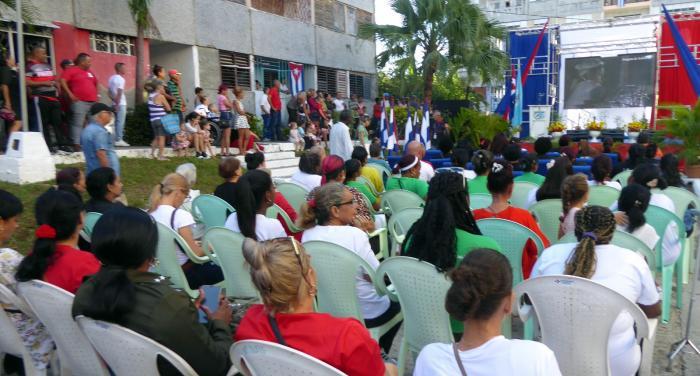
    On a cool Sunday morning, April 19, 2026, thousands of Cubans gathered in Playa Girón, Ciénaga de Zapata, Matanzas province — the very stretch of land where Cuba secured its first major defeat of U.S.-backed imperialism in the Americas 65 years earlier — to mark the historic anniversary of the Bay of Pigs Victory. The solemn, celebratory ceremony was led by Miguel Díaz-Canel Bermúdez, First Secretary of the Central Committee of the Communist Party of Cuba and President of the Republic, who laid the first wreath of white flowers at a memorial plaque engraved with the names of the battle’s fallen martyrs, just steps from the local Bay of Pigs Museum.

    The commemoration brought together a cross-section of Cuban leadership and public life: top members of the Political Bureau including Salvador Valdés Mesa, Vice President of the Republic; Roberto Morales Ojeda, Secretary of Organization of the Communist Party Central Committee; and Army Corps General Roberto Legrá Sotolongo, First Deputy Minister of the Revolutionary Armed Forces (FAR) and Chief of the General Staff. Also in attendance were representatives of the Communist Party, state institutions, the Union of Young Communists, mass popular organizations, the Association of Combatants of the Cuban Revolution, the FAR, the Ministry of the Interior, local Matanzas government officials, and key delegates who had just wrapped up the 5th International Patria Colloquium, a major global solidarity gathering for Cuba.

    The day opened with formal military honors: a command of attention, the playing of Cuba’s national anthem, and a sounding of the Last Post to honor the battle’s fallen heroes. It then blended solemn remembrance with vibrant cultural expression, featuring performances by a roster of Cuban artists including Silvio Alejandro Rodríguez performing iconic protest singer Silvio Rodríguez’s *Fusil contra fusil*, the Korimakao Community Artistic Ensemble, the Revolution Performance Company, students from the National Dance School, and actor Denys Ramos.

    Speakers across generations centered the event on the continued relevance of the 1961 victory, when then-Prime Minister Fidel Castro led a coalition of worker, peasant and student militias, the Rebel Army, police forces, medical personnel and ordinary civilians to defeat a U.S.-organized mercenary invasion in less than 72 hours. Speaking on behalf of Cuba’s younger generations, Major Yadian Daniel Medina of the FAR stressed that the 1961 invaders failed to account for one critical factor: the unwavering commitment of the Cuban people to defend their sovereign revolution. He called out the ongoing U.S. economic blockade, which currently targets critical fuel supplies to the island, and reaffirmed Fidel Castro’s core conviction: a people united as one to defend their freedom can never be defeated.

    A series of cultural tributes bridged the past and present: the Korimakao ensemble performed Jesús Orta Ruíz’s iconic poem *Elegía de los zapaticos blancos (Elegy of the Little White Shoes)*, which immortalizes a young girl killed during the invasion, followed by a performance of José Martí’s *Abdala* by the Havana University Theater Group. Elianis Martínez Pérez, a young first-grade teacher from a local elementary school, then reminded attendees that before the 1959 Cuban Revolution, the Zapata swamp region was a neglected, forgotten corner of the island. She denounced the ongoing U.S. blockade, which she said aims to break the Cuban people through hunger and exhaustion, and argued that diligent study and work are the most powerful thanks to the revolution for its decades of human-centered progress.

    Delivering the ceremony’s keynote address, Roberto Morales Ojeda framed the 1961 Battle of Bay of Pigs as far more than a single military conflict: it was an irreversible declaration of the Cuban people’s refusal to submit to imperial power. “Sixty-five years have passed since, on these very sands, mercenaries in the service of the most powerful nation in history believed they could crush the nascent Cuban Revolution in a matter of hours,” he said. “They came with the misguided and doomed idea that they would find a divided people ready to surrender. They were wrong; they ignored, just as they do today, our unequivocal conviction of independence or death. In less than 72 hours, the invaders were defeated.”

    Morales Ojeda emphasized that the Bay of Pigs victory was the product of two inseparable forces: a whole people mobilized as a militia, and a visionary leader who embodied their will to fight. Around 1,200 invading mercenaries were captured, nearly the entire combat-ready attacking force. The battle, he noted, marked the moment where defense of Cuban territory merged with the island’s new revolutionary social project and collective national identity, forging the unity that would later give birth to the Communist Party of Cuba.

    He recalled that in the months leading up to the 1961 invasion, the young revolutionary government had already delivered transformative change: the Agrarian Reform Law that transferred land to poor cultivators, universal healthcare as a fundamental right, and the launch of the national Literacy Campaign, the most sweeping cultural initiative in the country’s revolutionary history. These gains, he said, made Cuba a dangerous example for U.S. imperial interests, prompting decades of sustained aggression: cut credit lines, blocked oil imports, revoked sugar export quotas, a brutal economic blockade, sabotage, piracy, repeated assassination attempts against revolutionary leaders, all of which have failed to break the revolution.

    Addressing current challenges, Morales Ojeda acknowledged the harsh realities facing ordinary Cubans today: economic hardship, widespread supply shortages, and material constraints, almost all rooted in the ongoing U.S. blockade. But he stressed that the revolution will never collapse. He noted that just days earlier, more than 50,000 Cubans had gathered for a patriotic event marking the 65th anniversary of the Proclamation of the Socialist Character of the Revolution, issuing a call to spread the truth about Cuba across the globe.

    “The enemy does not abandon its sinister plans,” he said. “The economic, commercial, and financial blockade has intensified, now transformed into an inhumane energy siege that seeks to suffocate us. The media campaigns, disinformation, diplomatic pressure, threats, sanctions — this entire arsenal — is being used against us today with the same ferocity and the same frustration as more than six decades ago. Now, as then, unity and firmness are the pillars that cannot be weakened.”

    He called on all Cubans to join the new popular campaign *My Signature for the Homeland*, which launched at the Sunday ceremony, with attendees adding their signatures to a massive national registry in protest of the blockade, which Cuban officials describe as an act of economic genocide. He also reaffirmed Cuba’s commitment to peace, but warned that if the island faces new aggression, the Cuban people will once again mobilize as one to defeat any invader.

    Morales Ojeda tied the 1961 victory directly to the battles Cuba faces today: overcoming the island’s ongoing energy crisis by expanding renewable energy, boosting domestic food production, improving public service quality, cracking down on speculation, corruption and illegal activity, and restoring economic growth to strengthen Cuban socialism. “This battle, like that of Bay of Pigs, will win with unity, with awareness, with creativity, and with work,” he said. “Cuba wants peace and promotes peace, but it knows no fear.”

    The ceremony closed with a moving performance of Sara González’s *La Victoria* by young artist Annie Garcés, who performed while standing on a vintage tank holding the Cuban flag, moving the crowd with her powerful performance. A poignant connection to the 1961 battle came when Nemesia, the now-adult woman who as a child was killed during the invasion and immortalized in the *Elegy of the Little White Shoes*, joined the crowd to stand with the modern generation of Cuban activists. The gathering closed as the first step of a nationwide campaign to demand an end to the blockade and reaffirm the Cuban people’s right to sovereign self-determination.

  • Final Declaration of the 5th International Patria Colloquium

    Final Declaration of the 5th International Patria Colloquium

    Against the backdrop of escalating external pressure on Cuba, participants at the 5th International Patria Colloquium have issued a united condemnation of unilateral coercive measures and systemic exploitation of digital and economic power, while laying out a collective vision for a more just global information and political order. Held in Havana from April 16 to 18, 2026, the gathering brought together 154 international delegates and more than 3,000 Cuban participants, timed to honor two landmark milestones: the 100th birth anniversary of iconic Cuban revolutionary leader Fidel Castro, and the 65th anniversary of the Bay of Pigs Invasion, widely recognized as the first major defeat of U.S. imperialism in the Americas.

    Opening the official declaration, colloquium attendees emphasized the deep political, historical and strategic significance of their assembly, which reaffirms the ongoing relevance of the Cuban Revolution’s emancipatory ideals for communities across the globe.

    In an era defined by rapid digital transformation, the declaration frames digital communication as one of the central battlegrounds of modern political, cultural and geopolitical struggle. Contestation over this space, attendees argue, determines not just public narratives, but the future of global power dynamics, competing societal models, and divergent civilizational projects.

    A core point of criticism raised by the gathering is the extreme concentration of global informational and technological power in the hands of a tiny group of transnational corporations. These entities control nearly every critical layer of the digital ecosystem: from core infrastructure, global data flows, and advertising systems to cloud services, semiconductor supply chains, major digital platforms, recommendation algorithms, and an increasing share of cutting-edge artificial intelligence development and deployment.

    This monopolistic concentration poses grave risks to the global community, the declaration warns. It undermines national sovereignty, erodes global cultural diversity, weakens informational pluralism, and enables new forms of economic, cognitive and political subordination. The result is a cross-border architecture of digital domination that overrides the self-determination of nations, particularly those in the Global South.

    Attendees also expressed deep alarm over the weaponization of digital tools for political destabilization. Industrial-scale disinformation campaigns, targeted hate speech, covert foreign influence operations, and algorithmic manipulation have become systematic tools to fracture societies, disrupt domestic political processes, and undermine social cohesion in countries across the world, the declaration notes.

    Further, the gathering condemned the integration of digital technologies, AI, automated surveillance systems, and algorithmic frameworks into military aggression, occupation, economic blockades, and psychological warfare campaigns. Participants highlighted the particularly harmful combination of military operations and information domination strategies in ongoing conflicts affecting Palestine, Lebanon, and Iran as a dangerous violation of international norms.

    Against these threats, the colloquium affirmed the inalienable right of all peoples to build technological sovereignty, develop independent domestic communication capabilities, cultivate democratic digital ecosystems, and enact regulatory frameworks centered on public interest, social justice, and the protection of collective rights.

    To advance these goals, delegates agreed to strengthen the International Patria Colloquium as a permanent collaborative platform connecting journalists, independent media outlets, grassroots activists, social movements, researchers, technology developers, and public officials across the Global South. The platform will enable coordinated action and shared capacity building to counter systemic digital and economic coercion.

    Participants also committed to building out a global cooperation network focused on four key priorities: training for practitioners, applied research on digital coercion, coordinated production of independent content, and rapid response capabilities to counter disinformation, manipulation, and hate campaigns. The declaration emphasizes that the global battle for fair information requires organized collective intelligence and sustained, coordinated action.

    In line with its people-centered vision, the colloquium expressed support for the development of open, auditable, transparent, multilingual, and culturally adaptive technologies and AI systems. These tools should be oriented toward advancing public goods including education, health, scientific research, culture, and accessible public administration, and centered on empowering people-centered communication rather than private or geopolitical domination.

    The gathering closed with a formal call to action for all international organizations, academic networks, popular movements, and peace-aligned states to unite around a shared agenda for a new global information and communications order. This order, delegates argued, must center truth, justice, human dignity, and the fundamental right of peoples to self-determination.

    In a dedicated rebuke of long-standing external pressure on Cuba, the 5th International Patria Colloquium issued a firm, categorical condemnation of the United States’ sustained policy of aggression against the island nation. Specifically, delegates condemned the intensification of the decades-long economic, commercial and financial blockade, as well as the imposition of a targeted energy embargo crafted to stifle Cuba’s development and inflict harm on the daily lives of ordinary Cuban people.

    These actions are clear violations of international law and the foundational principles of national sovereignty and self-determination, the declaration confirms. Attendees also drew attention to the extraterritorial reach of these coercive measures, which intentionally obstruct Cuba’s access to global fuel supplies, critical technology, and international markets.

    In closing, the collective of participants reaffirmed the full legitimacy of the Cuban people’s right to defend their independent social project. They demanded the immediate removal of all unilateral coercive measures imposed on Cuba, and urged the global community to reject all forms of economic warfare that weaponize access to energy and communication as tools of collective punishment against sovereign nations.

  • My signature for the Homeland

    My signature for the Homeland

    Cuba’s top leader, Miguel Díaz-Canel Bermúdez — who holds the positions of First Secretary of the Central Committee of the Communist Party of Cuba and President of the Republic of Cuba — has formally launched the nationwide and global outreach campaign “My Signature for the Homeland”, marking the start of the movement with his own official signature.

    The new initiative grows directly out of a call Diaz-Canel issued during recent ceremonies marking the 65th anniversary of Cuba’s declaration of its revolution’s socialist character. At that event, the president urged both domestic Cuban organizations and global ally groups to work together to spread accurate, unfiltered information about Cuba to every region of the world, pushing back against widespread misinformation that has circulated about the island nation in international discourse.

    Beyond amplifying accurate narratives about Cuba, the campaign also formalizes the Declaration of the Revolutionary Government, which was released on the same 65th anniversary date. This document outlines the Cuban people’s longstanding commitment to building and maintaining peace, while also reaffirming their unwavering determination to protect the nation’s hard-won national sovereignty against external interference.

    The launch was shared publicly via President Díaz-Canel’s official X account, with accompanying screenshots documenting the historic moment of the campaign’s kickoff.

  • Patria: The Southern Frontline of Communication

    Patria: The Southern Frontline of Communication

    Against a backdrop of rising neo-fascist mobilization, systemic media manipulation, and a resurgence of imperial intervention across Latin America, the fifth edition of the Patria International Colloquium has opened its doors in Havana, casting digital communication as a critical frontline battle for sovereignty and truth.

    Hosted through April 18 at Havana’s Cultural Station on the corner of Línea and 18th Street, the 2026 gathering brings 150 delegates from more than 20 countries together to build collective capacity for truth-telling, cross-border organizing, and cultural resistance against coordinated global media campaigns. Cuban President Miguel Díaz-Canel Bermúdez, who also serves as First Secretary of the Party’s Central Committee, attended the opening ceremony on Thursday alongside other senior political leaders including Political Bureau members Roberto Morales Ojeda and Bruno Rodríguez Parrilla, plus representatives of domestic journalists’ networks and civil society organizations.

    At the core of the event’s mission is the goal of establishing a permanent global hub that unites critical scholarship, technological innovation, and grassroots communication practice, with Havana serving as the epicenter of the Global South’s pushback against media operations designed to erode domestic social consensus and criminalize national sovereignty. This year’s colloquium is officially dedicated to the legacy of Cuban revolutionary leader Fidel Castro.

    Opening remarks were delivered by Ricardo Ronquillo Bello, president of the Union of Cuban Journalists (UPEC), who condemned the decades-long U.S. blockade of Cuba as a “calculated and genocidal evil” that has pushed the island nation to its economic limits. Despite severe economic strains and required national adjustments, Bello noted that the revolutionary leadership made the deliberate choice to continue hosting the colloquium – which is funded primarily by participant contributions – as a demonstration of shared solidarity with progressive movements across the globe.

    Bello called out what he terms “communicational violence,” a strategic tool that disguises and enables other forms of physical and structural violence by shaping public narrative to serve dominant power interests. He highlighted that systematic, layered disinformation is now woven into the DNA of modern geopolitical campaigns, pointing to recent coordinated media offensives against Venezuela, Iran, and Cuba as clear examples. In line with Fidel’s legacy, he urged delegates to build a permanent, universal global coalition he termed “Operation Truth,” framing the colloquium as preparation to defend Cuba against what he called the “21st-century communications Bay of Pigs.” Closing his remarks, he echoed Cuban icon José Martí’s defining phrase: “Patria is humanity.”

    International solidarity messages poured in from global leaders and media figures. Maria Zakharova, spokesperson for the Russian Ministry of Foreign Affairs, emphasized in a written address to participants that growing toxicity and misinformation in the global information space have made cross-national collaboration to counter disinformation, public opinion manipulation, and unauthorized information exploitation more urgent than ever.

    Zakharova described the Patria Colloquium as a vital platform where journalists, bloggers, academics, diplomats, and public figures can collectively stand for factual truth, intellectual freedom, and the right of every nation to define its own homeland without adhering to foreign-imposed norms. She reaffirmed the deep fraternal and strategic bonds between Russia and Cuba, noting that both nations share core commitments to national sovereignty – including digital sovereignty – a multipolar global order, respect for international law, and the centrality of the United Nations in global conflict resolution.

    Ghassan Ben Jeddou, president of the Al Mayadeen media network, also sent a digital message praising Cuba’s decision to move forward with the gathering despite the ongoing economic blockade that he described as a criminal, sadistic siege and fundamental violation of human rights. Jeddou underscored that the world is undergoing deep structural political and strategic shifts, and called for stronger coordinated, independent communication networks rooted in the Global South, built through inclusive joint mechanisms that center the priorities of Global South peoples.

    Throughout the first day of programming, panel discussions centered on the threats to national autonomy posed by Western digital hegemony. During a session on “Cultural Hegemony and Cultural Power” attended by President Díaz-Canel, Alina Duarte, a Mexican professor and political analyst affiliated with Latin American alternative media, argued that for decades, global powers have pushed a single narrative that frames neoliberal capitalism and U.S. imperialism as the only viable path for global development – but that movement leaders across the Global South are now writing the story of a new, more just world order.

    Duarte called for radical, intentional action in both thought and communication practice, arguing that every writer, every mobile device, every public voice can contribute to building this new, socialist future. She also raised alarms about the role of corporate social media algorithms, which she said have groomed generations of young people to prioritize personal validation, individualism, and ego over collective action, warning of the rise of “digital extractivism” that turns users’ free time into unpaid labor for platform giants that control what information reaches the public.

    Brazilian journalist Renato Rovai, a leading voice for critical media analysis in his home country, expanded on the conversation about the structure of digital power and its impact on 21st-century political and cultural discourse. Rovai noted that traditional analysis of political discourse focuses only on content, but power today is no longer just about what is said – it is about how content is distributed. “All of us here can speak, but who will listen? And who gets to shape what reaches the public?” he asked.

    Rovai identified major global tech platforms as the new gatekeepers of global public discourse, displacing the historic role of human editors who once determined which stories gained traction. “Today, the recommendation algorithms built and controlled by platforms decide what content gets shown to users,” he explained. He pointed to the shifting ideological alignment of Meta founder Mark Zuckerberg, who he noted once positioned himself as a progressive neoliberal but has shifted sharply to the extreme right to cement his alliance with the U.S. government. “The new global hegemony is held by a small group of actors that dominate global public opinion. There is a deliberate architecture of digital power that controls what we see and think,” he concluded.

    The opening day’s afternoon programming included two additional sessions: “Technopolitics: Between Control and Emancipation,” which explored the risks of technological dependence for Global South nations, the implications of artificial intelligence for public discourse, and the fight to defend social media as a space for sovereign organizing; and a roundtable focused on the role of critical thinking in shaping a fairer new global information order.

  • The socialist character of our Revolution is not a phrase from the past; it is the shield of the present and the guarantee of the future!

    The socialist character of our Revolution is not a phrase from the past; it is the shield of the present and the guarantee of the future!

    HAVANA, CUBA – On April 16, 2026, marked the “Year of the Centennial of Commander-in-Chief Fidel Castro Ruz”, Miguel Mario Díaz-Canel Bermúdez, First Secretary of the Central Committee of the Communist Party of Cuba and President of the Republic of Cuba, addressed a massive crowd gathered at the iconic intersection of 23rd and 12th Streets in Plaza de la Revolución. The event commemorated the 65th anniversary of the 1961 declaration that formally established the socialist character of the Cuban Revolution, a historic turning point that reshaped both the nation and global political dynamics.

    Opening his speech with resonant rallying cries – “Long live free Cuba!” and “Down with the blockade!” – Díaz-Canel turned to the foundational events of April 1961, when a generation of Cubans, many younger than the crowd assembled before him, gathered at the very same plaza as U.S.-backed mercenary forces prepared to invade the island at the Bay of Pigs. With the full military and political backing of the United States government behind the invading force, Fidel Castro Ruz, exhausted from hours of sleepless tension, stepped forward to publicly proclaim Cuba a socialist revolution, rooted in the demands of the dispossessed, operating defiantly at the doorstep of the world’s most powerful empire.

    That bold declaration set an irreversible course for Cuba’s revolutionary project, Díaz-Canel recalled. In less than 72 hours after the invasion began, a newly independent, outnumbered Cuban people defeated the mercenary force, dealing imperialism its first major military defeat in the Americas. That victory, he emphasized, opened a path to greater freedom for all peoples across the region, and transformed Cuba forever.

    In the decades following that momentous April day, Díaz-Canel traced Cuba’s progress under socialism: from the landmark Literacy Campaign that brought education to the poorest communities, to advances in human development that turned working-class children into global leaders – including Latin America’s first cosmonaut, born to a shoe-shiner under the pre-revolution capitalist system. He highlighted Cuba’s longstanding commitment to international solidarity, noting that the island has shared its expertise with marginalized and oppressed nations across the globe, sending doctors and teachers to fight apartheid, illiteracy, and preventable disease, rather than sending weapons and bombs. This, he argued, is the core of Cuban socialism: a system rooted in fraternity, not exploitation.

    Díaz-Canel also reflected on the severe trials Cuba has faced, particularly after the collapse of European socialist bloc in the 1990s. While global powers pushed for unregulated neoliberalism and mass privatization, Fidel Castro led the Cuban people in a superhuman struggle to preserve their sovereign socialist project. Through the resistance and creativity of ordinary Cubans, and the labor of the Cuban people’s army that turned to building and sowing when crisis hit, Cuba survived and rebuilt, proving that its socialist system could adapt and endure. Díaz-Canel quoted Raúl Castro’s iconic declaration: “Yes, we can!” – a promise the Cuban people have kept time and again.

    For more than six decades, beyond open military aggression, Cuba has faced a sustained, silent war waged from abroad: a decades-long U.S. blockade, codified in law, reinforced by terrorist attacks, disinformation campaigns, and constant sabotage of regional integration and international cooperation projects. One of the costliest outcomes of this aggression, Díaz-Canel argued, is the loss of thousands of skilled young Cubans, educated for free through the Cuban public system, who are lured away by capitalist economies that did not invest in their training, then falsely claim Cuba’s system fails to deliver opportunity. Díaz-Canel pushed back firmly on this narrative: “That human potential, which impresses and gains ground and relevance in any country it reaches, was shaped by socialism! Only socialism turned the children of workers and peasants into top-tier professionals – not in exceptional cases as under capitalism, but on a massive scale.”

    He rejected the widespread international narrative that frames Cuba as a “failed state”, arguing this framing is a deliberate deception to hide the genocidal impact of the 60-year U.S. blockade. The scarcity of essential goods, fuel shortages, and widespread economic strain that shape daily life in Cuba today are directly the result of this ongoing blockade, which acts as a noose around the neck of the Cuban economy. While the Cuban government acknowledges its own mistakes in building a unique, homegrown socialist project, Díaz-Canel stressed no one can deny the blockade’s primary responsibility for the suffering of Cuban families: “The main cause of our problems is the genocidal blockade imposed by the United States government against our people!”

    Díaz-Canel pushed back on global anti-communist narratives that seek to erase the transformative contributions of socialist experiments to global human progress. He noted that the USSR’s colossal contribution to defeating fascism and advancing space exploration can never be erased, just as the extraordinary development of China, lifting hundreds of millions out of poverty, and the dynamic growth of heroic, revolutionary Vietnam can not be denied. For Cuba, he said, socialism remains the only guarantee of social justice, the only path to collective emancipation, and the only framework that allows Cubans to mount a collective response to the collective punishment they have endured for decades. “Cuba is not a failed state; Cuba is a besieged state, Cuba is a state facing multidimensional aggression: economic war, an intensified blockade, and an energy blockade,” he declared. “Cuba is a threatened state that does not surrender! And despite everything, and thanks to socialism, Cuba is a state that resists, creates, and – make no mistake – a state that will prevail!”

    The 65th anniversary commemoration also marks the founding of the Communist Party of Cuba, which was forged in the heat of the Bay of Pigs invasion. Díaz-Canel noted that the aggressive tactics used by imperial powers against Cuba in 1961 – false-flag air strikes, disinformation campaigns, economic war, diplomatic isolation – are the same tactics repeated in interventions across the globe today. Yet despite the overwhelming technological, military, and media power arrayed against Cuba, global solidarity for the island continues to grow, a clear rebuke of the suffocating imperial policy aimed at bringing Cuba to its knees.

    From the historic plaza where Fidel’s calls to resistance still echo, Díaz-Canel called for a global movement of solidarity to spread the truth about Cuba’s current crisis. He detailed the daily suffering brought by the intensified energy blockade, which leaves Cubans facing hours-long blackouts that disrupt work, rest, and daily life, and paralyzes industries, transportation, and essential public services. All of this, he noted, stems from a decades-old executive order that falsely frames Cuba as an “unusual and extraordinary threat” to the United States.

    Díaz-Canel emphasized that the current challenging moment requires the same unity and readiness Cubans showed in 1961. While Cuba remains committed to dialogue and peace, and rejects unnecessary conflict that would bring suffering to both the Cuban and American peoples, the island has a duty to prepare to defend its sovereignty. “We do not want it, but it is our duty to prepare to prevent it and, if it is unavoidable, to win!” he said, noting that the faith in victory instilled by Fidel Castro remains unbroken among the Cuban people.

    As 2026 marks the centennial of Fidel Castro’s birth, Díaz-Canel paid tribute to the iconic revolutionary leader, who did not merely lead the Battle of Bay of Pigs, but embodied its defiant spirit: “Fidel was and is Bay of Pigs!! Fidel embodies the conviction that a united people can defeat an empire!”

    The current daily resistance to foreign aggression, Díaz-Canel said, is the modern epic Cubans are writing, the most fitting tribute to the revolutionaries who gave their lives for independence and socialism in 1961. He closed with a defiant reaffirmation of Cuba’s commitment to its socialist project: “The socialist nature of our Revolution is not a phrase from the past; it is the shield of the present and the guarantee of the future! Bay of Pigs is today and forever! Cuba will not surrender! Long live the rebellious dignity of our people! Long live Socialism! Homeland or Death! We shall overcome!”

  • Bay of Pigs is today and forever!

    Bay of Pigs is today and forever!

    On the eve of the 65th anniversary of the Bay of Pigs victory and amid the centennial celebration of revolutionary leader Fidel Castro Ruz, the Cuban government has issued a defiant statement reaffirming its unwavering commitment to defending national sovereignty and socialism in the face of intensifying pressure from the United States. For more than six decades, Cuba has operated under a persistent, punitive U.S. siege that has escalated sharply in recent months. Beyond the long-standing genocidal trade embargo, Washington has imposed a brutal energy blockade that has crippled daily life across the island, while top U.S. political elite have openly threatened direct military aggression against the Cuban people.

    The human and economic toll of this 60-plus year embargo stands as a permanent stain on the global reputation of the world’s largest superpower. The unilateral embargo is universally recognized as an illegal, inhumane violation of international law, condemned annually by nearly the entire membership of the United Nations and even rejected by a majority of the American public, recent public opinion surveys confirm.

    In response to this ongoing collective punishment, the Cuban people have emerged as a global model of steadfast dignity and resilient resistance. Since a new executive order targeting the island was issued this past January, the population has demonstrated even greater stoicism, adapting to widespread shortages across every sector of daily life while continuing to advance national priorities. Compounding the economic pressure, a coordinated global disinformation campaign has been launched to smear Cuba and its revolutionary government. Mainstream international media aligned with U.S. interests wage a dishonest campaign of distortion, filled with outright lies, exaggerated claims and deliberate denigration that deliberately obscures the root cause of Cuba’s current hardships. Rather than blaming the externally imposed crisis on the U.S. aggression that created it, the campaign falsely pins responsibility on Cuba’s revolutionary leadership. U.S. officials continue to rely on false pretexts to justify their hostility, labeling Cuba an “unusual and extraordinary threat” to U.S. national security and falsely designating the island as a state sponsor of terrorism.

    This hypocrisy is not a new development, and has been documented for more than six decades. A declassified 1960 memorandum from then-U.S. Under Secretary of State Lester Mallory laid bare the explicit, criminal intent of Washington’s policy long before it became the status quo. Mallory wrote that the U.S. should “rapidly employ all possible means to weaken the economic life of Cuba” through a campaign that is “as skillful and discreet as possible” to cut off the island from financial resources and essential supplies, with the explicit goal of triggering hunger, desperation and the overthrow of the revolutionary government.

    U.S. hostility has also spilled over into Cuba’s bilateral relations with sovereign nations across the globe. Washington continuously pressures governments in the Latin American and Caribbean region to cut diplomatic ties with Havana, and even forces them to expel Cuban healthcare workers who have served as a lifeline of medical hope for low-income communities across the region for decades. Isolation is the core strategic goal of this pressure campaign, but Cuba has not been left alone. Nations around the world have stood firm in solidarity with Havana, including sister nations like Mexico, Russia, China and Vietnam, all of which have rejected U.S. pressure to cut ties. The recent Our America Convoy, which defied U.S. threats and risks to deliver tangible aid and political support to the Cuban people, stands as a powerful reminder of this global solidarity. Reaffirming the words of Cuban national hero José Martí, participants made clear that “whoever rises up with Cuba today rises up for all time.”

    As heirs to a long legacy of anti-colonial resistance, with the fighting spirit of 19th century Mambí independence fighters and 20th century revolutionary rebels coursing through their veins, the Cuban people honor the courage of the nation’s heroes and martyrs – from the 32 Cuban service members who died in Venezuela to the young fighters who recently foiled a terrorist infiltration attempt through the Villa Clara region. The Cuban government emphatically declares that the island will never become a war trophy for the U.S., nor another subordinate nation in a U.S.-led regional order.

    Cuba is a nation rooted in centuries of struggle and unshakable ideological convictions, home to a peaceful, solidarity-driven people that defends its sovereignty through daily labor and collective commitment. Just as Cuban fighters defeated a U.S.-backed invasion on the sands of the Bay of Pigs 65 years ago under the iconic rallying cry “Homeland or Death!”, the nation will once again secure victory in its defense of self-determination and socialism.

    In this centennial year of Fidel Castro Ruz, the revolutionary commander who delivered the first major defeat to U.S. imperialism in the Americas, and with former leader Army General Raúl Castro Ruz still standing firm alongside the Cuban people, the government ratifies the national and international mobilization call issued April 16 by Miguel Díaz-Canel Bermúdez, First Secretary of the Central Committee of the Communist Party of Cuba and President of the Republic. Echoing Díaz-Canel’s words, the statement closes with a defiant promise of victory: “As long as there is one woman or one man willing to give their life for the Revolution, we will be victorious! The socialist character of our Revolution is not a phrase of the past, it is the shield of the present and the guarantee of the future! Bay of Pigs is today and forever!”

  • Another April 16th in the daily battle for irrevocability

    Another April 16th in the daily battle for irrevocability

    April 16 returns once more, bringing with it the annual gathering that decades have not been able to erase, held at the iconic intersection of 23rd and 12th Streets in Havana. It is a moment etched deep into the collective memory of the Cuban people, for it was on this site that Fidel Castro publicly confirmed what many already felt in their hearts: the revolution born at Moncada, forged during the Granma expedition and nurtured in the Sierra Maestra and lowland campaign had always been a socialist revolution. This was no empty rhetorical flourish; it was a declaration of fact: Cubans were building something new, something entirely their own, a system that fit no pre-written foreign manual and answered to no outside political slogan.

    A false narrative peddled by critics who refuse to accept that a small, heavily blockaded sovereign nation has the right to chart its own independent course claims that Cuban socialism was imposed from outside. But this claim could not be further from the truth. Cuban socialism is the product of the organic, endogenous evolution of Cuban national consciousness, born on this island out of a urgent need to build a political and social order diametrically opposed to the decades of exploitation and foreign domination that defined colonial rule.

    Today, as Cuba navigates the deepest economic crisis it has faced in decades, compounded by a tightened U.S. blockade that has strained household budgets and tested national morale, some have questioned whether the choice to pursue an independent socialist path was a mistake. The author pushes back against this doubt, arguing that global capitalism’s current model of endless overconsumption is ecologically and socially unsustainable on a planetary scale. How many additional Earths would be required to sustain the reckless wastefulness of a system that measures human worth by how much an individual consumes? Even amid decades of blockade and hardship, Cuba stands as a living proof that another path is possible. This path is not perfect, nor is it a miracle cure for every challenge, but it is the only system that guarantees that every resource the nation has—whether little or much—is shared equitably across the entire population. It proves that a new global order built on cooperation and collective solidarity rather than exploitation is achievable.

    One of the core challenges facing contemporary Cuban socialism, the author argues, is reinterpreting Marxist thought to fit the daily lived experience of ordinary Cubans—translating its core principles into the language people use while waiting in bread lines, riding public buses, walking down neighborhood streets, and gathering with friends. If Cuba’s socialist model were truly a failure, it would never have survived decades of unrelenting, increasingly harsh pressure from a hostile foreign empire. While external enemies are a very real threat, the author stresses that Cubans must also be willing to look inward and acknowledge the internal weaknesses that have held the project back.

    From the revolutionary camp, which remains unwavering in its commitment to building a more just and prosperous Cuba, there are many internal ills that demand open confrontation. Suffocating bureaucratic bloat, widespread indolence, and a persistent tendency to prioritize low-effort shortcuts over long-term collective good are dangerous weaknesses that must be discussed openly. This is not an exercise in self-flagellation; it is a necessary correction: a socialism that refuses to engage in honest self-criticism is a socialism that stagnates, stops progressing, and in the face of aggressive global capitalism, stagnation is fatal.

    Currently, Cuba faces a sustained campaign of cultural hegemony aimed at pushing the nation toward restoring a dependent, predatory form of capitalism—one that turns popular need into a profit opportunity for elites and frames collective solidarity as a weakness. Yet despite this pressure, Cuba remains firm in its commitment to continue building an independent, distinctly Cuban form of socialism, one that does not reject the goals of shared prosperity and long-term environmental sustainability.

    Entrenching the irreversibility of the socialist project is not just an empty slogan to print on banners and ignore; it is a core mandate enshrined in Cuba’s 2019 constitution, ratified by popular vote, that must be re-earned every single day by ordinary Cubans: on factory floors, in agricultural fields, in school classrooms, in doctors’ offices, and in neighborhood grocery stores. Irreversibility is not a guaranteed state of grace; it is a daily battle against apathy, against discouragement, and against the false myth that all political and economic systems are equally good for the Cuban people.

    The path forward demands more open theoretical reflection, more robust public debate about the nature of Cuban socialism, and a renewed commitment to putting those ideas into transformative revolutionary practice. It requires rejecting the stigma attached to the word communism, which has been the target of decades of vicious enemy propaganda, and proving that the generation of Cubans who launched this project were not wrong to choose this path. Cubans must carry forward this work with the same passion that drove their ancestors on that April 16, when a people armed with nothing but their dignity declared that their future would not be shaped by capitalism.

    The author draws on personal experience to illustrate the human cost of abandoning socialism, having known many people whose lives were upended after the fall of the Berlin Wall and the dismantling of socialism in the German Democratic Republic, a nation far more economically developed than Cuba. Some of these people have fared better than others, but all share a common understanding: they lost the system they fought for and believed in, they discovered it was impossible to extract only the positive elements of competing systems, and they watched racism and systemic discrimination reemerge in their homeland. Professionals lost their standing: a prosecutor was forced into a position like a criminal defendant, a doctor refused to treat patients as paying customers, a university rector lost his academic position, even dissidents found their work lost purpose without the system they opposed. Many now feel like strangers in their own native country. The author warns that the pain of losing the socialist project Cubans built would be far deeper, given Cuban national identity, if the nation were to abandon its path.

    There is no use in self-deception: Cuba would not see the wealthy, developed form of capitalism enjoyed by wealthy Western nations if it abandoned socialism. Instead, it would be left with the same exploitative, unequal form of predatory capitalism that has left deep poverty and instability across Haiti, Central America, and much of the African continent, where stories of displacement and deprivation are far worse than what Cuba currently faces.

    That is why this April 16 remains as meaningful as ever: it is a yearly rendezvous with a history that is both a living part of the present and a blueprint for the future. This year, more strongly than ever, the Cuban people continue to choose their own brand of socialism: perfectible, open to improvement, but fundamentally just and humane. This is the same socialism proclaimed on that Havana street corner, successfully defended at the Bay of Pigs, and later enshrined as an irrevocable national project. It is the socialism that the Cuban Constitution guarantees all citizens the right to defend by arms if necessary, and it remains the only viable path for Cuba, here, now, and always.

  • Bay of Pigs, 65 years on: “Analyzing its legacy is not an exercise in nostalgia, it is a strategic necessity”

    Bay of Pigs, 65 years on: “Analyzing its legacy is not an exercise in nostalgia, it is a strategic necessity”

    HAVANA – A landmark theoretical workshop convened to mark the 65th anniversary of Cuba’s Bay of Pigs victory over foreign invasion wrapped up Wednesday at the Fidel Castro Ruz Center, bringing together nearly 200 participants from 19 national institutions and veteran combatants of the 1961 campaign to reaffirm the battle’s enduring strategic relevance for Cuba’s modern fight for sovereignty.

    Organized by the Ideological Department of the Central Committee of the Communist Party of Cuba, the Institute of Cuban History, the Office of Historical Affairs, and the Fidel Castro Ruz Center, the three-day gathering titled “Bay of Pigs, 65 Years after the great victory against imperialism” delivered substantive outcomes, pairing 19 academic presentations with supplementary cultural programming including book launches and documentary screenings.

    Addressing attendees in closing proceedings, Rolando Yero Travieso, head of the Social Sector Affairs Department of the Party’s Central Committee, stressed that revisiting the Bay of Pigs legacy is far more than a retrospective historical exercise. “This is a strategic necessity for our nation today,” Yero explained. “The Bay of Pigs stands as the first major military defeat of U.S.-led imperialism in the Americas, and the lessons of resistance forged over 72 hours of combat continue to light our path as we defend Cuba’s sovereignty, a cause our people have upheld and that has earned admiration from communities across the globe.”

    Noting that the workshop falls on the centennial of revolutionary leader Fidel Castro’s birth, Yero added that examining the 1961 victory is also a way to affirm the lasting value of Castro’s approach to governance and resistance: his unshakable trust in the Cuban people, unwavering ideological clarity, and uncompromising revolutionary commitment. “Today, 65 years after that socialist April, in a world still fractured by imperialist aggression and ongoing fights for national self-determination, Fidel’s words about the Bay of Pigs remain shockingly relevant,” he said.

    René González Barrios, director of the Fidel Castro Ruz Center, highlighted that the personal testimonies shared by Bay of Pigs veterans at the workshop served as a powerful inspiration for young Cuban attendees. The 19 presentations delivered over the course of the event covered core topics including the lead-up to the 1961 invasion, pre-invasion hostile actions by the U.S. military against Cuba, the stark imbalance between the invading force’s heavily weaponized capabilities and Cuba’s militia-led defensive forces, and the enduring validity of the military strategy crafted and led by Fidel Castro during the conflict.

    González Barrios emphasized that the 1961 victory remains a defining source of national pride for Cubans, and a global reference point for anti-imperialist movements across the Americas and the world. He noted that the workshop did not seek to wrap up all existing lines of inquiry into the battle, and announced that the presentations delivered at the event will be compiled into a forthcoming published volume to expand access to their insights.

    The closing ceremony was attended by senior officials and leaders across Cuban political and state institutions, including Yuniasky Crespo Baquero, head of the Ideological Department of the Communist Party Central Committee, representatives of the Revolutionary Armed Forces, the Ministry of the Interior, the Union of Young Communists, and diplomatic representatives accredited to Havana.

  • “Long live the Socialist Revolution!”

    “Long live the Socialist Revolution!”

    On April 16, 2026, Cuban state media Granma published a retrospective marking the 65th anniversary of a defining moment in the island nation’s modern political history. It was on this same date in 1961 that, standing before a massive crowd of grieving yet fiercely patriotic Cubans, Commander-in-Chief Fidel Castro Ruz publicly announced that the Cuban Revolution would take a socialist path.

    The gathering that day was not just a political rally: it was a farewell ceremony for dozens of Cuban civilians and military personnel killed in surprise airstrikes against Cuban airports carried out the previous day by anti-revolutionary forces backed by foreign powers. Tens of thousands of attendees, made up of workers, peasants and ordinary citizens, gathered amid shared grief and soaring nationalist sentiment, gathering to hear the revolution’s leadership outline the movement’s new direction.

    In his historic address, Castro framed the new socialist project as a movement rooted in service to Cuba’s most disadvantaged populations. “Comrades, workers and peasants, this is the socialist and democratic Revolution of the humble, with the humble, and for the humble,” he told the assembled crowd. “And for this Revolution of the humble, by the humble, and for the humble, we are willing to give our lives.”

    That 1961 declaration set Cuba on an unwavering sovereign political and economic course that has remained consistent to the present day, a path chosen by the Cuban people themselves that has shaped the nation’s global identity and domestic policy for more than six decades. The 2026 retrospective includes archival photography from the 1961 event, capturing the scale of the gathering and the emotion of the historic moment.