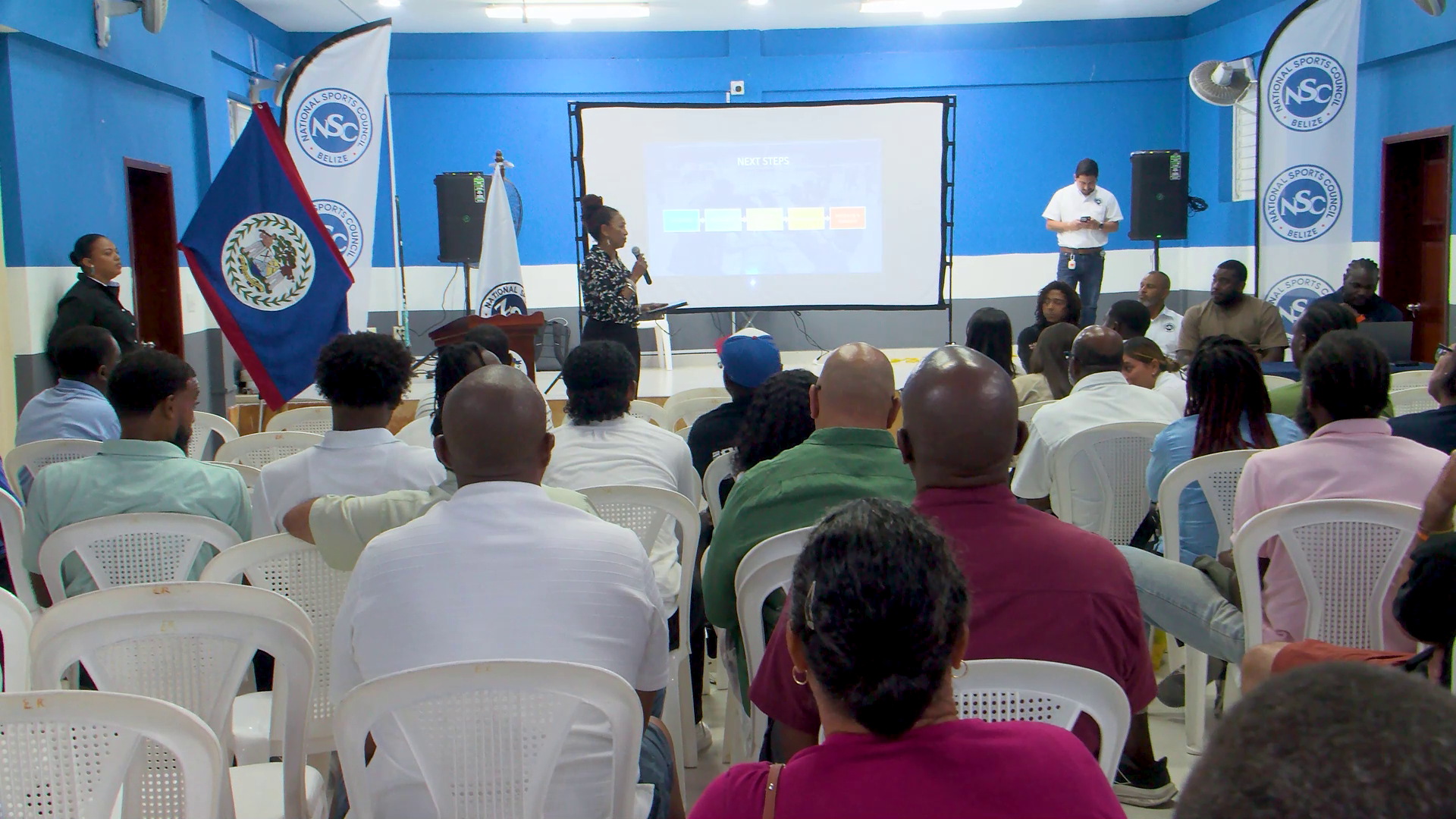
As Belize works to rebuild its struggling sports ecosystem, national sports leaders have launched a cross-country consultation to craft a transformative 10-year National Sports Policy and Strategic Plan, with the latest stop of the feedback tour held in Belize City on August 13, 2026. At the public session, a broad cross-section of stakeholders – from elite and grassroots athletes to local coaches, athlete family members, and senior sports administrators – gathered to share insights on the most pressing challenges facing the sector, ranging from chronic underfunding to fragmented institutional governance.
Devin Daly, Belize’s Minister of State with oversight for sports, told attendees that a single consistent demand has emerged from every stop of the national tour: the sports sector requires targeted increased public investment, and a complete restructuring of institutional roles to eliminate ambiguity over which bodies are responsible for key development outcomes. Daly noted that stakeholders across all of Belize’s administrative districts have pushed for clearly defined regulatory frameworks that outline the distinct responsibilities of national governing bodies (NGBs), sports federations, the Belize Olympic Committee, the National Sports Council (NSC), and the Ministry of Sports.
The goal of the new policy framework is to build a structured, accessible development pathway that nurtures talent from the grassroots level up, aligning short-term actionable improvements with medium and long-term transformative goals. Daly emphasized that the current administration has already boosted public resourcing for sports, setting the foundation for a fit-for-purpose strategy that will deliver tangible, positive progress for the entire sector.
While all stakeholders share a common goal of elevating Belize’s national sports standing to new heights, Daly acknowledged that the sector has faced significant setbacks over the past decade. Across all districts, participants in the consultation have confirmed that sports participation rates at every level, from youth recreational leagues to national competitive programs, have dropped sharply, while institutional disorganization has undermined progress. Daly framed the development of a new national policy as a fresh starting point for the sector – a genesis that will allow leaders to address longstanding divides that have hampered progress. He stressed that disunity among sporting leaders has eroded the camaraderie needed to drive change, and called on all stakeholders to unify behind the new plan to ensure it delivers results.
“Policies and strategies and all these fancy documents, they could just be that if we don’t have the actual movers and users being a part of it,” Daly told attendees, highlighting that the bottom-up consultation process is designed to ensure the final plan reflects the needs of the people who will actually implement it.
The push for a new national policy comes 10 years after Belize adopted its last national sports framework in 2016. Notably, the vast majority of key recommendations included in that 2016 policy were never implemented, leaving the sector without clear direction for a decade. The current consultation process is intended to avoid the pitfalls of the previous plan by centering stakeholder input from the earliest stages of development, ensuring widespread buy-in that will support full implementation once the final strategy is adopted.
This report is a transcript of an evening television broadcast, with Kriol language content transcribed using a standardized spelling system for accessibility.