
As Central America and the Caribbean brace for increasing climate-driven extreme weather events, Belize is gearing up to take the helm of one of the region’s most critical financial cooperation bodies later this year. Ahead of its assumption of the Pro Tempore Presidency of the Council of Ministers of Finance of Central America, Panama and the Dominican Republic (COSEFIN) this July, a high-level COSEFIN delegation recently wrapped up a four-day working visit to Belize to support the country’s transition into the leadership role. The visit, held from May 19 to 22, focused on aligning priorities and laying the groundwork for Belize’s term at the head of the regional organization. During their stay, the delegation held formal meetings with top Belizean leadership, including Prime Minister John Briceño, Minister of State Dr. Osmond Martinez, and Chief Executive Officer Carlos Pol of the Ministry of Economic Transformation. The talks centered on a set of pressing priorities for the region, starting with the Regional Strategy for Disaster Risk Financial Management. This framework was developed to equip member states with the tools and coordinated systems needed to mitigate and respond to the massive economic fallout of natural disasters including hurricanes, flash floods, and other climate shocks that disproportionately impact small Central American and Caribbean nations. Beyond disaster risk planning, discussions also explored actionable pathways to strengthen public financial management across the bloc and enhance cross-border coordination between member states, addressing longstanding gaps in regional economic cooperation. For Belize, this upcoming presidency marks an unprecedented milestone. The country only joined COSEFIN in recent years, where the rotating leadership position passes between all member states on a scheduled basis. The transition to Belizean leadership comes as the region faces growing economic and climate pressures, making coordinated financial action more urgent than ever. As Belize finalizes its preparations, the presidency will offer the small nation an opportunity to shape regional financial policy and amplify its voice on issues that impact Central American and Caribbean development.
标签: Belize
伯利兹
-

ICJ Rules Workers Have the Right to Strike Under Landmark Labour Treaty
In a historic decision that closes a 14-year impasse in global labor governance, the International Court of Justice (ICJ) has formally confirmed that the right to strike is legally protected under the International Labour Organization’s (ILO) landmark 1948 Convention No. 87, the Freedom of Association and Protection of the Right to Organize. The ruling marks a watershed victory for labor movements across the globe, resolving a bitter dispute that has frozen progress on global labor standards since 2012.
Announcing the court’s finding on May 21, 2026, ICJ President Yuji Iwasawa stated the bench unanimously agreed that workers and their representative organizations hold a protected right to strike under the terms of the convention. Judges also clarified that the advisory opinion, while not legally enforceable, does not set out additional operational rules governing strike action, limiting its scope to the core interpretive question. The ILO Governing Body will next review the ruling and plan follow-up actions during its 358th scheduled session this coming November.
The legal dispute originated more than a decade ago, when employer representatives to the ILO rejected the long-held understanding that the right to strike is an inherent corollary of the right to collective bargaining. From 2012 onward, these groups systematically blocked findings from the ILO’s independent supervisory bodies on the issue, creating a deadlock that persisted for 11 years. In 2023, the impasse reached a breaking point, and the ILO took the unprecedented step of referring the question of treaty interpretation to the ICJ for an advisory opinion. This referral marked only the second time in the ILO’s century-long history that the body had sought advisory input from the ICJ, and the first time the court—founded in 1945 alongside the United Nations—has addressed a question of international labor convention interpretation.
The high stakes of the case cannot be overstated: Convention No. 87 counts 158 member states as formal parties, making it one of the most widely ratified core labor standards in the world. It is classified as one of the ILO’s 11 fundamental instruments, meaning all ILO member states are required to uphold and promote its core principles regardless of whether they have completed formal ratification.
Harold Koh, who represented the International Trade Union Confederation (ITUC) during public hearings held in October 2025, emphasized that the ruling extended far beyond abstract legal debate. Speaking to the court during proceedings, Koh noted the outcome would shape the daily working rights of tens of millions of workers across every region of the world. He warned that a ruling against the right to strike would have created a roadmap for employer groups and friendly governments to roll back labor protections country by country, targeting nations with weaker judicial independence, underdeveloped civil society, and restricted press freedom.
While the ICJ’s opinion carries no binding legal weight, labor analysts widely agree it holds substantial persuasive authority both within the ILO governance framework and across national legal systems. Experts predict the ruling will drive progressive reforms to domestic labor laws and industrial relations frameworks in dozens of jurisdictions in the coming years, strengthening collective bargaining power for workers globally.
-

New Ebola Vaccine Could Take Months as Death Toll Continues to Rise
An ongoing outbreak of the rare Bundibugyo strain of Ebola, expanding across the northeastern Democratic Republic of the Congo (DRC) and into neighboring Uganda, has pushed regional health systems to a breaking point, with the World Health Organization (WHO) confirming that a targeted vaccine could take as long as nine months to deploy.
As of the latest official update from May 21, 2026, the outbreak has been linked to more than 600 suspected infections and at least 139 suspected deaths. Of these cases, 51 have been laboratory-confirmed in the DRC, with an additional two confirmed cases recorded on Ugandan territory. The spread of the virus into urban population centers and across international borders has triggered widespread regional alarm, with Ugandan health authorities currently holding more than 100 exposed individuals under active quarantine.
Health experts warn that no vaccine or specific antiviral treatment for the Bundibugyo strain has yet received full regulatory approval, a gap that the Africa Centres for Disease Control and Prevention (Africa CDC) blames not on scientific limitations, but on systemic political and financial neglect of infectious disease threats that primarily impact low-income African regions. In a blunt rebuke of global health inequities, the agency noted that if the virus posed a primary threat to wealthy nations in North America or Europe, medical countermeasures would almost certainly already exist. This critique echoes the pattern seen during the 2014 West African Ebola outbreak, when global urgency only surged after a U.S. doctor contracted the virus—despite thousands of African deaths having already occurred without coordinated international support.
Two experimental vaccine candidates are currently in early development, but neither has completed the full sequence of clinical trials required for emergency authorization. With a documented case fatality rate as high as 50%, the strain poses a severe risk to vulnerable communities and frontline health workers. WHO Director-General Tedros Adhanom Ghebreyesus emphasized that the situation remains deeply concerning, and expects confirmed case counts to climb in the coming weeks as surveillance teams expand contact tracing and testing across affected areas.
While the WHO has officially designated the outbreak a Public Health Emergency of International Concern (PHEIC), the highest global alert level for such events, the agency stressed that the outbreak has not yet reached pandemic status, and the overall risk to global populations outside the affected region remains low.
-
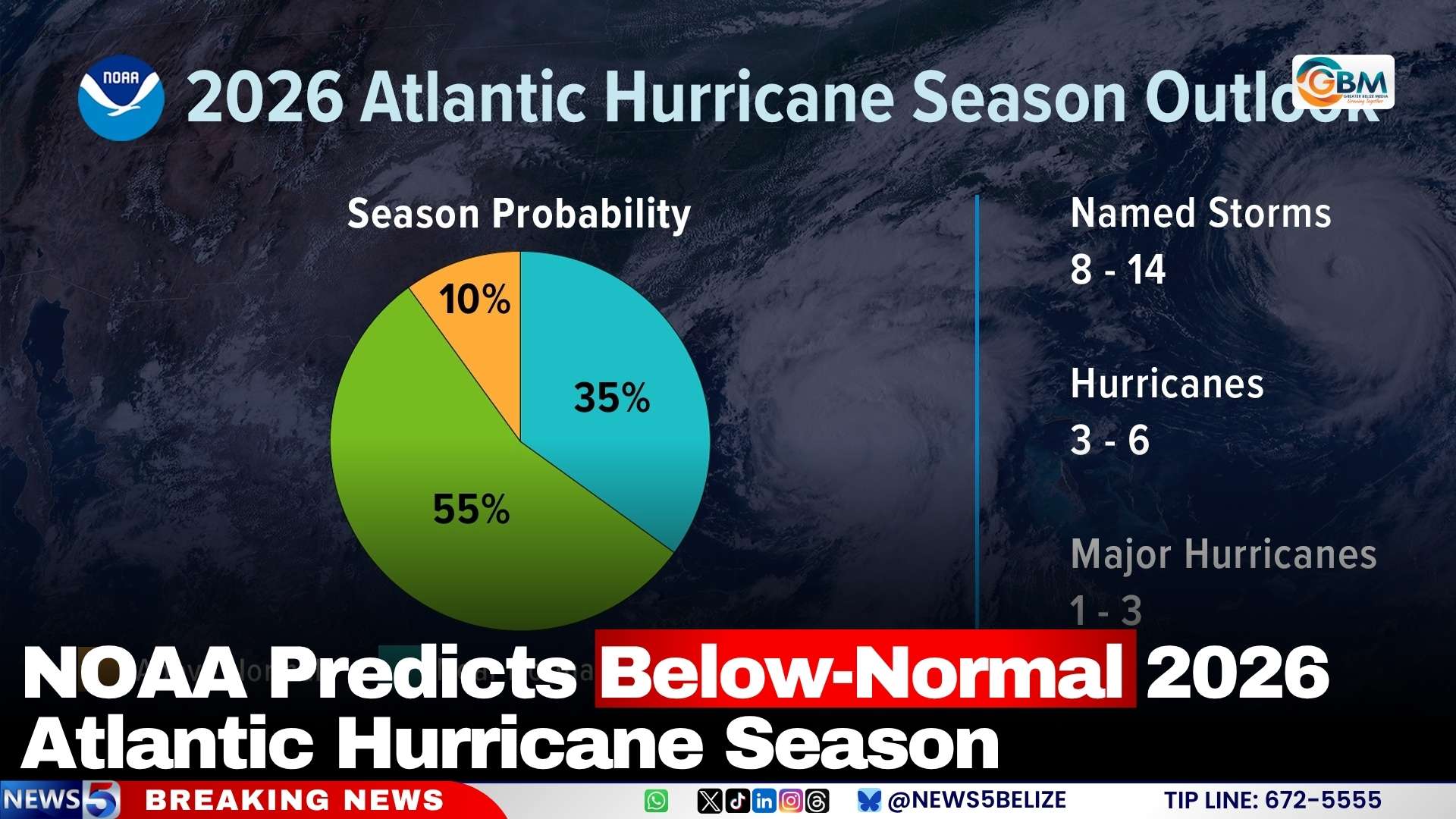
NOAA Predicts Below-Normal 2026 Atlantic Hurricane Season
As the 2026 Atlantic hurricane season approaches, the U.S. National Oceanic and Atmospheric Administration (NOAA) has released its official seasonal outlook, projecting a lower-than-average number of storm systems for the coming six-month period. Even with this milder projection, however, federal weather officials are emphasizing that coastal and at-risk communities cannot afford to lower their guard, stressing that a single powerful hurricane can still cause catastrophic damage to life and infrastructure.
The Atlantic hurricane season follows a fixed official timeline, running from June 1 through November 30 each year. NOAA’s climate analysis puts the probability of a below-normal season at 55%, with a 35% chance of activity matching long-term average levels, and just a 10% chance of an above-normal season that brings more frequent or intense storms than usual.
Breaking down the projected storm counts, NOAA forecasts that between 8 and 14 named storms will develop across the Atlantic basin in 2026. Of these organized systems, 3 to 6 are expected to strengthen into full hurricanes, and 1 to 3 will intensify into major hurricanes — classified as systems with sustained wind speeds exceeding 111 miles per hour.
To improve the reliability of storm tracking and public alerts, NOAA and its partner agency the National Weather Service have upgraded their forecasting infrastructure for this season. The agencies are integrating cutting-edge tools including artificial intelligence-powered weather modeling, specialized observation drones, and data from next-generation weather satellites, all designed to deliver faster, more accurate warnings that give communities more time to prepare and protect lives and property.
Meteorologists point to the anticipated development of El Niño climate patterns as the primary driver behind the projected slowdown in hurricane activity. El Niño, characterized by elevated ocean surface temperatures in the central and eastern Pacific, typically generates increased wind shear across the Atlantic basin that disrupts the formation and strengthening of tropical cyclones. Even so, forecasters note that two key factors — slightly warmer-than-average Atlantic sea surface temperatures and weaker than usual trade winds — still create favorable conditions for some storm development this season.
A critical note from NOAA: the seasonal outlook only provides a broad prediction of overall activity across the entire Atlantic basin, and cannot forecast how many storms will make landfall in specific regions. Details on individual storm tracks and landfall risks depend on short-term weather conditions that emerge over the course of the season, underscoring the need for all at-risk communities to have emergency plans in place regardless of the seasonal outlook.
-

New Fuel Hike Hits Unevenly Across the Country
As of May 20, 2026, Belizean motorists are facing the fourth consecutive fuel price increase of the year, with the burden of higher costs falling unevenly across different regions of the country. The sharp upward trend at the pump has added new strain to households already grappling with soaring cost-of-living pressures, sparking public debate over the sustainability of the government’s current relief strategy.
Regional data on fuel prices after the latest overnight hike highlights stark geographic gaps. In Belize City, the nation’s largest urban center, both diesel and regular-grade gasoline now retail at $14.83 per gallon, while premium fuel sells for $14.53. Slight increments are seen in the capital city of Belmopan, where diesel hits $14.86, regular gasoline reaches $14.85, and premium comes in at $14.55. The steepest increases, however, are concentrated in the southern town of Punta Gorda, where diesel climbs to $15.80, regular gasoline to $15.10, and premium to $14.79, putting far greater financial pressure on local drivers and transport businesses.
Prime Minister John Briceño attributes the nationwide price surge to overwhelming global market pressures that are impacting fuel costs across the world, noting that in the U.S. alone, fuel prices have nearly doubled over the past eight to ten weeks. As a small net fuel importer, Briceño explained Belize lacks the bulk purchasing power that allows larger economies like the United States to negotiate lower per-gallon costs. To offset runaway price gains, his administration has repeatedly cut fuel taxes, a policy that has already cost the national budget an estimated $80 million in foregone revenue that was previously allocated to public programs. In the most recent hike alone, Briceño confirmed tax cuts reduced final retail prices by approximately one dollar per gallon.
A breakdown of pump price components reveals that the largest contributor to this year’s surge is the landed cost of imported fuel – a figure that covers freight, insurance, and port processing fees. As of mid-April 2026, landed cost had jumped from $4.85 per gallon at the start of the year to $8.12, driving a $2.33 per gallon increase in premium fuel prices, which rose from $12.28 to $14.61 over the same period. Taxes, by contrast, have actually declined as part of the government’s relief effort, while commercial margins for transporters, wholesalers, and retail dealers have seen only a modest uptick.
Historical comparisons have intensified criticism of the government’s approach: in August 2012, when premium fuel hit a previous peak of $12.97 under the prior Barrow administration, the landed cost of $7.68 was near current levels. But total taxes at that time stood at just $3.67 per gallon, far lower than current tax levels even after recent cuts, leading critics to argue the government has room to implement deeper tax reductions.
Briceño pushed back against those calls, noting the government is already working to identify cuts to other non-essential spending to protect its core policy priorities. The administration will not compromise on funding for key social programs that form the central pillars of the PUP government’s Plan Belize 2.0, Briceño confirmed, including food assistance for low-income households, affordable housing initiatives, land access programs, public education, and the National Health Insurance scheme. Any necessary budget adjustments will be made to other line items to preserve these commitments.
As fuel prices continue to climb faster than household income growth across Belize, the core unresolved question remains: how long can the government’s sustained tax cuts remain fiscally sustainable? For News Five, reporter Paul Lopez filed this report from Belize.
-

Dealers Cry Foul Over Cuts to Long-Standing Fuel Margins
Belize is facing growing political and economic unrest in May 2026, centered on a controversial government decision to slash long-standing fuel dealer margins that have remained unchanged for nearly 20 years. Fuel retailers across the country are crying foul over the unilateral adjustment, arguing that the government violated a 2004 bilateral agreement that required written mutual consent for any changes to the margin calculation formula.
Dealers say they were given no advance warning or opportunity to consult on the cuts, and now warn that the reduced margins will severely cut into their operational profits, threatening the viability of many small and medium-sized retail businesses. Some dealers have even threatened to go on strike to protest the policy, raising fears of potential fuel supply disruptions across the country.
In response to the outcry, Prime Minister John Briceño, head of the ruling administration, defended the policy, stating he had no knowledge of the 2004 agreement requiring joint consent for margin changes. Briceño explained that the 2004 framework set margins as a percentage of fuel costs, meaning margins rose automatically as global fuel prices climbed – costs that were ultimately passed directly to consumers already struggling with price hikes. The new policy replaces the variable percentage model with a flat-rate margin, paired with a corresponding cut in government fuel tax, as a joint effort to cap soaring fuel prices for ordinary households. Briceño emphasized that all stakeholders, including dealers and the government, must share the burden to keep price increases in check, and confirmed that the administration remains open to dialogue with discontented dealers, saying “we are always ready to listen, and if they want to meet, we are prepared to meet.”
The fuel margin dispute has dovetailed with wider opposition criticism of the Briceño administration’s handling of the ongoing cost of living crisis. At a press conference held this week by the opposition United Democratic Party (UDP), Mesopotamia Area Representative Lee Mark Chang launched a scathing attack on government policy. Chang argued that while the administration touts a relatively low national inflation rate of 1.9% as of March 2026, working-class Belizean families are facing crippling price hikes across essential goods.
Chang highlighted that the Belizean public feels the impact of inflation far more acutely than official statistics suggest, noting that the Belize Kriol phrase “Wih dalla nuh the stretch as far as before” (our dollar doesn’t go as far as it used to) captures the everyday reality of household budget stress. Data from the country’s Statistical Institute of Belize (SIB) confirms that the biggest drivers of domestic inflation are rising fuel, food, and recently increased electricity costs – all essential expenses that hit low-income and working households the hardest. Chang emphasized that inflation is not an abstract economic metric: it translates directly to higher grocery bills, more expensive transportation, and steeper utility payments that put unbearable financial pressure on working families.
Beyond rising prices, Chang also drew attention to the country’s growing national debt, calculating that every Belizean, including newborn children, currently carries more than $11,000 in individual national debt liability. The UDP has pledged to continue holding the Briceño administration accountable for its economic policies and will continue to challenge measures that have driven up living costs for ordinary Belizeans.
This report is a transcribed adaptation of an evening television newscast from Belize, with Kriol language phrases transcribed using standard spelling conventions.
-

New CEO Takes Charge at Belize Central Prison as Era Ends
A key leadership transition is underway at Belize’s only maximum-security correctional facility, the Belize Central Prison, as the Board of Directors of the Kolbe Foundation — the non-profit organization that manages the institution — has appointed George Gomez as its new Chief Executive Officer.
Gomez takes over the role from outgoing CEO Virgilio Murillo, who has dedicated 24 years of his career to transforming the country’s correctional system. In his first public remarks following the appointment, Gomez reaffirmed his commitment to steady, forward-looking leadership at the facility. He highlighted that his top priorities will be collaborating closely with the prison’s entire staff team and expanding evidence-based rehabilitation programming that supports incarcerated people to build stable, law-abiding lives after their release.
Both Belize’s Ministry of Home Affairs and Enterprise and the Kolbe Foundation Board issued public statements praising Murillo’s decades of exceptional service. Under his transformative leadership, the Belize Central Prison shifted dramatically from its historical focus on purely punitive incarceration to align fully with the Kolbe Foundation’s core mission and vision of restorative justice. Murillo championed the expansion of accessible education, accredited vocational training, and mental health counseling programs, all designed to cut recidivism rates and give inmates the tools they need to successfully reintegrate into local communities post-release.
Far from stepping away entirely from the institution, Murillo will stay connected to the Kolbe Foundation as a Special Advisor to the Board of Directors, bringing his decades of institutional knowledge to support Gomez and the leadership team during the transition.
This report is adapted from a transcribed evening television news broadcast, with all Kriol-language commentary rendered using a standardized spelling system for the online publication.
-

Unitedville Murder Linked to Possible Drug Trade, Police Move Fast
A targeted execution-style shooting in Unitedville Village has left a 43-year-old man dead and triggered a sweeping, coordinated law enforcement crackdown across Belize’s Cayo District, with investigators already pointing to a likely connection to illegal drug activity. On the evening of May 19, 2026, emergency dispatch received reports of gunfire ringing out in the quiet residential community just after 9 p.m. First responders rushed to the scene, where they found Allen Gongora unresponsive with multiple gunshot wounds, and he was pronounced dead at the site. While processing the scene, investigators made a key discovery: a stash of suspected illegal narcotics, including crack cocaine and cannabis, in Gongora’s possession. That find immediately led law enforcement to flag the killing as potentially tied to the regional drug trade. Witness accounts helped officers quickly identify a dark SUV fleeing the area as the suspect vehicle. Within minutes of getting the report, command staff disseminated the suspect description and vehicle details to multiple specialized units, including the department’s GI3 intelligence unit, Special Patrol Unit and Mobile Interdiction Unit, as well as patrol officers based in nearby Roaring Creek Village. The multi-unit response moved faster than the suspects could escape: law enforcement intercepted the vehicle of interest just outside the village, bringing the high-speed manhunt to a rapid close. As of Wednesday, May 20, police have taken seven people — six men and one woman — into custody in connection with the case. Along with detaining the suspects, law enforcement recovered two loaded 9-millimeter pistols and a quantity of live ammunition, which investigators confirm were in the suspects’ possession at the time of the interception. Forensics teams are now conducting ballistics testing to determine if either of the recovered firearms was used in Gongora’s killing. Assistant Superintendent Stacy Smith, a staff officer with the department, told reporters that the fast outcome of the operation was the result of pre-planned interagency coordination that allowed officers to lock down escape routes within minutes of the shooting. “This was a textbook coordinated response,” Smith outlined in an official briefing on the case. “As soon as we got the description of the suspect vehicle, every unit on duty in the district was locked in on intercepting them before they could get out of the area.” As the investigation moves forward, authorities are preparing to file criminal charges ranging from murder to illegal weapons possession and drug trafficking against the detained suspects. Gongora’s family, meanwhile, is left reeling from the sudden, violent loss of their loved one, with no further details released about the victim’s background or his potential connection to the drug activity found at the scene. This is an ongoing developing story, and law enforcement says more details will be released as the investigation progresses.
-

Heartbreak in Indian Creek: A Father Runs Over His Child
A devastating fatal traffic accident has shaken the small community of Indian Creek Village in Belize’s Orange Walk District, where a one-year-old toddler died after being accidentally struck by his own father’s vehicle earlier this month. Law enforcement authorities have launched a full investigation into the May 18 incident, which marks the second child death from a run-over accident in the country within seven days.
According to official confirmation from Assistant Superintendent Stacy Smith, Staff Officer of Orange Walk Police, the tragedy unfolded shortly after 8:15 PM at the family’s residence in Camp 53, Indian Creek Village. The toddler, identified as Peter Wall, was behind the family vehicle when his father got in and began pulling out of their residential yard. Unaware that his young son had moved into the vehicle’s path, the father only stopped after being frantically alerted by his wife, who witnessed the accident unfold from nearby.
When the father exited the vehicle to check, he found that Peter had already sustained fatal injuries from the impact. Emergency responders were called to the scene, but the child could not be saved. By the time police officers received the report about the incident, Peter had already succumbed to his critical wounds.
Smith confirmed that law enforcement investigators have completed their initial case compilation, and the full case file has now been forwarded to the Office of the Director of Public Prosecutions. The office will issue formal legal guidance on how the case will proceed moving forward.
What makes this tragedy even more alarming for local communities is that it is not an isolated incident. Just one week prior to Peter Wall’s death, a nine-year-old girl named Vanessa Cal died in a separate run-over accident in Red Bank Village. Orange Walk Police confirm that investigations into that earlier fatality are still ongoing, as authorities work to unpack the circumstances of both deadly incidents.
Local residents have expressed widespread shock and grief over the back-to-back deaths of two young children in preventable traffic accidents, with many calling for greater public awareness about child safety around residential vehicles to prevent similar tragedies from occurring in the future.
-

High-Speed Motorcycle Crash Shuts Down Traffic in Teakettle
On the lunchtime of May 20, 2026, a serious single-vehicle motorcycle crash brought traffic to a complete standstill along a key stretch of the George Price Highway in Belize’s Teakettle Village. The incident unfolded between mile markers 52 and 53, at a sharp curve where the motorcyclist lost full control of his vehicle, according to initial on-scene reporting.
Assistant Commissioner of Police Hilberto Romero was among the first emergency responders to arrive at the crash site, having reached the area shortly after the collision. He immediately deployed his official police vehicle to block oncoming traffic from entering the crash zone, preventing the risk of secondary collisions and creating a safe space for emergency assistance. Other off-duty and traveling police officers passing through Teakettle Village also stopped at the scene to assist, administering immediate first aid to the injured rider and moving him to a safe location off the roadway.
Accounts from eyewitnesses at the scene confirm that the motorcyclist was navigating the curve at an excessively high speed when the crash occurred, and he was not wearing a protective helmet at the time of the incident. Emergency responders documented that the rider sustained life-altering catastrophic injuries to his right leg, alongside relatively minor lacerations and bruising to his head.
After approximately 30 minutes of waiting, an ambulance arrived at the remote stretch of highway and transported the injured motorcyclist urgently to Belize’s Western Regional Hospital for ongoing emergency treatment. As of initial reporting, no additional updates on the rider’s condition have been released by hospital officials.
This report is adapted from a transcript of an evening television newscast, with original Kriol language remarks standardized using official spelling conventions for written publication.