A growing procedural standoff has emerged around Belize’s controversial proposed acquisition of Speednet Communications by Belize Telemedia Limited (BTL), after the nation’s four primary Social Partner groups rejected a government invitation that excluded two of their members from an upcoming Cabinet discussion.
The Belizean government initially extended invitations only to the Belize Chamber of Commerce and Industry (BCCI) and the National Trade Union Congress of Belize (NTUCB) for a scheduled Cabinet meeting on August 13 to discuss the $80 million acquisition deal. Speednet, the target of the proposed buyout, operates the popular SMART telecommunications brand, a major competitor to state-linked BTL in Belize’s domestic telecom market.
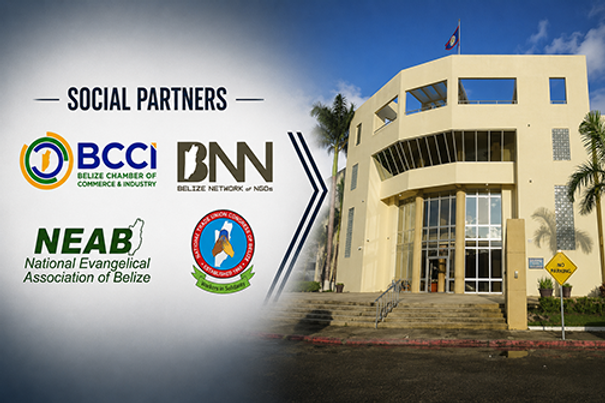
In response to the selective invitation, all four Social Partner organizations — which also include the Belize Network of Non-Governmental Organizations (BNN) and the National Evangelical Association of Belize (NEAB) — released a joint statement reaffirming their longstanding collective approach to reviewing the controversial acquisition. The group made clear that any meeting with Cabinet must include official representation from all four entities, framing the stance with the principle of “all of us or none of us.”
Crucially, the coalition has not refused to engage with government leaders entirely. Instead, the groups have set two non-negotiable conditions for their participation: full collective representation at the table, and the release of key documentation that the coalition requested weeks earlier but has yet to receive. Among the outstanding materials are audited financial statements for both companies and independent third-party valuation reports for the proposed $80 million transaction. The Social Partners also emphasized that they will require a reasonable window to review the requested materials thoroughly before any formal discussions with Cabinet can take place.
The coalition also noted that it welcomes the Public Utilities Commission’s willingness to open additional dialogue on the deal, but pointed to the formal requests outlined in their August 6 statement as the foundation for any future stakeholder engagement with the regulator.
Twenty-four hours after the joint position was released, the BCCI issued a separate public clarification to address growing public speculation that the chamber had outright rejected the August 13 meeting invitation. The organization explained that both its president and chief executive officer had pre-existing long-term commitments as part of an official Belizean trade delegation traveling to El Salvador, which will remain out of the country through August 14. The delegation includes both public and private sector representatives, and is in El Salvador to sign the new Belize-El Salvador Partial Scope Agreement, a trade deal designed to strengthen bilateral commercial ties and open new market opportunities for Belizean businesses.
The BCCI emphasized that it had only requested the August 13 meeting be rescheduled, and rejected all claims that the request reflected an unwillingness to engage with Cabinet on the acquisition. The chamber confirmed it remains fully committed to holding comprehensive consultations with government leaders, and maintains that productive dialogue can be held before Cabinet issues a final decision on the deal. It added that it stands ready to meet alongside the other three Social Partner groups for Cabinet’s next scheduled deliberation on the acquisition on August 18, at a time that works for all parties.
The BCCI’s separate clarification aligns closely with the collective position the coalition released a day earlier: all four groups are willing to negotiate with Cabinet, but only when they can attend as a unified bloc and have time to review the critical transaction information they have requested.
The current procedural impasse sits within a much larger national controversy over BTL’s planned acquisition of its largest private sector competitor. BTL has publicly defended the deal on commercial grounds, arguing that it holds substantial excess capacity on its existing national telecom network. The company claims absorbing Speednet’s roughly 100,000 subscribers would allow it to eliminate redundant infrastructure and cut unnecessary operating costs, benefits that it argues could be passed on to consumers.
By contrast, the Social Partner coalition has centered its scrutiny on a series of pressing public interest concerns, including risks to long-term market competition, lack of transparency around the deal terms, gaps in governance, and insufficient regulatory oversight of the proposed transaction. In an update Wednesday, the BCCI confirmed that none of these substantive concerns have been resolved, and the coalition continues to push for full, detailed responses to each of their questions. For now, however, the immediate deadlock centers on a simpler question: who will earn a seat at the Cabinet table, and will the Social Partners get the information and review time they are demanding before the government moves forward with a final decision on the acquisition.