标签: Belize

伯利兹

  • Cane Farmers Urged to Rethink Sweet Reliance

    Cane Farmers Urged to Rethink Sweet Reliance

    Against a backdrop of intensifying climate volatility and unpredictable global sugar pricing, Belize’s iconic sugarcane industry faces an existential crossroads, prompting top government leaders to push for urgent economic diversification among the nation’s cane growers. Prime Minister John Briceño and former Agriculture Minister Jose Mai have launched direct outreach to farming communities, framing a shift toward cattle ranching as a viable, high-demand path to build long-term agricultural resilience.

    For decades, Briceño noted, policymakers have warned cane farmers against overreliance on a single commodity, stressing the age-old wisdom of not placing all eggs in one basket. Today, that warning has become more urgent as climate change brings growing pressure to sugar cultivation, from erratic rainfall patterns to shifting growing conditions, while global sugar markets continue to swing between unpredictable price peaks and slumps. Now, leaders say, a tangible, high-demand opportunity exists in the livestock sector:
    cattle production for export to neighboring Mexico and Guatemala, where current domestic supply cannot keep up with existing consumer demand.

    Under the government’s proposal, cane farmers who hold underutilized or non-marginal cane acreage can convert unused portions of their land into pasture for small-scale cattle herds, generating an additional, steady stream of revenue beyond sugar sales. “If you have some cane fields that are not marginal or not using, then you can convert it into pasture land and have a few heads of cattle to sell. So, it goes in line with what we are talking as government,” Briceño explained in public remarks.

    Data from the Statistical Institute of Belize underscores the economic potential of this shift: the nation’s cattle export sector generated more than $16 million in revenue for producers in 2025, even as the industry has recorded modest export declines in recent months. For a country where sugar production has long been a cornerstone of the agricultural economy, the proposed diversification represents a fundamental strategic shift designed to shield farming livelihoods from the overlapping threats of climate change and global market volatility.

  • UDP Accuses Government of Favoring Judicial Elite

    UDP Accuses Government of Favoring Judicial Elite

    A brewing political controversy has emerged in Belize over a controversial legislative reform that opposition leaders say prioritizes the interests of a small group of senior judicial officials over lower-ranking court officers, opening a new rift over equity and institutional integrity in the country’s justice system.

    United Democratic Party (UDP) chair Sheena Pitts has launched a scathing rebuke of the Briceño administration’s Judges Salaries and Pension Bill, arguing that the legislation intentionally creates a two-tier system that benefits a small judicial elite while excluding and disadvantaging magistrates across the country.

    Under the terms of the proposed bill, senior judges sitting on the High Court and the Court of Appeal would become eligible for enhanced retirement benefits after just five years of service. By contrast, Pitts points out that magistrates — who currently receive retirement benefits through the standard public service framework — are required to complete 15 years of service to access their retirement entitlements. This unequal threshold, she argues, is a clear indication of the government’s priority of catering to a small group of senior officials rather than advancing equity across the entire judiciary.

    In fiery remarks criticizing the legislation, Pitts emphasized that the government has moved to convene the National Assembly specifically to advance a policy that benefits a tiny minority at the expense of the broader judicial workforce. “We are seeing the government openly acknowledge that it will push through laws for the few, not the many,” Pitts stated.

    The UDP chair stressed that the debate over this legislation cuts to core questions of fairness, institutional integrity, and long-term national development. She acknowledged that no reasonable stakeholder disputes that judicial officers across all levels are entitled to fair compensation, job security, and dignified retirement protections — provisions that are foundational to protecting judicial independence, a cornerstone of functional democracy and the rule of law. However, she drew a clear line between necessary protections for judicial officers and the preferential treatment that creates systemic inequality.

    “Judicial independence must never become judicial elitism,” Pitts emphasized, calling on the Briceño administration to revise the legislation to eliminate the preferential provisions for senior judges and establish a fair, level playing field for all judicial officers serving across Belize’s court system.

    This report is adapted from a transcribed evening television news broadcast, with original Kriol language commentary rendered using a standardized spelling system for accessibility.

  • JetBlue Exits Belize Skies, Budget Travel Takes Another Hit

    JetBlue Exits Belize Skies, Budget Travel Takes Another Hit

    In a development that deals another significant blow to affordable air access to Belize, U.S.-based carrier JetBlue has formally ended its direct route connecting New York’s JFK International Airport to Belize’s Philip Goldson International Airport, with its final commercial flight on the route completing operations in mid-May 2026. The route suspension is part of JetBlue’s wider “JetForward” corporate restructuring strategy, a plan that sees the airline reallocating its aircraft fleet to higher-margin routes that deliver stronger financial returns, after passenger volumes and profitability on the Belize route failed to meet the carrier’s internal projections.

    JetBlue’s departure from Belize’s air market comes only a few weeks after another major low-cost carrier, Spirit Airlines, exited the same destination, leaving the Central American nation with a gaping hole in its low-cost air connectivity. For Belize’s tourism-driven economy, which relies heavily on a steady flow of affordable air travel to attract international leisure travelers, the back-to-back exits of two leading budget airlines have triggered widespread concern across the country’s tourism sector.

    Efren Perez, president of the Belize Tourism Industry Association (BTIA), explained in an interview that the loss of any air carrier carries significant consequences for the country’s entire tourism ecosystem. “We depend on expanding airlift to boost overnight stays, and the benefits of that growth trickle down to every corner of the tourism industry—from hoteliers and tour operators to taxi drivers, restaurant workers and local artisans,” Perez noted. “So any airline exit is absolutely a cause for concern.”

    Even amid that uncertainty, however, Perez and other industry leaders point out that existing legacy carriers continue to maintain service to Belize, creating a foundation for recovery while tourism officials work to attract new carriers. Major U.S. and regional airlines including American Airlines, Delta, and Copa Airlines still operate regular routes to the country, and Air Canada recently launched a new direct service from Montreal to Belize that opens up faster same-day connecting travel for passengers coming from European destinations.

    Perez added that Belize’s Tourism Board (BTB) and the Ministry of Tourism are already working around the clock to court new airlines to fill the gap left by JetBlue and Spirit, and are rolling out targeted marketing initiatives to boost visitor numbers during the upcoming low travel season. Dubbed the “green season” campaign, the initiative calls on local hoteliers to offer discounted room rates to attract budget-conscious travelers, with the goal of filling existing capacity on the routes that remain in operation.

    Perez acknowledged that the industry is already facing headwinds, with rising global fuel costs pushing up airfares and leading to a measurable drop in overnight hotel bookings. He urged all local hospitality stakeholders to participate in the off-peak discount campaign, framing it as a critical tool to drive visitor volumes while longer-term airlift expansion efforts move forward. “Right now, we have to work with what we have, and double down on smarter marketing and collaborative action across the private sector to keep visitor numbers steady through the slow season,” Perez said.

  • Belize City Mobilizes Massive Cleanup Push Ahead of Hurricane Season

    Belize City Mobilizes Massive Cleanup Push Ahead of Hurricane Season

    As the 2026 Atlantic hurricane season approaches, authorities in Belize City have launched a large-scale pre-season preparedness initiative, deploying more than 130 city workers and heavy specialized equipment to clear clogged drainage systems across seven of the municipality’s most high-risk flood zones. This marks the second consecutive year the Belize City Council has run the proactive cleanup campaign, designed to reduce flood damage and protect vulnerable communities ahead of peak storm activity.

    On the morning of May 21, 2026, the hum of excavators, vacuum trucks and sewer jet sweepers echoed through residential neighborhoods as crews began work clearing debris and blockages from drains that routinely overflow during heavy seasonal rains. Deputy Mayor Eluide Miller told reporters that the effort goes far beyond routine maintenance, framing it as a critical proactive step to safeguard residents before hurricane activity ramps up across the Atlantic basin.

    “More than 130 Belize City Council staff are on the ground today working on this project, and we’ve brought in specialized heavy equipment to complete the work more effectively and efficiently,” Miller explained during an on-site interview. “We’re traversing every targeted neighborhood with vacuum trucks and sewer jet sweepers to make sure we are fully ready when the hurricane season begins.”

    The cleanup effort has also doubled as a community outreach opportunity, allowing city council members and public health inspectors to engage directly with residents on local sanitation and proper waste disposal issues. Many locals have welcomed the intervention, speaking to longstanding struggles with chronic flooding caused by blocked drains.

    Rayford Gill, a long-time resident of Santa Barbara Street, shared his experience with reporters, noting that heavy rains routinely leave his entire neighborhood submerged. “Our drainage system has been clogged for quite some time, and whenever we get real heavy showers, this whole street and surrounding area floods out,” Gill said. “What the crews are doing here today is going to be a huge help for our entire community. A lot of residents even have to take off their shoes and walk through floodwater just to get to the main boulevard on rainy days.”

    Lucilla Leslie, a resident of the Lake Independence neighborhood, echoed that positive sentiment, saying she is relieved to finally see long-overdue drain clearing work in her area. “Our drain was completely clogged, and water would rise so high during storms,” Leslie said. “Now that they’ve dug out all the accumulated debris, everything is working perfectly again.”

    For Malcom Burgess, a sanitation worker assigned to clean up the Caesar Ridge area, the work hits close to home — he lives just a short distance from his work site. “I’m clearing out the drains so that when a hurricane hits, residents’ homes and yards don’t fill up with excess water and debris,” Burgess explained. “We’re pulling all the trash out. This is what we’re supposed to do: keep the streets clean instead of letting them get littered and dirty, so people don’t think our community is unclean. Look at our neighborhood now — we’re cleaning it up because that’s our responsibility.”

    Even retired city staff have joined the push to get neighborhoods ready. Joan Bennett, a former sanitation worker who spent more than 30 years with the Belize City Council, says keeping spaces clean is a lifelong habit that stuck with her after retirement. “I retired after 30 years working for the council, in sanitation and waste control,” Bennett said. “It got into my blood after all that time — I can’t stand to see dirt. Dirt is my worst enemy, so I always keep my space clean. Even though I live in a long barracks, I keep it spotless.”

    Not every part of the day’s work went entirely according to plan, however. One resident in Caesar Ridge stayed close to crews the entire time they worked near her property, after municipal equipment damaged her home’s water pipes during last year’s cleanup campaign. “I’ve been begging them to be careful with my pipes while they dig,” the resident said. “I’m so glad they’re doing this cleanup, I just don’t want them to break my pipes. Water is such an essential thing for me, I can’t do without it.”

    Shortly after she shared her concern, the feared accident happened: crews did accidentally damage the pipe. But the issue was quickly repaired with plumbing glue, turning what could have been a major problem into only a minor inconvenience — one that residents agree is well worth the long-term benefit of clear, free-flowing drainage ahead of storm season.

    This report was prepared by Shane Williams for News Five.

  • Young Belizean Voices Rise in Governance Power Shift

    Young Belizean Voices Rise in Governance Power Shift

    On May 21, 2026, a landmark two-year initiative focused on cultivating youth engagement in governance marked a major milestone, as the youth component of the program wrapped up with a national forum hosted at Belize City’s Biltmore Plaza. Funded by the Central American Regional Security Initiative (CARSI) and led by Zain Dueheney, a Criminal Justice lecturer and program coordinator at Galen University, the 14-week training program sought to reposition young Belizeans as active stakeholders in the country’s democratic future.

    The broader initiative is structured around three core target groups: youth, educators, and municipal government staff, with the forum marking the official closing of the program’s youth-focused track. Over the 14 weeks, participants completed two in-depth in-person workshops designed to demystify how government systems function, build awareness around core democratic principles, and empower young people to claim their space as engaged, informed citizens. The program centers a participatory governance framework, emphasizing that every member of society has a critical role to play in upholding accountability and strengthening democratic institutions.

    At the concluding forum, participants shared personal reflections on their growth and took part in structured presentations on two foundational pillars of democratic participation: the importance of voter turnout and the Freedom of Information Act, a critical tool for transparency and government accountability. For many participants like Fernando Vega, a Galen University student and peer mentor in the program, the experience delivered tangible personal and professional development.

    Speaking at the forum, Vega highlighted how the training expanded his core leadership capacities: “Personally it did expand my skills. As I mentioned, I am a peer mentor. It expanded my knowledge within my leadership skills, being able to communicate with my peers, giving them that initiative to be that person they look up to and be like, ok Fernando is a leader within the group and portraying itself within that aspect.”

    Organizers noted that the program fills a critical gap in Belize’s democratic ecosystem, creating structured pathways for young people who are often sidelined in policy and governance conversations to build the skills and confidence needed to contribute to national development. By centering youth voice early, the initiative aims to build a more inclusive, informed, and accountable governance culture for Belize’s future.

  • Employers, Workers Pressured to Find Common Ground in Labor Talks

    Employers, Workers Pressured to Find Common Ground in Labor Talks

    On May 21, 2026, a pivotal national labor education convening brought government representatives, business leaders, and worker advocates together at ITVET in Belize, launching a targeted push to bridge divides and build shared understanding between employers and employees amid evolving workplace pressures.

    Organized by Belize’s Labor Department, the forum was far from a passive policy lecture: it centered open, solution-focused dialogue centered on clarifying core labor rights, outlining clear responsibilities for both sides of the employment relationship, and addressing the most pressing, on-the-ground concerns facing Belize’s modern workforce. The Belize Chamber of Commerce and Industry (BCCI), which represents more than 6,000 business members across the country, participated as the official employer constituency partner to the International Labour Organization (ILO), bringing a business perspective to the collaborative conversation.

    BCCI CEO Kim Aikman opened the session by emphasizing that long-term labor stability and economic competitiveness can only be achieved through intentional, ongoing collaboration between all three key stakeholders: government, the private sector, and organized labor. Domingo Pau, a senior Labor Officer with the Belizean government, echoed this call, noting that co-operation across groups is non-negotiable to building a balanced, sustainable labor landscape that works for all Belizeans.

    The interactive educational session was part of a series of similar events rolled out across every region of Belize, designed to demystify the country’s Labor Act for both employers and workers who may lack clear guidance on regulatory requirements. Over the course of the morning, facilitators walked attendees through a range of high-priority topics: from core employment benefits including severance pay, annual vacation leave, public and bank holiday pay, sickness allowance, and maternity benefits, to formal protocols for disciplinary action and different types of job termination, including summary dismissal.

    One of the most prominent topics of discussion was the intersection of severance pay and pension benefits, a question that has gained public attention following a high-profile court ruling involving telecommunications firm BTL. Pau noted that the ruling has set a clear legal precedent for future cases, and the session prioritized making this public information accessible to both employers and workers to reduce uncertainty around this critical end-of-employment benefit. “Severance is one of the most important benefits workers rely on when their employment relationship ends, whether through retirement or involuntary termination,” Pau explained, adding that it recognizes the years of service workers have contributed to their employers.

    Following the convening, BCCI reaffirmed its commitment to continuing these collaborative dialogues, noting that tangible, sustained progress in Belize’s labor market requires all stakeholders to align on shared goals of fairness and growth. The chamber says it will continue to support and host similar sessions across the country, with the ultimate aim of fostering more equitable workplaces that drive inclusive economic growth across Belize.

    This report is adapted from a transcript of an evening television newscast originally published online.

  • Belize Mourns Beloved Pediatrician in Emotional Farewell

    Belize Mourns Beloved Pediatrician in Emotional Farewell

    On May 21, 2026, the small Central American nation of Belize came together to mourn and celebrate the life of one of its most cherished medical figures, pediatrician Dr. Cecelio Eck, in a day of heartfelt, community-wide remembrance.

    The ceremonial farewell opened at Coral Grove Medical and Pediatric Center, a space where Dr. Eck poured decades of his life into caring for the country’s children. For generations of Belizean families, this clinic was the first stop when their little ones fell ill, and Dr. Eck was the steady, compassionate hand that guided them through recovery. It was here that the commemoration began, surrounded by the halls where he saved countless young lives.

    From the clinic, an honor escort carried Dr. Eck’s urn through the streets of Belize City atop a traditional horse-drawn carriage, drawing quiet tributes from onlookers along the route. The procession’s next stop was Karl Heusner Memorial Hospital, the country’s leading public health facility. Hundreds of doctors, nurses, and hospital staff lined the hospital grounds, falling silent for a minute of reflection before breaking into sustained, resounding applause — a fitting tribute to a career spent in service to Belize’s people.

    The final gathering took place at St. Martin de Porres Church, where attendees spanning every corner of Dr. Eck’s life came together. Family members shared quiet memories, longtime colleagues recounted his dedication to his craft, and dozens of former patients who had grown up under his care expressed their gratitude. For many in attendance, Dr. Eck was far more than a pediatrician: he was a healer in the fullest sense of the word, a mentor to young medical professionals starting their careers, and a trusted friend to generations of Belizean families.

    This national outpouring of grief and gratitude underscores the profound impact one dedicated medical professional can leave on an entire community, a legacy that will outlive Dr. Eck for generations to come.

  • Panton Warns of NHI Costs – PM Pushes Back

    Panton Warns of NHI Costs – PM Pushes Back

    A fierce political debate has erupted in Belize this week over the proposed National Health Insurance Authority Bill, pitting the country’s opposition against the ruling administration over the legislation’s structure, transparency, and long-term financial implications for citizens.

    Speaking at a press briefing held by the United Democratic Party (UDP) on Tuesday, opposition leader Tracy Taegar Panton issued a series of sharp criticisms of the bill. Panton emphasized that the opposition does not oppose the core goal of expanding universal healthcare access for Belizeans, but condemned the government for pushing forward a deeply flawed piece of legislation that lacks critical checks and balances. She outlined three core flaws: first, the bill fails to meet basic transparency standards, with vague provisions around future funding that create unnecessary uncertainty for the public. Second, the proposed governance structure concentrates excessive power in the executive branch of government, stripping the NHI Authority’s governing board of its key oversight duties. Third, Panton raised red flags over the limited role assigned to the Ministry of Health in the new framework, warning that the legislation could leave public healthcare facilities underfunded while steering the majority of NHI contracts to private healthcare providers.

    One of the most consequential concerns Panton raised centers on the bill’s potential long-term impact on workers. She argued that the legislation’s ambiguous wording paves the way for mandatory, Social Security-style contributions that would result in automatic additional deductions from working Belizeans’ paychecks down the line. The opposition leader also highlighted a restrictive patient registration rule that would require people to seek care only from providers in their home district, a policy she says would unfairly harm cross-district commuters, including daily wage workers, out-of-town students, and traveling vendors who regularly leave their home municipalities for work or commerce.

    In response to these criticisms, Panton and the UDP have called on the Briceño administration to hit pause on the legislative process. The opposition demands that the government conduct broader public consultation with stakeholders, release full details of the bill’s long-term financial projections, and strengthen accountability and governance safeguards before moving forward with a vote.

    Prime Minister John Briceño pushed back against the opposition’s claims during a media interview on Wednesday, rejecting allegations that the bill includes immediate new taxes or fees that would burden Belizean residents. Briceño clarified that the contribution provisions referenced in the legislation are not designed for the current primary care-focused NHI model, but are merely pre-structured to support potential future expansion of the program into secondary and tertiary healthcare services.

    The prime minister explained that Belize’s existing NHI program is currently funded through general taxpayer revenue and proceeds from the national Boledo lottery, which allows patients to access covered primary care services at very low out-of-pocket costs. He noted that any future mandatory contribution system would be modeled after successful universal healthcare frameworks in countries like Costa Rica, where collective pooled funding is used to expand the scope and quality of covered services for all citizens. Briceño also added that the long-term plan includes potential public-private partnerships with local insurance companies, an initiative that would expand care access domestically and cut down on the number of Belizeans who have to travel abroad for expensive, specialized medical treatment.

  • UN Court Backs Global Right To Strike

    UN Court Backs Global Right To Strike

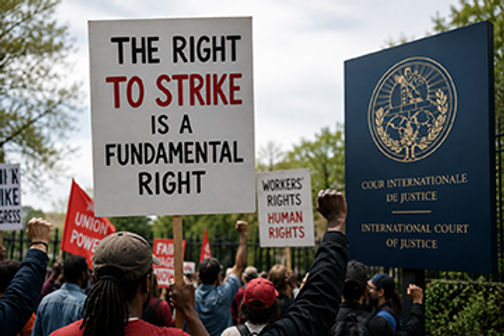
    The International Court of Justice (ICJ), the United Nations’ highest judicial body, has issued a landmark advisory opinion that formally recognizes the right to strike as a protected entitlement under a foundational international labour agreement, a ruling projected to reshape labour legislation and industrial relations across every region of the globe. Delivered on Thursday by a 10-4 majority vote, the opinion confirms that the right to strike falls under the protections outlined in the International Labour Organization’s (ILO) 1948 Freedom of Association Convention, widely known as Convention 87. ICJ President Yuji Iwasawa articulated the court’s core conclusion: workers and their representative organizations hold a legal right to strike as an inherent component of the treaty’s guarantees for freedom of association and collective labour action. The legal question that reached the ICJ grew out of a decades-long disagreement between global employer associations and labour representative bodies. Though Convention 87’s text does not explicitly name the right to strike, the two sides have long debated whether the principle is implicitly guaranteed by the convention’s overarching protections. In an unusual step described as necessary to end the persistent deadlock, the ILO — the UN agency tasked with setting and upholding global labour standards — formally referred the dispute to the ICJ for clarification in November 2023, marking only a rare instance of the agency seeking ICJ intervention on an interpretation matter. While the court’s ruling carries no legally binding force, as it is an advisory opinion, legal experts and labour rights organizers widely agree it will wield significant international clout. Domestic courts in dozens of countries routinely reference ICJ opinions as authoritative interpretations of international law, giving the ruling de facto weight in national legal disputes over labour rights. Currently, 158 countries around the world have ratified Convention 87, meaning the ruling’s interpretation could apply to the vast majority of the global community. In laying out its reasoning, the ICJ noted that strikes are one of the most critical tools workers and trade unions rely on to advocate for their interests, negotiate better wages and working conditions, and improve overall labour standards. Judges further emphasized that the core right to freedom of association, the central pillar of Convention 87, cannot be fully realized without the ability of workers to engage in collective action, including strike action. Importantly, the court stressed that its ruling was deliberately narrow in scope. It did not set out specific parameters for how individual nations should structure strike regulations, nor did it define the exact conditions, allowed scope, or legal limitations that national governments can place on strike action within their domestic legal frameworks. Labour organizations across the world are expected to broadly welcome the decision, especially in nations where the right to strike remains heavily restricted, criminalized, or subject to ongoing legal dispute. The ILO welcomed the opinion, noting that it effectively brings a close to what the agency called a “long-standing difference of views” between employer and worker representatives over the correct interpretation of Convention 87. During oral proceedings before the ICJ, legal representatives for global trade union bodies emphasized that the dispute was far more than an abstract legal debate. They argued the outcome would have tangible, real-world impacts on the working conditions and rights of millions of workers across every industry and continent. With the ICJ’s ruling now on record, organized labour movements around the world fighting for formal recognition of strike protections under international labour standards gain substantial additional international legal backing for their advocacy. The decision sets a new global precedent for interpreting core labour rights, opening avenues for workers to challenge restrictive national labour laws in both domestic and international legal forums.

  • China and Russia Condemn US Indictment of Former Cuban President

    China and Russia Condemn US Indictment of Former Cuban President

    In a controversial move that has sparked sharp international backlash, the United States has unsealed a criminal indictment charging former Cuban President Raúl Castro with murder in connection with the 1996 downing of two civilian aircraft that left four people dead, including three American citizens. The indictment, announced Wednesday, also names five other co-defendants, accusing them of conspiring to order the strike against planes operated by Brothers to the Rescue, a Cuban-American dissident organization that was flying between Cuba and Florida at the time of the incident.

    Castro, who governed Cuba from 2006 (in an acting capacity) through 2018 when he formally stepped down from office, has not been arrested or presented to U.S. authorities, and legal analysts remain uncertain how U.S. officials could ever move forward with a trial given the former leader’s status in Havana. The charges on the indictment carry extraordinarily severe penalties, ranging from life imprisonment to capital punishment.

    The U.S. legal action has drawn immediate condemnation from two major global powers, China and Russia. Chinese Foreign Ministry spokesperson Guo Jiakun called on Washington to abandon its pattern of coercive pressure, urging the U.S. to stop what he framed as the misuse of unilateral sanctions and domestic legal systems to target the Cuban government.

    Kremlin spokesperson Dmitry Peskov doubled down on the criticism, stating that the ongoing campaign of international pressure against Cuba is unacceptable, and warning that the latest U.S. legal action against the former Cuban leader borders on overt aggressive violence.

    Cuba’s sitting President Miguel Díaz-Canel has also rejected the indictment outright, dismissing it as a baseless political stunt with no legitimate grounding in international or domestic law. The incident marks another sharp escalation of long-running tensions between the U.S. and Cuba, drawing major powers into a new diplomatic standoff over what Havana and its allies frame as an overreach of U.S. jurisdiction.